Leading Reporters
  • Headlines
  • Health
  • Business
  • Exclusives
  • Investigation
  • Entertainment
  • Opinion
Tuesday, April 21, 2026
Hot
Breaking: FG files treason charge against ex-minister Sylva,...
Envoy Sets Agenda to Boost Nigeria-Israel Trade Ties
BREAKING: Retired Police Officers Shut Aso Rock Gate,...
FG to Invest $75m in Flutterwave IPO
Boko Haram Issues 72 Hour Warning to FG,...
Gunmen kidnap 14 JAMB candidates in Benue
ADC: We’ll Fight Again to Restore Democracy, Atiku...
BREAKING: Insecurity will stop after elections – Akpabio
JUST IN: Court Grants Bail to Nasir El-Rufai
Court Adjourns Judgment in David Mark ADC Leadership...
  • About Leading Reporters
  • Contact Us
Leading Reporters
Advertise With Us
  • Headlines
  • Health
  • Business
  • Exclusives
  • Investigation
  • Entertainment
  • Opinion
Hot
Breaking: FG files treason charge against ex-minister Sylva,...
Envoy Sets Agenda to Boost Nigeria-Israel Trade Ties
BREAKING: Retired Police Officers Shut Aso Rock Gate,...
FG to Invest $75m in Flutterwave IPO
Boko Haram Issues 72 Hour Warning to FG,...
Gunmen kidnap 14 JAMB candidates in Benue
ADC: We’ll Fight Again to Restore Democracy, Atiku...
BREAKING: Insecurity will stop after elections – Akpabio
JUST IN: Court Grants Bail to Nasir El-Rufai
Court Adjourns Judgment in David Mark ADC Leadership...
Leading Reporters
Leading Reporters
  • Headlines
  • Health
  • Business
  • Exclusives
  • Investigation
  • Entertainment
  • Opinion
Copyright 2024 - All Right Reserved
Home > CBN > Page 4
Tag:

CBN

HeadlinesBusiness

Nigeria may be Broke but don’t need Money to Turn the Tide

by Leading Reporters February 10, 2022
written by Leading Reporters

Nigeria has continued to borrow money to fund its budgets, the 2022 budget, and the country does not plan to stop borrowing soon, as details on its Medium Term Expenditure Framework show that between 2022 and 2024, the country will borrow N14.8 trillion.

Debt servicing, a consequence of the heavy borrowing, continues to gulp huge amounts and between 2022 and 2024, debt servicing will take a total of N14.6 Trillion.

To put it concisely Nigeria is broke, maybe not in the same way Musa or Nkechi are broke two days after receiving a salary, but broke all the same. 

President Muhammadu Buhari told the global community that the country needs $1.5 Trillion to bridge its infrastructure gap.

However, has more money always translated into more development for Nigeria?

Figures available on the Organization for Economic Cooperation and Development portal show the total public revenue of the country. 

Key Economic Indicators

(The public revenue of the country for 2020 and 2021 was not added due to the COVID-19 pandemic which altered financial demands and spending of the country and all countries across the globe.)

Between 2018 and 2019, public revenue increased with the revenue hitting N13 Trillion. Unfortunately, increased revenues have not always guaranteed better economic outcomes. Economic indicators showed that GDP growth remained at 2% in both years.

The inflation figures of the country have remained in double digits impacted by both demand-pull and cost-push forces. Dependency on imports has also put pressure on the country contributing to inflation especially when the increase in the price of imported goods may also drive up prices of goods and services in the country. The naira has continued to reduce in value as exchange rates makes the country’s dependence on imported goods near suicidal. Yet in 2019, importation figures increased up to N5.3 trillion, an increase of 49.34% over the 2018 figure. 

The various policies of the government have failed to reduce the food importation bill. Importation of agricultural products rose by 6.6% between Q4 2018 and Q4 2019. Wheat importation bill stood at $1.48billion as of 2019, according to the Observatory of Economic Complexity.  Although the country’s rice production increased, the country has yet to achieve self-sufficiency.

Nigeria has also battled with poverty, with the World Bank noting that over 40% of Nigerians representing 83 million persons live below the poverty line while another 25% (53 million people) were vulnerable.

Food insecurity is heightened as the country has struggled in recent times to meet its local demand for food. Scarcity occasioned by insufficiency and strengthened by insecurity has led to a surge in food prices. Although the country has recorded some increase in the Agricultural sector’s contribution to GDP over the years, in real-time, the results have not translated to a positive effect on final economic indicators nor the country’s food security positioning.

In 2016, the country introduced N-power to tackle unemployment but the unemployment figure has not dropped since then, growing from 14%, 19% to 23% respectively in 2016, 2017 and 2018. The N-power intervention and other related policies of the government did not reduce the unemployment percentage.

Recurrent, Capital Expenditure Ratio, Corruption May be Denying Nigeria Adequate Results of Increased Revenue

Nigeria has over the years experienced high recurrent expenditure over capital expenditure across key sectors. The ability to invest in key infrastructures that may have impacted on key indicators by increasing job creation, improving local manufacturing and production etc. have reduced the value of development and increase in public revenue could offer.

Corruption is a significant factor in the loss of development benefits from increased revenue. The corruption perception index of the country stood at 145 of 180 countries in 2020 with the country scoring 25 points out of a possible 100, according to Transparency international. 

Although Nigeria dropped one place in 2020 having ranked 146 in 2019, its record has historically been poor, ranking 1444 in 2018 and 148 in 2017. This is despite the introduction of the Treasury Single Account by the government in 20016 aimed to harmonize financial operations and ensure a transparent public sector. If the Auditor General’s report is anything to go buy, the government and its agencies continue to miss the mark on transparency and accountability

Budget Deficit, Debt Servicing May Deny Nigerians Full benefit of Increased Public Revenue

A report earlier noted the high cost of debt servicing in the country for instance between January to May 2020 Nigeria spent N72 on debt servicing for every N100 earned. The 2022 budget has a 22% debt servicing figure of N3.8 trillion. This means that a substantial part  of Nigeria’s public revenue will be spent on debt servicing, monies that might have aided in boosting key economic indicators.

With Nigeria planning to borrow another N14.8 Trillion between 2022 and 2024, that will shoot up the cost of the country’s debt servicing and is expected to gulp N14.6 Trillion in the same period (2022-2024).

Review of Nigeria’s Current Key Fiscal Policies

Nigeria’s policies on improving the economic outcomes of the country have suffered various handicaps. For instance, the diversification of the economy to Agriculture has been greatly affected by insecurity, climate change, among other issues.

Policies for reducing the unemployment burden have not yielded much results as the figures have continued to grow. 500,000 Nigerians were reported to have benefitted from the N-power program as of 2020, but there has been no impact on the rate of unemployment in the country which ended the year at 32.5% . The president launched another initiative, Nigeria Jubilee Fellows program aimed at employing twenty thousand Nigerians who just graduated from the National Youth Service Corps. Again this is unlikely to affect the employment projected to rise even higher in 2022. 

The country operates the Retail Dutch Auction system for its foreign exchange. What this implies is that the Central Bank sells Forex through Banks to the end-users. The apex bank announced in July 2021, that it was suspending the Bureau-De-Change operators and suspended the issuance of new licenses. This move was perceived by actors as part of a strategy to improve the naira’s positioning but the value of Naira has remained unstable at N414 to $1 as at the time of this report. Not only are import prices  higher which drives up inflation, Nigeria’s debt servicing costs will also increase as the naira weakens. 

Exports, government spending and local manufacturing and production are a major part of increasing Gross Domestic Product but increase in price of raw materials compounded by insecurity and insufficient government investment in capital projects are likely to keep the country’s GDP growth rate nominal. 

Nigeria may need money but clearly mere increase in revenue does not necessarily translate to development and without improving its key economic performance indicators, Nigeria may continue to be in a vicious cycle of lack, dependence and borrowing.

Better policies, a genuine fight against corruption and open and accountable governance are critical to lifting Nigeria out of poverty.

While more money may mean more resources to do more things, the country may need to improve on corresponding effective policies that are commensurate with the growth in public revenue.

The question may be that the value of those monies at that time also determines what they can do, but the value relies on working policies too. (dataphyte)

February 10, 2022 0 comments
0 FacebookTwitterPinterestThreadsBlueskyEmail
BusinessOpinion

Why CBN Rice Production Intervention Fund May Prove A Misplaced Priority Overtime

by Leading Reporters January 27, 2022
written by Leading Reporters

 (By Light Shedrack)

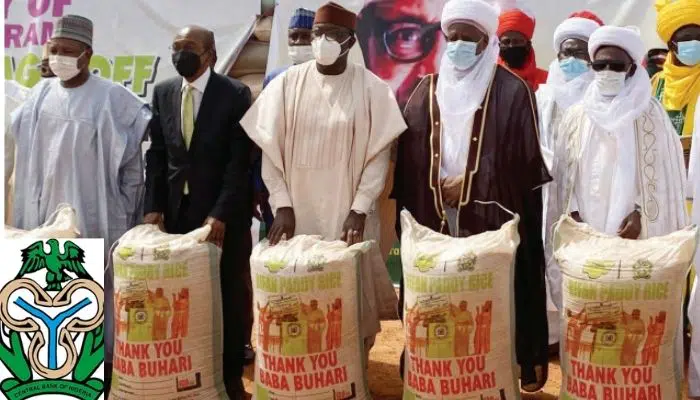
Rice is one of Nigeria’s major staple foods.  Prior to now, Nigeria spent billions of dollars every year on rice importation from Thailand and India, majorly.  To encourage local rice production, the Central Bank of Nigeria CBN came up with intervention schemes, under its Anchor Borrowers Programme (ABP).  The scheme is aimed at increasing local rice production which thus would discourage rice importation.

As much noble as the move by the Central Bank of Nigeria looks, there are lots of questions left unanswered such as the environmental impact of the scheme and looming protein deficiency that may hit the country. 

This could possibly be because Nigeria is a country that hardly makes long term plans or considers the long term effects of certain policies it pursues.  We believe in make-shift and fire-brigade approach to issues of national interest.

While Nigeria sees local rice production as the next big thing, some countries that are hitherto major rice farmers are considering divesting from commercial rice production.  India is one of such countries.  Priority may soon leave rice for other crops with higher economic value and better environmental impact.  India knows that if it continues its commercial rice farming, in the nearest future it would be hit by acute water shortage, or worse still water scarcity.

Research has shown that rice cultivation and production is a major water consumer.  Rice must be planted in areas with body of water.  Nigeria consumes about 7million tons of rice annually. To produce just one kilogram of rice, about 2500 liters of water is required.  Nigeria rice revolution is targeted majorly in the Northern Nigeria, and that axis is currently witnessing acute desert encroachment, untamed insecurity resulting in lull in economic activities.  There is as well the case of diminishing water level in Lake Chad, which has not only fueled insecurity but would sure worsen agro-allied businesses and farming.

2022 would witness protein deficiency among Nigerians, especially children.  The rising cost of beef and egg would sure mean that most families may not be able to afford these sources of protein.  What next could come as the handiest alternative?  Beans!  Beans are relatively affordable food that are considered rich in protein, carbohydrate and fibre. But how much has Nigeria Government and by extension the Central Bank of Nigeria invested in beans production.  Beans production in Nigeria has received little or no government attention or intervention.  This could partly be because beans are not elites’ preferred food.  Rice is.

Common sense should have revealed to us that Nigerians need more beans than rice now.  This is because there is deficiency of protein among the greater number of Nigerians. From 2022, protein-deficiency among Nigerians may worsen.  Most people cannot afford beef, egg and other foods rich in protein because of the skyrocketing cost of these essential foods.  To make up for this deficiency, beans can easily come handy. 

Nigeria economic policies have perennially favoured the elites.  In fact, the elites that make up less than ten percent of Nigeria’s population are mostly put into consideration whenever any policy is to be formulated.  Better put, the elites make the laws and initiate policies that favour them. Instead of the Bottom-top approach used in policy formulation in most economically viable countries that run inclusive system, Nigeria policy makers are mostly elites who sit in the comfort of their offices and over feast-like sessions, formulate policies that favour the elites.

There are other factors that may overtime prove that the Central Bank Rice Production Intervention schemes may boomerang and hit us worse than it helps us.  One of such factors is the environmental effect of rice production, when matched with the reality of climate change. Another is the absence of data, the manipulation and fraud that have characterized the scheme. But let this be a discussion for another day.

Light Shedrack is a serial entrepreneur, and an SME ideation specialist.  He writes from Abuja, Nigeria.

January 27, 2022 0 comments
0 FacebookTwitterPinterestThreadsBlueskyEmail
HeadlinesOpinion

Expert flays NNPC N287B profit; describes it as a manipulated balance sheet full of deception

by Leading Reporters August 30, 2021
written by Leading Reporters

A financial expert, public issues commentator and good governance advocate, Dr. Nnaemeka Obiareri has described as deceptive,

manipulative and sheer distortion of standard accounting standards the recently announced profit of N287billion by the Nigeria National Petroleum Corporation NNPC, from its perennial operational losses.

He said that when the figures brandished by NNPC leadership is interrogated, it would be discovered that NNPC did not engage in any extensive or extra-ordinary productive or trading activities in 2020 to generate and report such huge profits in 2020 from a consistent six years loss (2015-2020). 

“From my desktop review and analysis, I knew straight away, that it is either they reported bubble paper profit to enable them debit a ledger for a particular nefarious game or they engaged in unwholesome balance sheet engineering games.

“What Melee Kyari presented as profit from direct  NNPC operations and activities is actually a retention  of 20% of the profits and dividends paid by independent entities,  which the NNPC   received on behalf  of the federation ( FGN, States and LGAs). This is the first time they are allowed to retain such.  

“According to a reliable source, before now,  the FGN and the states used to collect 100% of all the dividends paid by these independent entities . 

“However, in 2020, the NNPC decided to retain the 20% from the dividends paid the the NLNG, the NGC, the West African Gas Pipeline ( Operated by Chevron) etc and consolidated same in their balance sheet.  

“So, what they reported were retained portions of the dividends  paid by other entities for the Federation.  All the poppycock by Melee Kyari of improving efficiency at the NNPC and cut cutting cost  measures  over the last one year are just hogwash . NNPC as an entity under him,  its operations  and that of  the three  refineries are cesspool of losses and perfidy . Don’t be deceived by their tales by moonlight . 

”It is a grave affronts to our sensibilities and intelligence for these guys to receive about $2.5billion/N1trillion (using CBN official rates)  as combined dividends on behalf of the federation from independent entities established by acts of Parliament for the benefits of the federation,  consolidate the retained  20% portion of  dividends meant for the Federation accounts and then report it (N287bn)  as profits made from the activities of a  corporation that did nothing,  other than , import PMS at a loss under subsidies and ignorant people clap away without asking questions  

“The most painful thing here is that these people understand that IGNORANCE walks on all four in Nigeria.  So, they assumed rightly, that a majority of us have no common sense , capacity , competence and ability to dig beyond the surface.  They also realise that investigative journalism built on deep knowledge is absent in this clime. THEY ALSO realise that we do not have many people with the discipline, knowledge,  good conscience and integrity in the NASS to probe, dig , uncover and recover as we have it in the US Congress.  So, they  corner our resources,  throw pittance at us  and then rub it on our faces  ..

“For those,  who have the discipline,  knowledge, ability and time,  kindly fish out the 2019 audited financial reports of the following independent entities set up by acts of Parliament for the benefits of the federation: 

  • The  NLNG; 2. The West African Gas Pipeline Company ( Operated by Chevron);  3. The Nigeria Gas Company(NGC);  4. Duke Oil;  5. The NPDC; 6. C. 7 Wheel Insurance ; etc 
  • When you add up all of the dividends  for the year ended 2019, which was declared,  paid and  transferred to the NNPC accounts in 2020 on behalf of the federation , you will get in excess of over $2.5bn/N1trillion (using the CBN official rate). 

“These guys at the NNPC are not sincere one bit . It is the height of deceit and manipulation of numbers, for them to gleefully consolidate the profits and dividends of independent entities, with independently audited balance sheets , who have been making and reporting  consistent profits over the last 10 years retain 20% of such dividends,  use them to cover the huge losses and pillaging at the NNPC and report same as profit for the NNPC, for the first time over the last 43 years . 

“Honestly, if the misappropriation and cornering of our national resources at our MDAs like the  NNPC, Petroleum Ministry,  FIRS, Customs,  NIMASA, NPA, are checkmate and  the leakages plugged , Nigeria will not need to borrow to fund our critical infrastructure needs .

“This is why we clamour for urgent and  total constitutional, fiscal,  administrative,  socio-economic and autonomous RESTRUCTURING of this jungle to stop the ongoing  bleeding,  destruction and destitution of the masses.  

August 30, 2021 0 comments
0 FacebookTwitterPinterestThreadsBlueskyEmail
Business

CBN needs bankable policy to reduce Nigeria’s $1.5 billion import bill on Wheat

by Leading Reporters May 27, 2021
written by Leading Reporters

Nigeria boasts of 34 million hectares of arable land area, with about 6.5 million hectares for permanent crops. Little wonder, Agriculture serves as the country’s main driver of the economy after oil.

But despite the goodies in the sector, the country imported wheat worth N2.2 trillion in the last four years.

According to data from the Food and Agriculture Organization (FAO) of the United Nations, Nigeria has witnessed low wheat yields amidst declining production in the last ten years. Within the period, the wheat area harvested reduced significantly. It also propelled the wheat yield to drop to the level of 10,678 hectograms (100 grams) per hectare (Hg ha) in 2018, the lowest since 1991 and one of such decline ever.


Between 2010 to 2019, wheat production was also on free fall, dropping to the range of 60,000 tonnes per annual from 165,000 tonnes production capacity in 2011. These staggering statistics (area farmed, yield, production) are the reasons why the country imported about 98 per cent of its total consumption. By implication, there are a vast population (market) but less capacity to produce one of its significant interest crops.

Why so much dependence on import Nigeria’s Minister of Agriculture and Rural Development, Mr Sabo Nanono, recently identified seeds’ unavailability as one major factor hampering investment and low production in the wheat value chain. He, however, said the ministry would provide quality seeds and agricultural inputs to Nigerian farmers.

Challenges facing the value chain include limited access to improved seed varieties, high production cost, inadequate irrigation infrastructure, insufficient funding systems, lack of a cohesive national strategy on wheat development, and unclear role of government and other stakeholders. These challenges factored in how Africa’s biggest economy managed to produce an average of 107,000 tonnes of wheat between 2001-2014. Africa produces more than 25 million tons of wheat on 10 million hectares (Mha) of land area, per FAO. Ethiopia and South Africa account for the largest production area with 1.7 Mha and 0.5 Mha, respectively.

Nigeria ranks low compared to other African peers in area harvested, yield, and production of wheat. While South Africa, Kenya and Ethiopia harvested hundreds of thousands of arable land, Nigeria only harvested on an average of 70,000 to 80,000 per annum.

What factors responsible for low local production
The reasons for low local production can be categorised into two main areas; technical and economic challenges. Analysis of the FAO data for sub-Saharan Africa showed that these factors influence farmers’ low yields in Nigeria’s wheat market. In 2011, when Nigeria harvested 128,992 hectares, its recorded peak production levels at 165,000 tonnes.

On the technical side, farmers in Nigeria have limited access to improved seed varieties, fertilizers & chemicals, high cost of production, and inadequate irrigation infrastructure, often leading to low yields. On the economic side, lack of investment opportunities, insufficient funding systems for research, and lack of a coordinated national strategy resulted in Nigeria’s dependence on imported wheat to meet its large population’s growing demands.

A Financial Derivatives Company’s report cited insecurity in Nigeria’s wheat belt, the lack of mechanized and modernized farming techniques, and uncompetitive pricing as challenges facing low wheat production.

Similarly, the International Food Policy Research Institute attributed a lack of policy support and support from international organisations to be responsible for low domestic production.

Low yield propels lack of investment despite the massive market for wheat in Nigeria, a perennial low yield often leads to low revenue and profits. This situation discourages the cultivation of wheat by farmers.

They instead divert their funds into more rewarding agricultural produce. Several reports, including direct comments from farmers, have decried the government’s lack of commitments as one significant factor. Due to this, farmers have shifted focus towards the cultivation of rice, while bakers go after imported wheat because it is cheaper.


A look at the 2011 figure of the FAO data showed that yield dictates the propensity for investment (Area farmed/harvested). Also, the area planted, in turn, determines output (production). A classic case is Ethiopia’s wheat value chain, which shows consistency in growth in the last decade. The country’s healthy production is influenced by its continued investment in seeds, fertilizers, and mechanization, according to the OECD-FAO Agricultural Outlook 2018-2027.


Presently, Nigeria has no actionable policy for its wheat market. The Anchor Borrowers’ Programme (ABP) captured wheat production, but the approach was mere paperwork for wheat farmers. Alhaji Salim Mohammed, the National President of the Wheat Farmers Association of Nigeria (WFAN), told Dataphyte that there is no specific outlined policy for Nigeria’s wheat market. He said both the FMA&RD and CBN have no serious concern about it. Wheat is an essential grain belonging to the grass family. When milled into flour, it makes a wide range of foods, including bread, noodles, pasta, biscuits, cakes, cookies, pastries, cereal bars, sweets and crackers. On another aspect, it is one of the most common grains which serve as feed for livestock. Research also suggests grain improves the calcium and energy status of cows to help them in transition.

Per a report by Emerald, Nigeria’s wheat importation stood at 4.2 MMT on average annually, costing $1.5 billion in import bill. For Nigeria to grow its wheat market, it needs to close the production gap and reduce the import bill as essential ingredients for best agric practices. These include improvement in seedlings, mechanizations, commercial agriculture, addressing insecurity in the North-East, a significant zone for Nigeria’s wheat.

The central bank and policymakers can also learn from Ethiopia and Egypt’s wheat value chain by giving full attention to crop production to ensure food security. The Nigerian Bureau of Statistics (NBS) recent report shows that crop production remains a significant portion of Nigeria’s GDP. In the fourth quarter, the Nigerian economy grew by 0.11% (year-on-year) in real terms, representing the first positive quarterly growth in the last three quarters. Quarter-on-quarter, crop production grew by 3.42 per cent compared to 1.39 per cent in Q3, nearly double the increase.

Investment and funding are also critical factors in expanding the wheat value chain, especially by supporting Lake Chad Research Institute in research and development to improve wheat seeds.

May 27, 2021 0 comments
0 FacebookTwitterPinterestThreadsBlueskyEmail
Headlines

Do you know Government Interventions In Agriculture May Not Yield Any Positive Result?

by Leading Reporters May 22, 2021
written by Leading Reporters

That scares right? Nigeria Governments at Federal and State levels are desirous of feeding its exploding population and earn from export.

But all that may still equal zero despite hundreds of Billions of Naira Government has plunged into agriculture through NIRSAL/CBN. 

Have you wondered why despite all the intervention policies, prices of food are skyrocketing and shortage of food still persist? The answer is simple. Government is facing only a side of what needs to be done. We’re just scratching around the solutions. We’ve not fully delved into the solutions proper.

Perennially, our interventions have been that of brigade-approach without proper and result-oriented planning. We are trying to grow AGRIC sector without efforts at growing the technology that drives the desired growth.

I’m awed at how much India is leveraging technology to solve most of its problems. We just tidied up a two-week training on Disruptive Agri-Tech Initiatives, sponsored by African Asian Rural Development Organization New Delhi and National Institute for Micro Small and Medium Enterprises NiMSME Hyderabad.

It was 8 days of interactive session with presentation from some of the best tech-companies in India.  Today, you can have a clue of what the next farming season looks like vis-a-vis the soil texture, weather condition,  your farm vulnerability in terms of pest and bacterial attack and what the yield will look like even before you till the ground.

There are other simple technology in form of Apps that can increase growth by over 40%. Indian rural farmers are becoming players in the international market and export. All thanks to disruptive Agri-Tech and many interventions by the Indian Government. Agric sector contributes over 21% of Indian export of these AGRIC produce are coming from rural farmers in India.

In Nigeria, the Government is doing great in supporting farmers with low interest loans ans other forms of intervention policies. But Government intervention in Agri-Tech is almost zero. Most of the start-ups in Agri-Tech are private sector driven and they’re walking okay silken soft thread, all by themselves. 

21st century is a technology-driven century. Billions of Dollars intervention in agric will equate nothing if there’s no technology driving growth in AGRIC sector.

May 22, 2021 0 comments
0 FacebookTwitterPinterestThreadsBlueskyEmail
Business

Nigeria’s external debt grows by 411% in 8 years — ActionAid

by Leading Reporters April 14, 2021
written by Leading Reporters

Study commissioned by ActionAid Nigeria has revealed that the country’s external debt stock increased by 410.9 per cent between 2012 and 2020, with the highest year-on-year growth recorded in 2017 at 65.82 per cent, followed by 35.16 per cent growth in 2013 and 33.63 per cent in 2018.

“The states and FCT external debt stock calculated in USD grew by 29.5 per cent, while the calculation in naira produced 136.7 per cent growth. The external debt component had risen to 31.82 per cent of overall debt as at end of 2018, while the domestic debt was 68.18 per cent of overall debt. Furthermore, Nigeria’s debt to GDP has been growing over the years and stood at 19 per cent by end 2018.”

Onyekpere said the Central Bank of Nigeria (CBN) and banks are heavily exposed to these domestic instruments up to 45.2 per cent of overall and the non-bank public is mainly about Pension Fund Administrators, Asset and Fund Managers, as well as Insurance companies hold the remaining part.

“The current debt to retained revenue profile of about 83 per cent is not sustainable. The drive to raise new domestic revenue is a struggle of the generation and it should attract the energy, vision and vigour of both government and citizens. The major driver should be a commitment to expand available resources, rather than the current clamour for sections of the country to have more of the stagnant pool of available resources. Debt can be reduced if we generate more revenue.”

April 14, 2021 0 comments
0 FacebookTwitterPinterestThreadsBlueskyEmail
Opinion

SMS Banking Service Is A Criminal Scheme By Banks With CBN Collusion

by Leading Reporters April 12, 2021
written by Leading Reporters

A Nigerian has narrated how his bank made it near-impossible when he applied for deactivation of the SMS service scheme.

Samson Akhigbe, who shared his experience on his Facebook page described the scheme as the most fraudulent one crafted by Banks with the banking of the Central Bank of Nigeria.

He advise Nigerians to deactivate their SMS service scheme, saying that with an active email address and a token, why pay for what only enriches bank.

“I stopped using SMS banking like five years ago. Even when I opened my last account, I deactivated SMS alert. Not only is it a useless method to receive banking information, it is a criminal scheme setup by Banks in collusion with CBN to milk Nigerians.

“I reasoned that, if I have a token, an active data and an email, why pay extra for SMS banking?

“While I was trying to deactivate it back then, they made it so difficult and I was wondering why. Na me get account, why insist I use SMS?

“At the end of the day, I filled forms, got a guarantor to sign indemnity. At last, I was free. But still, these banks looked for other means to scheme off my account.

“If you use GAPS on GTBank platform, you’ll see how bad these banks scheme off our account. N1 here, 50 kobo there. Every transaction is billed and at the end of the month, you’ll pay VAT and Account maintenance fee.

“Bear in mind that VAT is deducted for transactions as they occur. The people paying SMS charges are the worst hit.

“And then to hear that these banks owe TELCOS for the monies that they have collected from customers is the height of criminality. It is like saying ShopRite is owing vendors for goods already paid for by the customers.

“This is me saying to Nigerian Banks: UNA PAPA. MAY IT NOT BE WELL WITH YOU.

April 12, 2021 0 comments
0 FacebookTwitterPinterestThreadsBlueskyEmail
Headlines

Exposed: How Buratai, Other Service Chiefs Empty N2.5b from Military Pension Board In 24hrs

by Leading Reporters March 22, 2021
written by Leading Reporters

More Information now emerges on how the former Chief of Army Staff, Tukur Yusuf Buratai and other Service Chiefs plundered the Military Pension Treasury domiciled with Central Bank of Nigeria. 

Information uncovered by initially uncovered by PointBlank News revealed that on 31st December, 2020, Buratai and other Service Chiefs, including the leadership of Military Pension Board fleeced a whopping sum of N2.5b the same minute the said sum hit the Military Pension Account No. NGNAS99912100001, domiciled with the Central Bank of Nigeria, CBN.

Further checks revealed that the beneficiaries are mostly Bureau De Change operators, a Local Government Chairman, and others who are neither Military Pensioners nor people who have anything to do with the Military. In the same vein, these accounts with new generation banks (names withheld) of associates, friends and family members, were used to wipe off the entire fund that hit Military Pension Board Account on 30th December, 2020.

Among the names used and amount routed out through their accounts include:

1.           Ahmed Ibrahim                                                        N44,562,100.85

2.           Abbas Muhammed                                                 N35,119,089.09

3.           Abdulaziz Umar                                                       N86,159,030.85

4.           Abdullahi Abubakar                                                N48,459,602.97

5.           Abdullahi Haruna                                                    N44,582,100.65

6.           Abdullahi Usman                                                     N48,459,602.97

7.           Abubakar Abdullaziz Abba                                   N48,459,602.97

8.           Abubakar Aliyu Salis                                               N44,562,100.85

9.           Abubakar Ismail                                                       N48,459,602.97

10.        Abubakar Muhammad                                          N48,459,602.97

11.        Abubakar Yusuf                                                        N48,459,602.97

12.        Ali Mustapha                                                            N48,459,602.97

13.        Aminu Hussaini                                                        N48,459,602.97

14.        Ari Salisu Adamu                                                     N48,459,602.97

15.        Ayuba Yusuf                                                              N48,459,602.97

16.        Bala Aminu                                                                N48,459,602.97

18.        Bello Ado                                                                    N48,459,602.97

19.        Bello Ali                                                                      N48,459,602.97

20.        Bello Mustapha                                                       N48,459,602.97

21.        Dauda Adamu                                                           N48,459,602.97

22.        Faruku Sanusi Buku                                                N48,459,602.97

23.        Haruna                                                                        N48,459,602.97

24.        Haruna Shuaibu                                                       N86,159,030.85

25.        Ibrahim Hussaini                                                      N48,459,602.97

26.        Idris Muhammed                                                     N48,459,602.97

27.        Idris Yakubu                                                              N48,459,602.97

28.        Isah Salisu Tanko                                                     N48,459,602.97

29.        Isah Usman Dogo                                                    N48,459,602.97

30.        Isah Zachari Jubril                                                   N48,459,602.97

31.        Isyaku Abdullahi Mohammed                             N48,459,602.97

32.        Jamilu Usman                                                           N48,459,602.97

33.        Kabiru Yushua Abubakar                                      N48,459,602.97

34.        Kazeem Mohammed                                              N86,159,030.85

35.        Khalid zaharaddeen Abdurahman                     N86,149,030.85

36.        Lawan Aminu Maina                                              N48,459,602.97

37.        Mohammed Kabiru                                                N48,459,602.97

38.        Mohammed Mohammed                                     N48,459,602.97

39.        Mubarak Batta Jidda                                              N48,459,602.97

40.        Muhammad Salihu Zakari                                     N48,459,602.97

41.        Muktar Abubakar                                                    N48,459,602.97

42.        Munkaila Yazid                                                        N48,459,602.97

43.        Musa Umar Kalgwai                                               N86,159,030.85

44.        Rabiu Anas                                                                 N48,459,602.97

45.        Sani Abubakar Bakori                                             N44,582,100.65

46.        Shafiu Tijani Salihawa                                            N48,459,602.97

47.        Shehu Hassan                                                           N48,459,602.97

48.        Umar Shuaibu                                                          N48,459,602.97

49.        Yakubu Salisu Salisu                                               N86,159,030.85

50.        Yau Yusuf Ahmad                                                    N44,582,100.65

Recall that the National Security Adviser Mohammed Babagana Monguno has recently alleged that the immediate past Army leadership could not give account of the Billions of Dollars collected by it for arms purchases, a position he later shifted and claimed to have been quoted out of context.

Nigerians decried the recent non-career appointment of the immediate past Service Chiefs by President Muhammadu Buhari, insisting that the appointment was hastily done by President Buhari to give the Service Chiefs a shield from prosecution over many allegations bordering on criminal diversion of funds and corruption enrichment of selves by the service chiefs at the detriment of Nigerians who are daily killed, maimed and raped by terrorists, bandits and other criminals.

March 22, 2021 0 comments
0 FacebookTwitterPinterestThreadsBlueskyEmail
HealthHeadlines

Covid – 19: FG imported Worse Vaccines for Nigerians – Dino Melaye

by Leading Reporters March 11, 2021
written by Leading Reporters

By: Kenny Folarin

Former Senator representing Kogi West, Senator Dino Melaye has alleged that the Federal Government imported a worse vaccine for Nigerians.

The Senator in an interview with Root TV noted that the Federal Government did not take the interest of Nigerians at heart but imported a vaccine with most side effect and less potency.

According to Maleye, there are four notable vaccines and the least potent of the four is the one Nigeria government imported and the one imported by the Nigerian government has the worst side effect.

“What am saying is that Nigerians deserve the best, Federal government must carry out citizen diplomacy, they must show that they love there citizen and desire the best for there citizens.”

“If you go through this four vaccines, Johnson and Johnson is far better than what they have brought, Pfizer is also better, so if you look at the total trial effectiveness of this vaccines, you will find out that AstraZeneca is 62%, 14 days after second doze while Pfizer is 95% 28 days after the second doze and again, modena is 94% while Johnson and Johnson is about 70%.”

“So what am saying in essence is that the one that Nigeria government brought is the one with the least potency of effectiveness.”

Dino also added that “If you also look at the side effect, this same one imported by the Nigerian government has the worse side effect which include pain, headache, tiredness, muscle ache, fever, joint ache and nausea.”

He further stated that the 300 billion Naira budgeted by central bank is on the high side considering its side effects.

“So what am saying is that the Nigeria Government did not go for the best putting Nigerians into consideration and with the budget the central bank made available for this vaccine (300billion), it is outrageously calamitous”

“it is very unfair for them to have gone with the least vaccine and anything produced in India, you can not compare it with the ones produced in America or United Kingdom.”

However, Dino said that his submission is not against Nigerians not taking the vaccine, though it is now a business venture and the federal government is not fair in importing the least effective vaccine for Nigerians.

“I bought kits for people in kogi state, I wear face mask too, so i believe in the existence of the virus,

“But what am saying is that it has been monetized people are making business out of it and I did not see the patriotic nature that is expected of the federal government in protecting our citizens.”

“If you have a drug that has least potency and leave the one that has higher potency, I think it is not a good one, it is not fair at all.”. He added.

March 11, 2021 0 comments
0 FacebookTwitterPinterestThreadsBlueskyEmail
Nigeria Banks
Exclusives

Three Nigeria Banks may collapse in 2021 Over negative balance sheet and rougher business outlook

by Folarin Kehinde January 28, 2021
written by Folarin Kehinde

As it stands now, according to an insider source who would want to remain anonymous, some Nigeria banks have been run into obligations that have far outweighed their incomes and stirred red balance sheets. Another reason identified for this looming danger is the disreputable and unprofessional activities of some bank Chief Executive Officers which the banking regulator, the Godwin Emefiele-led Central Bank of Nigeria CBN has condoned and concealed for them overtime now.  

“These banks are standing on far borrowed legs and have been technically illiquid for a long time.  But the regulator seems to look the other way round”, the source told this media platform. 

“Bad and nonperforming loans, mostly extended to allies and politically exposed people who receive these loans and in most cases, share with top bank echelons, as well as the current economic realities may spell this looming doom on some of these banks in 2021”.

“In virtually all the cases, these loans continue to appear on the banks’ books as assets.  This is the height of deception that has overtime been condoned by Emefiele-led CBN”.

Another source hinted that the Godwin Emefiele-led Central Bank of Nigeria CBN has compromised all known banking tenets and standards and has overtime condoned irregularities, and allowed manipulations of figures by the bank echelons, because of unwholesome affiliations and relationships that exist between the CBN echelons and some bank executives.  

Our investigation further revealed that while some of these banks may suddenly go down irrecoverably, others may seek mergers with other stronger banks. 

Perennially, Godwin Emefiele has allegedly allowed lots of rots in the banking sectors.  The rots were seen in other agencies and companies affiliated to CBN such as NIRSAL, Nigeria Security Printing and Minting, NEXIM Bank, among others where the Central Bank Governor’s “boys” currently hold sway.  

Recall that this media platform has previously exposed the level of fraudulent activities going on in NIRSAL where proxy-companies are used to fleece monies.  

CBN Governor’s critics allege that the Governor has dumped the banking tenets and standards in order to remain in the good books of Nigeria power brokers, especially the “Cabal” members whom Emefiele has been accused of serving more than he serves the nation banking sector. 

“The Governor is in the fore of this decay and unless he is awakened fast, we may see a repeat of what happens previously where depositors lose their hard earned monies as a result of bad banking policies and untamed corruption”

All efforts to hear from the Central Bank of Nigeria over the allegations were unsuccessful as at the time of publishing this report. 

January 28, 2021 0 comments
0 FacebookTwitterPinterestThreadsBlueskyEmail
Newer Posts
Older Posts

Recent Posts

  • Breaking: FG files treason charge against ex-minister Sylva, others

    April 21, 2026
  • Envoy Sets Agenda to Boost Nigeria-Israel Trade Ties

    April 21, 2026
  • BREAKING: Retired Police Officers Shut Aso Rock Gate, Demand Tinubu Sign Pension Bill

    April 20, 2026
  • FG to Invest $75m in Flutterwave IPO

    April 20, 2026
  • Boko Haram Issues 72 Hour Warning to FG, Threaten to Kill 416 Captives

    April 20, 2026

Usefull Links

  • Contact Page
  • About Leading Reporters
  • Contact Us
  • Headlines
  • Investigation
  • Exclusives
  • Opinion
  • Business
  • Facebook
  • Twitter
  • Instagram
  • Linkedin

@2021 - All Right Reserved. Designed and Developed by PenciDesign


Back To Top
Leading Reporters
  • Featured
  • Politics
  • Opinion
  • Business
  • Entertainment
  • Sports
  • About Us
  • Contact