Leading Reporters
  • Headlines
  • Health
  • Business
  • Exclusives
  • Investigation
  • Entertainment
  • Opinion
Monday, August 10, 2026
Hot
Nigerians Raise Concern Over Rising Mob Justice
Atiku Abubakar Raises Alarm over Suspicious Deposit to...
Nigerian Author Loses $2 Million Book Deal Over...
Onaiyekan to Tinubu: Catholic Bishops Have Said Enough,...
Nigeria not short of gas but short of...
How Nigeria’s Mineral Wealth Is Being Handed to...
NAFDAC DG Vows Serious Consequences for Manufacturers Violating...
Peter Obi Reaffirms Commitment to Single Term Governance:...
#FixPolitics demands probe, accountability in ‘fake agency’ scandal
President Tinubu announces 26 new appointments
  • About Leading Reporters
  • Contact Us
Leading Reporters
Advertise With Us
  • Headlines
  • Health
  • Business
  • Exclusives
  • Investigation
  • Entertainment
  • Opinion
Hot
Nigerians Raise Concern Over Rising Mob Justice
Atiku Abubakar Raises Alarm over Suspicious Deposit to...
Nigerian Author Loses $2 Million Book Deal Over...
Onaiyekan to Tinubu: Catholic Bishops Have Said Enough,...
Nigeria not short of gas but short of...
How Nigeria’s Mineral Wealth Is Being Handed to...
NAFDAC DG Vows Serious Consequences for Manufacturers Violating...
Peter Obi Reaffirms Commitment to Single Term Governance:...
#FixPolitics demands probe, accountability in ‘fake agency’ scandal
President Tinubu announces 26 new appointments
Leading Reporters
Leading Reporters
  • Headlines
  • Health
  • Business
  • Exclusives
  • Investigation
  • Entertainment
  • Opinion
Copyright 2024 - All Right Reserved
Home > Archives for
Author

Folarin Kehinde

Folarin Kehinde

Politics

Ohakim’s record returns to spotlight as Imo debates development model

by Folarin Kehinde August 4, 2026
written by Folarin Kehinde

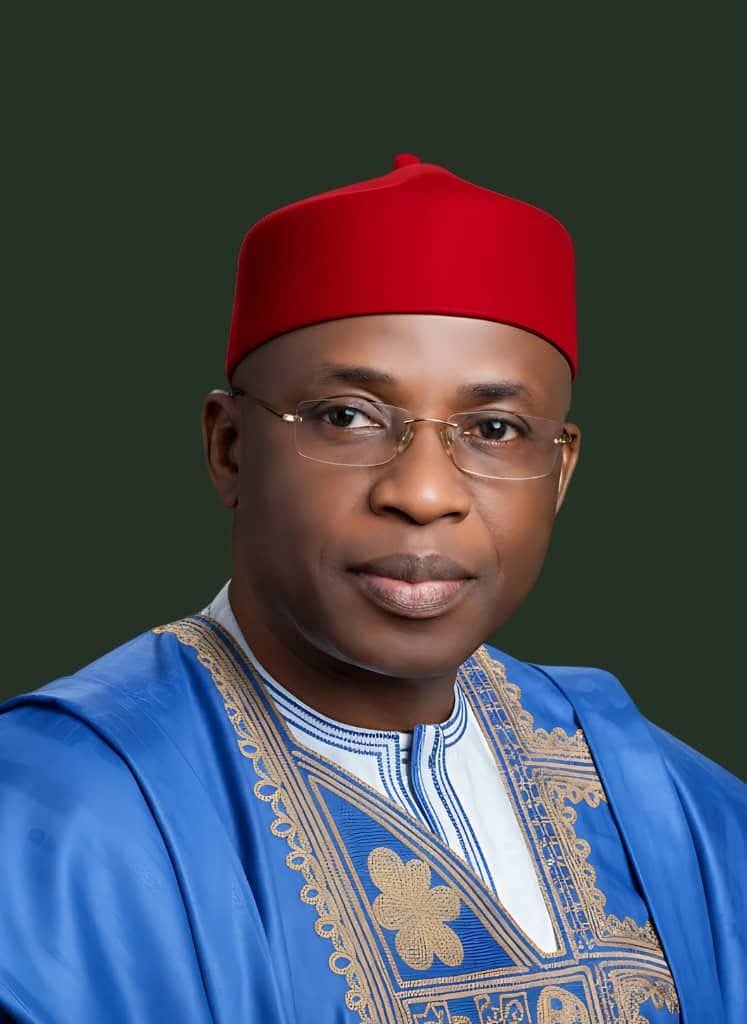
As political activities gradually gather momentum ahead of another electoral cycle in Imo State, the development record of former governor, Chief Ikedi Godson Ohakim, has again come under public scrutiny, with supporters arguing that his administration offers a template for the state’s future growth.

The renewed conversation, which coincides with Ohakim’s 69th birthday on August 4, has seen fresh comparisons between his governance approach and the development model that transformed Singapore from a resource-poor city-state into one of the world’s most prosperous economies.

Supporters say that between 2007 and 2011, Ohakim pursued a governance philosophy built on infrastructure expansion, youth employment, fiscal discipline, decentralised administration and environmental renewal, insisting that the policies produced measurable results that have remained reference points in the state’s political discourse.

During the period, about 450 kilometres of roads were constructed or rehabilitated, including major sections of the Owerri-Orlu-Okigwe road corridor, through the Imo Road Maintenance Agency, IROMA.

The agency, according to records from the administration, directly employed more than 30,000 workers while decentralising road maintenance across communities instead of concentrating the responsibility in government ministries.

Supporters also point to the administration’s policy of awarding contracts largely to indigenous contractors and community-based firms, arguing that the approach kept resources circulating within the state and strengthened local technical capacity.

Employment was another major focus of the administration, with about 10,000 graduates recruited into the state civil service in 2008 and another 5,000 teachers employed.

The government also revived more than 1,300 water schemes across the state and restored the Imo Water Corporation to operational status as part of efforts to improve access to potable water.

Environmental management featured prominently through the Clean and Green Imo initiative, which combined sanitation exercises, tree planting and urban renewal. Owerri was during the period widely regarded as one of Nigeria’s cleanest cities.

The administration equally introduced monthly town hall meetings across the state, a policy supporters say deepened citizens’ participation in governance by providing direct access to government officials.

On the financial front, the administration raised N18.5 billion through the bond market to fund infrastructure projects and reportedly left office with state reserves of N46.6 billion, a development supporters describe as evidence of prudent fiscal management.

Agriculture and rural development also formed part of the administration’s economic agenda, with investments designed to spread development beyond the state capital.

Although opinions remain divided over aspects of the administration, political observers acknowledge that Ohakim’s tenure continues to feature prominently in discussions on governance and development in Imo State.

His administration ended after the 2011 governorship election, while he returned to contest the office again in 2019. Since then, he has continued to advocate a governance model anchored on continuity, local content, youth empowerment, agricultural development and environmental sustainability.

With another election cycle approaching, renewed attention to Ohakim’s record has once again shifted public debate from campaign promises to questions about whether Imo should revive an earlier development trajectory or pursue a different path.

August 4, 2026 0 comments
0 FacebookTwitterPinterestThreadsBlueskyEmail
Headlines

Nigeria not short of gas but short of will to capture it — Energy expert

by Folarin Kehinde August 3, 2026
written by Folarin Kehinde

Nigeria is not suffering from a shortage of natural gas but from an inability to harness the enormous volumes currently wasted through routine gas flaring, Managing Director of Excella-U Energy Limited, Engr. Oseagah Solomon, has said.

Speaking against the backdrop of rising electricity shortages, increasing cooking gas prices and mounting environmental concerns, Solomon described the continued flaring of associated gas as one of the country’s biggest economic contradictions.

“We are burning away resources that should be lighting homes, powering businesses and earning foreign exchange,” he said.

His remarks come as analysis of data from the National Oil Spill Detection and Response Agency (NOSDRA) Gas Flare Tracker indicates that Nigeria lost an estimated US$5.5 billion (about ₦8.7 trillion) worth of natural gas to routine gas flaring between 2021 and 2025.

Industry experts, however, argue that the actual economic cost extends far beyond the commodity value of the gas burned.

According to Mahmoud Ibrahim Mahmoud, a postdoctoral researcher and environmental scientist with NOSDRA, the broader national losses from methane waste—including unrealised electricity generation, liquefied petroleum gas (LPG), fertilizer and petrochemical production, export earnings, taxes, royalties and carbon market opportunities—could amount to between US$18 million and US$28 million every day.

Under favourable carbon market conditions, he estimated that Nigeria’s unrealised opportunity could exceed US$30 million daily, translating to between US$7 billion and US$12 billion annually.

Gas capable of transforming power sector

Oseagah said the gas currently wasted every year could significantly improve Nigeria’s energy security if properly captured and commercialised.

According to him, gas presently flared across the country has the capacity to generate more than 32 gigawatts of electricity, while also supporting domestic LPG supply, fertilizer production and petrochemical industries.

“Nigeria is blessed with abundant gas resources. The challenge is not availability but creating the right environment to recover and utilise them instead of allowing them to go up in flames,” he said.

Nigeria possesses more than 215 trillion cubic feet of proven natural gas reserves, making it one of Africa’s largest gas producers.

Despite this, routine gas flaring remains common across oil-producing fields.

NOSDRA’s 2025 Gas Flare Report shows operators flared about 323 billion standard cubic feet of gas during the year.

The agency estimates that the wasted gas was worth approximately US$1.1 billion (₦1.49 trillion), emitted about 17.2 million tonnes of carbon dioxide, and could have generated over 32,300 gigawatt-hours of electricity if utilised.

Similarly, figures released by the Nigerian Upstream Petroleum Regulatory Commission (NUPRC) indicate that nearly 204 billion standard cubic feet of gas was flared in 2025 despite overall gas utilisation exceeding 92 per cent.

Investment barriers slowing gas recovery

While describing gas recovery as economically viable, Oseagah noted that financing challenges, inadequate infrastructure and inconsistent implementation of existing gas commercialisation programmes continue to discourage investment.

According to him, investors require clear regulatory frameworks, policy stability and stronger government support before committing capital to gas capture projects.

He stressed that greater certainty around fiscal policies and infrastructure development would encourage private investment capable of reducing gas flaring while expanding domestic energy supply.

Independent petroleum marketer, Chief Ajiboye Adebowale Moses, shared similar views, noting that every unit of methane wasted represents lost economic value.

“If captured instead of burned, methane can support electricity generation, cooking gas, fertilizer production and industrial development,” he said.


He added that wider domestic utilisation of natural gas would help lower LPG prices, improve electricity supply and stimulate industrial growth.


Experts quantify wider losses

Beyond the direct value of gas burned, Mahmoud said Nigeria loses opportunities across multiple sectors whenever methane is flared or vented.

According to him, captured gas could fuel power plants, increase household access to cooking gas, supply fertilizer and petrochemical industries, generate export revenue through liquefied natural gas (LNG), strengthen government revenues through taxes and royalties, and earn carbon credits under international climate markets.

“The true national loss is substantially larger than the commodity value shown on the Gas Flare Tracker because methane that is flared or vented could otherwise generate electricity, supply households with LPG, support fertilizer and petrochemical industries, earn export revenue and generate taxes and royalties,” he said.

Communities demand greater benefits

Oil-producing communities continue to bear the environmental consequences of decades of gas flaring.

Chairman of the Council of Chiefs of Lasukugbene Community in Bayelsa State, Chief Zion D. Kientei, said communities located close to flare sites have experienced declining crop yields, disappearing fish species and worsening health conditions.

“Our flare stack is less than 200 metres from the community. It has altered our ecosystem. The fish species we grew up seeing have disappeared. Crop yields have reduced drastically,” he said.

He urged government and operators to accelerate gas capture projects and prioritise host communities for electricity supply and economic development.

According to him, improved electricity access would stimulate small businesses, create employment and reduce youth unemployment across the Niger Delta.

Stronger enforcement needed

Environmental advocates also called for stricter enforcement of existing regulations.

Executive Director of the Renevlyn Development Initiative (RDI), Philip Jakpor, said methane emissions are frequently accompanied by hazardous pollutants that threaten public health and agricultural livelihoods.

He argued that while Nigeria has introduced regulations aimed at reducing methane emissions and gas flaring, implementation remains weak.

Jakpor advocated greater use of satellite monitoring, independent emissions tracking and transparent reporting to improve accountability.

Meanwhile, Mahmoud recommended integrating satellite observations with drones, airborne sensors and ground-based monitoring systems to improve methane detection and strengthen regulatory oversight.

He also called for expansion of digital platforms such as the Nigerian Gas Flare Tracker and the proposed Nigerian Methane Emissions Tracker.

Stakeholders agree that Nigeria possesses both the natural gas resources and the technology required to significantly reduce flaring.

However, they maintain that stronger policy implementation, investment and regulatory enforcement will determine whether the country succeeds in converting billions of dollars currently lost through gas flaring into electricity, cleaner cooking fuel, industrial development and economic growth.

August 3, 2026 0 comments
0 FacebookTwitterPinterestThreadsBlueskyEmail
Opinion

WHY NIGERIA’S DIGITAL IDENTITY DRIVE NEEDS THE CENSUS

by Folarin Kehinde August 3, 2026
written by Folarin Kehinde

By Stanley Nwosu

When President Bola Ahmed Tinubu recently directed the National Identity Management Commission (NIMC) to ensure that every Nigerian citizen is enrolled and issued a National Identification Number (NIN) by the end of 2026, it was more than a policy instruction. It was a national call to action, one that speaks to the future of governance, planning, inclusion, security, and development.

The directive, strengthened by the signing of the NIMC Act 2026, sets Nigeria on a path toward universal digital identity coverage. It is an ambitious goal, but also a necessary one in a country where identity remains the gateway to nearly every formal system: banking, healthcare, social protection, education, taxation, voting, and public service delivery.

So far, NIMC has registered more than 137.37 million Nigerians in its database. That is no small feat. It represents one of the most significant identity-enrollment efforts in Africa, and a laudable step toward building a country where every citizen can be seen, counted, and served.

But here lies the critical question: How do we know when everyone has truly been captured if we do not know exactly how many people we are?

That is where the Population and Housing Census comes in.

Without current and reliable population data, no national identity programme can confidently claim full coverage. The absence of up-to-date census figures makes it difficult to determine the true size of the population, measure the actual percentage of Nigerians enrolled, or identify the gaps that still exist. In practical terms, it means the country may be moving forward in the dark, working hard, but without a complete map.

The National Population Commission has projected Nigeria’s population to be over 238 million. While such projections are useful for planning, they remain estimates. They cannot replace the precision, depth, and authority of a properly conducted Population and Housing Census. A census does not merely count people; it provides the foundation upon which national decisions are made. It tells the government who lives where, how communities are changing, what services are needed, and where to direct resources.

This is why the next Population and Housing Census is no longer just desirable. It is urgent.

Nigeria cannot plan effectively without knowing itself. A country of this size and complexity cannot afford to rely indefinitely on projections when the demands of development require certainty. Whether the issue is identity management, infrastructure, schools, hospitals, electoral planning, social intervention, or security, the census remains the backbone of evidence-based governance.

For NIMC, the relationship is especially direct. The push to issue NINs to all Nigerians is deeply connected to the census exercise. The two are not competing national priorities; they are complementary ones. Census data gives the country a reliable denominator, the total number of people to be accounted for, while digital identity provides the unique personal record that allows government systems to function efficiently and inclusively.

It is important and relevant to note that the upcoming Population and Housing Census will be biometric based, and there is a plan to use the exercise to identify Nigerians without NIN and enroll them.

That is why NIMC and the National Population Commission must work hand in hand. The success of one strengthens the success of the other. A credible census will help Nigeria measure identity coverage accurately as well as help NIMC enroll the remaining citizens. A robust identity system, in turn, will help support planning, targeting, and service delivery after the census.

At the heart of both efforts is a simple idea that a nation cannot manage what it cannot count, and it cannot fully serve those it has not identified.

Digital identity is no longer a technical issue alone. It is a development issue. It determines access, inclusion, accountability, and state capacity. But digital identity must rest on a sound demographic foundation. That foundation is the census.

If Nigeria must truly achieve universal NIN coverage by the end of 2026 (although the deadline is not feasible), then it must also accelerate the process of counting its people. The road to a complete digital identity system runs through the census. One cannot be fully accomplished without the other.

In the end, the story is not simply about numbers. It is about visibility. It is about ensuring that every Nigerian exists not just in memory or projection, but in the data that drives national progress.


—Stanley Onyeka Nwosu, mnipr, a Communication Strategist, Political Economist, and Development Expert, is the Special Adviser on Media to the Honourable Chairman of the National Population Commission.

August 3, 2026 0 comments
0 FacebookTwitterPinterestThreadsBlueskyEmail
Politics

2027: I’ll restore fuel subsidy, return petrol price to N299 per litre — AA presidential aspirant, Fadunri

by Folarin Kehinde August 1, 2026
written by Folarin Kehinde

Presidential aspirant of the Action Alliance for the 2027 general election, Joseph Fadunri, has promised to restore fuel subsidy and reduce the pump price of petrol to N299 per litre if elected president.

Fadunri, who contested the Labour Party presidential ticket in 2023 before stepping down for Peter Obi, said the removal of fuel subsidy had worsened the country’s economic situation without delivering tangible benefits to Nigerians.

Speaking during an interview, the US-based registered nurse argued that the savings from subsidy removal had not translated into improved living standards, insisting that the policy should not have been implemented before Nigeria’s refineries became fully operational.

“The first thing I will do is return the subsidy that was removed so that fuel can go back to N299 per litre. Once we do that, Nigerians will begin to see the economy recover within the first six months,” he said.

According to him, the long-term solution to fuel subsidy lies in fixing Nigeria’s refineries rather than relying on imported refined petroleum products.

“The day we repair our refineries is the day subsidy naturally disappears because we will no longer have to export crude oil and import refined products,” he added.

The presidential hopeful also pledged to halt government-funded foreign medical trips for public officials, saying the resources should instead be invested in developing Nigeria’s healthcare system.

He said strengthening local hospitals would not only improve healthcare delivery but also create employment opportunities for medical professionals and other workers.

On industrialisation, Fadunri said his administration would encourage local automobile manufacturing by making Nigerian-assembled vehicles the official vehicles for government use while requiring foreign automobile manufacturers to establish assembly plants in the country.

He also promised to make education both free and compulsory up to the age of 18, arguing that investing in education would help reduce insecurity by preventing young people from being recruited into criminal activities.

On security, Fadunri said his administration would improve the welfare of military personnel, provide modern equipment and restructure the security architecture to effectively tackle insurgency and other security challenges.

Speaking on corruption, he vowed to enforce strict accountability in government, saying officials found guilty of embezzling public funds under his administration would face severe punishment.

Reflecting on the 2023 election, Fadunri said he had no regrets stepping down for Labour Party presidential candidate Peter Obi despite claiming that agreements reached between them were not fulfilled.

“I wasn’t desperate for power. I believed that if Peter Obi could move Nigeria forward, he should contest. Even though many of our agreements were not honoured, I chose to put Nigeria first,” he said.

He added that his experience since the 2023 election had reinforced his conviction that Nigeria needed a generational shift in leadership.

According to him, older politicians had dominated governance for decades without addressing the country’s challenges.

“They have tried their best, but their best is not enough. It is time for younger Nigerians to take over and build a new Nigeria,” he said.

August 1, 2026 0 comments
0 FacebookTwitterPinterestThreadsBlueskyEmail
Headlines

#FixPolitics demands probe, accountability in ‘fake agency’ scandal

by Folarin Kehinde July 23, 2026
written by Folarin Kehinde

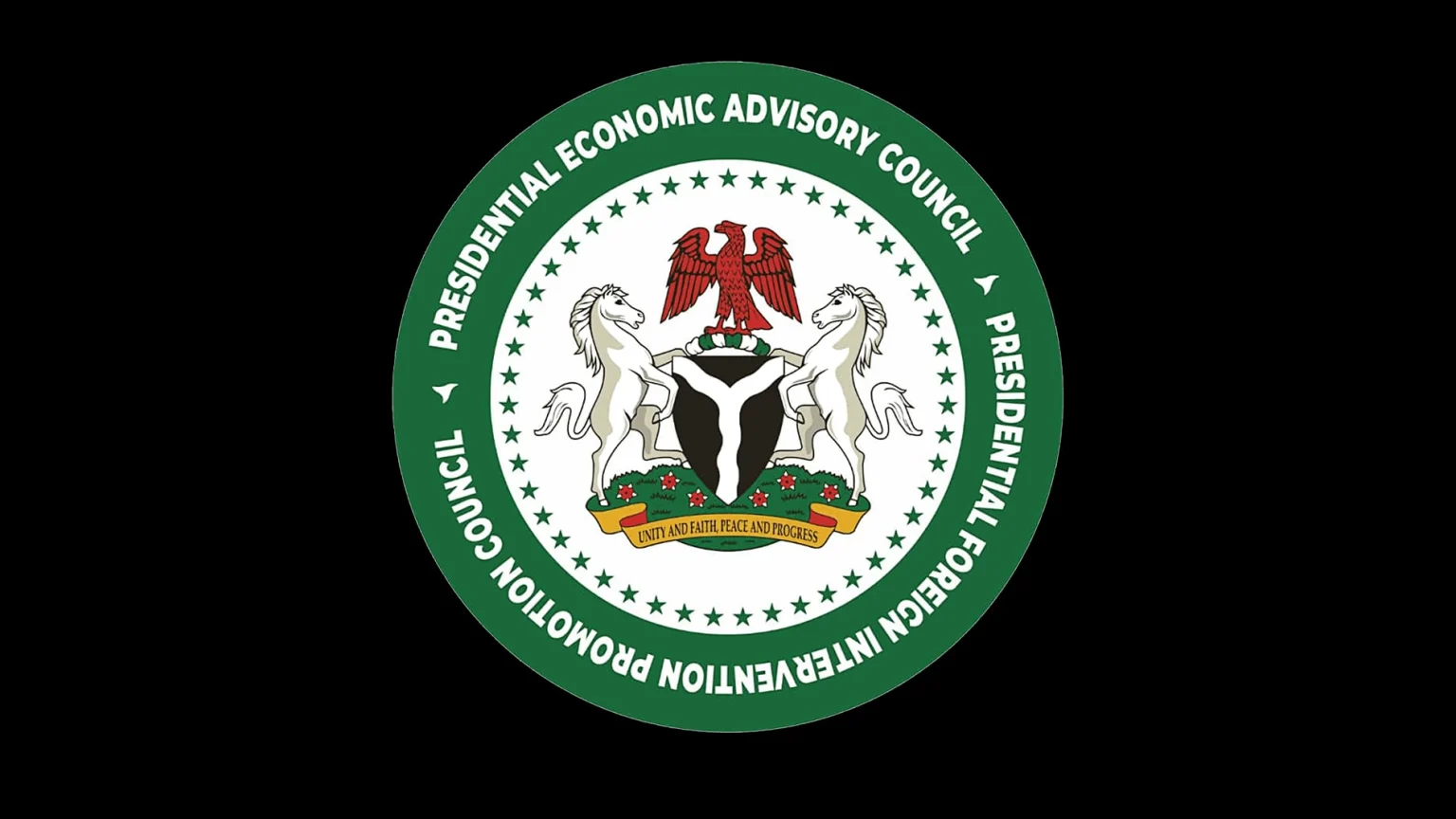
In the spirit of accountability, #FixPolitics Initiative has called on the Federal Government to fully disclose what it knows about the scandalous Presidential Foreign Intervention Promotion Council (PFIPC), which the Presidency has declared a fictitious government agency.

Executive Director, #FixPolitics Africa, Anthony Ubani, in a statement, urged the government to, among other things, establish and publish a single, authoritative digital register of all federal Ministries, Departments and Agencies (MDAs), as well as councils and presidential bodies to ensure accountability.

According to information already in the public domain, the organisation operated from an office within the Federal Secretariat, received a federal budget code and self-accounting status, secured accounts with the Central Bank of Nigeria (CBN), recruited personnel, corresponded with government institutions and interacted with senior public officials.

Most troubling is that approximately N1.3bn was allocated to it in the 2026 Appropriation Act, despite the absence of any law or valid executive instrument establishing the organisation.

The Presidency alleges that Mr Adeniyi Adeyemi forged official documents, impersonated a government appointee and misled several public institutions, allegations the suspect denied while making serious accusations against senior government officials.

According to #FixPolitics, these competing claims are now the subject of criminal proceedings and official investigations.

The statement reads, “All parties must therefore be presumed innocent until proven otherwise, and every allegation must be tested through an independent and transparent process, including our courts.

“However, the prosecution of one individual cannot answer the larger institutional questions raised by this scandal.”

A fictitious agency, the initiative noted, does not allocate office space to itself. “It does not issue itself a budget code, grant itself self-accounting status, open government bank accounts, obtain an official government domain, receive personnel or insert itself into a national budget. Each of these steps required an official decision, signature, verification, approval or failure to act.”

This, according to the group, therefore, is not merely an alleged case of impersonation; it represents a serious breakdown in governmental coordination, record-keeping, financial controls, budget scrutiny, institutional competence and public accountability.

“It is particularly alarming that questions about the organisation’s legitimacy had reportedly arisen by October 2025, leading to Adeyemi’s arrest and the filing of criminal charges in November 2025, yet the disputed entity subsequently appeared in the 2026 Appropriation Act. Nigerians deserve to know who submitted the budget request, who reviewed it, who approved it and why existing government records and warnings failed to prevent its inclusion,” #FixPolitics asserted, while welcoming President Bola Tinubu’s directive for the ICPC to investigate the matter within 30 days.

It also hailed the House of Representatives’ decision to investigate the budgetary and administrative failures involved. “These investigations must not become closed-door exercises whose findings are quietly submitted, buried or selectively released.

#FixPolitics also demanded, “All physical and electronic records connected to PFIPC must be secured against deletion, alteration, destruction, backdating or disappearance. This must include official correspondence, emails, file-movement registers, budget submissions, approval memoranda, meeting records, visitor logs, building-access records, domain-registration records, personnel deployment documents, bank-account applications, Know Your Customer (KYC) documentation, payment instructions and relevant telephone and digital communication records obtained in accordance with the law.

“Nigerians should be told which officials and institutions processed the requests for office space, budget codes, self-accounting status, bank accounts, personnel, government domain registration and budgetary allocation. The names and official designations of the approving authorities, together with the documents upon which they relied, should form part of the public investigation report.”

Nigerians, the initiative emphasised, are entitled to the full truth: who approved what, on the strength of which documents, at what time, and with what consequences.

“There must be no scapegoats, no sacred cows and no cover-up. Anyone found to have acted negligently, fraudulently or in collusion with others must be held accountable, regardless of rank or political affiliation.

“Public institutions exist on the strength of citizens’ trust. That trust can only be rebuilt through truth, transparency, institutional reform and consequences,” it added.

July 23, 2026 0 comments
0 FacebookTwitterPinterestThreadsBlueskyEmail
Headlines

PFIPC scandal: ‘Fake’ DG deceived me with Presidency letterhead — Kalu

by Folarin Kehinde July 8, 2026
written by Folarin Kehinde

The Deputy Speaker of the House of Representatives, Benjamin Kalu, has narrated how he unknowingly met with the Director-General of the fictitious Presidential Foreign Intervention Promotion Council, Adeniyi Adeyemi.

The Abia State-born politician stated that he met with Adeyemi in his office after receiving what appeared to be an official letter bearing the Presidency’s insignia.

Speaking during Wednesday’s plenary in support of a motion seeking an investigation into the activities of the alleged council, Kalu said he was among those deceived by the group’s claims of legitimacy.

“I rise this morning to support the motion that has been properly moved by my friend and brother from Plateau State. It is quite embarrassing that people have the kind of boldness exhibited, moving around with what is not in existence, carrying themselves as if they are a legal entity,” he said.

Kalu disclosed that his office received a letter dated May 2, 2025, on a letterhead bearing the Presidency and identifying the sender as the Director-General of both the Presidential Economic Advisory Council and the Presidential Foreign Intervention Promotion Council.

“On the 2nd of May, 2025, my office got a letter. That letter had the Presidency on top of the letterhead. It had the Office of the Director General, the Presidential Economic Advisory Council and the Presidential Foreign Intervention Promotion Council. Two councils under one DG,” he said.

According to him, although some aspects of the letter raised doubts, it contained what appeared to be authentic details, including an address at the Federal Secretariat Complex and a government website.

July 8, 2026 0 comments
0 FacebookTwitterPinterestThreadsBlueskyEmail
Central Bank of Nigeria
Business

CBN Threatens Sanctions Against Businesses Rejecting Standard ₦100 Notes

by Folarin Kehinde July 8, 2026
written by Folarin Kehinde

The Central Bank of Nigeria (CBN) has warned individuals, businesses, financial institutions, and other economic agents rejecting the standard ₦100 banknote that they risk enforcement action.

The apex bank said it would not hesitate to apply appropriate measures against any person or organisation found violating provisions of the CBN Act by refusing to accept the currency.

The warning followed reports that some members of the public and businesses had declined the standard ₦100 note over doubts about its validity as legal tender.

In a statement, the CBN clarified that both the commemorative ₦100 banknote and the standard ₦100 banknote remain valid legal tender and must be accepted for all transactions nationwide.

The bank explained that the commemorative ₦100 note, introduced in 2014 to mark Nigeria’s centenary celebration, did not replace the existing standard ₦100 note.

The CBN urged Nigerians to disregard claims suggesting that the standard ₦100 banknote was no longer acceptable, stressing that all duly issued banknotes remain valid until officially withdrawn.

“Such rejection constitutes a violation of the provisions of the CBN Act and undermines confidence in the national currency,” the statement read.

The apex bank added that it remained committed to protecting the integrity of the naira, ensuring confidence in all legally issued banknotes, and promoting smooth currency circulation across the country.

It advised members of the public seeking further clarification to contact the CBN through its official communication channels.

July 8, 2026 0 comments
0 FacebookTwitterPinterestThreadsBlueskyEmail
Headlines

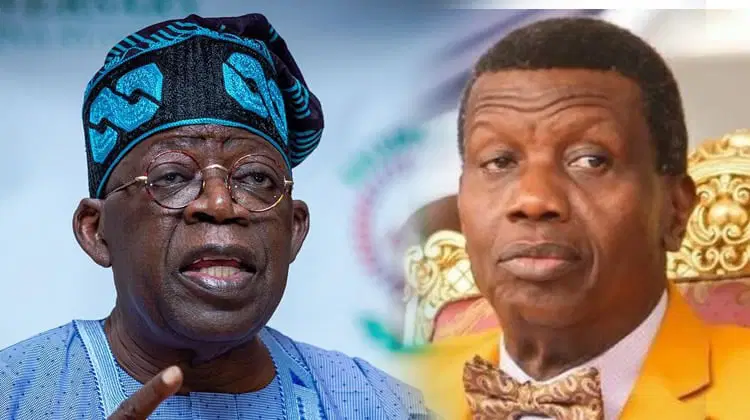
Insecurity: ‘He’s done his bit,’ Adeboye defends Tinubu

by Folarin Kehinde June 29, 2026
written by Folarin Kehinde

The General Overseer of the Redeemed Christian Church of God (RCCG), Pastor Enoch Adeboye, has defended President Bola Tinubu against criticism over worsening insecurity, saying the president has fulfilled his responsibility by issuing directives to the military.

Speaking at the US-Nigeria Faith Heroes Award Gala organised by the Save Nigeria Group in Washington on June 23, Adeboye said those blaming Tinubu for the country’s security challenges were unfair in their assessment of the president’s role as commander-in-chief.

“I need to make this one clear: I don’t support those who are accusing the president of not doing enough. When the commander-in-chief has given instructions to his subordinates, he has done his bit. You don’t expect him to go and put on khaki and (fight),” Adeboye said.

Drawing a comparison with the United States, he added: “When my friend Trump gives instructions to go and bomb anywhere, he doesn’t leave the White House. He has done his bit. ‘I hereby command, bomb Iran’, and then he goes to his bedroom and sleeps. The rest is left to the supporters.”

Despite defending the president, Adeboye acknowledged that insecurity had deteriorated and spread to parts of southern Nigeria.

“Things have gone far, far worse than before the bomb came,” he said, referring to the US bombing of Islamist terrorists last December.

“Far, far worse… so bad that they are asking: ‘Where is your God?’ That is how bad it is. The terrorism, kidnapping, and so on that were in the north are now even at my doorstep. They have come all the way down to the south. And, of course, the sponsors — they are all known, and they are still moving about freely.”

The cleric disclosed that he had discussed the country’s security situation with President Tinubu and the First Lady, Senator Oluremi Tinubu, urging the president to issue a firm directive to the nation’s security chiefs.

According to him, he advised the president to give military commanders a 90-day ultimatum to eliminate terrorism or resign.

“I told him to tell all the military boys, all the army, navy and air force: ‘You have 90 days. Wipe out this rubbish or resign.’ And then take care of the supporters, the sponsors,” he said.

Adeboye described the sponsors of terrorism as influential and wealthy individuals, including politicians and businesspeople, insisting that tackling them was crucial to ending the violence.

“You know them,” he said.

“Some of them are businessmen. Some of them are politicians. Go after them. Because if you do not deal with those who are supplying these people with arms and ammunition — and most of the time, when they go about, they go about on motorcycles — if we don’t go after the sponsors, the problem will continue.”

He also called on the United States to collaborate with other countries in supporting Nigeria’s efforts to combat terrorism.


June 29, 2026 0 comments
0 FacebookTwitterPinterestThreadsBlueskyEmail
Business

US cooling firm enters Nigeria, targets $2.5bn AC market

by Folarin Kehinde June 25, 2026
written by Folarin Kehinde

A United States-based cooling solutions manufacturer, Unico Incorporated, has officially entered the Nigerian market, citing the country’s growing construction sector and rising demand for air conditioning systems as major factors behind the move.

Speaking at the launch of Unico Cooling Systems in Abuja on Thursday, the Owner and Director of Unico System, Scott Intagliata, said Nigeria presents significant opportunities for the company due to its rapidly expanding air conditioning market.

“We think Nigeria is a great market for us. It is one of the fastest-growing construction markets in the world and one of the fastest-growing air conditioning markets globally,” Intagliata said.

According to him, air conditioning products worth about $2.5bn are expected to be sold in Nigeria within the next year.

The company manufactures small-duct, high-velocity central cooling systems, which Intagliata said offer advantages over conventional split air conditioners widely used in the country.

“Our product replaces traditional wall-mounted units with a central system that delivers conditioned air through small outlets. It is quieter, more energy-efficient, removes more moisture from the air, and provides greater comfort in humid environments,” he said.

He added that the system records less than two per cent thermal loss compared to conventional ducted systems, which can lose between 10 and 20 per cent of cooled air.

On affordability, Intagliata said the company had conducted extensive market analysis and would offer its products at prices comparable to existing premium brands in Nigeria.

“We are prepared to bring our products into the market at a price comparable to what other leading brands are offering,” he stated.

He also said the company was establishing a warehouse in Lagos to support operations, with two containers of equipment expected to arrive from the United States in the coming months.

Speaking at the event, the Business Development Manager of WorldProNet Nigeria, Florence Osuji, described the Unico cooling system as durable and energy-efficient.

She said the company was seeking distributors, marketers and promoters to support the expansion of the product across Nigeria.

“We need distribution channels for this product and are inviting interested partners to work with us,” Osuji said.

Also speaking, the Country Manager for Western Africa, Ikechukwu Nkpozi, said Nigeria would serve as the company’s gateway into the African market.

He disclosed that distributors had already been engaged in Lagos and Abuja, while efforts were ongoing to recruit additional partners.

“Unico has been in business for over 30 years in the United States, and many of its installations are still functioning today. We are bringing that same quality and durability to Nigeria,” Nkpozi said.

He added that although the brand is considered a premium product globally, the company had adjusted its pricing strategy to align with prevailing market realities in Nigeria.

“We have done our price analysis and will match prices with comparable brands already operating in the market to ensure seamless penetration,” he said.

The company said it plans to expand from Nigeria into other African countries as part of its broader growth strategy for the continent.


June 25, 2026 0 comments
0 FacebookTwitterPinterestThreadsBlueskyEmail
Headlines

Government Policies Driving Indigenous Growth in Mining Sector, Says Steron Mining CEO

by Folarin Kehinde June 24, 2026
written by Folarin Kehinde

The Managing Director and Chief Executive Officer of Steron Mining and Company Limited, Abu Omar, has credited recent government policies promoting local participation in Nigeria’s mining sector for the emergence and growth of indigenous mining operations across the country.

Speaking during a site visit by participants of the African Natural Resources and Energy Investment Summit (AFNIS) to the company’s lithium mining project in Abuja on Tuesday, Omar said deliberate government efforts to prioritise Nigerian operators had created opportunities for local companies to thrive in the industry.

“The government of today has dedicated time and effort to ensuring that local participation is prioritised. That has led to the birth of operations like this,” Omar said.

According to him, the policies have not only empowered indigenous investors but have also attracted foreign interest into Nigeria’s mining sector, creating a more competitive and investment-friendly environment.

“These policies have also welcomed foreigners, which is what AFNIS is showcasing,” he added.

Omar said the visit by delegates from across Africa was organised to demonstrate the capacity of local companies to successfully operate large-scale mining projects and contribute to the development of critical minerals needed for the global energy transition.

“We are honoured to host AFNIS and the African mining community to an excursion, showcasing what it looks like for a local Nigerian to run a mining operation like this,” he said.

He explained that visitors were taken through the full mining value chain, including exploration, drilling, blasting and production activities at the site.

Omar noted that beyond extraction, the company focuses on value addition by processing lithium ore locally to improve its quality before export, a move he said aligns with government efforts to increase local beneficiation and maximise economic value from Nigeria’s mineral resources.

He also highlighted the company’s commitment to maintaining strong relationships with host communities through initiatives aimed at improving safety and welfare.

Also speaking, the company’s geologist, Bello Damulak, said exploration and core drilling activities had revealed an estimated 94.8 million metric tonnes of mineral resources at the site.

“So far, our exploration work has given us an estimated mineral resource of 94.8 million metric tonnes of all minerals, including granite. The lithium reserve is estimated at 3.3 million metric tonnes, while granitic rock accounts for 91.4 million metric tonnes,” he said.

Damulak added that the estimates were derived from detailed exploration activities and would guide future mining operations at the site.

The AFNIS visit formed part of efforts to showcase investment opportunities in Nigeria’s mining sector and demonstrate the growing role of indigenous operators in developing the country’s vast mineral resources.

June 24, 2026 0 comments
0 FacebookTwitterPinterestThreadsBlueskyEmail
Newer Posts
Older Posts

Recent Posts

  • Nigerians Raise Concern Over Rising Mob Justice

    August 10, 2026
  • Atiku Abubakar Raises Alarm over Suspicious Deposit to his Account

    August 7, 2026
  • Nigerian Author Loses $2 Million Book Deal Over AI Plagiarism

    August 7, 2026
  • Onaiyekan to Tinubu: Catholic Bishops Have Said Enough, Govern Better

    August 4, 2026
  • Ohakim’s record returns to spotlight as Imo debates development model

    August 4, 2026

Usefull Links

  • Contact Page
  • About Leading Reporters
  • Contact Us
  • Headlines
  • Investigation
  • Exclusives
  • Opinion
  • Business
  • Facebook
  • Twitter
  • Instagram
  • Linkedin

@2021 - All Right Reserved. Designed and Developed by PenciDesign


Back To Top
Leading Reporters
  • Featured
  • Politics
  • Opinion
  • Business
  • Entertainment
  • Sports
  • About Us
  • Contact