Leading Reporters
  • Headlines
  • Health
  • Business
  • Exclusives
  • Investigation
  • Entertainment
  • Opinion
Tuesday, August 4, 2026
Hot
Nigeria not short of gas but short of...
How Nigeria’s Mineral Wealth Is Being Handed to...
NAFDAC DG Vows Serious Consequences for Manufacturers Violating...
Peter Obi Reaffirms Commitment to Single Term Governance:...
#FixPolitics demands probe, accountability in ‘fake agency’ scandal
President Tinubu announces 26 new appointments
Annie Idibia Denies Reunion With Ex-Husband 2face, Says...
ICRITR Director, Prof. Ngozi Egbuna, Honoured with Academia...
UNIZIK inaugurates Afreximbank-backed trade research centre to advance...
FG Suspends WASSCE, NECO Fee Hike After Massive...
  • About Leading Reporters
  • Contact Us
Leading Reporters
Advertise With Us
  • Headlines
  • Health
  • Business
  • Exclusives
  • Investigation
  • Entertainment
  • Opinion
Hot
Nigeria not short of gas but short of...
How Nigeria’s Mineral Wealth Is Being Handed to...
NAFDAC DG Vows Serious Consequences for Manufacturers Violating...
Peter Obi Reaffirms Commitment to Single Term Governance:...
#FixPolitics demands probe, accountability in ‘fake agency’ scandal
President Tinubu announces 26 new appointments
Annie Idibia Denies Reunion With Ex-Husband 2face, Says...
ICRITR Director, Prof. Ngozi Egbuna, Honoured with Academia...
UNIZIK inaugurates Afreximbank-backed trade research centre to advance...
FG Suspends WASSCE, NECO Fee Hike After Massive...
Leading Reporters
Leading Reporters
  • Headlines
  • Health
  • Business
  • Exclusives
  • Investigation
  • Entertainment
  • Opinion
Copyright 2024 - All Right Reserved
Home > Opinion
Category:

Opinion

Opinion

WHY NIGERIA’S DIGITAL IDENTITY DRIVE NEEDS THE CENSUS

by Folarin Kehinde August 3, 2026
written by Folarin Kehinde

By Stanley Nwosu

When President Bola Ahmed Tinubu recently directed the National Identity Management Commission (NIMC) to ensure that every Nigerian citizen is enrolled and issued a National Identification Number (NIN) by the end of 2026, it was more than a policy instruction. It was a national call to action, one that speaks to the future of governance, planning, inclusion, security, and development.

The directive, strengthened by the signing of the NIMC Act 2026, sets Nigeria on a path toward universal digital identity coverage. It is an ambitious goal, but also a necessary one in a country where identity remains the gateway to nearly every formal system: banking, healthcare, social protection, education, taxation, voting, and public service delivery.

So far, NIMC has registered more than 137.37 million Nigerians in its database. That is no small feat. It represents one of the most significant identity-enrollment efforts in Africa, and a laudable step toward building a country where every citizen can be seen, counted, and served.

But here lies the critical question: How do we know when everyone has truly been captured if we do not know exactly how many people we are?

That is where the Population and Housing Census comes in.

Without current and reliable population data, no national identity programme can confidently claim full coverage. The absence of up-to-date census figures makes it difficult to determine the true size of the population, measure the actual percentage of Nigerians enrolled, or identify the gaps that still exist. In practical terms, it means the country may be moving forward in the dark, working hard, but without a complete map.

The National Population Commission has projected Nigeria’s population to be over 238 million. While such projections are useful for planning, they remain estimates. They cannot replace the precision, depth, and authority of a properly conducted Population and Housing Census. A census does not merely count people; it provides the foundation upon which national decisions are made. It tells the government who lives where, how communities are changing, what services are needed, and where to direct resources.

This is why the next Population and Housing Census is no longer just desirable. It is urgent.

Nigeria cannot plan effectively without knowing itself. A country of this size and complexity cannot afford to rely indefinitely on projections when the demands of development require certainty. Whether the issue is identity management, infrastructure, schools, hospitals, electoral planning, social intervention, or security, the census remains the backbone of evidence-based governance.

For NIMC, the relationship is especially direct. The push to issue NINs to all Nigerians is deeply connected to the census exercise. The two are not competing national priorities; they are complementary ones. Census data gives the country a reliable denominator, the total number of people to be accounted for, while digital identity provides the unique personal record that allows government systems to function efficiently and inclusively.

It is important and relevant to note that the upcoming Population and Housing Census will be biometric based, and there is a plan to use the exercise to identify Nigerians without NIN and enroll them.

That is why NIMC and the National Population Commission must work hand in hand. The success of one strengthens the success of the other. A credible census will help Nigeria measure identity coverage accurately as well as help NIMC enroll the remaining citizens. A robust identity system, in turn, will help support planning, targeting, and service delivery after the census.

At the heart of both efforts is a simple idea that a nation cannot manage what it cannot count, and it cannot fully serve those it has not identified.

Digital identity is no longer a technical issue alone. It is a development issue. It determines access, inclusion, accountability, and state capacity. But digital identity must rest on a sound demographic foundation. That foundation is the census.

If Nigeria must truly achieve universal NIN coverage by the end of 2026 (although the deadline is not feasible), then it must also accelerate the process of counting its people. The road to a complete digital identity system runs through the census. One cannot be fully accomplished without the other.

In the end, the story is not simply about numbers. It is about visibility. It is about ensuring that every Nigerian exists not just in memory or projection, but in the data that drives national progress.


—Stanley Onyeka Nwosu, mnipr, a Communication Strategist, Political Economist, and Development Expert, is the Special Adviser on Media to the Honourable Chairman of the National Population Commission.

August 3, 2026 0 comments
0 FacebookTwitterPinterestThreadsBlueskyEmail
HeadlinesOpinion

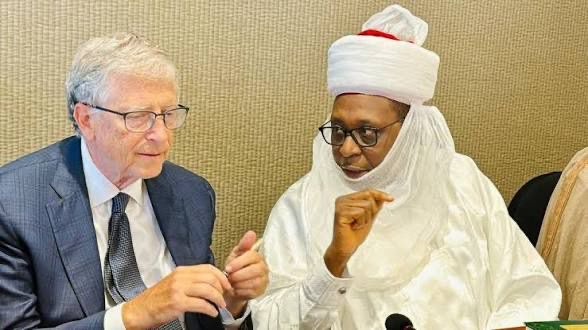
Minister of Health Muhammad Ali Pate and Bill Gates: Their Grand plan to depopulate Nigeria

by Nelson Ugwuagbo June 22, 2026
written by Nelson Ugwuagbo

To understand why Nigeria’s Minister of health Prof Muhammad Ali Pate has an umbilical like linkage to Bill Gates one will have to unravel the motive behind the multimillion dollar support from Gates foundation, the reason may not be far fetched over the years experts have theorized that Gates has been behind harmful medical experimentation around population control in Africa and Nigeria especially. And Pate is his gateway to ensure a massive population control. To stop Nigeria from becoming the third most populous country by 2050. This may sound far fetched to the undiscerning but there’s a precedence to this.

Public skepticism toward foreign-funded medical initiatives in Nigeria cannot be understood without reference to the 1996 Pfizer Trovan trial in Kano. During a meningitis outbreak that claimed thousands of lives, Pfizer tested the experimental antibiotic Trovan on children. Subsequent investigations and legal disputes raised serious concerns regarding informed consent procedures, ethical approvals, and research oversight. The controversy left a lasting impact on public trust and remains one of the most cited examples of ethical failures in medical research conducted in developing countries.

The legacy of the Trovan case continues to shape public perceptions of international health interventions. For many Nigerians, it serves as a reminder of the need for rigorous safeguards whenever foreign-funded research or medical programs involve Nigerian citizens.

Western-sponsored vaccines have thus become tools for population control with Gates Foundation at the forefront. More recently, discussions on social media and other online platforms have revived concerns about transparency, accountability, and oversight in international health collaborations. While various claims and allegations have circulated online, many remain unverified and should be treated with caution unless supported by credible evidence and official investigations.

Nevertheless, the broader questions raised by citizens deserve serious consideration. Nigerians have a legitimate interest in knowing that all medical research, health interventions, and international partnerships affecting their wellbeing are conducted in accordance with the highest ethical standards.

In this regard, health policy experts emphasize the importance of strong regulatory institutions, informed consent procedures, independent ethical review boards, and transparent government oversight. Public confidence in healthcare initiatives depends not only on scientific effectiveness but also on trust, accountability, and respect for human dignity.

A few months ago verified emails, circulated online analyzing and measuring women’s bodies and possible medical imaging. Among these were email exchanges said to be between Epstein and the same Gates, where specifically mentioned Nigeria and their anatomy, in which he was reportedly requested to bring women from Nigeria, with suspicions raised that parts of their bodies might be used for activities linked to potential research that may be contravenes the Nuremberg code of medical research ethics.

For many observers, the debate is ultimately about safeguarding the rights of citizens under principles that have guided medical ethics since the Nuremberg Code. No foreign-funded research involving Nigerians should proceed without fully informed consent, rigorous ethical scrutiny, and transparent government oversight. Anything less risks undermining public trust and repeating mistakes that history has already warned against.

As Nigeria deepens its engagement with global health partners, the challenge is not to reject international cooperation but to ensure that such partnerships operate under robust safeguards that protect the rights and interests of Nigerian citizens. Transparency, public accountability, and ethical compliance must remain at the heart of every health intervention conducted within the country.

Ultimately, the debate reflects a broader global issue: how nations can benefit from international scientific collaboration while maintaining sovereignty, public trust, and rigorous protection of their citizens.

Written by Dr David Ejiofor

June 22, 2026 0 comments
0 FacebookTwitterPinterestThreadsBlueskyEmail
Opinion

Ministers’ Certificate Forgery: A Scandal of Credentials, Cover-Up and Questions Unanswered

by Folarin Kehinde November 11, 2025
written by Folarin Kehinde

In recent weeks, Nigeria has witnessed a troubling sequence of events: two federal ministers from the Bola Tinubu-led administration Uche Nnaji and Olubunmi Tunji‑Ojo have found themselves at the centre of allegations of certificate forgery and irregular credentials.

The way the government has responded (or failed to respond) has raised sharp questions about integrity in public office, accountability and whether the rule of law applies equally to all.

Uche Nnaji

Uche Nnaji served as Minister of Innovation, Science & Technology. He was appointed in August 2023.

Investigative reporting by major media revealed that the University of Nigeria, Nsukka (UNN) could not confirm that Nnaji graduated in July 1985 as he claimed, though his submitted certificate said he did.

Further, the National Youth Service Corps (NYSC) certificate he presented was similarly disputed.

For weeks, the government response was limited — the presidency said it would “act after court verdict.”

On 7 October 2025, President Tinubu accepted Nnaji’s resignation.

Legal commentary suggests that if forgery is proven, Nigerian law provides for serious sanctions — possibly up to life imprisonment in some cases.

Olubunmi Tunji-Ojo

Tunji-Ojo is the Minister of Interior (appointed in Tinubu’s administration).

Allegations emerged challenging the authenticity of his NYSC certificate: the certificate he presented said he completed service November 2019–2020 and was issued in February (later) and signed by a Director-General who only assumed office in January of the same year.

The NYSC, in response to FOI queries, stated the certificate was genuine but acknowledged unusual circumstances: Tunji-Ojo was first mobilised in 2006, “absconded,” then remobilised in 2019, and his certificate was printed in February 2023.

Civil society has called for the government to allow an independent probe by the Department of State Services (DSS) into the minister’s credentials, arguing that failure to investigate would undermine rule of law.

Hannatu Musawa – Minister of Art, Culture & Creative Economy

Hannatu Musawa, the Federal Minister of Art, Culture and Creative Economy in Nigeria, was embroiled in controversy over her National Youth Service Corps (NYSC) certificate and related service status.

In January 2024 the Nigerian Bar Association (NBA), through its Public Interest & Development Law section, filed a suit against Musawa (and a music-promoter, Kenny Ogungbe) alleging their NYSC certificates were null and void and that Musawa had violated the NYSC Act.

The crux: the NYSC Act requires mobilisation for service by certain age thresholds and sets conditions for certificate validity; the plaintiffs argued Musawa, along with Ogungbe, were mobilised beyond age or otherwise outside the law.

In October 2024 Musawa responded publicly, denying wrongdoing, stating that her presence in office “means that I didn’t do anything wrong” and alluding to mis-reporting and misunderstanding of the facts.

What’s the Status of the Case?

The NBA suit, styled FCH/ABJ/05/90/2024, sought a declaration that Musawa was not entitled to hold public office because of alleged NYSC non-compliance.

In April 2024 the Federal High Court in Abuja dismissed the suit on procedural grounds: the claimants lacked legal standing. That means the court did not pronounce on the substance of the certificate/service issue itself.

Musawa remains in her ministerial role despite the controversy.

Why This Matters & The Bigger Picture

Compliance with NYSC service and proper certification is one of the formal eligibility conditions for many public offices in Nigeria. Allegations of falsified or invalid service/certificates strike at the heart of integrity in public appointments.

When a minister is accused of certificate or service irregularities, two major issues arise: (1) the efficacy of the screening and verification mechanism by appointing authorities; (2) the precedent it sets for accountability — are such allegations pursued until resolution, or do they fade away?

In Musawa’s case, while the suit was dismissed on standing (not on merits), the lack of a full public investigation or closing statement leaves questions unanswered. Many observers argue that unresolved credential controversies weaken public trust.

Musawa’s Response & the Government’s Reaction

Musawa publicly insisted on her innocence: “There have been so many different accounts… Social media has just run rife with different accounts.”

The government (through the appointment and retention) appears to have treated the matter as non-terminal: the minister continues to serve.

Critics argue the absence of decisive action — either dismissal, definitive investigation or public disclosure of findings — undermines the message that principle matters regardless of profile.

Key Questions Still Unanswered

Was Musawa’s NYSC mobilisation and certificate issuance lawful under the NYSC Act or not? The court did not adjudicate that.

Did the appointing/confirming agencies (e.g., Senate, DSS, NYSC) conduct full verification before she was appointed? If yes, why did the controversy arise?

If irregularities existed, what sanction or corrective mechanism would apply? And if none, why not?

What does this say about the enforcement of integrity standards for ministerial nominees in Nigeria?

Implications for Nigeria’s Public Service

These kinds of controversies highlight systemic weaknesses in how credentials are vetted and public officials are held accountable.

They also raise the question of whether the law is applied uniformly or whether political factors shield some individuals.

For citizens, unresolved cases like this erode confidence in public institutions and create cynicism about the rule of law and merit in public office.

What This Story Reveals

1. Credential Fraud Undermines Trust

When a public official presents a certificate that turns out to be questionable, it cuts to the heart of trust in governance. The position of a minister is not simply about policy; it symbolises the integrity of the state. The Nnaji case shows what happens when that symbolic trust is fractured.

2. Double Standards & Selective Enforcement

While Nnaji’s case resulted in a resignation, Tunji-Ojo’s matter remains unresolved and the government’s response far more muted. Civil society sees this as symptomatic of selective accountability – high profile flagships sometimes investigated, others allowed to linger.

3. Institutional Weaknesses in Vetting & Verification

Both cases expose weak mechanisms for verifying credentials in public appointments. That a nominee can present a certificate that later turns out to be suspect suggests gaps in screening by the presidency, Senate confirmation committee, NYSC, universities.

4. Legal Framework Exists — but Will It Be Used?

Nigerian law treats certificate forgery very seriously. Premium Times explains that under the Criminal Code or Penal Code, forgery can lead to up to 14 years or even life imprisonment if a seal is involved. Yet so far, no prosecution has been initiated in Nnaji’s case (beyond the resignation) and none has yet in Tunji-Ojo’s.

5. Politics, Reputation & Avoidance of Transparency

In Nnaji’s defence, he claimed the allegations were politically motivated, tied to a governorship ambition in Enugu State. The tone of the government’s engagement has been defensive rather than open. The Tunji-Ojo matter remains opaque.

Why the Government’s Silence over Tunji-Ojo Raises an Alarm

While Nnaji’s case was brought into the open and ended with resignation, Tunji-Ojo’s situation is being treated differently. Key points:

The NYSC’s reply to media queries was not fully explanatory; it admitted odd timing (certificate issued 2023 for service 2019–2020) but offered no full narrative.

The presidency has not announced any investigation or outcome in his case and there has been no public resignation or removal.

Civil society warns that if a minister with unresolved certificate questions remains in office without inquiry, it sends a message that performance takes precedence over integrity — or that certain individuals are above scrutiny.

Given that Nnaji resigned after public pressure and heavy media coverage, treating Tunji-Ojo’s matter differently suggests inconsistency.

The Human & Institutional Cost

For the public, there is a growing cynicism: if senior officials present questionable credentials and nothing happens (or happens only after pressure), citizens may conclude that the system is rigged in favour of the powerful.

For institutions (universities, NYSC, Senate, etc), each unresolved case diminishes their credibility. UNN’s letter to Nnaji that it didn’t issue his claimed certificate is a vivid example.

For good governance advocates, these cases become rallying points: the demand is not just for one person to be held accountable but for the process (vetting, verification, public transparency) to be institutionalised.

What Must Happen Now

1. Independent Investigation: The government should mandate an independent inquiry (possibly via the DSS or ICPC) into the Tunji-Ojo certificate matter — just as was effectively pressured into happening in the Nnaji case.

2. Public Reporting: Findings should be published. When left in limbo, suspicion grows even if one is innocent.

3. Reform Vetting Systems: The Senate confirmation process, presidential screening, institutional verification by agencies like NYSC and universities need to be strengthened and publicly transparent.

4. Clear Consequences: If forgery is proven, appropriate legal action must follow, so that the law does not apply in theory only but in practice.

5. Consistent Standards: The government must apply the same standard to all — regardless of ministerial portfolio, performance or political alignment. Integrity cannot be optional.

The twin cases of Uche Nnaji and Olubunmi Tunji-Ojo expose more than individual mis-deeds: they reveal a systemic problem of credentials and accountability in Nigeria’s public service.

Nnaji’s resignation might indicate progress, but the ambiguity surrounding Tunji-Ojo shows there is still much to do. Until transparency exists and the same rules apply to all, the confidence of citizens in their leaders will remain shaky — and the nation’s promise of ‘renewed hope’ will ring hollow.


November 11, 2025 0 comments
0 FacebookTwitterPinterestThreadsBlueskyEmail
Opinion

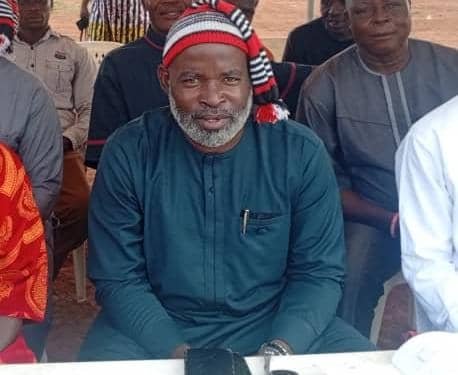
Trump’s Threat on Nigeria is opportunity for President Tinubu to act…

by Folarin Kehinde November 2, 2025
written by Folarin Kehinde

The designation of Nigeria as *a country of special interest* is definitely an embarrassment to the giant of Africa. It also serves as an opportunity for the Tinubu administration to wipe the religious terrorists out of Nigeria so as to save the lives of Nigerians.

Nigeria has had a history of religious violence dating back to the days when people of Igbo extraction were prosecuted and killed in thousands in Northern Nigeria. It is not untrue to say that Christians have suffered genocidal killing in Nigeria, and continues to suffer such killings till date.

The people of the north central Nigeria particularly the people of Benue and Plateau State including the people southern Kaduna have suffered the latest brunt of religious killings by religious terrorists.

It has been a sad and embarrassing ordeal that remains an abatross exacerbated by the inability of the Federal Government of Nigeria to checkmate the killings over the years.

It is on this note that the President of the Federal Government of Nigeria, Bola Ahmed Tinubu is called to step up to the plate and grab the opportunity to eradicate the menace.

President Tinubu should ask the American President, Donald Trump for help towards eradicating the menace.

Too many innocent lives have been lost to marauding bandits and religious terrorists.

Nigeria can be made great again.

Engr Ikenna Ellis-Ezenekwe

President General

Igbo Community Association FCT

November 2, 2025 0 comments
0 FacebookTwitterPinterestThreadsBlueskyEmail
Isreali Ambassador
Opinion

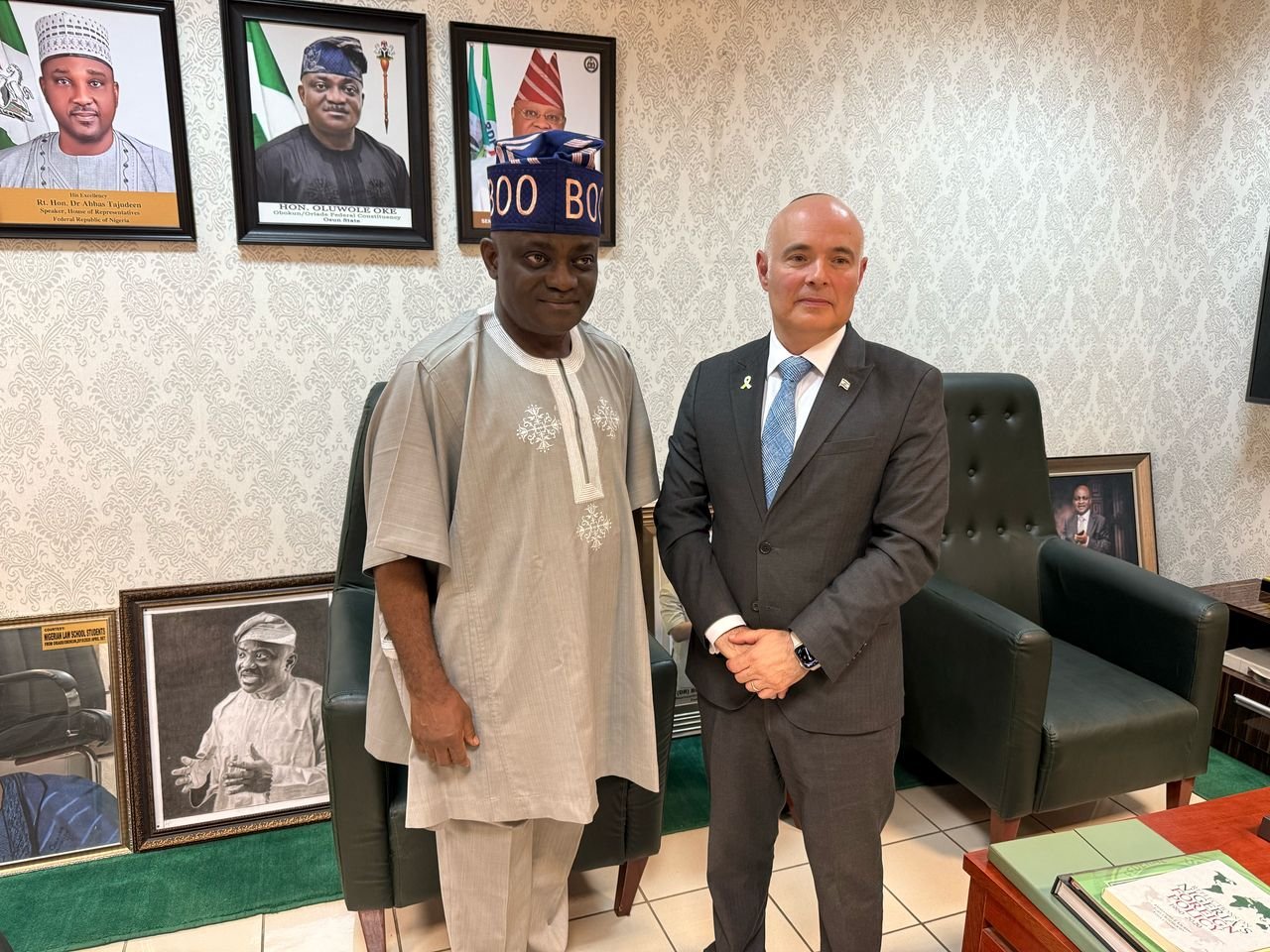
Honorable Wole Oke and the Israeli Lobby: A Question of Loyalty and National Interest

by Nelson Ugwuagbo October 9, 2025
written by Nelson Ugwuagbo

“Loyalty to foreign lobbies is treachery to national interest”

In an era when foreign influence has become the new frontier of modern geopolitics, Nigeria must guard its sovereignty with vigilance.

The quiet infiltration of foreign lobbying and disinformation networks has reached alarming levels globally, and Israel has emerged as one of the most aggressive players in this new information battleground.

Recent reports and observations of Honourable Wole Oke, Chairman of the House Committee on Foreign Affairs, engaging closely with Israeli diplomats, therefore raise troubling questions about where national loyalty begins and where foreign agendas intrude.

Israel’s strategic communications networks have long extended beyond conventional diplomacy. Across Europe, the United States, and Africa, Tel Aviv has invested heavily in influence operations, funding think tanks, online campaigns, and political proxies to push narratives that align with its foreign policy objectives.

From normalization efforts in the Middle East to countering pro-Palestinian solidarity in Africa, Israel has sought to shape political attitudes through selective partnerships, soft diplomacy, and targeted elite engagement.

In this context, any Nigerian public official cultivating unusually close ties with Israeli diplomats must be viewed through the lens of strategic caution.

Nigeria’s foreign policy anchored historically on justice, non-alignment, and African solidarity stands at odds with Israel’s aggressive lobbying strategies, particularly as Gaza continues to bleed and international consensus calls for restraint and accountability.

Hon. Wole Oke’s recent interactions with Israeli officials led my Amb Michael Freeman have not gone unnoticed within diplomatic circles.

While parliamentary diplomacy is legitimate, the perception of alignment with a foreign agenda especially one that conflicts with Nigeria’s official positions at the United Nations and the African Union is deeply problematic.

Nigeria’s position on Palestine has remained consistent since independence: a call for a two-state solution, human rights, and international law.

To be seen “hobnobbing” with Israeli envoys at a time when the world condemns Tel Aviv’s actions risks undermining the integrity of Nigeria’s diplomatic voice and emboldening those who seek to divide African consensus on issues of justice and peace.

Nigeria’s leadership in Africa has always been grounded in principled foreign policy, not transactional alliances. The nation has stood with oppressed peoples from South Africa under apartheid to Palestine under occupation guided by moral consistency rather than short-term gain.

For a senior legislator to lend legitimacy to a foreign power currently accused of human rights violations and information manipulation campaigns is not only tone-deaf; it is contrary to Nigeria’s moral and diplomatic heritage.

source: John Akande (Kali)

October 9, 2025 0 comments
0 FacebookTwitterPinterestThreadsBlueskyEmail
Opinion

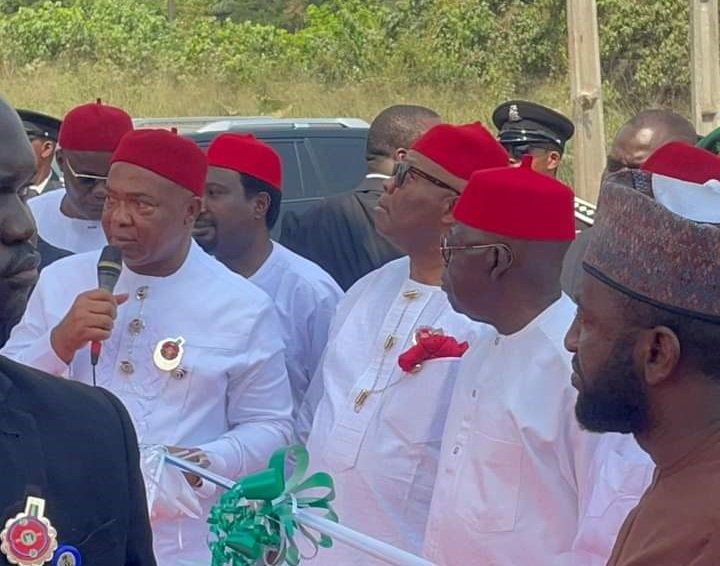
Uzodimma’s Imo Miracle: How Do We Ensure That the Momentum Is Not Lost?

by Folarin Kehinde October 8, 2025
written by Folarin Kehinde


By Oruruo Samuel Okechukwu

Imo State’s transformation under Governor Hope Uzodimma has been nothing short of remarkable. From a state weighed down by insecurity and fiscal distress, it has become a story of renewal and direction.

The recent working visit of President Bola Ahmed Tinubu further affirmed this progress and drew national attention to Imo’s new standing.

Concerns still exist about inclusiveness and whether all communities feel the impact of growth. These concerns, though sometimes overstated, are healthy reminders that development must be sustained, trusted, and evenly distributed.

Under Uzodimma, fiscal stability has taken root. State records show that public debt dropped from ₦259 billion to ₦99 billion, while internally generated revenue rose from about ₦400 million to nearly ₦4 billion.

This fiscal discipline has powered a wave of infrastructure renewal across the state. More than twenty major road projects now link Owerri, Orlu, Okigwe, and the coastal communities. The governor’s “Shared Prosperity” agenda has redefined Imo’s potential. His recognition as both Digital Governor of the Year and Infrastructure Governor of the Year by The Whistler Newspaper in 2025 was no surprise to those following the state’s trajectory.

President Tinubu’s visit to Imo gave these achievements further validation. He commissioned the Assumpta Twin Flyover, the Owerri – Mbaise – Umuahia Federal Road, and the Emmanuel Iwuanyanwu International Conference Centre.

He commended Uzodimma’s commitment to governance and urged Imolites to remain hopeful, stating that their sacrifices were beginning to produce results.

The visit symbolised continuity between state and federal efforts. It also reminded Imolites that progress must be consolidated through capable succession. As Uzodimma’s administration advances, the question grows louder: who can sustain the momentum?

That answer may well lie in Dr Ikedi Ohakim. A former governor with proven experience and a reformist mindset, Ohakim embodies continuity built on institutional memory and tested vision.

The parallels between both men are significant. Uzodimma established the Imo Roads and Bridges Agency, while Ohakim had earlier created the Imo Road Maintenance Agency (IROMA), which generated more than 30,000 jobs and transformed local road maintenance.

Whereas Uzodimma opened the state to investors, Ohakim had set up the Imo State Investment Promotion Agency to lay the groundwork for sustained private sector participation. Their efforts, though years apart, share the same philosophy of structured development.

Ohakim’s financial innovation remains a major reference point. In July 2009, Vanguard Newspaper reported that his administration launched a ₦40 billion infrastructural bond programme, with ₦18.5 billion successfully accessed in the first phase.

The bond funded key projects including the Oguta Wonder Lake Resort, rural water schemes, and road rehabilitation across the state. It was one of Nigeria’s earliest state-level development bonds and reflected financial foresight that remains relevant today.

Job creation was another hallmark. Beyond IROMA’s employment of thousands, Ohakim introduced the 10,000 Graduate Employment Initiative in 2008. Vanguard reported in November 2010 that 10,000 graduates were recruited into the state’s teaching and civil services, while a June 2011 follow-up article detailed how the scheme aimed to absorb young professionals into public service and education.

It was a structured, merit-based intervention that addressed unemployment more systematically than the ad hoc models common at the time.

Environmental renewal became his signature achievement. The Clean and Green Initiative, launched in August 2007 and reported by ModernGhana in May 2009, was implemented through the Environmental Transformation Committee (ENTRACO). It introduced modern waste management systems, tree planting, public sanitation drives, and beautification across Owerri.

By 2010, The Nation and Daily Independent reported that Owerri had been named Nigeria’s cleanest state capital for three consecutive years. The initiative restored civic pride and transformed the state’s image at home and abroad.

Ohakim also invested in long-term human capital projects. The Greater Okigwe Water Scheme, inaugurated by President Umaru Musa Yar’Adua in 2009, solved a long-standing regional challenge.

His establishment of the College of Education at Ihitte/Uboma and the expansion of the Imo State Polytechnic, now part of Imo State University, created pathways for teacher training and technical education.

These legacies continue to serve the state today.

Critics often point to shortcomings in communication during his first tenure, but what distinguishes Ohakim is his response after leaving office. Rather than retreat, he pursued further studies both at home and abroad to refine his understanding of governance.

That humility and commitment to self-improvement shaped a more grounded leader. Few Nigerian politicians have shown a similar readiness to evolve.

Political balance also weighs heavily in Imo’s calculations.

Uzodimma hails from Orlu Zone, which has produced most of the state’s governors since 1999 and has enjoyed more than twenty years in power. Okigwe Zone, from which Ohakim comes, has only completed a single four-year term instead of the eight years typically expected of each zone before power rotates.

This historical imbalance remains a key concern in the quest for justice and equity within the state’s political structure.

The Charter of Equity now points naturally toward Owerri Zone for the next cycle, but Ohakim’s re-emergence offers a unique bridge, a chance to complete Okigwe’s remaining four years while preparing a smooth and fair transition to Owerri thereafter. His inclusive leadership style, often praised by Ohanaeze Ndigbo, embodies the bridge-building spirit and sense of fairness that have long defined effective governance in Imo State.

The business community recognises his continuing relevance. His private sector experience and record in attracting investment align with current opportunities such as the Free Trade Zone, Oguta Lake dredging, and new power generation projects.

These initiatives need continuity, not disruption. Youth employment remains a national issue, and Imo is no exception. Ohakim’s 10,000 Youth Employment Initiative remains a model for structured job creation, contrasting sharply with random empowerment programmes. Its blend of public service absorption and skill development fits neatly with the new digital economy that Imo is building.

Continuity also matters in healthcare, infrastructure, and environmental management. Uzodimma’s health insurance scheme and ongoing security improvements require consolidation, not interruption. Projects like Oguta Lake and digital governance platforms demand experienced leadership with both technical understanding and historical context.

In all these, Ohakim’s blend of innovation and maturity offers the right balance.Transitions in democracy often determine whether progress endures or unravels. Imo now faces such a turning point. Uzodimma’s achievements have changed the state’s image, but their sustainability depends on who takes the baton. Ohakim represents continuity with correction, experience with humility, and vision with discipline.

This is not a contest of personalities but of purpose. The question before Imo’s people is how to protect and deepen the progress of recent years. Ohakim’s leadership style, grounded in inclusiveness and reform, provides that steady path forward.

Feedback from recent community reports shows that Imolites value stability, employment, and practical governance over political adventure.

The conversation has moved from partisanship to stewardship: who will secure Imo’s gains and widen their reach? Uzodimma’s legacy has reset Imo’s direction, though debates on inclusiveness and governance style continue. What Imo needs now is not disruption but stability. With renewed perspective, experience, and a record of reform, Ikedi Ohakim stands ready to lead that next phase.

Continuity with correction, experience with humility, and progress with prudence. That is the balance Imo State needs to ensure that the miracle of today becomes the foundation of tomorrow.


October 8, 2025 0 comments
0 FacebookTwitterPinterestThreadsBlueskyEmail
HeadlinesOpinion

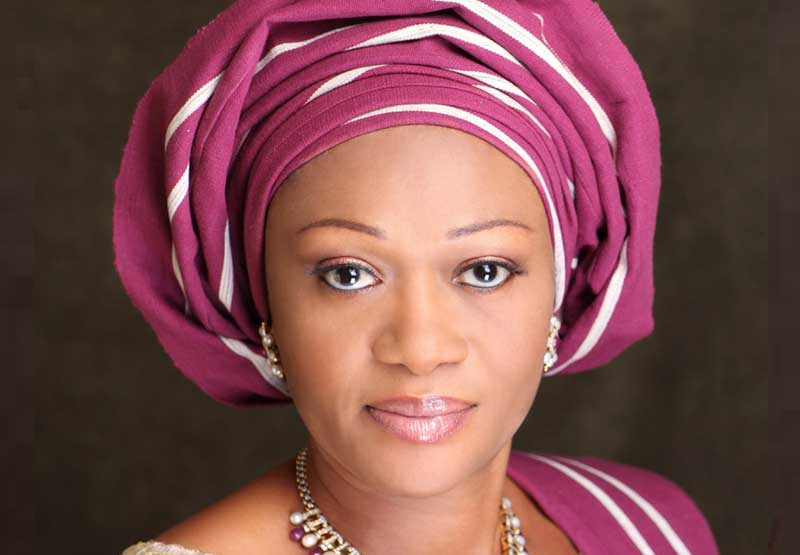
Group hails Remi Tinubu’s National Library Project; appeals to FCT minister to make library/ICT centers mandatory for estate approvals

by Leading Reporters September 26, 2025
written by Leading Reporters

A pro-literacy, pro-vocational group, Books Across Borders Initiative, has hailed the First Lady’s effort at completing the national library project and her other pro-literacy activities.  Speaking during a media chat, the Chairman Board of Trustees of Books Across Borders Initiative, Light Shedrack, said that literacy and skills acquisition are the only antidote to poverty and insecurity, a belief that the First Lady has validated through her pro-literacy activities. Mr Shedrack also appealed to the Minister of the Federal Capital Territory and other urban planners to ensure that every neighbourhood and estate is integrated with a functional library/ICT center to serve as a gathering place for the youths and adults alike.

”The First Lady has demonstrated and validated the widely accepted fact that literacy and skills acquisition are the only cures for poverty and insecurity. Poverty and illiteracy are interconnected. A nation that fails to promote a reading culture among its young population will likely be poor and restive. Poverty is a byproduct of illiteracy and a lack of skills. It breeds insecurity. Literacy, on the other hand, broadens and enlightens the mind. It promotes tolerance and human dignity.  A well-informed mind understands human unity and the sanctity of life. Skills acquisition makes us self-sufficient. A literate, innovative, and self-reliant society will effortlessly combat terrorism and other forms of insecurity.

“Let me use this opportunity also to appeal to the Minister of FCT Nyesom Wike, to integrate it into the FCT policy framework that each estate within the Federal Capital Territory should have a spot that serves as a functional library/ICT center as well as a gathering place for the youths. Even if it is a modular library.

“The First Lady has set the pace.  It would be ideal if the other States’ First Ladies toe the same line and ensure that literacy and ICT advancement are prioritised in their respective states, as their pet projects.

Speaking further on the activities of Books Across Borders Initiative, Mr, Shedrack made a case for skills acquisition, calling on organised private sectors, the governments, the religious bodies and other stakeholders in nation building to wade into the educational deficiency bedeviling the country.

“No efforts would ever produce any positive result if we do not prioritise education and skills acquisition.  Today, the world is migrating to AI and robotics.  How prepared are we as a people?  The time to make decisive efforts in advancing education, skills acquisition, especially in the areas of ICT, robotics and AI, has come.  Religious organisations such as Mosques and Churches, traditional organisations, NGOs, governments at all levels, as well as the organised private sectors should be at the fore of this indispensable message and support of mass education and skills acquisition.  This has been our central message and activity in the Books Across Borders Initiative and Academy for Creating Enterprise.

September 26, 2025 0 comments
0 FacebookTwitterPinterestThreadsBlueskyEmail
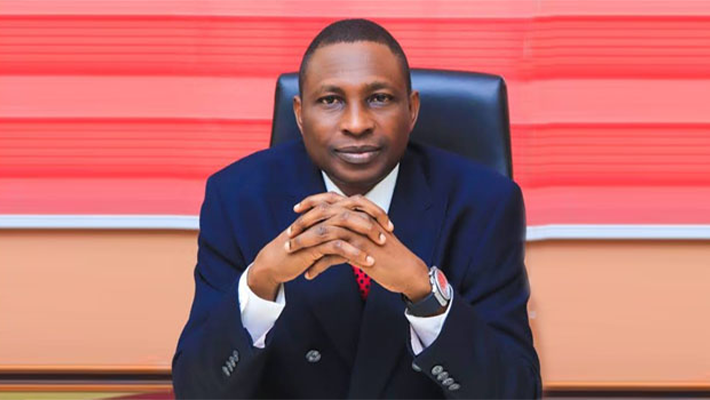
Anti-Corruption Fight: The moral dimension of the job, and the towering guts of Mr. Ola Olukoyede
HeadlinesOpinion

Anti-Corruption Fight: The moral dimension of the job, and the towering guts of Mr. Ola Olukoyede

by Leading Reporters September 15, 2025
written by Leading Reporters

The task of combating corruption in a country like Nigeria requires exceptional morality and rare bravery. It demands a willpower that surpasses the challenges of everyday work. Fighting corruption is a risk endeavour because you are not only dealing with corrupt individuals but also their destructive ideologies, inflated self-entitlements, ruthless manoeuvres, and moral decay. You are confronting a menace that has become ingrained in our collective consciousness.

Since President Ahmed Bola Tinubu appointed Mr Ola Olukoyede, precisely two years ago, as the Chairman of the Economic and Financial Crime Commission, he has brought with him an untamed courage, not only to dare the corrupt elements but to unclutter the bureaucratic bottlenecks that embolden corruption and everything that pushes the ideology of corruption. Corruption in Nigeria transcends stealing of public funds; it is a social aberration and a retrogressive menace that has permeated every aspect of our lives – social, economic, political, and even religious.

Perennially, the big question has been whether Nigeria can upturn this devastating trend and build a true nation where the principles of accountability, stewardship and morality in service delivery become an integral part of our existence. So many will answer “NO”, while most, especially those who have taken time to understand the journey of true nationhood, believe it is achievable. To achieve this tall order, Nigerians need to understand that a true change is mostly self-induced. A change comes when we reflect on our collective consciousness.

Without this self-introspection and self-awareness, no angel can effect the needed change we desperately desire. Nigerians have realised the dangers of corruption. We have understood the many great things and opportunities we have lost as a result of untamed corruption in Nigeria. Now is the time to re-engage our minds and choose the greater good. True change comes when we are ready and willing to do the right thing. Change comes with self-reformation. The moment we stir our collective consciousness to act on the greater right, change will come.

Talking about self-reformation, a story about America’s early days towards greater nation-building comes to mind. It was said that an agency of the American government once put out an advert that read ‘Reformers Wanted”. Within days, countless applications flooded the agency. Many applicants copiously quoted their qualifications and why they believed they were the best fit for the job as nation-reformers. Days and months went by, and there was no response from the agency that placed the advert.

The applicants, tired of waiting for a response, besieged the agency’s office to enquire why there was no response from it, many months after it posted an advert for an appointment. The agency pacified them with the assurance that the official response would be released in a matter of days.  A few days afterwards, as promised, the agency released another advert. This time, the tone of the message changed from “Reformers Wanted” to “Reformers of Selves Wanted.” To its surprise, the agency did not receive one single application.

The import of this story is that we all want a society that is reformed. We want politicians who are reformed. We want leaders who will be as flawless as angels, but we are not ready to introspect on our own weaknesses as individual citizens. We hype frivolity over virtue. There is no conscious effort towards creative statecraft. We act like tuna fish, flowing with the waves of the social media frenzies. We criticise others even when we have the tendency to act worse than they do if allowed to occupy the positions that those we criticise occupy.

I always ask myself, would I have done better than those I accuse today? Would I have had the courage to stand out and do better for the sake of greater nation-building, or am I just screaming corruption because I have not had the opportunity to be in a position that is morally demanding?

Not digressing, every keen observer who has been following the activities of Mr. Ola Olukoyede-led EFCC will understand the enormous load on the shoulders of one man against countless Nigerians. From those in elective and appointive positions to the yahoo-boys; from the civil servants to ordinary Nigerian business owners, corruption has nearly become our new normal. Unlike what we were used to in the past, Mr. Ola Olukoyede seems more concerned with ridding Nigeria of corruption and rebranding the battered image of the country within the polity of nations. His approach to the fight against corruption seems more subtle, incisive, and result oriented.

He does not seem to be a fan of media frenzies. In Nigeria, the loudest is assumed to be the toughest. Media toughness has not reduced corruption. The corrupt elements, too, are louder in the media. This seems to have prompted Mr. Olukoyede’s subtle approach to getting the job. This is by far a better approach, and it is expected that with more Nigerians understanding their roles in the anti-corruption fight, Nigeria can and will become the country of our collective dream.

Light Shedrack light is a life-skill coach, an ideation specialist and a public issues manager. He resides in Abuja and can be reached via mclightlogistics@gmail.com


September 15, 2025 0 comments
0 FacebookTwitterPinterestThreadsBlueskyEmail
Opinion

ENOUGH OF THIS CULT LOYALTY NONSENSE: AREGBESOLA IS NO TRAITOR

by Folarin Kehinde August 4, 2025
written by Folarin Kehinde

By Aare Amerijoye Dotb

Yesterday, I engaged in an intense political dialogue with Hon. Akinbowale Omole, former Majority Leader of the first Ekiti State House of Assembly, former State Chairman of the Labour Party in Ekiti, and erstwhile Commissioner for Information under Dr. Kayode Fayemi. In the course of our conversation, he lamented the worn-out, intellectually bankrupt tactic of labeling people as “betrayers” or “bastards” the moment they dare to deviate from the script written by the self-anointed gods of Yoruba politics. The speed with which dissent is criminalised and ideological independence punished is not only disturbing, it is tragic.

Tragic, because the very man now deified by these zealots has done nothing monumental for the Yoruba people, except trample the sacred ethos of Omoluabi, ridicule the principles of probity in governance, and drag us into the narcotic-forfeiture history of shame that is entirely alien to the Yoruba soul.

Let us state it clearly. Bola Ahmed Tinubu’s narcotics-related forfeiture of over $460,000 in a U.S. court is not a whisper of rumour. It is a documented, certified judicial fact. Yet his fanatics would rather gaslight the nation than confront the moral rot at the apex of their political cathedral.

If Bola Tinubu’s administration were performing, he wouldn’t need to conscript 1,000 social media writers he assembled a few days ago to whitewash his regime of kleptocracy and kakistocracy. I chuckled, yes, chuckled, when members of The Narrative Force bombarded my inbox, panicking over the recruitment of 1,000 online defenders.

I laughed, not in mockery, but in bitter irony. What exactly is there to defend? The hunger? The hardship? The hopelessness? The institutionalised incompetence?

That is not defense. That is desperate damage control. And in this sea of decay, Aregbesola was right, heroically right, to sever ties with the collapsing edifice and the mildew of arrogance that clings to its rotten throne.

When propaganda is stripped away and political loyalty is divorced from feudal subservience, history will not remember Rauf Aregbesola as a betrayer, but as the last honest remnant of Tinubu’s long-abandoned ideals. He is not Judas in this unfolding drama. He is the crucified one, bearing the sins of a political cult where gratitude is demanded like ransom and truth is punished like treason.

To Mayor Akinpelu, your piece is not an article. It is a disgraceful hymn of sycophancy. A cowardly beatification of a godfather who has long buried the ideals he once pretended to uphold. If betrayal resides anywhere in this narrative, it oozes from your pen, not from Aregbesola’s conscience.

Let’s shred your lazy revisionism point by point.

You mockingly described Rauf as a “scruffy man in tebliq trousers.” So what? That so-called “scruffy man” possessed more ideology in his bloodstream than the entire Lagos cabinet Tinubu ever cobbled together. Are we now evaluating political worth by fashion? (You can see how you goofed with such a nauseating assertion.) By that logic, Mahatma Gandhi would never have liberated India. Aregbesola wasn’t one of your boutique politicians in velvet suits offering empty speeches for contracts. He was a man of the trenches, a NADECO warrior, while your Asiwaju was cutting foreign deals in exile.

In the trenches of NADECO, Aregbesola was not a mere spectator. He was in the engine room, distributing anti-military leaflets, organising rallies, evading arrest, and keeping the democratic flame alive. The same NADECO that Tinubu later hijacked for myth-making was the crucible of Aregbesola’s activism, not his inheritance.

You mention 1999 as though it was a divine coronation. Let’s correct you. Tinubu did not make Aregbesola. Their alliance was born of mutual necessity, not a kingmaker’s benevolence. If anything, Aregbesola gave Tinubu credibility, grassroots firepower, a movement’s soul. Without Rauf in Alimosho, BATCO would have died stillborn. Aregbesola’s command of the masses paved the political road Tinubu strutted on. Mayor, perhaps your frequent pilgrimages to Isaac John dulled your memory?

Aregbesola did not ascend through cocktail circuits or media branding. He earned his relevance through sweat and sacrifice. That “scruffy mobilizer” became Commissioner, Governor, and Minister, not by pity, but by unmatched competence.

You lament the infamous “contract story” as if it exonerates you. On the contrary, it exposes the decayed patronage ecosystem Tinubu engineered. That loyalty had to be proven through contracts is itself the problem. Aregbesola refused backdoor negotiations at midnight. So is this a rebuttal, or a lament of failed contract seeking? The real beef is that Aregbesola didn’t give you a contract? He asked you to see him at midnight. What is wrong with that? Midnight meetings are a metaphor for hard work in politics, not a sinister code. If you couldn’t wait till midnight, perhaps you were not hungry enough for the contract. And that was good but stop holding it against Aregbesola.

You glorify Tinubu’s decision to leave Rauf’s commissioner seat vacant “in case he failed,” forgetting this. Aregbesola was not a spare tire. He was the engine. Tinubu trusted his competence and considered it necessary to keep the position vacant for him. While Tinubu protected family ambitions in Lagos, Aregbesola fought the PDP’s election heist in Osun, laying a judicial precedent that reverberated across Nigeria.

You blame Aregbesola and Peperito for Ambode’s downfall. Laughable. What you interpret as sabotage was resistance to tyranny masked as internal democracy. Ambode fell not because of Aregbesola, but because the godfather cannot stomach independent thought. That’s the real betrayal, not Aregbesola’s defiance, but Tinubu’s allergy to dissent. Ambode’s fall was orchestrated by multiple intra-party dynamics. Blaming Aregbesola for Ambode’s political fate is like blaming the moon for tides. It’s a convenient scapegoat. Besides, Ambode never publicly alleged betrayal. That’s your inference.

You say Aregbesola owes Tinubu everything. False. It was Tinubu who depended on Aregbesola’s machine to conquer the Southwest. Osun was the crucible. Oranmiyan wasn’t a slogan. It was a doctrine. Aregbesola pulled Osun out of PDP clutches, empowered artisans, educated children, built infrastructure, and governed with vision. He owes the people, not a political deity.

And when the time came to hand over, Tinubu imposed his cousin, a man with no grassroots capital. Aregbesola, in statesmanlike restraint, accepted him. But that technocrat didn’t just differ. He dismantled Aregbesola’s legacy brick by brick. Tinubu? He watched. He smirked. He said nothing.

And you expect silence?

Then came the insults. The erasure. The sabotage.

The Oyetola Saga: Yes, Aregbesola disagreed with Oyetola’s candidacy. And? Is that a crime? Must loyalty mean silence in the face of disagreement? Even Jesus argued with his disciples. The Oyetola imposition was a classic case of power play, and the people of Osun paid the price. What’s disloyal about saying the truth?

Yet Aregbesola never told all. But you, Mayor, throw around vile allegations, claiming he said Tinubu urinates on himself. That’s not just false. It’s evil. Aregbesola’s metaphor about “people urinating on themselves” never mentioned Tinubu. That your mind leapt to him betrays your own guilt. If the shoe fits, wear it, but don’t weaponise metaphor into character assassination.

You say Fashola kept silent. Fine. But silence is not always virtue. Sometimes, it is cowardice. Fashola chose silence. Aregbesola chose courage. He confronted hypocrisy, rejected nepotism, and walked away from a one-way loyalty cult. That is Omoluabi, not of convenience, but of conviction. Fashola kept quiet even when hurt. So we are now benchmarking leadership by silent suffering? That’s not Omoluabi, that’s slavery. Aregbesola spoke up. That’s courage. Omoluabi doesn’t mean blind obedience. It means principled conduct. Fashola is entitled to his style. Aregbesola chose another, and history will judge both.

Now you ridicule his defection to ADC. Yet Tinubu himself built his legacy by defecting. AC, ACN, APC, ring a bell? His own style of “gang-up.” But now, no one else must dare realign?

Let it be known, I was once a proud PDP member. I carry no bitterness. The PDP was a vital chapter of my political growth. But today, I pitch my tent with ADC, not out of desperation, but conviction. Because men like Aregbesola, David Mark, Tambuwal, and Atiku are returning sanity to a political space desecrated by political cultism.

Aregbesola left APC with his head high, not as a defector, but as a reformer. He is now the National Secretary, not by accident, but by merit, vision, and moral clarity, the very virtues APC abandoned.

Mayor Akinpelu, hear this with finality. Tinubu is not God. He is not infallible. He is not royalty. And Nigeria is not Bourdillon Estate. His presidency does not wash away his sins. It magnifies them. And history, unbought, unbowed, and unsentimental, will write its verdict.

You say Aregbesola hasn’t made amends. For what exactly? Refusing to lick boots? Choosing principle over personality cult? Remaining progressive while Tinubu regressed into a patriarchal hoarder of power?

Mayor, the apology is yours, to the Nigerian people, for kneeling before tyranny and distorting the truth. Aregbesola needs no forgiveness from you. He remains what Tinubu used to be, a rebel with a cause, not a kingpin with a cult.

You ended with a Yoruba song. Permit me to end with a Yoruba truth.

“Bi ènìyàn bá fi ọwọ́ kan iná, ó un jó ni.” — When a man places his hand in fire, he must be ready for the burn.

You quoted: “Kò sí daríjì f’eni t’ó bà dà’lé…”Yes, but who betrayed whom? Is it betrayal to question excess? Is it betrayal to challenge imposition? The real betrayal is turning a movement into a monarchy. The real betrayal is punishing ideological independence.

You have touched the fire, by defending a fallen gospel with fake parables, and you will be scorched, not by us, but by truth, which, when unleashed, is ungovernable.

Rauf Aregbesola is not your villain. He is your mirror. What you hate in him is what you once respected in yourself,conviction, courage, and conscience.

May Nigeria have more Aregbesolas, and fewer Mayor Akinpelus.

Aare Amerijoye DOT.B

Director-General,

The Narrative Force

August 4, 2025 0 comments
0 FacebookTwitterPinterestThreadsBlueskyEmail
Uromi
Opinion

NIGERIA: 16 LOUD DEATHS, 60 SILENT GRAVES

by Nelson Ugwuagbo April 9, 2025
written by Nelson Ugwuagbo

The recent tragedies in Uromi, Edo State, and Bokkos and Mangu Local Government Areas of Plateau State have once again exposed a disturbing inconsistency in national responses to incidents of mass violence in Nigeria.

These two grim episodes, separated by geography and nuance, nonetheless raise the same essential question: do all Nigerian lives matter equally?
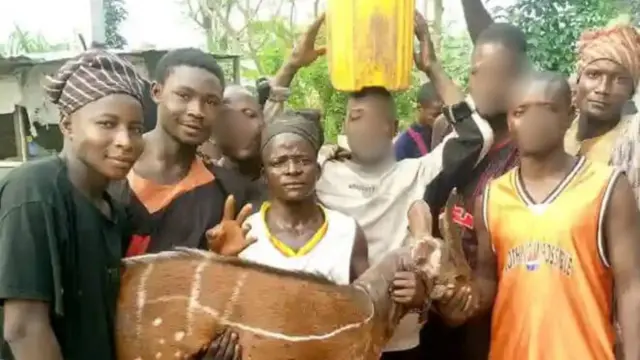
On the 28th of March 2025, a group of 16 hunters travelling from Rivers State to Kano for the Sallah celebration were lynched by a mob in Uromi, Edo State.
According to various sources, they were carrying locally fabricated Dane Guns, a practice not uncommon among hunters and vigilance groups in Nigeria.
However, due to the persistent insecurity in Uromi and the surrounding region—marked by a surge in kidnappings, rape, and murders—the presence of armed men travelling in a convoy was enough to raise suspicion.

The group was mistaken for a kidnapping gang, and without trial, without investigation, they were summarily executed by enraged locals in what has come to be widely condemned as an act of Jungle Justice.

This incident received an immediate and robust response from across the nation.

Within a few hours of news of this incident, President Bola Ahmed Tinubu condemned the murder of the sixteen (16) Dane gun-wielding hunters and directed security agencies to conduct swift and thorough investigations to apprehend and prosecute those responsible.

The House of Representatives swiftly passed a resolution condemning the killings, describing them as a “grave violation of human rights and the rule of law” while urging security agencies to identify, arrest, and prosecute those responsible. Former Vice President Atiku Abubakar condemned the act, calling it “barbaric and inhumane,” and reminded Nigerians that no frustration or distrust in security agencies justifies taking laws into their own hands.
Peter Obi, former governor of Anambra State and former presidential candidate, added, “We must never become a nation where due process is replaced with mob anger. A just society is one where every individual, guilty or innocent, is treated according to the law.”

The Nigerian Bar Association (NBA) also intervened, issuing a stern statement condemning the rise of mob justice across the country.
“The Nigerian Constitution presumes every accused person innocent until proven otherwise,” the statement read. “No person or group has the right to act as judge, jury, and executioner.”

Governor Abba Yusuf of Kano State, where most of the slain hunters hailed from, expressed outrage and called the incident a betrayal of the country’s collective humanity, demanding a thorough investigation and the arrest of perpetrators.
Rivers State Governor Siminalayi Fubara described the incident as a “gruesome murder of innocent citizens” and emphasised the need for community awareness and responsible security engagement.

The Christian Association of Nigeria (CAN) also joined the national chorus of condemnation. In a statement signed by its President, Archbishop Daniel Okoh, CAN described the killings as “a sad reminder of the breakdown of law and order and the growing tendency among citizens to take the law into their own hands.”
The Christian body called on security agencies to bring the perpetrators to justice and rebuild public trust.
“We sue for justice and peace and urge communities to seek lawful redress rather than vengeance. Mob action, no matter the provocation, cannot be justified in any civilised society,” the statement read.

In contrast, between the 2nd and 3rd of April 2025, barely a week after the Edo incident, a fresh massacre took place in Plateau State. This time, in the Bokkos and Mangu Local Government Areas, over 60 villagers were brutally killed in coordinated night-time attacks by armed men, reportedly wearing military camouflage.
According to residents and community leaders, the assailants moved from one village to another, slaughtering men, women, and children indiscriminately. Homes were set ablaze, food barns looted, and entire communities uprooted. Though the exact number of casualties is still being counted, early estimates suggest that more than 60 lives were lost and over 1,500 people displaced.

Shockingly, the national response to this tragedy was tepid at best. There was no immediate address from the President. The National Assembly did not pass any resolution condemning the killings. Religious and traditional institutions that had been vociferous in their reaction to the Edo lynchings remained largely silent.
The Nigerian Bar Association (NBA), which was so loud about the Edo killings, seemed to have suddenly lost its voice. Thankfully, the Plateau State Governor, Caleb Mutfwang, still has his voice; he has expressed his sorrow and called for reinforcement of security in the region.
Amnesty International Nigeria tweeted about the killings, expressing “deep concern over the ongoing carnage” and demanding urgent Federal intervention.
Then, in what many considered an afterthought, the Presidency finally broke its silence. Yesterday, Chief Bayo Onanuga, Special Adviser to the President on Information and Strategy, stated on behalf of President Bola Ahmed Tinubu.

The statement condemned the killings in Plateau and assured Nigerians that the Federal Government was committed to bringing the perpetrators to justice.
However, the timing and tone of the release struck many observers as lacklustre and reactive rather than proactive and presidential.
Critics noted that the statement came days after the massacre and only after mounting public pressure online.

This stark disparity in responses calls for serious reflection. Why did the killing of 16 hunters evoke such national outrage while the murder of over 60 villagers barely registered a whimper? Is this merely an oversight, or does it reflect a more systemic bias in how different regions and people are treated within Nigeria’s Federation?

We must examine what kind of country we are becoming when some deaths are met with outrage and others with silence. The issue is not whether one set of killings is more tragic than the other—it’s the implication that some lives are worth fighting for while others are dispensable. This selective empathy reveals a dangerous trend.
We have normalised violence in the Middle Belt and other parts of the North. It has become routine, and we lose our sense of humanity in that routineness. That’s how genocides start—first through indifference.

Social Media users were equally vocal. One X (formerly Twitter) user wrote, “Nigeria weeps for 16 hunters. May their souls rest in peace. But why is Nigeria silent for over 60 Plateau villagers? Is it because they are ‘just villagers’?
Or are we too used to their pain?” Another user posted, “These villagers had names, dreams, children, futures. Their deaths deserve the same national mourning as anyone else’s. Our silence is complicity.”

The inconsistency in national mourning and governmental response is not new, but it remains deeply troubling. It points to a hierarchy of empathy that undermines the spirit of our Constitution, which holds that all citizens are equal before the law and in the protection of the state.

There is also the matter of Media Framing. The Edo victims were identified as “hunters” and “travellers,” suggesting purposeful and legitimate activity, while the Plateau victims were referred to merely as “villagers.” This subtle but powerful difference dehumanises one group and sanitises the tragedy. Moreover, while images and tributes poured in for the 16 hunters, the identities and stories of the Plateau victims mainly remained anonymous. Who were they? What dreams did they harbour? What futures were snatched away?

The irony is painful. The Edo victims, suspected without proof, were mourned as martyrs, while the Plateau victims, clearly innocent and ambushed in their homes, remain statistics in an ever-growing tally of unacknowledged dead.

Of course, nothing justifies the lynching of the 16 in Edo. Even if they had been criminals—which they were not—Mob Justice is a regression to lawlessness and brutality. But equally, the Plateau killings, perpetrated by organised gunmen who roam freely and strike with impunity, deserve even greater condemnation and urgency. If 16 deaths can bring a country to attention, how can 60 not compel action?

Security failure is at the heart of both tragedies. In Uromi, the mob acted out of frustration over repeated kidnappings and a lack of effective policing. In Plateau, the attacks were yet another chapter in a long-running saga of unaddressed ethno-religious conflict, land disputes, and governmental inaction. In both cases, the state failed to protect its citizens, and in both cases, civilians paid the ultimate price.

If Nigeria is to become a just and truly democratic nation, it must begin to react equitably to its people’s sufferings. There must be no North or South in empathy, no Christian or Muslim in justice, no Farmer or Hunter in dignity. Every Nigerian Life must be counted, named, honoured, and defended.

The Federal Government must urgently address this apathy towards the Middle Belt and the growing narrative that those in conflict-prone regions are beyond help. Resources, political will, and national attention must not be rationed based on who shouts the loudest or hails from the most politically connected quarters.
Religious bodies and traditional institutions that lend their voices during other national tragedies must rise with equal fervour for the Plateau victims. Civil Society must not look away. The media must resist the urge to move on just because these killings have become frequent. We must not let our frequency of exposure dull our humanity.

Ultimately, we must ask ourselves as a people: What kind of nation do we want to be? One that only mourns selectively? One that lets outrage be governed by convenience? One that refuses to learn from its silence? Until we confront these questions sincerely and act decisively, we will remain a nation unsure of its soul—where grief is not a right, and where silence, not justice, follows the wail of the dying.

Lemmy Ughegbe, Ph.D

April 9, 2025 0 comments
0 FacebookTwitterPinterestThreadsBlueskyEmail
Newer Posts
Older Posts

Recent Posts

  • Ohakim’s record returns to spotlight as Imo debates development model

    August 4, 2026
  • Nigeria not short of gas but short of will to capture it — Energy expert

    August 3, 2026
  • WHY NIGERIA’S DIGITAL IDENTITY DRIVE NEEDS THE CENSUS

    August 3, 2026
  • 2027: I’ll restore fuel subsidy, return petrol price to N299 per litre — AA presidential aspirant, Fadunri

    August 1, 2026
  • How Nigeria’s Mineral Wealth Is Being Handed to China

    July 31, 2026

Usefull Links

  • Contact Page
  • About Leading Reporters
  • Contact Us
  • Headlines
  • Investigation
  • Exclusives
  • Opinion
  • Business
  • Facebook
  • Twitter
  • Instagram
  • Linkedin

@2021 - All Right Reserved. Designed and Developed by PenciDesign


Back To Top
Leading Reporters
  • Featured
  • Politics
  • Opinion
  • Business
  • Entertainment
  • Sports
  • About Us
  • Contact