
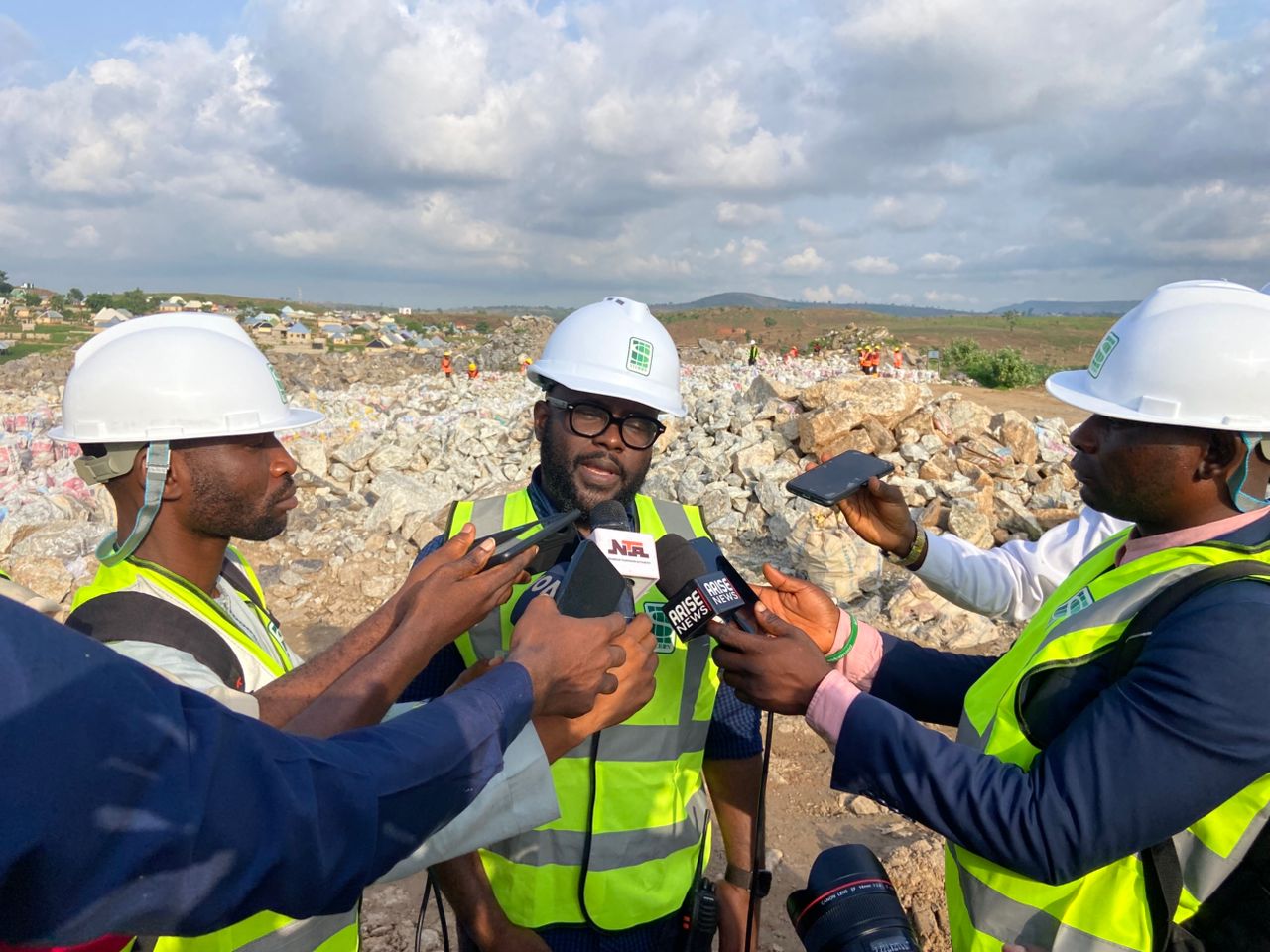
The Managing Director and Chief Executive Officer of Steron Mining and Company Limited, Abu Omar, has credited recent government policies promoting local participation in Nigeria’s mining sector for the emergence and growth of indigenous mining operations across the country.
Speaking during a site visit by participants of the African Natural Resources and Energy Investment Summit (AFNIS) to the company’s lithium mining project in Abuja on Tuesday, Omar said deliberate government efforts to prioritise Nigerian operators had created opportunities for local companies to thrive in the industry.
“The government of today has dedicated time and effort to ensuring that local participation is prioritised. That has led to the birth of operations like this,” Omar said.
According to him, the policies have not only empowered indigenous investors but have also attracted foreign interest into Nigeria’s mining sector, creating a more competitive and investment-friendly environment.
“These policies have also welcomed foreigners, which is what AFNIS is showcasing,” he added.
Omar said the visit by delegates from across Africa was organised to demonstrate the capacity of local companies to successfully operate large-scale mining projects and contribute to the development of critical minerals needed for the global energy transition.
“We are honoured to host AFNIS and the African mining community to an excursion, showcasing what it looks like for a local Nigerian to run a mining operation like this,” he said.
He explained that visitors were taken through the full mining value chain, including exploration, drilling, blasting and production activities at the site.
Omar noted that beyond extraction, the company focuses on value addition by processing lithium ore locally to improve its quality before export, a move he said aligns with government efforts to increase local beneficiation and maximise economic value from Nigeria’s mineral resources.
He also highlighted the company’s commitment to maintaining strong relationships with host communities through initiatives aimed at improving safety and welfare.
Also speaking, the company’s geologist, Bello Damulak, said exploration and core drilling activities had revealed an estimated 94.8 million metric tonnes of mineral resources at the site.
“So far, our exploration work has given us an estimated mineral resource of 94.8 million metric tonnes of all minerals, including granite. The lithium reserve is estimated at 3.3 million metric tonnes, while granitic rock accounts for 91.4 million metric tonnes,” he said.
Damulak added that the estimates were derived from detailed exploration activities and would guide future mining operations at the site.
The AFNIS visit formed part of efforts to showcase investment opportunities in Nigeria’s mining sector and demonstrate the growing role of indigenous operators in developing the country’s vast mineral resources.

Spotted an error? Read our Corrections Policy or tell the editors.
Got a story or a tip? Contact Leading Reporters. We protect our sources.