
Leading Reporters
  • Headlines
  • Health
  • Business
  • Exclusives
  • Investigation
  • Entertainment
  • Opinion
Thursday, August 13, 2026
Hot
European Union ‘Boycotts’ Nigeria’s 2027 General Elections, Rejects...
Nigerians Raise Concern Over Rising Mob Justice
Atiku Abubakar Raises Alarm over Suspicious Deposit to...
Nigerian Author Loses $2 Million Book Deal Over...
Onaiyekan to Tinubu: Catholic Bishops Have Said Enough,...
Nigeria not short of gas but short of...
How Nigeria’s Mineral Wealth Is Being Handed to...
NAFDAC DG Vows Serious Consequences for Manufacturers Violating...
Peter Obi Reaffirms Commitment to Single Term Governance:...
#FixPolitics demands probe, accountability in ‘fake agency’ scandal
  • About Leading Reporters
  • Contact Us
Leading Reporters
Advertise With Us
  • Headlines
  • Health
  • Business
  • Exclusives
  • Investigation
  • Entertainment
  • Opinion
Hot
European Union ‘Boycotts’ Nigeria’s 2027 General Elections, Rejects...
Nigerians Raise Concern Over Rising Mob Justice
Atiku Abubakar Raises Alarm over Suspicious Deposit to...
Nigerian Author Loses $2 Million Book Deal Over...
Onaiyekan to Tinubu: Catholic Bishops Have Said Enough,...
Nigeria not short of gas but short of...
How Nigeria’s Mineral Wealth Is Being Handed to...
NAFDAC DG Vows Serious Consequences for Manufacturers Violating...
Peter Obi Reaffirms Commitment to Single Term Governance:...
#FixPolitics demands probe, accountability in ‘fake agency’ scandal
Leading Reporters
Leading Reporters
  • Headlines
  • Health
  • Business
  • Exclusives
  • Investigation
  • Entertainment
  • Opinion
Copyright 2024 - All Right Reserved
Home > Solomon Oseagah
Tag:

Solomon Oseagah

Headlines

Nigeria not short of gas but short of will to capture it — Energy expert

by Folarin Kehinde August 3, 2026
written by Folarin Kehinde

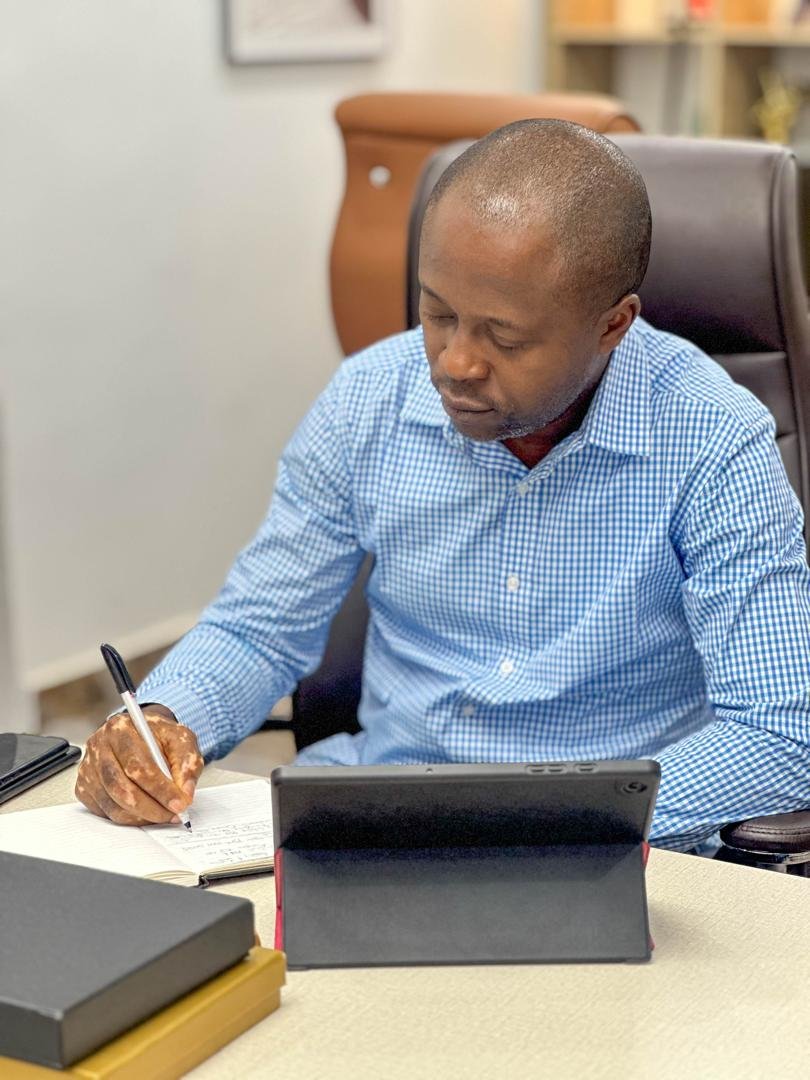
Nigeria is not suffering from a shortage of natural gas but from an inability to harness the enormous volumes currently wasted through routine gas flaring, Managing Director of Excella-U Energy Limited, Engr. Oseagah Solomon, has said.

Speaking against the backdrop of rising electricity shortages, increasing cooking gas prices and mounting environmental concerns, Solomon described the continued flaring of associated gas as one of the country’s biggest economic contradictions.

“We are burning away resources that should be lighting homes, powering businesses and earning foreign exchange,” he said.

His remarks come as analysis of data from the National Oil Spill Detection and Response Agency (NOSDRA) Gas Flare Tracker indicates that Nigeria lost an estimated US$5.5 billion (about ₦8.7 trillion) worth of natural gas to routine gas flaring between 2021 and 2025.

Industry experts, however, argue that the actual economic cost extends far beyond the commodity value of the gas burned.

According to Mahmoud Ibrahim Mahmoud, a postdoctoral researcher and environmental scientist with NOSDRA, the broader national losses from methane waste—including unrealised electricity generation, liquefied petroleum gas (LPG), fertilizer and petrochemical production, export earnings, taxes, royalties and carbon market opportunities—could amount to between US$18 million and US$28 million every day.

Under favourable carbon market conditions, he estimated that Nigeria’s unrealised opportunity could exceed US$30 million daily, translating to between US$7 billion and US$12 billion annually.

Gas capable of transforming power sector

Oseagah said the gas currently wasted every year could significantly improve Nigeria’s energy security if properly captured and commercialised.

According to him, gas presently flared across the country has the capacity to generate more than 32 gigawatts of electricity, while also supporting domestic LPG supply, fertilizer production and petrochemical industries.

“Nigeria is blessed with abundant gas resources. The challenge is not availability but creating the right environment to recover and utilise them instead of allowing them to go up in flames,” he said.

Nigeria possesses more than 215 trillion cubic feet of proven natural gas reserves, making it one of Africa’s largest gas producers.

Despite this, routine gas flaring remains common across oil-producing fields.

NOSDRA’s 2025 Gas Flare Report shows operators flared about 323 billion standard cubic feet of gas during the year.

The agency estimates that the wasted gas was worth approximately US$1.1 billion (₦1.49 trillion), emitted about 17.2 million tonnes of carbon dioxide, and could have generated over 32,300 gigawatt-hours of electricity if utilised.

Similarly, figures released by the Nigerian Upstream Petroleum Regulatory Commission (NUPRC) indicate that nearly 204 billion standard cubic feet of gas was flared in 2025 despite overall gas utilisation exceeding 92 per cent.

Investment barriers slowing gas recovery

While describing gas recovery as economically viable, Oseagah noted that financing challenges, inadequate infrastructure and inconsistent implementation of existing gas commercialisation programmes continue to discourage investment.

According to him, investors require clear regulatory frameworks, policy stability and stronger government support before committing capital to gas capture projects.

He stressed that greater certainty around fiscal policies and infrastructure development would encourage private investment capable of reducing gas flaring while expanding domestic energy supply.

Independent petroleum marketer, Chief Ajiboye Adebowale Moses, shared similar views, noting that every unit of methane wasted represents lost economic value.

“If captured instead of burned, methane can support electricity generation, cooking gas, fertilizer production and industrial development,” he said.


He added that wider domestic utilisation of natural gas would help lower LPG prices, improve electricity supply and stimulate industrial growth.


Experts quantify wider losses

Beyond the direct value of gas burned, Mahmoud said Nigeria loses opportunities across multiple sectors whenever methane is flared or vented.

According to him, captured gas could fuel power plants, increase household access to cooking gas, supply fertilizer and petrochemical industries, generate export revenue through liquefied natural gas (LNG), strengthen government revenues through taxes and royalties, and earn carbon credits under international climate markets.

“The true national loss is substantially larger than the commodity value shown on the Gas Flare Tracker because methane that is flared or vented could otherwise generate electricity, supply households with LPG, support fertilizer and petrochemical industries, earn export revenue and generate taxes and royalties,” he said.

Communities demand greater benefits

Oil-producing communities continue to bear the environmental consequences of decades of gas flaring.

Chairman of the Council of Chiefs of Lasukugbene Community in Bayelsa State, Chief Zion D. Kientei, said communities located close to flare sites have experienced declining crop yields, disappearing fish species and worsening health conditions.

“Our flare stack is less than 200 metres from the community. It has altered our ecosystem. The fish species we grew up seeing have disappeared. Crop yields have reduced drastically,” he said.

He urged government and operators to accelerate gas capture projects and prioritise host communities for electricity supply and economic development.

According to him, improved electricity access would stimulate small businesses, create employment and reduce youth unemployment across the Niger Delta.

Stronger enforcement needed

Environmental advocates also called for stricter enforcement of existing regulations.

Executive Director of the Renevlyn Development Initiative (RDI), Philip Jakpor, said methane emissions are frequently accompanied by hazardous pollutants that threaten public health and agricultural livelihoods.

He argued that while Nigeria has introduced regulations aimed at reducing methane emissions and gas flaring, implementation remains weak.

Jakpor advocated greater use of satellite monitoring, independent emissions tracking and transparent reporting to improve accountability.

Meanwhile, Mahmoud recommended integrating satellite observations with drones, airborne sensors and ground-based monitoring systems to improve methane detection and strengthen regulatory oversight.

He also called for expansion of digital platforms such as the Nigerian Gas Flare Tracker and the proposed Nigerian Methane Emissions Tracker.

Stakeholders agree that Nigeria possesses both the natural gas resources and the technology required to significantly reduce flaring.

However, they maintain that stronger policy implementation, investment and regulatory enforcement will determine whether the country succeeds in converting billions of dollars currently lost through gas flaring into electricity, cleaner cooking fuel, industrial development and economic growth.

August 3, 2026 0 comments
0 FacebookTwitterPinterestThreadsBlueskyEmail
HeadlinesLife Style

Beyond Skills, Get Certified, Joseta CEO Charges Graduands

by Folarin Kehinde July 3, 2022
written by Folarin Kehinde

The Managing Director and Chief Executive Officer, Joseta Works Integrated limited Power and Services, Mr. Oseagah Solomon has advised newly graduands of the organization to get certification beyond the informal knowledge.

Solomon while speaking in Abuja over the weekend at the graduation and certification ceremony of Mr. Ogbomade Gift and

Mr. Adomokhe Ambrose noted that having a higher learning degree/diploma will make them stand tall and give them an edge over others in the international community.

Group photo of successful graduands from Joseta works Integrated from exception.

“Do not stop here get certification, get degree, it gives you strength to face the international community”.

Mr. Solomon Praying for the Graduands

Emphasizing, Mr. Solomon explained how his late dad encouraged him to further his education to enhance his skills and professionalism which has made him a success to reckon with in the industry till date.

“It was very challenging, after secondary education, my late Dad Joseph Oseagah, told me to start technical college to go through training in electrical installation and maintenance practices, then to go to a polytechnic for further education on Electrical Engineering Technology some years back today here is the impact in the society”.

Mr. Ogbomade Gift and Mr. Adomokhe Ambrose.

Responding, the recipients expressing gratitude noted that the journey has not been easy but challenging, but are glad that they are now successful and will imbibe the skills and knowledge acquired in future engagements.

July 3, 2022 0 comments
0 FacebookTwitterPinterestThreadsBlueskyEmail
Headlines

First “African Climate Clock” to be received in Nigeria

by Leading Reporters April 27, 2021
written by Leading Reporters

Watch Virtual Event here:  http://bit.ly/africanclimateclock

Abuja, Nigeria. — The first CLIMATE CLOCK to be received by an African nation will be presented in a high level official presentation ceremony of the Government of Nigeria in Abuja on Tuesday.

Alhaji Mohammed Danjuma, social activist and Climate Champion

The handheld clock will be presented to Alhaji Mohammed Danjuma, social activist and Climate Champion,  by Jerome Ringo, former chair of the National Wildlife Federation, and currently Goodwill Ambassador to the Pan African Parliament.  

Nigeria will be the first African nation to receive a CLIMATE CLOCK. Ringo received the clock at an event in New York City on Monday, April 19 where Ringo delivered a clock to UN Ambassador from ECO WAS, which represents 15 West African nations, including Nigeria. Ringo plans to take a number of clocks to several other African nations. The presentation of the Climate Clock to Alhaji Mohammed Danjuma in Abuja on Tuesday would be followed, at a later date by a high-power delegation to present the clock to the President of the Federal Republic of Nigeria, His Excellency Muhammadu Buhari .

WHAT: First climate clock to be received by an African nation

WHEN: Tuesday April 27, 2021, 1.00pm to 3.00pm (WAT), 8:00am to 10:00am (EST) USA

WHO: Jerome Ringo presenting to the Government of Nigeria, delivered to Climate Champion Alhaji Mohammed Danjuma. With H.E. Pauline K. Tallen Minister of Women’s Affairs, and Dr. Paul Abolo, Ecologistics, African Climate Clock Initiative.

WHERE (Physical): Bon Hotel Elvis, #2 Monrovia Street, Wuse II, Abuja.

WHERE (Virtual): http://bit.ly/africanclimateclock

The Climate Clock project is known for the giant clock in New York’s Union Square, as well as portable handheld clocks that climate leaders took to the front of the White House and projected onto the Department of Energy in DC earlier this week.

Ringo stated: “This clock is a call to action. Future solutions are great, but we need NOW solutions. Solutions that create green jobs that can replace the fossil fuel economy.”

The CLIMATE CLOCK shows the deadline before our global Carbon Budget runs out, i.e. the time left before we emit enough carbon into the atmosphere to set the world on a course to exceed 1.5 C warming, which scientists say is a critical tipping point. The now famous giant clock recently added a sign of hope. The Deadline that has been displayed since it’s launch in September is now joined by a new “Lifeline” that displays the percentage of global energy currently supplied from renewable sources — 12.2 percent, and going up, but it needs to be going up much faster to meet our deadline. The world must do whatever it can to raise our lifeline to 100% before the deadline runs out. For more information on the science behind the clock: https://climateclock.world/science.

Ringo used the shift in the clock to speak to  the different responsibilities that different nations had for meeting our climate deadline. “Africa, like other developing regions who suffer climate impacts from CO2 historically released by industrialized nations, deserves a lifeline. They need countries like the US, that are the greatest contributors to the problem, to contribute the most to this renewable lifeline that is on the clock. The United States is only 5% of the world’s population but is responsible for 25% of the world’s carbon emissions.”

“The CLIMATE CLOCK says we must do what the science demands, and pursue solutions that leave no one behind.” said Laura Berry, research director for CLIMATE CLOCK.

The original prototype for the handheld clock was built in partnership with Ayodomola Okunseinde.

Earlier this week, the iconic CLIMATE CLOCK in New York’s Union Square added a “Lifeline” to show the percentage of global energy currently supplied from renewable sources — 12.2 percent, and going up, but nowhere near fast enough. Handheld “action” clocks were unveiled and distributed to youth leaders, who carried them to their own respective events.

Light-projected clocks were launched simultaneously in DC and Glasgow this week. 

Light-projected clocks were launched simultaneously in DC and Glasgow this week. In DC, on the Dept. of Energy. In Glasgow, on the landmark Tolbooth Steeple. The Glasgow Climate Clock will run continuously every night for the six months from Earth Day until the COP26 begins, turning the eyes of the world to the upcoming UN Summit in November.

Climate justice groups brought a clock to a rally in front of the White House on Wednesday, April 21.

Jerome Ringo, the Founder and Chairman of Zoetic Global is taking climate clocks to the heads of state of Nigeria, Ghana and other African nations to promote energy efficient and renewable energy solutions throughout the African continent.

350 Video: Facebook | Twitter | Youtube

NowThis video: Facebook | Twitter

ClimateClock.world

  Twitter: @theclimateclock    |    Instagram: @climateclock.world   |  TikTok: @theclimateclock

April 27, 2021 0 comments
0 FacebookTwitterPinterestThreadsBlueskyEmail

Recent Posts

  • European Union ‘Boycotts’ Nigeria’s 2027 General Elections, Rejects Observer Role Over Rising Insecurity

    August 10, 2026
  • Nigerians Raise Concern Over Rising Mob Justice

    August 10, 2026
  • Atiku Abubakar Raises Alarm over Suspicious Deposit to his Account

    August 7, 2026
  • Nigerian Author Loses $2 Million Book Deal Over AI Plagiarism

    August 7, 2026
  • Onaiyekan to Tinubu: Catholic Bishops Have Said Enough, Govern Better

    August 4, 2026

Usefull Links

  • Contact Page
  • About Leading Reporters
  • Contact Us
  • Headlines
  • Investigation
  • Exclusives
  • Opinion
  • Business
  • Facebook
  • Twitter
  • Instagram
  • Linkedin

@2021 - All Right Reserved. Designed and Developed by PenciDesign


Back To Top
Leading Reporters
  • Featured
  • Politics
  • Opinion
  • Business
  • Entertainment
  • Sports
  • About Us
  • Contact