Leading Reporters
  • Headlines
  • Health
  • Business
  • Exclusives
  • Investigation
  • Entertainment
  • Opinion
Friday, May 8, 2026
Hot
Jabi Lake takeover stands even if God comes...
Fuel Scarcity Looms As Dangote Refinery Hikes Fuel...
IGP scraps SWAT nationwide
17 Reps Dump ADC for NDC
Bride’s father, hypeman shot dead at Lagos wedding...
Xenophobia: 130 Nigerians apply for evacuation as tensions...
Abuja Female Pastor Kneels, Begs Wike Not to...
Obi, Kwankwaso Join NDC, Demand Litigation Free Elections
Tinubu nominates economic reform expert, Tegbe as minister...
Money Laundering: ‘We investigated Pastor Jerry Eze for...
  • About Leading Reporters
  • Contact Us
Leading Reporters
Advertise With Us
  • Headlines
  • Health
  • Business
  • Exclusives
  • Investigation
  • Entertainment
  • Opinion
Hot
Jabi Lake takeover stands even if God comes...
Fuel Scarcity Looms As Dangote Refinery Hikes Fuel...
IGP scraps SWAT nationwide
17 Reps Dump ADC for NDC
Bride’s father, hypeman shot dead at Lagos wedding...
Xenophobia: 130 Nigerians apply for evacuation as tensions...
Abuja Female Pastor Kneels, Begs Wike Not to...
Obi, Kwankwaso Join NDC, Demand Litigation Free Elections
Tinubu nominates economic reform expert, Tegbe as minister...
Money Laundering: ‘We investigated Pastor Jerry Eze for...
Leading Reporters
Leading Reporters
  • Headlines
  • Health
  • Business
  • Exclusives
  • Investigation
  • Entertainment
  • Opinion
Copyright 2024 - All Right Reserved
Home > Nigeria > Page 7
Tag:

Nigeria

HeadlinesOpinion

The Menace of “New Year Prophesies” And Aura of Negativity (Part 1)

by Folarin Kehinde February 7, 2022
written by Folarin Kehinde

By: Light Shedrack

The trend of “New Year Prophesies” by different religious leaders is fast becoming a norm, especially among the Christian community in Nigeria. While it is believed that God truly speaks to people, the prophecies and visions about Nigeria mainly border on social frivolities.

It mostly foretells what does not bear relevance to the growth and development of the country – Something like which politician and party stand a chance to win elections. It predicts doom and gloom and hardly points to a way out of Nigeria perennial crises.

Our prophecies, just like our religion hardly encourage hard work and creativity as antidotes to poverty and crime. It hardly calls out leaders by their names and rebukes them for squandering our national and state treasury.

In the scriptures, we read about prophets who, against all odds, called out leaders for their evil and wicked acts. Prophet Nathan and Prophet Elijah in the Bible come to mind. Prophet Nathan rebuked powerful King David for causing the death of Uriah while Prophet Elijah, despite the danger of being killed by wicked Queen Jezebel continued to speak against the evil of his time perpetrated by King Ahab and his wife, Jezebel. But today in Nigeria, we only have so-called prophets and seers who prophetically align with politicians and political parties of their choice for material benefits.

These religious leaders are beneficiaries of the prevailing corruption and untamed looting of the nation and state’s treasury by the public and civil servants.

Despite these “thus-says-the-lord” claims that spring from our religious places every year, Nigeria is still worse off in all its socioeconomic facets. Despite the presence of these so-called God’s advocates, Nigerians have continued to experience bad leadership. Ironically, while the people plunge further into abject poverty, these religious leaders continue to garner fortune, mostly from the very corrupt political elites. Who pays tithes and gives generous offerings from which massive cathedrals are built? Who patronizes the expensive schools owned by religious leaders? Your guess is as good as mine.

These ‘prophesies’ usually reach their peak when elections are around the corner. In some cases, Nigerians choices of voting those who will lead them are shaped by deceptive prophesy and visions of Nigeria religious leaders. An average Nigerian is religiously vulnerable making them easy preys in the hands of Nigerian politicians and the so-called prophets. Nothing sways an average Nigerian as claims of prophecies and visions. The religious leaders understand this susceptibility and they are cashing in and out.

Most deceptions perpetrated by religious leaders in Nigeria and Africa at large started in form of prophecy and vision. Once caught in the web of their ‘thus-said-the-lord’ visions, one becomes like a caged bird in the hands of these religious elements. But how far has all these prophesies stirred growth and development in the polity? How far has the prophesies shaped the morality and integrity of those saddled with leadership positions in the country? We have never been better off with the crop of leaders we have in Nigeria and the “prophecies” that bring them to power have never helped matters either. Rather this “yearly prophesy trend” has grown the “Prophesy Industry” more than it has grown the country’s collective fortune.

At the end of every year, Nigerians wait eagerly to hear from those who claim they have heard from God. Interestingly most of these prophesy only point to looming dangers and doom. From politics to the economy, we hear all manners of so-called negative prophesies. Esoterically, negative prophecies connote the presence and influence of the negative spirit. We have seen situations where a particular prophet claimed God told him a particular politician would win an election, while another prophet would claim that God prefers a different politician. The same God, different prophesies!

In 2015 when the likes of Rev. Father Ejike Mbaka and other pro-Buhari prophets claimed to have heard from God that the then President Goodluck Jonathan has been rejected by God. In his stead, that God has “anointed” the current Nigeria President Muhammadu Buhari as President Goodluck’s successor and the person to bring the good luck he claimed eluded Nigerians under former President Goodluck Jonathan.

Using a pigeon as a symbol of his spiritual experiment, Rev. Mbaka claimed that “Jonathan’s pigeon” refused to fly; an indication that President Jonathan would not make any headway in the general election that was then around the corner. In the same vein, he claimed: “Buhari’s pigeon” soared to the skies, an indication that God has chosen Buhari as the “Messiah” of the time and the next president of Nigeria.

That prophesy from a popular preacher like Mbaka was among the many factors that aided President Muhammadu Buhari’s in winning the 2015 Presidential Election. President Buhari eventually won the election as predicted, but unfortunately, Nigerians are yet to see the messiah in him as the economy keeps plunging under his watch, and insecurity worsening. This is simple to interpret. People should be wary of prophecies. Most prophesies are products of the mind of the prophets.

This brings us to the question, who truly hears from God? Who is God’s mouthpiece? Who has He sent and who has He not sent to speak?

….….. To be Continued
Light Shedrack is a public issue commentator. He writes from Abuja, Nigeria Federal Capital Territory. He could be reached via lightsheddie26@gmail.com

February 7, 2022 0 comments
0 FacebookTwitterPinterestThreadsBlueskyEmail
Headlines

Nigeria Loses Over N5b to UK Annually: Call For Scrapping of IELTS Intensifies

by Leading Reporters February 1, 2022
written by Leading Reporters

Nigerians have intensified campaign asking foreign institutions to stop demanding an English proficiency test — the International English Language Testing System (IELTS).

IELTS is one of the world’s known English language tests for work, study and migration.

It is an international standardised test of English language proficiency.

Annually, thousands of young Nigerian migrants take IELTS tests physically in different locations all over Nigeria, as part of the requirements to secure admissions into universities overseas or work abroad.

The Nation learnt the test costs over N80,000 and N90,000 per time and expires after two years. One has to re-sit if they have not been successful with their applications for UK scholarships.

Nigerians are questioning why they have to prove they can speak English ㅡ every two years

In 2020, the UK Home office, which is said to be primarily in charge of the test, had said that it did not have evidence that the majority of Nigerians speak English as a first language.

Many Nigerians took to social media with the hashtags — #ReformIELTSPolicy, #IELTS and #TOEFL calling on the UK home office to remove Nigeria from the list of countries whose citizens are required to take English Proficiency tests.

Some other requests include cancellation of two-year expiry clause, including Nigeria in the UKVI exemption list, and reducing test cost and increasing validity period.

Meanwhile, the UK home office is yet to react as at the time of report. while we await further engagement by the Ministry of Foreign Affairs.

IELTS: Why we impose language tests on Nigerians – UK

The statement noted that UK uses the Common European Framework of Reference for Languages (CEFR), an international standard for describing language ability, to set level of competence required to integrate in the UK.

The United Kingdom High Commission in Nigeria has reacted to Nigerians’ quest for the review of the International English Language Testing System (IELTS) which mandates Nigerians seeking to study or work in the United Kingdom to sit and pass the test.

On Saturday, in a response to an earlier enquiry by PREMIUM TIMES shared by the head of communications at the British High Commission in Abuja, Nigeria’s Federal Capital Territory, Dean Hurlock, the UK home office said it is important that anyone willing to either work or study in the UK shows evidence of language competence to integrate in the country.

The statement noted that UK uses the Common European Framework of Reference for Languages (CEFR), an international standard for describing language ability, to set level of competence required to integrate in the UK.

“We use CEFR (Common European Framework of Reference) levels to provide a common set of standards, and set them on a route by route basis, taking into account the types of activities and nature of the route. CEFR standards are an important common baseline to ensure applicants meet the required language standard,” the response noted.

How much English is English enough?

The British Council states that IELTS test results provide evidence of English language skills in most countries where it is the main language. But one big grouse many have with the initiative is: English is also the main language in Nigeria.

Having been a colony of Great Britain for nearly eight decades, it is both the country’s lingua franca and language of instruction in schools — even, some observe, to the detriment of native languages.

Nigeria’s history as an anglophone country is reflected in the people’s generally good grasp of the language. The country is ranked third-best in Africa and 29th best in the world by the 2019 EF English Proficiency Index. Also, out of over 140 countries who wrote the General IELTS in 2018, Nigerians had the sixth-best performance on average.

“Most of our systems have been set up in the English language. In fact, we even learn our own indigenous languages in secondary schools as electives,” observes Ebenezar Wikina, a development practitioner and editor of NDLink. “We have pretty much learnt English all our lives; so why then do I need to prove to you that I can speak it if we can communicate via email and you understand what I am saying?”

The Harvard-trained journalist had, in January, applied for a programme at Nexford University, an online institution based in the US, which then told him it needed to verify his English proficiency. He says he has never written the IELTS and just doesn’t bother putting in for opportunities that require it.

On fees charged

Speaking on the allegation of charging exorbitant fees, the response explained that individual test providers set the fees but these must be comparable to what is charged globally.

The statement reads in part; “Individual test providers set the fees for SELT. UK Visas & Immigration stipulate that the fees providers charge our customers must be comparable to the fees they charge others for the same or similar English language tests.”

Exception

The Home Office, however, explained that Bachelor’s Degree holders or its equivalent will not need to take a Secure English Language Test (SELT) if it is verified by UK Ecctis if it “meets, or exceeds the recognised standard of a UK bachelor’s degree, master’s degree or doctorate”.

It said on behalf of UK national agencies, Ecctis provides evidence of the level of qualifications and, or English language proficiency for the UK Home Office.

It provides services on behalf of the UK Government in qualifications, skills, and migration.

The United Kingdom also added in its response that, “An accurate and reliable SELT process is highly important to ensure people coming to work and study have the skills they need to complete the activity they are coming to the UK to do.”

How much English is English enough?

The British Council states that IELTS test results provide evidence of English language skills in most countries where it is the main language. But one big grouse many have with the initiative is: English is also the main language in Nigeria.

Having been a colony of Great Britain for nearly eight decades, it is both the country’s lingua franca and language of instruction in schools — even, some observe, to the detriment of native languages.

Nigeria’s history as an anglophone country is reflected in the people’s generally good grasp of the language. The country is ranked third-best in Africa and 29th best in the world by the 2019 EF English Proficiency Index. Also, out of over 140 countries who wrote the General IELTS in 2018, Nigerians had the sixth-best performance on average.

“Most of our systems have been set up in the English language. In fact, we even learn our own indigenous languages in secondary schools as electives,” observes Ebenezar Wikina, a development practitioner and editor of NDLink. “We have pretty much learnt English all our lives; so why then do I need to prove to you that I can speak it if we can communicate via email and you understand what I am saying?”

The Harvard-trained journalist had, in January, applied for a programme at Nexford University, an online institution based in the US, which then told him it needed to verify his English proficiency. He says he has never written the IELTS and just doesn’t bother putting in for opportunities that require it.

More difficult than necessary

The British Council’s head of IELTS, James Shipton, once described the test as “a reliable indicator of a person’s ability to communicate in English”. But the IELTS is designed to do much more than to simply ascertain fluency. The IDP admits that test questions are not only checking comprehension skills and are demanding — “even for native English speakers”.

When Jay Merlo wrote the test in 2017, he got a disappointing score of 6.5 even though he is a native speaker from Australia who was top of his English class at high school, studied English Literature at university, has a masters degree with first-class honours in Applied Linguistics from the University of Melbourne, and had taught English for nine years at universities in different countries.

“If the IELTS Academic were the only measurement of my English abilities then I think my confidence would now be destroyed,” he concedes.

Laurie Mitchell, another native speaker from the US who has written the test, describes it as difficult and stressful to take.

“It involves a lot of logical thinking and attention to detail, which can trip anyone up,” she says. “For the listening part, the recorded voices have various accents (Irish, Australian, American, etc.) and it can be challenging to understand everything they say because they may use pronunciations and vocabulary different than the English one is used to.”

Liadi in Nigeria has written the test twice already but is not satisfied with his results, and he does not agree he didn’t do well because of the quality of his English. “I am going to write it for the third time not because I can’t speak English,” he insists. “At least speaking with you, you can tell that I have control over the language.”

He also blames poor performances partly on the tension and anxiety that come with examinations. While he has friends who have written the test three or more times, Elizabeth’s coaching centre has seen worse cases.

“We’ve met someone who has taken the test 16 times before coming here. He shared his testimony and said that was his 17th time,” she tells The ICIR. 

A money-making machine

Writing the IELTS costs an average of $225 depending on the test centre and country. In Nigeria, the cost ranges between N85,000 – N90,000 for academic and general tests designed for UK Visas and Immigration.

But there are additional expenses as well. If a candidate is not satisfied with his result, for instance, they may apply for the paper to be remarked, which costs N 20,000 — refundable if the score increases.

Coaching centres also charge applicants separately for training sessions, with the price ranging between N30,000 and N60,000 per month.

Emails sent to the British Council multiple times to ask for how many Nigerians apply for the IELTS yearly and what the pass rate is were not acknowledged or replied — except with autoresponders. A call placed to Maryam Thomas, the Nigerian office’s Operations Resource Pool Manager, was also not answered, nor were texts sent on different days replied.

But, in 2017, the organisation had announced that as many as three million people wrote the test within a one-year period. Using this figure, gross profits should have averaged $675 million (N245 billion).

In Nigeria, there are 11 test centres run by the British Council, sometimes “with up to five test dates per month”. An exams invigilator working with the organisation informed The ICIR that an average of 120 people write the test at a centre on each day.

If there is a minimum of four test dates in a month and each applicant pays at least N75,000, then at the end of a year Nigerians would have paid at least N5.15 billion to the Council — and this does not include fees paid for remarking and certificate authentication.

According to the British Council’s as at 2017-18 financial review, it “achieved almost 9 per cent growth in total income to £1,172.3 million principally due to strong performance from its English teaching and examinations activities together with higher income from contract work”.

The contribution of exams to its income that year was 41 per cent (£486.9 million, N229 billion). The following year, exams together with teaching contributed 58 per cent of its total income (£727 million, N341 billion).

“I don’t see a reason why it should be that expensive,” says Liadi, referring to the IELTS. “They are using the avenue to milk us. When you go to their office, you’ll know these people are definitely in for business.”

Seyi Kolawole, another Nigerian seeking to migrate to Canada, however, considers the pricing fair especially for people whose goal is to relocate or study abroad. “Even though a reduction won’t be bad,” he adds.

Edited by: LeadingReporters, PremiumTimes and The ICIR

February 1, 2022 0 comments
0 FacebookTwitterPinterestThreadsBlueskyEmail
Headlines

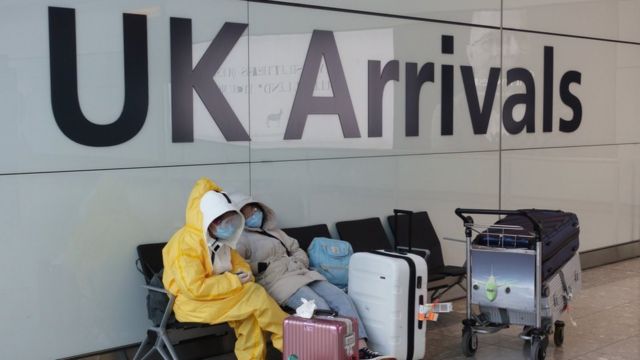
Racism: UK ignore EU countries of confirmed Omicron Variant, place 12 African Countries on Red Alert, Travel Ban

by Folarin Kehinde December 7, 2021
written by Folarin Kehinde

For what some would have assumed to be scientific on the recent ban of some African countries by the UK to curb the spread of new omicron variant, many are optimistic that it is clearly an act of racial discrimination.

It would be recall that on the eve of the new red list becoming effective, there were confirmed cases in countries such as Australia, Austria, Belgium, Botwana and Canada.

Others include Hong Kong, Nigeria, South Africa, Switzerland, Israel, Italy and UK.

The travel ban was extended to African countries such as Angola, Botwana, eSwatini, Lesotho, Malawi, and Mozambique.

Others include, Namibia, Nigeria, South Africa, Zambia and Zimbabwe.

Reaction has however continued to trail this discriminatory act from people all over the walks of life.

The inclusion of Nigeria on the list has generated reaction from the government and her citizens.

Minister of Information and Culture, Alhaji Lai Mohammed, who said this at a press conference in Abuja on Monday, described the travel ban as discriminatory.

Also, Nigeria’s High Commissioner to the UK, Alhaji Sharafa Ishola, described the travel ban as apartheid.

Britain had on Saturday banned Nigerian travellers after it said it discovered 21 cases of the Omicron variant in people who recently visited Nigeria.

Last week, Canada banned Nigerian travellers after the detection of the variant in persons who visited Nigeria.

The Minister of Health, Dr Osagie Ehanire, in an interview on Channels Television’s ‘Politics Today’ programme on Sunday, faulted the ban, saying it would hurt livelihoods.

But the Head of Communications, British High Commission, Hurlock, said the UK was aware of the significant impact of the travel ban.

He also noted that the decision would affect people in both the UK and Nigeria, particularly at this time of the year, but stated that it was a precautionary measure meant to protect public health in England.

Hurlock, said, “We know that this decision will have a significant impact on people in both our countries, particularly at this time of year.”This decision is a precautionary measure to protect public health in the UK, while we try to understand this new variant.

“These are temporary measures that have been introduced to prevent further Omicron cases from entering the UK, and will be examined at a review point on December 20.”

The commission stated that it would continue to work with the local authorities in tackling the pandemic.

But earlier on Monday, the Minister of Information and Culture, Mohammed, condemned travel bans by the UK, Canada, Indonesia, Hong Kong and others.

The United Kingdom on Monday justified its travel ban on Nigeria, saying the measure was a temporary measure aimed at protecting its public health.

Mohammed argued that the decision of Britain was based on discrimination and prejudice and not science because so far, no one had died of the Omicron strain.

He said it was obvious that many in the West were upset that their predictions on COVID-19 infections had failed to materialise.

The minister noted that many from the UK had also tested positive in Nigeria but Britain was not banned.

He also explained why Nigeria still received South African President, Cyril Ramaphosa, and his entourage despite the country recording a large number of Omicron cases.

He said even the United Nations had faulted the recent travel bans, adding that it was nonsensical and nothing but travel apartheid.

“If somebody who is a Nigerian but holds a British passport is allowed to enter Britain, he is as risky as I am. Is it the passport that now reduces his risk? That doesn’t make sense. If my cousin who holds a British passport stays in my house and is going back, you allow him to come in but you say I can’t?” Mohammed asked.

He faulted claims that Nigeria deserved to be banned because 21 persons with history of travel to Nigeria had tested positive in the UK.

The minister wondered why other European countries were banned by the UK including those with Omicron cases.

“I don’t think the issue is how many people have tested positive or how many people Britain claims have tested positive. My position is very clear. Is travel ban the answer? The answer is no. Number one, where is the origin of this Omicron variant? It is definitely not Africa or Nigeria,” Mohammed said.

The minister argued that the travel ban was counterproductive and wondered why British citizens coming from Nigeria were still allowed in.

“How do you slam this kind of discriminatory action on a country of 200 million people, just because of less than two dozen cases? Whereas British citizens and residents are allowed to come in from Nigeria, non-residents from the same country are banned.

“The two groups are coming from the same country, but being subjected to different conditions. Why won’t Britain allow people in both categories to come in, and be subjected to the same conditions of testing and quarantine? This is why this decision to ban travellers from Nigeria, who are neither citizens nor residents, is grossly discriminatory and punitive.”

He said the vaccine apartheid whereby developed countries denied developing nations vaccines was what propelled COVID-19 mutations.

Mohammed maintained that developed nations must understand that until everyone is safe, no one is safe.

Speaking in a similar vein, the Minister of State for Health, Dr Olorunnimbe Mamora, said the presidential committee would take a decision soon.’

When asked if Nigeria would retaliate, Mamora said it was not about retaliation but more of what would be in the best interest of Nigerians.

In a related development, British Airways on Monday informed travel agents in Nigeria about the restriction of flights from Nigeria to the UK following the ban.

It disclosed this in a notice, titled, “Restrictions for travel from Nigeria to the UK,” which was sent to travel agents of the international carrier that operate in Nigeria.

This came as it was gathered in Abuja on Monday that most passengers of the airline stayed away from the Nnamdi Azikiwe International Airport, Abuja, due to the restrictions by the carrier and the ban on Nigeria by the UK government.

The notice by British Airways to travel agents read in part, “As a result of the UK government placing Nigeria on to the red list, we continue to closely monitor the situation and adjust our schedule accordingly.

“All flights from Lagos to London Heathrow have been re-timed. This is due to restrictions at London Heathrow to support arrivals from a red-list country.

“All customers travelling from Nigeria must follow the UK government’s rules on arrivals from a red-list country and have a negative PCR test result within the 48 hours prior to their departure from Nigeria.”

It added, “Only British or Irish nationals or customers who have residence rights in the UK will be allowed to enter the UK, where they will be required to quarantine in a government facility.”

December 7, 2021 0 comments
0 FacebookTwitterPinterestThreadsBlueskyEmail
Health

If poor countries go unvaccinated, rich ones will pay, says study

by Leading Reporters May 7, 2021
written by Leading Reporters

In monopolising the supply of vaccines against Covid-19, wealthy nations are threatening more than a humanitarian catastrophe: The resulting economic devastation will hit affluent countries nearly as hard as those in the developing world.

This is the crucial takeaway from an academic study to be released Monday (Jan 25). In the most extreme scenario – with wealthy nations fully vaccinated by the middle of this year, and poor countries largely shut out – the study concludes that the global economy would suffer losses exceeding US$9 trillion (S$12 trillion), a sum greater than the annual output of Japan and Germany combined.

Nearly half of those costs would be absorbed by wealthy countries like the United States, Canada and Britain.

In the scenario that researchers term most likely, in which developing countries vaccinate half their populations by the end of the year, the world economy would still absorb a blow of between US$1.8 trillion and US$3.8 trillion. More than half of the pain would be concentrated in wealthy countries.

Commissioned by the International Chamber of Commerce, the study concludes that equitable distribution of vaccines is in every country’s economic interest, especially those that depend most on trade. It amounts to a rebuke to the popular notion that sharing vaccines with poor countries is merely a form of charity.

“Clearly, all economies are connected,” said Professor Selva Demiralp, an economist at Koc University in Istanbul who previously worked at the Federal Reserve in Washington, and is one of study’s authors. “No economy will be fully recovered unless the other economies are recovered.”

Prof Demiralp noted that a global philanthropic initiative known as the ACT Accelerator – which is aimed at providing pandemic resources to developing countries – has secured commitments for less than US$11 billion toward a US$38 billion target. The study lays out the economic rationale for closing the gap. The remaining US$27 billion may, on its face, look like an enormous sum but is a pittance compared with the costs of allowing the pandemic to carry on.

The commonplace idea that the pandemic respects neither borders nor racial and class divides has been promoted by corporate chief executives and pundits. This comforting concept has been belied by the reality that Covid-19 has trained its death and destruction of livelihoods on low-wage service workers, and especially racial minorities, while white-collar employees have been able to largely work safely from home, and some of the world’s wealthiest people can ride out the pandemic on yachts and private islands.

But in the realm of international commerce, there is no hiding from the coronavirus, as the study brings home. Global supply chains that are vital to industry will continue to be disrupted so long as the virus remains a force.

A team of economists affiliated with Koc University, Harvard University and the University of Maryland examined trade data across 35 industries in 65 countries, producing an extensive exploration of the economic impacts of unequal vaccine distribution.

If people in developing countries remain out of work because of lockdowns required to choke off the spread of the virus, they will have less money to spend, reducing sales for exporters in North America, Europe and East Asia. Multinational companies in advanced nations will also struggle to secure required parts, components and commodities.

At the centre of the story is the reality that most international trade involves not finished wares but parts that are shipped from one country to another to be folded into products. Of the US$18 trillion worth of goods that were traded last year, so-called intermediate goods represented US$11 trillion, according to the Organisation for Economic Cooperation and Development.

The study finds that the continued pandemic in poor countries is likely to be worst for industries that are especially dependent on suppliers around the world, among them automotive, textiles, construction and retail, where sales could decline more than 5 per cent.

The findings add a complicating layer to the basic assumption that the pandemic will leave the world economy more unequal than ever. While this appears true, one striking form of inequality – access to vaccines – could pose universal problems.

In an extraordinary testament to the innovative capacities of the world’s most skilled scientists, pharmaceutical companies produced life-saving vaccines in a small fraction of the time thought possible. But the wealthiest countries in North America and Europe locked up orders for most of the supply – enough to vaccinate two and three times their populations – leaving poor countries scrambling to secure their share.

Many developing countries, from Bangladesh to Tanzania to Peru, will likely have to wait until 2024 before fully vaccinating their populations.

The initiative to supply poor countries with additional resources gained a boost as US President Joe Biden took office. The Trump administration did not contribute to the cause. Mr Biden’s chief medical officer for the pandemic, Dr Anthony Fauci, promptly announced that the United States would join the campaign to share vaccines.

In contrast to the trillions of dollars that governments in wealthy countries have spent to rescue companies and workers harmed by the health emergency and the wrenching economic downturn, developing countries have struggled to respond.

As migrant workers from poor countries have lost jobs during the pandemic, they have not been able to send as much money home, levelling a major blow to countries that have relied on these so-called remittances like the Philippines, Pakistan and Bangladesh.

The global recession has slashed demand for commodities, decimating copper producers like Zambia and Congo, and countries dependent on oil exports like Angola and Nigeria. As Covid-19 cases have soared, that has depressed tourism, costing jobs and revenue in Thailand, Indonesia and Morocco.

Many poor countries entered the pandemic with debt burdens that absorbed much of their government revenue, limiting their spending on healthcare. Private creditors have refused to participate in a modest debt suspension programme forged by the Group of 20. The World Bank and the International Monetary Fund both promised major relief but failed to produce significant dollars.

This, too, appears to be changing as new leadership takes over Washington. The Trump administration opposed a proposed US$500 million expansion of so-called special drawing rights at the IMF, a reserve asset that governments can exchange for hard currency. Mr Biden’s ascent has bolstered hopes among fund members that his administration will support the expansion. Democrats in Congress – now in control of both chambers – have signalled support for a measure that would compel the Treasury to act.

Still, in capitals like Washington and Brussels, the discussion about support for the developing world has been framed in moral terms. Leaders have debated how much they can spare to help the planet’s least fortunate communities while mostly tending to their own people.

The study challenges that frame. In failing to ensure that people in the developing world gain access to vaccines, it concludes, leaders in the wealthiest nations are damaging their own fortunes.

“No economy, however big, will be immune to the effects of the virus until the pandemic is brought to an end everywhere,” said Mr John Denton, secretary-general of the International Chamber of Commerce. “Purchasing vaccines for the developing world isn’t an act of generosity by the world’s richest nations. It’s an essential investment for governments to make if they want to revive their domestic economies.”

May 7, 2021 0 comments
0 FacebookTwitterPinterestThreadsBlueskyEmail
Headlines

Volte-face, Nigeria Wants U.S. Africa Command Headquarters in Africa

by Leading Reporters May 4, 2021
written by Leading Reporters

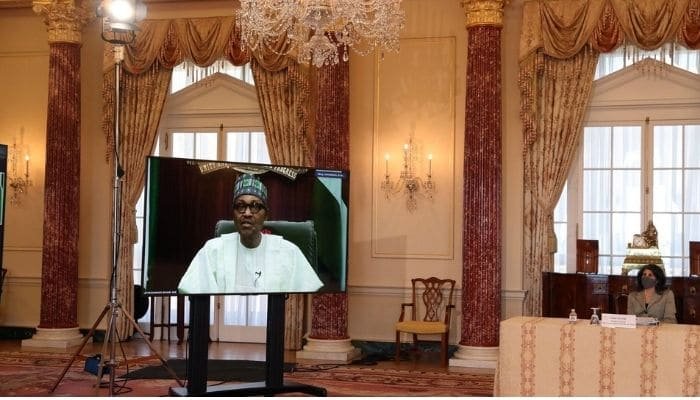
On April 27, Nigerian President Muhammadu Buhari, in a virtual meeting with U.S. Secretary of State Antony Blinken, requested that the United States move the U.S. Africa Command (AFRICOM) headquarters from Stuttgart, Germany to Africa.

The request marks a reversal of official Nigerian opposition—first made public twelve years ago—to AFRICOM plans to move to the continent. The shift likely reflects the conclusion that the security situation in West Africa and Nigeria is out of control, spurring a willingness to consider options hitherto unacceptable. Buhari argued that AFRICOM’s headquarters should be closer to the theater of operations. He also seemed to imply greater U.S. involvement in West African security, including a kinetic dimension in the context of greater Western support for West Africa’s response to its security threats. The statement released by President Buhari’s office following the meeting did not indicate whether the president offered Nigeria to host the AFRICOM headquarters.

When President George W. Bush established AFRICOM in 2007, a military-civilian hybrid command in support of Africa, African official reaction was largely hostile, seeing the effort as “neo-colonialist.” The Nigerian government took the lead in persuading or strong-arming other African states against accepting the AFRICOM headquarters, which was thereupon established at Stuttgart, Germany, already the headquarters of the European Command.

Up to the death of dictator Idriss Déby on April 27, Chad fielded the most effective West African fighting force against various jihadi groups and worked closely with France, the United States, and other partners. However, post-Déby, Chad is becoming a security unknown, with indigenous insurrections far from quelled and opposition demonstrations to the succession in the capital, N’Djamena. In Nigeria, in some quarters at least, panic has emerged over the erosion of security, and calls on the Buhari administration to seek outside help have been growing.

In addition to opposing AFRICOM in the first place, the Nigerian military authorities have been largely uncooperative with the U.S. military. Hence, U.S. military involvement in Nigeria beyond limited training operations is minimal, and the country does not host any American defense installations. Successive Nigerian governments have wanted to purchase sophisticated American military equipment but have rejected U.S. oversight. In fact, Nigerian purchases of U.S. military material have been rare, despite their high-profile, ultimately successful purchase of twelve A-29 Super Tucanos—sophisticated aircraft.

If opposition to AFRICOM is now muted, it has not gone away. Former Nigerian Senator Shehu Sani, an outspoken critic of the United States, characterized Buhari’s volte-face as “an open invitation for recolonisation of Africa.” In his view, Nigeria should seek only “technical assistance.” Buhari is promising much better multilateral cooperation; it remains to be seen whether he can deliver.

From an American perspective, moving AFRICOM’s headquarters after fourteen years in Stuttgart would be a major undertaking. The defense review, now underway, will likely include the AFRICOM headquarters location issue. However, should the AFRICOM headquarters move, it is unlikely—if not impossible—that it would be to Africa, with its logistical challenges. Some in the U.S. Congress support moving AFRICOM’s headquarters to the United States as a cost-effective alternative. For example, South Carolina’s senators, both Republican, have advocated moving it to Charleston, the site of large U.S. military installations.

Credit: www.cfr.org

May 4, 2021 0 comments
0 FacebookTwitterPinterestThreadsBlueskyEmail
Opinion

Nigeria’s perennial recession; a result of policy somersault.

by Leading Reporters May 1, 2021
written by Leading Reporters

Nigeria will predictably be in recession for a long time. When you keep doing the same thing and expect different results, you will need to check yourself. It appears we are not in a hurry to live in the reality of the 21st century with others.

I sometimes wonder why we like to put the cart before the horse as a country. There  has never been a time when we did anything that was not opposite of what everyone else was doing. Fundamental economics teaches that before you stop importation, you need to have put in place import substitution strategy, and get them working properly before attempting any grandstanding.

Then again, timing is very important in making policy decisions. You cannot wake up from the wrong side of the bed and declare things banned. It is as insensitive as it is unconstructive.  People have often questioned the reasons for some government policies in Nigeria.

What is more heart breaking is where some ‘supporters’ get the kind of shameless illiteracy with which they defend retrogressive policies. Let us start with the Covid-19 decisions of the government.  As the pandemic was biting hard, incomes were shrinking. That was when we suddenly woke up to ban in a commando style,  a whopping 41 imported items, among which were foodstuff and other consumer goods critical to every day survival.

That is not all o. The people were losing jobs in droves. That means that purchasing power was falling rapidly and the country trapped itself in stagflation. Prices were skyrocketing and there was no purchasing power in the hands of the people. To my surprise, some people who I thought ‘know book’ were  just falling my hands in the halleluyah praise singing in honour of the courage with which the government was ‘tackling’ the economy. We would argue it until I had a headache. At some point I couldn’t tell if it was the argument that caused the headaches or the useless virus that trapped all of us in our homes.

Puerile arguments were advanced in support of the government. I took a look at my then none months old baby and asked her if at that age she could disgrace her father by saying such a meaningless thing. One of the headless statements was that China closed their borders and started agriculture. And boom! They became greater, the China you know today. I was torn between laughter and sorrow. 

The story that they did not verify is that China’s maximum ruler, chairman Mao Zedong, threaded the communist path. He closed the boarders and decided on a pilot execution of certain apocryphal economic policies. He closed the Chinese borders to neighbouring countries. And then starvation set in.

Chairman Mao’s decision led to one of the most catastrophic man made starvation in human history which left between 15 to 55 million people dead, and hundreds of people malnourished. That happened between 1959 and 1961. Zedong had no choice but to immediately take steps to reverse the policy.

But ridiculously, that policy was what Zedong called the Great Leap. By 1962, China having seen nwe, reversed themselves and opened their borders. They started an industrialization policy that embraced the domestication of technology. They started to produce for export.

It is the same as Nigeria’s great leap that happened in the midst of a world wide devastation. But wait, who exactly did Nigerians offend that is so unforgiving? Nigeria wanted to leap. Two things happened. She leaped in the darkness of a pandemic with its eyes wide shut! Where did we land? In a circle of inflationary pressures.

First, we ought to have had a solid import substitution plan before talking of shutting down importation. We do not have mechanised agriculture. We want to produce rice for a population of 200 million people with hoes and cutlasses on an unyielding soil. We have no reservoirs where we store excess grains for time of scarcity. What am I even saying, we do not even have enough. Where are we getting the excess from? We might as well be wasting money building silos.

Even the ones planted are being eaten by the holy cows. Private investors in agriculture have had their farms vandalised by cattle which roam across the country. The famine loving government has encouraged the increased devastation of the farms by failing to call the vandals and bandits to order.

People have abandoned the farms and run away to join the army of the hungry parading the streets in the cities to hustle for the little that’s available. That’s a double whammy. No money and the prices of food are high.

The north east and north west of Nigeria used to be the producer of grains and spices. But not anymore. Boko Haram has killed and maim many a farmer, destroyed promising Micro, Small and Medium Scale businesses like sales of rice, onions, fish etc that accompany farming. They have turned large swaths of thriving villages and towns into desolate, uninhabited lands. The best you get in such places in Borno, Yobe and environs are Internally Displaced People’s camps. Even when those at the camps Internally Displaced People’s camps. Even when those at the camps attempt to do little fishing here and farming there, they are traced to the camps and killed. The survivors have become dependent on the lean resources instead of the contributors that they used to be.

On all fronts, Nigeria is scoring abysmally low. In the midst of the confusion called policy, the youths decided to make themselves happy by trading in cryptocurrencies.  The government, like the proverbial village people, followed them there and blocked the channel.

Foreign exchange from that sector has been blocked. This is while the entire world is running towards digital currencies o. Big companies have started accepting Bitcoin as payment for their products, the risks not withstanding. Tesla is a major example. Nigeria nko? They banned it. This is digital currency. Then we have a Digital Economy ministry which knows next to nothing about how to rein in the volatility of digital currency. And some bishops, youths etc had the effrontery to carry placards under the hot Abuja sun to assault our collective intelligence that Pantami is doing well as the head of that ministry.

Nigeria will continue in this damnable trajectory unless things change from the anachronism it has adopted as a state policy to what the world has embraced. The worldview of the government is annoyingly too narrow.

May  Nigeria quickly realise that like the ostrich, it is burying its head in the sand while the entire body is outside. Very soon we will be forced to look inwards. The increase in prices are eroding profits and people are getting thrown out of jobs. The current unemployment rate in Nigeria is 33%. Nigeria is among the first three most terrorised country in the world. Nigeria took over from India as the poverty capital of the world in 2019, according to the Austria based World Poverty Clock and The World Bank in separate reports, with 1 person sliding into abject poverty every six minutes.

To be continued.

Alex Agbo is a writer and an economic researcher based in Lagos.

May 1, 2021 0 comments
0 FacebookTwitterPinterestThreadsBlueskyEmail
Headlines

First “African Climate Clock” to be received in Nigeria

by Leading Reporters April 27, 2021
written by Leading Reporters

Watch Virtual Event here:  http://bit.ly/africanclimateclock

Abuja, Nigeria. — The first CLIMATE CLOCK to be received by an African nation will be presented in a high level official presentation ceremony of the Government of Nigeria in Abuja on Tuesday.

Alhaji Mohammed Danjuma, social activist and Climate Champion

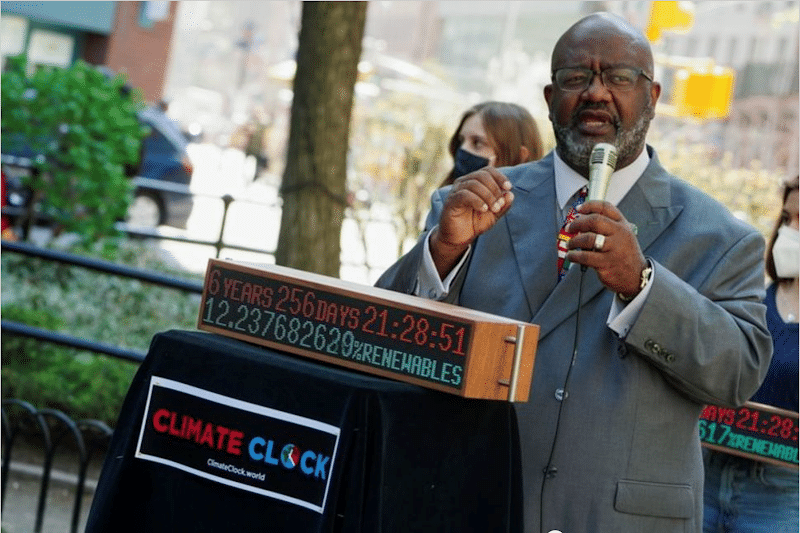
The handheld clock will be presented to Alhaji Mohammed Danjuma, social activist and Climate Champion,  by Jerome Ringo, former chair of the National Wildlife Federation, and currently Goodwill Ambassador to the Pan African Parliament.  

Nigeria will be the first African nation to receive a CLIMATE CLOCK. Ringo received the clock at an event in New York City on Monday, April 19 where Ringo delivered a clock to UN Ambassador from ECO WAS, which represents 15 West African nations, including Nigeria. Ringo plans to take a number of clocks to several other African nations. The presentation of the Climate Clock to Alhaji Mohammed Danjuma in Abuja on Tuesday would be followed, at a later date by a high-power delegation to present the clock to the President of the Federal Republic of Nigeria, His Excellency Muhammadu Buhari .

WHAT: First climate clock to be received by an African nation

WHEN: Tuesday April 27, 2021, 1.00pm to 3.00pm (WAT), 8:00am to 10:00am (EST) USA

WHO: Jerome Ringo presenting to the Government of Nigeria, delivered to Climate Champion Alhaji Mohammed Danjuma. With H.E. Pauline K. Tallen Minister of Women’s Affairs, and Dr. Paul Abolo, Ecologistics, African Climate Clock Initiative.

WHERE (Physical): Bon Hotel Elvis, #2 Monrovia Street, Wuse II, Abuja.

WHERE (Virtual): http://bit.ly/africanclimateclock

The Climate Clock project is known for the giant clock in New York’s Union Square, as well as portable handheld clocks that climate leaders took to the front of the White House and projected onto the Department of Energy in DC earlier this week.

Ringo stated: “This clock is a call to action. Future solutions are great, but we need NOW solutions. Solutions that create green jobs that can replace the fossil fuel economy.”

The CLIMATE CLOCK shows the deadline before our global Carbon Budget runs out, i.e. the time left before we emit enough carbon into the atmosphere to set the world on a course to exceed 1.5 C warming, which scientists say is a critical tipping point. The now famous giant clock recently added a sign of hope. The Deadline that has been displayed since it’s launch in September is now joined by a new “Lifeline” that displays the percentage of global energy currently supplied from renewable sources — 12.2 percent, and going up, but it needs to be going up much faster to meet our deadline. The world must do whatever it can to raise our lifeline to 100% before the deadline runs out. For more information on the science behind the clock: https://climateclock.world/science.

Ringo used the shift in the clock to speak to  the different responsibilities that different nations had for meeting our climate deadline. “Africa, like other developing regions who suffer climate impacts from CO2 historically released by industrialized nations, deserves a lifeline. They need countries like the US, that are the greatest contributors to the problem, to contribute the most to this renewable lifeline that is on the clock. The United States is only 5% of the world’s population but is responsible for 25% of the world’s carbon emissions.”

“The CLIMATE CLOCK says we must do what the science demands, and pursue solutions that leave no one behind.” said Laura Berry, research director for CLIMATE CLOCK.

The original prototype for the handheld clock was built in partnership with Ayodomola Okunseinde.

Earlier this week, the iconic CLIMATE CLOCK in New York’s Union Square added a “Lifeline” to show the percentage of global energy currently supplied from renewable sources — 12.2 percent, and going up, but nowhere near fast enough. Handheld “action” clocks were unveiled and distributed to youth leaders, who carried them to their own respective events.

Light-projected clocks were launched simultaneously in DC and Glasgow this week. 

Light-projected clocks were launched simultaneously in DC and Glasgow this week. In DC, on the Dept. of Energy. In Glasgow, on the landmark Tolbooth Steeple. The Glasgow Climate Clock will run continuously every night for the six months from Earth Day until the COP26 begins, turning the eyes of the world to the upcoming UN Summit in November.

Climate justice groups brought a clock to a rally in front of the White House on Wednesday, April 21.

Jerome Ringo, the Founder and Chairman of Zoetic Global is taking climate clocks to the heads of state of Nigeria, Ghana and other African nations to promote energy efficient and renewable energy solutions throughout the African continent.

350 Video: Facebook | Twitter | Youtube

NowThis video: Facebook | Twitter

ClimateClock.world

  Twitter: @theclimateclock    |    Instagram: @climateclock.world   |  TikTok: @theclimateclock

April 27, 2021 0 comments
0 FacebookTwitterPinterestThreadsBlueskyEmail
Headlines

World Bank: name Nigeria as Africa’s poorest supplier of electricity with unending power outage

by Leading Reporters April 26, 2021
written by Leading Reporters

Nigeria now has the highest percentage of the population without access to electricity globally, overtaking the Democratic Republic of Congo, according to the World Bank reports.

In a virtual engagement with reporters in Abuja on the Power Sector Recovery Programme (PSRP), the bank officials said 25 per cent of Nigeria’s population do not have access to electricity supply.

The Word Bank also stated that many of the over 200 million Nigerian population with access to electricity had battled prevalent blackouts and defective electricity supply for years with Billions injected to the failed sector.

“Nigeria now has the largest number of unelectrified people globally, and the trend is worsening; of the electrified, the supply is very unreliable with widespread blackouts,” it said.

The financial institution observed that the electricity supply had risen from 1.1 per cent yearly since 2010 but at a slow pace compared to the population growth of three per cent annually.

“Nigeria now has 25 per cent more unelectrified people than the second most unelectrified country (DRC – in absolute terms). For the bottom, 40 per cent of the population (mostly rural), access to grid electricity is even lower at about 31 per cent nationwide. Regionally, only South-West has access of over 50 per cent (except Kano),” it said.

In his presentation, Ashish Khanna, the WBG Practice Manager, West, and Central Africa Energy, noted, “The power sector is operationally inefficient with unreliable supply exacerbated by high losses and lack of payment discipline.”

Mr Khanna explained that many businesses had lost their prospects due to the erratic power supply in Africa’s most populous country.

“Businesses in Nigeria lose about $29 billion annually because of unreliable electricity while Nigerian utilities get paid for only a half of electricity they receive,” he added.

The bank further stated that 80 per cent of grid-connected households have less than six hours of electricity daily, while 40 per cent of those with access to power depend on other means.

It, however, pointed out that the PRSP intended to foster a change in the electricity situation while disclosing that $1.25 billion was approved by the board between June 2020 and February 2021 to reset the power sector.

April 26, 2021 0 comments
0 FacebookTwitterPinterestThreadsBlueskyEmail
ExclusivesHeadlines

Azman’s Air Near-Fatal Landing: Passengers Say Worn-Out Tyres May Be Responsible For The Incident

by Leading Reporters March 10, 2021
written by Leading Reporters

Some passengers onboard Azman Air Boeing 737-500 with Registration Marks SN-SYS, which left from Nnamdi Azikiwe International Airport Abuja to Murtala Mohammed Airport Lagos which lost four tyres on landing on 16th of February believe that bad landing on worn-out tyres may have been the cause of the near-fatal incident involving the aircraft.

The incident happened around 5pm local time in Lagos when the airline from Abuja to Lagos began to experience landing challenges.

Azman Tyres

One of the passengers who spoke to LeadingReporters on condition that his name would not be mentioned said that he started feeling that something was wrong when the pilot kept hovering around the airport.  He said that the pilot made the first attempt at landing, but had to pull up the plane again, citing bad weather condition. 

The passenger who boarded the plane said that the landing was so sudden and nerve-cracking that you would know that there was something amiss. He frowned at what he described as desperate moves by the owners of the airline to stop them from taking pictures, insisting that it infringed their right to be well informed about what happened.

LR- Azman

“Trying to force us not to take pictures was a desperate move by the airliner.  Possibly, there was something they wanted to hide. It was the height of insensitivity to treat passengers who narrowly escaped being perished the way they did.  They seemed more concerned in keeping their names than caring about the passengers.

“We thought we were not going to make it.  In fact, I started noticing that something was wrong when the pilot began to hover around the airport.  He made the first attempt at landing and suddenly pulled up the plane.  I knew something was wrong.  He announced inclement weather, but it seemed something much more than that.

LR Azman

The plane almost land-crashed.  When we were evacuated, something told me that the problem may be with the tyre.  I looked at the tyres.  I counted four burst tyres.  But beyond that, you’d notice that some of the tyres are so badly worn out before the burst.  The pictures are here to speak for themselves.

The aircraft, was said to have 49 passengers on board and 6 crew members. It had 4 burst tyres on landing on Runway 18R of Murtala Muhammed International Airport, Ikeja, Lagos, Nigeria.

Azman Tyres

All effort to get the management of Azman Air to address the allegations were unsuccessful as the person who spoke to our Lead Investigation Editor said he was not in a position to answer and could not link LeadingReporters to Azman Communication Department.

March 10, 2021 0 comments
0 FacebookTwitterPinterestThreadsBlueskyEmail
Nigeria
Opinion

The Tottering Nigeria Ship of State

by Folarin Kehinde January 30, 2021
written by Folarin Kehinde

All watchers of the Nigerian political space must be agreed that at the present, the Nigerian ship of state is tottering. 

Yes, Nigeria is a clearly wickedly structured country designed to fail. It has since its origin been seen as an unworkable union sustained by the greed and avarice of the political players. 

Ahmadu Bello, the Premier of Northern Nigeria never believed in it and said so clearly and also said that if the new country would be acceptable to him and his tribesmen, it must be as an extension of the Estate of Othman Dan Fodio, the grand patron of the Fulani tribe.

Chief Obafemi Awolowo did not mince words in describing it as a mere geographical expression on paper. Conspiracy theories mentioned him to be behind Nigeria’s first military coup and to have planned other insurrections to end the evil arrangement.

Dr. Nnamdi Azikiwe lamented at one time that if this union would not work, let’s peacefully close it up and go our different ways.

Today, Nigeria is popularly called a “contraption” instead of a country.

All those who have seized power in the Nigerian political space be they the Nigerian military or politicians has never been mandated by majority of Nigerians. They have either shot their way to power with the gun in military coups or stolen the mandates through election rigging and brigandage.

It is obvious that Nigeria has done nothing with the huge human and mineral resources it has than to totter as a drunken man because like the irresponsible drunken man, the rulers has displayed the highest form of irresponsibility in their misuse of the huge financial and human resources of the country concentrating more on stealing money with open bravado from the national treasury or wasting what they cannot steal.

Meanwhile, never has there been a time in the history of Nigeria when the Nigerian ship of state has been in the state it is in today. The tottering of Nigeria under the Presidency that is being run in the name of Muhammadu Buhari is like a floating piece of paper in a whirlwind. The only prospect one can see for Nigeria today is the likelihood of the piece of paper in a whirlwind falling into a bonfire, the sea or on the highway where fast moving Dangote trucks are struggling to navigate out of muddy potholes.

It is clear that shipwreck and bonfire is going to consume Nigeria in not so distant time and if those fail, the Dangote trailers would certainly bury the piece of paper in the muddy potholes in all of Nigeria’s roads.

The worst part of our condition is that the so-called elite in the academia are waiting to be bribed. They are not willing to do anything because they can find food to eat at present. They cannot see beyond their nose that before long some hungry Nigerian youth who they call hoodlums would soon come for them.

The political hawks and vultures are having a field day on the carcass of the dead elephant (Nigeria). They cannot see beyond their noses. They strongly believe that they can pay for enough firearms to keep the hungry, listless, hapless and disoriented youth at bay. These are the blind and brainless rulers of Nigeria. They are so blind and brainless and also deaf that they could not see or hear or remember what happened in Central African Republic in 2013 when Fulani rogue rulers like them took over that country and proceeded like they are doing in Nigeria now to expropriate and subjugate the rest of the populace politically, economically and religiously.

Perhaps the worst failures are the Nigerian youth who have over the years demonstrated a failure to use their brain. Demographically, the youth age people of Nigeria are more in numbers than the rest of Nigeria. Yet they sit back helplessly and watch rogue rulers rubbish our commonwealth and the only thing they do is to seek for ways to join them. One of the worst of the groups is the youth of Niger Delta. Nigeria is hanging on a single hinge – the oil. The oil is extorted from the Niger Delta. The youth of Niger Delta like their older generations are satisfied to receive bribe from the Fulani minority overlords – a bribe paid for by the oil money coming from their own land where they cannot farm or fish again. That they are satisfied to be bribed by the Fulani with cash and scholarships abroad and sidelined from having access to the wealth coming from their own land is what I cannot understand how a people would sit by and let it happen. 

One of the most worrying parts of the whole joke of a country is that the people and youth mainly are afraid to die and yet through the instrumentality of the Nigeria Police Force and Military, they are being killed on daily basis. This is why I said in past write-ups that “Nigerians are dead people who are afraid of being killed.” I cannot understand.

Well, history is not on the side of Nigerian politicians, rogue rulers and the Fulani. They have ignited a whirlwind that must destroy all of them. The time is coming and not so far away when the hapless youth would discover that it would be better to die fighting than to die like fools and chickens for sacrifice.

My advice to the Fulani and their comrades-in-arms rest of the rogue political class in Nigeria is to know that there is enough and to spare in this country when equity and rule of law is allowed to reign in it.  You need to redress your steps now before it is too late.  You think you have the Nigerian military and Police behind you.  You must know that it is only a few of the military and police who are enjoying the loot with you and that when the revolt shall come, the largest majority of the men and women under arms are going to turn those guns on you and cause your blood and those of your wives and children to be spilled on the streets of Nigeria.

The above is not my plan.  It is what happens in history.  Remember the theory of the species.  Once one particular species starts over-exploiting the ecosystem, nature engenders a revolt that changes it all.  Avoid having to be on the run like the Fulani from Central African Republic.  Wake up and learn.

January 30, 2021 0 comments
0 FacebookTwitterPinterestThreadsBlueskyEmail
Newer Posts
Older Posts

Recent Posts

  • Jabi Lake takeover stands even if God comes down – Wike

    May 6, 2026
  • Fuel Scarcity Looms As Dangote Refinery Hikes Fuel Price to N1350

    May 6, 2026
  • Why I moved to Kenya – Femi Lazarus

    May 5, 2026
  • IGP scraps SWAT nationwide

    May 5, 2026
  • 17 Reps Dump ADC for NDC

    May 5, 2026

Usefull Links

  • Contact Page
  • About Leading Reporters
  • Contact Us
  • Headlines
  • Investigation
  • Exclusives
  • Opinion
  • Business
  • Facebook
  • Twitter
  • Instagram
  • Linkedin

@2021 - All Right Reserved. Designed and Developed by PenciDesign


Back To Top
Leading Reporters
  • Featured
  • Politics
  • Opinion
  • Business
  • Entertainment
  • Sports
  • About Us
  • Contact