Leading Reporters
  • Headlines
  • Health
  • Business
  • Exclusives
  • Investigation
  • Entertainment
  • Opinion
Sunday, January 25, 2026
Hot
Nigerian-born nurse loses licence in Australia for sleeping...
BREAKING: Kano Gov Abba Yusuf dumps NNPP
National Grid Collapse For First Time in 2026
BREAKING: Tinubu approves posting of Ambassadors to U.S.,...
Insecurity: Kidnappers demand 17 motorcycles for release of...
FG to Abolish Hnd-Degree Dichotomy, Allow Polytechnics to...
AFCON Initiative drives stronger Nigeria Morocco cooperation
Obasanjo: I’ll Never Stop Having Children
JUST IN: Bandits abduct over 100 worshippers in...
Nigeria’s Non-oil exports hit record $6.1bn – NEPC
  • About Leading Reporters
  • Contact Us
Leading Reporters
Advertise With Us
  • Headlines
  • Health
  • Business
  • Exclusives
  • Investigation
  • Entertainment
  • Opinion
Hot
Nigerian-born nurse loses licence in Australia for sleeping...
BREAKING: Kano Gov Abba Yusuf dumps NNPP
National Grid Collapse For First Time in 2026
BREAKING: Tinubu approves posting of Ambassadors to U.S.,...
Insecurity: Kidnappers demand 17 motorcycles for release of...
FG to Abolish Hnd-Degree Dichotomy, Allow Polytechnics to...
AFCON Initiative drives stronger Nigeria Morocco cooperation
Obasanjo: I’ll Never Stop Having Children
JUST IN: Bandits abduct over 100 worshippers in...
Nigeria’s Non-oil exports hit record $6.1bn – NEPC
Leading Reporters
Leading Reporters
  • Headlines
  • Health
  • Business
  • Exclusives
  • Investigation
  • Entertainment
  • Opinion
Copyright 2024 - All Right Reserved
Home > Nigeria > Page 5
Tag:

Nigeria

Headlines

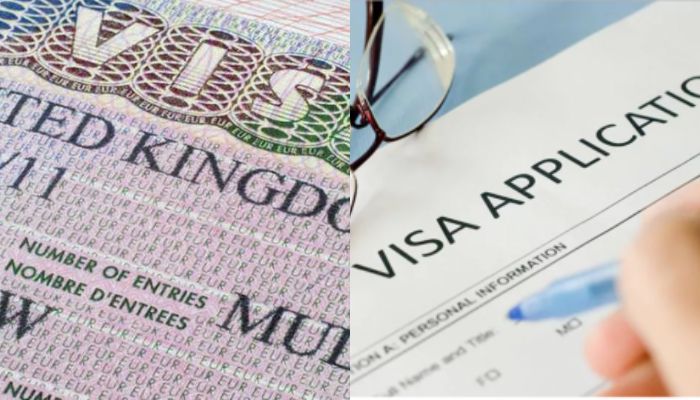
Nigerians Qualify As UK Launches Visa Scheme For Skilled Workers

by Folarin Kehinde August 24, 2022
written by Folarin Kehinde

The United Kingdom has announced that skilled foreign nationals can now apply for its worker scale up -visa program.

A scale-up worker visa is a visa route that allows people come to the UK to do an eligible job for a fast-growing UK business.

According to a statement on the www.gov.uk website, foreign nationals are now eligible to apply for the visa effective 22nd August.

The professions qualified to apply for the scale-up visa include: Scientists, Engineers, Programmers, Software Developers, Research and Development Professionals, Economists, Architects, Technicians, and Financial and Investment Advisers.

Applicants granted the scale-up visa are eligible to stay in the UK for 2 years. However, when the 2 years visa expire, they can extend their visa by 3 years for as long as possible.

According to a statement issued by the British government, the development would see growing businesses attract the right talent to enhance productivity across the economy as it is believed that scaling up is an important phase for high-growth businesses to continue growing and drive their international competitiveness.

The exercise is expected to see talent across various fields such as science, engineering, and programming as it brings in sought-after expertise and skills, enterprises that can boost their innovation and productivity and in turn keep contributing to the UK’s economy.

Nigerians and citizens of other countries are eligible to apply for the Visa programme as it is an opportunity for career advancement and experience.
August 24, 2022 0 comments
0 FacebookTwitterPinterestThreadsBlueskyEmail
BusinessHeadlines

Microsoft To Partner With Nigeria In Digital Identification For Development Project

by Folarin Kehinde August 13, 2022
written by Folarin Kehinde

American multinational technology company, Microsoft Corporation says it is willing to partner the Nigeria Digital Identification for Development (ID4D) project in the areas of capacity development and data protection.

Microsoft’s Government Affairs Lead, Nonye Ujam disclosed this during a working visit to the Nigeria ID4D project office in Abuja.

A statement by the Manager, Communications of the Nigeria Digital ID4D, Dr. Walter Duru explained that Ujam lauded the ID4D project for its timely intervention in the areas of data protection and digital identity in Nigeria, expressing the readiness of Microsoft to collaborate with the project to succeed.

“We are here to ensure that we support you to make things work very well. We are happy with the achievements Nigeria ID4D has recorded in such a short period.

“Microsoft Corporation has made a lot of investments and interventions in capacity development and cyber security. Beyond supporting governments in the area of capacity development, Microsoft meets their stakeholders where they are, hand-hold and close identified gaps. As people are working hard to upgrade and update themselves, that is how hard the bad players are working to update their skills.

This is why we must take data protection and cyber security very seriously,” the statement read.

Responding, Project Coordinator, ID4D Musa Odole Solomon expressed the readiness of the project to partner with Microsoft.

“We are open to collaborating with as many relevant stakeholders as possible to ensure that the project succeeds. We want the capacity of ecosystem implementing partners enhanced,” he said.

Speaking on data protection in Nigeria, Solomon stressed that: “the project is working very hard to ensure that a principal law is in place. We are constrained by time, considering the fact that elections are close. We are battling to ensure that we balance the urgency with quality. It will not just be done quickly, but also done very well. Stakeholders’ engagement is an ongoing activity and Microsoft is our major stakeholder. We are ready and willing to work with you.

“We are happy with your interest in capacity development. We operate an ecosystem model and our implementing partners need to benefit from the capacity building plans. It is one of our deliverables and we are willing to partner with Microsoft to close gaps in capacity.”

Solomon used the occasion to call on Microsoft Corporation to consider extending support to the National Identity Management Commission (NIMC) and other ecosystem implementing partners.

The coordinator used the occasion to invite Microsoft to the second leg of Focus Group Discussion on Nigeria’s Data Protection law, scheduled to hold at Lagos September 1, 2022.

Part of the activities lined up for the engagement is a courtesy call on the leadership of Microsoft Corporation in Nigeria. Conversations will center around data protection, capacity development and other areas of collaboration.

On the project coordinator’s team that received Ujam were the Internal and external communications Managers of the project, Dr. Duru and Mouktar Adamu.

The ID4D project is a Nigerian project, jointly funded by the World Bank, European Investment Bank and French Development Agency.

August 13, 2022 0 comments
0 FacebookTwitterPinterestThreadsBlueskyEmail
Headlines

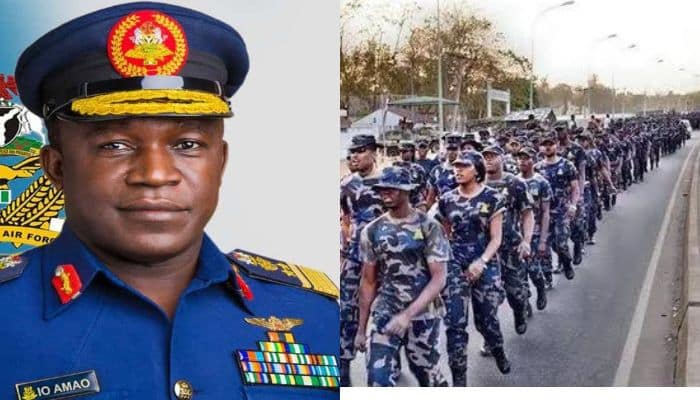
Nigerian Airforce Appoints New Branch Chiefs

by Folarin Kehinde August 4, 2022
written by Folarin Kehinde

Chief of the Air Staff , Air Marshal Oladayo Amao has approved the immediate appointment and redeployment of new Branch Chiefs, Air Officers Commanding and other senior officers.

The shake up is coming 48 hours after his directive to Air Force Operational and Air Component Commanders to maximize the deployment of firepower against terrorists and other criminal elements.

The newly appointed and redeployed senior officers are expected to assume their new offices on or before Friday, 5 August 2022.

In a statement on Thursday, the Director of Public Relations Information, Air Commodore Edward Gabkwet, said among the newly appointed Branch Chiefs are Air Vice Marshal Jackson Yusuf, formerly Chief of Training and Operations, now the Chief of Policy and Plans Headquarters NAF, Abuja; and AVM Oluwafemi Ogunmola, former Director of Intelligence Surveillance and Reconnaissance now Chief of Communications Information Systems.

AVM Aliyu Bello, former Chief of Standards and Evaluation is now redeployed as the CTOP, HQ NAF, Abuja while AVM Nkem Aguiyi takes over as the Chief of Air Intelligence, and AVM Hassan Abubakar, former AOC Logistics Command is now the Chief of Standards and Evaluation.

August 4, 2022 0 comments
0 FacebookTwitterPinterestThreadsBlueskyEmail
Headlines

Data Of Completed Voter Registration Across Nigeria

by Folarin Kehinde August 3, 2022
written by Folarin Kehinde

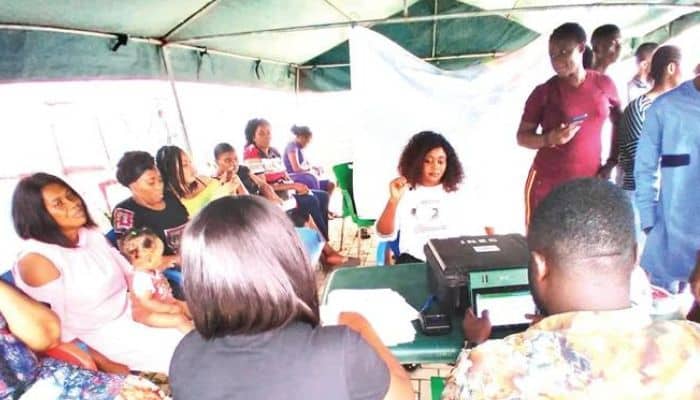
The Independent National Electoral Commission (INEC) has officially ended the Continuous Voter Registration (CVR) exercise, which started last year.

The total number of registered voters who completed their registration (online and physical) at the close of the CVR exercise stood at 12.29 million.

On June 28, 2021, INEC resumed the CVR and has since then given weekly updates of the online pre-registration and the physical completion of registration by voters.

The CVR was initially scheduled to end on June 30. However, on that day, the Commission, through its National Electoral Commissioner for Information and Voter Education, Festus Okoye, announced an extension of the exercise to ensure that all eligible Nigerians get registered. 

The CRV was first extended by 15 days, then another 2 weeks, bringing the total duration for the extension to 31 days (July 1st-31st). 

This new deadline elapsed on Sunday, July 31st, and the electoral Commission has stated there would be no further extension as they need to carry out other functions, which among others, include the clean up of the voter register for double and multiple registrations.

As the exercise finally ends, Dataphyte looks at the figure of those who completed their registration in the year-long CVR exercise and will join other registered voters from previous elections to decide the country’s fate in the 2023 general election. 

Number of Completed Registrations

Data released by INEC shows that 12.29 million persons completed their registration. Of this figure, 3.44 million were done online, while 8.85 million were done physically. By this figure, the total number of registered voters for the 2023 election is an estimated 96.3 million.

Election YearNumber of Registered Voters (Millions)Percentage Increase of New Registration
199957.94–
200360.824.98
200761.571.22
201173.5319.43
201567.42-8.30
201984.0024.59
2023* estimated96.3014.64

This figure is, however, subject to change after the electoral body cleans up the voter register for double registration.

Completed PVC Registration by States

At the end of the CVR exercise on July 31, the data published by INEC shows that Lagos has the highest number of persons who completed their PVC registration. The state has a total of 585,629 persons who completed their registration, followed by Kano with 569,103. Delta state came third with 523,517.

On the other hand, Ekiti, Yobe, and the Federal Capital Territory (FCT) recorded the least number of registrations. Ekiti and Yobe recorded 124,844 and 152,844 completed registrations, respectively, while the FCT had 211,341. 

Number of Males and Females who Completed their PVC Registration 

As earlier stated, 12.29 million persons completed their registration in the just concluded CVR exercise. Of this figure, 6.22 million, 50.6% of those who completed their PVC registration are females, while 6.07 million, 49.4% are males.

It is worth mentioning that 84,083 Persons with Disabilities (PWDs) completed their registration across genders. This is 0.68% of the 12.29 million completed registrations.

Completed PVC Registration by Age Group

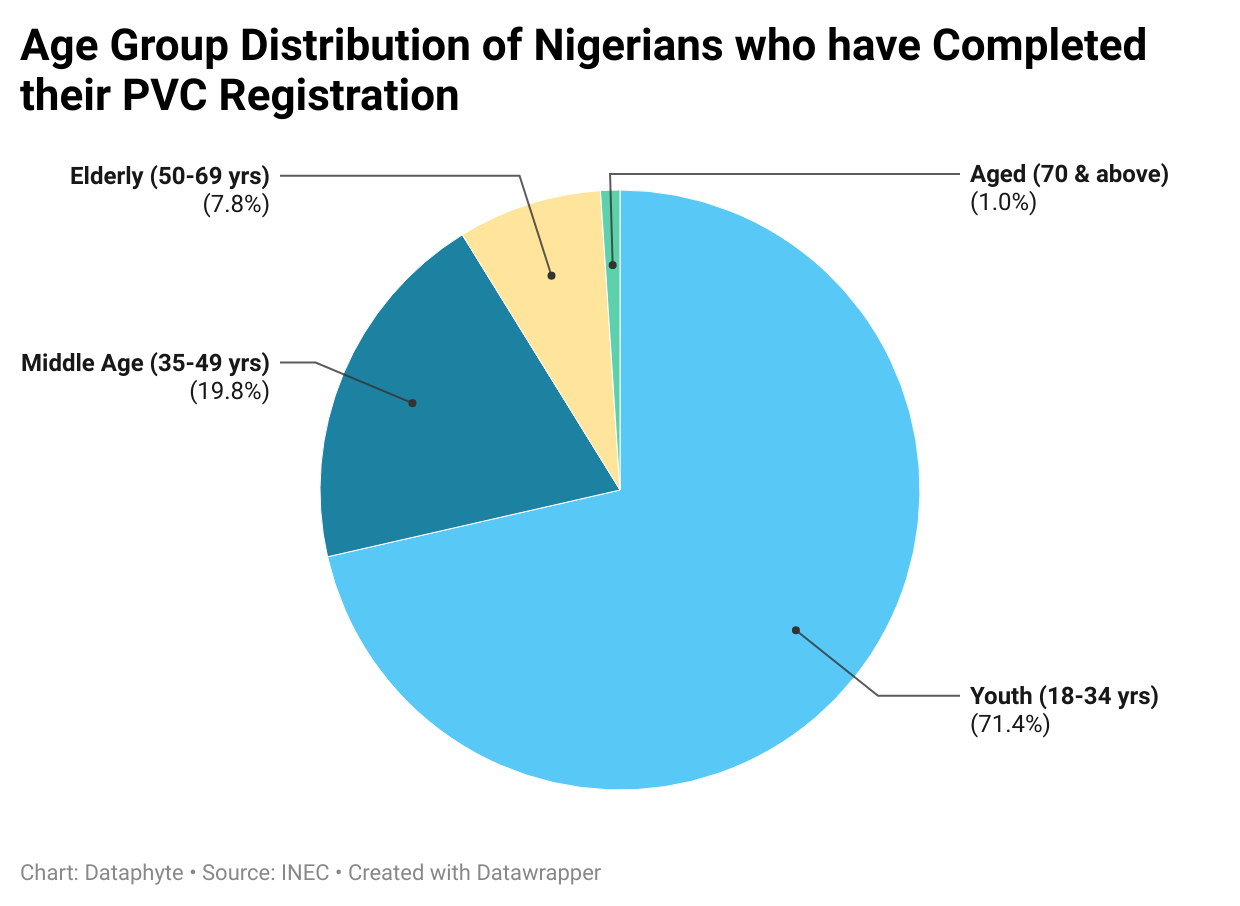
A breakdown of the data shows that 71.4% (8.78 million) of those who completed their registration are youth. This means that out of every 10 persons who completed their registration, at least 7 fall within 18-34 years range; the Soroke generation. 

2023 Election: Completed PVC Registration Across Nigeria in 5 Charts

Following is the middle age group, which accounts for 19.8% of the total number of persons who completed their registration. The elderly and the Aged (70 years and above) account for 7.8% and 1% of the completed PVC registration, respectively. 

Completed PVC Registration by Occupation

Students constitute the highest population of those who completed their registration. Of the 12.29 million who completed their registration, 4.5 million persons identified themselves as students.

2023 Election: Completed PVC Registration Across Nigeria in 5 Charts

Those into business and farming/fishing followed with 2.24 and 1.54 million respectively. 

At the bottom are Public Servants and Civil Servants, with 124,027 and 381,254 completed registration, respectively.

Completed PVC Registration by Geo-Political Zones

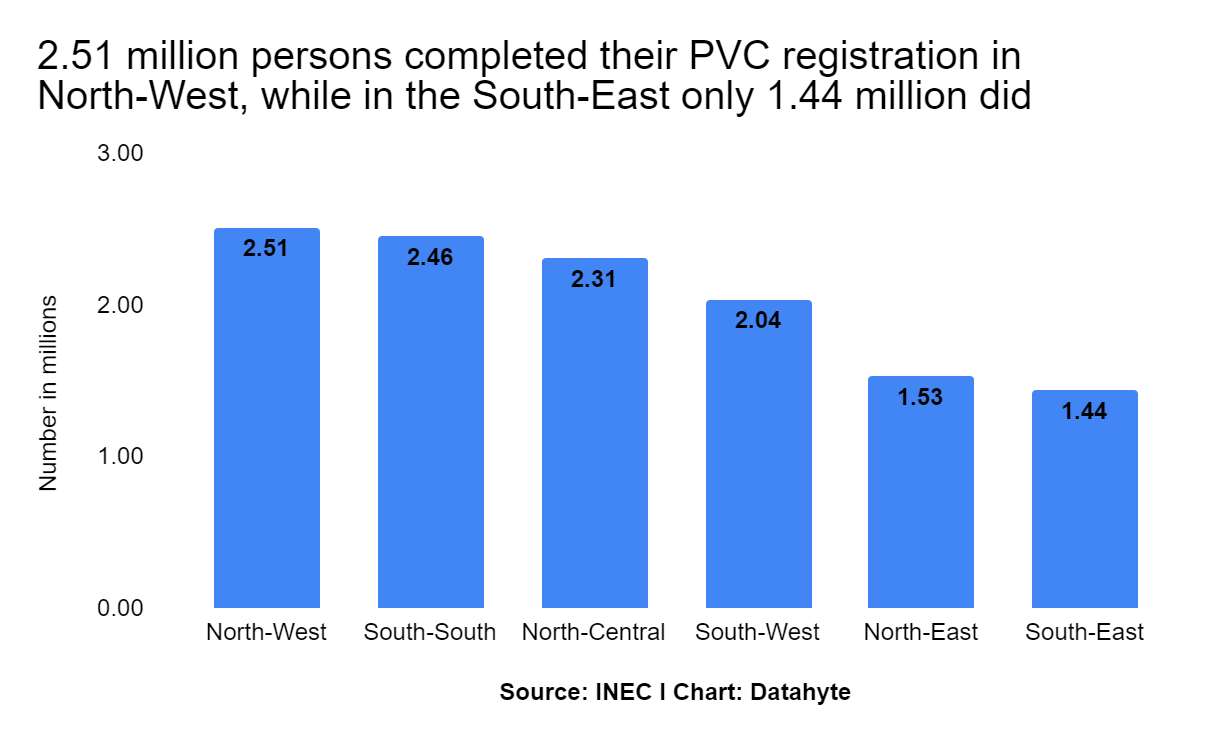
Nigeria has six geo-political zones. 2.51 million persons in the North-West completed their PVC registration making it the region with the highest registrations.

In the South-South, 4.46 million completed their registration. The North-Central and South-West followed with 2.31 million and 2.04 million respectively.

2023 Election: Completed PVC Registration Across Nigeria in 5 Charts

The North-East and South-East recorded less than 2 million, making them the two regions with the lowest number of persons who completed their registration at the end of the CVR exercise.

Source: Datahyte

August 3, 2022 0 comments
0 FacebookTwitterPinterestThreadsBlueskyEmail
OpinionHeadlines

Writing Buhari’s Scorecard

by Folarin Kehinde August 3, 2022
written by Folarin Kehinde

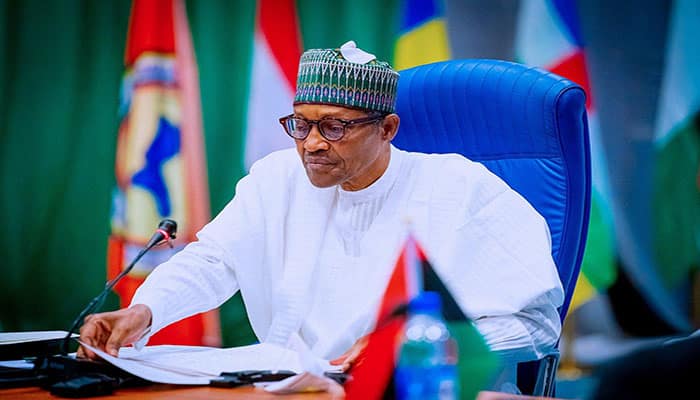
The consensus among Nigerians across different parts of our country today is that President Muhammadu Buhari has failed both as a leader and a two-term president. His inability to deliver on his electoral promises to secure Nigeria, making it a safe polity for life and property aside food and job security in the wake of what Nigerians then thought was the demolition job of the Peoples Democratic Party, PDP-led government of Goodluck Jonathan; fight corruption and relate with the people of Nigeria without fear or favour, in regard to religion, ethnic and gender identity- all of these have conspired to undermine his claim to a favourable place in history.

For a man who at a point enjoyed the unalloyed support and admiration of the vast majority of Nigerians from his part of the country, was accorded grudging respect from other parts on account of his apparent spartan lifestyle (which was seen as the appropriate antidote to the corrupt profligacy of the Jonathan years) and spent the latter part of his adult life aspiring to lead the country he once ruled as a military dictator for almost two years before he was ousted from power in a military putsch, this turn of events is without any doubt tragic. The more so it does not appear there is much the administration can achieve in the few months left before a new government comes into office.

President Buhari, indeed, has just about five active months, between August and February, left to ameliorate the harsh verdict of history. Not enough time to do much to say nothing of achieving a fundamental shift in opinion, expectations of Nigerians or his own capacity for any miraculous transformation in the state of the nation.

Any time after February, time during which the 2023 elections would have come and gone and a new president elected, would be only for the few house-keeping tasks left before Buhari enjoys his last presidential ride into Daura as a sitting president.

It is a journey, or more appropriately, a time he says he eagerly looks forward to. But whether that final journey home or life thereafter would be happy is beyond any one of us to say. The signs are, however, ominous and leave little to hope for.

Things need not have come to this point. The loss of credibility was gradual but steady and started with the erosion of trust from the outlining areas where the president had a very tiny, if any, support base in the South-East. At this stage, Nigerians from other parts of the country still harboured some hope that the president could achieve some good in the framework of democratic governance despite his reputation as a brutal, narrow-minded dictator. The anti-corruption image of the regime he led was sufficient to override these misgivings in some parts of the country barring the South-East.

But the disillusionment soon filtered to more liberal-minded people in other regions who could not make head or tail of the president’s ways, particularly his increasingly narrow take of national events that are regarded from the point of view of his region of the country and crass disregard of other parts. This went hand-in-hand with his habit of outsourcing presidential authority and responsibility to surrogates and hangers-on who know too well his weakness in this regard and thus proceed with their self-aggrandising agenda that are sold to the rest of the country in the name of national interest.

Soon communities of the North-Central region, that were being decimated by the predatory activities of common criminals masquerading as Fulani nationalists under the accommodating policies of the Buhari administration, would join the widening circle of malcontents and things would worsen as these criminals export their version of terror to parts of the South-West, leaving room for pockets of brigandage by local outlaws operating under the guise of Fulani invaders.

By the time the terrorists of the North-East closed rank with those of the North-West, leaving vast wastelands of destruction of property and life, the disenchantment has come full circle. It was no longer a matter of the North against the North-Central or the North against the South. It was clear that government has failed roundly and the strategy of divide-and-conquer would no longer work.

There is no hiding place for Abuja under Buhari any more. The attempt at globalising the failures of the government persuades only those who have chosen to be blind to the seven years of Buhari’s ineptitude. The world may be experiencing inflation at an unprecedented scale, the global economy under the strains of the Russia-Ukraine war may be heading for recession but none of these explains Buhari’s lack of connection with the Nigerian people, his neglect or outsourcing of his responsibilities to others while he enjoys the perks of his office like a patriarch in retirement.

In the last few months of his administration, Jonathan was able to downgrade the ability of Boko-Haram to inflict further damage on Nigeria. Rather than working along similar lines (as it is too late for Buhari to perform any miracle now that Nigerians look forward to his successor), Abuja under Buhari appears still to be looking for a scapegoat in the media, both local (that it accuses of lack of patriotism) and the British Broadcasting Corporation, BBC, that it is threatening to sanction for its expose on the ongoing brigandage in Zamfara. When the BBC did an expose on Nigerian universities, the government saw it as an opportunity to draw up laws tailor-made to the universities; when pastors were the target of a similar investigation, Abuja saw nothing amiss. But now the focus is on its own rotten underbelly, the intractable banditry in the North, it suddenly sees bad faith.

The historical fight between the Fulani and the Hausa over land and everything else under and above it, the BBC investigation shows, has been mismanaged and worsened by corruption in high places. The mystery that the Buhari administration has so far thrown around bandit terror has been shredded by the investigation that puts faces to known names and narratives behind their murderous activities. These are human beings, if deformed, inhabiting known places in a Savannah, not a wilderness of rain forests.

From where comes the mystification of their activities and identity by Abuja? Rather than finding a lasting solution to the problem(appeasement, annihilation or a bit of both), government and its supporters view the BBC investigation as promoting banditry and lionising bandits.

Far from it, the investigation points at the misery of the victims of banditry, the corruption that has sustained it and the bandits’ own attempts at profiting from it in the light of government’s unwillingness to end it. The investigation is a critique of the nested scale of the corruption wrought by power.

by: Rotimi Fasan

August 3, 2022 0 comments
0 FacebookTwitterPinterestThreadsBlueskyEmail
Headlines

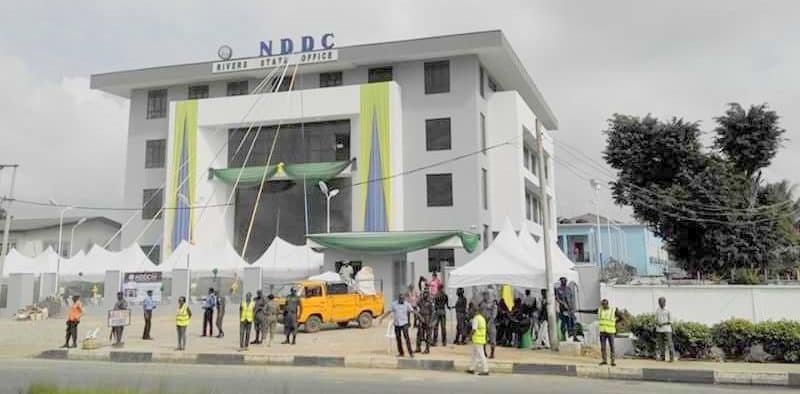
FG orders NDDC to resume suspended scholarship scheme

by Folarin Kehinde August 1, 2022
written by Folarin Kehinde

The Minister of Niger Delta Affairs Umana Umana has ordered the Niger Delta Development Commission (NDDC) to resume the commission’s scholarship scheme suspended some years ago.

It was gathered that Umana gave the directive during a two-day retreat for senior staff of the NDDC and the Niger Delta Ministry, which ended in Abuja at the weekend.

An official of the ministry, who spoke in confidence, said Umana vehemently kicked against suggestions to scrap the scheme and insisted that it would be sustained, expanded and reviewed to eliminate all forms of corruption in the system.

The source said Umana wanted a scholarship scheme that would be home driven with a special focus on Nigerian universities.

“The idea is to retain the scheme and make it home-based instead of the usual practice of sending beneficiaries abroad to study courses offered in Nigerian universities.

“Foreign scholarship scheme will not be totally removed. But it will be de-emphasised. Niger Delta students will no longer be sent abroad to study courses offered in Nigerian universities.

“The commission can only sponsor interested scholars overseas
to study only special courses that are not found in our universities. Therefore, Umana has ordered the commission to review and relaunch the scholarship scheme.”

The source said other far-reaching decisions were taken at the retreat to reposition the NDDC in harmony with the recommendations of the forensic audit report.

He said it was resolved that NDDC would henceforth streamline its projects against the current practice of awarding many jobs in one fiscal year.

“Henceforth, the NDDC will work closely with the National Assembly to ensure that projects are streamlined. Projects that had been completed would be inaugurated and the commission will also stop issuing emergency contracts”, he said.

He said there was also hope for the contractors, who had finished their jobs but had yet to receive their money as a decision was reached that the commission should focus on clearing its debts.

The source said: “It was also agreed the NDDC should cancel all projects that had been awarded but the contractors refused to mobilise to their sites. The money for such projects will now be used to complete other abandoned projects.

“The forensic audit report is being implemented in phases. The area that concerned the National Assembly had been sent to the lawmakers. The areas that concern the anti-graft agency have also been directed to them.

“A staff audit has also been ordered to ensure proper placement of workers and retirement of those directors due for retirement. The Niger Delta stakeholders should expect a new NDDC that responds to their yearnings under the current minister”, he said.

August 1, 2022 0 comments
0 FacebookTwitterPinterestThreadsBlueskyEmail
Headlines

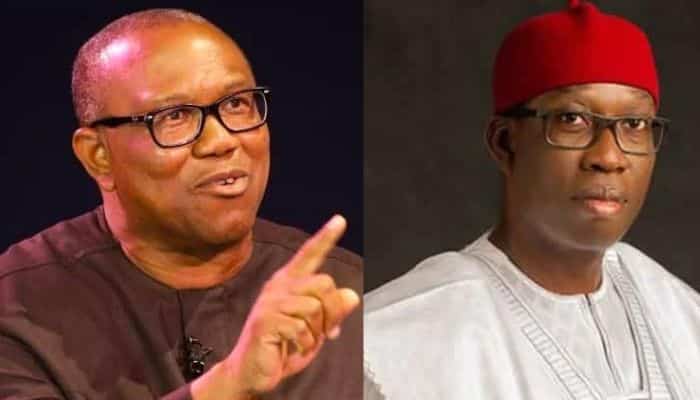
Peter Obi, Okowa, Others Ask Christians To pray for Nigeria’s Peace, Unity

by Folarin Kehinde July 29, 2022
written by Folarin Kehinde

Presidential flag bearers of major political parties yesterday took turns to enjoin Christian faithful to intensify prayers against the myriad of problems facing the country.

Peter Obi of the Labour Party, PDP’s Ifeanyi Okowa and Adewole Adebayo of the SDP spoke at the 12th General Assembly of the Christian Association of Nigeria on Thursday in Abuja.

Mr Adebayo asserted that the present challenges bedevilling the country were “ordained for our time”.

“The problems that the church is facing today is the problem ordained for our time. They are not problems that should distract us because God remains constant,” Mr Adebayo said.

He urged Christians to pray for the unity and peace of the church and the nation.

“This is because the Church of Christ is not one side of Nigeria. It is not an opposition. It is a blessing to all Nigerians.

“The Church of Christ is the reason why Nigeria will be saved. The blessings go to all Nigerians, both Christians and non-Christians,” Mr Adebayo said.

He also advised clerics to pray for God’s will and not concentrate on predictions regarding the 2023 elections.

Meanwhile, the presidential candidate of the Labour Party, Peter Obi, who congratulated CAN for the peaceful transition in its leadership, urged the association to be united, saying, “the family of Christ is one, please let us be united “.

“Nigerians, please remember your country in prayers. Remember those of us going for public offices in prayers for us to use public offices and public money for public goods,” he said.

Similarly, Ifeanyi Okowa, the vice-presidential candidate of the People’s Democratic Party (PDP), said there was no doubt Nigeria was going through a lot in terms of security and economy.

He reiterated the need for Christians and their leaders to stand in for the country through prayers.

Source: PeoplesGaazette

July 29, 2022 0 comments
0 FacebookTwitterPinterestThreadsBlueskyEmail
The African Development Bank
BusinessHeadlines

African Development Bank Calls Nigeria ‘Most Difficult Client’

by Folarin Kehinde July 27, 2022
written by Folarin Kehinde

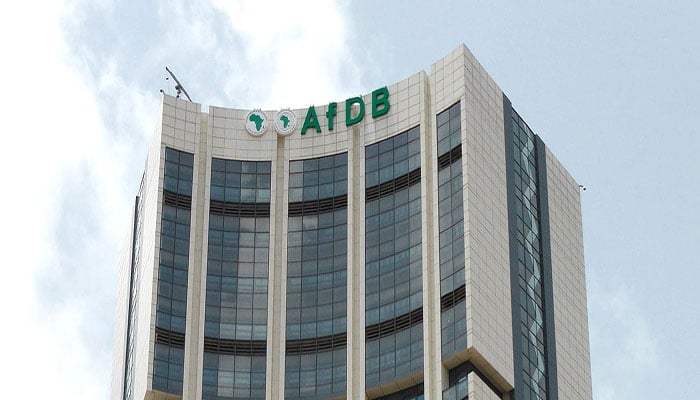
The African Development Bank (AFDB) has declared that the Federal Government of Nigeria is the bank’s most difficult client. This statement was made by the Senior Special Adviser to the President of bank, Prof. Banji Oyelaran-Oyeyinka.

Prof. Banji made this statement while delivering a keynote address at 2022, 3rd Biennial African Scientific Integration Network Conference hosted by the Centre for Energy Research and Development, Obafemi Awolowo University, Ile-Ife, Osun state. There, he delivered a paper virtually on the topic, ‘Science, Technology and Innovation for Sustainable Development.’

While responding to questions on what the bank was doing to assist the growth of industries in Nigeria, he made specific reference to a loan facility that the Board of the bank approved for Nigeria and how the Federal Government delayed its approval.

He said, “I can tell you we have many projects in Nigeria and I am leading one of them. For the Special Arrangement Industrial Processing Loan, we raised $540m for each zone in Nigeria.

“We raised it, and the board of the AfDB approved it on December 13 but the Ministry of Finance did not sign until June 1. We were begging them to sign. By the way, this loan has less than a one per cent interest rate for 25 years and an eight-year moratorium.  It is like someone is giving you money for free.

“Other countries have just one zone and they have been calling to thank us, thank the president, thank everyone for what you have done for us, but in Nigeria, you will be asked why you are pushing too much. We were supposed to launch the project by March 1. The Nigerian government is the most difficult client.”

July 27, 2022 0 comments
0 FacebookTwitterPinterestThreadsBlueskyEmail
Opinion

Why Peter Obi-Datti Baba Ahmed Should Get Your Vote in 2023

by Leading Reporters July 23, 2022
written by Leading Reporters

I am not the typical politician or party man, but I love Nigeria very much to be deeply interested in her welfare, progress and future. It is from that perspective, unbiased and objective, that I put these thoughts forward.

I have been around enough to know that Nigeria has suffered from leadership deficit, and that many simple things have been left undone purely because of self-centered interests. I am also able to see that past leaders have failed woefully to unite Nigerians and erase such divisive tags as religion and ethnicity.

After over sixty years of independence, we are unable to birth a true Nigerian citizenship; rather, we have remained as Yorubas, Igbos, Hausa, Ijaws, Ibibios, Fulanis, Nupes, Idomas, etc. There is nothing wrong, as such, in coming from an ethnic stock, but there is everything wrong when ethnicity is promoted over and above nationhood, common brotherhood and sisterhood of humanity. The blame is squarely on the door steps of past political leadership.

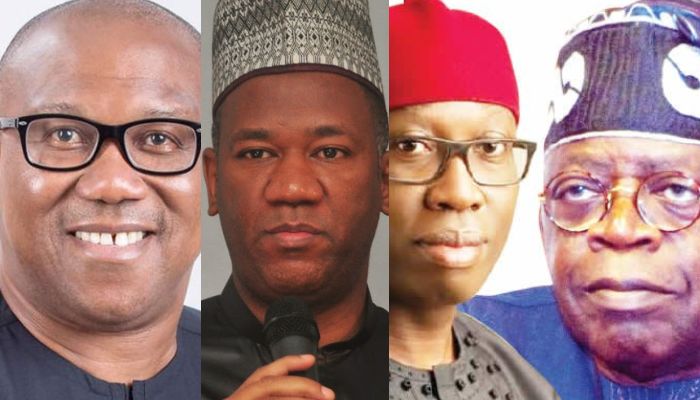
Next year’s presidential elections, therefore, present us a fresh opportunity to do a total rethink, call it re-jig and introspection. In that regard, so far, we have identified three major frontline political parties. The one is the ruling All Progressive Congress, the APC, having Senator Bola Tinubu and Kashim Shettima as flag bearers. The other is the Peoples Democratic Party, PDP, having Alhaji Atiku Abubakar and Governor Ifeanyi Okowa, as flag bearers.

Then the third is the Labour Party, having Peter Obi and Datti Baba-Ahmed as flag bearers. Apart from the names of the individuals in the first and second political parties, both APC and PDP are like Siamese twins. They are populated by the very same class of Nigerian politicians who have ruled Nigeria from 1999 till date; and who have crisscrossed effortlessly between the two parties. The results of their years of governance, like score cards, are on the table for every Nigerian to behold. It shows abysmal performance in all key sectors of human and public affairs.

Our security situation is in tatters, with various security agencies at the lowest ebb of their sense of devotion and patriotism. Fear of death, kidnap and payment of ransoms have become daily experiences for Nigerians when travelling, and even while in their homes. The economy has nose-dived to the point where government is said to now borrow to address recurrent expenditures, thereby totally abandoning capital projects. The result has been mind-shattering inflationary rates that have left every citizen living below acceptable levels of existence; while pushing many others into stealing and corrupt practices. Electricity supply challenges have been intractable. The educational sector has shamefully been in total comatose. Healthcare delivery is unaffordable, and nearly absent; yet the political elite prefer going on medical tourism abroad. In short, the citizens have been left wondering why nothing seems to work, and are daily seeking after greener pastures in other climes. Worst of all, the entire Nigerian brand, represented by our Flag, has suffered grave damages!

Then, here comes Peter Obi and Datti Baba-Ahmed; the duo with clear articulation of solutions to these myriads of challenges. They came from what you may call the political underdog class, but equipped with high moral and ethical dispositions never before seen in Nigeria’s political space. They seem like a dream reality for the Nigerian class of youthful voters. They also present the fresh hope for the many otherwise disenchanted adult voter population, all of whom have ‘seen it all’ with the crop of charlatans who have occupied the political space in the past twenty plus years in Nigeria.

In short, the Peter Obi- Datti Baba-Ahmed team has the following going for it:

  1. Clarity of understanding about the myriads of challenges facing Nigeria and Nigerians.
  2. Clarity of applicable solutions for each challenge.
  3. Background in private sector attainments that show grit, capability to generate wealth, integrity and passion to excel.
  4. Zero tolerance for the usual corrupt ways of acquisition of political power in Nigeria.
  5. Manifest show of love for the masses of Nigeria and determination to turn around the fortunes of the country through clearly articulated ideas and programmes.
  6. Uncommon show of simplicity and humility, conveying a sense of ‘not business as usual.’
  7. Transparent records about self, past achievements, attainments and associations.
  8. Impeccable academic and professional exposures that guarantee capacity to address the challenges of Nigeria.
  9. Uncommon ability and flair to clearly articulate believable road maps for deliverables.
  10. Detribalized approach to issues of national concerns, devoid of primordial sentiments such as religion and ethnicity.
  11. Finally, these two gentlemen have age and health in their favour, and have been able to effortlessly elicit revitalization of genuine hope and sense of patriotism, once more, among Nigerians, especially youths, who for many decades have remained aloof from politics and governance.

Even INEC has become a beneficiary, as new enthusiasm is being generated and galvanized by Peter Obi-Datti Baba-Ahmed towards electioneering processes in Nigeria.

It is for these reasons, and many more which space would not immediately permit me to state, that I highly recommend the flag bearers of the Labour Party, Peter Obi-Datti Baba-Ahmed to you. Be objective and remember that your vote for them amounts to birthing a new Nigeria.

A GENUINELY CONCERNED NIGERIAN.

July 23, 2022 0 comments
0 FacebookTwitterPinterestThreadsBlueskyEmail
Headlines

Oil Rich, Electricity Poor. What will it Take To Solve Nigeria’s Energy Crisis?

by Folarin Kehinde July 23, 2022
written by Folarin Kehinde

Nigeria is Africa’s biggest oil producer but the west African nation struggles to meet its energy needs, a struggle that has persisted for many decades.

On Monday, authorities in the country said they disbursed over 3.2 billion US dollars to support power supply to Nigerians in the last five years. Godwin Emefiele who is head of the country’s apex bank, Central Bank of Nigeria (CBN) said the monies were disbursed to electricity Generating and Distribution companies to acquire equipment, buy meters and improve electricity supply in the country.

Yet Nigerians have continued to battle poor power supply with the situation worsening last week when the country’s power grid collapsed twice, causing a huge black out across most parts of the country.

Beat Fm, a 24-hour radio station in Lagos temporarily went off air, announcing moments before that it could not sustain operations into the night. Several other businesses were impacted. But this is not the first time that the power grid collapses in the nation of over 200 million people.

According to TheCable, there were power grid collapses in February, May, July, and August of 2021 and there have been about “206 collapses between 2010 and 2019.”

So why was the power grid of last week different?

Power Grid “Full System” Collapse

Nigeria’s power generation is mostly thermal and hydro and has an installed capacity of nearly 13,000 megawatts. For many years, authorities only manage to dispatch about 4,500 megawatts of its installed capacity.

By contrast, South Africa’s total domestic electricity generation capacity is over 58,000 megawatts from all sources including coal which is by far its major energy source.

According to 2020 figures, South Africa has a population of nearly 60 million and Nigeria is Africa’s most populous nation; it (Nigeria) also ranks as the biggest economy on the continent. When this reality is factored in, the disparity between both nations soon become evident and certainly not only on paper.

It is a disparity that can be seen in the stark reality of millions of homes in Nigeria that have to experience if at all, any power supply, at best, a very epileptic daily supply.

But not many would have imagined the situation to get terribly bad recently.

Generators could not save the situation

Despite being Africa’s largest producer of crude oil, Nigeria imports almost all of its fuel and that is because none of its four refineries is operational- presenting a big paradox.

To avoid a spike in prices at the pump, the Nigerian government massively subsidizes Premium Motor Spirit (PMS) commonly known as Petrol. The price is fixed at 165 naira, which is about 40 cents. The price of diesel is however higher than petrol- usually just a little less than I dollar per litre.In dealing with the poor electricity supply, Nigerians for several years have relied heavily on small and huge generator sets operating on these products- petrol or diesel.

These imported generating sets have served as an alternative source of power for Nigerians and in some occasions the only source. So, when power supply from government and private providers significantly drops, the demand for petrol and diesel shoots up.

In February, a severe fuel shortage pushed prices up to 1.50 dollars per litre on the parallel market. The Nigerian National Petroleum Company (NNPC) announced that 100 million litres of adulterated petrol had been imported by error prompting a withdrawal from the market.

A delay in cargo ships carrying refined oil due to the war in Ukraine was also blamed for the shortage. Long queues flowing onto the roads soon lined filling stations across the country for days and weeks, climaxing into a huge and almost nationwide black out last week.

A troubled ‘Privatised’ sector

It is now nearly a decade since Nigeria ‘privatised’ its power sector. The process led to the creation of 11 distribution companies (Discos), while seven generating companies were sold to different private companies. But nothing significant has changed in the experience of consumers and year in, year out, both the government and the Discos blame each other for the failures and woes.

In an interview with africanews journalist Jerry Fisayo-Bambi, the CEO, of the Centre for the Promotion of Private Enterprise Nigeria, Muda Yusuf noted there are many structural and systemic problems facing the players in the power business sector.

First, he counters the CBN’s claim of funding saying the stated amount of spending in five years is grossly inadequate.

“The funding you require for the power sector and to effectively turn around the power sector is far more than that. In fact you should be talking about 15 -20 billion US dollars. At the distribution end alone, there are major funding gaps. And some of the investors in the sector have claimed that they are not being allowed to charge a cost effective tariff” Yusuf, the former Director General of the Lagos Chamber of Commerce and Industries (LCCI) explained.

Yusuf points out further that the power reforms that saw the sector privatised in 2011 was done partially and the quality of the process has raised concern. Generation and distribution were privatised with the exclusion of the transmission component, he says, explaining that the operators continue to struggle with funding and technical capacity.

“There is a major issue with regards to generating liquidity within the system, a major issue with indebtedness to the generating companies because they can not pay adequately for gas and gas suppliers sometimes disconnect them. Then the transmission problem is managed by the government and you can imagine what that means.. so it is a multifaceted and complicated issue compounded by massive electricity theft with some government agencies and consumers not paying adequately for electricity”.

Indeed, it is a complicated issue. A former minister of power Prof. Barth Nnaji alludes to some of the insight shared by Yusuf.

“There is also human factor problem on distribution such as connection inefficiencies, leakages, people stealing power, and all kinds of things done by people that make it difficult for efficient distribution, and also, the distribution companies themselves who are not investing in infrastructure which brings about inability to supply power.” Barth Nnaji was quoted as saying recently in a local newspaper interview.

What then is the way out?

Members of the lower house of Nigeria’s parliament on Tuesday 22 March mandated the Minister of Power, Abubakar Aliyu to take concrete actions aimed at solving the current nationwide blackout rather than always presenting theories.

The Committee on power, led by Hon. Magaji Da’u Aliyu at a meeting with the minister, expressed disappointment over the attitude of the ministry towards power issues particularly during national emergencies.

“There is nothing on ground to show that there will be light or generation of up to 5000 megawatts, but we keep hearing about 30,000 megawatts of installed capacity across the power stations” Da’u Aliyu said.

The Member of Parliament in his rebuke of the current minister of power, hints of the government target of 30,000 megawatts of electricity by 2030, something Generation Companies in the country (GenCos) have assured authorities to be very much attainable.

But Nigeria’s former power minister Barth Nnaji thinks this is in fact a far cry from what is needed. “If we are going to be a mid-level economy, then we should clearly be talking about having the sort of power supply that Brazil has, which is over 100, 000 megawatts. If we are going to have 100, 000 megawatts of power supply, then we need to have transmission lines to match that capacity, but we don’t have it” he says.

As of today, only about 47 percent of Nigerians have access to electricity when it is available, the World Bank estimates. And if the country must achieve the target of 30, 000 megawatts by 2030, a pragmatic approach, which must be implemented commercially and politically will need to be ensured at the very least.

Fuel scarcity disappears, generators can now be filled

The government says it has released one billion litres of fuel from the national reserve to normalize distribution of petroleum products across the country after the shortage that saw fuel queues return to the roads in the past month.

The queues have though started to disappear. But the inflationary pressures from the recent fuel shortage and lack of electricity supply have already compounded business dealings and left their ugly mark on this giant African nation.

According to the International Monetary Fund 2019 country report on Nigeria, electricity problem causes the Nigerian economy to lose an estimated $29-billion annually.

“This fuel is finished, it is frustrating and there is not much profit to be made when you spend so much monies on petrol. How do you make extra monies? It is not possible particularly when you have to give the best to your customers”.

Those were the words of Olorundare Juwon, a Fashion Designer and owner of a garment factory in Lagos, as he stared miserably at his empty power generating set.

President Muhammadu Buhari in a rare move last week apologized to Nigerians for fuel and electricity issues. This week, he has promised citizens that the issues will soon be over.

But until then, people in business like Olorundare Juwon in Lagos and indeed millions more across Nigeria will continue to bear the brunt.

July 23, 2022 0 comments
0 FacebookTwitterPinterestThreadsBlueskyEmail
Newer Posts
Older Posts

Recent Posts

  • Nigerian-born nurse loses licence in Australia for sleeping on duty

    January 24, 2026
  • AI may outsmart humanity in five years — Musk

    January 24, 2026
  • BREAKING: Kano Gov Abba Yusuf dumps NNPP

    January 23, 2026
  • National Grid Collapse For First Time in 2026

    January 23, 2026
  • BREAKING: Tinubu approves posting of Ambassadors to U.S., UK, others

    January 22, 2026

Usefull Links

  • Contact Page
  • About Leading Reporters
  • Contact Us
  • Headlines
  • Investigation
  • Exclusives
  • Opinion
  • Business
  • Facebook
  • Twitter
  • Instagram
  • Linkedin

@2021 - All Right Reserved. Designed and Developed by PenciDesign


Back To Top
Leading Reporters
  • Featured
  • Politics
  • Opinion
  • Business
  • Entertainment
  • Sports
  • About Us
  • Contact