
Leading Reporters
  • Headlines
  • Health
  • Business
  • Exclusives
  • Investigation
  • Entertainment
  • Opinion
Wednesday, August 19, 2026
Hot
European Union ‘Boycotts’ Nigeria’s 2027 General Elections, Rejects...
Nigerians Raise Concern Over Rising Mob Justice
Atiku Abubakar Raises Alarm over Suspicious Deposit to...
Nigerian Author Loses $2 Million Book Deal Over...
Onaiyekan to Tinubu: Catholic Bishops Have Said Enough,...
Nigeria not short of gas but short of...
How Nigeria’s Mineral Wealth Is Being Handed to...
NAFDAC DG Vows Serious Consequences for Manufacturers Violating...
Peter Obi Reaffirms Commitment to Single Term Governance:...
#FixPolitics demands probe, accountability in ‘fake agency’ scandal
  • About Leading Reporters
  • Contact Us
Leading Reporters
Advertise With Us
  • Headlines
  • Health
  • Business
  • Exclusives
  • Investigation
  • Entertainment
  • Opinion
Hot
European Union ‘Boycotts’ Nigeria’s 2027 General Elections, Rejects...
Nigerians Raise Concern Over Rising Mob Justice
Atiku Abubakar Raises Alarm over Suspicious Deposit to...
Nigerian Author Loses $2 Million Book Deal Over...
Onaiyekan to Tinubu: Catholic Bishops Have Said Enough,...
Nigeria not short of gas but short of...
How Nigeria’s Mineral Wealth Is Being Handed to...
NAFDAC DG Vows Serious Consequences for Manufacturers Violating...
Peter Obi Reaffirms Commitment to Single Term Governance:...
#FixPolitics demands probe, accountability in ‘fake agency’ scandal
Leading Reporters
Leading Reporters
  • Headlines
  • Health
  • Business
  • Exclusives
  • Investigation
  • Entertainment
  • Opinion
Copyright 2024 - All Right Reserved
Home > Gas
Tag:

Gas

Headlines

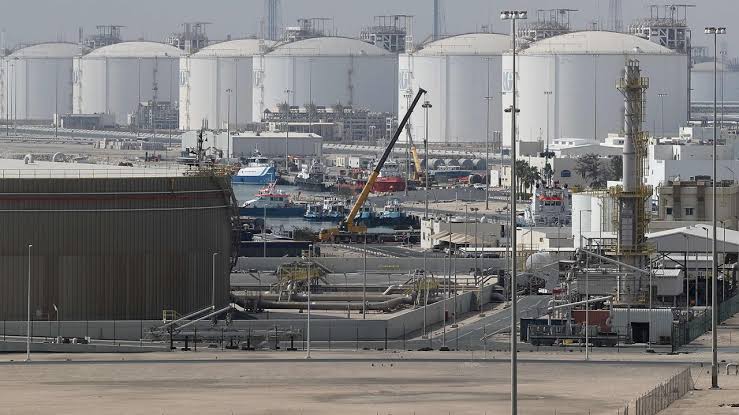
Nigeria not short of gas but short of will to capture it — Energy expert

by Folarin Kehinde August 3, 2026
written by Folarin Kehinde

Nigeria is not suffering from a shortage of natural gas but from an inability to harness the enormous volumes currently wasted through routine gas flaring, Managing Director of Excella-U Energy Limited, Engr. Oseagah Solomon, has said.

Speaking against the backdrop of rising electricity shortages, increasing cooking gas prices and mounting environmental concerns, Solomon described the continued flaring of associated gas as one of the country’s biggest economic contradictions.

“We are burning away resources that should be lighting homes, powering businesses and earning foreign exchange,” he said.

His remarks come as analysis of data from the National Oil Spill Detection and Response Agency (NOSDRA) Gas Flare Tracker indicates that Nigeria lost an estimated US$5.5 billion (about ₦8.7 trillion) worth of natural gas to routine gas flaring between 2021 and 2025.

Industry experts, however, argue that the actual economic cost extends far beyond the commodity value of the gas burned.

According to Mahmoud Ibrahim Mahmoud, a postdoctoral researcher and environmental scientist with NOSDRA, the broader national losses from methane waste—including unrealised electricity generation, liquefied petroleum gas (LPG), fertilizer and petrochemical production, export earnings, taxes, royalties and carbon market opportunities—could amount to between US$18 million and US$28 million every day.

Under favourable carbon market conditions, he estimated that Nigeria’s unrealised opportunity could exceed US$30 million daily, translating to between US$7 billion and US$12 billion annually.

Gas capable of transforming power sector

Oseagah said the gas currently wasted every year could significantly improve Nigeria’s energy security if properly captured and commercialised.

According to him, gas presently flared across the country has the capacity to generate more than 32 gigawatts of electricity, while also supporting domestic LPG supply, fertilizer production and petrochemical industries.

“Nigeria is blessed with abundant gas resources. The challenge is not availability but creating the right environment to recover and utilise them instead of allowing them to go up in flames,” he said.

Nigeria possesses more than 215 trillion cubic feet of proven natural gas reserves, making it one of Africa’s largest gas producers.

Despite this, routine gas flaring remains common across oil-producing fields.

NOSDRA’s 2025 Gas Flare Report shows operators flared about 323 billion standard cubic feet of gas during the year.

The agency estimates that the wasted gas was worth approximately US$1.1 billion (₦1.49 trillion), emitted about 17.2 million tonnes of carbon dioxide, and could have generated over 32,300 gigawatt-hours of electricity if utilised.

Similarly, figures released by the Nigerian Upstream Petroleum Regulatory Commission (NUPRC) indicate that nearly 204 billion standard cubic feet of gas was flared in 2025 despite overall gas utilisation exceeding 92 per cent.

Investment barriers slowing gas recovery

While describing gas recovery as economically viable, Oseagah noted that financing challenges, inadequate infrastructure and inconsistent implementation of existing gas commercialisation programmes continue to discourage investment.

According to him, investors require clear regulatory frameworks, policy stability and stronger government support before committing capital to gas capture projects.

He stressed that greater certainty around fiscal policies and infrastructure development would encourage private investment capable of reducing gas flaring while expanding domestic energy supply.

Independent petroleum marketer, Chief Ajiboye Adebowale Moses, shared similar views, noting that every unit of methane wasted represents lost economic value.

“If captured instead of burned, methane can support electricity generation, cooking gas, fertilizer production and industrial development,” he said.


He added that wider domestic utilisation of natural gas would help lower LPG prices, improve electricity supply and stimulate industrial growth.


Experts quantify wider losses

Beyond the direct value of gas burned, Mahmoud said Nigeria loses opportunities across multiple sectors whenever methane is flared or vented.

According to him, captured gas could fuel power plants, increase household access to cooking gas, supply fertilizer and petrochemical industries, generate export revenue through liquefied natural gas (LNG), strengthen government revenues through taxes and royalties, and earn carbon credits under international climate markets.

“The true national loss is substantially larger than the commodity value shown on the Gas Flare Tracker because methane that is flared or vented could otherwise generate electricity, supply households with LPG, support fertilizer and petrochemical industries, earn export revenue and generate taxes and royalties,” he said.

Communities demand greater benefits

Oil-producing communities continue to bear the environmental consequences of decades of gas flaring.

Chairman of the Council of Chiefs of Lasukugbene Community in Bayelsa State, Chief Zion D. Kientei, said communities located close to flare sites have experienced declining crop yields, disappearing fish species and worsening health conditions.

“Our flare stack is less than 200 metres from the community. It has altered our ecosystem. The fish species we grew up seeing have disappeared. Crop yields have reduced drastically,” he said.

He urged government and operators to accelerate gas capture projects and prioritise host communities for electricity supply and economic development.

According to him, improved electricity access would stimulate small businesses, create employment and reduce youth unemployment across the Niger Delta.

Stronger enforcement needed

Environmental advocates also called for stricter enforcement of existing regulations.

Executive Director of the Renevlyn Development Initiative (RDI), Philip Jakpor, said methane emissions are frequently accompanied by hazardous pollutants that threaten public health and agricultural livelihoods.

He argued that while Nigeria has introduced regulations aimed at reducing methane emissions and gas flaring, implementation remains weak.

Jakpor advocated greater use of satellite monitoring, independent emissions tracking and transparent reporting to improve accountability.

Meanwhile, Mahmoud recommended integrating satellite observations with drones, airborne sensors and ground-based monitoring systems to improve methane detection and strengthen regulatory oversight.

He also called for expansion of digital platforms such as the Nigerian Gas Flare Tracker and the proposed Nigerian Methane Emissions Tracker.

Stakeholders agree that Nigeria possesses both the natural gas resources and the technology required to significantly reduce flaring.

However, they maintain that stronger policy implementation, investment and regulatory enforcement will determine whether the country succeeds in converting billions of dollars currently lost through gas flaring into electricity, cleaner cooking fuel, industrial development and economic growth.

August 3, 2026 0 comments
0 FacebookTwitterPinterestThreadsBlueskyEmail
Headlines

More hardship looms as cooking gas price jumps to all-time high

by Folarin Kehinde October 14, 2024
written by Folarin Kehinde

As Nigerians grapple with rising fuel costs, Liquefied Petroleum Gas (LPG), commonly used for cooking, has reached an unprecedented N1,500 per kilogram.

This surge has increased the average price for a 12.5kg cylinder to N17,000 in Abuja, up 41.6% since July, when it cost around N12,000.

In Ogun and Lagos, retail prices range from N1,300 to N1,500 per kilogram, further squeezing household budgets.

Suresh Kumar, managing director and CEO of NIPCO Plc, voiced concerns about Nigeria’s reliance on imported LPG.

“Currently, less than 40% of the 1.5 million metric tonnes consumed domestically is produced locally. The government must encourage companies like Chevron to convert more propane output into butane, which is more suitable for domestic use,” Kumar stressed at the recent National Conference of the Nigerian Association of LPG Marketers in Lagos.

The scarcity of local LPG production exacerbates high prices, which have pushed many Nigerians toward alternative cooking fuels, such as charcoal.

Ogun State’s Commissioner for Environment, Ola Oresanya, warned that more families might turn to less efficient cooking methods if the price hike continues.

Despite the grim outlook, Kumar remains optimistic that increased local refinery output could help drive down prices.

He noted that LPG production should grow with the Dangote Refinery and other facilities now sourcing crude oil locally, easing reliance on imports and reducing the impact of foreign exchange fluctuations on prices.

“There is hope that the reliance on imported LPG will decrease, positively influencing domestic prices,” Kumar noted.

Kumar emphasized the need for investment in gas infrastructure to expand Nigeria’s LPG capacity. “Our latest assessments show that existing downstream infrastructure can handle up to 5 million MT annually, preparing us to accommodate increased production from local gas fields,” he explained.

Since entering the LPG market in 2004, NIPCO has invested heavily in infrastructure to make cooking gas accessible to Nigerians.

“Our facility in Apapa, which began at 5,000 MT, now has a capacity exceeding 20,000 MT,” Kumar said, underscoring NIPCO’s commitment to bolstering national energy infrastructure.

The NIPCO CEO called on the government to support local refineries and refocus on boosting LPG output.

“It is crucial for the government to back these refineries to significantly increase LPG output. This will drive down retail prices and make the product more accessible to Nigerians,” he urged.

With high prices dampening LPG consumption, Kumar hopes market conditions will improve as more local players enter the sector.

“The current high prices are temporary. With more entrants in gas processing, we anticipate a market correction soon,” he concluded, calling for collaborative efforts to realise the full potential of Nigeria’s gas reserves.

October 14, 2024 0 comments
0 FacebookTwitterPinterestThreadsBlueskyEmail
Business

We’ve Removed VAT On Diesel, Cooking Gas, Tinubu Assures

by Folarin Kehinde October 3, 2024
written by Folarin Kehinde

The Nigerian government has said that it has taken out Value Added Tax on cooking gas, diesel and some other products.

Wale Edun, Nigeria’s minister of finance and the coordinating minister of the economy said this in a statement on Wednesday.

The statement signed by the Director of Information and Public Relations at the Ministry of Finance, Mohammed Manga, said that the Federal Government is planning on incentives that are aimed at revitalising Nigeria’s oil and gas sector.

According to him, these incentives will include VAT modification order 2024 and notice of tax incentives for deep offshore oil and gas production.

He added that this decision is in line with the Oil and Gas Companies (tax incentives, exemption, remission, etc.) Order 2024.

He said: “In addition, the Notice of Tax Incentives for Deep Offshore Oil & Gas Production provides new tax reliefs for deep offshore projects.

“This initiative is aimed at positioning Nigeria’s deep offshore basin as a premier destination for global oil and gas investments,” he added.

October 3, 2024 0 comments
0 FacebookTwitterPinterestThreadsBlueskyEmail
BusinessHeadlines

EVP Gas at NNPCL foresees revenue surge through gas commercialization in Nigeria 

by Leading Reporters August 8, 2023
written by Leading Reporters

Mohammed Ahmed, the Executive Vice President of Gas, Power and New Energy at the Nigerian National Petroleum Company Limited (NNPCL) has said that upcoming gas projects in the country will generate a lot of revenue for the government through taxes and royalties. 

He said this in an interview last week during the NNPCL program; Energy and You, airing weekly on the Nigerian Television Authority (NTA) Network. 

According to him, Nigeria is aiming for gas commercialization through various projects that will see the populace making use of gas for industrialization, cooking and auto use, as opposed to flaring it. 

He said the NNPCL is working to ensure that those who produce the gas will have visibility as to the revenue they will get from their investments and customers will also be sure that once they begin to use gas, there is affordability and sustainability.    

He said: 

  • “The gas, power and new energy directorate in the Nigerian National Petroleum Company Limited’s basic objective is to ensure the commercialization of our gas assets across the country and this is not only for the domestic market but for exports. 
  • “In doing that we also have the new energy attached to it, we look at renewables and hydrogen, and all these come together to form what we call the energy transition mix.  
  • “Our focus is to ensure that there is gas availability, sustainability and affordability across the country.”  

According to him, there are various projects that are expanding the horizon of gas supply in the country, through functioning infrastructure that will take more gas into the domestic market.  

He said: 

  • “The Ajaokuta-Kaduna-Kano (AKK) gas pipeline corridor for instance has three major power plants, the minimum of which is 900 megawatts (MW), these power plants are aimed at sucking up available gas, putting it into use and generating power. 
  • “This will go a long way to ensuring that industries and factories that are facing the challenge of energy availability, will be happy to suck up the energy from these power plants.”  

He also spoke about upcoming gas projects like the Assa North Ohaji gas project.

He said that the project has the capacity to produce Liquefied Petroleum Gas (LPG), thereby making firewood as cooking fuel a thing of the past in the country.  

He also said that the project will help to further commercialize the gas that is available in the domestic market. Note that in its latest clean cooking report, the International Energy Agency (IEA) stated that LPG as a cooking fuel in Africa has gained some ground in countries like Kenya, and Nigeria.  

However, a lack of natural gas storage and distribution systems in many urban areas in Africa, makes LPG a lower-cost solution than building new pipelines.    

During the interview, Mr. Ahmed said that the NNPCL has received several requests from developed and developing countries who wish to collaborate with NNPCL, to produce liquefied natural gas (LNG) in Nigeria. 

This is because Nigeria Liquefied Natural Gas Limited is incapable of converting all the country’s gas into LNG.  

According to him, several gas projects will help transition Nigeria from a petrol-dependent country to a gas-dependent country. 

Note that this has been the aim of the government from the administration of former president Muhammadu Buhari who signed off on the decade of gas initiative in 2021.  

August 8, 2023 0 comments
0 FacebookTwitterPinterestThreadsBlueskyEmail

Recent Posts

  • European Union ‘Boycotts’ Nigeria’s 2027 General Elections, Rejects Observer Role Over Rising Insecurity

    August 10, 2026
  • Nigerians Raise Concern Over Rising Mob Justice

    August 10, 2026
  • Atiku Abubakar Raises Alarm over Suspicious Deposit to his Account

    August 7, 2026
  • Nigerian Author Loses $2 Million Book Deal Over AI Plagiarism

    August 7, 2026
  • Onaiyekan to Tinubu: Catholic Bishops Have Said Enough, Govern Better

    August 4, 2026

Usefull Links

  • Contact Page
  • About Leading Reporters
  • Contact Us
  • Headlines
  • Investigation
  • Exclusives
  • Opinion
  • Business
  • Facebook
  • Twitter
  • Instagram
  • Linkedin

@2021 - All Right Reserved. Designed and Developed by PenciDesign


Back To Top
Leading Reporters
  • Featured
  • Politics
  • Opinion
  • Business
  • Entertainment
  • Sports
  • About Us
  • Contact