Leading Reporters
  • Headlines
  • Health
  • Business
  • Exclusives
  • Investigation
  • Entertainment
  • Opinion
Thursday, June 25, 2026
Hot
NECO Publishes 2026 Basic Education Certificate Examination Results
Police Dismiss Viral Katsina Bandit Convoy Claims, Say...
Senate to Vote on State Police Today
Government Policies Driving Indigenous Growth in Mining Sector,...
State Governors Demand Greater Command Over Police
Minister of Health Muhammad Ali Pate and Bill...
Edo Governor, Monday Okpebholo, Vows To Hang Bandits,...
Alison-Madueke acquitted of all bribery charges in London
CBN Deputy Governor Emem Nnana Usoro Hides N1.4...
JUST IN: ADC announces Amaechi as Atiku’s running...
  • About Leading Reporters
  • Contact Us
Leading Reporters
Advertise With Us
  • Headlines
  • Health
  • Business
  • Exclusives
  • Investigation
  • Entertainment
  • Opinion
Hot
NECO Publishes 2026 Basic Education Certificate Examination Results
Police Dismiss Viral Katsina Bandit Convoy Claims, Say...
Senate to Vote on State Police Today
Government Policies Driving Indigenous Growth in Mining Sector,...
State Governors Demand Greater Command Over Police
Minister of Health Muhammad Ali Pate and Bill...
Edo Governor, Monday Okpebholo, Vows To Hang Bandits,...
Alison-Madueke acquitted of all bribery charges in London
CBN Deputy Governor Emem Nnana Usoro Hides N1.4...
JUST IN: ADC announces Amaechi as Atiku’s running...
Leading Reporters
Leading Reporters
  • Headlines
  • Health
  • Business
  • Exclusives
  • Investigation
  • Entertainment
  • Opinion
Copyright 2024 - All Right Reserved
Home > Archives for > Page 76
Author

Folarin Kehinde

Folarin Kehinde

Headlines

Off Grid Options for Rural Electrification is Better for Nigeria’s Clean Energy Goals

by Folarin Kehinde July 26, 2022
written by Folarin Kehinde

Four hundred and thirty-eight rural electrification projects were completed by the Rural Electrification Agency (REA) in 2017 as contained in the 2017 budget. These projects are to ensure the provision of electricity in rural areas to improve access to electricity.

On one hand, the completed projects mean expanding the already burdened grid to accommodate additional load.

On the other hand, although it provided energy to the rural areas, the energy provided cannot be judged clean because of its source. At least 75% of the on-grid electrification projects in the country are thermal-powered.

Electrifying Rural Areas

The Rural Electrification Agency (REA) in its 2017 budget, made provision of power to rural areas through 471 projects approved by the government. To achieve this, the agency made provision for the construction of mini-grids and expansion of ‌ grids.

Data available shows that the agency completed 438 of the 471 projects proposed in 2017. This shows a 92.9% rural electrification project performance from the 2017 budget.

Most of the projects were ‌in the north-central region of the country. The region had 103 of the 117 electrification projects completed, as stated in the budget. In the south-south, 77 out of 85 projects were completed and in the north-west,76 of 79 projects were completed.

Measuring the regions based on most projects completed as proposed, the south-west, which has fewer projects, completed most of its projects. Out of 54 projects, 53 were completed, representing 98.12%. At the extreme end is the north-central with 88.03% completion rate. Other regions had a completion performance above 90%.

Increased Climate Change Pressure

While powering the rural areas with increased output in gigawatts, it detracts from   the country’s clean energy progress. As the grids operated by the generation companies (GenCo) are mostly thermal power plants.

These projects are connected to the grid networks, which are mostly thermally powered.

At least 75% of the power supply generated in the country is thermally powered. For example, in 2020 27,324.33 gigawatts (GW) of thermal electricity were produced out of a total output of 35.720.27 GW. Likewise, in 2021, 28,045.9 GW out of 36,367.92 GW thermal-powered electricity was produced.

Details of energy generated in the country from January to June 2022 averaged 3328.4 megawatts (MW) daily.

It is estimated that a thermal electricity generation plant emits 450 grams of carbon per kilowatts (g/kw) of electricity produced. This means that in 2020 and 2021, 13.553 million tons and 13.912 million tons of carbon dioxide (CO2) were emitted from thermal plants.

Thus, at a daily average of 2496.3 MW of thermal electricity which is 75% of total electricity generated daily and an emission rate of 450 g/kw; 1238.263 million tons of CO2 are emitted daily from the thermal plants.

As thermal-powered electricity generation increases, so does the CO2 emissions. If Nigeria continues its rural electrification projects with thermal-powered energy, the odds against the country’s 2060 goal of zero emissions increases.

The Off-Grid Renewable Energy Option

Electrifying the rural areas using the off-grid option will not only provide clean, sustainable energy, it will also provide revenue to the government and save some cost.

It is estimated ‌that an off-grid electricity project to power 5 million homes will generate additional N7 billion tax revenue for the country annually. Also, powering the same number of rural households will save the country $10 million in import substitution annually.

Nigeria’s rural population is 90.033 million as at 2020 and just 24.6%, representing  22.148 million have access to electricity. At least 67.885 million people in rural areas don’t have access to electricity and with an average of five persons per household, an estimated  13.577 million households do not have access to electricity.

If these 13.577 million households are connected to off-grid electricity, it will generate at least N17.5 billion in tax annually and will save the country at least $25 million in import substitutes annually.

Implementation of the National Electrification Project (NEP) can leverage Nigeria’s  17 MW off-grid energy generation capacity, which will deliver benefits, beyond the proposed coverage, to the country.

The off-grid power generation has recorded success in South Africa, where it provided the most cost-effective rural electrification option. The project’s success in providing off-grid electricity was high as it considered businesses, population growth, and the corresponding load increase. And in the long run, generating revenue for the government.

Rethinking the electrification of rural areas using off-grid technologies will move Nigeria forward in the direction of its clean energy goals, provide energy to households and set the country on course for the attainment of SDGs 7 and 13.

Source: Dataphyte

July 26, 2022 0 comments
0 FacebookTwitterPinterestThreadsBlueskyEmail
Headlines

ASUU Strike: NLC Embarks on Nationwide Protest

by Folarin Kehinde July 26, 2022
written by Folarin Kehinde

The Nigerian Labour Congress (NLC) has made true of its promise to carry out a nationwide protest the ongoing ASUU strike on the 26th and 27th of July.

Major roads in Lagos, Ibadan, Jos and other Cities across the country has been blocked as both members of NLC, ASUU and NANS engage in their planned protest.

The union had announced last week Sunday that it would on the 26th and 27th of July, carry out a nationwide strike to compel the federal government to resolve the five-month-old Asuu strike that has kept public university students at home.

The government, through Minister of Information Lai Mohammed had deemed the protest illegal, stating that there was no need for the planned protest since the government does not have any dispute with members of the NLC.

However, Nation President of NLC Ayuba Wabba in a statement said there was no going back on the planned protest

Wabba, who was reacting to an earlier warning against the strike by Information and Culture Minister Lai Mohammed said it was in consonance with democratic norms and rule of law.

Mohammed had on Wednesday said the NLC had no reason to embark on the protest as the Federal Government had no dispute with its members. He declared the protest as illegal.

The NLC, in a statement, said:” It’s elementary knowledge that the right to peaceful assembly and protest is a fundamental global right guaranteed by the UN Charter on Human and Peoples right and the constitution of the federal republic of Nigeria. All peaceful assemblies are lawful and do not require any permission under our laws. In a democratic society, such a statement is not consistent with the rule of law.

Details coming in from the Lagos chapter of the NLC says that it has given the federal government a two-week ultimatum to resolve the ongoing strike.

Speaking at the protest in Ikeja, Lagos NLC chairperson, Mrs Agnes Sessy urged the federal government to act within the two weeks ultimatum or risk another #ENDSARS type of protest.

Members of the National Union of Electricity Employees have also threatened nationwide blackout as they plan to join the NLC in solidarity protest with ongoing strike by ASUU.

July 26, 2022 0 comments
0 FacebookTwitterPinterestThreadsBlueskyEmail
Headlines

64 Civil Society Leaders Sign Petition, Urge Govt To Implement Climate Law

by Folarin Kehinde July 26, 2022
written by Folarin Kehinde

A coalition of civil society organisations on environment and climate change has called on the Federal Government of Nigeria to immediately implement the Climate Change Act signed into law by President Muhammadu Buhari since November 2021.

The group, in a petition signed by 64 CSO and NGO leaders and submitted to the relevant government agencies, expressed dismay over the delay by the government in implementing the core provisions of the Act which, according to them, would set the country on the right trajectory in meeting the 2060 net zero target.

According to the coalition, “we are gravely worried that after eight months of signing the Climate Change Act into law, no action has been taken to implement the different provisions of the Act”.

The coalition, however, thanked the President for showing commitment to providing a solid framework for climate action to achieve Nigeria’s short-, medium-, and long-term goals on climate mitigation and adaptation through the signing of the bill into a full Act.

“We, the undersigned civil society organisations and individuals appreciate and commend the President for signing into law the Climate Change Act which has demonstrated his commitment to providing a solid framework for climate action to achieve Nigeria’s short-, medium-, and long-term goals on climate mitigation and adaptation,” the coalition submitted.

It reminded the government that the continuous delay in implementation, especially when some core provisions of the Act are time-bound, would stall the progress the country had made in tackling effects of climate change and all the policies developed to mitigate climate change in Nigeria and across the globe.

The group went further: “We wish to alert Mr President that the government is now almost certain to default on some of the provisions of the Climate Act. The signing of the Act into law automatically triggered Section 19(2) of the Act which mandates that the Federal Ministry of Environment in consultation with the Federal Ministry of Budget and National Planning must present the pilot carbon budget to the Federal Executive Council (FEC) through the National Council on Climate Change not later than one year from the date of assent to the Bill. That, automatically, means that the pilot carbon budget must be presented on or before November 16, 2022.

“The Federal Ministry of Environment and the Secretariat are also mandated by Section 20 to develop the five-yearly Action Plan for the realisation of the carbon budget. Section 20(2) mandates that the first Action Plan must be ready within one year of assent to the Bill. It is important to note that Section 20(3) mandates that, before the Action Plan is presented to the Council and FEC, it must be made public for eight weeks (culminating 14 days before the date of presentation to the Council) for the public to review.

Given the long and thorough process needed to decide a carbon budget including through national consultation with the CSO and other stakeholders, we are concerned that the Federal government may fail to set a carbon budget by the date required by the new climate law.

“It seems that the government and its relevant agencies and ministries have abandoned the implementation of the key provisions of the Act. We are worried at the lack of action by the Federal government to implement a law it signed in good faith.”

The coalition warned that the attitude of the government so far in implementing the Climate Change Act will further damage the image of the country in the international arena and more so in climate change community and called on the government to act fast to save the government and the country from impending embarrassment as the COP27 to be hosted in Africa, Egypt is fast approaching.

“This unfortunate event carries the risk of portraying Nigeria as unserious before the international community and a country that makes a pledge without an intention to keep its words.

“A lack of implementation of the climate act will surely damage the image of the country at the global arena, especially as the build up to COP27 in Africa has commenced.

“By maintaining aloof and not acting quickly to implement the Climate Change Act, other countries will make mockery of Nigeria and some may begin to review or withdraw their climate support for Nigeria.

“In these days of climate change struggle, the Nigerian government and relevant ministries and agencies are more than ever needed to act to save our country from the further devastations of climate change. A stitch in time saves nine,” added the group.

During a recent virtual workshop for CSOs and NGOs leaders titled “Understanding and Implementation of Nigeria’s Climate Change Act: Implications for Nigeria’s Net Zero Target” organised by the Society for Planet Prosperity in collaboration with the Centre for Climate Change and Development Alex Ekwueme Federal University Ndufu Alike (CCCD AEFUNAI) and Global Environmental and Climate Conservation Initiative (GECCI), the CSO leaders advocated for the immediate implementation of the Climate Change Act by the government to save the country from further consequences of climate change.

July 26, 2022 0 comments
0 FacebookTwitterPinterestThreadsBlueskyEmail
Headlines

How Olumuyiwa Igbalojobi Is Fighting IELTS Discrimination Against Nigerians

by Folarin Kehinde July 26, 2022
written by Folarin Kehinde

The International English Language Testing System (IELTS) is an International Standardized test of English language proficiency for non-native English Language speakers. Its is used to test the English writing and speaking capability of individuals from non-English speaking countries, before they would be given admission into western universities.

However, Nigeria which is a former British colony with English as it’s official Lingua Franca is been subjected to the IELTS or TOEFL examination as a prerequisite for getting admission into universities in Europe, Canada and the United States.

The IELTS has proved a stumbling block to the Nigerians with dreams to further their education in western countries. A lot of Nigerians have decried the exams as racism and injustice to Nigeria as it is already an English-Speaking nation.

In January, about 40,000 Nigerians signed a petition calling on the United Kingdom (UK) home office to either remove Nigeria from the list of countries whose citizens are required to take English proficiency tests or reduce the fees charged for the examination.

The cost of the test, which currently stands between N80,000 and N90,000 in Nigeria, is almost three times the country’s minimum wage of N30,000.

Many individuals and organizations have tried to petition the countries involved to scrap IELTS for Nigeria without much success, until now when a Nigerian-Canadian took a different approach and decided to write the schools directly. His name is OLUMUYIWA IGBALOJOBI.

Born in Ado-Ekiti, Ekiti State Nigeria, Olumuyiwa is currently a postdoctoral fellow at the Professor Kronstad laboratory, Department of Microbiology and Immunology, Michael Smith Laboratories at the University of British Columbia (UBC), Canada.

He has taken it upon himself to write petitions to various institutions in Canada to waive Nigerians from the list of countries that requires IELTS before securing admission.

Olumuyiwa argued in his petition that since Nigeria teaches its children English from elementary to tertiary level, this means the country is an English-speaking country.

He also argued that English is the official language of business in the country, thus there is no need for Nigerians to be subjected to further tests.

In his words: “It is bad to request IELTS from African countries colonized the government of Britian.

These Petitions from Olumuyiwa has prompted two universities in Canada to waiver Nigerians from writing the IELTS examination before getting admission into their institutions.

Last Month, he got the University of Alberta, Canada, to exclude Nigerian students from its English language requirement. It added Nigeria has now been added to the university’s list of countries where English is an official language of instruction.

Also, another breakthrough came when last week, another Canadian instituition, the Athabasca University, Canada, excluded Nigerian students from its list of foreign applicants to write and pass English proficiency before admission.

Succumbing to Olumuyiwa his demand, Athabasca University, Canada has deleted Nigeria from its list of countries to write International English Language Testing System (IELTS), Test of English as a Foreign Language (TOEFL) and other English tests before enrolment.

These waivers will be a victory for Nigerians who see the tests as mountains to surmount before gaining admission to Canadian universities of their choice.

Dr Olumuyiwa has been receiving his deserved appreciation from lot of Nigerians, especially twitter users where he his active. People have referred to him as a hero who is fighting education injustice against Nigeria.

The board and management of the Ugwumba centre for leadership development in Africa, made Dr. Olumuyiwa Igbalajobi as one of its Ambassadors for making Nigerians proud in Canada.

Olumuyiwa is not relenting in his efforts to stop the demand of IELTS for Nigerians. According to him, “I have written about 12 universities till date. I will continue to identify universities with stale lists and those who wouldn’t recognize Nigeria as an English-speaking country.

July 26, 2022 0 comments
0 FacebookTwitterPinterestThreadsBlueskyEmail
Headlines

Online Publishers Demand Immediate Release of Arrested Peoples Gazette’s Journalists

by Folarin Kehinde July 23, 2022
written by Folarin Kehinde

The Online Publishers Association of Nigeria (OPAN) strongly condemns today’s raid of online newspaper, Peoples Gazette’s office in Abuja and the subsequent arrest of five journalists by armed policemen.

According to news reports, the policemen forcefully entered the media office and demanded to see managing editor, Samuel Ogundipe and a reporter Adefemola Akintade over a story it published on June 23, 2022, detailing how anti-graft agency, ICPC, raided a property allegedly belonging to a former Chief of Army Staff and current Ambassador to Benin Republic, retired General Tukur Buratai, where it recovered cash and luxury items.

The policemen then arrested five members of staff, John Adenekan, assistant managing editor, Ameedat Adeyemi, Grace Oke, Sammy Ogbu and Justina Tayani, and detained them at the police station.

OPAN in a statement by its President, Austyn Ogannah and General Secretary, Daniel Elombah, notes that the ICPC had confirmed that it executed an operation at the building as reported by Peoples Gazette, but General Buratai thereafter alleged that the story defamed his reputation and complained to the Police at the Utako Police Station in Abuja. “State security services cannot continue this unlawful and crude practice of raiding media houses in a bid to intimidate the press.

Today’s raid of the Peoples Gazette’s office and subsequent arrest of journalists reminds us of the draconian era of military rule, especially during the reign of General Muhammadu Buhari between 1983 and 1985”, OPAN stated. “If retired General Buratai feels he was defamed by the report, the lawful and correct approach would be to sue the news outfit for libel in a court of law.

The days of using state security agencies to harass and intimidate the press and journalists are over. This desecration of people’s rights cannot be tolerated in a democracy any longer,” OPAN further warned. OPAN therefore calls for the immediate release of the journalists and demands an unreserved apology from the police and the Nigerian government over this incident.

Signed: Austin Ogannah President

Source: Secret Reporters

July 23, 2022 0 comments
0 FacebookTwitterPinterestThreadsBlueskyEmail
Headlines

Oil Rich, Electricity Poor. What will it Take To Solve Nigeria’s Energy Crisis?

by Folarin Kehinde July 23, 2022
written by Folarin Kehinde

Nigeria is Africa’s biggest oil producer but the west African nation struggles to meet its energy needs, a struggle that has persisted for many decades.

On Monday, authorities in the country said they disbursed over 3.2 billion US dollars to support power supply to Nigerians in the last five years. Godwin Emefiele who is head of the country’s apex bank, Central Bank of Nigeria (CBN) said the monies were disbursed to electricity Generating and Distribution companies to acquire equipment, buy meters and improve electricity supply in the country.

Yet Nigerians have continued to battle poor power supply with the situation worsening last week when the country’s power grid collapsed twice, causing a huge black out across most parts of the country.

Beat Fm, a 24-hour radio station in Lagos temporarily went off air, announcing moments before that it could not sustain operations into the night. Several other businesses were impacted. But this is not the first time that the power grid collapses in the nation of over 200 million people.

According to TheCable, there were power grid collapses in February, May, July, and August of 2021 and there have been about “206 collapses between 2010 and 2019.”

So why was the power grid of last week different?

Power Grid “Full System” Collapse

Nigeria’s power generation is mostly thermal and hydro and has an installed capacity of nearly 13,000 megawatts. For many years, authorities only manage to dispatch about 4,500 megawatts of its installed capacity.

By contrast, South Africa’s total domestic electricity generation capacity is over 58,000 megawatts from all sources including coal which is by far its major energy source.

According to 2020 figures, South Africa has a population of nearly 60 million and Nigeria is Africa’s most populous nation; it (Nigeria) also ranks as the biggest economy on the continent. When this reality is factored in, the disparity between both nations soon become evident and certainly not only on paper.

It is a disparity that can be seen in the stark reality of millions of homes in Nigeria that have to experience if at all, any power supply, at best, a very epileptic daily supply.

But not many would have imagined the situation to get terribly bad recently.

Generators could not save the situation

Despite being Africa’s largest producer of crude oil, Nigeria imports almost all of its fuel and that is because none of its four refineries is operational- presenting a big paradox.

To avoid a spike in prices at the pump, the Nigerian government massively subsidizes Premium Motor Spirit (PMS) commonly known as Petrol. The price is fixed at 165 naira, which is about 40 cents. The price of diesel is however higher than petrol- usually just a little less than I dollar per litre.In dealing with the poor electricity supply, Nigerians for several years have relied heavily on small and huge generator sets operating on these products- petrol or diesel.

These imported generating sets have served as an alternative source of power for Nigerians and in some occasions the only source. So, when power supply from government and private providers significantly drops, the demand for petrol and diesel shoots up.

In February, a severe fuel shortage pushed prices up to 1.50 dollars per litre on the parallel market. The Nigerian National Petroleum Company (NNPC) announced that 100 million litres of adulterated petrol had been imported by error prompting a withdrawal from the market.

A delay in cargo ships carrying refined oil due to the war in Ukraine was also blamed for the shortage. Long queues flowing onto the roads soon lined filling stations across the country for days and weeks, climaxing into a huge and almost nationwide black out last week.

A troubled ‘Privatised’ sector

It is now nearly a decade since Nigeria ‘privatised’ its power sector. The process led to the creation of 11 distribution companies (Discos), while seven generating companies were sold to different private companies. But nothing significant has changed in the experience of consumers and year in, year out, both the government and the Discos blame each other for the failures and woes.

In an interview with africanews journalist Jerry Fisayo-Bambi, the CEO, of the Centre for the Promotion of Private Enterprise Nigeria, Muda Yusuf noted there are many structural and systemic problems facing the players in the power business sector.

First, he counters the CBN’s claim of funding saying the stated amount of spending in five years is grossly inadequate.

“The funding you require for the power sector and to effectively turn around the power sector is far more than that. In fact you should be talking about 15 -20 billion US dollars. At the distribution end alone, there are major funding gaps. And some of the investors in the sector have claimed that they are not being allowed to charge a cost effective tariff” Yusuf, the former Director General of the Lagos Chamber of Commerce and Industries (LCCI) explained.

Yusuf points out further that the power reforms that saw the sector privatised in 2011 was done partially and the quality of the process has raised concern. Generation and distribution were privatised with the exclusion of the transmission component, he says, explaining that the operators continue to struggle with funding and technical capacity.

“There is a major issue with regards to generating liquidity within the system, a major issue with indebtedness to the generating companies because they can not pay adequately for gas and gas suppliers sometimes disconnect them. Then the transmission problem is managed by the government and you can imagine what that means.. so it is a multifaceted and complicated issue compounded by massive electricity theft with some government agencies and consumers not paying adequately for electricity”.

Indeed, it is a complicated issue. A former minister of power Prof. Barth Nnaji alludes to some of the insight shared by Yusuf.

“There is also human factor problem on distribution such as connection inefficiencies, leakages, people stealing power, and all kinds of things done by people that make it difficult for efficient distribution, and also, the distribution companies themselves who are not investing in infrastructure which brings about inability to supply power.” Barth Nnaji was quoted as saying recently in a local newspaper interview.

What then is the way out?

Members of the lower house of Nigeria’s parliament on Tuesday 22 March mandated the Minister of Power, Abubakar Aliyu to take concrete actions aimed at solving the current nationwide blackout rather than always presenting theories.

The Committee on power, led by Hon. Magaji Da’u Aliyu at a meeting with the minister, expressed disappointment over the attitude of the ministry towards power issues particularly during national emergencies.

“There is nothing on ground to show that there will be light or generation of up to 5000 megawatts, but we keep hearing about 30,000 megawatts of installed capacity across the power stations” Da’u Aliyu said.

The Member of Parliament in his rebuke of the current minister of power, hints of the government target of 30,000 megawatts of electricity by 2030, something Generation Companies in the country (GenCos) have assured authorities to be very much attainable.

But Nigeria’s former power minister Barth Nnaji thinks this is in fact a far cry from what is needed. “If we are going to be a mid-level economy, then we should clearly be talking about having the sort of power supply that Brazil has, which is over 100, 000 megawatts. If we are going to have 100, 000 megawatts of power supply, then we need to have transmission lines to match that capacity, but we don’t have it” he says.

As of today, only about 47 percent of Nigerians have access to electricity when it is available, the World Bank estimates. And if the country must achieve the target of 30, 000 megawatts by 2030, a pragmatic approach, which must be implemented commercially and politically will need to be ensured at the very least.

Fuel scarcity disappears, generators can now be filled

The government says it has released one billion litres of fuel from the national reserve to normalize distribution of petroleum products across the country after the shortage that saw fuel queues return to the roads in the past month.

The queues have though started to disappear. But the inflationary pressures from the recent fuel shortage and lack of electricity supply have already compounded business dealings and left their ugly mark on this giant African nation.

According to the International Monetary Fund 2019 country report on Nigeria, electricity problem causes the Nigerian economy to lose an estimated $29-billion annually.

“This fuel is finished, it is frustrating and there is not much profit to be made when you spend so much monies on petrol. How do you make extra monies? It is not possible particularly when you have to give the best to your customers”.

Those were the words of Olorundare Juwon, a Fashion Designer and owner of a garment factory in Lagos, as he stared miserably at his empty power generating set.

President Muhammadu Buhari in a rare move last week apologized to Nigerians for fuel and electricity issues. This week, he has promised citizens that the issues will soon be over.

But until then, people in business like Olorundare Juwon in Lagos and indeed millions more across Nigeria will continue to bear the brunt.

July 23, 2022 0 comments
0 FacebookTwitterPinterestThreadsBlueskyEmail
BusinessHeadlines

Naira In Free Fall Against The Dollar

by Folarin Kehinde July 22, 2022
written by Folarin Kehinde

The devaluation of the naira has continued this week after the Central Bank Governor, Godwin Emefiele issued a statement saying that people who buy dollars from black market would be arrested.

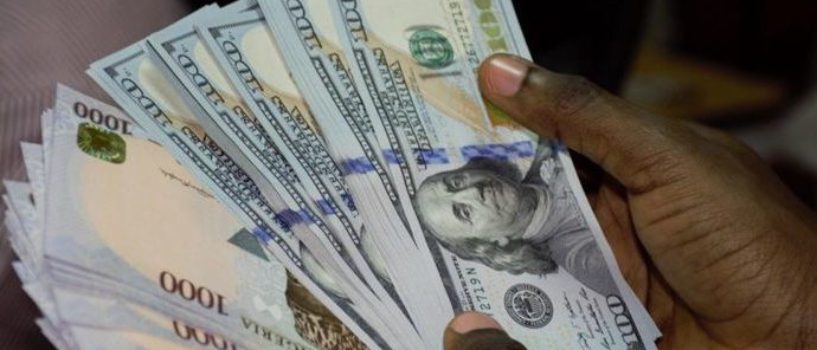
Listing on Aboki Forex, a digital platform that informs users of the rates at which different currencies are traded on both official and unofficial markets, revealed that the naira, which traded for N620 against the dollar on Monday and N630 on Wednesday, has fallen to N645 as of Thursday afternoon.

Under the governorship of Godwin Emefiele, the Central Bank of Nigeria has failed to mitigate the national currency’s free fall.

On Tuesday, Mr Emefiele threatened to arrest and prosecute Nigerians who were buying dollars with naira, claiming that doing so was against the law.

Citizens’ ability to conduct foreign transactions has become increasingly difficult as many deposit money banks reduced the international spending limit on naira cards to $20 per month following CBN’s stiff forex policies.

The apex bank, however, maintains the parallel market does not accurately reflect the country’s exchange rate economy.

Yet, naira’s fall from N588 against the American dollar in May to N655 today has continued to send prices of services and commodities through the roof across the country.

July 22, 2022 0 comments
0 FacebookTwitterPinterestThreadsBlueskyEmail
OpinionHeadlines

The Green Passport Needs Urgent Revamping

by Folarin Kehinde July 22, 2022
written by Folarin Kehinde

By: Ololade Otayemi
CEO at The Orbra Company | Startup Mentor at Faster Capital, Dubai, UAE | Partnerships and International Business Lead at NBWSM, GA, USA | Ex Chief of Staff at Ventures Platform NG

The green passport needs an urgent perception revamp. My work requires me to travel around the world often. When I present my green passport across the world, i often get a different treatment.

The warmth and smiles enjoyed by people before me sometimes changes very quickly. The guys with the blue, red etc passport are treated like kings and those with the green passport… well… In October 2021, i had to be in 6 cities across 4 continents in the space of 2 months, i saw this happen almost back-to-back at most airports.

 In one of the countries in Europe, i was asked some really annoying questions and delayed unnecessarily because apparently i had a special visa that they think did not tally with the color of my passport (if you know what i mean). I wondered if I’d get the same treatment if i carried a different colour of passport. Most likely not. Recently, I needed to travel again and this time, the discrimination was by my fellow Nigerians at our own airport, the people with other passports were treated much better.

Yesterday, i got news that one of the countries I frequent and I’m starting a business in has suspended the easiest and fastest visa process they have just for Nigerians.

Basically, because our people have misrepresented us and it now affects us all.

Another time, i was stuck in another airport in Europe because I missed a connecting flight, which by the way, was the fault of the airline. I was told to find a chair in the airport to spend the night. Meanwhile, i heard a story of my wife’s cousin who holds a blue passport and his country almost grounded an airport because he missed his flight and his family couldn’t reach him. I had to insist on the airline getting me a hotel and treating me better and THEY DID!

This reminds me of one of @feladurotoye saying “a third-class citizen of a first- world country will be treated better than a first-class citizen of a third-world country”

We need to get Nigeria right as a matter of urgency! JAPA is not the solution. Please go get your PVC!

In all of this, I am Nigerian and I am proud to be one!

July 22, 2022 0 comments
0 FacebookTwitterPinterestThreadsBlueskyEmail
OpinionHeadlines

Proposed Mining Ban Will Skyrocket Insecurity In Nigeria; social scientist

by Folarin Kehinde July 22, 2022
written by Folarin Kehinde

Any ban on mining activities in Nigeria will create the highest level of insecurity ever witnessed anywhere in the World.

I can bet my life that Northern economy will completely collapse if mining activities are banned. Already the Nigerian economy is headed south!

All the anti-social groups operating in the North will finally have great harvests of members if Mining is banned.

Please the your Ministry of Mines did not tell you, the solid mineral sector in Northern Nigeria directly employs over 5 million people, and indirectly employs over 20 million people with its multiplier effect. Most of those directly employed are highly knowledgeable in the use of explosives, one of the major required materials in mining. let do ourself a favour to guess what will happen in Nigeria if about 30% or more of 5 million of people knowledgeable in explosives are thrown out of legitimate employment to economic uncertainties!

Such an idea should never be contemplated. It is a potentially nuclear idea! No one will come out of it. The government may not be aware that the recent drop in criminalities in Nasarawa State is because of the influx of Chinese in Nigeria looking for lithium bearing minerals.

As a social scientist, who have studied the relationship between the solid mineral sector and crime, I can bet my money that if mining is stopped today in Nigeria, either of two things will happen: it is either the policy is ignored, or the level of insecurities the thoughtless policy will create, will threaten cities like Abuja, which is sharing boundaries with Nasarawa, Kogi, Niger & Kaduna, major mining states.

This is dangerous and must not be entertained!

Ede O.G Nigeria

July 22, 2022 0 comments
0 FacebookTwitterPinterestThreadsBlueskyEmail
Headlines

INSECURITY: FG Considers Ban On Motorcycles and Mining Nationwide

by Folarin Kehinde July 22, 2022
written by Folarin Kehinde

The Attorney general of the federation, Abubakar Malami has confirmed that the federal government is considering to ban motorcycles and mining nationwide in order to fight insecurity.

Briefing newsmen Thursday at the end of the National Security Council meeting presided over by President Muhammadu Buhari, the Attorney General of the Federation (AGF) and Minister of Justice, Abubakar Malami, said the ban was one of the resolutions arrived at during the security meeting.

Malami said that the terrorist have moved from conversional means of funding their activities, evolving their financing techniques to mining and ransom taking, which has prompted federal government intervention.

The Attorney general pointed out that the nature of their activities has made government action imperative in order to guarantee the Country’s security. He however noted that the federal government was not unaware of the economic consequences of the proposed resolution, particularly the motorcycle ban.

The AGF stated: “The issues deliberated border on one, the logistics being used by the terrorists, Boko Haram and bandits among others in the act of executing their unfortunate act of terrorism and terrorising the country.

“It was extensively deliberated upon as to what needs to be done for the purpose of ensuring that their means of logistics are indeed adequately considered and necessary steps are taken in degrading their capacity to move around.

“So, discussions were carried out, deliberations made and sizeable resolutions in that direction were equally developed.

“The government would looked into that possibility with particular regard to restriction on use and distribution of motorcycles which is the most conventional logistical means being deployed by terrorists.

“Again, issues of funding of the terrorism and the terrorism acts were discussed and deliberated upon and considered. As you rightly know, recently the government under the leadership of President Buhari had indeed, passed, assented to certain bills inclusive of the money laundering, prevention and prohibition act among others.

“With the passage of that law, and assented to, the conventional means of terrorists funding and financing was substantially and drastically addressed and that led to forensic analysis of and identification of certain personalities that were in one way or the other connected with terrorism funding and financing.

“But then, new innovations were brought into it, into the terrorists funding and financing inclusive of the use of mineral resources – the mining for example among others. And indeed, ransom, which

conventionally has been taken by the terrorists, and then, the need arises to now look into those frontiers that are being considered by the terrorists for the purpose of addressing them accordingly.

“A resolution was equally developed on the need to address frontally, attack and ensure at the end of the day that other considerations being put in place by terrorists in terms of funding their activities are equally addressed.

“And with that in mind, the government is looking at what measures to take in terms of addressing, bridging and blocking associated sources of funding including payment for ransom and indeed, the mining activities and the possibility or otherwise of suspending for the time being, mining activities, are being considered as well, by the government.

“Again other than logistics and funding, mining, other considerations were equally put in place on table for consideration by council with particular regard to the unfortunate incident of the (Kuje) Correctional Service attack and equally, there were anticipated resolutions arising from the consequences associated with dereliction of duty.

“Issues associated with logistics of terrorists and bandits, issues associated with blockage of the source of funding, issues associated with the likely possible suspension of mining activities if indeed, it is a nexus and connection is indeed established and the issues associated with consequences for dereliction of duty if indeed, it is established arising from the report expected and anticipated relating to the Kuje correctional incident.”

July 22, 2022 0 comments
0 FacebookTwitterPinterestThreadsBlueskyEmail
Newer Posts
Older Posts

Recent Posts

  • NECO Publishes 2026 Basic Education Certificate Examination Results

    June 25, 2026
  • Police Dismiss Viral Katsina Bandit Convoy Claims, Say Riders Were Vigilantes

    June 25, 2026
  • US cooling firm enters Nigeria, targets $2.5bn AC market

    June 25, 2026
  • Senate to Vote on State Police Today

    June 24, 2026
  • Government Policies Driving Indigenous Growth in Mining Sector, Says Steron Mining CEO

    June 24, 2026

Usefull Links

  • Contact Page
  • About Leading Reporters
  • Contact Us
  • Headlines
  • Investigation
  • Exclusives
  • Opinion
  • Business
  • Facebook
  • Twitter
  • Instagram
  • Linkedin

@2021 - All Right Reserved. Designed and Developed by PenciDesign


Back To Top
Leading Reporters
  • Featured
  • Politics
  • Opinion
  • Business
  • Entertainment
  • Sports
  • About Us
  • Contact