
Leading Reporters
  • Headlines
  • Health
  • Business
  • Exclusives
  • Investigation
  • Entertainment
  • Opinion
Tuesday, December 2, 2025
Hot
Tinubu Nominates Ex-CDS Christopher Musa As Defence Minister
BREAKING: FG Publishes List of 15 Alleged Terrorist...
FG Proposes 40% Salary Increase for ASUU Lecturers
Northern Governors Host Emergency Meeting Over Escalating Security...
Tinubu appoints ex-INEC Chair Yakubu, Fani-Kayode, Reno Omokri,...
Niger Delta Boss Jennifer Adighije Accused of Corruption,...
India Orders $570 Million Payout in Major Fraud...
Dangote Refinery Saves Nigeria over ₦10bn Annually in...
Bandits Abduct 16-year-old boy, six girls in FCT...
Social Security: A Missing Link in Nigeria’s Search...
  • About Leading Reporters
  • Contact Us
Leading Reporters
Advertise With Us
  • Headlines
  • Health
  • Business
  • Exclusives
  • Investigation
  • Entertainment
  • Opinion
Hot
Tinubu Nominates Ex-CDS Christopher Musa As Defence Minister
BREAKING: FG Publishes List of 15 Alleged Terrorist...
FG Proposes 40% Salary Increase for ASUU Lecturers
Northern Governors Host Emergency Meeting Over Escalating Security...
Tinubu appoints ex-INEC Chair Yakubu, Fani-Kayode, Reno Omokri,...
Niger Delta Boss Jennifer Adighije Accused of Corruption,...
India Orders $570 Million Payout in Major Fraud...
Dangote Refinery Saves Nigeria over ₦10bn Annually in...
Bandits Abduct 16-year-old boy, six girls in FCT...
Social Security: A Missing Link in Nigeria’s Search...
Leading Reporters
Leading Reporters
  • Headlines
  • Health
  • Business
  • Exclusives
  • Investigation
  • Entertainment
  • Opinion
Copyright 2024 - All Right Reserved
Home > Oil
Tag:

Oil

HeadlinesAfrica & World

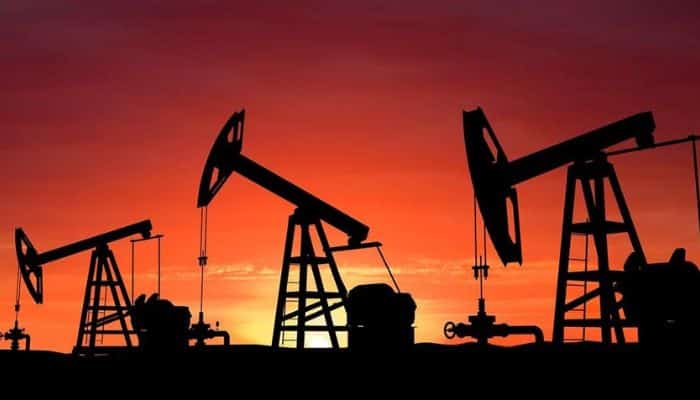
India Orders $570 Million Payout in Major Fraud Case Against Nigeria’s Sterling Oil

by Leading Reporters November 27, 2025
written by Leading Reporters

In a sweeping move, India’s Supreme Court has allowed billionaire siblings Nitin and Chetan Sandesara to evade full prosecution in a massive alleged bank-fraud scheme if they settle with a payment equal to about one-third of their assessed debt.

The ruling, which allows the pair to settle for about $570 million on liabilities pegged at $1.6 billion, could end years of criminal proceedings that New Delhi has pursued across multiple jurisdictions.

The ruling could open the way for economic offenders to strike similar settlements, leaving lenders struggling to recover their entire dues, said Debopriyo Moulik, a Supreme Court lawyer in independent practice, told Reuters.

“This is very similar to the approach adopted in foreign countries where fines are an alternative to facing trial,” Moulik said.

For the industrialists, the decision marks the closest India has come to resolving a scandal that has stretched from Mumbai to Abuja and into the offshore oil fields of West Africa.

Yet the brothers’ fortunes have never been brighter.

Far from the Indian courts that have hounded them since 2017, the Sandesaras have built one of Nigeria’s largest independent oil producers, turning a once-minor set of onshore licenses into a sprawling African energy empire delivering tens of thousands of barrels of crude a day.

Their success in Africa, combined with Nigeria’s persistent refusal to extradite them, has long frustrated Indian authorities and underscored how geopolitical and commercial interests have shielded the pair from consequences at home.

Nigeria, Africa’s top crude producer, has embraced the Sandesaras even as India brands them fugitives responsible for what investigators call “one of the largest economic scams in the country.”

Their flagship companies, Sterling Oil Exploration & Production Co. and Sterling Global Oil Resources Ltd, pump roughly 50,000 barrels of crude daily, according to a 2023 Bloomberg report, operating under contracts with the Nigerian National Petroleum Company.

The brothers’ rise in Nigeria accelerated after they pivoted away from India in the mid-2010s. What began almost 20 years earlier with two modest onshore licences in the Niger Delta matured into a vertically integrated drilling and crude-export business.

The Sandesaras transferred operations to Lagos, hired the former head of Nigeria’s petroleum regulator to oversee their expansion, and secured major state contracts that cemented their standing in the country’s energy sector.

Their companies now rank among Nigeria’s top oil exporters, and in 2019 the government said taxes and royalties paid by Sandesara-linked entities accounted for 2 percent of national revenue.

According to the Indian Times, their operations have also cleverly sidestepped the endemic sabotage of Nigeria’s pipeline network by shipping crude via barges to a floating offshore storage vessel. The approach has allowed them to keep exports steady even as peers disrupted by oil theft and militant activity scaled back.

Nigeria has also doubled down on the Sandesaras’ involvement in its future oil ambitions. Government officials last year announced the discovery of as many as 1 billion barrels of crude in the country’s arid northeast, part of a multi-billion-dollar hydrocarbons push that relies partly on drilling contractors connected to the brothers.

To New Delhi, the brothers are not pioneers but perpetrators of a sweeping financial fraud. Indian agencies allege the Sandesaras built their now-collapsed domestic conglomerate, Sterling Group, with the help of fabricated documents, inflated valuations, and an intricate network of shell structures designed to siphon overseas cash.

The brothers deny any wrongdoing and say they are victims of political persecution.

The Central Bureau of Investigation (CBI) claims the group owed more than 140 billion rupees ($1.7 billion) to state-owned lenders, including State Bank of India, Union Bank of India, and Bank of Baroda.

A 2019 charge sheet accused the family of channeling loan proceeds into offshore ventures, including their Nigerian oil operations.

The same banks later pursued the group abroad, winning two UK High Court rulings in 2018 and 2021 that ordered Sandesara-linked companies to repay nearly $60 million after defaulting on obligations related to the Sterling Oil business.

India also sought the brothers’ extradition from Nigeria. But in a blow to New Delhi’s efforts, Nigerian officials in 2018 refused to arrest them, saying India’s allegations “appeared to be political in nature,” according to correspondence published by the Organised Crime and Corruption Reporting Project and reviewed by Bloomberg.

The brothers subsequently applied for Nigerian citizenship, according to CBI filings.
November 27, 2025 0 comments
0 FacebookTwitterPinterestThreadsBlueskyEmail
Headlines

FG bans importation of oil pipelines

by Folarin Kehinde April 25, 2025
written by Folarin Kehinde

The Federal Government has announced a ban on the importation of oil pipelines into Nigeria.

The Minister of Petroleum Resources (Oil), Heineken Lokpobiri, stated this on Thursday during the launch of Monarch Alloys 33LPE and concrete weight coating facility in the Ikorodu area of Lagos State.

According to Lokpobiri, the country has to stop importing pipelines to patronise local producers.

Lokpobiri told the Nigerian Content Development and Monitoring Board not to give waivers for the importation of Chinese pipelines any longer.

While acknowledging that pipelines are very important to the oil and gas industry, he said one of the reasons the NCDMB was created was to enable Nigerian companies to build capacity to service the industry.

He expressed happiness that for the past 15 years, Monarch Alloys had laid a solid foundation, expressing concerns, however, over its sustainability.

“I’m very happy that companies like this are now springing up in Nigeria.

But what is more important is not what all of us are getting here to witness. What is more important is the sustainability of this company. If this company is not patronised by companies in the oil and gas industry, this company will die naturally.

“In the past, Nigeria used to be a dumping ground for companies importing these pipes from China. I also do know that a couple of companies like this were set up and they found it very difficult to survive because we allowed dumping to take place.

“Let me take this opportunity to say today that under the leadership of President Bola Tinubu, dumping will be no more. We have a duty to support our industries to grow and render the services that are relevant to the survival and sustainability of the oil and gas industry,” the minister said.

Speaking to the NCDMB team, he noted, “I’m very happy that I see the entire NCDMB family seated here. The ES is here. I saw all the directors who are here. Let me use the opportunity to publicly say that, look, there should be no more waivers to bring in Chinese pipes.

“The pipes the industry needs are right here in Monarch Alloys Limited. And what I see and the complaints I get is that, instead of implementing a local content act, what is being done is that waivers are being given for Chinese products to be brought in, thereby killing companies like this one. That’s why I’m saying it’s very important for us to gather here today.

I want to see how, in the next year, this company will grow. You know, in its capacity to be able to provide services, not just to Nigeria, but the entire African continent. The whole of Africa is looking up to Nigeria for services, for knowledge sharing. Whatever you think about the oil and gas industry, the rest of Africa is looking up to Nigeria. And for Nigeria, one of the most fundamental problems we have is the integrity of our pipelines.”

The oil minister maintained that Nigeria can easily produce 3 million barrels of oil per day, but the challenge is that the pipelines are old.

April 25, 2025 0 comments
0 FacebookTwitterPinterestThreadsBlueskyEmail
Headlines

Oil Rich, Electricity Poor. What will it Take To Solve Nigeria’s Energy Crisis?

by Folarin Kehinde July 23, 2022
written by Folarin Kehinde

Nigeria is Africa’s biggest oil producer but the west African nation struggles to meet its energy needs, a struggle that has persisted for many decades.

On Monday, authorities in the country said they disbursed over 3.2 billion US dollars to support power supply to Nigerians in the last five years. Godwin Emefiele who is head of the country’s apex bank, Central Bank of Nigeria (CBN) said the monies were disbursed to electricity Generating and Distribution companies to acquire equipment, buy meters and improve electricity supply in the country.

Yet Nigerians have continued to battle poor power supply with the situation worsening last week when the country’s power grid collapsed twice, causing a huge black out across most parts of the country.

Beat Fm, a 24-hour radio station in Lagos temporarily went off air, announcing moments before that it could not sustain operations into the night. Several other businesses were impacted. But this is not the first time that the power grid collapses in the nation of over 200 million people.

According to TheCable, there were power grid collapses in February, May, July, and August of 2021 and there have been about “206 collapses between 2010 and 2019.”

So why was the power grid of last week different?

Power Grid “Full System” Collapse

Nigeria’s power generation is mostly thermal and hydro and has an installed capacity of nearly 13,000 megawatts. For many years, authorities only manage to dispatch about 4,500 megawatts of its installed capacity.

By contrast, South Africa’s total domestic electricity generation capacity is over 58,000 megawatts from all sources including coal which is by far its major energy source.

According to 2020 figures, South Africa has a population of nearly 60 million and Nigeria is Africa’s most populous nation; it (Nigeria) also ranks as the biggest economy on the continent. When this reality is factored in, the disparity between both nations soon become evident and certainly not only on paper.

It is a disparity that can be seen in the stark reality of millions of homes in Nigeria that have to experience if at all, any power supply, at best, a very epileptic daily supply.

But not many would have imagined the situation to get terribly bad recently.

Generators could not save the situation

Despite being Africa’s largest producer of crude oil, Nigeria imports almost all of its fuel and that is because none of its four refineries is operational- presenting a big paradox.

To avoid a spike in prices at the pump, the Nigerian government massively subsidizes Premium Motor Spirit (PMS) commonly known as Petrol. The price is fixed at 165 naira, which is about 40 cents. The price of diesel is however higher than petrol- usually just a little less than I dollar per litre.In dealing with the poor electricity supply, Nigerians for several years have relied heavily on small and huge generator sets operating on these products- petrol or diesel.

These imported generating sets have served as an alternative source of power for Nigerians and in some occasions the only source. So, when power supply from government and private providers significantly drops, the demand for petrol and diesel shoots up.

In February, a severe fuel shortage pushed prices up to 1.50 dollars per litre on the parallel market. The Nigerian National Petroleum Company (NNPC) announced that 100 million litres of adulterated petrol had been imported by error prompting a withdrawal from the market.

A delay in cargo ships carrying refined oil due to the war in Ukraine was also blamed for the shortage. Long queues flowing onto the roads soon lined filling stations across the country for days and weeks, climaxing into a huge and almost nationwide black out last week.

A troubled ‘Privatised’ sector

It is now nearly a decade since Nigeria ‘privatised’ its power sector. The process led to the creation of 11 distribution companies (Discos), while seven generating companies were sold to different private companies. But nothing significant has changed in the experience of consumers and year in, year out, both the government and the Discos blame each other for the failures and woes.

In an interview with africanews journalist Jerry Fisayo-Bambi, the CEO, of the Centre for the Promotion of Private Enterprise Nigeria, Muda Yusuf noted there are many structural and systemic problems facing the players in the power business sector.

First, he counters the CBN’s claim of funding saying the stated amount of spending in five years is grossly inadequate.

“The funding you require for the power sector and to effectively turn around the power sector is far more than that. In fact you should be talking about 15 -20 billion US dollars. At the distribution end alone, there are major funding gaps. And some of the investors in the sector have claimed that they are not being allowed to charge a cost effective tariff” Yusuf, the former Director General of the Lagos Chamber of Commerce and Industries (LCCI) explained.

Yusuf points out further that the power reforms that saw the sector privatised in 2011 was done partially and the quality of the process has raised concern. Generation and distribution were privatised with the exclusion of the transmission component, he says, explaining that the operators continue to struggle with funding and technical capacity.

“There is a major issue with regards to generating liquidity within the system, a major issue with indebtedness to the generating companies because they can not pay adequately for gas and gas suppliers sometimes disconnect them. Then the transmission problem is managed by the government and you can imagine what that means.. so it is a multifaceted and complicated issue compounded by massive electricity theft with some government agencies and consumers not paying adequately for electricity”.

Indeed, it is a complicated issue. A former minister of power Prof. Barth Nnaji alludes to some of the insight shared by Yusuf.

“There is also human factor problem on distribution such as connection inefficiencies, leakages, people stealing power, and all kinds of things done by people that make it difficult for efficient distribution, and also, the distribution companies themselves who are not investing in infrastructure which brings about inability to supply power.” Barth Nnaji was quoted as saying recently in a local newspaper interview.

What then is the way out?

Members of the lower house of Nigeria’s parliament on Tuesday 22 March mandated the Minister of Power, Abubakar Aliyu to take concrete actions aimed at solving the current nationwide blackout rather than always presenting theories.

The Committee on power, led by Hon. Magaji Da’u Aliyu at a meeting with the minister, expressed disappointment over the attitude of the ministry towards power issues particularly during national emergencies.

“There is nothing on ground to show that there will be light or generation of up to 5000 megawatts, but we keep hearing about 30,000 megawatts of installed capacity across the power stations” Da’u Aliyu said.

The Member of Parliament in his rebuke of the current minister of power, hints of the government target of 30,000 megawatts of electricity by 2030, something Generation Companies in the country (GenCos) have assured authorities to be very much attainable.

But Nigeria’s former power minister Barth Nnaji thinks this is in fact a far cry from what is needed. “If we are going to be a mid-level economy, then we should clearly be talking about having the sort of power supply that Brazil has, which is over 100, 000 megawatts. If we are going to have 100, 000 megawatts of power supply, then we need to have transmission lines to match that capacity, but we don’t have it” he says.

As of today, only about 47 percent of Nigerians have access to electricity when it is available, the World Bank estimates. And if the country must achieve the target of 30, 000 megawatts by 2030, a pragmatic approach, which must be implemented commercially and politically will need to be ensured at the very least.

Fuel scarcity disappears, generators can now be filled

The government says it has released one billion litres of fuel from the national reserve to normalize distribution of petroleum products across the country after the shortage that saw fuel queues return to the roads in the past month.

The queues have though started to disappear. But the inflationary pressures from the recent fuel shortage and lack of electricity supply have already compounded business dealings and left their ugly mark on this giant African nation.

According to the International Monetary Fund 2019 country report on Nigeria, electricity problem causes the Nigerian economy to lose an estimated $29-billion annually.

“This fuel is finished, it is frustrating and there is not much profit to be made when you spend so much monies on petrol. How do you make extra monies? It is not possible particularly when you have to give the best to your customers”.

Those were the words of Olorundare Juwon, a Fashion Designer and owner of a garment factory in Lagos, as he stared miserably at his empty power generating set.

President Muhammadu Buhari in a rare move last week apologized to Nigerians for fuel and electricity issues. This week, he has promised citizens that the issues will soon be over.

But until then, people in business like Olorundare Juwon in Lagos and indeed millions more across Nigeria will continue to bear the brunt.

July 23, 2022 0 comments
0 FacebookTwitterPinterestThreadsBlueskyEmail
BusinessHeadlines

Hunger ravages Nigerian as consumable cereals record 253%, 51% price jump

by Leading Reporters July 27, 2021
written by Leading Reporters

Farmers decry worsening insecurity, FG promises intervention
The cost of food items in Nigeria has been recording significant increases in the past one year.

A survey carried out by our correspondents in markets across Lagos, Ogun and Federal Capital Territory showed that staple food commodities have witnessed astronomical price hikes.

Findings showed that within a one-year period, the cost of 50kg of beans rose by about 253 per cent, a basket of tomatoes leaped by 123 per cent, while the price of 50kg of rice rose by 51.48 per cent.

Other commodities such as bread, garri and onions also witnessed sharp increases in their prices during the period under review.

The food commodities surveyed included rice, beans, garri, maize, tomatoes, onions and bread, while the time frames examined were July 2020, January 2021 and July 2021.

In July 2020, the cost of one mudu of rice was N420.63, while 50kg of rice was between N21,125 and N28,500.

A price increase occurred in January 2021, with one mudu of rice rising to N500, while 50kg of rice was between N23,750 and N24,500.

The increase continued until in July 2021 as one mudu of rice rose to N1,100, while 50kg of rice increased to an average of N32,000.

As of July 2020, one mudu of beans cost N305.48, while 50kg of beans was N12,750.

However, by January 2021, the price of a mudu of beans had climbed to N373, while 50kg of beans was N30,000.

The increase continued in July 2021, with one mudu of beans costing N900, while 50kg of beans had risen to N45,000.

Between July 2020 to January 2021, the cost of a 1kg and onions rose from N180.56 to N411, while one big bag of onions climbed from N17,000 to N21,500.

In July 2020, the cost of one mudu of garri was N247.62, while 50kg of garri was N11,500.

A price increase occurred in January 2021, with one mudu of garri selling for N300, while 50kg of garri sold between N10,750 to N11,125.

The increase continued until in July 2021 with one mudu of garri going for N450 while 50kg of garri sold for N14,500.

In July 2020, a mudu of maize was sold for N186.89 to N184.52, while 50kg of maize was N17,500 to N17,250.

A price increase occurred in January 2021 with one mudu of maize selling for N216 to N230, while 50kg of maize was N20,000 to N20,167.

The increase continued in July 2021 with one mudu of maize selling N400, while 50kg of maize sold between N22,000 and N24,000.

In July 2020, the cost of 1kg of tomatoes was N284.49, while a big basket of tomatoes was N8,500.

A price drop occurred in January 2021 with 1kg of tomatoes going for N152, while a big basket of tomatoes sold for N6,500.

However, as of July 23, 2021 when this report was filed, 1kg of tomatoes cost N1,000, while a big basket of tomatoes was sold for N19,000.

The cost of bread continued to rise steadily within the review period.

As of July 2020, the cost of one loaf of bread was N375. The same unit was sold for N500 in January 2021 and N600 as of July 2021.

The composite food index (a measure of food inflation) rose to 21.83 per cent in June compared to 22.28 per cent in May 2021, according to the National Bureau of Statistics.

This rise was caused by increases in prices of bread and cereals, potatoes, yam and other tubers, milk, cheese and eggs, fish, soft drinks, vegetables, oils and fats, and meat.

In January, food inflation was 20.57 per cent, compared to 19.56 per cent in December 2020. This rise was caused by increases in prices of bread and cereals, potatoes, yam and other tubers, meat, fruits, vegetable, fish and oils and fats.

In June 2020, food inflation was 15.18 per cent. An increase caused by increases in prices of bread and cereals, potatoes, yam and other tubers, fruits, oils and fats, meat, fish and vegetables.

According to the NBS, food inflation on a year-on-year basis was highest in Kogi (30.34 per cent), Enugu (25.18 per cent) and Kwara (24.78 per cent), and lowest in Bauchi (18.97per cent), River (18.92per cent) and Abuja (17.09per cent) in June, 2021.

On month-on-month basis, food inflation was highest in Jigawa (2.67 per cent), Edo (2.43 per cent) and Cross River (2.16 per cent), and lowest in Lagos (0.14 per cent), Borno (0.06 per cent) and Kwara (0.02 per cent) in June, 2021.

July 27, 2021 0 comments
0 FacebookTwitterPinterestThreadsBlueskyEmail

Recent Posts

  • Tinubu Nominates Ex-CDS Christopher Musa As Defence Minister

    December 2, 2025
  • Poor Toilets Driving GBV, School Dropouts – Wateraid

    December 2, 2025
  • BREAKING: FG Publishes List of 15 Alleged Terrorist Financers in Nigeria [SEE LIST]

    December 1, 2025
  • FG Proposes 40% Salary Increase for ASUU Lecturers

    December 1, 2025
  • Northern Governors Host Emergency Meeting Over Escalating Security Concerns

    December 1, 2025

Usefull Links

  • Contact Page
  • About Leading Reporters
  • Contact Us
  • Headlines
  • Investigation
  • Exclusives
  • Opinion
  • Business
  • Facebook
  • Twitter
  • Instagram
  • Linkedin

@2021 - All Right Reserved. Designed and Developed by PenciDesign


Back To Top
Leading Reporters
  • Featured
  • Politics
  • Opinion
  • Business
  • Entertainment
  • Sports
  • About Us
  • Contact