Leading Reporters
  • Headlines
  • Health
  • Business
  • Exclusives
  • Investigation
  • Entertainment
  • Opinion
Tuesday, January 27, 2026
Hot
FCTA Workers, NLC Storm Industrial Court, Demand Wike...
DisCos reject FG’s free meter plan
Nigerian-born nurse loses licence in Australia for sleeping...
BREAKING: Kano Gov Abba Yusuf dumps NNPP
National Grid Collapse For First Time in 2026
BREAKING: Tinubu approves posting of Ambassadors to U.S.,...
Insecurity: Kidnappers demand 17 motorcycles for release of...
FG to Abolish Hnd-Degree Dichotomy, Allow Polytechnics to...
AFCON Initiative drives stronger Nigeria Morocco cooperation
Obasanjo: I’ll Never Stop Having Children
  • About Leading Reporters
  • Contact Us
Leading Reporters
Advertise With Us
  • Headlines
  • Health
  • Business
  • Exclusives
  • Investigation
  • Entertainment
  • Opinion
Hot
FCTA Workers, NLC Storm Industrial Court, Demand Wike...
DisCos reject FG’s free meter plan
Nigerian-born nurse loses licence in Australia for sleeping...
BREAKING: Kano Gov Abba Yusuf dumps NNPP
National Grid Collapse For First Time in 2026
BREAKING: Tinubu approves posting of Ambassadors to U.S.,...
Insecurity: Kidnappers demand 17 motorcycles for release of...
FG to Abolish Hnd-Degree Dichotomy, Allow Polytechnics to...
AFCON Initiative drives stronger Nigeria Morocco cooperation
Obasanjo: I’ll Never Stop Having Children
Leading Reporters
Leading Reporters
  • Headlines
  • Health
  • Business
  • Exclusives
  • Investigation
  • Entertainment
  • Opinion
Copyright 2024 - All Right Reserved
Home > Nigeria > Page 6
Tag:

Nigeria

OpinionHeadlines

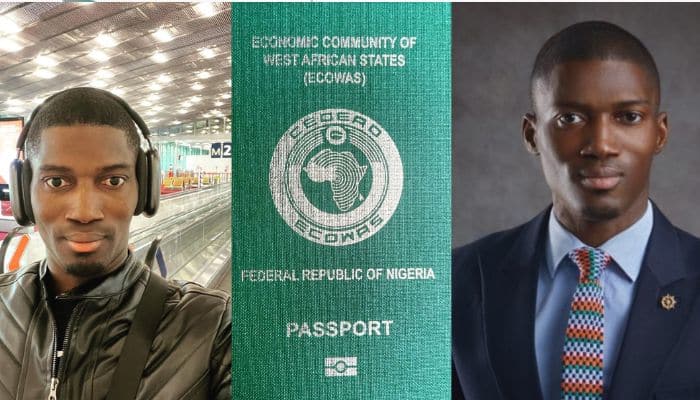
The Green Passport Needs Urgent Revamping

by Folarin Kehinde July 22, 2022
written by Folarin Kehinde

By: Ololade Otayemi
CEO at The Orbra Company | Startup Mentor at Faster Capital, Dubai, UAE | Partnerships and International Business Lead at NBWSM, GA, USA | Ex Chief of Staff at Ventures Platform NG

The green passport needs an urgent perception revamp. My work requires me to travel around the world often. When I present my green passport across the world, i often get a different treatment.

The warmth and smiles enjoyed by people before me sometimes changes very quickly. The guys with the blue, red etc passport are treated like kings and those with the green passport… well… In October 2021, i had to be in 6 cities across 4 continents in the space of 2 months, i saw this happen almost back-to-back at most airports.

 In one of the countries in Europe, i was asked some really annoying questions and delayed unnecessarily because apparently i had a special visa that they think did not tally with the color of my passport (if you know what i mean). I wondered if I’d get the same treatment if i carried a different colour of passport. Most likely not. Recently, I needed to travel again and this time, the discrimination was by my fellow Nigerians at our own airport, the people with other passports were treated much better.

Yesterday, i got news that one of the countries I frequent and I’m starting a business in has suspended the easiest and fastest visa process they have just for Nigerians.

Basically, because our people have misrepresented us and it now affects us all.

Another time, i was stuck in another airport in Europe because I missed a connecting flight, which by the way, was the fault of the airline. I was told to find a chair in the airport to spend the night. Meanwhile, i heard a story of my wife’s cousin who holds a blue passport and his country almost grounded an airport because he missed his flight and his family couldn’t reach him. I had to insist on the airline getting me a hotel and treating me better and THEY DID!

This reminds me of one of @feladurotoye saying “a third-class citizen of a first- world country will be treated better than a first-class citizen of a third-world country”

We need to get Nigeria right as a matter of urgency! JAPA is not the solution. Please go get your PVC!

In all of this, I am Nigerian and I am proud to be one!

July 22, 2022 0 comments
0 FacebookTwitterPinterestThreadsBlueskyEmail
Sports

Williams Ekong’s own goal hands Mexico 2-1 win over Super Eagles

by Leading Reporters May 29, 2022
written by Leading Reporters

Super Eagles’ captain William Troost-Ekong on Saturday cleared into his team’s net to gift Mexico a 2-1 victory over Nigeria in an international friendly at Dallas in the United States.

The match was the Super Eagles’ first of two international friendlies lined up by the Nigeria Football Federation (NFF). It was also head coach Jose Peseiro’s first game in charge of the team, and part of their preparations for the 2023 Africa Cup of Nations (AFCON) qualifiers.

While Nigeria failed to qualify for this year’s FIFA World Cup, El Tri are using the game to prepare for the event in Qatar.

The match was the first of three friendlies for the Mexicans before their CONCACAF Nations League opener against Suriname in June.

Santiago Gimenez opened the scoring for a makeshift Mexico squad in the 13th minute.

It was with a great finish as they got their international window off to a positive start In front of a healthy crowd in Arlington.

The Mexicans bossed the first half with Gerardo Martino using the second half primarily as an opportunity to integrate Diego Lainez and Edson Alvarez from the bench.

Goalkeeper Francis Uzoho made some superb saves to contain their opponents in the first half and keep the Super Eagles in the game.

Peseiro’s boys however grew more into the game in the second half and got a well-deserved equaliser through Cyriel Dessers in the 54th minute from a powerful header. It was Dessers first international goal for the national team.

However, defender Troost-Ekong inadvertently conceded an own goal in an attempt to clear the ball from a delicate cross into the penalty box in the 56th minute.

The match was thereafter cagey and saw the introduction of a few players from the Nigeria Professional Football League League (NPFL) towards the end, with about 20 minutes left.

Enyimba’s Victor Mbaoma, and Ishaq Rafiu and Chiamaka Madu (both from Rivers United) replaced Terem Moffi (Lorient FC, France), Moses Simon (FC Nantes, France) and Dessers (Feyenoord, Netherlands) respectively.

They helped the team to hold on for a commendable finish.

Troost-Ekong’s own-goal eventually proved the difference between the two sides, in spite of coming barely two minutes after Dessers equaliser for Nigeria.

Super Eagles will face Ecuador on Thursday before attention shifts to the 2023 AFCON qualifiers against Sierra Leone and Mauritius in June. NAN


May 29, 2022 0 comments
0 FacebookTwitterPinterestThreadsBlueskyEmail
Headlines

Nigeria, others witness lunar eclipse today

by Folarin Kehinde May 16, 2022
written by Folarin Kehinde

Centre Director, Dr. Bonaventure Okere, stated that the lunar eclipse would be visible from across the nooks and crannies of Nigeria, as well as in several other countries of Africa, North and South America, Europe and parts of Asia.

He added that the lunar eclipse has remained one of the most interesting astronomical events/phenomena for sky-watchers globally over the years.

The natural phenomenon, according to him, occurs “when the Earth blocks the Sun’s light, which otherwise would have struck and reflect off the moon’s surface. In other words, the moon passes into the umbra/deep shadow of the Earth.

“When this happens, the short-wavelength light from our planet is scattered/absorbed while the light of longer wavelength (red colour) is refracted around the edges of the atmosphere while falling upon the moon’s surface, thereby turning the moon reddish in colour (the Blood Moon).”

May 16, 2022 0 comments
0 FacebookTwitterPinterestThreadsBlueskyEmail
Headlines

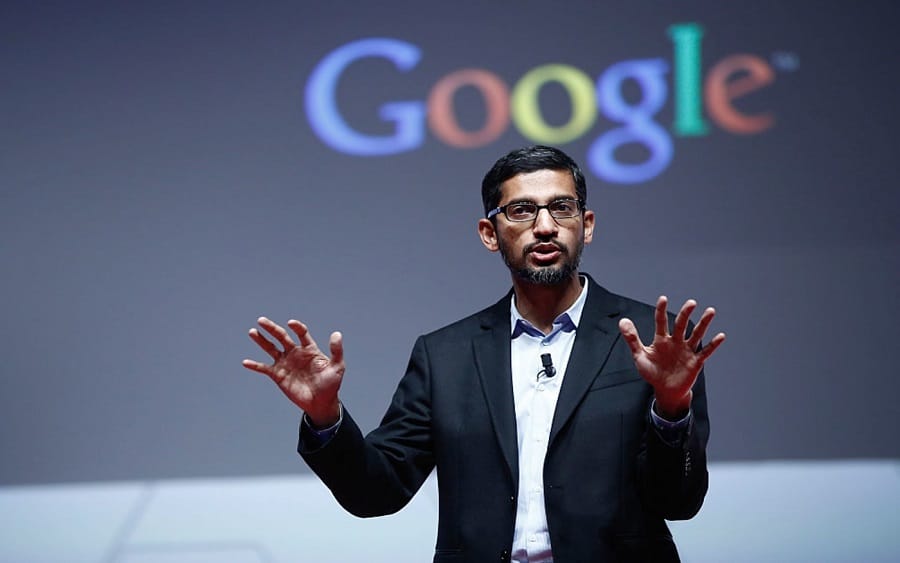
Google snubs Nigeria, establishes first Africa Development Centre in Kenya

by Folarin Kehinde April 19, 2022
written by Folarin Kehinde

American multinational technology company, Google, in what appears like a snubbing of Africa’s largest economy, Nigeria, has announced the establishment of its first Africa product development centre in Nairobi, Kenya.

The centre which is expected to help create transformative products and services for people in Africa and around the world is coming barely 4 weeks after Microsoft opened new African Development Centre at Ikoyi, Lagos.

This was made known by Google’s Vice President of the product, Ms Susan Frey, at a Virtual Media Round Table, where she said that Google would also be hiring for the development centre.

According to NAN, Frey said there would be hiring visionary engineers, product managers, UX designers and researchers to lay the foundation for significant growth in the coming years.

Frey also said that the centre was looking for talented, creative people who would help solve difficult and important technical challenges, such as improving the smartphone experience for people in Africa.

She said that talented people would also be building a more reliable internet infrastructure.

Frey recalled that in October 2021, at a `Google for Africa’ event, the Chief Executive Officer, Sundar Pichai, announced plans to invest $1billion over the next 5 years to support Africa’s digital transformation.

She pointed out that the investment is expected to focus on enabling fast, affordable internet access for more Africans, building helpful products, supporting entrepreneurs and small businesses and helping non-profits to improve lives across Africa.

The Managing Director for Google in Africa, Nitin Gajria, revealed that there were 300 million internet users in Africa who were young, mobile-first and had similar patterns to mobile youth globally.

Gajria said that by 2030, Africa would have 800 million internet users and a third of the world’s under-35 population, adding that the potential for Africa to become a leading digital economy was right on the horizon and Google was committed to accelerating Africa’s digital transformation through human capital.

April 19, 2022 0 comments
0 FacebookTwitterPinterestThreadsBlueskyEmail
Headlines

Does anyone deserve immunity in Nigeria?

by Leading Reporters April 10, 2022
written by Leading Reporters

By Tonnie Iredia

In 2007, the Nigerian Judiciary turned down a request by the Federal Government to declare the office of Vice President Atiku Abubakar vacant on account of his defection from the then ruling People’s Democratic Party (PDP) to the Action Congress (AC).

The decision was premised on Section 308 of the Nigerian Constitution which protects a sitting President and his Vice as well as State Governors and their deputies from being prosecuted in court while in office. Atiku’s case therefore helped to underscore the inviolability of the immunity clause.

However, conscious of some likely negative effects, such as abuses by political office-holders, Umaru Yar’adua who became President a few months later, sought to expunge it from the Constitution. Yar’adua pointedly argued during the launch of his anti-corruption campaign that nobody in Nigeria deserved “the right to be protected by law when looting public funds.”

The suggestion was well received in many quarters, especially by those who wondered which party manifesto a Defector-Vice President would execute while in a ‘limbo-office.’ Interestingly, the Action Congress reputed to consist of progressives opposed the proposal on political grounds thereby making it more difficult for possible negative fall-outs from Section 308 to be resolved.

According to the then Publicity Secretary of the party, Alhaji Lai Mohammed, it was not the immunity clause that was protecting looters but the lack of political will by government to tackle corruption. The immunity clause survived, not because many were persuaded by the reasoning in Atiku’s case, but more because the attempt to sack Atiku was seen as political and not on account of corruption. In addition, Nigerians had assumed that any ill-gotten wealth garnered by corrupt leaders would be legally retrieved later while those found guilty of corrupt practices would be severely penalized.

This assumption has since been disproved especially after a former party chieftain declared that those who defect to the ruling party would have their sins forgiven. Perhaps, no one imagined that the immunity clause which was genuinely inserted in the Constitution to dissuade anyone from distracting the executive arm would be exploited by the same beneficiaries to commit mischief.

The logical reasoning was that as a developing society challenged by infrastructural deficiencies, leaders in the executive arm would have so much to do about development to have spare time to be engrossed in politics. In truth however, many Nigerian politicians are prepared to hide under constitutional protection and technicalities to engage in unwholesome political and electoral mal-practices. It is now obvious in retrospect that office holders who enjoy immunity are able to use the privilege negatively for personal gains which was not the purpose of the provision.

This over-pampering of executives who are not required to reciprocate the goodwill accorded them ought to be reviewed. For example, whereas the constitution stops anyone from instituting legal cases against leaders in the executive arm, the same constitution failed to also bar such leaders, while in office, from initiating same against members of the public. So, they can sue but cannot be sued! They are also free to engage in political immorality which they quickly defend using the instrumentality of the immunity clause.

Even the legal injunction that executives should not be engaged in other assignments except governance has not materialized. The first problem came from a new arrangement in which candidates elected at elections suddenly became designated by their parties as national leaders in the case of President or state leader in the case of governors. The main result of this designation and consequent preoccupation with party matters is that the executives have been diverted from spending ample time on governance issues as if they were elected by the entire electorate to run one political party or the other.

President Muhammadu Buhari as the national leader of the ruling APC has had to take charge of the party at different times. At a point he, had to arrange for a caretaker management when the party’s chairman was removed while he stepped in again recently to stop the party’s national convention from derailing. Governors Mai Mala Buni of Yobe, Abubakar Bello of Niger and Gboyega Oyetola of Osun had to virtually run the national working committee of their party for almost two years thereby relegating the tedious but substantive task of state executives.

While many state governors are now more seen in Abuja than their state capitals dealing with one party issue or another, many have in the last one year traversed the length and breadth of the country on party assignments well ahead of the official time for electioneering. As a result, the original time for governance has been heavily appropriated while expanding the time for electioneering. Yet, the constitution, in anticipation of the numerous projects of development that have to be executed for the benefit of the masses barred everyone from distracting executives.

In the midst of these self/party imposed distractions, some governors are counselled that to be reelected or elevated to higher positions, they have to defect to another party. They hurriedly implement such arrangements ignoring the fact that their current positions were attained through the sponsorship of another political party. If legally challenged, they are able to plead Section 308 of the Constitution. What bothers many about this trend is that it is only the arguments of senior lawyers copiously quoting the Supreme Court that the people hear.

No one considers that some die-hard actors would soon design extra-judicial arrangements to protect their votes from being transferred to another party. In other words, the injustice of defection which converts winners to losers by transferring the votes obtained at elections may soon generate political violence leading to another inexplicable insecurity. To confirm that there is no remorse about the approach, even legislators that the Constitution says should lose their seats upon defection are left untouched. What then is the purpose of voting, if the wishes of the people can be recklessly reversed?

The expectation that somewhere along the line, judicial activism would decisively put a halt to the vicious attack on the spirit of the Constitution is daily fading. At the same time, the justification for defection is becoming more bizarre by the day. The other day, one governor who was defending his defection from one party to another said on national television that he moved to avoid a fellow governor whom he described as a bully. He neither explained the venue of the alleged bullying nor how a governor in another state can stop him from working in his own state.

What he inadvertently confirmed was that he loathes how the so-called unnamed bully operates during party meetings. But why should a governor, an otherwise statesman, be occupied with party matters? When the court declined to remove him from office, he publicly celebrated “victory” whereas what happened was that the court couldn’t find an approved punishment for his unwholesome conduct.

Except the country finds a way of reversing the trend, defectors would increase shortly thereby retarding national growth and development. So far, the way the cases in court challenging the politicization of governance are being handled suggests that the reprehensible conduct will not be addressed soon as all eyes are turned towards only the letters of the law. With the fast approaching primary election for which everyone is already in the mood for campaigns not much can be done in the area of pushing for an amendment to Section 308 of the Constitution.

The direction to look towards in the circumstance is for our Supreme Court to help shape our public policy by using its powers of interpretation to positively expand the provisions of the section in such a way that the genuine intention of the drafters of our Constitution is attained. For example, considering that the judiciary has said that votes scored at an election belong to political parties, the executives wishing to defect should be allowed to do so but without taking away votes which still belong to their erstwhile parties.
April 10, 2022

April 10, 2022 0 comments
0 FacebookTwitterPinterestThreadsBlueskyEmail
HeadlinesBusiness

Nigeria may be Broke but don’t need Money to Turn the Tide

by Leading Reporters February 10, 2022
written by Leading Reporters

Nigeria has continued to borrow money to fund its budgets, the 2022 budget, and the country does not plan to stop borrowing soon, as details on its Medium Term Expenditure Framework show that between 2022 and 2024, the country will borrow N14.8 trillion.

Debt servicing, a consequence of the heavy borrowing, continues to gulp huge amounts and between 2022 and 2024, debt servicing will take a total of N14.6 Trillion.

To put it concisely Nigeria is broke, maybe not in the same way Musa or Nkechi are broke two days after receiving a salary, but broke all the same. 

President Muhammadu Buhari told the global community that the country needs $1.5 Trillion to bridge its infrastructure gap.

However, has more money always translated into more development for Nigeria?

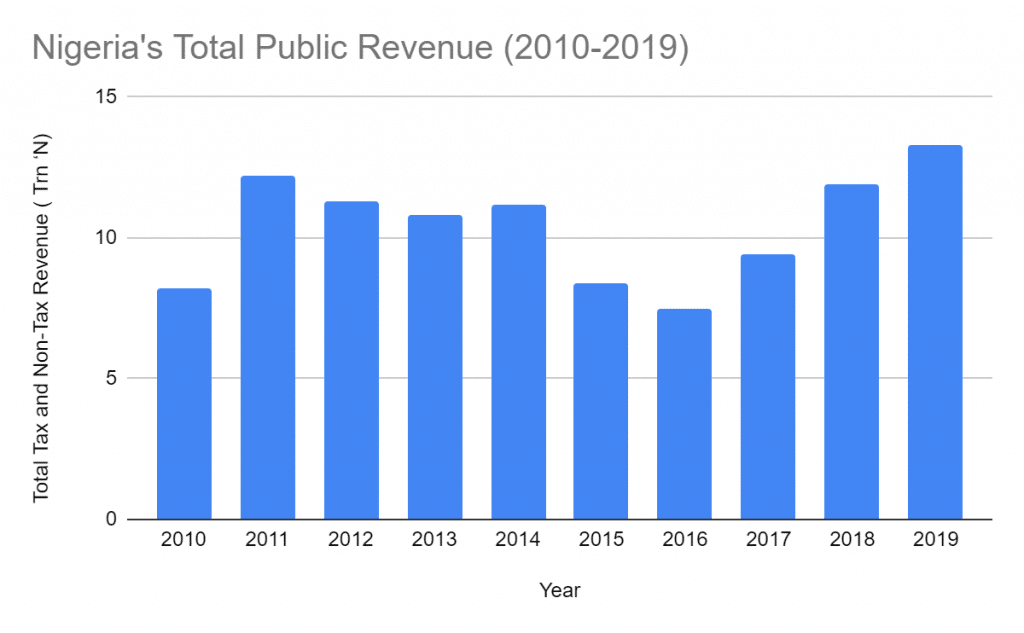
Figures available on the Organization for Economic Cooperation and Development portal show the total public revenue of the country. 

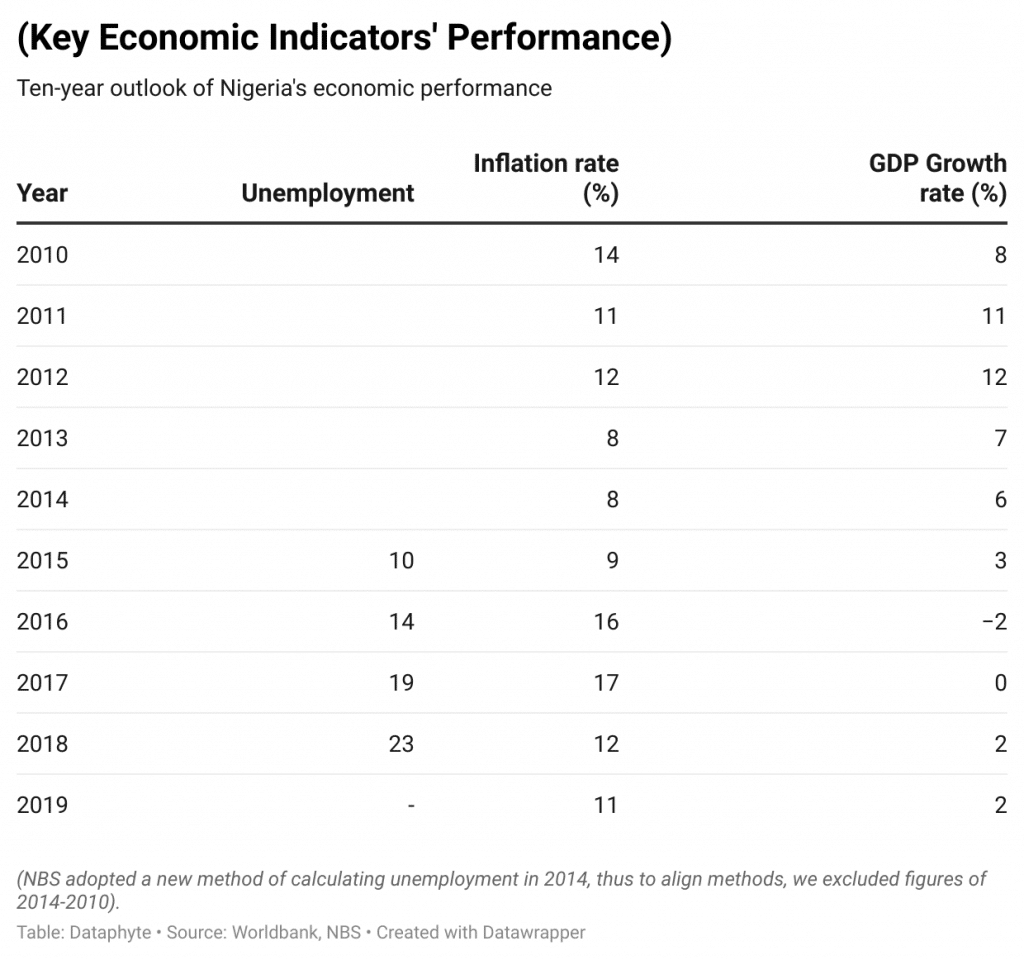
Key Economic Indicators

(The public revenue of the country for 2020 and 2021 was not added due to the COVID-19 pandemic which altered financial demands and spending of the country and all countries across the globe.)

Between 2018 and 2019, public revenue increased with the revenue hitting N13 Trillion. Unfortunately, increased revenues have not always guaranteed better economic outcomes. Economic indicators showed that GDP growth remained at 2% in both years.

The inflation figures of the country have remained in double digits impacted by both demand-pull and cost-push forces. Dependency on imports has also put pressure on the country contributing to inflation especially when the increase in the price of imported goods may also drive up prices of goods and services in the country. The naira has continued to reduce in value as exchange rates makes the country’s dependence on imported goods near suicidal. Yet in 2019, importation figures increased up to N5.3 trillion, an increase of 49.34% over the 2018 figure. 

The various policies of the government have failed to reduce the food importation bill. Importation of agricultural products rose by 6.6% between Q4 2018 and Q4 2019. Wheat importation bill stood at $1.48billion as of 2019, according to the Observatory of Economic Complexity.  Although the country’s rice production increased, the country has yet to achieve self-sufficiency.

Nigeria has also battled with poverty, with the World Bank noting that over 40% of Nigerians representing 83 million persons live below the poverty line while another 25% (53 million people) were vulnerable.

Food insecurity is heightened as the country has struggled in recent times to meet its local demand for food. Scarcity occasioned by insufficiency and strengthened by insecurity has led to a surge in food prices. Although the country has recorded some increase in the Agricultural sector’s contribution to GDP over the years, in real-time, the results have not translated to a positive effect on final economic indicators nor the country’s food security positioning.

In 2016, the country introduced N-power to tackle unemployment but the unemployment figure has not dropped since then, growing from 14%, 19% to 23% respectively in 2016, 2017 and 2018. The N-power intervention and other related policies of the government did not reduce the unemployment percentage.

Recurrent, Capital Expenditure Ratio, Corruption May be Denying Nigeria Adequate Results of Increased Revenue

Nigeria has over the years experienced high recurrent expenditure over capital expenditure across key sectors. The ability to invest in key infrastructures that may have impacted on key indicators by increasing job creation, improving local manufacturing and production etc. have reduced the value of development and increase in public revenue could offer.

Corruption is a significant factor in the loss of development benefits from increased revenue. The corruption perception index of the country stood at 145 of 180 countries in 2020 with the country scoring 25 points out of a possible 100, according to Transparency international. 

Although Nigeria dropped one place in 2020 having ranked 146 in 2019, its record has historically been poor, ranking 1444 in 2018 and 148 in 2017. This is despite the introduction of the Treasury Single Account by the government in 20016 aimed to harmonize financial operations and ensure a transparent public sector. If the Auditor General’s report is anything to go buy, the government and its agencies continue to miss the mark on transparency and accountability

Budget Deficit, Debt Servicing May Deny Nigerians Full benefit of Increased Public Revenue

A report earlier noted the high cost of debt servicing in the country for instance between January to May 2020 Nigeria spent N72 on debt servicing for every N100 earned. The 2022 budget has a 22% debt servicing figure of N3.8 trillion. This means that a substantial part  of Nigeria’s public revenue will be spent on debt servicing, monies that might have aided in boosting key economic indicators.

With Nigeria planning to borrow another N14.8 Trillion between 2022 and 2024, that will shoot up the cost of the country’s debt servicing and is expected to gulp N14.6 Trillion in the same period (2022-2024).

Review of Nigeria’s Current Key Fiscal Policies

Nigeria’s policies on improving the economic outcomes of the country have suffered various handicaps. For instance, the diversification of the economy to Agriculture has been greatly affected by insecurity, climate change, among other issues.

Policies for reducing the unemployment burden have not yielded much results as the figures have continued to grow. 500,000 Nigerians were reported to have benefitted from the N-power program as of 2020, but there has been no impact on the rate of unemployment in the country which ended the year at 32.5% . The president launched another initiative, Nigeria Jubilee Fellows program aimed at employing twenty thousand Nigerians who just graduated from the National Youth Service Corps. Again this is unlikely to affect the employment projected to rise even higher in 2022. 

The country operates the Retail Dutch Auction system for its foreign exchange. What this implies is that the Central Bank sells Forex through Banks to the end-users. The apex bank announced in July 2021, that it was suspending the Bureau-De-Change operators and suspended the issuance of new licenses. This move was perceived by actors as part of a strategy to improve the naira’s positioning but the value of Naira has remained unstable at N414 to $1 as at the time of this report. Not only are import prices  higher which drives up inflation, Nigeria’s debt servicing costs will also increase as the naira weakens. 

Exports, government spending and local manufacturing and production are a major part of increasing Gross Domestic Product but increase in price of raw materials compounded by insecurity and insufficient government investment in capital projects are likely to keep the country’s GDP growth rate nominal. 

Nigeria may need money but clearly mere increase in revenue does not necessarily translate to development and without improving its key economic performance indicators, Nigeria may continue to be in a vicious cycle of lack, dependence and borrowing.

Better policies, a genuine fight against corruption and open and accountable governance are critical to lifting Nigeria out of poverty.

While more money may mean more resources to do more things, the country may need to improve on corresponding effective policies that are commensurate with the growth in public revenue.

The question may be that the value of those monies at that time also determines what they can do, but the value relies on working policies too. (dataphyte)

February 10, 2022 0 comments
0 FacebookTwitterPinterestThreadsBlueskyEmail
HeadlinesOpinion

The Menace of “New Year Prophesies” And Aura of Negativity (Part 1)

by Folarin Kehinde February 7, 2022
written by Folarin Kehinde

By: Light Shedrack

The trend of “New Year Prophesies” by different religious leaders is fast becoming a norm, especially among the Christian community in Nigeria. While it is believed that God truly speaks to people, the prophecies and visions about Nigeria mainly border on social frivolities.

It mostly foretells what does not bear relevance to the growth and development of the country – Something like which politician and party stand a chance to win elections. It predicts doom and gloom and hardly points to a way out of Nigeria perennial crises.

Our prophecies, just like our religion hardly encourage hard work and creativity as antidotes to poverty and crime. It hardly calls out leaders by their names and rebukes them for squandering our national and state treasury.

In the scriptures, we read about prophets who, against all odds, called out leaders for their evil and wicked acts. Prophet Nathan and Prophet Elijah in the Bible come to mind. Prophet Nathan rebuked powerful King David for causing the death of Uriah while Prophet Elijah, despite the danger of being killed by wicked Queen Jezebel continued to speak against the evil of his time perpetrated by King Ahab and his wife, Jezebel. But today in Nigeria, we only have so-called prophets and seers who prophetically align with politicians and political parties of their choice for material benefits.

These religious leaders are beneficiaries of the prevailing corruption and untamed looting of the nation and state’s treasury by the public and civil servants.

Despite these “thus-says-the-lord” claims that spring from our religious places every year, Nigeria is still worse off in all its socioeconomic facets. Despite the presence of these so-called God’s advocates, Nigerians have continued to experience bad leadership. Ironically, while the people plunge further into abject poverty, these religious leaders continue to garner fortune, mostly from the very corrupt political elites. Who pays tithes and gives generous offerings from which massive cathedrals are built? Who patronizes the expensive schools owned by religious leaders? Your guess is as good as mine.

These ‘prophesies’ usually reach their peak when elections are around the corner. In some cases, Nigerians choices of voting those who will lead them are shaped by deceptive prophesy and visions of Nigeria religious leaders. An average Nigerian is religiously vulnerable making them easy preys in the hands of Nigerian politicians and the so-called prophets. Nothing sways an average Nigerian as claims of prophecies and visions. The religious leaders understand this susceptibility and they are cashing in and out.

Most deceptions perpetrated by religious leaders in Nigeria and Africa at large started in form of prophecy and vision. Once caught in the web of their ‘thus-said-the-lord’ visions, one becomes like a caged bird in the hands of these religious elements. But how far has all these prophesies stirred growth and development in the polity? How far has the prophesies shaped the morality and integrity of those saddled with leadership positions in the country? We have never been better off with the crop of leaders we have in Nigeria and the “prophecies” that bring them to power have never helped matters either. Rather this “yearly prophesy trend” has grown the “Prophesy Industry” more than it has grown the country’s collective fortune.

At the end of every year, Nigerians wait eagerly to hear from those who claim they have heard from God. Interestingly most of these prophesy only point to looming dangers and doom. From politics to the economy, we hear all manners of so-called negative prophesies. Esoterically, negative prophecies connote the presence and influence of the negative spirit. We have seen situations where a particular prophet claimed God told him a particular politician would win an election, while another prophet would claim that God prefers a different politician. The same God, different prophesies!

In 2015 when the likes of Rev. Father Ejike Mbaka and other pro-Buhari prophets claimed to have heard from God that the then President Goodluck Jonathan has been rejected by God. In his stead, that God has “anointed” the current Nigeria President Muhammadu Buhari as President Goodluck’s successor and the person to bring the good luck he claimed eluded Nigerians under former President Goodluck Jonathan.

Using a pigeon as a symbol of his spiritual experiment, Rev. Mbaka claimed that “Jonathan’s pigeon” refused to fly; an indication that President Jonathan would not make any headway in the general election that was then around the corner. In the same vein, he claimed: “Buhari’s pigeon” soared to the skies, an indication that God has chosen Buhari as the “Messiah” of the time and the next president of Nigeria.

That prophesy from a popular preacher like Mbaka was among the many factors that aided President Muhammadu Buhari’s in winning the 2015 Presidential Election. President Buhari eventually won the election as predicted, but unfortunately, Nigerians are yet to see the messiah in him as the economy keeps plunging under his watch, and insecurity worsening. This is simple to interpret. People should be wary of prophecies. Most prophesies are products of the mind of the prophets.

This brings us to the question, who truly hears from God? Who is God’s mouthpiece? Who has He sent and who has He not sent to speak?

….….. To be Continued
Light Shedrack is a public issue commentator. He writes from Abuja, Nigeria Federal Capital Territory. He could be reached via lightsheddie26@gmail.com

February 7, 2022 0 comments
0 FacebookTwitterPinterestThreadsBlueskyEmail
Headlines

Nigeria Loses Over N5b to UK Annually: Call For Scrapping of IELTS Intensifies

by Leading Reporters February 1, 2022
written by Leading Reporters

Nigerians have intensified campaign asking foreign institutions to stop demanding an English proficiency test — the International English Language Testing System (IELTS).

IELTS is one of the world’s known English language tests for work, study and migration.

It is an international standardised test of English language proficiency.

Annually, thousands of young Nigerian migrants take IELTS tests physically in different locations all over Nigeria, as part of the requirements to secure admissions into universities overseas or work abroad.

The Nation learnt the test costs over N80,000 and N90,000 per time and expires after two years. One has to re-sit if they have not been successful with their applications for UK scholarships.

Nigerians are questioning why they have to prove they can speak English ㅡ every two years

In 2020, the UK Home office, which is said to be primarily in charge of the test, had said that it did not have evidence that the majority of Nigerians speak English as a first language.

Many Nigerians took to social media with the hashtags — #ReformIELTSPolicy, #IELTS and #TOEFL calling on the UK home office to remove Nigeria from the list of countries whose citizens are required to take English Proficiency tests.

Some other requests include cancellation of two-year expiry clause, including Nigeria in the UKVI exemption list, and reducing test cost and increasing validity period.

Meanwhile, the UK home office is yet to react as at the time of report. while we await further engagement by the Ministry of Foreign Affairs.

IELTS: Why we impose language tests on Nigerians – UK

The statement noted that UK uses the Common European Framework of Reference for Languages (CEFR), an international standard for describing language ability, to set level of competence required to integrate in the UK.

The United Kingdom High Commission in Nigeria has reacted to Nigerians’ quest for the review of the International English Language Testing System (IELTS) which mandates Nigerians seeking to study or work in the United Kingdom to sit and pass the test.

On Saturday, in a response to an earlier enquiry by PREMIUM TIMES shared by the head of communications at the British High Commission in Abuja, Nigeria’s Federal Capital Territory, Dean Hurlock, the UK home office said it is important that anyone willing to either work or study in the UK shows evidence of language competence to integrate in the country.

The statement noted that UK uses the Common European Framework of Reference for Languages (CEFR), an international standard for describing language ability, to set level of competence required to integrate in the UK.

“We use CEFR (Common European Framework of Reference) levels to provide a common set of standards, and set them on a route by route basis, taking into account the types of activities and nature of the route. CEFR standards are an important common baseline to ensure applicants meet the required language standard,” the response noted.

How much English is English enough?

The British Council states that IELTS test results provide evidence of English language skills in most countries where it is the main language. But one big grouse many have with the initiative is: English is also the main language in Nigeria.

Having been a colony of Great Britain for nearly eight decades, it is both the country’s lingua franca and language of instruction in schools — even, some observe, to the detriment of native languages.

Nigeria’s history as an anglophone country is reflected in the people’s generally good grasp of the language. The country is ranked third-best in Africa and 29th best in the world by the 2019 EF English Proficiency Index. Also, out of over 140 countries who wrote the General IELTS in 2018, Nigerians had the sixth-best performance on average.

“Most of our systems have been set up in the English language. In fact, we even learn our own indigenous languages in secondary schools as electives,” observes Ebenezar Wikina, a development practitioner and editor of NDLink. “We have pretty much learnt English all our lives; so why then do I need to prove to you that I can speak it if we can communicate via email and you understand what I am saying?”

The Harvard-trained journalist had, in January, applied for a programme at Nexford University, an online institution based in the US, which then told him it needed to verify his English proficiency. He says he has never written the IELTS and just doesn’t bother putting in for opportunities that require it.

On fees charged

Speaking on the allegation of charging exorbitant fees, the response explained that individual test providers set the fees but these must be comparable to what is charged globally.

The statement reads in part; “Individual test providers set the fees for SELT. UK Visas & Immigration stipulate that the fees providers charge our customers must be comparable to the fees they charge others for the same or similar English language tests.”

Exception

The Home Office, however, explained that Bachelor’s Degree holders or its equivalent will not need to take a Secure English Language Test (SELT) if it is verified by UK Ecctis if it “meets, or exceeds the recognised standard of a UK bachelor’s degree, master’s degree or doctorate”.

It said on behalf of UK national agencies, Ecctis provides evidence of the level of qualifications and, or English language proficiency for the UK Home Office.

It provides services on behalf of the UK Government in qualifications, skills, and migration.

The United Kingdom also added in its response that, “An accurate and reliable SELT process is highly important to ensure people coming to work and study have the skills they need to complete the activity they are coming to the UK to do.”

How much English is English enough?

The British Council states that IELTS test results provide evidence of English language skills in most countries where it is the main language. But one big grouse many have with the initiative is: English is also the main language in Nigeria.

Having been a colony of Great Britain for nearly eight decades, it is both the country’s lingua franca and language of instruction in schools — even, some observe, to the detriment of native languages.

Nigeria’s history as an anglophone country is reflected in the people’s generally good grasp of the language. The country is ranked third-best in Africa and 29th best in the world by the 2019 EF English Proficiency Index. Also, out of over 140 countries who wrote the General IELTS in 2018, Nigerians had the sixth-best performance on average.

“Most of our systems have been set up in the English language. In fact, we even learn our own indigenous languages in secondary schools as electives,” observes Ebenezar Wikina, a development practitioner and editor of NDLink. “We have pretty much learnt English all our lives; so why then do I need to prove to you that I can speak it if we can communicate via email and you understand what I am saying?”

The Harvard-trained journalist had, in January, applied for a programme at Nexford University, an online institution based in the US, which then told him it needed to verify his English proficiency. He says he has never written the IELTS and just doesn’t bother putting in for opportunities that require it.

More difficult than necessary

The British Council’s head of IELTS, James Shipton, once described the test as “a reliable indicator of a person’s ability to communicate in English”. But the IELTS is designed to do much more than to simply ascertain fluency. The IDP admits that test questions are not only checking comprehension skills and are demanding — “even for native English speakers”.

When Jay Merlo wrote the test in 2017, he got a disappointing score of 6.5 even though he is a native speaker from Australia who was top of his English class at high school, studied English Literature at university, has a masters degree with first-class honours in Applied Linguistics from the University of Melbourne, and had taught English for nine years at universities in different countries.

“If the IELTS Academic were the only measurement of my English abilities then I think my confidence would now be destroyed,” he concedes.

Laurie Mitchell, another native speaker from the US who has written the test, describes it as difficult and stressful to take.

“It involves a lot of logical thinking and attention to detail, which can trip anyone up,” she says. “For the listening part, the recorded voices have various accents (Irish, Australian, American, etc.) and it can be challenging to understand everything they say because they may use pronunciations and vocabulary different than the English one is used to.”

Liadi in Nigeria has written the test twice already but is not satisfied with his results, and he does not agree he didn’t do well because of the quality of his English. “I am going to write it for the third time not because I can’t speak English,” he insists. “At least speaking with you, you can tell that I have control over the language.”

He also blames poor performances partly on the tension and anxiety that come with examinations. While he has friends who have written the test three or more times, Elizabeth’s coaching centre has seen worse cases.

“We’ve met someone who has taken the test 16 times before coming here. He shared his testimony and said that was his 17th time,” she tells The ICIR. 

A money-making machine

Writing the IELTS costs an average of $225 depending on the test centre and country. In Nigeria, the cost ranges between N85,000 – N90,000 for academic and general tests designed for UK Visas and Immigration.

But there are additional expenses as well. If a candidate is not satisfied with his result, for instance, they may apply for the paper to be remarked, which costs N 20,000 — refundable if the score increases.

Coaching centres also charge applicants separately for training sessions, with the price ranging between N30,000 and N60,000 per month.

Emails sent to the British Council multiple times to ask for how many Nigerians apply for the IELTS yearly and what the pass rate is were not acknowledged or replied — except with autoresponders. A call placed to Maryam Thomas, the Nigerian office’s Operations Resource Pool Manager, was also not answered, nor were texts sent on different days replied.

But, in 2017, the organisation had announced that as many as three million people wrote the test within a one-year period. Using this figure, gross profits should have averaged $675 million (N245 billion).

In Nigeria, there are 11 test centres run by the British Council, sometimes “with up to five test dates per month”. An exams invigilator working with the organisation informed The ICIR that an average of 120 people write the test at a centre on each day.

If there is a minimum of four test dates in a month and each applicant pays at least N75,000, then at the end of a year Nigerians would have paid at least N5.15 billion to the Council — and this does not include fees paid for remarking and certificate authentication.

According to the British Council’s as at 2017-18 financial review, it “achieved almost 9 per cent growth in total income to £1,172.3 million principally due to strong performance from its English teaching and examinations activities together with higher income from contract work”.

The contribution of exams to its income that year was 41 per cent (£486.9 million, N229 billion). The following year, exams together with teaching contributed 58 per cent of its total income (£727 million, N341 billion).

“I don’t see a reason why it should be that expensive,” says Liadi, referring to the IELTS. “They are using the avenue to milk us. When you go to their office, you’ll know these people are definitely in for business.”

Seyi Kolawole, another Nigerian seeking to migrate to Canada, however, considers the pricing fair especially for people whose goal is to relocate or study abroad. “Even though a reduction won’t be bad,” he adds.

Edited by: LeadingReporters, PremiumTimes and The ICIR

February 1, 2022 0 comments
0 FacebookTwitterPinterestThreadsBlueskyEmail
Headlines

Racism: UK ignore EU countries of confirmed Omicron Variant, place 12 African Countries on Red Alert, Travel Ban

by Folarin Kehinde December 7, 2021
written by Folarin Kehinde

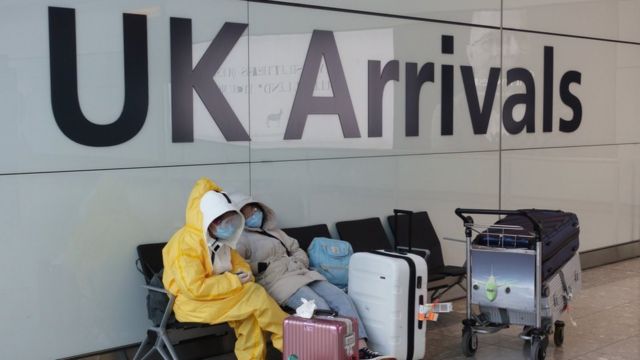
For what some would have assumed to be scientific on the recent ban of some African countries by the UK to curb the spread of new omicron variant, many are optimistic that it is clearly an act of racial discrimination.

It would be recall that on the eve of the new red list becoming effective, there were confirmed cases in countries such as Australia, Austria, Belgium, Botwana and Canada.

Others include Hong Kong, Nigeria, South Africa, Switzerland, Israel, Italy and UK.

The travel ban was extended to African countries such as Angola, Botwana, eSwatini, Lesotho, Malawi, and Mozambique.

Others include, Namibia, Nigeria, South Africa, Zambia and Zimbabwe.

Reaction has however continued to trail this discriminatory act from people all over the walks of life.

The inclusion of Nigeria on the list has generated reaction from the government and her citizens.

Minister of Information and Culture, Alhaji Lai Mohammed, who said this at a press conference in Abuja on Monday, described the travel ban as discriminatory.

Also, Nigeria’s High Commissioner to the UK, Alhaji Sharafa Ishola, described the travel ban as apartheid.

Britain had on Saturday banned Nigerian travellers after it said it discovered 21 cases of the Omicron variant in people who recently visited Nigeria.

Last week, Canada banned Nigerian travellers after the detection of the variant in persons who visited Nigeria.

The Minister of Health, Dr Osagie Ehanire, in an interview on Channels Television’s ‘Politics Today’ programme on Sunday, faulted the ban, saying it would hurt livelihoods.

But the Head of Communications, British High Commission, Hurlock, said the UK was aware of the significant impact of the travel ban.

He also noted that the decision would affect people in both the UK and Nigeria, particularly at this time of the year, but stated that it was a precautionary measure meant to protect public health in England.

Hurlock, said, “We know that this decision will have a significant impact on people in both our countries, particularly at this time of year.”This decision is a precautionary measure to protect public health in the UK, while we try to understand this new variant.

“These are temporary measures that have been introduced to prevent further Omicron cases from entering the UK, and will be examined at a review point on December 20.”

The commission stated that it would continue to work with the local authorities in tackling the pandemic.

But earlier on Monday, the Minister of Information and Culture, Mohammed, condemned travel bans by the UK, Canada, Indonesia, Hong Kong and others.

The United Kingdom on Monday justified its travel ban on Nigeria, saying the measure was a temporary measure aimed at protecting its public health.

Mohammed argued that the decision of Britain was based on discrimination and prejudice and not science because so far, no one had died of the Omicron strain.

He said it was obvious that many in the West were upset that their predictions on COVID-19 infections had failed to materialise.

The minister noted that many from the UK had also tested positive in Nigeria but Britain was not banned.

He also explained why Nigeria still received South African President, Cyril Ramaphosa, and his entourage despite the country recording a large number of Omicron cases.

He said even the United Nations had faulted the recent travel bans, adding that it was nonsensical and nothing but travel apartheid.

“If somebody who is a Nigerian but holds a British passport is allowed to enter Britain, he is as risky as I am. Is it the passport that now reduces his risk? That doesn’t make sense. If my cousin who holds a British passport stays in my house and is going back, you allow him to come in but you say I can’t?” Mohammed asked.

He faulted claims that Nigeria deserved to be banned because 21 persons with history of travel to Nigeria had tested positive in the UK.

The minister wondered why other European countries were banned by the UK including those with Omicron cases.

“I don’t think the issue is how many people have tested positive or how many people Britain claims have tested positive. My position is very clear. Is travel ban the answer? The answer is no. Number one, where is the origin of this Omicron variant? It is definitely not Africa or Nigeria,” Mohammed said.

The minister argued that the travel ban was counterproductive and wondered why British citizens coming from Nigeria were still allowed in.

“How do you slam this kind of discriminatory action on a country of 200 million people, just because of less than two dozen cases? Whereas British citizens and residents are allowed to come in from Nigeria, non-residents from the same country are banned.

“The two groups are coming from the same country, but being subjected to different conditions. Why won’t Britain allow people in both categories to come in, and be subjected to the same conditions of testing and quarantine? This is why this decision to ban travellers from Nigeria, who are neither citizens nor residents, is grossly discriminatory and punitive.”

He said the vaccine apartheid whereby developed countries denied developing nations vaccines was what propelled COVID-19 mutations.

Mohammed maintained that developed nations must understand that until everyone is safe, no one is safe.

Speaking in a similar vein, the Minister of State for Health, Dr Olorunnimbe Mamora, said the presidential committee would take a decision soon.’

When asked if Nigeria would retaliate, Mamora said it was not about retaliation but more of what would be in the best interest of Nigerians.

In a related development, British Airways on Monday informed travel agents in Nigeria about the restriction of flights from Nigeria to the UK following the ban.

It disclosed this in a notice, titled, “Restrictions for travel from Nigeria to the UK,” which was sent to travel agents of the international carrier that operate in Nigeria.

This came as it was gathered in Abuja on Monday that most passengers of the airline stayed away from the Nnamdi Azikiwe International Airport, Abuja, due to the restrictions by the carrier and the ban on Nigeria by the UK government.

The notice by British Airways to travel agents read in part, “As a result of the UK government placing Nigeria on to the red list, we continue to closely monitor the situation and adjust our schedule accordingly.

“All flights from Lagos to London Heathrow have been re-timed. This is due to restrictions at London Heathrow to support arrivals from a red-list country.

“All customers travelling from Nigeria must follow the UK government’s rules on arrivals from a red-list country and have a negative PCR test result within the 48 hours prior to their departure from Nigeria.”

It added, “Only British or Irish nationals or customers who have residence rights in the UK will be allowed to enter the UK, where they will be required to quarantine in a government facility.”

December 7, 2021 0 comments
0 FacebookTwitterPinterestThreadsBlueskyEmail
Health

If poor countries go unvaccinated, rich ones will pay, says study

by Leading Reporters May 7, 2021
written by Leading Reporters

In monopolising the supply of vaccines against Covid-19, wealthy nations are threatening more than a humanitarian catastrophe: The resulting economic devastation will hit affluent countries nearly as hard as those in the developing world.

This is the crucial takeaway from an academic study to be released Monday (Jan 25). In the most extreme scenario – with wealthy nations fully vaccinated by the middle of this year, and poor countries largely shut out – the study concludes that the global economy would suffer losses exceeding US$9 trillion (S$12 trillion), a sum greater than the annual output of Japan and Germany combined.

Nearly half of those costs would be absorbed by wealthy countries like the United States, Canada and Britain.

In the scenario that researchers term most likely, in which developing countries vaccinate half their populations by the end of the year, the world economy would still absorb a blow of between US$1.8 trillion and US$3.8 trillion. More than half of the pain would be concentrated in wealthy countries.

Commissioned by the International Chamber of Commerce, the study concludes that equitable distribution of vaccines is in every country’s economic interest, especially those that depend most on trade. It amounts to a rebuke to the popular notion that sharing vaccines with poor countries is merely a form of charity.

“Clearly, all economies are connected,” said Professor Selva Demiralp, an economist at Koc University in Istanbul who previously worked at the Federal Reserve in Washington, and is one of study’s authors. “No economy will be fully recovered unless the other economies are recovered.”

Prof Demiralp noted that a global philanthropic initiative known as the ACT Accelerator – which is aimed at providing pandemic resources to developing countries – has secured commitments for less than US$11 billion toward a US$38 billion target. The study lays out the economic rationale for closing the gap. The remaining US$27 billion may, on its face, look like an enormous sum but is a pittance compared with the costs of allowing the pandemic to carry on.

The commonplace idea that the pandemic respects neither borders nor racial and class divides has been promoted by corporate chief executives and pundits. This comforting concept has been belied by the reality that Covid-19 has trained its death and destruction of livelihoods on low-wage service workers, and especially racial minorities, while white-collar employees have been able to largely work safely from home, and some of the world’s wealthiest people can ride out the pandemic on yachts and private islands.

But in the realm of international commerce, there is no hiding from the coronavirus, as the study brings home. Global supply chains that are vital to industry will continue to be disrupted so long as the virus remains a force.

A team of economists affiliated with Koc University, Harvard University and the University of Maryland examined trade data across 35 industries in 65 countries, producing an extensive exploration of the economic impacts of unequal vaccine distribution.

If people in developing countries remain out of work because of lockdowns required to choke off the spread of the virus, they will have less money to spend, reducing sales for exporters in North America, Europe and East Asia. Multinational companies in advanced nations will also struggle to secure required parts, components and commodities.

At the centre of the story is the reality that most international trade involves not finished wares but parts that are shipped from one country to another to be folded into products. Of the US$18 trillion worth of goods that were traded last year, so-called intermediate goods represented US$11 trillion, according to the Organisation for Economic Cooperation and Development.

The study finds that the continued pandemic in poor countries is likely to be worst for industries that are especially dependent on suppliers around the world, among them automotive, textiles, construction and retail, where sales could decline more than 5 per cent.

The findings add a complicating layer to the basic assumption that the pandemic will leave the world economy more unequal than ever. While this appears true, one striking form of inequality – access to vaccines – could pose universal problems.

In an extraordinary testament to the innovative capacities of the world’s most skilled scientists, pharmaceutical companies produced life-saving vaccines in a small fraction of the time thought possible. But the wealthiest countries in North America and Europe locked up orders for most of the supply – enough to vaccinate two and three times their populations – leaving poor countries scrambling to secure their share.

Many developing countries, from Bangladesh to Tanzania to Peru, will likely have to wait until 2024 before fully vaccinating their populations.

The initiative to supply poor countries with additional resources gained a boost as US President Joe Biden took office. The Trump administration did not contribute to the cause. Mr Biden’s chief medical officer for the pandemic, Dr Anthony Fauci, promptly announced that the United States would join the campaign to share vaccines.

In contrast to the trillions of dollars that governments in wealthy countries have spent to rescue companies and workers harmed by the health emergency and the wrenching economic downturn, developing countries have struggled to respond.

As migrant workers from poor countries have lost jobs during the pandemic, they have not been able to send as much money home, levelling a major blow to countries that have relied on these so-called remittances like the Philippines, Pakistan and Bangladesh.

The global recession has slashed demand for commodities, decimating copper producers like Zambia and Congo, and countries dependent on oil exports like Angola and Nigeria. As Covid-19 cases have soared, that has depressed tourism, costing jobs and revenue in Thailand, Indonesia and Morocco.

Many poor countries entered the pandemic with debt burdens that absorbed much of their government revenue, limiting their spending on healthcare. Private creditors have refused to participate in a modest debt suspension programme forged by the Group of 20. The World Bank and the International Monetary Fund both promised major relief but failed to produce significant dollars.

This, too, appears to be changing as new leadership takes over Washington. The Trump administration opposed a proposed US$500 million expansion of so-called special drawing rights at the IMF, a reserve asset that governments can exchange for hard currency. Mr Biden’s ascent has bolstered hopes among fund members that his administration will support the expansion. Democrats in Congress – now in control of both chambers – have signalled support for a measure that would compel the Treasury to act.

Still, in capitals like Washington and Brussels, the discussion about support for the developing world has been framed in moral terms. Leaders have debated how much they can spare to help the planet’s least fortunate communities while mostly tending to their own people.

The study challenges that frame. In failing to ensure that people in the developing world gain access to vaccines, it concludes, leaders in the wealthiest nations are damaging their own fortunes.

“No economy, however big, will be immune to the effects of the virus until the pandemic is brought to an end everywhere,” said Mr John Denton, secretary-general of the International Chamber of Commerce. “Purchasing vaccines for the developing world isn’t an act of generosity by the world’s richest nations. It’s an essential investment for governments to make if they want to revive their domestic economies.”

May 7, 2021 0 comments
0 FacebookTwitterPinterestThreadsBlueskyEmail
Newer Posts
Older Posts

Recent Posts

  • FCTA Workers, NLC Storm Industrial Court, Demand Wike Sack

    January 26, 2026
  • DisCos reject FG’s free meter plan

    January 26, 2026
  • Nigerian-born nurse loses licence in Australia for sleeping on duty

    January 24, 2026
  • AI may outsmart humanity in five years — Musk

    January 24, 2026
  • BREAKING: Kano Gov Abba Yusuf dumps NNPP

    January 23, 2026

Usefull Links

  • Contact Page
  • About Leading Reporters
  • Contact Us
  • Headlines
  • Investigation
  • Exclusives
  • Opinion
  • Business
  • Facebook
  • Twitter
  • Instagram
  • Linkedin

@2021 - All Right Reserved. Designed and Developed by PenciDesign


Back To Top
Leading Reporters
  • Featured
  • Politics
  • Opinion
  • Business
  • Entertainment
  • Sports
  • About Us
  • Contact