Leading Reporters
  • Headlines
  • Health
  • Business
  • Exclusives
  • Investigation
  • Entertainment
  • Opinion
Wednesday, December 3, 2025
Hot
Tinubu Nominates Ex-CDS Christopher Musa As Defence Minister
BREAKING: FG Publishes List of 15 Alleged Terrorist...
FG Proposes 40% Salary Increase for ASUU Lecturers
Northern Governors Host Emergency Meeting Over Escalating Security...
Tinubu appoints ex-INEC Chair Yakubu, Fani-Kayode, Reno Omokri,...
Niger Delta Boss Jennifer Adighije Accused of Corruption,...
India Orders $570 Million Payout in Major Fraud...
Dangote Refinery Saves Nigeria over ₦10bn Annually in...
Bandits Abduct 16-year-old boy, six girls in FCT...
Social Security: A Missing Link in Nigeria’s Search...
  • About Leading Reporters
  • Contact Us
Leading Reporters
Advertise With Us
  • Headlines
  • Health
  • Business
  • Exclusives
  • Investigation
  • Entertainment
  • Opinion
Hot
Tinubu Nominates Ex-CDS Christopher Musa As Defence Minister
BREAKING: FG Publishes List of 15 Alleged Terrorist...
FG Proposes 40% Salary Increase for ASUU Lecturers
Northern Governors Host Emergency Meeting Over Escalating Security...
Tinubu appoints ex-INEC Chair Yakubu, Fani-Kayode, Reno Omokri,...
Niger Delta Boss Jennifer Adighije Accused of Corruption,...
India Orders $570 Million Payout in Major Fraud...
Dangote Refinery Saves Nigeria over ₦10bn Annually in...
Bandits Abduct 16-year-old boy, six girls in FCT...
Social Security: A Missing Link in Nigeria’s Search...
Leading Reporters
Leading Reporters
  • Headlines
  • Health
  • Business
  • Exclusives
  • Investigation
  • Entertainment
  • Opinion
Copyright 2024 - All Right Reserved
Home > IELTS
Tag:

IELTS

Headlines

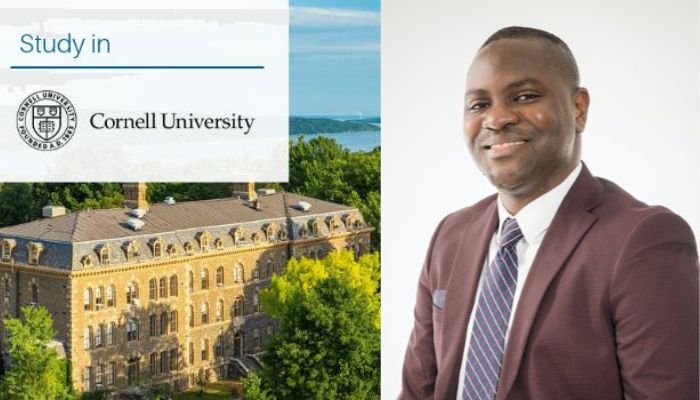
Cornell University USA Scraps IELTS For Nigerians

by Folarin Kehinde October 5, 2022
written by Folarin Kehinde

A renowned university in the United States have now excluded Nigeria from its list of countries that require IELTS before gaining admission into the institution.

Cornell University, New York, USA, has waived the International English Language Testing System (IELTS) and the Test of English As a Foreign Language (TOEFL) for Nigerians seeking masters admission into the school.

After an update to its English language requirement list for graduates, the university included Nigeria as an English-speaking country.

Nigeria is listed as an English-speaking country by the world Fact book, a website which the Cornell University referenced in its own website.

Previously the school insisted Nigerian students must also present an English test before admission into its graduate school.

This victory has been achieved as a result of a continuous advocacy by Dr Olumuyiwa Igbalajobi for Nigeria to be removed from countries where IELTS is required before its citizens gain admission into western universities.

Dr Olumuyiwa argued that Nigeria, a former colony of the United Kingdom, with English as it’s official Lingua Franca,  is by default an English speaking country and has no business writing English tests like IELTS and TOEFL.

He condemned the act as racist and educational disenfranchisement.

His advocacy has led to some universities in Canada, United Kingdom and the United States to scrap the IELTS requirement for Nigerians.

LEADINGREPORTERS wrote a detailed article about how Dr Olumuyiwa is fighting the IELTS discrimination for Nigerians and indeed all west African countries in general.

October 5, 2022 0 comments
0 FacebookTwitterPinterestThreadsBlueskyEmail
Headlines

University of Oregon USA Waives IELTS For Nigerians

by Folarin Kehinde July 28, 2022
written by Folarin Kehinde

The University of Oregon, Eugene in the United States has announced that from the winter 2023 application cycle, it would waive IELTS/TOEFL for all native and first language English speakers.

The university has made this known as a challenge to Home Office and other institutions around the world who continue to discriminate against English-Speaking Africans.

This development is due to the efforts from Dr. Olumuyiwa Igbalajobi who is championing the #ReformIELTS campaign by writing to various institutions to waive Nigeria off countries that are required to write IELTS or TOEFL before gaining admission.

Recall that LEADINGREPORTERS wrote a report on how Dr. Olumuyiwa has taken up the fight on IELTS discrimination by western universities by writing a petition to the various universities stating the various reasons why Nigeria should not be included in IELTS since it is already an English-speaking country.

The University of Oregon becomes the third university to waive IELTS for English-Speaking African countries, behind the University of Alberta Canada and the University of Athabasca Canada. It is also the first non-Canadian university to do so giving hope that more countries would begin to take the #ReformIELTS campaign seriously.

We hope that more Universities in Western countries would begin to change their policies in order to reflect Nigeria and other English-Speaking Africans as English speakers who do not need to write the IELTS examination before been offered admission

July 28, 2022 0 comments
0 FacebookTwitterPinterestThreadsBlueskyEmail
Headlines

How Olumuyiwa Igbalojobi Is Fighting IELTS Discrimination Against Nigerians

by Folarin Kehinde July 26, 2022
written by Folarin Kehinde

The International English Language Testing System (IELTS) is an International Standardized test of English language proficiency for non-native English Language speakers. Its is used to test the English writing and speaking capability of individuals from non-English speaking countries, before they would be given admission into western universities.

However, Nigeria which is a former British colony with English as it’s official Lingua Franca is been subjected to the IELTS or TOEFL examination as a prerequisite for getting admission into universities in Europe, Canada and the United States.

The IELTS has proved a stumbling block to the Nigerians with dreams to further their education in western countries. A lot of Nigerians have decried the exams as racism and injustice to Nigeria as it is already an English-Speaking nation.

In January, about 40,000 Nigerians signed a petition calling on the United Kingdom (UK) home office to either remove Nigeria from the list of countries whose citizens are required to take English proficiency tests or reduce the fees charged for the examination.

The cost of the test, which currently stands between N80,000 and N90,000 in Nigeria, is almost three times the country’s minimum wage of N30,000.

Many individuals and organizations have tried to petition the countries involved to scrap IELTS for Nigeria without much success, until now when a Nigerian-Canadian took a different approach and decided to write the schools directly. His name is OLUMUYIWA IGBALOJOBI.

Born in Ado-Ekiti, Ekiti State Nigeria, Olumuyiwa is currently a postdoctoral fellow at the Professor Kronstad laboratory, Department of Microbiology and Immunology, Michael Smith Laboratories at the University of British Columbia (UBC), Canada.

He has taken it upon himself to write petitions to various institutions in Canada to waive Nigerians from the list of countries that requires IELTS before securing admission.

Olumuyiwa argued in his petition that since Nigeria teaches its children English from elementary to tertiary level, this means the country is an English-speaking country.

He also argued that English is the official language of business in the country, thus there is no need for Nigerians to be subjected to further tests.

In his words: “It is bad to request IELTS from African countries colonized the government of Britian.

These Petitions from Olumuyiwa has prompted two universities in Canada to waiver Nigerians from writing the IELTS examination before getting admission into their institutions.

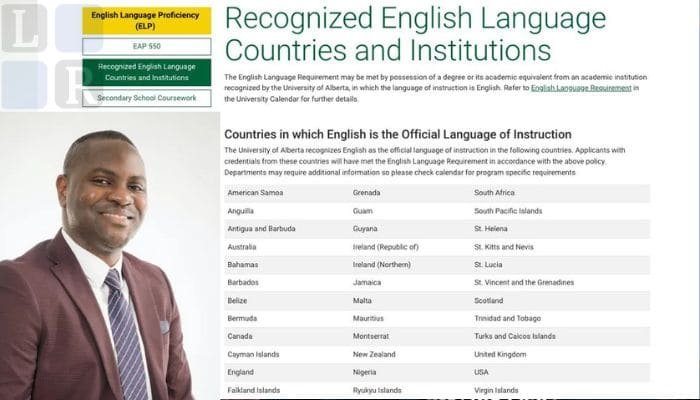
Last Month, he got the University of Alberta, Canada, to exclude Nigerian students from its English language requirement. It added Nigeria has now been added to the university’s list of countries where English is an official language of instruction.

Also, another breakthrough came when last week, another Canadian instituition, the Athabasca University, Canada, excluded Nigerian students from its list of foreign applicants to write and pass English proficiency before admission.

Succumbing to Olumuyiwa his demand, Athabasca University, Canada has deleted Nigeria from its list of countries to write International English Language Testing System (IELTS), Test of English as a Foreign Language (TOEFL) and other English tests before enrolment.

These waivers will be a victory for Nigerians who see the tests as mountains to surmount before gaining admission to Canadian universities of their choice.

Dr Olumuyiwa has been receiving his deserved appreciation from lot of Nigerians, especially twitter users where he his active. People have referred to him as a hero who is fighting education injustice against Nigeria.

The board and management of the Ugwumba centre for leadership development in Africa, made Dr. Olumuyiwa Igbalajobi as one of its Ambassadors for making Nigerians proud in Canada.

Olumuyiwa is not relenting in his efforts to stop the demand of IELTS for Nigerians. According to him, “I have written about 12 universities till date. I will continue to identify universities with stale lists and those who wouldn’t recognize Nigeria as an English-speaking country.

July 26, 2022 0 comments
0 FacebookTwitterPinterestThreadsBlueskyEmail
Headlines

Nigerian students now exempted from taking English test at this Canadian university

by Leading Reporters June 7, 2022
written by Leading Reporters

A Nigerian academic has reportedly succeeded in getting the University of Alberta to remove Nigeria from countries that have to present proof of their English language proficiency before admission. 

On Twitter, Olumuyiwa Igbalajobi, a Nigerian academic based in Canada, said he had written to the University of Alberta’s graduate school asking that applicants from Nigeria be exempt from submitting the test.

After following up, he claimed that Nigeria was added to the list of countries where English is the official language of instruction.

The University of Alberta had previously recognised some Nigerian schools whose students do not need an English test, but Igbalajobi’s request saw the school granting a full waiver. 

About 2 weeks ago, I initiated a request via email, Linkedin, and Twitter to the graduate school of the University of Alberta asking that applicants from Nigeria should be exempted from submitting English proficiency tests.

— Olumuyiwa Igbalajobi, Ph.D (@olumuyiwaayo) June 4, 2022

University of Alberta’s English language proficiency test waiver for Nigerians welcomed 

Many Twitter users lauded Igbalajobi’s effort in getting the University of Alberta to recognise English as the official language of instruction in Nigeria.

In response to his tweet, Twitter user Akhila Jayaram said, “Well done @olumuyiwaayo. @UAlberta should consider extending to all Commonwealth countries where medium of instruction is English for a large number of students.”

Another user, TITITUNDE, said: “Writing IELTS or other proof of English doesn’t make people speak good English, it’s just a way of exploiting Africa. Kudos for your kind gesture, I pray another university follows suit.”

Adedoyin Alimi said: “I believe most of these grad schools are just waiting for one or more enquiries bout this. I recalled when applying to Wayne State university last year and they were requesting for English Tets (sic).

“Fortunately they organised an open house event for prospective grad students and we ..raised it. Guess what, within 48 hours after, Nigeria was added to list of countries with English as language of instruction. It was even the email I got from grad school that English Language has not been waived that made me know. So most times, no harm in making enquiries (sic).”

university of alberta

Many universities require international students to take English proficiency tests for admission. Source: Daniel Slim/AFP

English language proficiency tests controversial for some

Many universities require international students to take English proficiency tests for admission if English is not their first language.

The test has proved controversial for some students, particularly those from Nigeria, where English is the official language. Much of the furore surrounding mandatory English proficiency exams is due to the fees charged for a single test.

Ebenezar Wikina, a Nigerian student who is an advocate for the change of English proficiency policies, previously told Study International: “I personally believe that it’s a crime for the English proficiency tests in English-speaking countries especially knowing that they cost up to US$250 (three times the minimum wage in Nigeria). The results expire every two years as well.”

To complicate matters, two popular English language proficiency tests — the IELTS and TOEFL — have a two-year validity date. Once it expires, the test scores cannot be used for future applications, and students have to retake the exam even if they did well the first time. 

Speaking to Legit.ng, Igbalajob said: “From my own lens of equality, diversity, and inclusion, this is just unfair. Nigeria is an English-speaking country and the mode of instruction from the elementary to the tertiary institutions is in English.”

He said subjecting applicants to another round of English tests is “annoying”, adding that the financial constraints “have also prevented a lot of applicants from a shot to most of these universities”. 

June 7, 2022 0 comments
0 FacebookTwitterPinterestThreadsBlueskyEmail
Headlines

Why IELTS Should Be Scrapped for Nigerians, Other Anglophone Nationals

by Leading Reporters April 8, 2022
written by Leading Reporters

The past weeks have witnessed an intensified effort to stop foreign universities from requesting International English Language Testing System (IELTS) from Nigerians. A petition by a public policy organisation, Policy Shapers, has gathered over 75,000 signatures. Those reacting to the petition are asking the UK Home Office, which is believed to be primarily in charge of the test, to either reform it or stop it for Nigerians and other anglophone countries.

Nigerians seeking to study in foreign countries often find themselves in need of an IELTS test. For instance, in the United Kingdom, where most universities require IELTS, apart from their travel cost, the test application fee is another burden many international students bear when processing UK student visas. Some employment-based travels also require the test.

Some of the concerns raised include the cost of the test, which is almost three times the minimum wage in a country like Nigeria, and the validity of the exam result, which only lasts for two years. Many also question the need for a country like Nigeria, where English is lingua Franca and used as the language of instruction from primary to university level.

The average cost of IELTS test ranges from 83,000 Naira (200.5 USD) and 89,500 ($216.2 USD) in Nigeria. This is almost three times the national minimum wage which is 30,000 Naira monthly. There are 11 IELTS test centres across Nigeria run by the British Council, a 2020 ICIR report shows. Up to five test dates are scheduled monthly, with an average of 120 people writing the test at a centre on each day.

Given the frequency of the test dates and an average number of candidates, at least 5.15 billion Naira must have been paid by Nigerians to the Council in 2020. Furthermore, the test can only be taken in 12 centres in the country, requiring many candidates to travel a long distance to participate. The transport fare is extra financial burden applicants bear. 

Nigerians aren’t the only ones paying a high cost for IELTS; other Anglophone countries face the same challenge. In Uganda, where the test application fee is the highest in Africa, each applicant pays $317 to take the test. This is over 1,000% of the country’s minimum wage of $1.70. Zimbabwe, Malawi, Kenya, and Namibia are some of the African countries that pay higher for IELTS than their minimum wage.

The shelf life of the test result is another concern. IELTS result becomes invalid after two years. This means those who do not use it within the timeframe will have to re-register the exam paying the high amount again if they don’t relocate within the given timeframe. The #ReformIELTS campaign on Twitter trended with people comparing the English proficiency test with its French Test (TOEFL), which cost much lower and last for life. The convener of the campaign, Ebenezar Wikinar, lamented the motive behind the short validity, stating “there’s no way that my English knowledge would expire.”

While some want the test to be reformed, others are questioning its necessity for Nigerians and other Anglophone nationals who communicate in English in their everyday lives. While Nigerians and nationals of other British colonies in Africa are required to take the IELTS, citizens of Bahamas, Barbados, Antigua and Barbuda, Jamaica, St. Kitts, and Nevis Dominica, Trinidad, and Tobago, and 10 other nations are exempted from taking the test. This further questions the organiser’s criteria for eligibility for an exemption.

In October, Policy Shapers wrote the Home Office for explanations on why none of the Anglophone countries was listed as its Majority English Speaking Countries. Three months after, the UK replied saying, “to be included on the Majority English Speaking Country (MESC) list, we must have evidence that most people in the country (more than half) speak English as a first language.”

However, most Nigerians are not satisfied with the answer, with many questioning the type of evidence needed by the UK to know that Nigerians deserve a spot on the list of countries exempted from the test.

There is enough evidence showing the proficiency of Nigerians in English. For years, the country has been ranking high on the EF English Proficiency Index, currently standing 29th out of 112 countries ranked globally and 3rd in Africa. In addition, out of more than 140 countries that sat for IELTS in 2018, Nigerians reportedly had the sixth-best performance.

Olusegun Akinfenwa writes for Immigration Advice Service, a UK-based law firm that offers global immigration service and representation. By Mindmingles

April 8, 2022 0 comments
0 FacebookTwitterPinterestThreadsBlueskyEmail
Headlines

IELTS: Nigerians reject UK’s explanation, insist language test a “scam”

by Folarin Kehinde February 8, 2022
written by Folarin Kehinde

The cost of IELTS, which currently stands between N80,000 and N90,000 in Nigeria, is almost three times the country’s minimum wage of N30,000.

Nigerians have maintained that the continuous request of an English Proficiency Test from Nigerians, and citizens of other Anglophone countries in Africa, seeking to study or work in the United Kingdom, “is simply a way of swindling the citizens of these countries of their monies by the UK authorities.”

Many participants, who spoke at the maiden edition of PREMIUM TIMES’ TwitterSpaces on Wednesday, condemned what they described as the UK authorities’ unwillingness to include Nigeria and other African countries on the list of its Majority English Speaking Country (MESC).

PT TwitterSpaces is an innovation of PREMIUM TIMES to advance conversations around issues of national concern and those that may be trending on social media and particularly Twitter.

Many participants had argued that English being the language of instruction in Nigerian schools from kindergarten to tertiary level is a testimony that Nigerians speak and understand the language.

Petition
As of Saturday, over 75,000 people had signed a petition by Policy Shapers, a public policy organisation, on Change.org, seeking a policy reform by the UK on its request for English Language Proficiency from Nigerians who are migrating to the UK to study or work.

The cost of the test, which currently stands between N80,000 and N90,000 in Nigeria, is almost three times the country’s minimum wage of N30,000.

Apart from its high cost, the test is only valid for two years and can only be taken in 12 cities across the country.

Individuals requiring it for their pursuits would have to take the test again if they fail or did not relocate to the UK after two years of taking the test.

UK Home Office reacts
In October 2021, Policy Shapers wrote to the UK Home Office seeking answers to why none of the Anglophone countries in Africa was part of its Majority English Speaking Countries, and what it will take for the UK to include them on the list.

Three months later, in January 2022, amidst the growing number of signees of the Policy Shapers’ petition, and growing Twitter trends of #ReformIELTSPolicy #IELTS, #TOEFL, most of them tagging the UK home office’s twitter handle, the UK replied the inquiry by the public campaign organisation.

Parts of its reply read: “To be included on the Majority English Speaking Country (MESC) list, we must have evidence that most people in the country (more than half) speak English as a first language.

“We rely on publicly available evidence such as official censuses to make this determination along with other academic sources.

“We may also consult the Foreign, Commonwealth and Development Office where additional evidence is required. Currently, based on the information available to us, Nigeria does not meet the requirement.

“This list is periodically reviewed and updated, and new countries are added if they are found to meet the requirements.

However, speaking on PREMIUM TIMES’ Twitter Space, Ebenezer Wikina, the founder of Policy Shapers, and a champion of the #ReformIELTSPolicy campaign, said the UK home office is too elaborate and not specific in what kind of public evidence it relies on to verify that more than 51 per cent of Nigerians speak English.

He said: “Public evidence is very broad. There is a lot of public evidence on why Nigerians should be on that list.”

To back his claims, Mr Wikina cited how Nigeria made the top 28 countries for six consecutive years in the English Proficiency Index released annually by Education First, a Sweden-based international education company that specialises in language training.

Mr Wikina said: “We actually deserve to be on the list. And I think that we should be on the list and that’s what the campaign is all about.”

He also hinted that Policy Shapers is working on a policy brief to be presented to the UK Home Office.

Others react
A participant, Senibo @Sen_Abbey, argued that IELTS is designed as a standardised IQ test and not necessarily as a language proficiency test.

He said: “It’s more of an intelligence quotient test than an English proficiency test. I have been to several classes, where I have to learn or study under someone to prepare for the test. And I have come to discover that what they are only testing is your IQ. How good you are and how fast you are in answering questions, which is the same thing with every other exam. These guys just go and rip us of our money, every two-two years.

“For me, it’s a scam, there is nothing else to it. It’s just a pure scam. These guys are just there to collect our money and that’s it. So for me, I will say this thing should be scrapped totally”.

Another participant, Joe Abuku @JoeAbuku, said: “Proficiency doesn’t get worse, it gets better. The ultimate goal is to scrap it”.

Munachi Deca-Anyanwu, @munadeca6 said: “For me, I am for the total scrapping of the test because our primary schools, high schools and our universities all teach in English.

“I have a friend who goes to France who went to language school before they go to university. There they finish a language school and they go to university and they get their masters. People who never spoke French. So why would people who have immersed themselves through English all through their lives will now have to go through another English language exam? And if somebody is going to the UK to study if you cannot speak English, that should be the person’s problem.”

Source: Premium Times

February 8, 2022 0 comments
0 FacebookTwitterPinterestThreadsBlueskyEmail
Headlines

Nigeria Loses Over N5b to UK Annually: Call For Scrapping of IELTS Intensifies

by Leading Reporters February 1, 2022
written by Leading Reporters

Nigerians have intensified campaign asking foreign institutions to stop demanding an English proficiency test — the International English Language Testing System (IELTS).

IELTS is one of the world’s known English language tests for work, study and migration.

It is an international standardised test of English language proficiency.

Annually, thousands of young Nigerian migrants take IELTS tests physically in different locations all over Nigeria, as part of the requirements to secure admissions into universities overseas or work abroad.

The Nation learnt the test costs over N80,000 and N90,000 per time and expires after two years. One has to re-sit if they have not been successful with their applications for UK scholarships.

Nigerians are questioning why they have to prove they can speak English ㅡ every two years

In 2020, the UK Home office, which is said to be primarily in charge of the test, had said that it did not have evidence that the majority of Nigerians speak English as a first language.

Many Nigerians took to social media with the hashtags — #ReformIELTSPolicy, #IELTS and #TOEFL calling on the UK home office to remove Nigeria from the list of countries whose citizens are required to take English Proficiency tests.

Some other requests include cancellation of two-year expiry clause, including Nigeria in the UKVI exemption list, and reducing test cost and increasing validity period.

Meanwhile, the UK home office is yet to react as at the time of report. while we await further engagement by the Ministry of Foreign Affairs.

IELTS: Why we impose language tests on Nigerians – UK

The statement noted that UK uses the Common European Framework of Reference for Languages (CEFR), an international standard for describing language ability, to set level of competence required to integrate in the UK.

The United Kingdom High Commission in Nigeria has reacted to Nigerians’ quest for the review of the International English Language Testing System (IELTS) which mandates Nigerians seeking to study or work in the United Kingdom to sit and pass the test.

On Saturday, in a response to an earlier enquiry by PREMIUM TIMES shared by the head of communications at the British High Commission in Abuja, Nigeria’s Federal Capital Territory, Dean Hurlock, the UK home office said it is important that anyone willing to either work or study in the UK shows evidence of language competence to integrate in the country.

The statement noted that UK uses the Common European Framework of Reference for Languages (CEFR), an international standard for describing language ability, to set level of competence required to integrate in the UK.

“We use CEFR (Common European Framework of Reference) levels to provide a common set of standards, and set them on a route by route basis, taking into account the types of activities and nature of the route. CEFR standards are an important common baseline to ensure applicants meet the required language standard,” the response noted.

How much English is English enough?

The British Council states that IELTS test results provide evidence of English language skills in most countries where it is the main language. But one big grouse many have with the initiative is: English is also the main language in Nigeria.

Having been a colony of Great Britain for nearly eight decades, it is both the country’s lingua franca and language of instruction in schools — even, some observe, to the detriment of native languages.

Nigeria’s history as an anglophone country is reflected in the people’s generally good grasp of the language. The country is ranked third-best in Africa and 29th best in the world by the 2019 EF English Proficiency Index. Also, out of over 140 countries who wrote the General IELTS in 2018, Nigerians had the sixth-best performance on average.

“Most of our systems have been set up in the English language. In fact, we even learn our own indigenous languages in secondary schools as electives,” observes Ebenezar Wikina, a development practitioner and editor of NDLink. “We have pretty much learnt English all our lives; so why then do I need to prove to you that I can speak it if we can communicate via email and you understand what I am saying?”

The Harvard-trained journalist had, in January, applied for a programme at Nexford University, an online institution based in the US, which then told him it needed to verify his English proficiency. He says he has never written the IELTS and just doesn’t bother putting in for opportunities that require it.

On fees charged

Speaking on the allegation of charging exorbitant fees, the response explained that individual test providers set the fees but these must be comparable to what is charged globally.

The statement reads in part; “Individual test providers set the fees for SELT. UK Visas & Immigration stipulate that the fees providers charge our customers must be comparable to the fees they charge others for the same or similar English language tests.”

Exception

The Home Office, however, explained that Bachelor’s Degree holders or its equivalent will not need to take a Secure English Language Test (SELT) if it is verified by UK Ecctis if it “meets, or exceeds the recognised standard of a UK bachelor’s degree, master’s degree or doctorate”.

It said on behalf of UK national agencies, Ecctis provides evidence of the level of qualifications and, or English language proficiency for the UK Home Office.

It provides services on behalf of the UK Government in qualifications, skills, and migration.

The United Kingdom also added in its response that, “An accurate and reliable SELT process is highly important to ensure people coming to work and study have the skills they need to complete the activity they are coming to the UK to do.”

How much English is English enough?

The British Council states that IELTS test results provide evidence of English language skills in most countries where it is the main language. But one big grouse many have with the initiative is: English is also the main language in Nigeria.

Having been a colony of Great Britain for nearly eight decades, it is both the country’s lingua franca and language of instruction in schools — even, some observe, to the detriment of native languages.

Nigeria’s history as an anglophone country is reflected in the people’s generally good grasp of the language. The country is ranked third-best in Africa and 29th best in the world by the 2019 EF English Proficiency Index. Also, out of over 140 countries who wrote the General IELTS in 2018, Nigerians had the sixth-best performance on average.

“Most of our systems have been set up in the English language. In fact, we even learn our own indigenous languages in secondary schools as electives,” observes Ebenezar Wikina, a development practitioner and editor of NDLink. “We have pretty much learnt English all our lives; so why then do I need to prove to you that I can speak it if we can communicate via email and you understand what I am saying?”

The Harvard-trained journalist had, in January, applied for a programme at Nexford University, an online institution based in the US, which then told him it needed to verify his English proficiency. He says he has never written the IELTS and just doesn’t bother putting in for opportunities that require it.

More difficult than necessary

The British Council’s head of IELTS, James Shipton, once described the test as “a reliable indicator of a person’s ability to communicate in English”. But the IELTS is designed to do much more than to simply ascertain fluency. The IDP admits that test questions are not only checking comprehension skills and are demanding — “even for native English speakers”.

When Jay Merlo wrote the test in 2017, he got a disappointing score of 6.5 even though he is a native speaker from Australia who was top of his English class at high school, studied English Literature at university, has a masters degree with first-class honours in Applied Linguistics from the University of Melbourne, and had taught English for nine years at universities in different countries.

“If the IELTS Academic were the only measurement of my English abilities then I think my confidence would now be destroyed,” he concedes.

Laurie Mitchell, another native speaker from the US who has written the test, describes it as difficult and stressful to take.

“It involves a lot of logical thinking and attention to detail, which can trip anyone up,” she says. “For the listening part, the recorded voices have various accents (Irish, Australian, American, etc.) and it can be challenging to understand everything they say because they may use pronunciations and vocabulary different than the English one is used to.”

Liadi in Nigeria has written the test twice already but is not satisfied with his results, and he does not agree he didn’t do well because of the quality of his English. “I am going to write it for the third time not because I can’t speak English,” he insists. “At least speaking with you, you can tell that I have control over the language.”

He also blames poor performances partly on the tension and anxiety that come with examinations. While he has friends who have written the test three or more times, Elizabeth’s coaching centre has seen worse cases.

“We’ve met someone who has taken the test 16 times before coming here. He shared his testimony and said that was his 17th time,” she tells The ICIR. 

A money-making machine

Writing the IELTS costs an average of $225 depending on the test centre and country. In Nigeria, the cost ranges between N85,000 – N90,000 for academic and general tests designed for UK Visas and Immigration.

But there are additional expenses as well. If a candidate is not satisfied with his result, for instance, they may apply for the paper to be remarked, which costs N 20,000 — refundable if the score increases.

Coaching centres also charge applicants separately for training sessions, with the price ranging between N30,000 and N60,000 per month.

Emails sent to the British Council multiple times to ask for how many Nigerians apply for the IELTS yearly and what the pass rate is were not acknowledged or replied — except with autoresponders. A call placed to Maryam Thomas, the Nigerian office’s Operations Resource Pool Manager, was also not answered, nor were texts sent on different days replied.

But, in 2017, the organisation had announced that as many as three million people wrote the test within a one-year period. Using this figure, gross profits should have averaged $675 million (N245 billion).

In Nigeria, there are 11 test centres run by the British Council, sometimes “with up to five test dates per month”. An exams invigilator working with the organisation informed The ICIR that an average of 120 people write the test at a centre on each day.

If there is a minimum of four test dates in a month and each applicant pays at least N75,000, then at the end of a year Nigerians would have paid at least N5.15 billion to the Council — and this does not include fees paid for remarking and certificate authentication.

According to the British Council’s as at 2017-18 financial review, it “achieved almost 9 per cent growth in total income to £1,172.3 million principally due to strong performance from its English teaching and examinations activities together with higher income from contract work”.

The contribution of exams to its income that year was 41 per cent (£486.9 million, N229 billion). The following year, exams together with teaching contributed 58 per cent of its total income (£727 million, N341 billion).

“I don’t see a reason why it should be that expensive,” says Liadi, referring to the IELTS. “They are using the avenue to milk us. When you go to their office, you’ll know these people are definitely in for business.”

Seyi Kolawole, another Nigerian seeking to migrate to Canada, however, considers the pricing fair especially for people whose goal is to relocate or study abroad. “Even though a reduction won’t be bad,” he adds.

Edited by: LeadingReporters, PremiumTimes and The ICIR

February 1, 2022 0 comments
0 FacebookTwitterPinterestThreadsBlueskyEmail

Recent Posts

  • Tinubu Nominates Ex-CDS Christopher Musa As Defence Minister

    December 2, 2025
  • Poor Toilets Driving GBV, School Dropouts – Wateraid

    December 2, 2025
  • BREAKING: FG Publishes List of 15 Alleged Terrorist Financers in Nigeria [SEE LIST]

    December 1, 2025
  • FG Proposes 40% Salary Increase for ASUU Lecturers

    December 1, 2025
  • Northern Governors Host Emergency Meeting Over Escalating Security Concerns

    December 1, 2025

Usefull Links

  • Contact Page
  • About Leading Reporters
  • Contact Us
  • Headlines
  • Investigation
  • Exclusives
  • Opinion
  • Business
  • Facebook
  • Twitter
  • Instagram
  • Linkedin

@2021 - All Right Reserved. Designed and Developed by PenciDesign


Back To Top
Leading Reporters
  • Featured
  • Politics
  • Opinion
  • Business
  • Entertainment
  • Sports
  • About Us
  • Contact