Leading Reporters
  • Headlines
  • Health
  • Business
  • Exclusives
  • Investigation
  • Entertainment
  • Opinion
Friday, May 8, 2026
Hot
Jabi Lake takeover stands even if God comes...
Fuel Scarcity Looms As Dangote Refinery Hikes Fuel...
IGP scraps SWAT nationwide
17 Reps Dump ADC for NDC
Bride’s father, hypeman shot dead at Lagos wedding...
Xenophobia: 130 Nigerians apply for evacuation as tensions...
Abuja Female Pastor Kneels, Begs Wike Not to...
Obi, Kwankwaso Join NDC, Demand Litigation Free Elections
Tinubu nominates economic reform expert, Tegbe as minister...
Money Laundering: ‘We investigated Pastor Jerry Eze for...
  • About Leading Reporters
  • Contact Us
Leading Reporters
Advertise With Us
  • Headlines
  • Health
  • Business
  • Exclusives
  • Investigation
  • Entertainment
  • Opinion
Hot
Jabi Lake takeover stands even if God comes...
Fuel Scarcity Looms As Dangote Refinery Hikes Fuel...
IGP scraps SWAT nationwide
17 Reps Dump ADC for NDC
Bride’s father, hypeman shot dead at Lagos wedding...
Xenophobia: 130 Nigerians apply for evacuation as tensions...
Abuja Female Pastor Kneels, Begs Wike Not to...
Obi, Kwankwaso Join NDC, Demand Litigation Free Elections
Tinubu nominates economic reform expert, Tegbe as minister...
Money Laundering: ‘We investigated Pastor Jerry Eze for...
Leading Reporters
Leading Reporters
  • Headlines
  • Health
  • Business
  • Exclusives
  • Investigation
  • Entertainment
  • Opinion
Copyright 2024 - All Right Reserved
Home > FG > Page 6
Tag:

FG

Business

FG to spend N1.9b to fuel State House generators in 2025

by Folarin Kehinde December 24, 2024
written by Folarin Kehinde

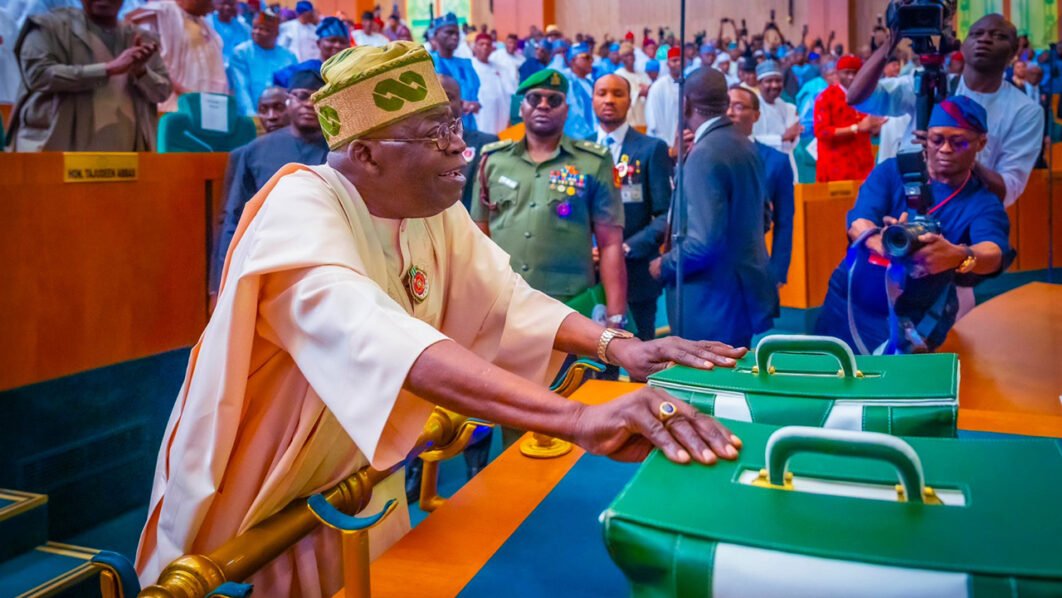
It appears there is no hope for an improved power supply to Nigerian households in 2025, as the federal government has made a provision of N1,989,579,379 to fuel State House generators during the course of the year.

This is higher than the amount budgeted for the same item in 2024 (N37,959,406), 2023 (N30,678,552), 2022 (N30,678,552), and 2021 (N45,678,552) combined by a staggering 1,272 per cent and 5,143 per cent higher than the N37,959,406 budgeted for the same item last year.

This high budget to fuel generators at the State House is indicative of a government that has lost hope in its power sector.

Power, as important as it is, has been a major challenge for Nigeria over the years, even though the country has made significant investments in the sector between 2021 and 2024. The budget for the power sector grew by 129.42 per cent, from N133.479 billion in 2020 to N306.23 billion in 2022, with a focus on capital expenditures for infrastructural development. In 2023, the government budgeted N258.494 billion for the power sector, with N251.609 billion allocated for capital expenditure.

It is estimated that between 2021 and 2024, Nigeria spent around N1.2 trillion on the power sector.

However, this has not resulted in significant improvements in power supply to the citizens, as homes and businesses are subjected to frequent blackouts.

In 2024 alone, the national power grid collapsed 12 times, an average of once every month.

Many businesses are shutting down, while others are finding their way out of the country because they can no longer bear the heavy costs of generating their own power.

Recently, the Director-General of the Nigerian Association of Chambers of Commerce, Industry, Mines, and Agriculture (NACCIMA), Olusola Obadimu, raised the alarm that businesses in the country suffer an annual $29 billion revenue loss due to inadequate power supply.

The sector is said to be fraught with challenges such as inadequate power supply, unreliable energy infrastructure, and high electricity tariffs.

These challenges not only hamper the growth of industries but also undermine the ability of the country to attract investments and create jobs.

It is, however, heartening to note that in the 2025 budget proposal, a total sum of N2,086,790,002,565 has been earmarked for the Ministry of Power, of which a princely sum of N2,076,305,541,394 was set aside for capital projects.

December 24, 2024 0 comments
0 FacebookTwitterPinterestThreadsBlueskyEmail
Tinubu
Headlines

FG sacks Civil Servants with degrees from Togo, Benin

by Folarin Kehinde December 5, 2024
written by Folarin Kehinde

The Federal Government has fired some civil servants with degrees from private tertiary institutions in Benin Republic and Togo, The PUNCH reports.

The directive affected federal workers who graduated from the institutions from 2017 to date.

The Director of Information and Public Relations in the Office of the Secretary to the Government of the Federation, Segun Imohiosen, confirmed the development to one of our correspondents on Wednesday.

In August, the Federal August announced that only eight universities had been accredited to award degrees to Nigerians in Togo and Benin Republic.

This followed an undercover investigation report in which a Daily Nigerian journalist acquired a degree from a university in Benin Republic in two months and used it to participate in the National Youth Service Corps scheme.

Following the report, the government banned the accreditation and evaluation of degrees from tertiary institutions in Benin Republic and Togo.

The Federal Government also set up an Inter-Ministerial Investigative Committee on Degree Certificate Milling to probe the activities of certificate racketeers.

The then Minister of Education, Tahir Mamman, revealed that over 22,500 Nigerians obtained fake degree certificates from Benin Republic and Togo and such certificates would be cancelled.

Mamman explained that the revelation was part of a report submitted to the Federal Executive Council by the investigative committee instituted to probe degree certificate racketeering by foreign and local universities in Nigeria.

He insisted there was no going back on the Federal Government’s decision to cancel the about 22,500 certificates awarded to Nigerians by some “fake” universities in the two francophone countries.

Mamman maintained that the decision to invalidate the certificates was not harsh as Nigerians who obtained degree certificates from such tertiary institutions dent the country’s image.

He said, “Most of those parading the fake certificates didn’t even leave the shores of Nigeria but got their certificates through racketeering in collaboration with government officials at home and abroad.

“The fake universities capitalised on the gullibility of Nigerians patronising such fake schools. The Federal Government, through the offices of the Head of Civil Service and the Secretary to the Government of the Federation, would fish out those in the government’s employment with such fake certificates. I also urge the private sector to follow suit.”

Although the exact number of affected civil servants could not be ascertained, it was gathered that the Office of the Secretary to the Government of the Federation (Cabinet Affairs) had issued a memo to all the Ministries, Departments, and Agencies to implement the order.

A source, who pleaded anonymity because she was not authorised to speak on the matter, disclosed that the sacking of the affected workers was based on the inter-ministerial committee’s recommendation.

The official stated, “There was a letter from the SGF cabinet affairs directing all ministries, departments and agencies of government to identify and terminate the appointments of workers employed with certificates obtained from the private universities in the Republic of Benin and Togo from 2017 to date.

“The decision is part of the recommendations of the committee set up to investigate the certificates of people who graduated from the universities.”

Our correspondent also gathered that some agencies like the National Youth Services Corps have commenced the implementation of the directive.

The NYSC Director of Information, Caroline Embu, confirmed to our correspondent that five members of staff had been sacked in line with the SGF’s directive.

She said, “Five members of staff were affected by the directive contained in the letter from the office of the SGF. No more.”

Source: The Punch

December 5, 2024 0 comments
0 FacebookTwitterPinterestThreadsBlueskyEmail
Business

BREAKING: FG begins N50 electronic levy deductions from Opay, Moniepoint, others’ users

by Folarin Kehinde December 2, 2024
written by Folarin Kehinde

The federal government has commenced N50 electronic levy deductions from transactions of N10,000 and above made by users of financial technology (Fintech) companies, including Opay, Moniepoint, Kuda, and others.

The levy, called Electronic Money Transfer Levy (EMTL), introduced under the Finance Act 2020, places a singular and one-off levy of N50 on the recipient of any electronic receipt or transfer of N10,000 or above, and was earlier announced to take effect from September 9, Tribune Online reported.

The introduction of the EMTL was, however, met with opposition from Nigerians, with various groups including the National Association of Nigerian Students (NANS) calling on the federal government to reverse its position on the implementation of the levy.

Meanwhile, in a notice sent to customers earlier in September, Opay explained that the levy was imposed by the Federal Inland Revenue Service (FIRS), stating however that it did not benefit from it.

“Please be informed that starting September 9, 2024, a one-time of N50 will be applied to electronic transfers of N10,000 and above paid into your personal or business account in compliance with the Federal Inland Revenue Service (FIRS) regulations.

“It is important to note that Opay does not benefit from this charge in any way as it is directed entirely by the federal government,” Opay explained in its earlier notice.

In a recent development, the fintech companies have again notified their customers that the implementation of the N50 EMTL deduction has commenced from December 1, 2024.

Opay, in a message sent to its users on Saturday (also shared via its app), explained that the electronic levy deduction begins on December 1.

“Dear Customer, in line with the FIRS, the EMTL applies starting from December 1st, 2024,” the message reads.

Likewise, Moniepoint in a notice sent to its customers on Saturday, explained that it has commenced implementation of the EMTL charges, clarifying however that the levy will be remitted to the FIRS.

“Dear customer, you will be charged stamp duty of N%) on inflows of N10,000 and above. Moniepoint collects and remits this on behalf and to FIRS,” Moniepoint says.

Meanwhile, our correspondent also gathered that the EMTL implementation has officially taken effect with Fintechs already deducting N50 for the federal government on transactions of N10,000 and above.

December 2, 2024 0 comments
0 FacebookTwitterPinterestThreadsBlueskyEmail
Headlines

JUST IN: FG launches free CNG bus ride in Abuja

by Folarin Kehinde November 28, 2024
written by Folarin Kehinde

The federal government has launched free Compressed Natural Gas (CNG) bus rides in Abuja to alleviate the effects of fuel subsidy removal on residents.

The initiative, which began on Thursday, November 28, 2024, will run until January 6, 2025.

The buses are operating along major routes from suburbs such as Mararaba to Eagle Square, Berger Bus Stop, and Area 1, as well as Zuba.

According to reports from the President Bola Tinubu’s Media Center, plans are underway to expand the project to inter-state commuter services to further ease transportation challenges for Nigerians.

November 28, 2024 0 comments
0 FacebookTwitterPinterestThreadsBlueskyEmail
Headlines

18 years after FG finally set to conduct census, reveals date

by Folarin Kehinde November 28, 2024
written by Folarin Kehinde

The Chairman of the National Population Commission (NPC), Nasir Isa Kwarra, has disclosed that Nigeria’s belated census will hold in 2025.

Kwarra made the revelation at the 2024 Anniversary on the Nairobi Summit on International Conference on Population and Development (ICPD) on Thursday in Abuja.

Recall that despite the United Nations recommending Population census to be hold in countries every 10 years, Nigeria last conducted its own in 2006, making the country 18 years without accurate figure of its citizens.

While the country was supposed to hold the census in 2023, the exercise was botched after missing two dates it was scheduled under the administration of President Muhammadu Buhari.

The administration had predicated the cancellation on wanting the incoming administration that won the 2023 elections to own the census exercise.

But Kwarra in his speech noted that major setback Nigeria faces is the delay in conducting a population and housing census which is fundamental for informed decision-making.

He said the delay in conducting the census, particularly in the face of logistical and financial constraints, had hindered efforts to assess the full scope of population needs and allocate resources effectively, especially in rural and underserved areas.

“This gap in accurate population data poses challenges in tailoring reproductive health services and interventions to specific demographic groups, ultimately undermining progress toward reducing maternal mortality and improving access to family planning.

“We are gathered in the spirit of a shared commitment to progress, inclusivity, and the empowerment of individuals, particularly women and young people. Our focus is on advancing sexual and reproductive health, eliminating gender-based violence (GBV), and promoting equal opportunities for everyone in our nation.

“We must continue our march to address these challenges head-on. For many in our communities—particularly women, girls, and young people—sexual and reproductive health rights (SRHR) remain out of reach. This is not just a health issue; it is also an issue of social and economic justice. When individuals are denied the ability to make choices about their health and lives, it limits their potential, reduces opportunities, and impacts society as a whole.”

On her part, the founder of wellbeing Foundation Africa, Toying Saraki, expressed commitment to a continuous programme of advocacy and policy on a global and subnational scale to accelerate progress towards the ICPD agenda and mobilise private, philanthropic and multi-sector stakeholders towards the goal.

November 28, 2024 0 comments
0 FacebookTwitterPinterestThreadsBlueskyEmail
Headlines

FG to build mini grids in health, educational institutions to reduce cost of electricity – Power Minister

by Folarin Kehinde November 15, 2024
written by Folarin Kehinde

As part of President Bola Ahmed Tinubu administration ‘s commitment towards providing a conducive environment for learning and carrying out research for students and staff members, the Federal Government is committed to building mini grids in some higher institutions in the country.

This is also to reduce cost of electricity consumption by the institutions.

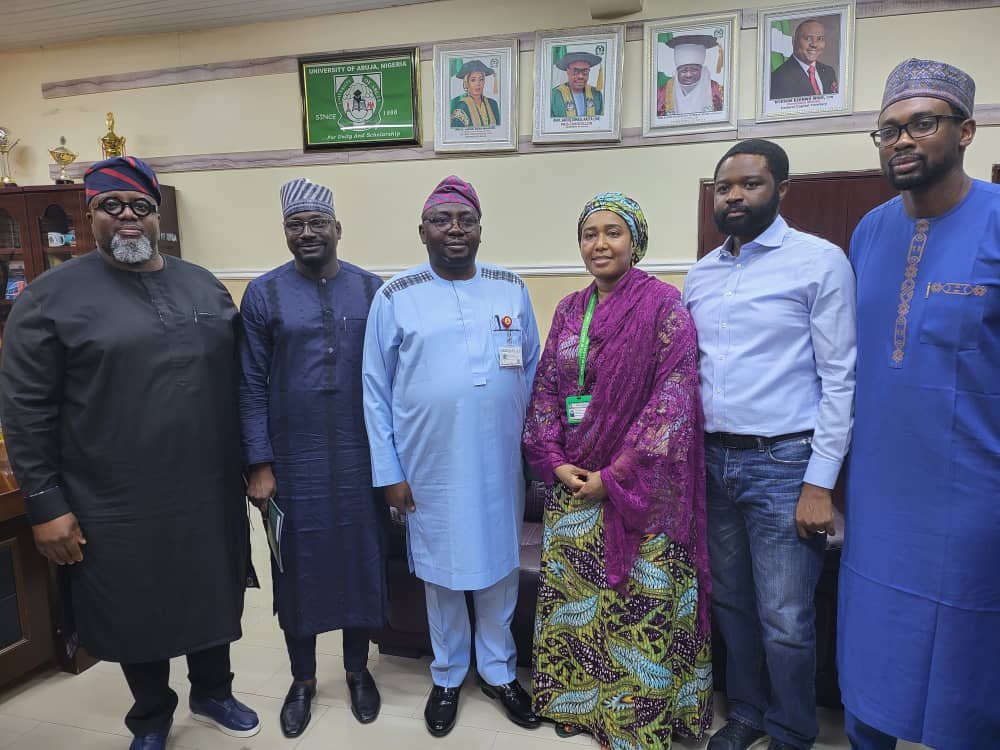
This was disclosed by the Minister of Power, Chief Adebayo Adelabu on Thursday, November 14, 2024, when he inspected the Advanced Solar Micro grid project, being built at the University of Abuja. The project is about 95 percent completed.

He said the university solar project would be replicated in other universities, tertiary institutions and Teaching Hospitals across the country and it will shield those institutions from the high cost of electricity.

According to him, President Tinubu’s love and believe in education, as the bedrock of economic growth and industrial development, informed the decision to provide alternative sources of energy for the institutions.

“I am delighted to be here today to inspect this project. As you know, no critical sector can perform optimally without stability, functionality, reliability and affordability of energy. Energy is like the blood that every sector needs to perform optimally, which is the reason why President Tinubu has prioritise power as a sector, which will drive the other critical sectors.

“The backbone of economic growth and sustainable long time human capacity and human development lies on education, which is why we have focused on our tertiary institution and teaching hospital facilities, to ensure that they are shielded from the high cost of energy”, the Minister said.

He also added that the solar project would reduce the reliance of the recipient institutions on the grid.
Adelabu equally called on the University of Abuja authorities to ensure adequate, regular maintenance and protection of the grid.

“We want to replicate what we have here in other institutions. We believe that this will be sustainable.

We need the support and co-operation of the beneficiary institutions for it to work and provide the needed service to the students and the university community at large. We will hand over the responsibility and sustainability to the management of the university and I believe you are more than capable to sustain the project. We need your cooperation so that we can replicate it in other locations. With this, we are sure that all the hues and cry about the high cost of energy in these institutions will come to an end.

“You cannot have a sound education without electricity. This is why we have prioritised this one that is located in the Federal Capital. The administration of President Tinubu loves education and also believes that it is the bedrock of economic growth and industrial development. This is one of benefits of our democracy”,

Adelabu said as he was taken round and shown all the components of the solar energy project.
He announced that the project would be commissioned by President Tinubu himself in December.

The Acting Vice Chancellor of the University, Prof. Aisha Sani Maikudi, while welcoming the Minister, informed him that the issue of electricity was a major challenge to the institution and the solar project would be a major relieve to the entire university community.

“This visit means a lot to us, as we have been looking forward to it. As you, know electricity is very critical to us. The cost of running our generators is so high because of the high cost of diesel. I often get calls and text messages from our students that there is no light. But this is a big relief to us. University of Abuja is very strategic and everyone in the FCT has interest in the university, because it is the only one with a Federal mandate in Abuja. We are happy, we are delighted with it and we promise that it will be well protected and maintained”, the Vice Chancellor said.

The solar energy project is being handled by the Rural Electrification Agency (REA) in collaboration with the Nigeria Electrification Programme (NEP) and Energising Education Programme (EEP).

November 15, 2024 0 comments
0 FacebookTwitterPinterestThreadsBlueskyEmail
Business

FG proposes N47.9trn as 2025 budget

by Folarin Kehinde November 15, 2024
written by Folarin Kehinde

The federal government has proposed N47.9 trillion as the total expenditure in the 2025 budget.

Atiku Bagudu, the minister of budget and economic planning, told journalists on Thursday, after the federal executive council (FEC) meeting presided over by President Bola Tinubu.

Vaguely said the council approved the medium-term expenditure framework (MTEF) for 2025-2027.

He said the government pegged the crude oil benchmark at $75 per barrel and oil production at 2.06 million barrels per day (bpd).

The budget minister said the exchange rate was pegged at N1,400 per dollar, noting that the government is targeting a gross domestic product (GDP) growth rate of 6.4 percent.

November 15, 2024 0 comments
0 FacebookTwitterPinterestThreadsBlueskyEmail
Headlines

FG Targets $10 Billion Power Investment with Private Sector Collaboration

by Folarin Kehinde November 13, 2024
written by Folarin Kehinde

The Nigerian government has announced plans to partner with the private sector to address the $10 billion funding gap required to overhaul the country’s power sector in the next five to ten years.

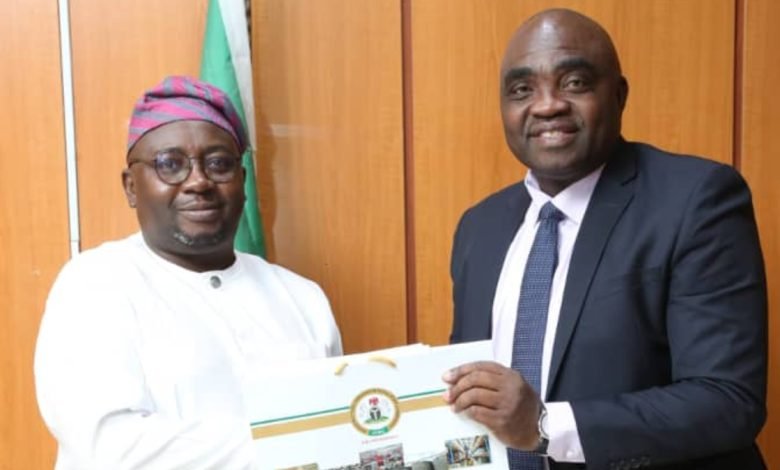
This move was confirmed after a meeting between the Director General of the Infrastructure Concession Regulatory Commission (ICRC), Dr. Jobson Oseodion Ewalefoh, and the Minister of Power, Chief Adebayo A. Adelabu, in Abuja on Tuesday.

Dr Ewalefoh stressed the critical role of the private sector in revitalising the power sector. “The investment required in power is very huge and government cannot fund it alone, so we have to leverage the financing capacity of the private sector. That is why the ICRC was set up to regulate this leverage,” he said.

He highlighted that while the government has a vital role, only private-sector collaboration can bring the required capital and expertise.

The Minister of Power echoed these concerns, underscoring the immense investment needed for a stable electricity supply.

“For us to achieve 24-hour power supply across Nigeria in the next 5 to 10 years, there is a minimum funding requirement of about $10 billion. The government cannot afford that, when there are other critical sectors in need of funding. We need to do this in collaboration with the private sector, and the best way is through concession,” Adelabu explained.

Both officials agreed that optimising current infrastructure performance and financing new projects would necessitate close collaboration between public and private entities.

To facilitate this, the ICRC, responsible for regulating public-private partnerships (PPP), is set to streamline the processes involved.

Dr Ewalefoh outlined a six-point policy to accelerate project delivery and prevent delays caused by underprepared companies.

To reassure stakeholders about the integrity of the process, Dr Ewalefoh also discussed the commission’s measures to ensure accountability.

“We are insisting on inserting conditions precedent to all PPP agreements so that any preferred bidder that defaults will have their agreement automatically nullified,” he affirmed.

This initiative marks a significant step toward revitalising Nigeria’s power sector and improving electricity supply nationwide.

The government hopes to unlock foreign direct investment by leveraging private sector investment, stimulating economic growth, and providing Nigerians with consistent, reliable power in the coming years.

November 13, 2024 0 comments
0 FacebookTwitterPinterestThreadsBlueskyEmail
Headlines

BREAKING: FG bans Pilots, other crew members from operating multiple airlines

by Folarin Kehinde November 12, 2024
written by Folarin Kehinde

Licensed flight crew members have been banned from operating multiple airlines, the Federal Government of Nigeria has said.

In a restriction order issued by the Nigeria Civil Aviation Authority (NCAA), flight crew members and pilots have been restricted from rendering services to different airlines.

According to the NCAA, its findings show that pilots and crew members have continued to operate under several airlines.

In the circular NCAA/DGCA/AOL dated November 6, 2024, and signed by the acting director general of Civil Aviation, Captain Chris Najomo, the NCAA declared such an act illegal.

The agency said such action by crew members and pilots pose a safety risk.

The order said, “Instances where pilots operate for more than one airline concurrently without safety considerations of such actions poses a safety risk to the industry.

“The Authority will take appropriate enforcement action on violators of this directive, effective from November 11, 2024.

“Simulator renewals from henceforth will be tied to the Operator. Please comply accordingly,” the circular noted.

November 12, 2024 0 comments
0 FacebookTwitterPinterestThreadsBlueskyEmail
Headlines

Strike: FG, SSANU, NASU in close door meeting

by Folarin Kehinde October 31, 2024
written by Folarin Kehinde

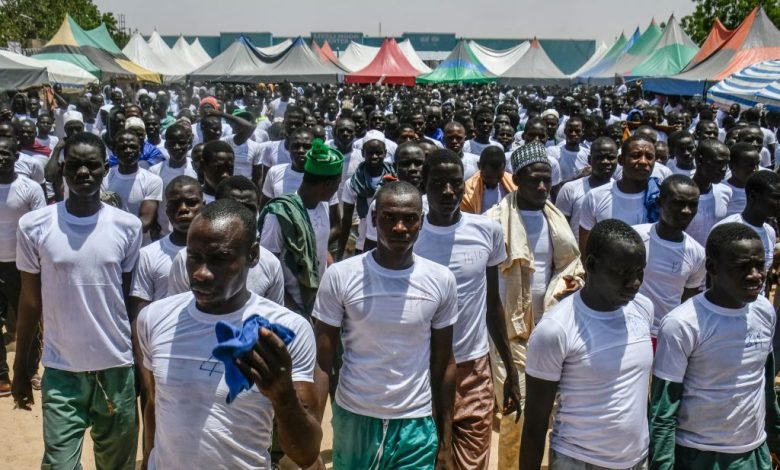
The Federal Government is set to meet with the Joint Action Committee of the Non-Academic Staff Union of Educational and Associated Institutions and the Senior Staff Association of Nigerian Universities on Thursday, October 31.

This was disclosed by Abdussobur Salaam, the vice president of SSANU who said that the meeting would occur at 11.00 am on Thursday to discuss issues surrounding the ongoing strike actions.

According to Salaam, the union received an official invitation from FG on Wednesday night.

“We received a formal invitation last night. The meeting is scheduled for 11 am today. It will be presided over by the Minister of State for Education and will be held in the Minister’s Conference Room,” Salaam stated.

Union members under JAC had earlier stated a strike action over issues of unpaid salaries by the FG.

October 31, 2024 0 comments
0 FacebookTwitterPinterestThreadsBlueskyEmail
Newer Posts
Older Posts

Recent Posts

  • Jabi Lake takeover stands even if God comes down – Wike

    May 6, 2026
  • Fuel Scarcity Looms As Dangote Refinery Hikes Fuel Price to N1350

    May 6, 2026
  • Why I moved to Kenya – Femi Lazarus

    May 5, 2026
  • IGP scraps SWAT nationwide

    May 5, 2026
  • 17 Reps Dump ADC for NDC

    May 5, 2026

Usefull Links

  • Contact Page
  • About Leading Reporters
  • Contact Us
  • Headlines
  • Investigation
  • Exclusives
  • Opinion
  • Business
  • Facebook
  • Twitter
  • Instagram
  • Linkedin

@2021 - All Right Reserved. Designed and Developed by PenciDesign


Back To Top
Leading Reporters
  • Featured
  • Politics
  • Opinion
  • Business
  • Entertainment
  • Sports
  • About Us
  • Contact