


Ace Vanguard columnist and public intellectual, Dr Obadiah Mailafia is dead.
According to a source, the 64-year-old former deputy governor of the Central Bank of Nigeria (CBN) died at the National Hospital Abuja.
More details soon……..

Ace Vanguard columnist and public intellectual, Dr Obadiah Mailafia is dead.
According to a source, the 64-year-old former deputy governor of the Central Bank of Nigeria (CBN) died at the National Hospital Abuja.
More details soon……..

Kenny Folarin, Abuja
The Registrar and Chief Executive Officer, Nigerian Institute of Animal Science, Prof. Eustace Iyayi has advocated for the development of local dairy breeds that has high milk yeilding capacity potential to boost dairy production in the country and reduce importation.
Iyayi while speaking in Abuja on Tuesday at a press conference noted that if local breeds are not developed, all intervention measures are just mere and will remain without lasting results.
“There is a big shortfall between what is needed in the country and what is produced, we need about 1.6 million metric tonnes of milk and we can only produce about 600 metric tonnes, so the difference has to come in through importation.
“This is huge, though CBN has tried to intervene and of course we know this is going to take a long time to develop because what is happening now is that in most cases, we are just using artificial insemination to upgrade the milk production capacity of local breed in a short run.
“But in a long run, what we have been advocating as an institute is that we need to develop our local breed that has had high milk yielding capacity potential.
“That’s the only way to go, though it can take about 10-15 years down the line but we need to start, if we do not develop our breeds that have high yield, all these intervention measures are just what they are, mere interventions that will not be long lasting so the way out is to have a long reach planning”.
According to Iyayi, the Nigerian Poultry Industry contributes about 25% to the agricultural Gross Domestic Product (GDP) and has the largest annual egg production of 650 metric tonnes and second largest poultry production of 180 million birds in Africa.
Read Also: Institute urges FG halt exportation of Maize, Soya Beans
He also stated that in order to reduce food import bill, there is need to increase production and improve the agriculture value chain which is about #85 billion that is so underdeveloped and only 6% of the development in the agric value chain is being harnessed while others lack attention.
“The current high annual food import bill of over US$5 billion and US$1.5 billion on dairy product and other derivatives in the face obvious comparative advantage is an unsustainable trend particularly in the wake of dwindling foreign exchange”.
Iyayi explained that “the country has to be aware of this and the institute has been sticking out it’s neck in this direction, “we need to do something busy to reduce our food import bill”.
Meanwhile, Iyayi noted that the impact of the COVID-19 pandemic in the dairy industry has been phenomenal with steep losses reported by farmers, whilst the feed sector has not also been spared as two essential ingredients, maize and soyabean whose cultivation and importation reduced drastically, further compounding the problem of the industry.
Nigeria’s chances of achieving Goal 1 of the SDGs, which is the attainment of zero poverty among its people by the year 2030, appear slim, as the country’s poverty headcount is soaring high still, instead of reducing.
The latest sustainable development report ranked Nigeria low at the 160th position out of 165 countries. The leadership of countries all over the world, through the UN, had committed themselves to achieve all the 17 SDG goals by the end of 2030.
The SDG report revealed that the Nigerian government is not effective at all in lowering poverty among its people if it is making any effort at all. Instead, the leadership in Nigeria is supervising increasing poverty in the country.
Data showed that 43% of Nigeria’s estimated 206.1 million population is living below the lowest poverty threshold which is $1.90 a day. That is to say, more than 4 out of every 10 Nigerians live on less than N779, using the Central Bank of Nigeria’s official exchange rate of N410.
The outcome of the poverty headcount is far worse when it is based on the next international poverty threshold of $3.20. The UN data revealed that 74% of the country’s population survive on less than $3.20 or N1,312 a day. That means according to international standards, more than 7 persons out of every 10 Nigerian are poor.
The recent SDG 1 figures present Nigerians as poorer than their fellow Africans in four other African countries from the North, South, East and West of the continent, namely Egypt, South Africa, Kenya and Ghana.
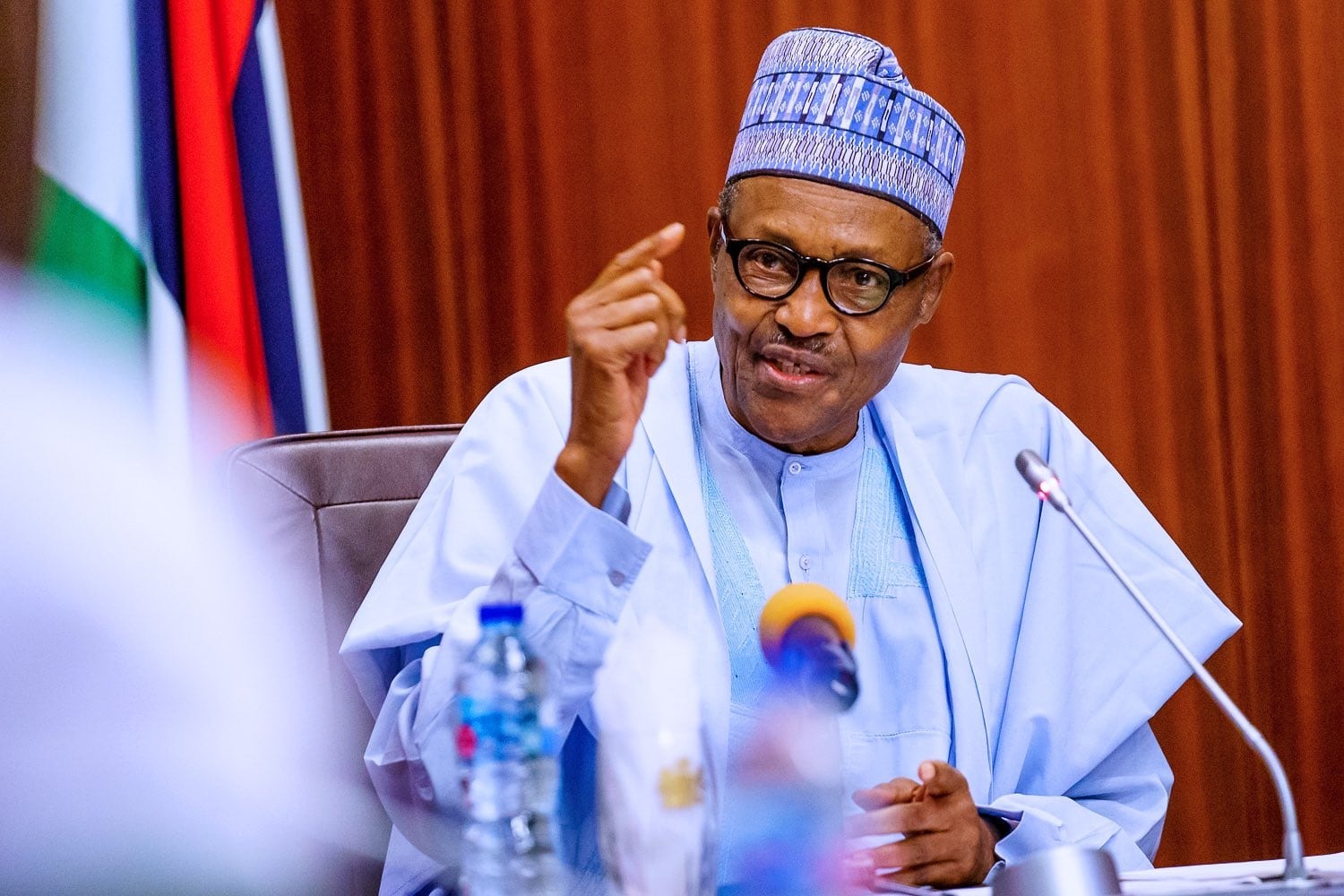
In his democracy speech on June 12, 2021, President Buhari claimed that his administration has lifted 10.5 million Nigerians out of poverty in the last two years. However, the Sustainable Development Report says the contrary. In fact, data showed that more people slipped into poverty within this period, either using the $1.90 or $3.20/day poverty threshold.
Nigeria’s poverty headcount ratio at $3.20 rose from 68.7% in 2018 to 70% in 2019. It further increased to 73.22% in 2020. These increasing incidents of poverty, particularly in the Buhari administration and the government’s denial of the same casts doubt on its ambitious plans to lift 100 million Nigerians out of poverty in 10 years.
Not only this, just like the country did not achieve the Millennium Development Goals’ (MDGs) poverty targets by 2015, it might also be one of the countries that may not attain goal one of the SDGs by 2023, given its ever-increasing unemployment and inflation rate – two economic factors that prevent access to income and devalue people’s hard-earned income.
Between 2010 and 2020, Nigeria’s unemployment rate rose five-fold, from 6.4% in 2010 to 33.3% in 2020. According to a report by the Nigerian Economic Summit Group, the rise in the number of unemployed people is expected to push more people into the poverty trap, going forward.
Already, inflation has pushed millions of Nigerians below the poverty threshold. The World Bank revealed this in its recent Nigeria Development Update report, noting that inflationary pressure pushed about 7 million Nigerians below the poverty line in 2020 alone.
The foregoing evidence from data suggests that unemployment and inflation contribute to extreme poverty in Nigeria, and together pose a major challenge for Nigeria in ending poverty – goal one of the SDGs. This is aside from the impact the COVID-19 may have had not only on Nigeria but the global community in achieving the SDGs. Acknowledging the effect of the global pandemic on the SDGs, the United Nations Secretary General noted that “the current crisis is threatening decades of development gains,… and throwing progress on the SDGs even further off track”
To get back on track to achieve Goal 1 of the SDGs, the government may need to adopt more effective economic measures, particularly in reducing the unemployment rate and inflationary pressure.
“The states and FCT external debt stock calculated in USD grew by 29.5 per cent, while the calculation in naira produced 136.7 per cent growth. The external debt component had risen to 31.82 per cent of overall debt as at end of 2018, while the domestic debt was 68.18 per cent of overall debt. Furthermore, Nigeria’s debt to GDP has been growing over the years and stood at 19 per cent by end 2018.”
Onyekpere said the Central Bank of Nigeria (CBN) and banks are heavily exposed to these domestic instruments up to 45.2 per cent of overall and the non-bank public is mainly about Pension Fund Administrators, Asset and Fund Managers, as well as Insurance companies hold the remaining part.
“The current debt to retained revenue profile of about 83 per cent is not sustainable. The drive to raise new domestic revenue is a struggle of the generation and it should attract the energy, vision and vigour of both government and citizens. The major driver should be a commitment to expand available resources, rather than the current clamour for sections of the country to have more of the stagnant pool of available resources. Debt can be reduced if we generate more revenue.”
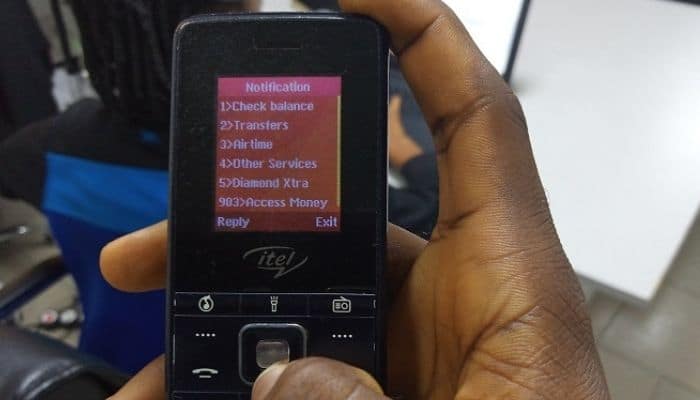
Samson Akhigbe, who shared his experience on his Facebook page described the scheme as the most fraudulent one crafted by Banks with the banking of the Central Bank of Nigeria.
He advise Nigerians to deactivate their SMS service scheme, saying that with an active email address and a token, why pay for what only enriches bank.
“I stopped using SMS banking like five years ago. Even when I opened my last account, I deactivated SMS alert. Not only is it a useless method to receive banking information, it is a criminal scheme setup by Banks in collusion with CBN to milk Nigerians.
“I reasoned that, if I have a token, an active data and an email, why pay extra for SMS banking?
“While I was trying to deactivate it back then, they made it so difficult and I was wondering why. Na me get account, why insist I use SMS?
“At the end of the day, I filled forms, got a guarantor to sign indemnity. At last, I was free. But still, these banks looked for other means to scheme off my account.
“If you use GAPS on GTBank platform, you’ll see how bad these banks scheme off our account. N1 here, 50 kobo there. Every transaction is billed and at the end of the month, you’ll pay VAT and Account maintenance fee.
“Bear in mind that VAT is deducted for transactions as they occur. The people paying SMS charges are the worst hit.
“And then to hear that these banks owe TELCOS for the monies that they have collected from customers is the height of criminality. It is like saying ShopRite is owing vendors for goods already paid for by the customers.
“This is me saying to Nigerian Banks: UNA PAPA. MAY IT NOT BE WELL WITH YOU.

Information uncovered by initially uncovered by PointBlank News revealed that on 31st December, 2020, Buratai and other Service Chiefs, including the leadership of Military Pension Board fleeced a whopping sum of N2.5b the same minute the said sum hit the Military Pension Account No. NGNAS99912100001, domiciled with the Central Bank of Nigeria, CBN.
Further checks revealed that the beneficiaries are mostly Bureau De Change operators, a Local Government Chairman, and others who are neither Military Pensioners nor people who have anything to do with the Military. In the same vein, these accounts with new generation banks (names withheld) of associates, friends and family members, were used to wipe off the entire fund that hit Military Pension Board Account on 30th December, 2020.
Among the names used and amount routed out through their accounts include:
1. Ahmed Ibrahim N44,562,100.85
2. Abbas Muhammed N35,119,089.09
3. Abdulaziz Umar N86,159,030.85
4. Abdullahi Abubakar N48,459,602.97
5. Abdullahi Haruna N44,582,100.65
6. Abdullahi Usman N48,459,602.97
7. Abubakar Abdullaziz Abba N48,459,602.97
8. Abubakar Aliyu Salis N44,562,100.85
9. Abubakar Ismail N48,459,602.97
10. Abubakar Muhammad N48,459,602.97
11. Abubakar Yusuf N48,459,602.97
12. Ali Mustapha N48,459,602.97
13. Aminu Hussaini N48,459,602.97
14. Ari Salisu Adamu N48,459,602.97
15. Ayuba Yusuf N48,459,602.97
16. Bala Aminu N48,459,602.97
18. Bello Ado N48,459,602.97
19. Bello Ali N48,459,602.97
20. Bello Mustapha N48,459,602.97
21. Dauda Adamu N48,459,602.97
22. Faruku Sanusi Buku N48,459,602.97
23. Haruna N48,459,602.97
24. Haruna Shuaibu N86,159,030.85
25. Ibrahim Hussaini N48,459,602.97
26. Idris Muhammed N48,459,602.97
27. Idris Yakubu N48,459,602.97
28. Isah Salisu Tanko N48,459,602.97
29. Isah Usman Dogo N48,459,602.97
30. Isah Zachari Jubril N48,459,602.97
31. Isyaku Abdullahi Mohammed N48,459,602.97
32. Jamilu Usman N48,459,602.97
33. Kabiru Yushua Abubakar N48,459,602.97
34. Kazeem Mohammed N86,159,030.85
35. Khalid zaharaddeen Abdurahman N86,149,030.85
36. Lawan Aminu Maina N48,459,602.97
37. Mohammed Kabiru N48,459,602.97
38. Mohammed Mohammed N48,459,602.97
39. Mubarak Batta Jidda N48,459,602.97
40. Muhammad Salihu Zakari N48,459,602.97
41. Muktar Abubakar N48,459,602.97
42. Munkaila Yazid N48,459,602.97
43. Musa Umar Kalgwai N86,159,030.85
44. Rabiu Anas N48,459,602.97
45. Sani Abubakar Bakori N44,582,100.65
46. Shafiu Tijani Salihawa N48,459,602.97
47. Shehu Hassan N48,459,602.97
48. Umar Shuaibu N48,459,602.97
49. Yakubu Salisu Salisu N86,159,030.85
50. Yau Yusuf Ahmad N44,582,100.65
Recall that the National Security Adviser Mohammed Babagana Monguno has recently alleged that the immediate past Army leadership could not give account of the Billions of Dollars collected by it for arms purchases, a position he later shifted and claimed to have been quoted out of context.
Nigerians decried the recent non-career appointment of the immediate past Service Chiefs by President Muhammadu Buhari, insisting that the appointment was hastily done by President Buhari to give the Service Chiefs a shield from prosecution over many allegations bordering on criminal diversion of funds and corruption enrichment of selves by the service chiefs at the detriment of Nigerians who are daily killed, maimed and raped by terrorists, bandits and other criminals.