Leading Reporters
  • Headlines
  • Health
  • Business
  • Exclusives
  • Investigation
  • Entertainment
  • Opinion
Wednesday, March 25, 2026
Hot
I am excelling in my job as minister...
MC Oluomo Visits NURTW National Secretariat After Failed...
JUST IN: Ex-AGF Malami Breaks Silence After EFCC...
Gunmen abduct worshippers during church service in Kwara
Tinubu’s Address at Windsor Castle State Banquet [FULL...
Three security agents collapsed during Soludo’s 2nd term...
Insecurity: Tinubu orders service Chiefs to relocate to...
Petrol Subsidy Removal Pushes 63% of Nigerians Below...
“We Are Not Miyetti Allah” — Plateau Fulani...
Reps prescribe 2-year jail term, 10m fine for...
  • About Leading Reporters
  • Contact Us
Leading Reporters
Advertise With Us
  • Headlines
  • Health
  • Business
  • Exclusives
  • Investigation
  • Entertainment
  • Opinion
Hot
I am excelling in my job as minister...
MC Oluomo Visits NURTW National Secretariat After Failed...
JUST IN: Ex-AGF Malami Breaks Silence After EFCC...
Gunmen abduct worshippers during church service in Kwara
Tinubu’s Address at Windsor Castle State Banquet [FULL...
Three security agents collapsed during Soludo’s 2nd term...
Insecurity: Tinubu orders service Chiefs to relocate to...
Petrol Subsidy Removal Pushes 63% of Nigerians Below...
“We Are Not Miyetti Allah” — Plateau Fulani...
Reps prescribe 2-year jail term, 10m fine for...
Leading Reporters
Leading Reporters
  • Headlines
  • Health
  • Business
  • Exclusives
  • Investigation
  • Entertainment
  • Opinion
Copyright 2024 - All Right Reserved
Home > Opinion > Page 8
Category:

Opinion

OpinionHeadlines

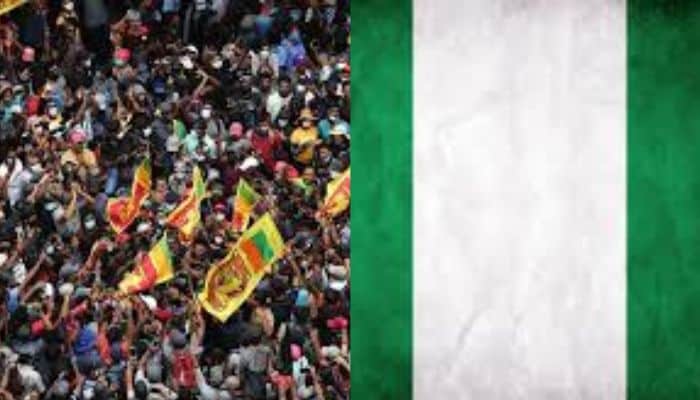
Sri Lanka Crisis: “Lessons For Nigeria”

by Folarin Kehinde August 8, 2022
written by Folarin Kehinde

The recent crisis in Sri Lanka, a small country and developing economy with a population of 22 million people, has continued to take over a large space of world news.

A massive crowd of protesters stormed the presidential palace despite efforts by security operatives to barricade the way to the palace, but the number of protesters was overwhelming, so it didn’t work.

The protesters marched peacefully into the official residence of Rajapaska and celebrated, after sending him to exile. They swarmed, entered and tasted the luxury of his bedrooms, toilets, gyms and banquet halls, where they took selfies.

Many keen watchers of the country, famous for its elephants, said they saw the crisis coming, citing years of mismanagement of the country’s economy by a few political elites.

 Analysts said like many developing nations, Sri Lanka also suffered from a combination of external economic shocks that landed its economy into a coma.

According to them, the economic coma was mainly generated by COVID-19 pandemic, the Russian-Ukraine war and internal political dysfunction – a predicament that equally affected Nigeria and other African states.

As a result of these shocks, Sri Lanka found itself in a crisis of severe shortages of food, fuel, electricity, medicine, shrinking foreign reserves and collapse in currency value.

Prior to that, the country also succumbed to foreign debt crisis, high inflation and paucity of money to pay for basic necessities, blaming President Gotabaya Rajapaska for mismanaging the country’s finances.

Rajapaska spent more than the national income and allowed deep tax cuts, destroying the economy to a level that the government can’t afford imports or to service the external debt.

 Reflecting on these, Nigeria and other developing economies should be on the watch because the Sri Lankan crisis could mutate and more countries would fall, “Colombo is just a canary in a coalmine,” some analysts described the situation.

 How did Sri Lanka drive itself into this crisis?

Sri Lanka’s tourist trade, one of its biggest foreign currency earners and agriculture, just like the oil and agriculture in Nigeria, was affected by COVID-19 pandemic.

Tourists were frightened off by a series of deadly bomb attacks beginning in 2019.

Things were made worse by Rajapaksa’s policy on agriculture, which employed millions of peasants, which saw the banning of the importation of fertiliser in addition to his other ways of poor economic mismanagement which totally ruined the sector.

This made Sri Lanka run out of money, and its foreign reserve was depleted. As an import-dependent country that buys almost everything from outside, it spent more than it earned, while taking unsustainable loans from the IMF, World Bank and China.

The country quickly ran short of money to import oil and there were massive power cuts, students shut out of schools, parents sacked from jobs, and sales of fuel severely restricted, then the protest began and spiralled out of control.

Many other developing countries are suffering similar crises, maybe on a lower scale. But what is obvious is that if not much is done, the world will have a similar situation in its hands

Looming debt crisis in 70 nations  

On February 15, days before Russia invaded Ukraine, World Bank had issued a warning that “developing nations faced a looming debt crisis”

The bank named 70 low and middle-income countries facing debt repayment worth $11 billion, and the report clearly stated that the debt burden could crush their economy in 2022.

Few days later, Russia invaded Ukraine and disrupted the supply chains, put the financial market into disarray and triggered a global oil crisis. The economic focus became darker.

In March, the United Nations released a report that there were 107 economies that faced “severe exposure” to the consequences of the Russia-Ukraine war. And, the risks are rising food crisis, rising energy crisis, and tougher financial conditions.

 Also, the report had projected that 1.4 billion people from the 107 countries would be affected (approximately one-fifth of the world’s population).

According to the report, a total of 75 countries would go Sri Lanka’s way to face the three risks of food, energy and finance crises. Twenty-five of the countries are in Africa, Twenty-five in Latin America and another Twenty-five in Asian-Pacific.

 Although the alarm bell rang in Africa, Nigeria was lucky to stand out, leaving Ghana, Kenya, South Africa and Ethiopia to be among the 25 countries to be the worst hit in sub-saharan Africa.

 In Ghana, the debt level is soaring, the interest payment is choking the economy and the debt crisis seems imminent. 

Also, in South Africa, the debt has risen 80 per cent of its economic Gross Domestic Product (GDP), despite higher revenue, which indicates that there’s a looming threat of state collapse, therefore, much needs to be done to avoid the rerun of the 2021 civil unrest.

In Kenya, the debt has also climbed to $70 billion, which is 70 per cent of the country’s Gross Domestic Product (GDP), and weeks back, Kenya secured $244 million from the International Monetary Fund (IMF) to weather its economic storm.

 Is Nigeria ready for the coming spite of the debt crisis?

Nigeria is lucky to be exempted this time around, but the World Bank report said, “Over the next 12 months, as many as a dozen of developing economies might not be able to service their debts.”

Data from Debt Management Office (DMO) has shown a sign that Nigeria is perhaps inching towards a debt crisis because as at first quarter of 2022, the country’s external debt stood at $39.96 billion with a foreign reserve of $38.483bn.

Nigeria’s inflation also spiked to 18.60 per cent and the naira slipped to N700 against the USD at the black market.

Economic analyst, Tope Fasua, has said Nigeria’s loan is already unsustainable because it is taking 95 to 97 per cent of the revenue generated. “That ratio is not sustainable,” he said.

Fasua warned that the huge debt that Nigerian government is incurring mostly is to cater for a lot of failures and they just borrow to keep some activities going.

 “How the loans are going to be paid is not in question for them and that’s very unfortunate.

“The loan is unsustainable from the perspective of revenue, from the perspective of corruption and value for money and from the perspective of project implementation.

“Only 30 per cent value for money is what we get especially on these loans, some of what we are taking is for very frivolous issues.

“In my opinion, we should take loans only for projects that have the ability to pay themselves back. If a project is not generating cash flow, it shouldn’t be taken.

“If we are taking loans for local roads and schools, who is going to pay? These are projects that should be funded from internally generated revenue,” he said.

He also attributed the currency challenges to Nigeria’s debt portfolio.

“We have a challenge with the naira presently, and one of the key things that throws your currency off is debt unsustainability.

“And mind you, most of the loans we are taking in recent times have not fallen due for payment. What we are doing is only paying the interest. Many of them have moratoriums on interest payments.

“These guys have actually booked for us a bad time and a lot of trouble upfront,” Fasua added.  Analysts said to avoid taking the path of Sri Lanka’s, African countries need multi-front solution to deal with their multi- dimensional crisis of rising food, rising energy and tougher financial conditions.

And, to achieve this, the governments must first defeat corruption and bring about reforms that would reduce their rising debt burden choking their economies, and be free from the 75 projected by the UN to go Sri Lanka’s way.

August 8, 2022 0 comments
0 FacebookTwitterPinterestThreadsBlueskyEmail
OpinionHeadlines

ASUU STRIKE: “The Problem With The Nigerian University System”.

by Folarin Kehinde August 8, 2022
written by Folarin Kehinde

I have been doing a lot of research on why we continually have problems with university education in Nigeria.

Chief of our problem is funding. Just like every other system in Nigeria, over-dependence on the govt for everything is killing our university education. I am yet to see any country in d world with a working university system that runs universities the way we run ours in Nigeria.

Universities in the United Kingdom and their yearly revenue:

Oxford          – £2.5 b

Cambridge   – £2.2 b

UCL               – £1.5 b

Edinburgh    – £1.1 b

Manchester – £1.0 b

Imperial        – £1.0 b

King’s CL      – £901m

Leeds           – £791m

These are the total revenue/income of the top Universities in Britain per year.

Guess what, every dime u see above here is generated by these Unies on their own through income from student fees, govt grants & research grants, as well as generating their own income through charitable fundraising, investments & business activities such as ‘spin-out companies.

Meanwhile, only about a quarter of their income comes from UK student fees. The rest comes from higher fees paid by international students, charitable donations, and investments that Universities make.

I am going somewhere. Let’s break it down.

What’s govt grant? Govt grants make up about 30.6% of total revenue for most UK universities. Students’ fees is about 29.4%. Self-generated income is 20.4% & research grants about 19.6%. It varies with very little margin from University to university.

Therefore, total revenue from non-governmental grants is 69.4% while grants from the government is merely 30.6%. Therefore, in a country that wants to maximize its university educational system, the government’s contribution cannot be more than 35% at most.

We are in trouble with our university education system in Nigeria because we make universities totally dependent on the government for its revenue and running costs. That’s an aberration!

We need a total disruption of our university education system.

What we have always lacked is a leader with the political will to take tough decisions devoid of political correctness. We need to totally reform our university system & the recruitment process of Vice Chancellors.

We have VCs of public Universities behaving like State governors

Lame duck leaders, sitting down & expecting monthly draw down from the Federal government to pay salaries & enjoy the largesse of office and then wait for next month’s drawdown. Our system of administration does not excite nor tax the ingenuity of any man. It makes people lazy.

The University system has become an extension of our politics & ASUU is the political arm. It would take a total reform to unleash the dragon & let Professors prove their mettle as eggheads by leading from the front on how they can generate revenue for the running of our universities.

Recruitment of VCs must take the pattern of recruitment for a multinational where revenue targets are set and the potential candidates must be able to prove how they would meet the revenue targets for their university or go bankrupt.

Negotiation with ASUU is not what we need. They’ve been negotiating for over 30 years and nothing had come out of all the negotiations. The reason is that the federal government can never meet up with the kind of money to really cater to all the Universities.

Universities are not run that way. Govt must hand of 60% of their involvement with university education, or give a moratorium of a 10-year withdrawal plan from university funding. Reduce funding every 2 years, and recruit VCs that are forward looking and ready to work to get grants and endowment for his/her university. Let our public universities be tuition-paying universities, strengthen professional certification for people with skill, and make it recognizable like ICAN does with accounting.

This way people can be proud of their professionalism without a university degree, and be sure they can get a well-paying job.

That way only people who really needed to attend a university would do so. Presently, my boss at work here in the UK has no university degree, but he’s an experienced hand with a deep knowledge of his industry. He consults for government on reforms in the sector and an authority in his field. Under him, we have people with multiple degrees but we all defer to him because he knows his onions.

Presently, a lot of Nigerians with master’s degree are abandoning their degree certificates and getting certification in Project Management, Agile, Business Analysis, and getting into tech jobs that pay well. Nobody cares about what they studied at the University.

What employers are looking and asking for is your certification in technology-related field and your experience in that field to get employment.

I sincerely believe we can revamp this system because we have more to gain if we do or more to lose if we don’t.

by: Kay Lord

August 8, 2022 0 comments
0 FacebookTwitterPinterestThreadsBlueskyEmail
OpinionHeadlines

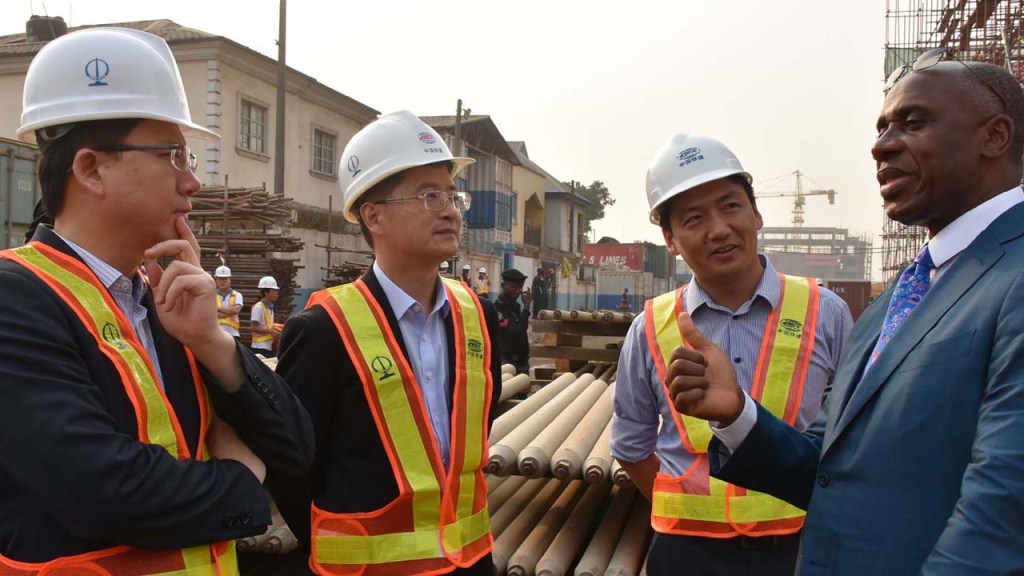
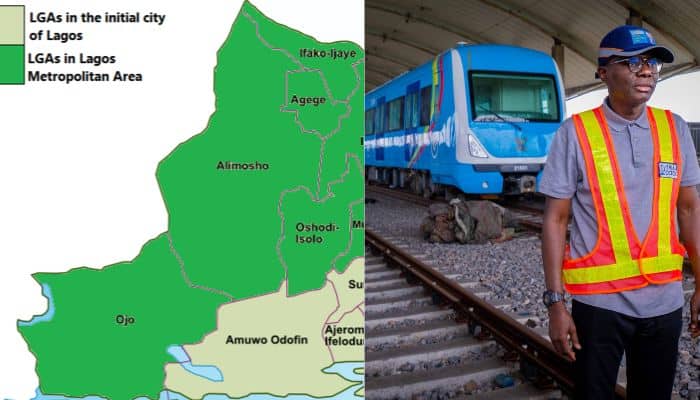
Exposing Waste and Corruption in Lagos State Blue Line Railway Project

by Folarin Kehinde August 5, 2022
written by Folarin Kehinde

In 2009, during the tenure of Governor Babatunde Fashola, the Lagos state government commenced the Blue Line railway project. On paper, the railway line is supposed to run from Okokomiko to inner Marina (CMS), a distance of 27 Kilometre, with 13 stations and an end-end journey time of 35 minutes. The project is costing the Lagos government 1.5 billion dollars

The reality however, is that the railway line runs from Miles 2 to CMS, a distance of 14.2 Kilometre. Also, it is light weight, having the ability to carry only passengers not cargo. Even with this lowered distance and quality, the railway line is yet to be completed till this very day.

The reason this rail line is yet to be complete for over 13 years is mainly due to corruption and waste by the Lagos government through successive governors from 2009 till date.

To put it in context, in 2011 the government of Ethiopia began the construction of a heavy railway line capable of carrying cargo and passengers from Addis Ababa to Djibouti, the capital of the republic of Djibouti.

That railway line is 759 Kilometres in distance and its main of objective was to connect Ethiopia to the sea ports of Djibouti. The cost for executing the project was 4.5 billion dollars.

That 759 Kilometres railway line was largely completed in 2016 when testing began. It was commissioned for operations by the President of Ethiopia in 2018.

When you divide the 4.5 billion dollars which the railway line cost Ethiopia by 759 Kilometre, it amounts to 5.2 million dollars per kilometre.

The government of Lagos on the other hand is spending over 54 million dollars per kilometre in constructing their railway line, yet till now it is still to be completed.

This goes to show how far inefficiency, corruption and waste can go in stalling a project whose completion otherwise would have been beneficial to the citizens of Lagos state.

August 5, 2022 0 comments
0 FacebookTwitterPinterestThreadsBlueskyEmail
OpinionHeadlines

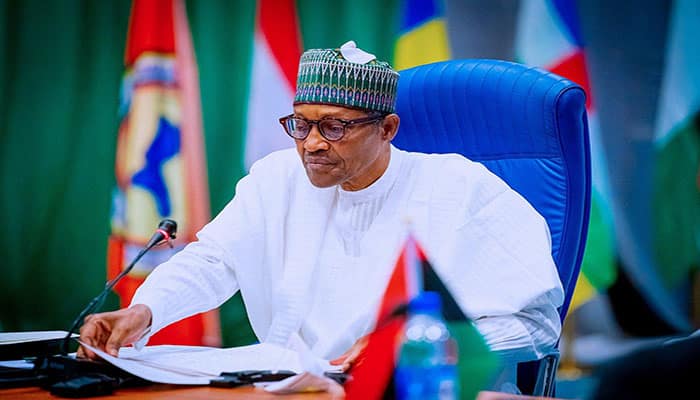
Writing Buhari’s Scorecard

by Folarin Kehinde August 3, 2022
written by Folarin Kehinde

The consensus among Nigerians across different parts of our country today is that President Muhammadu Buhari has failed both as a leader and a two-term president. His inability to deliver on his electoral promises to secure Nigeria, making it a safe polity for life and property aside food and job security in the wake of what Nigerians then thought was the demolition job of the Peoples Democratic Party, PDP-led government of Goodluck Jonathan; fight corruption and relate with the people of Nigeria without fear or favour, in regard to religion, ethnic and gender identity- all of these have conspired to undermine his claim to a favourable place in history.

For a man who at a point enjoyed the unalloyed support and admiration of the vast majority of Nigerians from his part of the country, was accorded grudging respect from other parts on account of his apparent spartan lifestyle (which was seen as the appropriate antidote to the corrupt profligacy of the Jonathan years) and spent the latter part of his adult life aspiring to lead the country he once ruled as a military dictator for almost two years before he was ousted from power in a military putsch, this turn of events is without any doubt tragic. The more so it does not appear there is much the administration can achieve in the few months left before a new government comes into office.

President Buhari, indeed, has just about five active months, between August and February, left to ameliorate the harsh verdict of history. Not enough time to do much to say nothing of achieving a fundamental shift in opinion, expectations of Nigerians or his own capacity for any miraculous transformation in the state of the nation.

Any time after February, time during which the 2023 elections would have come and gone and a new president elected, would be only for the few house-keeping tasks left before Buhari enjoys his last presidential ride into Daura as a sitting president.

It is a journey, or more appropriately, a time he says he eagerly looks forward to. But whether that final journey home or life thereafter would be happy is beyond any one of us to say. The signs are, however, ominous and leave little to hope for.

Things need not have come to this point. The loss of credibility was gradual but steady and started with the erosion of trust from the outlining areas where the president had a very tiny, if any, support base in the South-East. At this stage, Nigerians from other parts of the country still harboured some hope that the president could achieve some good in the framework of democratic governance despite his reputation as a brutal, narrow-minded dictator. The anti-corruption image of the regime he led was sufficient to override these misgivings in some parts of the country barring the South-East.

But the disillusionment soon filtered to more liberal-minded people in other regions who could not make head or tail of the president’s ways, particularly his increasingly narrow take of national events that are regarded from the point of view of his region of the country and crass disregard of other parts. This went hand-in-hand with his habit of outsourcing presidential authority and responsibility to surrogates and hangers-on who know too well his weakness in this regard and thus proceed with their self-aggrandising agenda that are sold to the rest of the country in the name of national interest.

Soon communities of the North-Central region, that were being decimated by the predatory activities of common criminals masquerading as Fulani nationalists under the accommodating policies of the Buhari administration, would join the widening circle of malcontents and things would worsen as these criminals export their version of terror to parts of the South-West, leaving room for pockets of brigandage by local outlaws operating under the guise of Fulani invaders.

By the time the terrorists of the North-East closed rank with those of the North-West, leaving vast wastelands of destruction of property and life, the disenchantment has come full circle. It was no longer a matter of the North against the North-Central or the North against the South. It was clear that government has failed roundly and the strategy of divide-and-conquer would no longer work.

There is no hiding place for Abuja under Buhari any more. The attempt at globalising the failures of the government persuades only those who have chosen to be blind to the seven years of Buhari’s ineptitude. The world may be experiencing inflation at an unprecedented scale, the global economy under the strains of the Russia-Ukraine war may be heading for recession but none of these explains Buhari’s lack of connection with the Nigerian people, his neglect or outsourcing of his responsibilities to others while he enjoys the perks of his office like a patriarch in retirement.

In the last few months of his administration, Jonathan was able to downgrade the ability of Boko-Haram to inflict further damage on Nigeria. Rather than working along similar lines (as it is too late for Buhari to perform any miracle now that Nigerians look forward to his successor), Abuja under Buhari appears still to be looking for a scapegoat in the media, both local (that it accuses of lack of patriotism) and the British Broadcasting Corporation, BBC, that it is threatening to sanction for its expose on the ongoing brigandage in Zamfara. When the BBC did an expose on Nigerian universities, the government saw it as an opportunity to draw up laws tailor-made to the universities; when pastors were the target of a similar investigation, Abuja saw nothing amiss. But now the focus is on its own rotten underbelly, the intractable banditry in the North, it suddenly sees bad faith.

The historical fight between the Fulani and the Hausa over land and everything else under and above it, the BBC investigation shows, has been mismanaged and worsened by corruption in high places. The mystery that the Buhari administration has so far thrown around bandit terror has been shredded by the investigation that puts faces to known names and narratives behind their murderous activities. These are human beings, if deformed, inhabiting known places in a Savannah, not a wilderness of rain forests.

From where comes the mystification of their activities and identity by Abuja? Rather than finding a lasting solution to the problem(appeasement, annihilation or a bit of both), government and its supporters view the BBC investigation as promoting banditry and lionising bandits.

Far from it, the investigation points at the misery of the victims of banditry, the corruption that has sustained it and the bandits’ own attempts at profiting from it in the light of government’s unwillingness to end it. The investigation is a critique of the nested scale of the corruption wrought by power.

by: Rotimi Fasan

August 3, 2022 0 comments
0 FacebookTwitterPinterestThreadsBlueskyEmail
OpinionHeadlines

Nigeria’s insecurity: One impeachment not enough

by Leading Reporters July 31, 2022
written by Leading Reporters

By Tonnie Iredia

Over 80 senators across political parties and a majority of House of Representatives members, have reportedly agreed to begin impeachment proceedings against President Muhammadu Buhari, if the growing insecurity across the nation persisted beyond the next six weeks. It was a rather stern ultimatum given by the federal legislators on the eve of their departure to a 2-month vacation. Anyone who thinks the legislators are ready for a hard time with the executive needs to take a second look at their subsisting posture which portrays them as members of a rubber stamp legislature.

They actually showed the turf they are made up of when in line with their feeble outlook, they allowed as long as six weeks for the presidency to make amends not withstanding that they had had cause more than once to show ample frustration over the prosecution of the fight against insurgency and every form of insecurity in the land.  

Senator Call To Impeach President Buhari


No empirical reason was given for how the ultimatum of six weeks was arrived at; making it appear that it was influenced by their desire to avoid a disruption to their vacation. With the rash of attacks which led to several killings in the last few weeks, one would have expected the representatives of the people to put off their vacation for now so as to squarely face the severe issue of widespread fear and anxiety in the nation. It was an error of judgment that the legislators kept to their schedule of incessant vacations at this crucial point.

Time there was when Nigerian legislators cut short their vacation to deal with what they often called “urgent matters of national importance” even though such matters were essentially always about their welfare. So, not many people are able to comprehend why our legislators faithfully go on vacation as if it is one of their critical functions.  Besides, the same legislators do not only enjoy every public holiday, they usually go away for weeks before and after every holiday for which  other public officers enjoy no more than the two days officially declared for it
 
The National Assembly has a constitutional right to follow the impeachment process it is threatening to invoke and we are not anxious to dispute their power but if the recent tough talks end up only as half-hearted sermons, the legislature would merely place the nation in jeopardy. To start with, it is difficult to understand why the minority leader of the House of Representatives, Ndudi Elumelu was begging his colleagues to take advantage of their long holiday to stay away from what has become the highly unsafe Abuja. The plea no doubt unveils many posers.

First, was Elumelu encouraging legislators to abandon Nigerians who have no option but to stay in the location?  Second, bearing in mind that there is hardly any safe place today, where precisely would legislators who buy the plea head to? On at least two occasions, in the last couple of weeks, the city of Owo in Ondo state has been attacked twice. In Niger state, the media reported no fewer than 12 villagers abducted last Tuesday by suspected gunmen in Shaddadi village in the Mariga Local Government Area of the state.  Would legislators leave Abuja for any of these volatile areas or would those of them from Enugu state prefer to go home to nearby Ozalla town where the Actors Guild of Nigeria raised alarm the other day of the alleged kidnap of two veteran film stars who had gone missing after they left a movie location in the state?
 
If Elumelu’s plea to legislators is taken as a joke, from a leader not generally given to frivolity, many analysts would be on the same page with  Idris Wase, Deputy Speaker who accused the minority leader of playing politics with the lives of citizens. However, Wase’s sharp reaction is a sign that at the appropriate time, disagreements may as usual displace the seeming consensus of legislators on the nation’s grave insecurity.

Indeed, many of them would stay away from voting as they did during the crucial issue of the bill on electronic transmission of election results. Some other lawmakers might choose to pay lip service to the so called impeachment proceedings by supporting it during debates and rejecting it during voting as they did while considering the numerous pro-women bills. Already, in spite of the claim by Senator Smart Adeyemi that the impeachment threat was bipartisan, at least one member of the House of Representatives from Imo state, Chike Okafor has vowed that lawmakers of the ruling All Progressive Congress APC will resist any attempt to impeach the president by those he described to be grandstanding just to be noticed by their constituents
 
This unpredictable disposition of some legislators to the subject was already visible within the National Assembly on the day of the threat. Senate President Ahmad Lawan, was not comfortable with the subject and objected to its discussion on the floor of the senate. About seven other senators, that reportedly included Opeyemi Bamidele and Gabriel Suswam were also said to have shared Lawan’s sentiment. It was perhaps the unpredictable environment created by their ambivalence that influenced the reaction of the presidency to the impeachment that those behind the threat were merely “performative, babyish and playing to the gallery.” The reaction can hardly be dismissed as every wrong the legislators wish to blame Buhari for, exposes their own unquantifiable contributory negligence. A National Assembly whose leadership stated unequivocally from the beginning that they would approve whatever the president presented to them cannot be seen at this point to be isolating the same president. If impeachment is an option, it cannot affect only one side.
 
There is much for which the nation can justifiably blame the legislature concerning the worsening insecurity in our clime. More often than not, this column has had to berate our legislature for the simple reason that its power to check the executive is hardly done with the interest of the nation in mind. Huge sums of monies were appropriated for the military to combat insecurity with no evidence that the funds were used for the purposes for which they were approved. How come the relevant committees of the National Assembly were never able to use oversight to identify lapses in military spending? The former service chiefs under the leadership of General Gabriel Olonisakin were accused by many of misappropriation of funds, yet it was only after the team left office that legislators started summoning their successors to appear to brief them on the state of affairs. Even the opportunity our lawmakers had to interrogate the team during their screening for their new appointments as ambassadors was frittered away in pursuit of shadows.
 
The legislature also distracted the president many times especially in its passage of convoluted budgets. It became so much that at the signing of this year’s budget,, Buhari was constrained to openly condemn what he described as “worrisome changes” to the budget by the National Assembly. The changes amounted to N378.9 billion covering   460 duplicated items inserted in the budget – a figure that has 144 items more than the 316 items inserted in last year’s budget. To make matters worse, many of the projects were surreptitiously placed under MDAs that have no bearing with them. For example, the sum of N67.8 million for the construction of “Gun Armouries” was found in the budget of the Ministry of Environment which is not a security organization. Interestingly, the blame game is never extended to the unwholesome initiatives of those that have a final say in the preparation of the budget
 
It is true that Nigerians have endured enormous pains in the last few years. It is also true that as the overall boss of the nation, the president ought to take much of the blame on the basis of vicarious liability. But considering that much of what has gone wrong in Nigeria is criminal, no one can be held to account for the crime committed by others. This is why the current threat of impeachment of the president is too narrow. Nigerians should clamour for the removal of all conniving public office holders.

July 31, 2022

July 31, 2022 0 comments
0 FacebookTwitterPinterestThreadsBlueskyEmail
OpinionHeadlines

Naira Vs Dollar Devaluation: The Real Issues

by Folarin Kehinde July 28, 2022
written by Folarin Kehinde

by: Dr Oni Gbolabo

Appreciation and depreciation of currency is not related to race or color or who is the president be it Hausa Igbo or Yoruba. It is basically about production of goods and services and the demand of your products in the world market. A confused country that produces almost nothing will never meet up. Policies only control your currency, not the value of another country’s currency against yours.

A country where over 500 industries died within 30 years must be stupid to complain of depreciation of her currency. We keep killing local industries and expect policies to make it up. It’s a joke sir. Don’t use China as an example in depreciating currencies and strong economy. China produces and may attract more export with that strategy unlike Nigeria that produces nothing.

A country where someone carried $2+billion simply to be shared is already a doomed one in terms of monetary policy and value. A country that produces Dizeani and Bafarawa who spent billions to appease demons. Money without economic value is an economic poison injected into the system.

A country that favours importation over local production is doomed because it creates employment for another country while sacking her own citizens. Some people are working in Michelin and Dunlop somewhere, yet we use the tyre here. Don’t tell me principle of comparative advantage here. It’s not applicable.

A country that exports all raw materials without adding value is shameless to talk of depreciation of currency, to later re-import finished products of that material is the peak of daftness. A bag of cocoa will go for like N1 million but when it is processed it will be worth around N7 million. Even farmers who produce raw cocoa can’t buy chocolate.

A country that deliberately operate a banking system that gives loans to importers at the expense of local industries is doomed and should say nothing about depreciation. Most of the loans are given to Senators and Representatives, not industrialists.

A country that gives loans in billions to agric sector without monitoring & evaluation of such loan on how it gets to the real farmers is a sham. A guy collected over N2 billion agric loan, he bought a Jeep, built a mansion, and use the rest to import processed pork. Meanwhile, local pork farmers are dying here. Is that not a double tragedy, stressing forex and at the same time killing local industries.

A country that spend more on a few privileged politicians at the expense of the populace who are unemployed should not talk about depreciation. A country that keeps paying NNPC staff N10 billion as salaries every month when a single drop of petrol was not refined should shut up about depreciation of currency. Crime is rising as value added to the initial failure.

A country where it is difficult for investors to register businesses because of the governent officials demanding for bribe. Right from airport, to hotel, to Minister to Governors, investors must give bribe. All these are part of cost of investment. A friend brought investor on estate development just for the State Commissioner in charge to demand 30% of the investment. To see the Governor of a state will cost you N2 million as bribe before you can be scheduled. This is a State as poor as anything.

A country where the cost of travelling for treatment abroad by officials will build world class hospitals should not talk about naira against dollar parity. Money taken to that trip is part of stress on forex.

A country where few people have access to federal reserve and those few can get loans,not because of what they can produce, but because of the connection they have – is that country not gone already?

A country where we import what we produce because it’s cheaper over there is gone.

A country that has arable land, teaming idle youths and still complain of hunger should not talk about currency depreciation. It’s annoying.

A country where free money flows can never control inflow and outflow of forex. Imagine someone who wants to hide his loot went to _bureau-de-change_ to buy dollars worth $50 million just to hide it in the basement of his house. That money has no economic value yet it deprives Companies that need it to import raw materials. Those Companies go to that same _bureau-de-change_ to buy forex at exorbitant price.

A country where a strong bank owner can influence shares from within Stock Exchange room to inflate their shares worth from N20 to N150, crash the same share to N30 and ready to buy it back at N28 all within a year. Forget it, currency will never appreciate in such economy.

A country where banks are involved in round tripping and inflated cost to siphon money is doomed. A Company wants to import caterpillar worth $50,000. A bank made the forex $550,000 meanwhile no caterpillar was imported, yet the money faded into private accounts. Who strain forex in that case?

July 28, 2022 0 comments
0 FacebookTwitterPinterestThreadsBlueskyEmail
Opinion

Do Nigerian law enforcement agencies cherish promptings?

by Folarin Kehinde July 24, 2022
written by Folarin Kehinde

By Tonnie Iredia

The unveiling of Senator Kashim Shettima as the vice presidential candidate of the All Progressive Congress APC for the 2023 presidential election was no doubt a major political event in the country last week. For several reasons, it made more news than the unveiling of the vice presidential candidates of the other political parties that are contesting the same election. One of the reasons had to do with the controversy over the decision of the APC to present a same faith team. As critical as the subject appears to be, it is not the only subject that the party’s presidential candidate, Asiwaju Bola Ahmed Tinubu is compelled to worry about.
Another silent but tricky subject which emerged three days ago was the decision of an Abuja High Court to grant the request of a group seeking to compel the Inspector General of Police to investigate certain allegations against Tinubu.

The group, a non-governmental organization known as the Incorporated Trustees of Center for Reform and Public Advocacy, said the legal action against the police and their boss, the IGP was necessitated by their refusal to take action on its petition against Tinubu over an offence of perjury which dates back to 1999. According to the group, an ad hoc committee of the Lagos State House of Assembly had indicted Tinubu for making false claims on oath about his eligibility for public office in Nigeria. It is this case that the group has now taken up to demand the disqualification of Tinubu. For the allegations to be conclusively investigated to the point of prosecution, the group presented its demand to the IGP in two letters dated June 16 and 27, 2022 respectively. With a feeling that the police were probably trying to ignore the demand, the group proceeded to court to compel the IGP to act.

Ruling on an ex parte application last Thursday, an Abuja High Court presided over by Justice Inyang Ekwo reportedly granted permission to the group to apply for an order of mandamus to compel the IGP to prefer charges against Tinubu for having allegedly lied on oath. Considering that Nigerian politicians are notorious for always placing legal impediments ahead of their rivals well before voting, it is difficult to distance the resurrection of this 23-year old case from politics especially now that the accused is aspiring to be President. But because it is not illegal to find ways and means of using the judiciary to get a rival off the way in an election, the present case is not unusual. However, that is not the interest of this column. What is of interest is that Nigerian law enforcement agencies have a habit of selective prosecution by ignoring certain allegations while using more force than is necessary to handle others.

Cases against the elite especially high profile personalities are more often than not ignored in the hope that events would overtake them. The immediate implication is that Nigeria’s democracy is not premised on the rule of law in which every citizen is equal before the law. If the case in question concerned an ordinary citizen especially a media professional, the accused would have been bundled in the night to be detained hundreds of miles away from his normal abode while efforts would be made to keep the accused in detention beyond the duration approved by law. In other cases, a request would be made to the court to approve a longer period of detention to enable the law enforcement agency enough time to do its investigation. But when the case concerns politically exposed individuals, the allegations are ignored.

It therefore becomes necessary to interrogate the culture of law enforcement in Nigeria in which allegations made against certain persons would not be investigated until the agency concerned is legally prompted to do its job. If the police cannot immediately remember the sections of the nation’s constitution which make it mandatory for them to “prevent, detect and investigate criminal allegations brought to their notice by individuals, corporate bodies and institutions, they can hardly claim to be unaware of Section 4 of the Nigerian Police Act, 2020, which restates the same obligation. Indeed, the police cannot claim ignorance of Sections 31 and 32 of their own Act and Section 3 of the Criminal Justice Act, 2015 in respect of alleged crime laid out in complaint to them as captured by the Incorporated Trustees of the Center for Reform and Public Advocacy in their letter of June 16, 2022 demanding Criminal Prosecution of Senator Bola Ahmed Tinubu.

To pretend as though the petition was not received is patently unwise especially as the case concerns the leadership of the ruling party which no societal institution can afford to unsettle. If the intention was to assist Tinubu and his ruling party, the effort was virtually fruitless as the message which the handling of the case has produced is negative. A prompt investigation on the other hand, would have created a different scenario which would have made it easier for the public to appreciate a police finding that is same as the conclusion drawn in 1999 by the Ad Hoc committee of the Lagos State House of Assembly that the errors in Tinubu’s declaration were not intended. Now that police investigation into the matter would only commence after a court has so directed, only a negative finding will satisfy Nigeria’s cynical public and APC’s fault-finding political rivals.

It will certainly take a while for the ‘small men’ in the corridors of power in Nigeria to appreciate why democracy is the preferred system of government in progressive societies. Many Nigeria politicians only corrupt the system and bully institutions to favour them. They only imbibe western privileges but ignore the discipline which for example emboldened the police to investigate and indict the outgoing British Prime Minister for misdemeanor.

The point to be made is that the undue protection which Nigeria’s political class in general appropriate are neither restricted to the police nor the current ruling party. The other time, it was the Economic and Financial Crimes Commission EFCC that was reluctant to investigate gross allegations made against a former Edo state governor, Adams Oshiomhole who at the point of the petition against him had become the national chairman of the ruling party. Although the court refused to compel the EFCC to do the needful, the defence of the anti-grant agency made little sense to anybody. One of her points was that no one can dictate how she should do her job. Of course, it was a weak point because if the agency picked up former governor Ayo Fayose of Ekiti state on the very day he left office, how come the radar of the agency could not locate or catch-up with another governor whose alleged offences had earlier been highlighted for more than a year? The basic truth is that the EFCC wanted to prosecute one former governor and protect the other contrary to Section 15(5) of the 1999 Constitution which enjoined the State to abolish ALL corrupt practices. Luckily, from recent events, it appears that it is not in the character of the current EFCC to so discredit herself

Our police must quickly depart from the old order where they help those in authority to oppress ordinary citizens. Let’s recall the case of journalist Agba Jalingo who raised a weighty allegation of the diversion of huge sums by the governor of Cross River State. Rather than bring Jalingo to court to prove his allegation or be found guilty, the police detained him for several months. Later during prosecution, the charge stated that the journalist intended to “cause alarm, hatred and disturb public peace in Calabar, for the purpose of bringing down the reputation of the Executive Governor of Cross River State, His Excellency, Senator Professor Ben Ayade.” Jalingo’s illegal detention resonated to the embarrassment of Nigeria at the 2018 Convention of the International Press Institute (IPI). Our law enforcement agencies should therefore learn to work for the progress of society.
July 24, 2022

July 24, 2022 0 comments
0 FacebookTwitterPinterestThreadsBlueskyEmail
Opinion

Why Peter Obi-Datti Baba Ahmed Should Get Your Vote in 2023

by Leading Reporters July 23, 2022
written by Leading Reporters

I am not the typical politician or party man, but I love Nigeria very much to be deeply interested in her welfare, progress and future. It is from that perspective, unbiased and objective, that I put these thoughts forward.

I have been around enough to know that Nigeria has suffered from leadership deficit, and that many simple things have been left undone purely because of self-centered interests. I am also able to see that past leaders have failed woefully to unite Nigerians and erase such divisive tags as religion and ethnicity.

After over sixty years of independence, we are unable to birth a true Nigerian citizenship; rather, we have remained as Yorubas, Igbos, Hausa, Ijaws, Ibibios, Fulanis, Nupes, Idomas, etc. There is nothing wrong, as such, in coming from an ethnic stock, but there is everything wrong when ethnicity is promoted over and above nationhood, common brotherhood and sisterhood of humanity. The blame is squarely on the door steps of past political leadership.

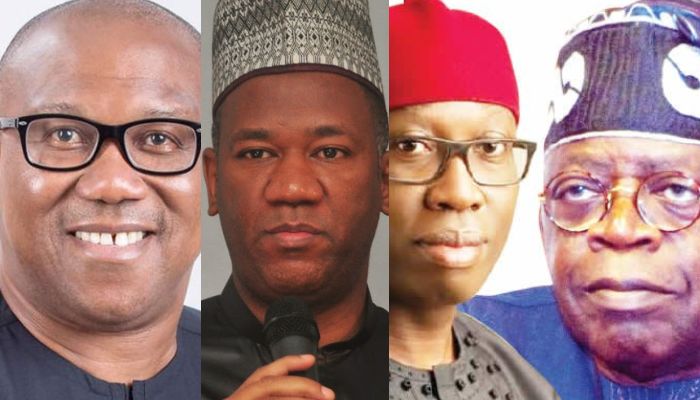
Next year’s presidential elections, therefore, present us a fresh opportunity to do a total rethink, call it re-jig and introspection. In that regard, so far, we have identified three major frontline political parties. The one is the ruling All Progressive Congress, the APC, having Senator Bola Tinubu and Kashim Shettima as flag bearers. The other is the Peoples Democratic Party, PDP, having Alhaji Atiku Abubakar and Governor Ifeanyi Okowa, as flag bearers.

Then the third is the Labour Party, having Peter Obi and Datti Baba-Ahmed as flag bearers. Apart from the names of the individuals in the first and second political parties, both APC and PDP are like Siamese twins. They are populated by the very same class of Nigerian politicians who have ruled Nigeria from 1999 till date; and who have crisscrossed effortlessly between the two parties. The results of their years of governance, like score cards, are on the table for every Nigerian to behold. It shows abysmal performance in all key sectors of human and public affairs.

Our security situation is in tatters, with various security agencies at the lowest ebb of their sense of devotion and patriotism. Fear of death, kidnap and payment of ransoms have become daily experiences for Nigerians when travelling, and even while in their homes. The economy has nose-dived to the point where government is said to now borrow to address recurrent expenditures, thereby totally abandoning capital projects. The result has been mind-shattering inflationary rates that have left every citizen living below acceptable levels of existence; while pushing many others into stealing and corrupt practices. Electricity supply challenges have been intractable. The educational sector has shamefully been in total comatose. Healthcare delivery is unaffordable, and nearly absent; yet the political elite prefer going on medical tourism abroad. In short, the citizens have been left wondering why nothing seems to work, and are daily seeking after greener pastures in other climes. Worst of all, the entire Nigerian brand, represented by our Flag, has suffered grave damages!

Then, here comes Peter Obi and Datti Baba-Ahmed; the duo with clear articulation of solutions to these myriads of challenges. They came from what you may call the political underdog class, but equipped with high moral and ethical dispositions never before seen in Nigeria’s political space. They seem like a dream reality for the Nigerian class of youthful voters. They also present the fresh hope for the many otherwise disenchanted adult voter population, all of whom have ‘seen it all’ with the crop of charlatans who have occupied the political space in the past twenty plus years in Nigeria.

In short, the Peter Obi- Datti Baba-Ahmed team has the following going for it:

  1. Clarity of understanding about the myriads of challenges facing Nigeria and Nigerians.
  2. Clarity of applicable solutions for each challenge.
  3. Background in private sector attainments that show grit, capability to generate wealth, integrity and passion to excel.
  4. Zero tolerance for the usual corrupt ways of acquisition of political power in Nigeria.
  5. Manifest show of love for the masses of Nigeria and determination to turn around the fortunes of the country through clearly articulated ideas and programmes.
  6. Uncommon show of simplicity and humility, conveying a sense of ‘not business as usual.’
  7. Transparent records about self, past achievements, attainments and associations.
  8. Impeccable academic and professional exposures that guarantee capacity to address the challenges of Nigeria.
  9. Uncommon ability and flair to clearly articulate believable road maps for deliverables.
  10. Detribalized approach to issues of national concerns, devoid of primordial sentiments such as religion and ethnicity.
  11. Finally, these two gentlemen have age and health in their favour, and have been able to effortlessly elicit revitalization of genuine hope and sense of patriotism, once more, among Nigerians, especially youths, who for many decades have remained aloof from politics and governance.

Even INEC has become a beneficiary, as new enthusiasm is being generated and galvanized by Peter Obi-Datti Baba-Ahmed towards electioneering processes in Nigeria.

It is for these reasons, and many more which space would not immediately permit me to state, that I highly recommend the flag bearers of the Labour Party, Peter Obi-Datti Baba-Ahmed to you. Be objective and remember that your vote for them amounts to birthing a new Nigeria.

A GENUINELY CONCERNED NIGERIAN.

July 23, 2022 0 comments
0 FacebookTwitterPinterestThreadsBlueskyEmail
OpinionHeadlines

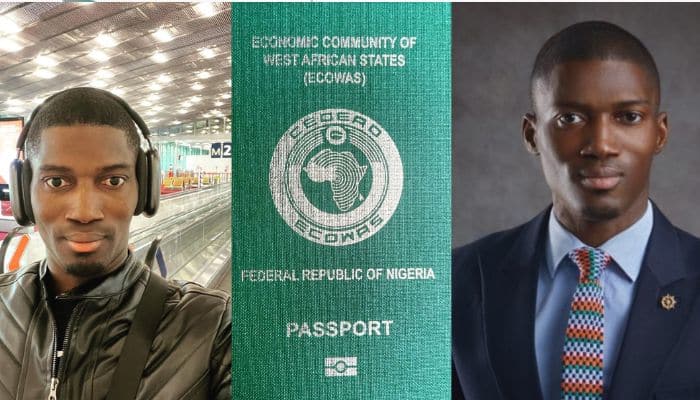
The Green Passport Needs Urgent Revamping

by Folarin Kehinde July 22, 2022
written by Folarin Kehinde

By: Ololade Otayemi
CEO at The Orbra Company | Startup Mentor at Faster Capital, Dubai, UAE | Partnerships and International Business Lead at NBWSM, GA, USA | Ex Chief of Staff at Ventures Platform NG

The green passport needs an urgent perception revamp. My work requires me to travel around the world often. When I present my green passport across the world, i often get a different treatment.

The warmth and smiles enjoyed by people before me sometimes changes very quickly. The guys with the blue, red etc passport are treated like kings and those with the green passport… well… In October 2021, i had to be in 6 cities across 4 continents in the space of 2 months, i saw this happen almost back-to-back at most airports.

 In one of the countries in Europe, i was asked some really annoying questions and delayed unnecessarily because apparently i had a special visa that they think did not tally with the color of my passport (if you know what i mean). I wondered if I’d get the same treatment if i carried a different colour of passport. Most likely not. Recently, I needed to travel again and this time, the discrimination was by my fellow Nigerians at our own airport, the people with other passports were treated much better.

Yesterday, i got news that one of the countries I frequent and I’m starting a business in has suspended the easiest and fastest visa process they have just for Nigerians.

Basically, because our people have misrepresented us and it now affects us all.

Another time, i was stuck in another airport in Europe because I missed a connecting flight, which by the way, was the fault of the airline. I was told to find a chair in the airport to spend the night. Meanwhile, i heard a story of my wife’s cousin who holds a blue passport and his country almost grounded an airport because he missed his flight and his family couldn’t reach him. I had to insist on the airline getting me a hotel and treating me better and THEY DID!

This reminds me of one of @feladurotoye saying “a third-class citizen of a first- world country will be treated better than a first-class citizen of a third-world country”

We need to get Nigeria right as a matter of urgency! JAPA is not the solution. Please go get your PVC!

In all of this, I am Nigerian and I am proud to be one!

July 22, 2022 0 comments
0 FacebookTwitterPinterestThreadsBlueskyEmail
OpinionHeadlines

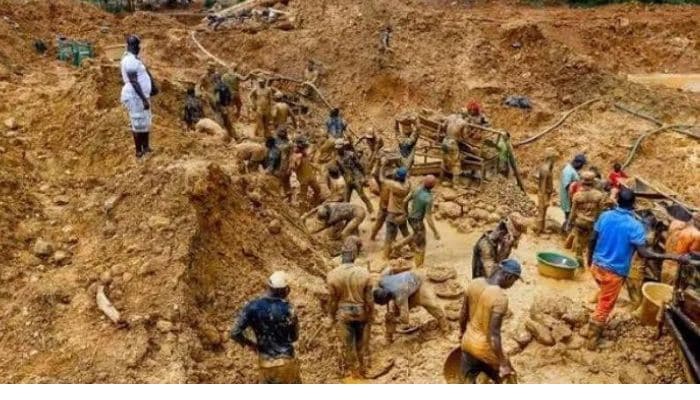
Proposed Mining Ban Will Skyrocket Insecurity In Nigeria; social scientist

by Folarin Kehinde July 22, 2022
written by Folarin Kehinde

Any ban on mining activities in Nigeria will create the highest level of insecurity ever witnessed anywhere in the World.

I can bet my life that Northern economy will completely collapse if mining activities are banned. Already the Nigerian economy is headed south!

All the anti-social groups operating in the North will finally have great harvests of members if Mining is banned.

Please the your Ministry of Mines did not tell you, the solid mineral sector in Northern Nigeria directly employs over 5 million people, and indirectly employs over 20 million people with its multiplier effect. Most of those directly employed are highly knowledgeable in the use of explosives, one of the major required materials in mining. let do ourself a favour to guess what will happen in Nigeria if about 30% or more of 5 million of people knowledgeable in explosives are thrown out of legitimate employment to economic uncertainties!

Such an idea should never be contemplated. It is a potentially nuclear idea! No one will come out of it. The government may not be aware that the recent drop in criminalities in Nasarawa State is because of the influx of Chinese in Nigeria looking for lithium bearing minerals.

As a social scientist, who have studied the relationship between the solid mineral sector and crime, I can bet my money that if mining is stopped today in Nigeria, either of two things will happen: it is either the policy is ignored, or the level of insecurities the thoughtless policy will create, will threaten cities like Abuja, which is sharing boundaries with Nasarawa, Kogi, Niger & Kaduna, major mining states.

This is dangerous and must not be entertained!

Ede O.G Nigeria

July 22, 2022 0 comments
0 FacebookTwitterPinterestThreadsBlueskyEmail
Newer Posts
Older Posts

Recent Posts

  • I am excelling in my job as minister of power – Adelabu

    March 24, 2026
  • MC Oluomo Visits NURTW National Secretariat After Failed Takeover Attempt

    March 24, 2026
  • JUST IN: Ex-AGF Malami Breaks Silence After EFCC Takes Over Abuja Residence

    March 24, 2026
  • Gunmen abduct worshippers during church service in Kwara

    March 23, 2026
  • REA, NDDC partner to boost electricity in Niger Delta

    March 22, 2026

Usefull Links

  • Contact Page
  • About Leading Reporters
  • Contact Us
  • Headlines
  • Investigation
  • Exclusives
  • Opinion
  • Business
  • Facebook
  • Twitter
  • Instagram
  • Linkedin

@2021 - All Right Reserved. Designed and Developed by PenciDesign


Back To Top
Leading Reporters
  • Featured
  • Politics
  • Opinion
  • Business
  • Entertainment
  • Sports
  • About Us
  • Contact