Leading Reporters
  • Headlines
  • Health
  • Business
  • Exclusives
  • Investigation
  • Entertainment
  • Opinion
Wednesday, August 5, 2026
Hot
Onaiyekan to Tinubu: Catholic Bishops Have Said Enough,...
Nigeria not short of gas but short of...
How Nigeria’s Mineral Wealth Is Being Handed to...
NAFDAC DG Vows Serious Consequences for Manufacturers Violating...
Peter Obi Reaffirms Commitment to Single Term Governance:...
#FixPolitics demands probe, accountability in ‘fake agency’ scandal
President Tinubu announces 26 new appointments
Annie Idibia Denies Reunion With Ex-Husband 2face, Says...
ICRITR Director, Prof. Ngozi Egbuna, Honoured with Academia...
UNIZIK inaugurates Afreximbank-backed trade research centre to advance...
  • About Leading Reporters
  • Contact Us
Leading Reporters
Advertise With Us
  • Headlines
  • Health
  • Business
  • Exclusives
  • Investigation
  • Entertainment
  • Opinion
Hot
Onaiyekan to Tinubu: Catholic Bishops Have Said Enough,...
Nigeria not short of gas but short of...
How Nigeria’s Mineral Wealth Is Being Handed to...
NAFDAC DG Vows Serious Consequences for Manufacturers Violating...
Peter Obi Reaffirms Commitment to Single Term Governance:...
#FixPolitics demands probe, accountability in ‘fake agency’ scandal
President Tinubu announces 26 new appointments
Annie Idibia Denies Reunion With Ex-Husband 2face, Says...
ICRITR Director, Prof. Ngozi Egbuna, Honoured with Academia...
UNIZIK inaugurates Afreximbank-backed trade research centre to advance...
Leading Reporters
Leading Reporters
  • Headlines
  • Health
  • Business
  • Exclusives
  • Investigation
  • Entertainment
  • Opinion
Copyright 2024 - All Right Reserved
Home > Opinion > Page 3
Category:

Opinion

Opinion

NCC: A Digital Enabler of the Renewed Hope Agenda

by Folarin Kehinde May 30, 2024
written by Folarin Kehinde

In Nigeria, a young tech-savvy and upwardly mobile population is teeming, and exploring derivable benefits of digital technologies. They are propelled by rapidly expanding internet access and steady broadband penetration, currently about 43 per cent. Our digital economy is poised for significant growth, positively impacting various sectors and benefiting the nation through enhanced connectivity and digital skills.

Digital transformation is happening globally at a record pace. During the Covid-19 pandemic, for example, remote work and virtual collaboration tools took centre stage; platforms such as Zoom, Microsoft Teams, and Google Meet became—and still are—essential for meetings, conferences and team collaboration. E-commerce and online retail have transformed how consumers seamlessly order and receive goods and services.

Even traditionally brick-and-mortar businesses are changing the ways they engage with their customers through introduction of digital solutions to improve the customer experience. It is a no-brainer that Artificial Intelligence (AI) and the Internet of Things (IoT) are revolutionising our lives for the better, whether in education, healthcare delivery, living, public services, energy management, and much more.

Suffice to say, that underpinning this global digital transformation is the indispensable role of telecommunications infrastructure. Universal, affordable, reliable and fast telecom services are becoming social rights, as mobile networks and data-centres form the backbone for digital transformation by enabling the storage and processing of large amounts of data as well as the integration of digital technologies into numerous use cases.

For President Bola Ahmed Tinubu, the Renewed Hope Agenda draws us all to a more promising outlook. Inherent in his agenda is the pledge to embolden and support the youth and women by harnessing emerging sectors such as the digital economy. In delivering this vision, the Honourable Minister of Communications, Innovation and Digital Economy, Dr. Bosun Tijani unveiled a blueprint appropriately titled – “Accelerating our Collective Prosperity through Technical Efficiency” with the goal of supporting Nigeria’s economic growth by enhancing productivity, facilitated by digital innovation.

Acknowledging the criticality of resilient telecommunications infrastructure to a robust digital economy, Dr. Tijani’s Strategic Agenda 2023 — 2027 sets targets to achieve a 50 per cent improvement in Quality of Service (QoS) by the end of 2024; to boost Nigeria’s broadband penetration rate to 70 per cent by the end of 2025; to deliver data download speed of 25Mbps in urban areas and 10Mbps in rural areas by the end of 2025; to provide coverage for, at least, 80 per cent of the country’s population, especially the underserved and unserved populations by the end of 2026; to reduce the gap of unconnected Nigerians in rural areas from 61 per cent to less than 20 per cent by 2027; and to secure between 300 per cent to 500 per cent increase in broadband investment by the end of 2027.

Drawing from the Strategic Agenda of the Ministry, Dr. Aminu Maida, the Executive Vice Chairman and Chief Executive Officer of the Nigerian Communications Commission, (NCC) has emplaced three Strategic Focus Areas for the Commission: The Consumers, the Industry and Licensees; and the Government.

Dr. Maida’s approach to delivering on President Bola Tinubu’s Renewed Hope Agenda comes from the recognition that each of these stakeholders has a unique perspective and different, occasionally-paradoxical expectations of the Commission. His goal is to forge a path that carefully balances each stakeholder’s needs while meeting their expectations.

Consider the Consumers—who are central to Dr. Maida’s focus—for example. His approach focuses on ensuring that they receive an enhanced Quality of Experience, beyond the narrow and very technically-evaluated Quality of Service. Quality of experience takes into account all touch points along the consumers journey in using telecom services from selection, through on boarding, usage, support and even off-boarding.

This means that, consumers are empowered to make the right network selection, enjoy a seamless onboarding into the network of their choice, enjoy quality service at fair costs, receive responsive customer service and enjoy protected off-boarding where they chose to leave the network.

To address consumer complaints on data depletion, the Commission has directed Mobile Network Operators (MNOs) to conduct an independent audit of their billing systems and is concluding a consultation process to simplify tariff plans. These initiatives would provide enhanced transparency to the consumer.

The Commission, under Dr. Maida, rather than taking a national outlook on data collection for Quality-of-Service delivery, has adopted an approach where more granular data is collected from operators and analysed to determine quality of service at very small, local levels, to allow the deployment of optimised solutions or regulatory actions where needed.

On the side of the Industry and Licensees of the Commission, Dr. Maida’s focus is aimed at forging a resilient industry and enhancing the delivery of regulatory services. Since he came on board, the Commission has shown commitment to tackling industry debt issues more seriously. It has also embarked on critical advocacy initiatives to address long-term challenges in the sector, including advocacy for designating telecom infrastructure as Critical National Infrastructure, as well as successfully persuading over six states to waive Right of Way (RoW) fees, even as he initiates discussions with more states.

The Commission, under Dr. Maida’s leadership, is equally engaging with the Presidential Committee on Fiscal Policy and Tax Reforms towards addressing multiple taxation issues in the telecoms sector.

In order to ensure that the industry is in line with current realities, the Commission is also undertaking a review of its extant Regulatory Instruments and Licensing Frameworks. For instance, Quality of Service Regulations have been reviewed to incorporate Key Performance Indicators (KPIs) for 5G and other participants that are critical to the Quality of Service.

By achieving expected QoS KPIs, high-speed internet connectivity, and forging a resilient and innovative telecommunications industry, the Commission is actively supporting the Ministry’s vision of boosting economic growth and productivity through technological innovation, delivering on the promise of Renewed Hope for all Nigerians.

May 30, 2024 0 comments
0 FacebookTwitterPinterestThreadsBlueskyEmail
Opinion

Call for State of Emergency in Rivers State: A Plea for Restoration and Unity

by Folarin Kehinde May 28, 2024
written by Folarin Kehinde

Written By Wabiye Dikio Idoniboyeobu (ANIPR)

As a citizen of Rivers State who left in 2015, I have watched from afar with growing concern as my beloved home has descended into a state of disarray and division. It is with a heavy heart and a deep sense of urgency that I call upon the President of Nigeria to declare a state of emergency in Rivers State. This drastic measure is necessary to address the severe and persistent issues that have plagued the state since 2015, and to pave the way for a brighter and more unified future.

Since 2015, Rivers State has been fractured into two highly toxic factions. This division has not only polarized the citizenry but has also severely hampered governance and equitable development. The once vibrant and progressive state is now mired in a climate of animosity and dysfunction, where unconstitutional actions have often dictated governance. This is a stark departure from the principles of democracy and the rule of law, which should be the bedrock of our society.

The suspension of four lawmakers loyal to the Governor during plenary, the subsequent demolition of the Assembly, and the defection of other assembly members loyal to the Minister of the FCT have set the state on a roller coaster of confusion. There is a clear breakdown in legislative order. These actions seem to have rendered the state without a functioning assembly, plunging it further into a state of anarchy. Without a legislative body to provide checks and balances, the state is effectively without the necessary framework to ensure accountable governance.

The current trajectory of Rivers State is alarming. The state’s descent into lawlessness and instability not only threatens the well-being of its citizens but also undermines the potential for any meaningful development. The toxic political climate has created an environment where progress is stifled, and the needs of the people are overshadowed by the relentless power struggles.

Despite this bleak picture, there is a silent majority in Rivers State that remains apolitical and committed to the state’s progress. These individuals, who strive for development and prosperity, are stymied by the pervasive toxicity that has gripped the state. Their voices are drowned out by the cacophony of political infighting, leaving them powerless to effect the change that Rivers State so desperately needs.

In light of these circumstances, I implore the President to declare a state of emergency in Rivers State. This intervention is critical to restore order, ensure the rule of law, and create an environment conducive to development and unity. A state of emergency would provide the framework to reset the state’s governance, allowing for the establishment of a functioning assembly and the implementation of constitutional actions.

The people of Rivers State deserve a government that works for them, not against them. They deserve a state where development is spread equitably, and where governance is guided by the principles of democracy and the rule of law. By declaring a state of emergency, the President can help to restore sanity, promote development, and ultimately, heal the divisions that have torn Rivers State apart.

It is time for bold and decisive action. The future of Rivers State hangs in the balance, and only through a concerted effort to address these deep-rooted issues can we hope to reclaim the state’s lost glory. Let us come together to support this call for a state of emergency, for the sake of our beloved Rivers State and its people.

May 28, 2024 0 comments
0 FacebookTwitterPinterestThreadsBlueskyEmail
Opinion

SIM Boxing, And The Unboxing of a Crime Syndicate

by Folarin Kehinde May 8, 2024
written by Folarin Kehinde

Boxes have a multitude of uses, and the word “box”, lends itself to diverse contexts. For “Ajala Travelers,” the box is a necessity for keeping goods for their endless journeys. In literature, idiomatically, it can be said that “one has been boxed into a corner;” another might say to deal with a conundrum: “think outside the box;” then there is the “Pandora’s box” that no one wants opened. To “box one’s ear’s” refers to a hit on the head, especially around one’s ears. For those who celebrate Christmas, “Boxing Day,” which is the 26th of December, the second day of Christmastide is not to be joked with: A day to unbox gifts. So much for the box.

Another type of boxes exists in the telecommunications world: The SIM Box. Have you ever received an international call but saw a local phone number ring in? That is SIM Boxing in action. Let me explain.

SIM boxing happens when a person uses a special equipment, what is called a SIM Box containing tens to hundreds of SIM Cards—from 32, to 96, to 512 and more SIMs —to terminate international calls by bringing in the international call into the SIM Box using internet connections and regenerating the calls to the called party from one of the hundred SIMs in the box. This way, the called party will see the local number of the SIM from the SIM Box, and not the original international number calling.

With SIM Boxes, the syndicate charges international call carriers lower rates than what regular Nigerian telecommunications operators would charge, as they do not have to pay the full cost of maintaining and operating a phone network. Basically, they are bypassing the normal route for international phone call termination to terminate international calls cheaply and making windfall profits off it.

Take for instance, a telecommunications operator in Nigeria would ordinarily charge international carriers 10cents per minute for terminating an international call in Nigeria. However, by routing the call through a SIM Boxing syndicate, the international telecommunications carrier only pays a fraction of the charge to the syndicate, say 5cents per minute and does not have to pay the full 10cents per minute charge.

The SIM Boxer will terminate this call to the called subscriber at a rate of, say N15 per minute using one of the SIM cards in their SIM Box. The SIM Boxer thus makes a killing from the differential between the rate charged to the international carrier and the rate paid to telecommunications operators whose SIM they utilise in their SIM Boxes, at the expense of our national security and income of mobile network operators and quality of our service to consumers.

Asides the revenue loss that local mobile network operators suffer courtesy the activities of these syndicates, networks face congestion around areas where the illegal call routings via SIM Boxing occurs. With the huge traffic from the boxes, callers around the area see more dropped calls, poor call quality, and slower data speeds.

The introduction of the linking of National Identity Numbers (NIN) to SIMs is one way the Federal Government has worked to tackle this criminal enterprise. With every SIM in the country being linked to an NIN, an identity is tied to the owner of each line, and regulators now have visibility of ownership. That is not all. There is also the “Max-4 Rule” where a subscriber is not allowed to have more than four lines per network operator linked to his NIN. With this rule in place, coupled with the NIN-SIM Linkage, every telephone subscriber in Nigeria would not just be accurately identifiable but limited to having only four telephone lines per subscriber.

To enforce this rule, the Nigerian Communications Commission (NCC) on the 29th of March 2024 announced the deadline for Mobile Network Operators to bar all subscribers who had five lines and above, and whose NIN failed the verification test of biometrics matching.

Over the last few weeks, sources within the NCC have confirmed cases where a single NIN was linked to over 100,000 lines. Some NINs had well over 10,000 SIMS linked to them, others over a thousand, others had hundreds. Many have questioned the reports and asked, what would any single reasonable person be doing with these number of lines? Justifiable questions, because no sane person—who is not running a business—should own more than five SIM cards.

Given the ‘Max 4 Rule’ in place and the NIN-SIM Linkage Policy, SIM Boxers have been boxed into a corner. The applications they use require tens to thousands of SIM Cards, and the imperative to stay anonymous. If these policies are well and fully implemented, this is the death knell for SIM Boxing merchants.

But the regulator, NCC needs to be fast and ready for the battle ahead. SIM Boxing is a billion-dollar criminal enterprise. They are not going to go down without a fight. It is like taking a bone being chewed from the mouth of a bulldog.

Already, the battle seems to have kicked off. A lawyer, Barrister Olukoya Ogunbeje has recently taken the Federal Government, NCC and Mobile Network Operators to court, claiming that the barring of SIMs not linked to NINs goes against his fundamental human rights, and has cost him the loss of business opportunities. Anyone who has Nigeria’s interest at heart ordinarily supports this policy. It then does not add up seeing a so-called activist lawyer take up such a matter that is clearly against the public interest—unless this is the Haka cry of SIM Boxers.

A most interesting observation with his case is that it is not even a class action, but individually driven. It begs the question then, who is funding Barr. Olukoya Ogungbeje? What is his interest in fighting this policy that puts paid to the business of a criminal enterprise? Is he funded by interests in the SIM Boxing world? Time would tell. But in the meantime, NCC must go head on without fear or intimation and clean the Augean stable of SIM ownership in Nigeria.

May 8, 2024 0 comments
0 FacebookTwitterPinterestThreadsBlueskyEmail
Opinion

COKER-ODUSOTE AT 40: AN EXAMPLE OF AN INDUSTRIOUS TECHNOCRAT IN THE PUBLIC SECTOR.

by Folarin Kehinde April 26, 2024
written by Folarin Kehinde

By Ayodele Babalola

Today, April 26, marks an extraordinary milestone as Engr. Abisoye Coker-Odusote, the Director-General of the National Identity Management Commission (NIMC), one of Nigeria’s finest female professionals celebrates her 40th birthday.

Reflecting on Coker-Odusote’s 40 years of existence, it is clear that her journey had been nothing short of extraordinary and remarkable strides.

From humble beginnings to her current position at the helm of NIMC, she has overcome numerous challenges and obstacles with grace and resilience. Her story is a robust proof of perseverance and determination. It is a stark reminder that with hard work and dedication, anything is possible.

For those who have followed her trajectory closely, Abisoye Coker-Odusote embodies the essence of visionary leadership. This is no surprising given the altitude of her fledging career. Her rise to prominence has been characterized by a relentless pursuit of innovation and efficiency. Since her assumption of office last year as the NIMC boss, the commission has undergone a profound evolution, embracing cutting-edge technologies and pioneering innovative solutions to address the challenges of identity verification and authentication in the country. Coker-Odusote has not only achieved extraordinary milestones but has also set new standards of excellence in the field of identity management.

Her leadership has led to unprecedented growth and progress in NIMC, significantly advancing the country’s digital identity infrastructure. One of Engr. Coker-Odusote’s most notable achievements is her relentless advocacy for the adoption of digital identity solutions, which enhance security, efficiency, and inclusivity. She has spearheaded groundbreaking projects that aim to expand access to digital identity services, particularly in underserved communities.

Under her guidance, NIMC has played a pivotal role in empowering millions of Nigerians with secure and verifiable identities, laying the foundation for a more inclusive and digitally enabled society. Additionally, she has expedited the enrollment and distribution of National Identification Numbers (NINs) to all Nigerians and legal residents while also streamlining and integrating existing identity databases across the country.

Engineer Coker-Odusote’s impact extends far beyond the confines of her role at NIMC. She is a tireless advocate for inclusive identity management policies, recognizing the fundamental importance of ensuring that every Nigerian has access to secure and reliable identification. Her advocacy efforts have contributed to greater awareness and engagement on issues of identity management, paving the way for meaningful change and progress.

To delve into her credentials and wealth of experience is to probe into a horde of narratives of excellence. With over 18 years of experience in managing complex and sensitive projects across various sectors, Coker-Odusote is a professionally trained tech enthusiast who has held roles that improved stakeholders’ engagements and execution of digital transformation projects.

She had once served as the General Manager/CEO of the Lagos State Infrastructure Maintenance and Regulatory Agency (LASIMRA), where she oversaw vital utility infrastructure providers – telecommunication, power, and gas operators – to promote standards and procedures in infrastructural development and maintenance.

Her impressive journey also includes serving as the Head of Information Technology & Communication at Bate Litwin, an engineering company working on projects such as Chevron ESA (JV with Atlas). Coker-Odusote’s diverse experience also encompasses her time in the United Kingdom and Nigeria.

Indeed, prior to the announcement of her appointment by President Bola Tinubu, she was the General Manager/CEO at LASIMRA where as, earlier noted, she supervised crucial utility infrastructure providers, including telecommunication, power, and gas operators.

Beyond her professional accomplishments, she is also a passionate advocate for gender equality and women’s empowerment in STEM fields. As a trailblazing female leader in a male-dominated industry, she serves as a role model and mentor to aspiring women in technology, inspiring them to pursue their dreams and break down barriers to success. Through her leadership and advocacy, Coker-Odusote is helping to create a more diverse and inclusive workforce, where talent and innovation thrive regardless of gender.

On this day, we at NIMC pay tribute to Coker-Odusote’s outstanding achievements, innovative leadership, unwavering commitment to excellence, and profound impact on Nigeria’s identity management landscape.

She is an inspiration to us all, motivating us to continue striving for excellence and to never lose sight of our goals. As she enters a new decade of her life, may her journey be filled with even greater success, fulfillment, and prosperity.

April 26, 2024 0 comments
0 FacebookTwitterPinterestThreadsBlueskyEmail
Opinion

Kwankwaso’s Plot to Oust Ganduje

by Folarin Kehinde April 23, 2024
written by Folarin Kehinde

By Khalid Ibn Abubakar

Political power play, power game as well as high political interests aggregation, are normal variables that define partisan politics. However, when these correlates are stretched beyond certain limits, there may be the likelihood of ushering in very dangerous instinctual reactions that have huge capacity for destabilizing the polity.

For all followers of the politics of Kano, Northwest Nigeria, particularly between May 29, 1999, to May 29, 2007, there is a tie-back to the historical precedence of the joint electoral victory between Alhaji Rabiu Musa Kwankwaso as then governor-elect and Alhaji Abdullahi Umar Ganduje, PhD, as deputy governor-elect, respectively.

These two gentlemen were members of the same political party, the Peoples’ Democratic Party {PDP}, but they had definitely passed through varying and divergent socialization processes. Even as it is a known fact that all deputy governors in Nigeria are hardly allowed to exercise full political authority, the duo of Alhaji Rabiu Musa Kwankwaso and Alhaji Abdullahi Umar Ganduje managed to work together in harmony during their first tenure.

For Alhaji Kwankwaso to consider the inclusion of Ganduje as running mate for the second term, however, it was a tug-of-war. Elders of the party, eminent citizens and significant others, intervened, persuaded and eventually prevailed on Kwankwaso to restore Ganduje to the joint gubernatorial ticket as running mate. They expectedly won the elections. So, they worked together for eight years.

Ganduje was to succeed Kwankwaso as governor, perhaps against the wishes of his former political principal and leader who, after his tenure as governor, was rewarded with a high end political portfolio as Nigeria’s minister of defence by the then President Olusegun Obasanjo.

Over time, Ganduje has achieved a solid political stature which tended to overshadow his former principal. The result is that Kano has been split between the two tendencies. The particular human behavioural trait at play here is none other than the human Ego. As a student of the Freudian tradition, one is quick to point out that the major behavioural set back that any political leadership, must avoid in his or her political career, is by avoiding a negative inter-play of the different roles of the three major clinical psychology properties that regulate the impulse of all human, namely, Id, Ego and Superego, respectively.

These three, when negatively influenced, can bring about the downfall of anybody who is somebody, irrespective of his or her social stratification in the larger society.

It is therefore imperative to point out within this medium that the ongoing struggle for political power, relevance and advantage between a former political principal, Alhaji Kwankwaso, and his “junior” associate, Dr. Ganduje — who by way of chronological and mental age is much more senior and better educated than his erstwhile political boss— can all be traced to politics. That is why there is a desperate plot by Kwankwaso and his group to oust Dr. Ganduje as the National Chairman of the All Progressives Congress (APC).

Part of the plot is the sinister scheme to destabilize the Tinubu administration using veiled propaganda, campaign of calumny and allied methods to tarnish APC and its leadership with the hope that such a distraction will add to the political fortunes of Kwankwaso and his NPP in Kano. The calculation is that once Ganduje is out of the way, Kwankwaso and his acolytes can have the whole of Kano to themselves.

Not surprisingly, the whole machinery of the Kano State Government has been deployed to achieve this end.

Dr. Ganduje in his eight years as governor of Kano State produced a very credible democratic scorecard, whose sectoral achievements are cogent and verifiable by any interested member of the public. Apparently not getting adequate results from all the failed plots so far executed by him and his lackeys, Alhaji Rabiu Musa Kwankwaso does not seem to have any iota of respect for seniority and civilized order.

Devoting and ploughing all his energies towards clandestine schemes aimed at pulling down the personality of Alhaji Ganduje who had paid his dues in society by Allah SWT’s divine blessings, is akin to trying the patience of the Almighty ALLAH SWT. The bitter jealousy of Kwankwaso and his men can be further understood when one considers the fact that Ganduje is an urbane intellectual who obtained his Doctor of Philosophy degree {PhD} at the famous University of Ibadan, in 1993, following his first degree in 1975, when Alhaji Rabiu Musa Kwankwaso had not dreamt of enrolling in any Higher School Certificate program.

The conditioned behaviour, which had always propelled Alhaji Rabiu Musa Kwankwaso, who has an affinity for wanting to show political dominance over every citizen from Kano State as an infallible dictator, was what made eminent personalities like Alhaji Ibrahim Shekarau and Distinguished Senator Jibrin Barau, just to mention a few, not stay in the same political camp with him.

In Kwankwaso’s world, his word is law. He cannot tolerate democratic tenets. He cannot work with intellectually endowed people. For him, getting Dr. Ganduje out of his current position as the National Chairman of the APC is his greatest headache. He is probably calculating that Ganduje’s ouster will enable him (Kwankwaso) grab a ministerial position as a pre-electoral bargaining condition and convince President Bola Ahmed Tinubu that he has the entire Kano State in his pocket and that his NNPP is waiting in the wings to play ball.

The NNPP gang is full of hypocrites. They demand integrity from others while lacking it themselves. An example: Governor Abba Kabiru Yusuf has appointed Kwankwaso’s son as a member of the Kano State Executive Council. It’s payback time. They are sharing the spoils as all the other parties do. There is no difference between the way they are carrying on and the way Ganduje ran the government. If anything, Ganduje was better. Time will tell.

When Governor Yusuf eventually finds out that he is not allowed to have a mind of his own and that Kwankwaso is supposed to be all-knowing, the current cosy relationship between them will disappear. Owing to the fact that Kwankwaso would always want every eminent political citizen in Kano State to submit to his overbearing and dictatorial tendencies, all who flock around him must play the dummy to be considered loyal.

In their desperation to pull down Alhaji Abdullahi Umar Ganduje, NNPP hirelings have embarked on senseless moves to procure fake “APC Executive Members”, at the ward and state levels, who are their sidekicks. They’ve tried impersonation, blackmail, open threats and all sorts of sabotage to no avail.

From the grapevine, Alhaji Rabiu Musa Kwankwaso’s most pressing need now is how best he can penetrate the APC federal administration to get a plum ministerial appointment when the president rejigs his cabinet as expected. To achieve this, he is persuaded that he has to destroy Dr Ganduje. But, if history is anything to go by, all their schemes will fail. For, history teaches us that those who plot the destruction of others often fall on their own sword.

April 23, 2024 0 comments
0 FacebookTwitterPinterestThreadsBlueskyEmail
Opinion

Service delivery: Nigeria Customs takes the lead 

by Folarin Kehinde April 7, 2024
written by Folarin Kehinde

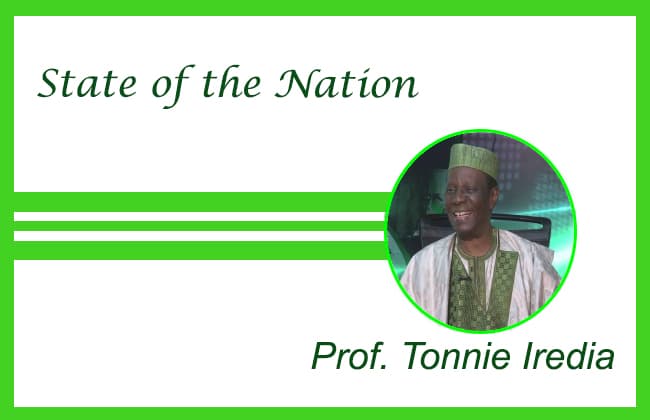
By Tonnie Iredia
 

One thing the flamboyant electioneering campaigns leading to the 2023 presidential elections did not expatiate upon was how the first budget of the new administration would be funded to meet the lofty campaign promises.

The expectations became heightened when it became obvious that the inauguration of a new Nigerian President on May 29, 2023 did not come along with a magic wand to arrest the country’s deteriorating economy. Instead, the strategies designed by the new President, Bola Ahmed Tinubu only emphasized some future relief to be preceded by immediate severe pain on citizens. The first signs that the supposed future relief was achievable emerged a few days ago following the news of a huge increase in revenue generation by the Nigeria Customs Service NCS. According to media reports, the Service pulled off a spectacular performance to collect the sum of N1,347,675,608,972.75 in the first quarter of 2024.
 
The impressive outing by the NCS must have gladdened many hearts but to those who are familiar with the antecedents of the current leadership of the Service, it didn’t come as a surprise. Some analysts are even looking forward to greater achievements during the tenure of Bashir Adewale Adeniyi who was recently picked as Comptroller General of Customs by President Bola Tinubu.  Industry watchers are generally agreed that in every respect, Adeniyi is a square peg in a square hole. For the no less than 3 decades that he has been in service, he has become known for achieving great things. Some 4 years ago for instance, he was singled out for an award in appreciation of his pivotal supervision of the seizure of $8,065,612 million cash at the Murtala Mohammed International Airport, Ikeja, Lagos in January 2020.
 
By his posture, CG Adeniyi effortlessly makes a case for our agencies to be headed by intelligent and professional career officers who had over the years been prepared for the Chief Executive position. In which case, they would   have acquired many years of cognate experience by passing through several critical segments of the relevant entity. Such officers best know the strengths and weaknesses of their organizations; they know what button to push, who to deploy to where and when and how to make progress by not just increasing activities but also by blocking loopholes through which all gains normally vanish within seconds. Organizations such as the Customs Service should therefore never be where to post loyalists or where to reward friends and relations who know nothing about the peculiar nuances of the institution concerned.
 
But no matter the institution, modern trends suggest that the best way to successfully run an organization is to realize the inevitability of technology which now serves as the redeeming feature of humanity. In this age of technology, it is no longer reasonable to rely on analogue platforms to achieve sustainable progress. CG Adeniyi being a strategic researcher and communicator must have among other things quickly discarded the physical pursuit of smugglers in favour of aerial surveillance just as he must have followed global realities by installing ICT and other digital facilities for operations especially smart scanning machines in airports. What is certain is that because technology changes daily making it possible for yesterday’s kits to show signs of obsolescence even before they are unparked, identifying the latest facilities that can place operations above criminals is now an imperative.
 
Remarkably, the new Customs administration did not wait for the media to begin to speculate on its activities when it decided on its own that every societal institution owes accountability to the public for whose sake it was established. It is hoped that all government agencies would emulate the NCS by institutionalizing the practice of occasional media briefings in furtherance of public enlightenment. Those who operate differently have so much to lose because by the time the media speculates on their activities warranting rejoinders from them, the first casualty is institutional reputation especially at a point of collective frustration caused by overbearing inflation. If the NCS has made 122.35 percent progress in its revenue generation compared with same time last year, what have others done? 
 
They need to let us know because the world is now in the age of open government. The narratives of a deceitful colonial era in which operatives were only to be seen but not heard are no longer fashionable. Nigeria must progress into becoming one of the world’s greatest communicating nations. The reverse bears anarchy like the recent situation in Kaduna state where some party stalwarts were unhappy with Governor Uba Sani for revealing the huge debts and heavy contractual liabilities inherited by his administration. More annoying is the alleged suspension of the woman leader of the state chapter of the APC, Maryam Suleiman for berating Governor Sani who supposedly rubbished the former Governor. Penalizing a citizen for expressing an opinion should only happen in a dictatorship and not a democracy.
 
Government officials at all levels ought to perform well and at the same time inspire public confidence by taking the people along. At the federal level, the repeated assurances by President Tinubu that the buck stops at his desk cannot be used by agency heads to undermine accountability to the public. In fact, Tinubu’s acceptance of vicarious liability presupposes that he is ready to fire all those not performing. This is because a time for economic depression is the best time for activities here and there – not speeches but actions that have quick wins. At the beginning of this administration, there was a lot of public expectations from the Immigration Service due to the proactive posture of Tunji Ojo, the Interior Minister. So, when can Nigerians apply and seamlessly pick up their international passports? Last week, the story was that efforts were being made to print our passports locally. Is that an objective that falls within the realm of rocket science?
 
We must however not forget to pay tribute to two private sector leaders, namely Allen Onyema and Aliko Dangote that are bringing messages of hope to the homes of citizens. But for Dangote, life would have been much harder at the rate the price of Automative Gas Oil (diesel) was rising and rising. Happily, Dangote Petroleum Refinery has now forced down the pump price of the product to around N1,225 from about N1, 700 per litre. Similarly, Allen Onyema has used his airline, Air Peace to halt the conspiracy of the west to kill the naira. With his entry into the Lagos-London route, all carriers hitherto exploiting Nigerians are now in disarray. It is hoped that other business owners and executives would emulate Dangote and Onyema so that Nigeria can rise again. It is therefore not too much for government to formally commend the two patriots to strengthen them to keep hope alive.
 
A time like this when people are striving to survive is certainly not the time for any Nigerian business to maximize profit.  It is therefore unfortunate that our power distribution companies have convinced themselves that this is the best time to raise tariffs. It is worse that they are able to persuade their regulator to accept a rise by as much as 300 percent. If precedent is anything to go by, the arrangement of categorising consumers into bands will as usual, lead to profiteering. It will be recalled that during the Buhari administration, metres paid for by government to be freely distributed to consumers were surreptitiously sold by the DISCOS. With some consumers already claiming to have been short-changed, on band categorization, there is no better time than now for the regulator to operate with a human face.
 
It would be against the run of play if public sector agencies are waiting to be prompted to up their performances so as to give room for the rest of us to breathe.  May be the Nigeria Custom Service should take the lead again; this time not just in revenue generation but in curbing insider abuses. It is unfair that agencies extort huge sums of money from citizens in addition to approved payments before offering the service for which they were employed. CG Adeniyi would leave his name in gold if he can use technology to sanitize all the processes and procedures for obtaining services from customs operatives. Many citizens would be relieved if other Nigerian service provider executives can similarly act.
 

April 7, 2024 0 comments
0 FacebookTwitterPinterestThreadsBlueskyEmail
Opinion

The Information Immune Nigeria’s Stock Exchange and Lesson from EFCC Raid in Dangote Group

by Folarin Kehinde January 6, 2024
written by Folarin Kehinde

Nigeria is a special place. When the news broke that Economic and Financial Crimes Commission (EFCC) operatives raided the headquarters of Dangote Group, as part of investigations into possible misuse of foreign currency, I had expected that during the next trading day on the Nigerian stock exchange, the values of Dangote Cement and other companies in the Group would struggle.

But you know what? Investors did not care. It was similar to what happened when APC named Aliko Dangote as part of Buhari’s reelection committee member in 2019. On that one, investors did not pay attention also.

If this information does not move markets in Nigeria, what are investors trading on then? In the United States, Dangote properties would have suffered huge losses. But in Nigeria, just like in elections, no one cares about anything.

“We went to the head office of Dangote Group today to look into their books on the ongoing investigation on the abuse of the extant laws that govern the foreign exchange transaction during the tenure of Godwin Emefiele as CBN governor,” one of the sources told Reuters.

“Here, we are talking about multiple exchange rates and others. It is an ongoing investigation and it was the turn of Dangote Group today,”

Sure, they do not re-price in near-real time, but over weeks and months, they do re-price. That simply shows the level of our stock market development. It is not driven by data and most times, it is all about herding and speculations. Once in, they tune off, and even a possible criminal investigation in a company does not constitute risk! What a nation!

Count yourself lucky of being a Nigerian because you can get away with most things!

January 6, 2024 0 comments
0 FacebookTwitterPinterestThreadsBlueskyEmail
Opinion

EFCC Update: Taiwo Adeniran Highlights Ongoing Efforts Against Corruption in Nigeria

by Nelson Ugwuagbo January 6, 2024
written by Nelson Ugwuagbo

Gentlemen of the press members of the civil society groups. We wish to use this medium to commend the New EFCC boss Mr. Ola Olukoyede as the Executive Chairman of the Economic and Financial Crimes Commission, EFCC for the work done so far since his assumption of office.

We have it on good grounds the committed effort put in place for the recovery of funds stolen and prosecution of looters and the ongoing activities of the EFCC, to ensure all diverted public funds are recovered.

Transparency Advocacy for Developments Initiative (TADI) as an advocate for good governance, transparency and probity would continue to give the agency necessary support to attain its objectives of sanitizing the nation’s public offices.

We want to draw the attention of the New EFCC boss to ensured he and his team avoid been used to intimidate, embarrass citizens instead to do due diligence in order to sustain the reputation and dignity of the commission.

On the current exercise of the commission and effort to recover public funds diverted to private accounts by some enemies of the state.

We wish to state clearly that the tools of the graft agency should be use for what is in the interest of the nation and not to be use to intimidate, Oppress, embarrass or to serve as pay back time to citizens that have distinguished themselves while in public office in the verge to serve their father land.

We also called on the media to do due diligence in reportage and balancing of information at their disposal for national unity and peaceful co-existence of Nigerians.

We hereby pledged our unalloyed support to the current administration led by President Bola Ahmed Tinubu in his quest to reorganise the nation’s economy prosperity for Nigerians under his renewed hope agenda.

God bless Nigeria

January 6, 2024 0 comments
0 FacebookTwitterPinterestThreadsBlueskyEmail
Opinion

Economic Challenges Pose Difficulties for Festive Season

by Nelson Ugwuagbo December 20, 2023
written by Nelson Ugwuagbo

Dorcas Egwuje

As Nigerians gear up to celebrate the joyous occasion of Christmas, the rising prices of foodstuffs and fuel are casting a shadow over the festivities. The economic challenges faced by many Nigerians are making it increasingly difficult to fully embrace the spirit of the season.

Christmas, a time of togetherness and giving, holds significant cultural and religious importance for Nigerians. However, the cost of foodstuffs tends to soar during this period due to increased demand and market dynamics. This surge in prices is making it challenging for individuals and families to afford the necessary ingredients for traditional meals and celebrations.

The impact of rising food prices is particularly felt by low-income households, who already struggle to meet their basic needs. The inability to provide for loved ones and participate fully in the festivities can dampen the holiday spirit for many Nigerians.

In addition to the rising cost of food, the price of fuel is also a cause for concern during the Christmas season. Transportation plays a crucial role in enabling people to travel and reunite with their families. However, higher fuel prices translate into increased transportation costs, making it more difficult for individuals to visit their loved ones or travel to celebrate the holiday together.

This situation is especially burdensome for those who live far away from their families or have limited financial resources. The economic inequalities exacerbated by these rising prices can hinder the enjoyment of the holiday season for many Nigerians.

Efforts to alleviate the impact of rising prices during Christmas include government interventions such as price controls, subsidies, or social welfare programs. These measures aim to ensure that essential food items remain affordable for all Nigerians, regardless of their economic circumstances.

Furthermore, communities are coming together to support one another during these challenging times. Initiatives such as food drives, community kitchens, and resource sharing are being organized to ensure that everyone can experience the joy of Christmas, even in the face of economic difficulties.

As Nigerians navigate the festive season, it is crucial for both the government and communities to work hand in hand to find sustainable solutions. By addressing the rising prices of foodstuffs and fuel, they can ensure that the spirit of Christmas remains alive and accessible to all, fostering a sense of unity and togetherness.

In conclusion, while Christmas is a time of celebration and joy, the rising prices of foodstuffs and fuel are posing significant challenges for Nigerians. The economic hardships faced by many are hindering their ability to fully embrace the festive season. It is imperative for stakeholders to collaborate and implement measures that alleviate the burden on individuals, ensuring that the spirit of Christmas shines through, even in the face of economic adversity.

December 20, 2023 0 comments
0 FacebookTwitterPinterestThreadsBlueskyEmail
Opinion

Nigeria’s gale of demolitions: The missing point 

by Leading Reporters December 3, 2023
written by Leading Reporters

By Tonnie Iredia
 
Nyesom Wike, governor of Rivers state (2015-2023) left no one in doubt that he had enormous capacity for project development. No other governor in the history of Nigeria ever evolved his type of schedule for the daily commissioning of projects for several months without stop. His penchant for saying things as they are, no matter who is hurt, may have earned him several political enemies but no one disputes his well-deserved award of ‘Mr Project’ first bestowed on him by former vice president Yemi Osinbajo. It was against this backdrop that his appointment as Minister of the Federal Capital Territory FCT by president Bola Tinubu provoked great expectations of Abuja almost immediately wearing a new look along with consequential collateral damage of demolitions of buildings erected on illegally acquired land or without approved building plans.
 
Wike lived up to expectation as his first move revealed his determination to eliminate every distortion to the Abuja master plan and make the city befitting as Nigeria’s capital. At his maiden news conference, he confirmed his readiness to tackle all unplanned structures that can compromise urban development. To all those who have contributed to distorting the master plan he said “be you a Minister of anywhere, be you an ambassador, if you know you have developed where you were not supposed to develop, your house must go down. Those who have taken over the green areas to build, sorry, our parks must come back, the green areas must come back.” A few weeks later, FCT’s Department of Development Control identified thousands of illegal buildings for demolition in no less than 30 locations in the territory.
 
In fairness to Wike, the policy of demolitions in the FCT was not started by him. Former FCT Minister, Nasir El Rufai had in fact been more identified as the ‘demolition man.’ During his tenure, Nasir according to Mohammed Alkali, the then general counsel of the Federal Capital Territory Authority destroyed over 75,000 houses and other public property. El Rufai himself found time to explain that he had no regrets for doing what he did notwithstanding his stepping on several toes adding that he took the drastic actions to save Abuja from being turned into a slum by influential persons in the corridors of power. According to the former minister, rich and powerful elements in the military and politics had with the connivance of others cornered choice plots in the city through the back door.
 
If building demolitions were restricted to the FCT one would have attributed the trend to the special nature of the location as the most developed part of Nigeria with huge infrastructural facilities. But then, demolitions were also taking place in other cities. In kano state, the new administration of governor Abba Yusuf wasted no time in rolling out bulldozers to begin the demolition of private buildings, which he had earlier declared during his campaigns, as illegal structures erected during the tenure of his predecessor, Abdullahi Ganduje. Abba had actually anchored his campaign on a promise of mass demolitions if he got elected as he accused the previous administration of splintering public assets, specifically land, and selling them to its cronies.
 
In Ogun state, many expect demolitions because the government had earlier marked several houses and directed their owners to remove them. According to Ola Oresanya who had served as Commissioner for Environment, the affected houses were built on drainage channels that were obstructing the flow of water. The government had warned that any owner who waited for official demolition would have to refund to government, tax payers’ monies incurred in removing the buildings. The Ogun state government has indeed, continued to express concerns over the impact of urban flooding in such parts of the state as Ikenne Local Government Area.  Like Ogun, Lagos state which has had a rather large share of demolitions and evictions in Nigeria, insists that structures built on drainage channels would be demolished.
 
Both the owners of demolished buildings and government spend ample time canvassing each other’s perspective. Here, the government which has organs of mass communication to propagate its viewpoint has expectedly had the upper hand. The major justification which government officials keep making is that the demolitions are usually done in the public interest. Tokunbo Wahab, the Commissioner for Environment and Water Resources, in Lagos State probably beat everybody to it last Wednesday when he shared a photo of a house built on a canal in the state obstructing the free flow of water. But we caution against overblowing the story because not every demolished building was erected on a canal or some sort of drainage channel.
 
Some 5 months ago, a popular newspaper had used one of its editorials to condemn the immediate past administration in kano state for allegedly carving out plots from the grounds of public schools, hospitals and utilities, and selling or distributing them to government officials and their relatives in the state. Such plots which were reportedly taken out of school football fields, and also in-between classroom blocks, for the construction of shops for commercial activities cannot be justified. It is generally believed that right from the days of the Maroko saga in Lagos state, the motivation for the acquisition of plots and the demolitions of buildings in certain Nigeria cities is obviously not altruistic as government officials would want the public to believe.
 
The constant resort by some Nigerians to illegal acquisition of land or the construction of buildings, without appropriate approvals, is unacceptable. But if the people miss that point, a greater miss is the failure of the government to provide shelter for its citizens as seen in the huge figure of housing deficit in the country. In his ‘Hierarchy of Needs’, the legendary psychologist, Robert Maslow, had persuasively described shelter as a basic right. Interestingly, the Nigerian government despite Section 43 of our constitution which sees citizens’ shelter as a right, is yet to accept it as its duty to the people. Citizens ought to be motivated rather dissuaded from getting sheltered. Indeed, the sanctity of the subject as clothed in the next Section 44 of the same constitution abhors compulsory acquisition without compensation.
 
The real missing point in Nigeria’s demolitions is the failure of government to sanction insider abuses. To start with, government at the point of enforcement has a habit of not separating citizens in possession of approvals from those who have none. Once demolition is pronounced by the political head; everyone, the innocent and the guilty suffer same fate. Besides, many approvals which turn out to be phony were the handiwork of public lands and housing officials serving or retired. Nothing is known to have been done to them. If government was ‘demolishing’ such deviants from work the way they send bulldozers to penalize acclaimed wrong owners, building demolitions would have since been drastically reduced. But it is never so; instead such perverse personnel remain at work and more often than not, advance to the highest grade thereby encouraging the growth of such cabals and perpetuating their misconduct.
 
If other leaders claim not to know, minister Nyesom Wike cannot because he has made public how such officials had attempted to extort funds from him even as governor of Rivers state. It is therefore obvious that no one can really claim ignorance of the existence of the cabals because their methodologies and operational patterns hardly change. Why for instance is it that buildings get demolished several decades after they had been completed and occupied? Where were those who become super active during demolitions when such buildings were at foundation levels? Is it not an open secret that the real meaning of sign X placed on any building to stop further work is for the owners to visit the enforcement officials for settlement? 
 
Some demolitions may no doubt be inevitable. But in such cases, government must proceed and function with a human face.  All those involved in the breaches necessitating demolitions which should include government officials should be equally sanctioned. Since we are in a democracy, punitive and ‘surprise demolitions’ such as midnight actions should be avoided even where court approvals have been secured. Victims should never be given grounds to imagine any form of discrimination.  We all desire beautiful cities, just as we all deserve affordable shelter.
 
December 3, 2023     

December 3, 2023 0 comments
0 FacebookTwitterPinterestThreadsBlueskyEmail
Newer Posts
Older Posts

Recent Posts

  • Onaiyekan to Tinubu: Catholic Bishops Have Said Enough, Govern Better

    August 4, 2026
  • Ohakim’s record returns to spotlight as Imo debates development model

    August 4, 2026
  • Nigeria not short of gas but short of will to capture it — Energy expert

    August 3, 2026
  • WHY NIGERIA’S DIGITAL IDENTITY DRIVE NEEDS THE CENSUS

    August 3, 2026
  • 2027: I’ll restore fuel subsidy, return petrol price to N299 per litre — AA presidential aspirant, Fadunri

    August 1, 2026

Usefull Links

  • Contact Page
  • About Leading Reporters
  • Contact Us
  • Headlines
  • Investigation
  • Exclusives
  • Opinion
  • Business
  • Facebook
  • Twitter
  • Instagram
  • Linkedin

@2021 - All Right Reserved. Designed and Developed by PenciDesign


Back To Top
Leading Reporters
  • Featured
  • Politics
  • Opinion
  • Business
  • Entertainment
  • Sports
  • About Us
  • Contact