Leading Reporters
  • Headlines
  • Health
  • Business
  • Exclusives
  • Investigation
  • Entertainment
  • Opinion
Sunday, March 15, 2026
Hot
Petrol Subsidy Removal Pushes 63% of Nigerians Below...
“We Are Not Miyetti Allah” — Plateau Fulani...
Reps prescribe 2-year jail term, 10m fine for...
Row In Senate As Natasha Akpoti-Uduaghan Dropped From...
Fire Breaks Out At Federal Head Of Service...
Police reportedly remove force PRO Hundeyin 6 months...
BREAKING: Tinubu appoints Taiwo Oyedele as Minister
“If I Run for President, Nigerians Will Vote...
Fuel Price in Nigeria Set to Increase amid...
INEC Shifts 2027 General Elections to January, February...
  • About Leading Reporters
  • Contact Us
Leading Reporters
Advertise With Us
  • Headlines
  • Health
  • Business
  • Exclusives
  • Investigation
  • Entertainment
  • Opinion
Hot
Petrol Subsidy Removal Pushes 63% of Nigerians Below...
“We Are Not Miyetti Allah” — Plateau Fulani...
Reps prescribe 2-year jail term, 10m fine for...
Row In Senate As Natasha Akpoti-Uduaghan Dropped From...
Fire Breaks Out At Federal Head Of Service...
Police reportedly remove force PRO Hundeyin 6 months...
BREAKING: Tinubu appoints Taiwo Oyedele as Minister
“If I Run for President, Nigerians Will Vote...
Fuel Price in Nigeria Set to Increase amid...
INEC Shifts 2027 General Elections to January, February...
Leading Reporters
Leading Reporters
  • Headlines
  • Health
  • Business
  • Exclusives
  • Investigation
  • Entertainment
  • Opinion
Copyright 2024 - All Right Reserved
Home > Archives for > Page 50
Author

Nelson Ugwuagbo

Nelson Ugwuagbo

Tinubu
Headlines

Presidency Releases Full Appointment List Amid Criticism from Northern Elites, Sparks Debate Over Regional Bias

by Nelson Ugwuagbo April 10, 2025
written by Nelson Ugwuagbo

In a bid to counter mounting criticism from prominent northern figures such as former Kaduna State Governor Nasir El-Rufai and Senator Ali Ndume, the Presidency has released a comprehensive list of President Bola Tinubu’s appointments since assuming office.

The list, unveiled by Sunday Dare, Special Adviser on Information and Strategy, details 134 federal appointments across Nigeria’s six geopolitical zones, revealing a complex picture of regional distribution that has ignited fresh debates about fairness, competence, and ethnic favoritism.

The data shows that the North collectively secured 71 appointments, slightly edging out the South’s 63. Breaking it down further, the North West leads with 36 positions, followed by the North Central with 25, and the North East with 24. In the South, the South West dominates with 29 appointments, while the South South secured 22, and the South East trails significantly with only 16.

The Presidency has touted this as evidence of Tinubu’s commitment to national unity, with Dare emphasizing in a statement that “President Tinubu is a detribalised leader” who prioritizes merit over tribal affiliations.

However, a closer look at the list reveals a stark reality: while the North may have a numerical advantage, the South West—Tinubu’s home region—holds a disproportionate share of the country’s most powerful and influential positions.

Key roles such as Minister of Finance and Coordinating Minister of the Economy (Wale Edun), Central Bank Governor (Olayemi Cardoso), Chief of Army Staff (Lt. Gen. Taoreed Lagbaja), Inspector General of Police (Kayode Egbetokun), and Chairman of the Economic and Financial Crimes Commission (Olanipekun Olukoyede) all hail from the South West. Notably, the region has no Ministers of State—junior ministerial roles—indicating that its appointees occupy only senior, high-impact positions.

Critics argue this concentration of key portfolios in the South West undermines claims of equitable distribution. “The South West holds all the key positions,” observed X user @Udoh_D
in a widely circulated post. “SW region has no Ministers of State; all appointees are full senior ministers. Compare that to 16 for the South East—mostly minor roles. It’s clear where the power lies.”

The South East’s paltry 16 appointments have drawn particular outrage, with many accusing Tinubu of bigotry against the region.

Unlike the South West’s commanding roles, South Eastern appointees are largely relegated to less influential positions, such as Minister of State for Finance (Dr. Doris Anite Uzoka), Minister of State for Labour (Nkeiru Onyejiocha), and a handful of special assistants and managing directors of lesser-known agencies.

The highest-profile appointment from the region, Minister of Works (Sen. Dave Umahi), stands out as an exception rather than the rule.

Senator Ndume, a vocal critic from Borno South, has repeatedly warned that Tinubu’s appointments violate the federal character principle enshrined in Nigeria’s Constitution, predicting political repercussions if the imbalance persists.

The Presidency has fired back, with Dare arguing that Tinubu’s selections are based on “merit, integrity, and geographical spread,” not “tribal arithmetic.” Yet, the list’s release appears to be a calculated move to appease northern elites like Ndume and El-Rufai, who have expressed discontent over perceived marginalization.
April 10, 2025 0 comments
0 FacebookTwitterPinterestThreadsBlueskyEmail
Energy
Headlines

Energy Commission Begins Energy Audit Across Universities, Medical Institutions

by Nelson Ugwuagbo April 10, 2025
written by Nelson Ugwuagbo

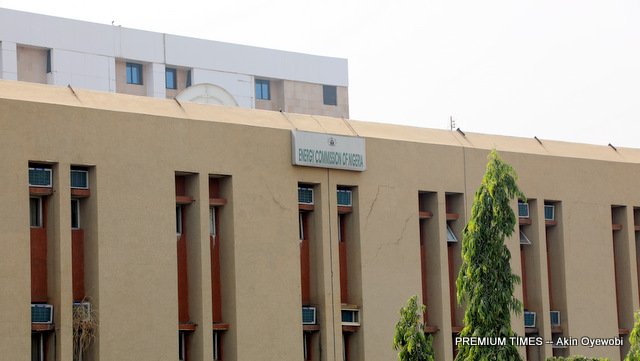
The Energy Commission of Nigeria (ECN) has commenced an energy audit across universities and medical institutions nationwide as part of efforts to assess and address the energy needs of these establishments. The audit is scheduled for completion before the end of the year.

The initiative is part of a broader national drive to invest in renewable energy technologies and smart technology solutions. According to the Commission, these investments are critical to accelerating Nigeria’s development, ensuring sustainability, and attracting foreign direct investment.

Highlighting global precedents, the ECN referenced Morocco’s Noor Ouarzazate Solar Complex—the world’s largest concentrated solar farm—which has contributed significantly to energy security and job creation in the region. The Commission noted that Nigeria holds immense potential to replicate such achievements, particularly in the northern region where solar intensity is highest.

“Security and job creation are two intertwined issues that technology can help resolve,” the Commission stated, citing the examples of Israel and the United States, where renewable energy supports security infrastructure such as AI-driven surveillance and drone technology. The Commission suggested that Nigeria could adopt similar strategies, including the use of solar-powered security cameras in high-risk zones and technology-driven agricultural solutions to address youth unemployment—a major contributor to insecurity.

With over 60% of Nigeria’s population under the age of 25, the ECN emphasized the importance of training programs in sustainable technologies such as solar panel installation, smart agriculture, and energy management. Such programs, it said, would not only generate employment but also help tackle the nation’s persistent power deficit.

The Commission also highlighted the role of renewable energy in enhancing education and national development. It pointed to countries like Finland and South Korea, which have leveraged digital tools and smart classrooms powered by renewable energy to transform their educational systems. The ECN envisioned a future in which rural Nigerian schools have uninterrupted electricity from solar microgrids, enabling students in remote areas to access digital learning platforms.

Speaking on the federal government’s support for the energy sector, the Director-General of the ECN expressed satisfaction with the innovative policies, strategic partnerships, and intentional financing enabled by President Bola Ahmed Tinubu under the “Renewed Hope Administration.” He also commended the role of the Ministry of Innovation, Science and Technology, led by Honourable Minister Chief Uche Nnaji, for its commitment to advancing energy solutions in the country.

The Director-General further announced a major federal government initiative aimed at bridging the gap between energy supply and demand through renewable sources. According to him, the federal government has recently appropriated funds to the ECN for the “Solarisation of Critical Infrastructure Across the Country.”

The ECN will oversee the full implementation of this project, which will benefit universities, teaching hospitals, and other public institutions. Under the initiative, solar hybrid mini-grids with capacities of up to 2 megawatts will be installed in federal government institutions and hospitals across all 36 states and the Federal Capital Territory (FCT).

April 10, 2025 0 comments
0 FacebookTwitterPinterestThreadsBlueskyEmail
Kogi Women
Headlines

Kogi Women Strip Half-Naked, Protest Against Banditry and Insecurity

by Nelson Ugwuagbo April 9, 2025
written by Nelson Ugwuagbo

A group of women from Oke-Ere community in Yagba West Local Government Area of Kogi State on Wednesday staged a protest against ongoing attacks by suspected kidnappers and Fulani herdsmen.

In a video seen by SaharaReporters, the women, many of them elderly, marched half-naked through the community, chanting mournfully and calling for urgent government intervention. The protesters carried sticks and leaves as they lamented the continuous abductions and killings that have plagued the area in recent months.

Some of the women were seen wailing and singing sorrowful songs, expressing frustration over what they described as the “endless reign of terror” in their town.

A Facebook user, Kogi Pulse, who shared footage of the protest, wrote: “The women of Oke-Ere in Yagba West local government area of Kogi State making prayers for the security of the land against kidnappers and Fulani herdsmen.”

“The women are tired of insecurity and reckless killings of their husbands, children, and loved ones in the hood. They can’t go to the market or farm to feed again. #freeYagbawestfromInsecurity,” the post added.

The protest comes amid a series of violent incidents in the state, including a March attack on travellers along the Ayere-Kabba expressway, where three people were abducted and four others injured.

The injured victims were taken to St. John’s Hospital in Kabba for treatment. The state has witnessed several similar incidents in recent times, with many residents attributing the violence to herdsmen activities.

April 9, 2025 0 comments
0 FacebookTwitterPinterestThreadsBlueskyEmail
Bandits
Headlines

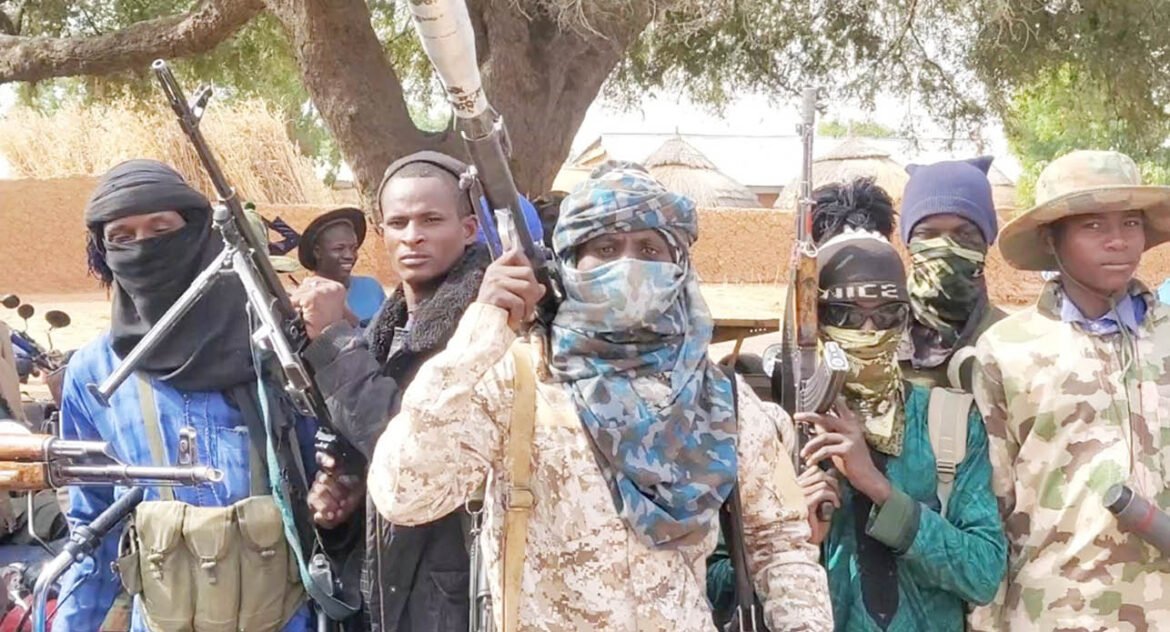
Bandits Now Occupy 64 Plateau Communities, Governor Muftwang Raises Alarm

by Nelson Ugwuagbo April 9, 2025
written by Nelson Ugwuagbo

Governor Caleb Muftwang of Plateau State has said that at least 64 communities in the state have been taken over by bandits.

Speaking in an interview on Channels Television on Tuesday, Governor Muftwang alleged that the attacks were part of a deliberate attempt to displace the original inhabitants of the affected areas.

“These communities that have been recently attacked were part of the communities that were attacked in 2023, but they survived and rebuilt themselves,” he said.

He cited the Ruwi community as an example, noting that it lost about 17 people in a 2023 attack but managed to recover.

The governor also expressed concern over the long-standing security crisis in the state.

“If these attacks have been going on for close to 10 years, it tells you that there is a deliberate, conscious attempt to clean out populations,” he said.

Muftwang further claimed that the affected communities, located in Bokkos, Barkin Ladi, and Riyom local government areas, have not only been occupied by bandits but also renamed.

“As I am talking to you, there are not less than 64 communities that have been taken over by bandits on the Plateau. They have been taken over, renamed, and people are living there conveniently on lands they pushed people away to occupy,” he said.

April 9, 2025 0 comments
0 FacebookTwitterPinterestThreadsBlueskyEmail
Uromi
Opinion

NIGERIA: 16 LOUD DEATHS, 60 SILENT GRAVES

by Nelson Ugwuagbo April 9, 2025
written by Nelson Ugwuagbo

The recent tragedies in Uromi, Edo State, and Bokkos and Mangu Local Government Areas of Plateau State have once again exposed a disturbing inconsistency in national responses to incidents of mass violence in Nigeria.

These two grim episodes, separated by geography and nuance, nonetheless raise the same essential question: do all Nigerian lives matter equally?
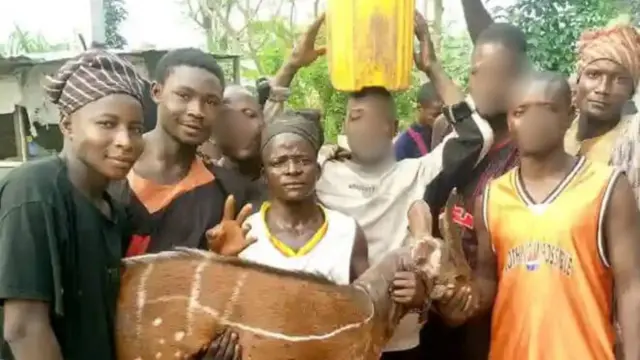
On the 28th of March 2025, a group of 16 hunters travelling from Rivers State to Kano for the Sallah celebration were lynched by a mob in Uromi, Edo State.
According to various sources, they were carrying locally fabricated Dane Guns, a practice not uncommon among hunters and vigilance groups in Nigeria.
However, due to the persistent insecurity in Uromi and the surrounding region—marked by a surge in kidnappings, rape, and murders—the presence of armed men travelling in a convoy was enough to raise suspicion.

The group was mistaken for a kidnapping gang, and without trial, without investigation, they were summarily executed by enraged locals in what has come to be widely condemned as an act of Jungle Justice.

This incident received an immediate and robust response from across the nation.

Within a few hours of news of this incident, President Bola Ahmed Tinubu condemned the murder of the sixteen (16) Dane gun-wielding hunters and directed security agencies to conduct swift and thorough investigations to apprehend and prosecute those responsible.

The House of Representatives swiftly passed a resolution condemning the killings, describing them as a “grave violation of human rights and the rule of law” while urging security agencies to identify, arrest, and prosecute those responsible. Former Vice President Atiku Abubakar condemned the act, calling it “barbaric and inhumane,” and reminded Nigerians that no frustration or distrust in security agencies justifies taking laws into their own hands.
Peter Obi, former governor of Anambra State and former presidential candidate, added, “We must never become a nation where due process is replaced with mob anger. A just society is one where every individual, guilty or innocent, is treated according to the law.”

The Nigerian Bar Association (NBA) also intervened, issuing a stern statement condemning the rise of mob justice across the country.
“The Nigerian Constitution presumes every accused person innocent until proven otherwise,” the statement read. “No person or group has the right to act as judge, jury, and executioner.”

Governor Abba Yusuf of Kano State, where most of the slain hunters hailed from, expressed outrage and called the incident a betrayal of the country’s collective humanity, demanding a thorough investigation and the arrest of perpetrators.
Rivers State Governor Siminalayi Fubara described the incident as a “gruesome murder of innocent citizens” and emphasised the need for community awareness and responsible security engagement.

The Christian Association of Nigeria (CAN) also joined the national chorus of condemnation. In a statement signed by its President, Archbishop Daniel Okoh, CAN described the killings as “a sad reminder of the breakdown of law and order and the growing tendency among citizens to take the law into their own hands.”
The Christian body called on security agencies to bring the perpetrators to justice and rebuild public trust.
“We sue for justice and peace and urge communities to seek lawful redress rather than vengeance. Mob action, no matter the provocation, cannot be justified in any civilised society,” the statement read.

In contrast, between the 2nd and 3rd of April 2025, barely a week after the Edo incident, a fresh massacre took place in Plateau State. This time, in the Bokkos and Mangu Local Government Areas, over 60 villagers were brutally killed in coordinated night-time attacks by armed men, reportedly wearing military camouflage.
According to residents and community leaders, the assailants moved from one village to another, slaughtering men, women, and children indiscriminately. Homes were set ablaze, food barns looted, and entire communities uprooted. Though the exact number of casualties is still being counted, early estimates suggest that more than 60 lives were lost and over 1,500 people displaced.

Shockingly, the national response to this tragedy was tepid at best. There was no immediate address from the President. The National Assembly did not pass any resolution condemning the killings. Religious and traditional institutions that had been vociferous in their reaction to the Edo lynchings remained largely silent.
The Nigerian Bar Association (NBA), which was so loud about the Edo killings, seemed to have suddenly lost its voice. Thankfully, the Plateau State Governor, Caleb Mutfwang, still has his voice; he has expressed his sorrow and called for reinforcement of security in the region.
Amnesty International Nigeria tweeted about the killings, expressing “deep concern over the ongoing carnage” and demanding urgent Federal intervention.
Then, in what many considered an afterthought, the Presidency finally broke its silence. Yesterday, Chief Bayo Onanuga, Special Adviser to the President on Information and Strategy, stated on behalf of President Bola Ahmed Tinubu.

The statement condemned the killings in Plateau and assured Nigerians that the Federal Government was committed to bringing the perpetrators to justice.
However, the timing and tone of the release struck many observers as lacklustre and reactive rather than proactive and presidential.
Critics noted that the statement came days after the massacre and only after mounting public pressure online.

This stark disparity in responses calls for serious reflection. Why did the killing of 16 hunters evoke such national outrage while the murder of over 60 villagers barely registered a whimper? Is this merely an oversight, or does it reflect a more systemic bias in how different regions and people are treated within Nigeria’s Federation?

We must examine what kind of country we are becoming when some deaths are met with outrage and others with silence. The issue is not whether one set of killings is more tragic than the other—it’s the implication that some lives are worth fighting for while others are dispensable. This selective empathy reveals a dangerous trend.
We have normalised violence in the Middle Belt and other parts of the North. It has become routine, and we lose our sense of humanity in that routineness. That’s how genocides start—first through indifference.

Social Media users were equally vocal. One X (formerly Twitter) user wrote, “Nigeria weeps for 16 hunters. May their souls rest in peace. But why is Nigeria silent for over 60 Plateau villagers? Is it because they are ‘just villagers’?
Or are we too used to their pain?” Another user posted, “These villagers had names, dreams, children, futures. Their deaths deserve the same national mourning as anyone else’s. Our silence is complicity.”

The inconsistency in national mourning and governmental response is not new, but it remains deeply troubling. It points to a hierarchy of empathy that undermines the spirit of our Constitution, which holds that all citizens are equal before the law and in the protection of the state.

There is also the matter of Media Framing. The Edo victims were identified as “hunters” and “travellers,” suggesting purposeful and legitimate activity, while the Plateau victims were referred to merely as “villagers.” This subtle but powerful difference dehumanises one group and sanitises the tragedy. Moreover, while images and tributes poured in for the 16 hunters, the identities and stories of the Plateau victims mainly remained anonymous. Who were they? What dreams did they harbour? What futures were snatched away?

The irony is painful. The Edo victims, suspected without proof, were mourned as martyrs, while the Plateau victims, clearly innocent and ambushed in their homes, remain statistics in an ever-growing tally of unacknowledged dead.

Of course, nothing justifies the lynching of the 16 in Edo. Even if they had been criminals—which they were not—Mob Justice is a regression to lawlessness and brutality. But equally, the Plateau killings, perpetrated by organised gunmen who roam freely and strike with impunity, deserve even greater condemnation and urgency. If 16 deaths can bring a country to attention, how can 60 not compel action?

Security failure is at the heart of both tragedies. In Uromi, the mob acted out of frustration over repeated kidnappings and a lack of effective policing. In Plateau, the attacks were yet another chapter in a long-running saga of unaddressed ethno-religious conflict, land disputes, and governmental inaction. In both cases, the state failed to protect its citizens, and in both cases, civilians paid the ultimate price.

If Nigeria is to become a just and truly democratic nation, it must begin to react equitably to its people’s sufferings. There must be no North or South in empathy, no Christian or Muslim in justice, no Farmer or Hunter in dignity. Every Nigerian Life must be counted, named, honoured, and defended.

The Federal Government must urgently address this apathy towards the Middle Belt and the growing narrative that those in conflict-prone regions are beyond help. Resources, political will, and national attention must not be rationed based on who shouts the loudest or hails from the most politically connected quarters.
Religious bodies and traditional institutions that lend their voices during other national tragedies must rise with equal fervour for the Plateau victims. Civil Society must not look away. The media must resist the urge to move on just because these killings have become frequent. We must not let our frequency of exposure dull our humanity.

Ultimately, we must ask ourselves as a people: What kind of nation do we want to be? One that only mourns selectively? One that lets outrage be governed by convenience? One that refuses to learn from its silence? Until we confront these questions sincerely and act decisively, we will remain a nation unsure of its soul—where grief is not a right, and where silence, not justice, follows the wail of the dying.

Lemmy Ughegbe, Ph.D

April 9, 2025 0 comments
0 FacebookTwitterPinterestThreadsBlueskyEmail
Mal Mal
Headlines

Yobe Government Debunks Claims of Boko Haram Attack on Capital

by Nelson Ugwuagbo April 8, 2025
written by Nelson Ugwuagbo

The Yobe State Government has refuted a viral social media report claiming that Boko Haram insurgents were advancing toward Damaturu, the state capital.

In a statement released on Monday, the Special Adviser on Security Matters to the Governor, Brigadier General Dahiru Abdulsalam (Rtd), described the report as false, misleading, and the work of mischief-makers aiming to incite public panic.

The viral post, titled “Immediate Security Alert”, alleged that suspected terrorists were moving toward Damaturu. However, Abdulsalam clarified that the report did not originate from any credible or official security source, including his office.

“The public should disregard the report in its entirety as it has no basis,” he said. “It is fake and clearly intended to create fear and confusion among residents.”

He assured the people of Damaturu and the state at large that the security situation remained stable, and urged them to go about their lawful activities without fear.

Abdulsalam reaffirmed the government’s commitment to protecting lives and property, adding that all security agencies in the state are maintaining surveillance and working together to ensure continued peace and stability.

He also cautioned against the spread of false information, warning that such actions could cause unnecessary panic and disrupt public order.

April 8, 2025 0 comments
0 FacebookTwitterPinterestThreadsBlueskyEmail
Baby Factory
Headlines

Police Uncover Baby Factory in Lagos, Rescue 10 Victims, Arrest Three Suspects

by Nelson Ugwuagbo April 8, 2025
written by Nelson Ugwuagbo

The Lagos State Police Command has uncovered a baby factory in the Ijegun area of the state, rescuing 10 victims and arresting three suspects connected to the operation.

Spokesperson for the command, SP Benjamin Hundeyin, confirmed the development in a statement on Monday. He said the illegal facility was discovered following a tip-off received by the police on Saturday.

Acting swiftly, officers raided the premises and arrested the prime suspect, 35-year-old Mariam Vincent, along with two alleged accomplices identified as Orie Ruth, 23, and Ujunwa Ifeanyi, 18.

Seven adult women and three children—aged seven, five, and two—were rescued during the operation. The adult victims were named as Precious (24), Magdalene (25), Adaobi (23), Princess (22), Ifeanyi (25), and Amaka (26). The children rescued were identified as Destiny (7), Miracle (5), and Success (2).

Hundeyin said the victims are currently receiving appropriate care and support.

Preliminary investigations revealed that the suspects allegedly abducted the victims from various locations across the state for the purpose of operating the baby factory.

The police said the investigation is ongoing, and the suspects will be charged to court upon its conclusion.

April 8, 2025 0 comments
0 FacebookTwitterPinterestThreadsBlueskyEmail
Natasha
Headlines

Senator Natasha Akpoti-Uduaghan Sues Colleague Nwaebonyi for N5 Billion Over Defamation

by Nelson Ugwuagbo April 8, 2025
written by Nelson Ugwuagbo

Senator Natasha Akpoti-Uduaghan, representing Kogi Central Senatorial District, has filed a N5 billion lawsuit against Senator Onyekachi Nwaebonyi of Ebonyi North Central over alleged defamatory statements made during a televised interview.

The suit, filed at the Federal Capital Territory High Court in Abuja by her legal counsel, Michael Numa, seeks redress over remarks made by Nwaebonyi during an appearance on Channels Television on March 6, 2025.

According to court documents, Senator Akpoti-Uduaghan alleges that Nwaebonyi described her as a “gold digger, habitual liar, and habitual blackmailer,” and falsely claimed she is a mother of six children from different men. She contends that the statements were false, malicious, and intended to damage her reputation.

The senator argued that the remarks were made recklessly and have caused her significant public embarrassment and reputational harm, particularly in her role as a prominent female politician and advocate for women in governance.

“The defendant’s characterisation of the claimant as a ‘mother of six from different men’ is baseless, malicious, and reckless,” the suit states.

She further asserted that rather than tarnishing the image of women in politics, as allegedly suggested by Nwaebonyi, she continues to inspire and empower women to pursue political leadership and speak truth to power.

Akpoti-Uduaghan is asking the court to award N5 billion in aggravated and exemplary damages for the alleged defamatory remarks. She also seeks a restraining order preventing Senator Nwaebonyi from making further similar statements against her.

In addition, she is requesting that the court compel Nwaebonyi to issue a public retraction and unreserved apology on the same television platform where the statements were made.

April 8, 2025 0 comments
0 FacebookTwitterPinterestThreadsBlueskyEmail
Dire Wolf
Africa & World

U.S. Scientists Successfully Revive Long-Extinct Dire Wolves in Reverse Genetic Project

by Nelson Ugwuagbo April 8, 2025
written by Nelson Ugwuagbo

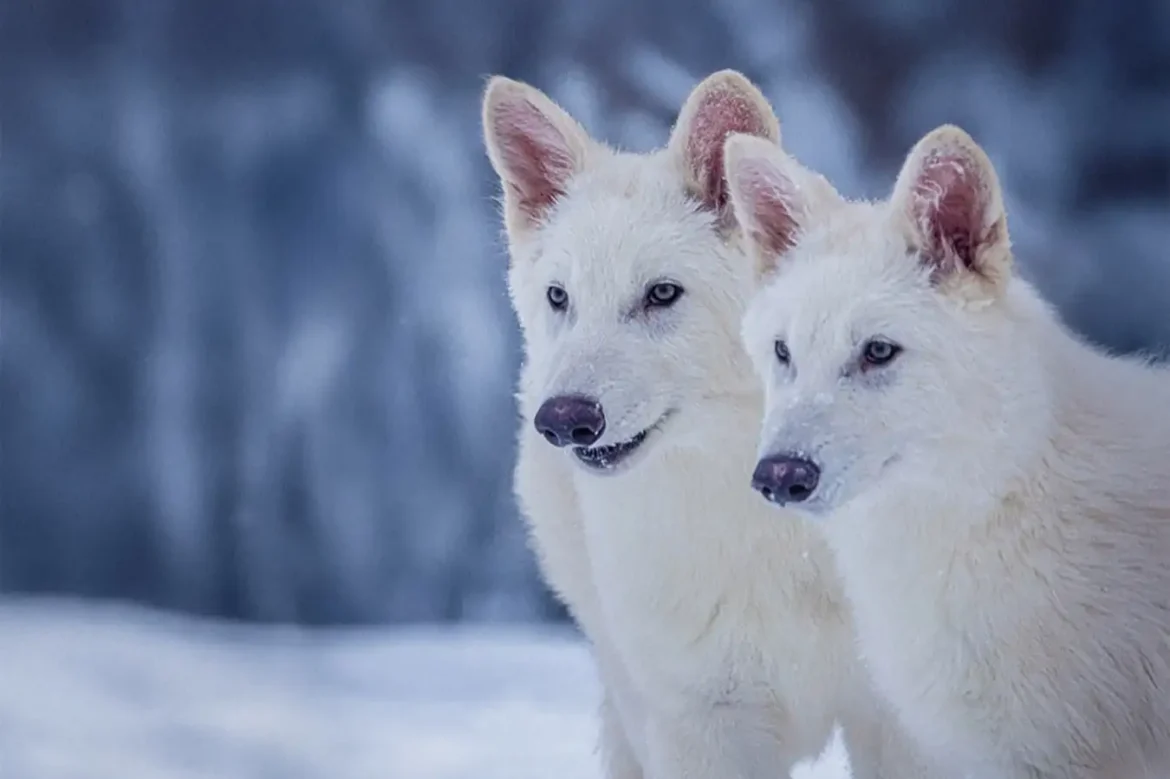
A team of U.S. geneticists has successfully brought back the long-extinct dire wolf species (Canis dirus) using advanced genetic engineering techniques. The milestone marks the first time the apex predator, which roamed North and South America more than 10,000 years ago, has returned to life after disappearing at the end of the last Ice Age.

The project, led by researchers at the Revive & Restore Initiative in collaboration with the Smithsonian Institution and several top U.S. universities, used recovered DNA from dire wolf fossils to recreate a living specimen through a process known as de-extinction cloning.

Dr. Eleanor Greene, the lead geneticist on the project, announced the successful birth of the first cloned dire wolf pup at a secure bio-research facility in Montana. “This is a landmark achievement in synthetic biology and species restoration,” Greene said. “The dire wolf was a formidable predator in its time, and bringing it back offers immense scientific insight into Ice Age ecosystems.”

Dire wolves, once widespread across the Americas, were larger and more robust than modern gray wolves, weighing up to 150 pounds with powerful jaws designed to crush bone. Despite their name, they were not direct ancestors of today’s wolves but a genetically distinct lineage.

The team extracted viable DNA from well-preserved dire wolf remains discovered in the La Brea Tar Pits in California. After identifying gaps in the genome, scientists used CRISPR gene-editing technology and DNA from the gray wolf and other canid species to reconstruct a complete genome. The embryo was gestated in a gray wolf surrogate.

The first pup, named “Fenrir,” was born on March 29 and is reported to be in excellent health. Initial observations show strong dire wolf traits, including a stockier build and deeper chest compared to gray wolves.

While the scientific community has largely hailed the success, the project has sparked debate over the ethics and ecological risks of de-extinction.

“This is not just about reviving extinct animals — it’s about understanding how species evolve, how ecosystems recover, and what we might do to preserve biodiversity today,” said Dr. Nathan Kim, an evolutionary biologist unaffiliated with the project.

However, critics warn of unforeseen consequences if such species are reintroduced into the wild. “We’re dealing with an apex predator that has not existed for over 10,000 years,” said Laura Chen of the Global Wildlife Policy Institute. “We must proceed with extreme caution.”

The successful revival of the dire wolf marks a monumental step in the field of genetic science and could pave the way for future restoration efforts of other extinct species such as the woolly mammoth and the passenger pigeon.

April 8, 2025 0 comments
0 FacebookTwitterPinterestThreadsBlueskyEmail
Yoon
Africa & World

South Korea Sets Presidential Election for June 3 Following Yoon’s Removal

by Nelson Ugwuagbo April 8, 2025
written by Nelson Ugwuagbo

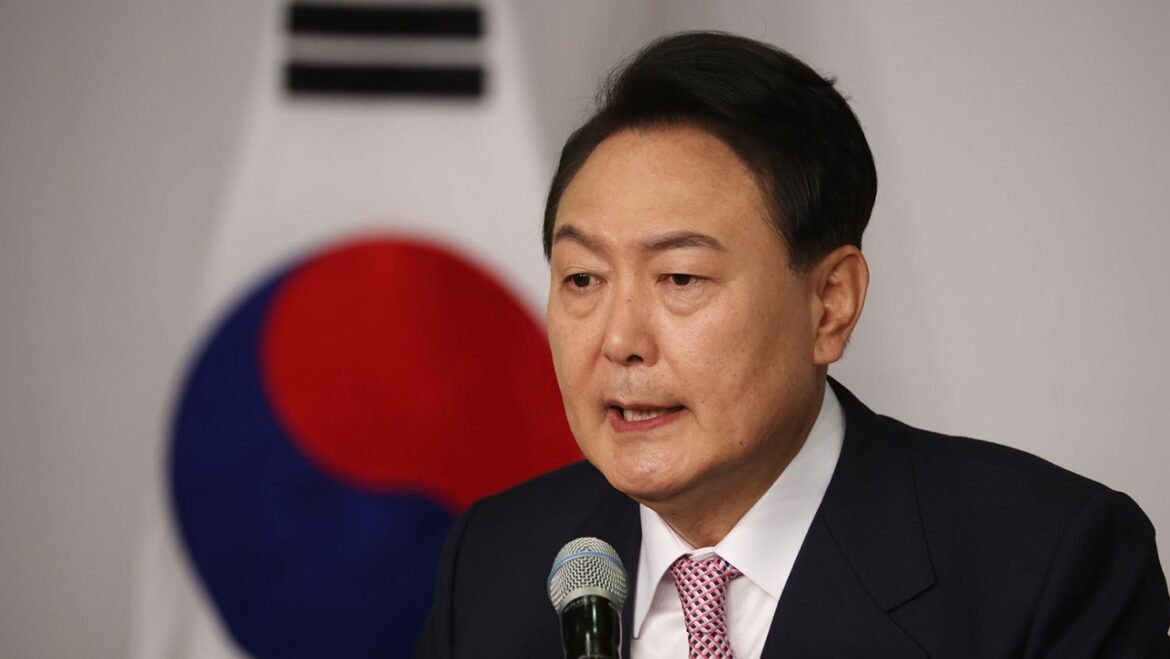
South Korea will hold a presidential election on June 3, the country’s acting president announced on Tuesday, following the impeachment and removal of former President Yoon Suk Yeol.

The country has been without an official leader since December, when Yoon was suspended from office after declaring martial law in a move widely condemned as an attempt to subvert civilian authority. Lawmakers swiftly impeached him, and the Constitutional Court upheld the impeachment last week, formally ending his tenure and triggering the constitutional requirement for a new election within 60 days.

Prime Minister Han Duck-soo, who is currently serving as acting president, announced the election date on Tuesday. He said June 3 would be declared a temporary public holiday to facilitate voter participation.

Han stated that the decision considered “the need to ensure smooth election operations and allow sufficient time for political parties to prepare”. He also urged all government ministries and the National Election Commission to ensure the election is conducted in a fair and transparent manner.

Unlike regular presidential elections in South Korea, where the president-elect typically undergoes a two-month transition period, the winner of this snap election will be inaugurated the following day.

April 8, 2025 0 comments
0 FacebookTwitterPinterestThreadsBlueskyEmail
Newer Posts
Older Posts

Recent Posts

  • WikiLeaks’ Assange says ‘no dirt’ on Trump, praises former US President

    March 15, 2026
  • Tinubu: BAT Movement Reaffirms Support for Second Term

    March 14, 2026
  • Church Donates Tech Equipment to NIS

    March 14, 2026
  • CBN directs banks to block loan defaulters from accessing credit facilities

    March 13, 2026
  • Petrol Subsidy Removal Pushes 63% of Nigerians Below Poverty Line — Report

    March 13, 2026

Usefull Links

  • Contact Page
  • About Leading Reporters
  • Contact Us
  • Headlines
  • Investigation
  • Exclusives
  • Opinion
  • Business
  • Facebook
  • Twitter
  • Instagram
  • Linkedin

@2021 - All Right Reserved. Designed and Developed by PenciDesign


Back To Top
Leading Reporters
  • Featured
  • Politics
  • Opinion
  • Business
  • Entertainment
  • Sports
  • About Us
  • Contact