Leading Reporters
  • Headlines
  • Health
  • Business
  • Exclusives
  • Investigation
  • Entertainment
  • Opinion
Tuesday, July 28, 2026
Hot
Peter Obi Reaffirms Commitment to Single Term Governance:...
#FixPolitics demands probe, accountability in ‘fake agency’ scandal
President Tinubu announces 26 new appointments
Annie Idibia Denies Reunion With Ex-Husband 2face, Says...
ICRITR Director, Prof. Ngozi Egbuna, Honoured with Academia...
UNIZIK inaugurates Afreximbank-backed trade research centre to advance...
FG Suspends WASSCE, NECO Fee Hike After Massive...
PFIPC scandal: ‘Fake’ DG deceived me with Presidency...
Kogi Police Nab Three Over Killing of Teacher...
Gov Soludo Gifts 10 SUVs to Judges
  • About Leading Reporters
  • Contact Us
Leading Reporters
Advertise With Us
  • Headlines
  • Health
  • Business
  • Exclusives
  • Investigation
  • Entertainment
  • Opinion
Hot
Peter Obi Reaffirms Commitment to Single Term Governance:...
#FixPolitics demands probe, accountability in ‘fake agency’ scandal
President Tinubu announces 26 new appointments
Annie Idibia Denies Reunion With Ex-Husband 2face, Says...
ICRITR Director, Prof. Ngozi Egbuna, Honoured with Academia...
UNIZIK inaugurates Afreximbank-backed trade research centre to advance...
FG Suspends WASSCE, NECO Fee Hike After Massive...
PFIPC scandal: ‘Fake’ DG deceived me with Presidency...
Kogi Police Nab Three Over Killing of Teacher...
Gov Soludo Gifts 10 SUVs to Judges
Leading Reporters
Leading Reporters
  • Headlines
  • Health
  • Business
  • Exclusives
  • Investigation
  • Entertainment
  • Opinion
Copyright 2024 - All Right Reserved
Home > Archives for > Page 7
Author

Folarin Kehinde

Folarin Kehinde

Headlines

Petrol Subsidy Removal Pushes 63% of Nigerians Below Poverty Line — Report

by Folarin Kehinde March 13, 2026
written by Folarin Kehinde

A new study has revealed that about 63 per cent of Nigerians fell below the poverty line following the removal of petrol subsidy, highlighting the welfare impact of the country’s recent economic reforms.

The research, presented on Thursday at a stakeholders’ dialogue organised by the Agora Policy in Abuja, showed that the national poverty headcount rose sharply from a baseline of about 49.8 per cent to roughly 63 per cent after the subsidy removal. The rate later moderated slightly following the introduction of social protection measures.

The dialogue, themed “Sustaining and Deepening Economic Reforms in Nigeria,” brought together policymakers, economists, civil society leaders, and private sector representatives to examine the effects of the Federal Government’s reform agenda.

Participants included the Deputy Governor for Economic Policy at the Central Bank of Nigeria, Muhammad Abdullahi; the Special Adviser to the President on Finance and Economy, Sanyade Okoli; the World Bank Senior Economist for Nigeria, Samer Matta; the Country Director of CARE International, Hussaini Abdu; and the Executive Director of Agora Policy, Waziri Adio.

The study was presented by a Senior Lecturer in the Department of Economics at the University of Abuja, Mohammed Shuaibu. It analysed the economic and social consequences of major reforms introduced by the Federal Government, including the removal of petrol subsidy and adjustments in electricity tariffs.

President Bola Ahmed Tinubu had announced the removal of the petrol subsidy during his inauguration on May 29, 2023. According to the study, the policy triggered widespread price increases across the economy and significantly affected household welfare.

“After the subsidy removal, poverty increased from a baseline of about 50 per cent to 63 per cent,” Shuaibu said.

He noted that social protection initiatives helped reduce the severity of the impact but did not fully reverse the decline in welfare conditions.

“However, when social protection measures such as cash transfers were introduced, the poverty rate moderated to around 56.2 per cent,” he added.

The findings showed that the effects of the reform were uneven across income groups. While high-income households were largely shielded from the shocks, low-income households experienced the greatest decline in purchasing power.

According to the data, poverty among low-income households rose sharply from about 50 per cent before the subsidy removal to around 63 per cent afterwards. At the same time, the national poverty gap widened significantly.

The poverty gap increased from 31.6 per cent to over 45 per cent, indicating deeper deprivation among poor households. Although social transfers slightly reduced the gap, the improvement remained limited due to delays in implementing intervention programmes and the relatively small scale of support provided.

The study also examined how the reforms affected household consumption patterns. Findings showed that consumption declined across all income groups following the removal of the subsidy and the adjustment of electricity tariffs.

“Across the board, household consumption declined following both the subsidy removal and electricity tariff adjustments. However, social transfers helped cushion the impact, especially for low-income households,” Shuaibu explained.

The decline in consumption was particularly pronounced among rural and low-income households, where rising energy and transport costs significantly reduced spending capacity.

Urban low-income households also experienced reduced consumption, though the effect was slightly moderated where social transfers were available.

Beyond household welfare, the research assessed the broader macroeconomic impact of electricity tariff reforms. The study found that tariff adjustments caused a modest rise in consumer prices, initially increasing prices by about 0.26 per cent and later to roughly 0.52 per cent after social protection measures were included.

However, the electricity reform also had a small positive impact on economic output. Real Gross Domestic Product increased by about 0.42 per cent under the reform scenario, before moderating to around 0.21 per cent when social protection programmes were factored into the model.

Firm-level investment also recorded slight gains following the tariff adjustments, though part of the improvement was offset by the cost of implementing social protection measures.

In contrast, the removal of the petrol subsidy had a contractionary effect on economic activity. Rising fuel prices and transport costs triggered inflationary pressures that affected business operations and investment.

The research also incorporated insights from focus group discussions conducted across Nigeria’s six geopolitical zones. Participants generally acknowledged that reforms were necessary given the country’s fiscal and macroeconomic challenges, but many criticised the speed of their implementation.

According to the study, many households responded to the economic shocks by cutting consumption, reducing transport use, rationing electricity, and borrowing to meet basic needs.

“Households adjusted to the shocks not through recovery but through sacrifice,” Shuaibu said.

Businesses reported similar challenges, stating that rising fuel and electricity costs significantly increased operating expenses. Some firms said they had been forced to raise prices, reduce staff strength, or shut down operations.


March 13, 2026 0 comments
0 FacebookTwitterPinterestThreadsBlueskyEmail
Headlines

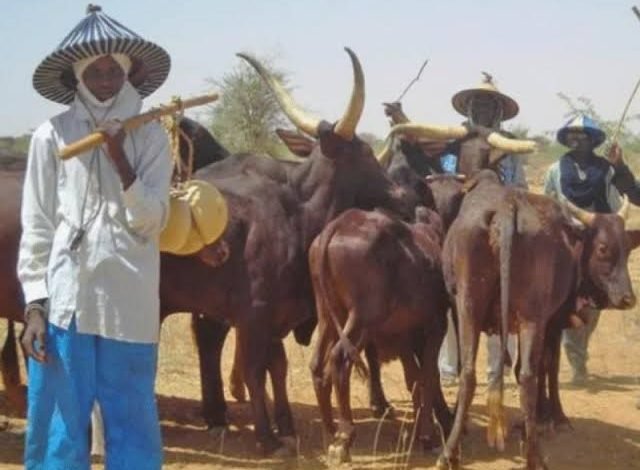
“We Are Not Miyetti Allah” — Plateau Fulani Christians Denounce Terrorist Links

by Folarin Kehinde March 13, 2026
written by Folarin Kehinde

The Fulani Christian Association of Nigeria (FCAN) has firmly rejected any connection with two prominent Fulani socio-cultural groups recently mentioned in discussions about security concerns in Nigeria.

Speaking during a gathering in Miango community of Bassa Local Government Area, Plateau State, the association said it should not be linked to the activities or positions of the Miyetti Allah Kautal Hore or the Miyetti Allah Cattle Breeders Association of Nigeria (MACBAN).

The clarification followed reports that the United States Congress recently classified the two organisations as terrorist groups.

The clarification followed reports that the United States Congress recently classified the two organisations as terrorist groups.

Chairman of FCAN, Rev. Buba Aliyu, spoke during a symposium attended by Christian leaders and representatives of the International Christian Concern. The meeting held in Miango, a community within Bassa Local Government Area that has witnessed repeated attacks in recent years.

Rev. Aliyu said Fulani Christians across Nigeria do not belong to Miyetti Allah groups and should not be grouped with them simply because of shared ethnic identity.

“The Fulani Christian Association of Nigeria is a fellowship of Fulani believers in Christ. We are not part of Miyetti Allah or MACBAN and we do not support violence. Our faith teaches us peace and respect for human life,” Rev. Aliyu said.

According to him, the association represents a distinct community within the larger Fulani ethnic group. He stressed that the group focuses mainly on spiritual fellowship and support for Fulani individuals who have embraced Christianity.

He explained that FCAN members had long distanced themselves from organisations they believe openly defend armed herdsmen during attacks on rural communities.

Rev. Aliyu said such positions often deepen suspicion against all Fulani people. He warned that criminal elements hiding behind ethnic identity have damaged the image of ordinary Fulani citizens who live peacefully across the country.

He also criticised narratives that often describe attacks as mere clashes between farmers and herders. According to him, many of the incidents go beyond disputes over grazing land.

The cleric added that communities affected by violence have suffered displacement, loss of property and the occupation of ancestral lands by armed groups.

Rev. Aliyu further revealed that his advocacy among Fulani Christians has exposed him to threats.

“On several occasions, I have received messages telling me that I am a walking corpse and that my time is finished.

“But by the help of God, I am still alive and continuing the work,” he added.

He urged Nigerians not to judge an entire ethnic group based on the actions of criminal gangs.

“Among the Fulani people, there are many who live peacefully. Those involved in crimes do not represent the entire community,” he emphasized.

Aliyu also called on security agencies and the international community to clearly separate peaceful citizens from armed militants when discussing the security crisis in parts of northern and central Nigeria.

March 13, 2026 0 comments
0 FacebookTwitterPinterestThreadsBlueskyEmail
Headlines

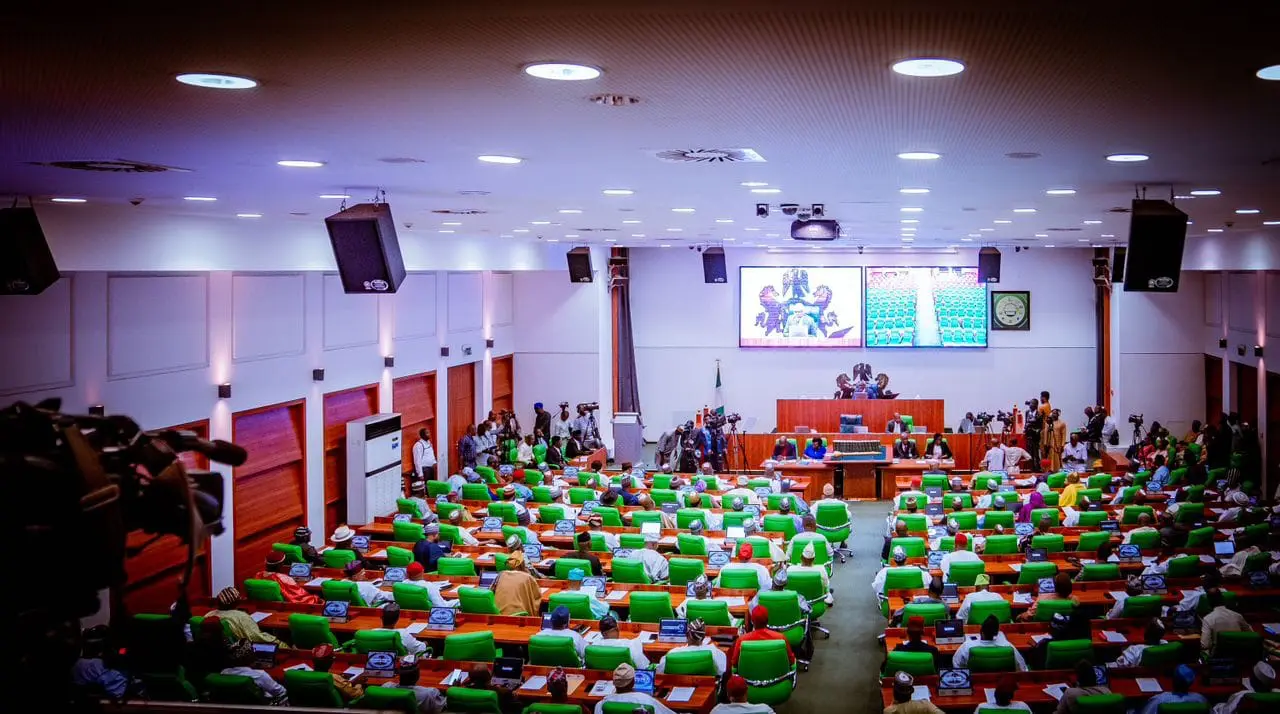
Reps prescribe 2-year jail term, 10m fine for dual party membership

by Folarin Kehinde March 11, 2026
written by Folarin Kehinde

The House of Representatives on Wednesday amended Section 77 of the recently assented Electoral Act 2026 to prescribe two-year jail term or N10 million fines or both, for anyone who knowingly maintains membership of two political parties at the same time.

LEADING REPORTERS gathered that lawmakers during the committee of the whole presided by Deputy Speaker Benjamin Okezie Kalu, made amendment to section 77 of the 2026 Act by inserting three new clauses 8, 9 and 10 which were considered and approved by lawmakers after a heated session of back and forth debates.

According to the new clauses approved by lawmakers, any party member found to be registered as member of more than one political party at the same time will have his or membership of the said parties voided.

Clause (8) of the approved amendment stipulates that “A person shall not be registered as a member of more than one political party at the same time.”

Clause (9) stipulates that “Where it is established that a person is registered as a member of more than one political at the same time, such dual membership shall be void, and the person shall cease to be recognised as a valid member of any political party pending regularisation in accordance with the provisions of this Act and the constitution of the political party concerned.

Clause (10) stipulates that “A person who knowingly registers or maintains membership in more than one political party at the same time commits an offence is liable on conviction to a fine of N10,000,000 or to imprisonment for a term of two years, or both.”


March 11, 2026 0 comments
0 FacebookTwitterPinterestThreadsBlueskyEmail
Natasha Akpoti
Headlines

Row In Senate As Natasha Akpoti-Uduaghan Dropped From UN Summit Delegation

by Folarin Kehinde March 10, 2026
written by Folarin Kehinde

A fresh controversy has erupted in the Senate over Nigeria’s delegation to the 2026 session of the United Nations Commission on the Status of Women (CSW) in New York, as Senator Natasha Akpoti-Uduaghan alleged that she was excluded from the official delegation despite indications that she was earlier being prepared for the trip.

The dispute surfaced as the global conference on gender equality and women’s empowerment commenced on Monday in New York, drawing government officials, activists, and policymakers from across the world.

At the centre of the controversy was the Senator representing the Federal Capital Territory, Ireti Heebah Kingibe, who chairs the Senate Committee on Women Affairs.

Kingibe had earlier taken a strong position during a Senate budget presentation session, reportedly warning that she would boycott the international conference if Akpoti-Uduaghan was excluded from the delegation.

The FCT senator, according to sources at the meeting, said, “If Senator Natasha Akpoti is not going to attend the programme, it means I am not going to attend too.”

The remark was widely interpreted within the National Assembly as an expression of solidarity with the Kogi Central senator.

However, subsequent developments appeared to contradict that position.

In a letter dated March 5, 2026, addressed to Natasha Akpoti-Uduaghan sighted by THISDAY last week, Kingibe clarified that only two senators had been officially nominated and registered for the CSW meeting by the Senate leadership.

“For the sake of clarity, I can confirm that at this stage, only two members of the Senate have been officially nominated by the Senate President and have confirmed registration: myself and Senator Adeniyi Adegbonmire,” the letter stated.

Kingibe also explained that the Federal Ministry of Women Affairs had yet to finalise the broader list of delegates or conclude travel and accommodation arrangements for the Nigerian team.

But documents and messages circulating online suggested thatAkpoti-Uduaghan might have been initially considered for the trip.

A WhatsApp message allegedly sent by an aide linked to Kingibeshowed a request to the Personal Assistant to the Kogi Central senator asking for the “principal’s data page,” a reference to her international passport, for the CSW programme in New York.

The message read: “Good afternoon ma’am… Please we need your principal’s data page for CSW New York.”

Shortly after, an image of an international passport data page was reportedly forwarded in response.

The development has fuelled speculation within political circles about what might have changed between the early preparations and the final list of nominees.

The controversy has also ignited debate about Nigeria’s representation at a global conference dedicated to women’s rights and gender equality.

Nigeria currently has very few female senators in the National Assembly, including Kingibe and Akpoti-Uduaghan.


March 10, 2026 0 comments
0 FacebookTwitterPinterestThreadsBlueskyEmail
Uncategorized

Energy Crisis: Restore Fuel Subsidy, Fix Refineries Now — Faduri

by Folarin Kehinde March 10, 2026
written by Folarin Kehinde

A presidential aspirant under the National Rescue Movement, Faduri Joseph, has called for the full restoration of fuel subsidy in Nigeria, blaming the current economic hardship on poor leadership, corruption and the failure to fix the nation’s refineries.

Faduri, reacting to the emerging global energy crisis triggered by tensions involving Iran, Israel and the United States, said Nigeria should ordinarily be benefiting from rising global crude oil prices if its refineries were functioning.

According to him, the country’s continued dependence on refining crude oil abroad has worsened the impact of rising fuel prices on ordinary Nigerians.

“It is unfortunate that over the years we have not had good government. If we had leaders who fixed our refineries, the crisis in Iran today would have been an advantage for Nigeria because we would be refining our crude locally and making more money,” he said.

He noted that Nigeria currently exports crude oil for refining abroad and later imports refined products at higher prices, a situation he described as economically harmful.

Faduri also referenced the role of the Dangote Group refinery project, stating that although some local refining has begun, a significant portion of the country’s crude is still processed overseas.

“The ones refined abroad eventually return to Nigeria at higher prices, and Nigerians who know nothing about the global conflict end up paying the price,” he added.

On the issue of subsidy removal, Faduri criticized the decision taken by Bola Ahmed Tinubu’s administration in 2023, arguing that the policy was implemented without adequate safeguards.

“The government does not need a temporary subsidy. What Nigerians need is the full restoration of the fuel subsidy that was removed in 2023. Governments around the world support their citizens through subsidies,” he said.

He questioned the transparency surrounding the funds reportedly saved from the subsidy removal, saying Nigerians have not seen clear evidence of how the money has been utilized.

According to him, the absence of accountability has further eroded public trust in government institutions.

Faduri also criticized the country’s energy policy and leadership structure, alleging that many government appointments are based on political loyalty rather than competence.

He argued that Nigeria must learn from countries that implement measures such as fuel price caps, export controls and temporary subsidies during global energy crises.

“It is only governments that truly care about their citizens that take protective steps in difficult times. Unfortunately, we do not currently have such leadership,” he said.

On measures to cushion the current fuel price volatility, Faduri said the government should introduce policies to stabilize prices and reduce the burden on citizens, noting that petrol prices have surged significantly in parts of the country.

Looking ahead, he stressed that fixing Nigeria’s refineries remains the most critical long-term solution to the country’s energy vulnerability.

“Until our refineries are fully functional, we will continue to suffer the consequences of global oil price fluctuations,” he said.

Faduri further called for a shift from what he described as Nigeria’s “consuming economy” to a productive one, urging policies that encourage local manufacturing and investment.

He also advocated reforms to strengthen security, promote local production and reduce dependence on foreign goods and services.

“We must become a producing nation. From cars to basic items like toothpicks, we should encourage local production. Without security and serious economic reforms, Nigeria cannot compete in the global economy,” he added.

Faduri, who has declared interest in the 2027 presidential race, said Nigeria requires a “generational change in leadership” to address systemic corruption, economic instability and governance challenges.


March 10, 2026 0 comments
0 FacebookTwitterPinterestThreadsBlueskyEmail
Business

Tatum Bank Meets CBN’s New Recapitalization, within 10 Months of Operation

by Folarin Kehinde March 10, 2026
written by Folarin Kehinde

Tatum Bank has announced that it has met the capitalisation requirement set by the Central Bank of Nigeria for financial institutions operating in the country.

The bank disclosed this in a statement on Monday, noting that the milestone strengthens its financial base and positions it to expand its role in Nigeria’s financial services sector.

According to the statement, the achievement also reinforces the bank’s commitment to providing a secure and dependable financial platform for its growing customer base.

The Managing Director of Tatum Bank, Niyi Adeseun, said the development reflects the institution’s strong foundation and readiness for sustainable growth.

“This milestone is a strong affirmation of the solid foundation upon which Tatum Bank was built.

Our vision has always been to create a safe financial haven where customers can confidently pursue their financial goals,” he said.

Adeseun added that the bank would continue to strengthen its commitment to delivering seamless and reliable banking services to customers.

Also commenting, the Chairman of the bank, Samuel Ologunorisa (SAN), said the institution would continue to leverage digital banking solutions to expand access to financial services across the country.

“Our strategy is firmly anchored on leveraging digital banking solutions to drive financial inclusion while supporting the growth of businesses and large corporations,” he said.

Ologunorisa noted that the bank’s operations are guided by strong corporate governance principles, responsible environmental, social and governance practices, and a robust enterprise risk management framework.

He added that these principles would continue to guide the bank in building a resilient and transparent financial institution within Nigeria’s evolving financial landscape.

The bank stated that it achieved the capitalisation milestone less than a year after commencing full banking operations in May 2025.

It added that the strengthened capital base would support its commitment to innovation, operational excellence and improved banking experiences for customers.

March 10, 2026 0 comments
0 FacebookTwitterPinterestThreadsBlueskyEmail
Headlines

Fire Breaks Out At Federal Head Of Service Building In Abuja

by Folarin Kehinde March 9, 2026
written by Folarin Kehinde

A section of the Office of the Head of Service of the Federation building in Abuja has gone up in flames.

Eyewitnesses report that the fire was first noticed in one part of the structure at approximately 8:20 a.m., with smoke billowing from the affected area.

The incident was said to have occurred at Section C of the head of service building, within the Head of Service complex, as staffers in the building were seen moving away from the affected area while emergency responders were alerted to contain the situation.

The media department of the Office of the Head of Service of the Federation confirmed the incident, stating that the fire outbreak was limited to Section C of the building and was currently being attended to by emergency officials.

The exact cause of the fire has yet to be ascertained, as an investigation into the cause of the fire is expected to commence after the situation is fully brought under control.


March 9, 2026 0 comments
0 FacebookTwitterPinterestThreadsBlueskyEmail
Headlines

Police reportedly remove force PRO Hundeyin 6 months after serving as Ex-IGP’s apologist

by Folarin Kehinde March 5, 2026
written by Folarin Kehinde

The Nigeria Police Force (NPF) has removed its Force Public Relations Officer, Benjamin Hundeyin, barely six months after he assumed the position.

It was learnt that the approval for Hundeyin’s removal was given on Thursday, March 5, 2025.

However, the circumstances surrounding the sudden development remain unclear as of the time of filing this report.

The decision comes amid ongoing internal restructuring within the police hierarchy following the emergence of new leadership at the force headquarters.

The shake-up follows the appointment of Tunji Disu as the 23rd Inspector-General of Police by President Bola Ahmed Tinubu. Disu was named IGP last week after the removal of Kayode Egbetokun, who had led the force since 2023.

A source quoted by The Whistler confirmed the development, saying, “The Force Public Relations Officer has been removed this morning.”

However, uncertainty remains over who will replace Hundeyin as the new spokesperson of the force, particularly as operational activities within the police have intensified in recent days.

During his time as the Force’s PRO, Hundeyin was involved in a series of controversies including claiming that N100million was erroneously transferred from the Anambra State Government’s security vote account to Victor Adewale Egbetokun, son of formerInspector-General of Police (IGP), Kayode Egbetokun.


March 5, 2026 0 comments
0 FacebookTwitterPinterestThreadsBlueskyEmail
Uncategorized

WIDEN empowers women with inclusive AI solutions

by Folarin Kehinde March 4, 2026
written by Folarin Kehinde

Stakeholders in academia and technology have intensified efforts to bridge the gender gap in Science, Technology, Engineering and Mathematics (STEM) through the Women in Digital Empowerment Network (WIDEN), a British Council-funded initiative designed to equip Nigerian women — including those with disabilities — with digital and artificial intelligence skills.

Speaking at the third workshop on the presentation of digital solutions under WIDEN, the Nigeria Principal Investigator, Prof. Ganiyat Adesina-Uthman, said the project was born out of concern over the persistent exclusion of women from the technology ecosystem.

“Whenever you hear about tech, it is always ‘tech boys, tech boys.’ What about tech ladies? It is not that women do not want to learn; many simply do not have access to education, digital tools and opportunities,” she said.

The WIDEN programme, sponsored by the British Council, was conceptualised to address these access gaps while ensuring inclusion of vulnerable groups, particularly persons with disabilities.

Adesina-Uthman explained that the team deliberately structured the training to accommodate participants who are deaf, blind, or physically challenged, with provisions such as sign language interpreters and audio adaptations.

Among the collaborators on the project are Dr. David Wilson of the University of London and disability advocate Dr. Lalu James, former Executive Secretary of the National Commission for Persons with Disabilities.

She disclosed that representatives of the Federal Ministry of Education and the National Universities Commission attended the second and third workshops, pledging support for scaling up the initiative across tertiary institutions.

“Our next step is to engage them formally so that the solutions developed can be improved, protected and implemented widely in Nigerian universities,” she said.

Over 200 participants registered for the current cohort, although about 70 are actively engaged. The project, which runs free of charge until April, is expected to transition into a paid model unless adopted by the Federal Government.

Adesina-Uthman also commended President Bola Ahmed Tinubu for lifting restrictions on research grant funds previously held by the Central Bank of Nigeria, noting that the directive allowing funds to be paid into commercial bank accounts would ease access for researchers.

Participants at the workshop showcased locally relevant AI-driven solutions. One innovation, “School Connect,” enables parents to monitor their children’s school attendance and academic performance remotely while maintaining data confidentiality.

Adesina-Uthman also developed a postgraduate progress monitoring platform to address prolonged study durations in Nigerian universities. The system requires periodic progress reports from students and supervisors, a model she said mirrors international best practices.

Co-Principal Investigator, Dr. David Botchie of Brunel Business School, Brunel University London, noted that while the challenges facing women in STEM are well documented, practical solutions have remained limited.

“We understand that enabling environments are not always there for women to thrive in tech-related jobs. WIDEN focuses on equipping women with practical digital skills so they can create useful products, monetise them and improve their welfare,” he said.

He acknowledged that internet connectivity and affordability remain barriers in Nigeria and across the Global South, urging governments to work closely with telecommunications providers to expand access.

Prof. Rashidah Olanrewaju, Co-Investigator and Professor of Artificial Intelligence and Computer Science at Nasarawa State University, emphasised the need for indigenous AI systems that reflect Nigerian culture and values.

“We have artificial intelligence everywhere, but something is missing — our indigenous knowledge, our proverbs, our respect culture. We need systems that reflect who we are,” she said.

She added that sustainability of the initiative would depend on mentorship and intergenerational knowledge transfer, stressing the importance of engaging young women to build long-term impact.

Adesina-Uthman encouraged women to embrace AI as a productivity tool rather than fear job displacement.

“Artificial intelligence will not take your job. It will take the jobs of those who do not use it. Use AI to enhance what you do, especially routine tasks, and focus your energy on creativity,” she advised.

Describing WIDEN as a movement rather than a one-off project, she called on women across Nigeria to seize the opportunity to gain digital skills and participate in shaping inclusive technological solutions for the country.


March 4, 2026 0 comments
0 FacebookTwitterPinterestThreadsBlueskyEmail
Headlines

BREAKING: Tinubu appoints Taiwo Oyedele as Minister

by Folarin Kehinde March 3, 2026
written by Folarin Kehinde

President Bola Ahmed Tinubu has appointed Taiwo Oyedele as the Minister of State for Finance, replacing Dr Doris Uzoka-Anite.

This was disclosed by Bayo Onanuga, Special Adviser to the President on Information and Strategy.

Onanuga also said Uzoka-Anite will now move to the Ministry of Budget and National Planning, as the Minister of State, her third portfolio in the administration.

The statement said, President Tinubu has today conveyed the nomination of Oyedele to the Senate for confirmation in a letter to the Senate President, Godswill Akpabio.

Until President Tinubu nominated him as a minister, Oyedele from Ikaram, Akoko, Ondo State, was the chairman of the Presidential Committee on Fiscal Policy and Tax Reforms, which overhauled Nigeria’s tax system.

Oyedele, 50, is an economist, accountant and public policy expert.

He attended Yaba College of Technology, where he obtained a Higher National Diploma (HND) in accountancy and finance. He attended Oxford Brookes University and earned a BSc in applied accounting.

He also completed executive education programmes at the London School of Economics, Yale University, the Gordon Institute of Business Science, and the Harvard Kennedy School.


March 3, 2026 0 comments
0 FacebookTwitterPinterestThreadsBlueskyEmail
Newer Posts
Older Posts

Recent Posts

  • Peter Obi Reaffirms Commitment to Single Term Governance: “Not a Day Beyond”, He Says

    July 27, 2026
  • #FixPolitics demands probe, accountability in ‘fake agency’ scandal

    July 23, 2026
  • President Tinubu announces 26 new appointments

    July 22, 2026
  • Annie Idibia Denies Reunion With Ex-Husband 2face, Says Old Videos are Circulating

    July 20, 2026
  • ICRITR Director, Prof. Ngozi Egbuna, Honoured with Academia of the Year Award

    July 20, 2026

Usefull Links

  • Contact Page
  • About Leading Reporters
  • Contact Us
  • Headlines
  • Investigation
  • Exclusives
  • Opinion
  • Business
  • Facebook
  • Twitter
  • Instagram
  • Linkedin

@2021 - All Right Reserved. Designed and Developed by PenciDesign


Back To Top
Leading Reporters
  • Featured
  • Politics
  • Opinion
  • Business
  • Entertainment
  • Sports
  • About Us
  • Contact