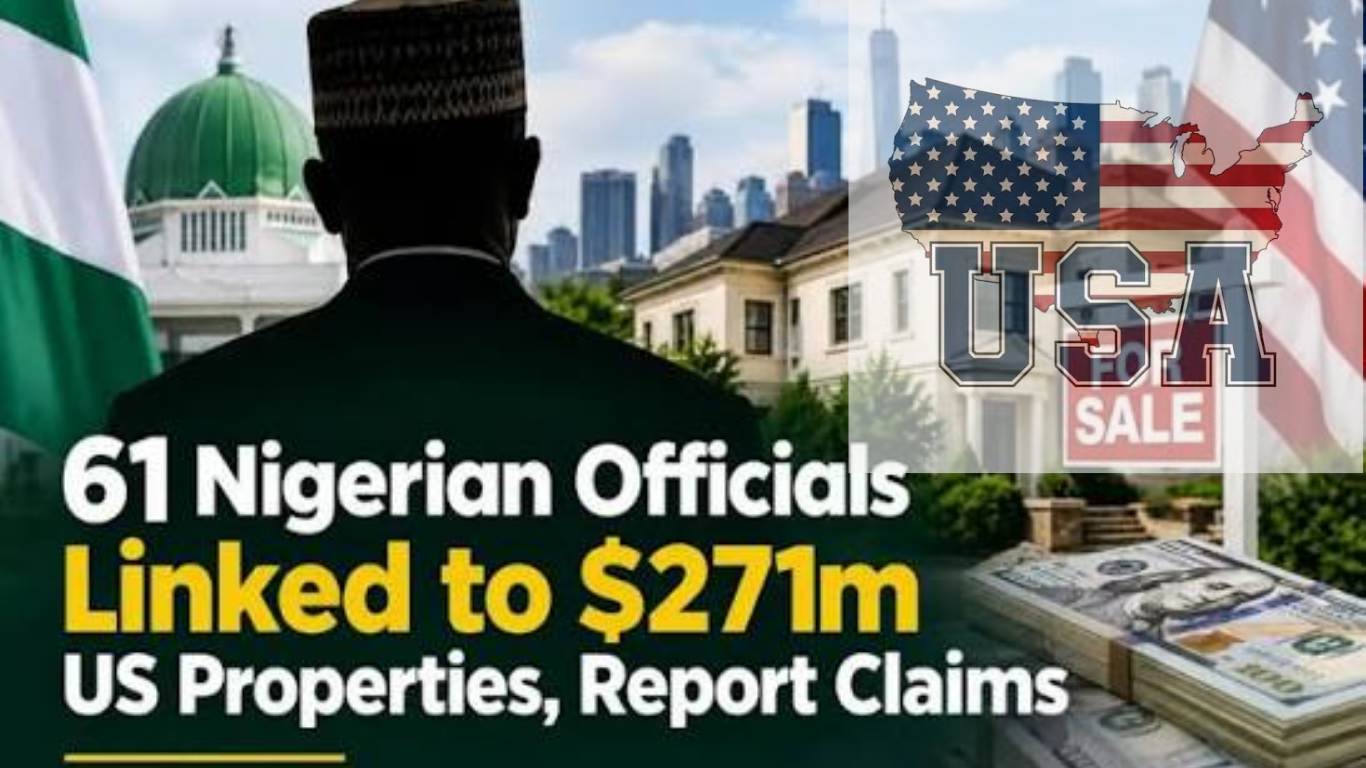
An investigation has linked 284 properties in the United States US, collectively valued at nearly $271 million, to 61 current and former high-level Nigerian officials, their families, associates and affiliated companies.
The Platform to Protect Whistleblowers in Africa (PPLAAF), working with the Anti-Corruption Data Collective, says the properties were acquired from 1991 onwards. The report puts their combined value at roughly ₦370 billion.
152 properties, valued at about $177 million, were bought while officials held office. Its findings flag transactions requiring scrutiny, but do not establish that every property was illegally acquired or that all funds came from public money.
The findings point to an extensive property trail across more than three decades. PPLAAF says 152 of the properties, worth about $177 million, were purchased while the officials were in public office. That is more than half of the properties identified. The report does not claim that every acquisition happened during tenure or that public money financed every purchase. [
The report says 230 properties, worth a combined $232 million, were purchased without apparent financing, such as a mortgage. PPLAAF treats the pattern as a money-laundering risk indicator because it may remove a financing source that would otherwise prompt checks into a buyer’s funds. But the phrase ‘without apparent financing’ is not proof that the money came from Nigeria’s treasury, nor is it, by itself, proof of a crime.
The investigation also found that 147 properties, valued at about $111 million, were held in the names of officials or their spouses, or through legal entities registered in their names. A further 104 properties, worth about $140 million, were acquired through companies. In 12 cases, PPLAAF said, officials used U.S.-incorporated entities that appeared affiliated with Nigerian companies to purchase, hold or sell properties. These categories can overlap, so they should not be added together as separate totals.
Of the 61 people examined, 39 have been publicly accused, indicted or sentenced in corruption matters. Those are distinct legal statuses: an accusation or indictment is not a conviction. The report links 232 properties, worth about $238 million, to those 39 individuals. It further says 79 properties, valued at approximately $73 million, remain connected to 27 people who have been publicly accused of corruption.
The findings are an investigative report, not a court judgment declaring all 284 acquisitions unlawful. The transactions as patterns consistent with potential money laundering and illicit enrichment and calls on Nigerian and U.S. authorities to examine the sources of funds. It also says asset recovery should follow only where authorities establish that property was bought with stolen public funds or is otherwise subject to applicable forfeiture laws.
That distinction matters. Property ownership, a purchase during public office, a lack of visible mortgage financing, or a prior corruption allegation may justify questions and further investigation. None alone proves that an individual stole public money or laundered it through real estate. Each property’s ownership, purchase price, financing, beneficial ownership and source of funds must be assessed on its own evidence.
The scale and detail of the report now place a clear test before Nigeria’s anti-corruption institutions: will they examine the underlying transactions and explain which cases warrant formal investigation? We calls for stronger cooperation between Nigerian and U.S. financial-crime authorities,

Spotted an error? Read our Corrections Policy or tell the editors.
Got a story or a tip? Contact Leading Reporters. We protect our sources.