


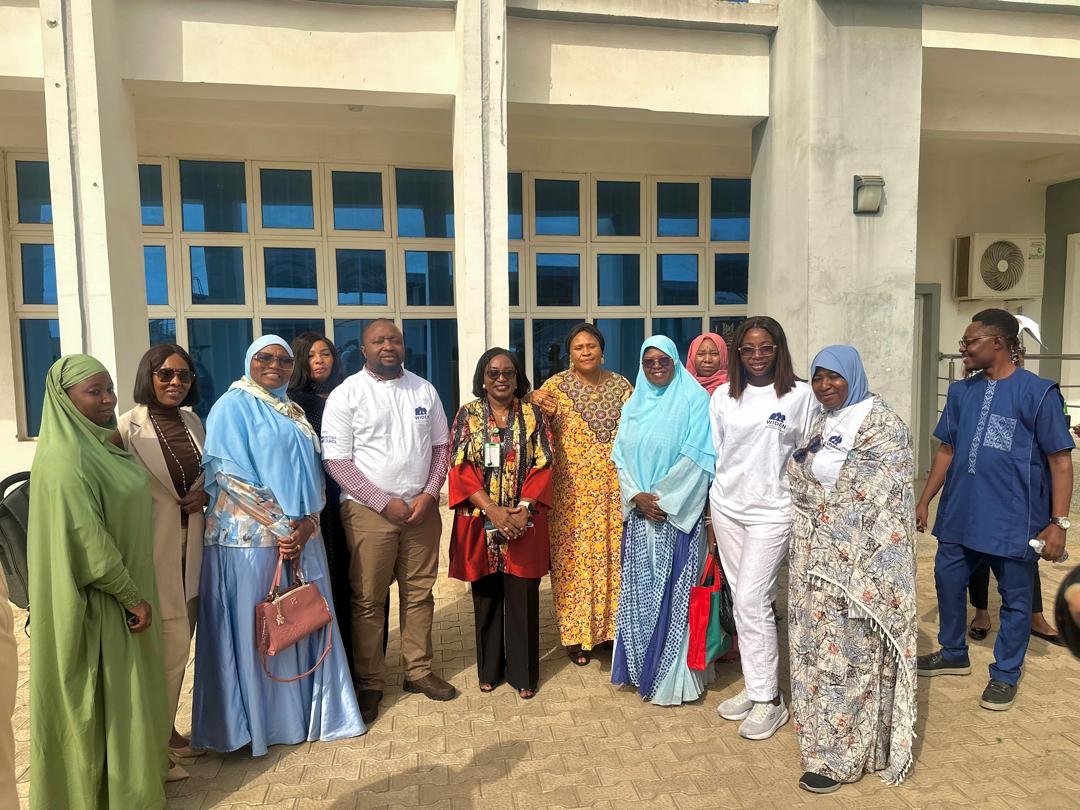
Stakeholders in academia and technology have intensified efforts to bridge the gender gap in Science, Technology, Engineering and Mathematics (STEM) through the Women in Digital Empowerment Network (WIDEN), a British Council-funded initiative designed to equip Nigerian women — including those with disabilities — with digital and artificial intelligence skills.
Speaking at the third workshop on the presentation of digital solutions under WIDEN, the Nigeria Principal Investigator, Prof. Ganiyat Adesina-Uthman, said the project was born out of concern over the persistent exclusion of women from the technology ecosystem.
“Whenever you hear about tech, it is always ‘tech boys, tech boys.’ What about tech ladies? It is not that women do not want to learn; many simply do not have access to education, digital tools and opportunities,” she said.
The WIDEN programme, sponsored by the British Council, was conceptualised to address these access gaps while ensuring inclusion of vulnerable groups, particularly persons with disabilities.
Adesina-Uthman explained that the team deliberately structured the training to accommodate participants who are deaf, blind, or physically challenged, with provisions such as sign language interpreters and audio adaptations.
Among the collaborators on the project are Dr. David Wilson of the University of London and disability advocate Dr. Lalu James, former Executive Secretary of the National Commission for Persons with Disabilities.
She disclosed that representatives of the Federal Ministry of Education and the National Universities Commission attended the second and third workshops, pledging support for scaling up the initiative across tertiary institutions.
“Our next step is to engage them formally so that the solutions developed can be improved, protected and implemented widely in Nigerian universities,” she said.
Over 200 participants registered for the current cohort, although about 70 are actively engaged. The project, which runs free of charge until April, is expected to transition into a paid model unless adopted by the Federal Government.
Adesina-Uthman also commended President Bola Ahmed Tinubu for lifting restrictions on research grant funds previously held by the Central Bank of Nigeria, noting that the directive allowing funds to be paid into commercial bank accounts would ease access for researchers.
Participants at the workshop showcased locally relevant AI-driven solutions. One innovation, “School Connect,” enables parents to monitor their children’s school attendance and academic performance remotely while maintaining data confidentiality.
Adesina-Uthman also developed a postgraduate progress monitoring platform to address prolonged study durations in Nigerian universities. The system requires periodic progress reports from students and supervisors, a model she said mirrors international best practices.
Co-Principal Investigator, Dr. David Botchie of Brunel Business School, Brunel University London, noted that while the challenges facing women in STEM are well documented, practical solutions have remained limited.
“We understand that enabling environments are not always there for women to thrive in tech-related jobs. WIDEN focuses on equipping women with practical digital skills so they can create useful products, monetise them and improve their welfare,” he said.
He acknowledged that internet connectivity and affordability remain barriers in Nigeria and across the Global South, urging governments to work closely with telecommunications providers to expand access.
Prof. Rashidah Olanrewaju, Co-Investigator and Professor of Artificial Intelligence and Computer Science at Nasarawa State University, emphasised the need for indigenous AI systems that reflect Nigerian culture and values.
“We have artificial intelligence everywhere, but something is missing — our indigenous knowledge, our proverbs, our respect culture. We need systems that reflect who we are,” she said.
She added that sustainability of the initiative would depend on mentorship and intergenerational knowledge transfer, stressing the importance of engaging young women to build long-term impact.
Adesina-Uthman encouraged women to embrace AI as a productivity tool rather than fear job displacement.
“Artificial intelligence will not take your job. It will take the jobs of those who do not use it. Use AI to enhance what you do, especially routine tasks, and focus your energy on creativity,” she advised.
Describing WIDEN as a movement rather than a one-off project, she called on women across Nigeria to seize the opportunity to gain digital skills and participate in shaping inclusive technological solutions for the country.
