Leading Reporters
  • Headlines
  • Health
  • Business
  • Exclusives
  • Investigation
  • Entertainment
  • Opinion
Monday, January 26, 2026
Hot
FCTA Workers, NLC Storm Industrial Court, Demand Wike...
DisCos reject FG’s free meter plan
Nigerian-born nurse loses licence in Australia for sleeping...
BREAKING: Kano Gov Abba Yusuf dumps NNPP
National Grid Collapse For First Time in 2026
BREAKING: Tinubu approves posting of Ambassadors to U.S.,...
Insecurity: Kidnappers demand 17 motorcycles for release of...
FG to Abolish Hnd-Degree Dichotomy, Allow Polytechnics to...
AFCON Initiative drives stronger Nigeria Morocco cooperation
Obasanjo: I’ll Never Stop Having Children
  • About Leading Reporters
  • Contact Us
Leading Reporters
Advertise With Us
  • Headlines
  • Health
  • Business
  • Exclusives
  • Investigation
  • Entertainment
  • Opinion
Hot
FCTA Workers, NLC Storm Industrial Court, Demand Wike...
DisCos reject FG’s free meter plan
Nigerian-born nurse loses licence in Australia for sleeping...
BREAKING: Kano Gov Abba Yusuf dumps NNPP
National Grid Collapse For First Time in 2026
BREAKING: Tinubu approves posting of Ambassadors to U.S.,...
Insecurity: Kidnappers demand 17 motorcycles for release of...
FG to Abolish Hnd-Degree Dichotomy, Allow Polytechnics to...
AFCON Initiative drives stronger Nigeria Morocco cooperation
Obasanjo: I’ll Never Stop Having Children
Leading Reporters
Leading Reporters
  • Headlines
  • Health
  • Business
  • Exclusives
  • Investigation
  • Entertainment
  • Opinion
Copyright 2024 - All Right Reserved
Home > World Bank
Tag:

World Bank

Business

‘You lied, 139 million Nigerians not living in poverty, FG tells World Bank

by Folarin Kehinde October 9, 2025
written by Folarin Kehinde

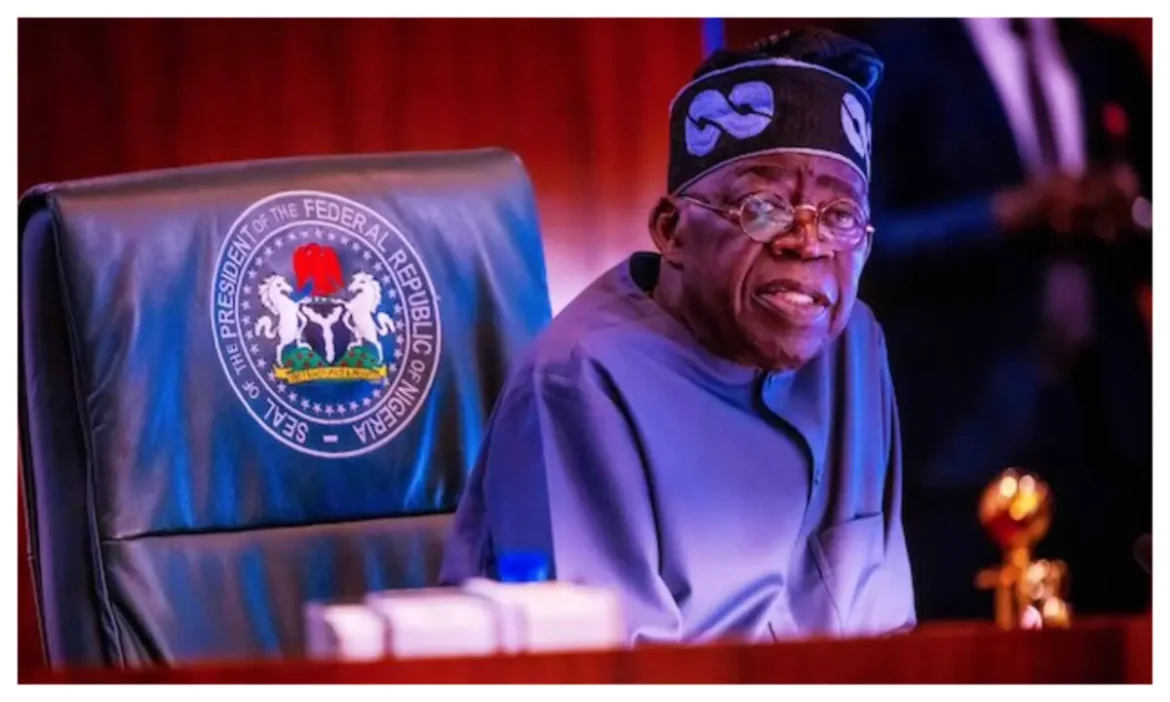
The Presidency has faulted the World Bank’s latest economic report, which estimated that about 139 million Nigerians are living in poverty, describing the figure as exaggerated and disconnected from the country’s prevailing realities.

LEADING REPORTERS gathered that the new figure by the organisation represents an increase from 129 million in April 2025.

President Bola Tinubu’s Special Adviser on Media and Public Communication, Sunday Dare, in a statement posted on his official X handle on Wednesday, said the World Bank’s poverty estimate must be “properly contextualised” within the framework of global poverty measurement models.

“While Nigeria values its partnership with the World Bank and appreciates its contributions to policy analysis, the figure quoted must be properly contextualised. It is unrealistic,” Dare said.

According to the Presidency, the global lender’s estimate was based on the $2.15 per person per day international poverty line, set in 2017 using Purchasing Power Parity (PPP). It said the figure should not be mistaken for an actual headcount of poor Nigerians.

The statement explained that, when converted to nominal terms, the $2.15 benchmark equals about N100,000 per month at the current exchange rate, which is significantly higher than Nigeria’s new minimum wage of N70,000.

It added that the PPP methodology relies on historical consumption data—Nigeria’s last major household survey was conducted in 2018/2019—and often fails to account for the large informal and subsistence sectors that sustain millions of Nigerian families.

“There must be caution against interpreting the World Bank’s numbers as a literal, real-time headcount,” the Presidency said. “The figure is an analytical construct, not a direct reflection of local income realities.”

The Presidency, therefore, described the World Bank’s estimate as a modelled global projection rather than an empirical reflection of living conditions in 2025.

Dare stressed that the administration’s focus was on changing the trajectory, not debating static figures, adding that Nigeria’s economy was now on a recovery and reform path aimed at achieving inclusive growth and social protection.

He noted that the administration has expanded a number of social welfare and economic initiatives under the Renewed Hope Agenda to cushion the impact of recent reforms while laying the foundation for long-term prosperity.

These, he said, include the Conditional Cash Transfer programme, which now covers 15 million households nationwide with digital verification through the National Social Register; the Renewed Hope Ward Development Programme targeting all 8,809 electoral wards with micro-infrastructure and social projects; and the strengthening of National Social Investment Programmes such as N-Power, GEEP micro-loans, and school feeding schemes to support jobs, businesses, and education.

He further cited food security initiatives involving the distribution of subsidised grains and fertilisers, mechanisation partnerships, and the revival of strategic food reserves to stabilise staple prices.

The Renewed Hope Infrastructure Fund, he said, is financing key road, housing, and power projects to lower living costs and create jobs, while the National Credit Guarantee Company is expanding affordable credit access for small businesses, women, and youth entrepreneurs through risk-sharing arrangements with commercial banks.

The Presidency maintained that the Tinubu administration was tackling Nigeria’s poverty challenge by addressing the structural distortions that have constrained productivity and inclusive growth for decades.

It explained that ongoing reforms such as the removal of fuel subsidy, exchange rate unification, and fiscal reallocation of funds toward productive sectors were “painful but necessary choices” aimed at fixing the root causes of poverty rather than its symptoms.

It noted that even the World Bank had acknowledged that these reforms are already restoring macroeconomic stability and growth momentum.

The government emphasised that economic recovery alone is not enough unless it translates into real welfare gains for ordinary Nigerians. According to the statement, the administration’s medium-term priority is to ensure that macroeconomic stability leads to affordable food, quality jobs, and reliable infrastructure.

It added that major investments were underway in agriculture, manufacturing, and power, including new gas-to-power projects and skill development hubs expected to boost job creation and reduce living costs. “Nigerians should begin to feel visible improvements in food prices, income, and purchasing power as these programmes mature,” the statement said.

The Presidency also revealed that efforts were ongoing to consolidate the nation’s social protection architecture under a unified, data-driven framework to enhance transparency and ensure that no vulnerable community is left behind. It said the administration was expanding the National Social Register and scaling up existing social investment schemes to provide targeted support to poor households.

The Presidency reaffirmed President Tinubu’s commitment to building a resilient and inclusive economy that directly improves living standards. “Nigeria rejects exaggerated statistical interpretations detached from local realities. The government remains focused on empowering households, expanding opportunity, and laying the foundation for a fairer, more prosperous nation,” the statement said.
October 9, 2025 0 comments
0 FacebookTwitterPinterestThreadsBlueskyEmail
Headlines

FG Seeks Fresh $1.75bn World Bank Loan Despite 40.5% Revenue Surge

by Folarin Kehinde September 5, 2025
written by Folarin Kehinde

The Federal Government plans to increase its borrowing despite a significant 40.5 per cent surge in revenue for the first eight months of 2025. This boost in revenue has largely been driven by substantial gains in non-oil revenue collections, as confirmed in a press statement on Wednesday by Special Adviser to the President on Information and Strategy, Bayo Onanuga.

Based on the figures released by the Presidency, Nigeria’s fiscal performance from January to August 2025 saw total collections reach a record N20.59tn, surpassing the N14.6tn collected during the same period in 2024. It was noted that non-oil revenues now account for 75 per cent of the total collections.

The statement read, “From January to August 2025, total collections reached N20.59tn, a 40.5 per cent increase from N14.6tn recorded in 2024. This strong performance aligns with projections, placing the government firmly on course to achieve its annual non-oil revenue target.”

However, despite these positive developments, Nigeria still faces substantial funding gaps in crucial sectors such as infrastructure, with low capital spending. Local contractors under the All Indigenous Contractors Association of Nigeria, on Wednesday, staged a protest at the Headquarters of the Ministry of Finance in Abuja, to demand payment for capital projects executed in 2024, amounting to about N4tn.

To address these funding gaps, the government plans to borrow locally and domestically despite an earlier claim by President Bola Tinubu on Tuesday in Abuja that Nigeria had met its revenue target for 2025 ahead of schedule and would no longer rely on borrowing to fund its budget.

On Thursday, The PUNCH gathered that the World Bank is expected to approve loans totalling $1.75bn before the end of the year to support key development projects in Nigeria, according to official data obtained from the bank’s official website. These loans will finance several key initiatives, including projects in agriculture, health, and digital infrastructure.

One of the major projects set to benefit from this financial backing is the Nigeria Sustainable Agricultural Value-Chains for Growth project, which will receive $500m. This initiative is aimed at improving agricultural productivity and integrating value chains to support rural development and economic diversification. The project is currently in the Concept Review phase, with approval expected on December 11, 2025.

Another project, the Building Resilient Digital Infrastructure for Growth, which has a commitment of $500m, aims to enhance Nigeria’s digital infrastructure and foster economic growth, particularly in the technology sector. The project is currently in the Begin Negotiation phase, with approval scheduled for October 31, 2025.

Similarly, the Health Security Programme in Western and Central Africa, Nigeria – Phase II, will receive $250m to strengthen Nigeria’s health systems and improve the country’s preparedness for health emergencies. This project is also in the Begin Negotiation phase, with approval expected by September 30, 2025.

Lastly, the Fostering Inclusive Finance for MSMEs in Nigeria project, which aims to improve access to finance for small and medium-sized enterprises, will be allocated $500m. This project is in the Concept Review phase, with approval set for December 18, 2025.

Collectively, these projects comprise the $1.75bn in loans expected to be approved by the World Bank before the end of the year. The PUNCH earlier reported that the World Bank approved a total of $8.40bn in fresh loans to Nigeria over the past two years, according to data obtained from the bank’s official website.

The approvals, covering the period from June 2023 to August 2025, spanned 15 projects in the energy, education, healthcare, rural infrastructure, and governance sectors. The amount comprises $1.95bn from the International Bank for Reconstruction and Development and $6.50bn from the International Development Association.

The International Bank for Reconstruction and Development provides loans on commercial or near-commercial terms to middle-income and creditworthy low-income countries, while the International Development Association offers highly concessional loans and grants to the world’s poorest nations.


September 5, 2025 0 comments
0 FacebookTwitterPinterestThreadsBlueskyEmail
World Bank
Headlines

World Bank Raises Concerns Over Nigeria’s 2025 Budget Assumptions

by Nelson Ugwuagbo May 13, 2025
written by Nelson Ugwuagbo

The World Bank has described Nigeria’s key assumptions for the 2025 national budget as overly optimistic, citing a significant gap between the projected figures and current economic realities.

In its May 2025 Nigeria Development Update, released on Monday in Abuja, the global financial institution raised concerns over the Federal Government’s projection of crude oil production at 2.1 million barrels per day (mbpd) and an oil price benchmark of $73 per barrel. The Bank noted that these projections are ambitious, given the current production level of 1.6mbpd and an average international price of $60 per barrel.

However, the Federal Government defended its position, stating that the assumptions reflect the country’s economic potential and are grounded in a forward-looking outlook.

The report presentation was attended by key government officials including the Minister of Finance, Wale Edun; Minister of Budget and National Planning, Atiku Bagudu; Minister of Communications, Innovation and Digital Economy, Bosun Tijani; Central Bank Governor, Yemi Cardoso; Governor of Plateau State, Caleb Mutfwang; and several private sector leaders.

Presenting the report, Dr. Alex Sienaert, Lead Economist at the World Bank Nigeria Country Office, acknowledged the Federal Government’s recent economic reforms, particularly the removal of petrol subsidies and the liberalization of the foreign exchange market.

He noted that while Nigeria’s macroeconomic indicators are largely positive, high inflation remains a pressing concern. He emphasized that for the country to reach its target of becoming a $1 trillion economy by 2030, its growth rate must accelerate to at least five times the current 3.8 percent.

The World Bank’s report also urged the government to remain committed to its reform agenda and warned that the 2025 budget could result in a wider-than-expected fiscal deficit if not properly managed.

Despite the challenges, the World Bank expressed cautious optimism about Nigeria’s fiscal outlook, provided that reforms are sustained and public investment in infrastructure and youth development is strengthened.

May 13, 2025 0 comments
0 FacebookTwitterPinterestThreadsBlueskyEmail
Headlines

Tinubu’s govt spending habits, threat to economic stability – World Bank

by Folarin Kehinde October 23, 2024
written by Folarin Kehinde

The World Bank has ranked the Nigerian government as weak in managing wasteful expenditures, raising concerns over financial transparency and accountability under President Bola Tinubu’s administration.

In its Nigeria Development Update, the global institution advised the government to reduce non-essential spending, such as the purchase of luxury vehicles and external training, to address the country’s economic challenges.

Despite widespread economic hardship, the Tinubu administration reportedly spent billions on luxury items, including N9.2 billion on State House vehicles over three months.

Additional spending included N250 million for First Lady event decorations within five days and another N14 billion for renovations, honorariums, and forex purchases.

The extravagant spending also included a new Presidential jet costing a staggering N150 billion.

The expenses have fueled public criticism, especially as Nigeria grapples with limited resources and mounting debt, with the country increasingly relying on loans to cover its budget deficit.

Concerns have been raised over the administration’s financial management, particularly as the nation faces high debt servicing costs.

Indermit Gill, the World Bank’s Senior Vice President, stressed the need for sustained economic reforms, suggesting that Nigeria must maintain these changes for another 10 to 15 years to see a transformative impact.

He made the remarks recently at the 30th Nigerian Economic Summit in Abuja.

October 23, 2024 0 comments
0 FacebookTwitterPinterestThreadsBlueskyEmail
Headlines

World Bank Approves $500m Loan For Nigeria

by Folarin Kehinde October 4, 2024
written by Folarin Kehinde

The World Bank has given the green light to a $500 million loan to support the Sustainable Power and Irrigation for Nigeria (SPIN) initiative to mitigate challenges of climate conditions.

World Bank’s Regional Director, Sustainable Infrastructure Development for West and Central Africa, Chakib Jenane, announced this during a visit to the Minister of Water Resources and Sanitation on Thursday in Abuja.

Jenane said the SPIN project was approved during the World Bank’s Board meeting on September 26, adding that it was scheduled to commence in January 2025.

He added that the project is designed to address climate-related issues, including floods and droughts, through enhanced dam safety, improved water resource management, and expanded irrigation services.

Janane stated that the project would benefit approximately 950,000 people, including farmers and livestock breeders, emphasising the need for Nigeria to continue preparations to meet the remaining conditions for the project to be effective by the target date.

The World Bank team also provided an update on the Transforming Irrigation Management in Nigeria (TRIMING) project, which is nearing completion.

The team also gave an update on the Sustainable Urban and Rural Water Supply, Sanitation, and Hygiene (SURWASH) programme, and stressed the importance of involving more states in the initiative.

Jenane encouraged the ministry to explore the establishment of a National WASH Fund, a key objective under the SURWASH programme’s Disbursement Linked Indicator (DLI) 1.

The Minister of Water Resources and Sanitation, Prof. Joseph Utsev, expressed his appreciation to the bank for its continued support of Nigeria’s development, particularly in sustainable infrastructure and water resource management.

He assured the delegation that the Nigerian government would provide the counterpart funding support to ensure the successful implementation of all World Bank-backed projects.

Utsev also emphasised the importance of completing the TRIMING Project on schedule and reaffirmed the ministry’s commitment to meeting the January 2025 deadline.

Minister of State for Water Resources and Sanitation, Dr Bello Goronyo also thanked the World Bank for its approval of the SPIN project, reiterating the ministry’s commitment to the project through collaborative efforts.

October 4, 2024 0 comments
0 FacebookTwitterPinterestThreadsBlueskyEmail
Business

World Bank approves fresh $1.57bn loan for Nigeria, total dept to hit $17.16 bn

by Folarin Kehinde September 30, 2024
written by Folarin Kehinde

The World Bank says it has approved three new loan requests totalling $1.57bn for Nigeria to support the Federal Government in strengthening human capital through better health for women, children and adolescents.

The new loan will bring the country’s total dept to the Bretton Woods Institution to about $17.16 bn.

At least six loan projects have been approved. They include loans for power ($750m), women empowerment ($500m), girl’s education ($700m), renewable energy ($750m), economic stabilization reforms ($1.5bn) and resource mobilization reforms ($750m).

Data from the external debt stock report of the Debt Management Office shows that Nigeria owes the World Bank a total of $15.59 billion as of March 31, 2024

Meanwhile, a statement by the World Bank said on Monday that the projects for which the new loan was approved, would also help build resilience to the effects of climate change, such as floods and drought, by improving dam safety and irrigation.

“The World Bank has today approved three operations for a total of $1.57bn to support the Government of Nigeria in strengthening human capital through better health for women, children and adolescents and building resilience to the effects of climate change such as floods and droughts through improving dam safety and irrigation,” the statement said.

The international lender stated that this new financing includes $500m for addressing governance issues that constrain the delivery of education and health, $570m for the Primary Healthcare Provision Strengthening Programme and $500m for the Sustainable Power and Irrigation for Nigeria Project.

“The HOPE-GOV and HOPE-PHC programmes combined will support the Government of Nigeria to improve service delivery in the basic education and primary healthcare sectors which are critical towards improving Nigeria’s human capital outcomes.

“The SPIN project will support the improvement of dams’ safety and management of water resources for hydropower and irrigation in selected areas of Nigeria.

“The HOPE-GOV Programme will support Nigeria to address underlying governance weaknesses in the systems and procedures of government in two key human development sectors,” it noted.

The approval, made on September 26, 2024, highlights the World Bank’s commitment to strengthening Nigeria’s human capital and building resilience in the face of climate threats.

It also indicates that Nigeria has secured a total of $6.52bn in loans from the World Bank under the administration of President Bola Tinubu amid concerns over the country’s rising external debt servicing costs.

Continuing, the World Bank explained that the HOPE-GOV Program will address underlying governance weaknesses in the systems and procedures of government to substantially reduce maternal and under-five mortality, benefiting 40 million people, especially vulnerable populations.

It said the project to be implemented by the Federal Ministry of Budget and Economic Planning, Federal Ministry of Budget and Economic Planning, Federal Ministry of Health and Social Welfare, and Federal Ministry of Education will receive $500m International Development Association credit and an additional $70m in grant financing from the Global Financing Facility for Women, Children and Adolescents.

“The HOPE-GOV Program will support Nigeria to address underlying governance weaknesses in the systems and procedures of government in two key human development sectors. It will particularly focus on critical cross-cutting challenges and enabling factors related to both financial and human resource management in basic education and primary healthcare sectors. The Program will increase the availability and effectiveness of financing for basic education and primary healthcare service delivery, enhance transparency and accountability of financing and improve recruitment, deployment and performance management of basic education teachers and primary healthcare workers by federal, state, and local governments.

“In support of the government’s newly launched reforms in the health sector, under the Health Sector Renewal Investment Initiative, the HOPE-PHC project will improve the quality and utilization of core reproductive, maternal, newborn, child, and adolescent health and nutrition services to substantially reduce maternal and under-five mortality and to improve the resilience of the health system— benefiting 40 million people, especially vulnerable populations.

The project is financed by a concessional $500 million International Development Association credit and an additional $70 million in grant financing from the Global Financing Facility for Women, Children and Adolescents. The GFF support includes $11 million from the UK Foreign, Commonwealth & Development Office and $12.5 million from the Children’s Investment Foundation Fund through joint financing with the GFF to help close the financing gap for primary and community healthcare and maternal newborn care at hospital-level, while also supporting government efforts to ensure sustainable financing for family planning commodities,” The statement explained.

September 30, 2024 0 comments
0 FacebookTwitterPinterestThreadsBlueskyEmail
HeadlinesBusiness

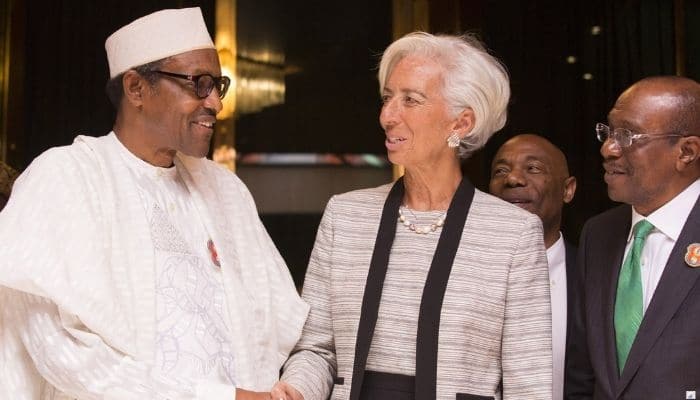
Nigeria may be Broke but don’t need Money to Turn the Tide

by Leading Reporters February 10, 2022
written by Leading Reporters

Nigeria has continued to borrow money to fund its budgets, the 2022 budget, and the country does not plan to stop borrowing soon, as details on its Medium Term Expenditure Framework show that between 2022 and 2024, the country will borrow N14.8 trillion.

Debt servicing, a consequence of the heavy borrowing, continues to gulp huge amounts and between 2022 and 2024, debt servicing will take a total of N14.6 Trillion.

To put it concisely Nigeria is broke, maybe not in the same way Musa or Nkechi are broke two days after receiving a salary, but broke all the same. 

President Muhammadu Buhari told the global community that the country needs $1.5 Trillion to bridge its infrastructure gap.

However, has more money always translated into more development for Nigeria?

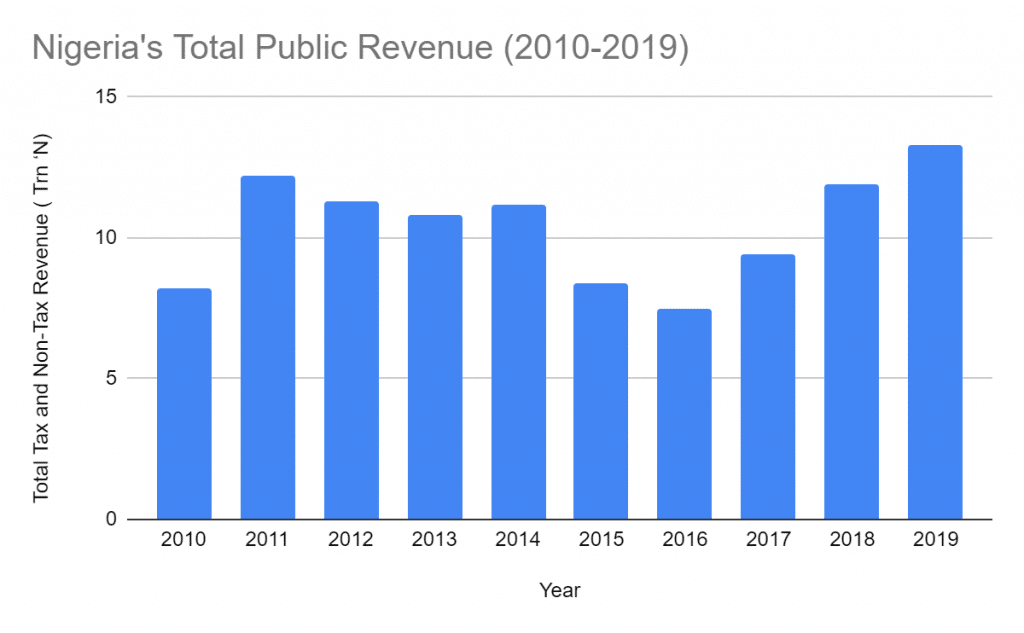
Figures available on the Organization for Economic Cooperation and Development portal show the total public revenue of the country. 

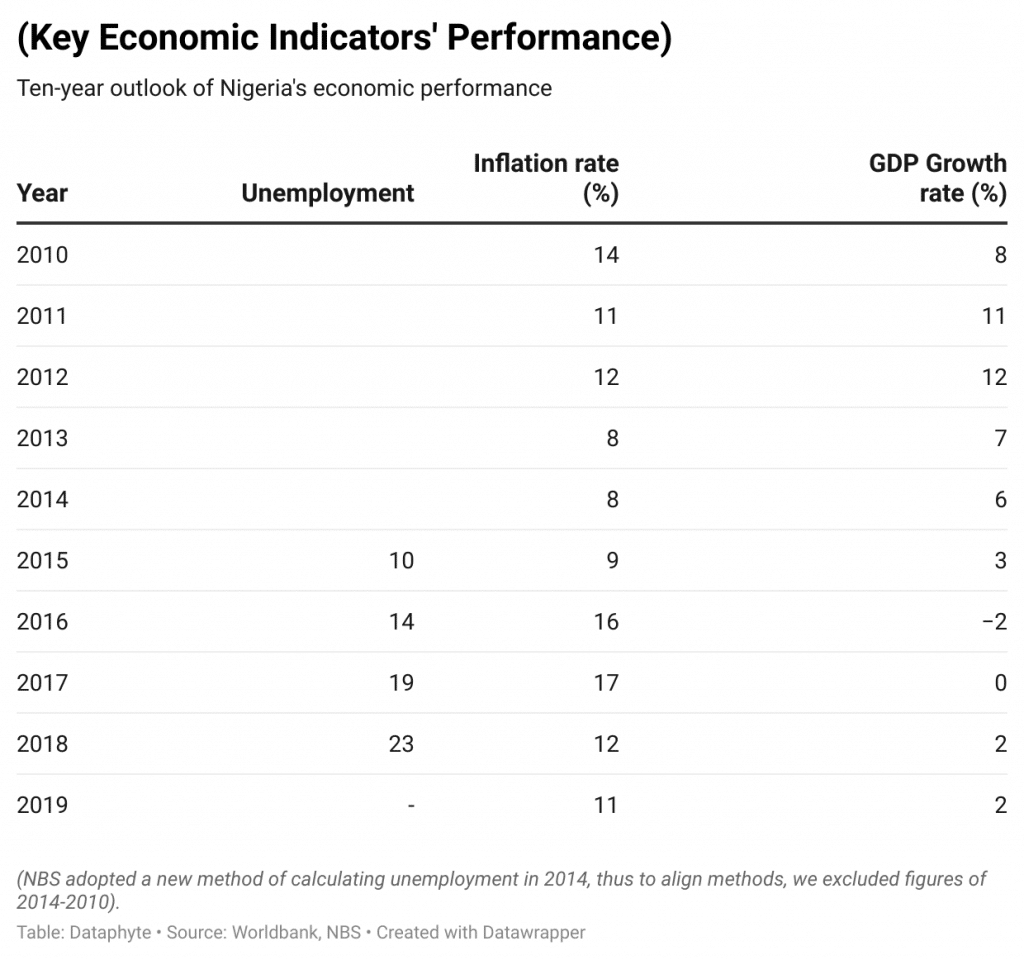
Key Economic Indicators

(The public revenue of the country for 2020 and 2021 was not added due to the COVID-19 pandemic which altered financial demands and spending of the country and all countries across the globe.)

Between 2018 and 2019, public revenue increased with the revenue hitting N13 Trillion. Unfortunately, increased revenues have not always guaranteed better economic outcomes. Economic indicators showed that GDP growth remained at 2% in both years.

The inflation figures of the country have remained in double digits impacted by both demand-pull and cost-push forces. Dependency on imports has also put pressure on the country contributing to inflation especially when the increase in the price of imported goods may also drive up prices of goods and services in the country. The naira has continued to reduce in value as exchange rates makes the country’s dependence on imported goods near suicidal. Yet in 2019, importation figures increased up to N5.3 trillion, an increase of 49.34% over the 2018 figure. 

The various policies of the government have failed to reduce the food importation bill. Importation of agricultural products rose by 6.6% between Q4 2018 and Q4 2019. Wheat importation bill stood at $1.48billion as of 2019, according to the Observatory of Economic Complexity.  Although the country’s rice production increased, the country has yet to achieve self-sufficiency.

Nigeria has also battled with poverty, with the World Bank noting that over 40% of Nigerians representing 83 million persons live below the poverty line while another 25% (53 million people) were vulnerable.

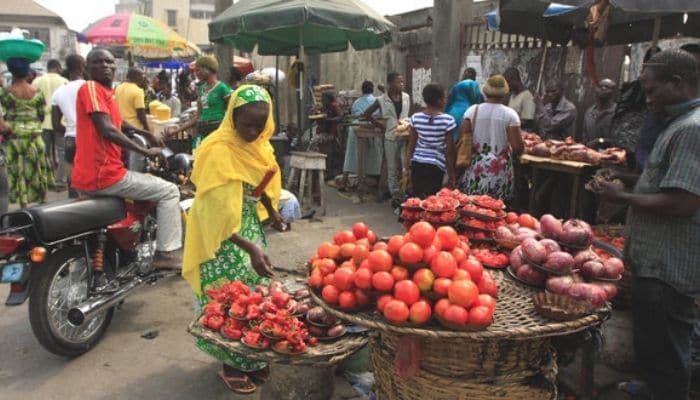
Food insecurity is heightened as the country has struggled in recent times to meet its local demand for food. Scarcity occasioned by insufficiency and strengthened by insecurity has led to a surge in food prices. Although the country has recorded some increase in the Agricultural sector’s contribution to GDP over the years, in real-time, the results have not translated to a positive effect on final economic indicators nor the country’s food security positioning.

In 2016, the country introduced N-power to tackle unemployment but the unemployment figure has not dropped since then, growing from 14%, 19% to 23% respectively in 2016, 2017 and 2018. The N-power intervention and other related policies of the government did not reduce the unemployment percentage.

Recurrent, Capital Expenditure Ratio, Corruption May be Denying Nigeria Adequate Results of Increased Revenue

Nigeria has over the years experienced high recurrent expenditure over capital expenditure across key sectors. The ability to invest in key infrastructures that may have impacted on key indicators by increasing job creation, improving local manufacturing and production etc. have reduced the value of development and increase in public revenue could offer.

Corruption is a significant factor in the loss of development benefits from increased revenue. The corruption perception index of the country stood at 145 of 180 countries in 2020 with the country scoring 25 points out of a possible 100, according to Transparency international. 

Although Nigeria dropped one place in 2020 having ranked 146 in 2019, its record has historically been poor, ranking 1444 in 2018 and 148 in 2017. This is despite the introduction of the Treasury Single Account by the government in 20016 aimed to harmonize financial operations and ensure a transparent public sector. If the Auditor General’s report is anything to go buy, the government and its agencies continue to miss the mark on transparency and accountability

Budget Deficit, Debt Servicing May Deny Nigerians Full benefit of Increased Public Revenue

A report earlier noted the high cost of debt servicing in the country for instance between January to May 2020 Nigeria spent N72 on debt servicing for every N100 earned. The 2022 budget has a 22% debt servicing figure of N3.8 trillion. This means that a substantial part  of Nigeria’s public revenue will be spent on debt servicing, monies that might have aided in boosting key economic indicators.

With Nigeria planning to borrow another N14.8 Trillion between 2022 and 2024, that will shoot up the cost of the country’s debt servicing and is expected to gulp N14.6 Trillion in the same period (2022-2024).

Review of Nigeria’s Current Key Fiscal Policies

Nigeria’s policies on improving the economic outcomes of the country have suffered various handicaps. For instance, the diversification of the economy to Agriculture has been greatly affected by insecurity, climate change, among other issues.

Policies for reducing the unemployment burden have not yielded much results as the figures have continued to grow. 500,000 Nigerians were reported to have benefitted from the N-power program as of 2020, but there has been no impact on the rate of unemployment in the country which ended the year at 32.5% . The president launched another initiative, Nigeria Jubilee Fellows program aimed at employing twenty thousand Nigerians who just graduated from the National Youth Service Corps. Again this is unlikely to affect the employment projected to rise even higher in 2022. 

The country operates the Retail Dutch Auction system for its foreign exchange. What this implies is that the Central Bank sells Forex through Banks to the end-users. The apex bank announced in July 2021, that it was suspending the Bureau-De-Change operators and suspended the issuance of new licenses. This move was perceived by actors as part of a strategy to improve the naira’s positioning but the value of Naira has remained unstable at N414 to $1 as at the time of this report. Not only are import prices  higher which drives up inflation, Nigeria’s debt servicing costs will also increase as the naira weakens. 

Exports, government spending and local manufacturing and production are a major part of increasing Gross Domestic Product but increase in price of raw materials compounded by insecurity and insufficient government investment in capital projects are likely to keep the country’s GDP growth rate nominal. 

Nigeria may need money but clearly mere increase in revenue does not necessarily translate to development and without improving its key economic performance indicators, Nigeria may continue to be in a vicious cycle of lack, dependence and borrowing.

Better policies, a genuine fight against corruption and open and accountable governance are critical to lifting Nigeria out of poverty.

While more money may mean more resources to do more things, the country may need to improve on corresponding effective policies that are commensurate with the growth in public revenue.

The question may be that the value of those monies at that time also determines what they can do, but the value relies on working policies too. (dataphyte)

February 10, 2022 0 comments
0 FacebookTwitterPinterestThreadsBlueskyEmail
Headlines

Revealed! Nigeria Lost 50% of Her Youths, World Bank

by Leading Reporters July 25, 2021
written by Leading Reporters

Seeking to secure their future in a land with a viable economy and favourable economic conditions, it has been revealed that half of the Nigerian youths are seeking to travel out of the country.

According to the World Bank, an increasing number of Nigerian youths are planning to leave the country in search of greener pastures. This was revealed by the World Bank in a study titled “Of Roads Less Traveled: Assessing the Potential for Migration to Provide Overseas Jobs for Nigeria’s Youth,” which was released on the website of the World Bank this week.

future in a land with a viable economy and favourable economic conditions, it has been revealed that half of the Nigerian youths are seeking to travel out of the country.

According to the World Bank, an increasing number of Nigerian youths are planning to leave the country in search of greener pastures. This was revealed by the World Bank in a study titled “Of Roads Less Traveled: Assessing the Potential for Migration to Provide Overseas Jobs for Nigeria’s Youth,” which was released on the website of the World Bank this week.


Among the nations polled, Nigeria ranked third just behind Liberia (70 per cent) and Sierra Leone (60 per cent) in terms of respondents looking to permanently relocate to another country. Niger Republic came in at 10% ranking lowest in the study

The study revealed further that Nigerians were the largest group of migrants from Sub-Saharan Africa entering Europe in 2016 and 2017, with almost 40,000 migrants landing in Italy in 2016, and over 90% arriving by sea.

“With rising migratory pressures created by poor employment conditions, Nigerians are increasingly choosing to migrate through irregular means,” the World Bank said.

“A larger number of Nigerian migrants arriving in Italy were women (32 per cent) more than migrants from the rest of Sub-Saharan Africa (24 per cent),” the bank stated.

“However, the underlying economic and demographic factors that create migratory pressures are unlikely to subside in the near future, with other potential irregular routes being reported through Sudan and Chad to Libya” it noted.

I Have Done My Best For Nigeria On Poverty And Insecurity, Buhari Insists

With the current insecurity and growing poverty in Nigeria, President Muhammadu has said that he has done his best to rescue the country’s situation. This is as the President met with some members of the All Progressives Congress (APC) on Thursday. In a statement by the Senior Special Assistant to the President on Media and Publicity, Garba Shehu, Buhari made this known when he hosted some APC governors at his hometown in Daura, Katsina state.

According to Buhari, things were worse at the time he assumed power in 2015. He also added the security situation in the North-East had improved compared to what was happening there before 2015 when some parts of the region were being controlled by terrorists. He noted that he had to change the security chiefs and did what was necessary to achieve a level of security.

July 25, 2021 0 comments
0 FacebookTwitterPinterestThreadsBlueskyEmail
Headlines

Nigeria economic growth lags Africa, poverty rising

by Leading Reporters June 16, 2021
written by Leading Reporters

Nigerian economic growth has resumed after the COVID shock but is lagging the rest of sub-Saharan Africa, with food inflation, heightened insecurity and stalled reforms slowing growth and increasing poverty, the World Bank said on Tuesday.

Presenting its six-monthly update on development in Africa’s most populous country, the organisation gave a GDP growth forecast for Nigeria of 1.9% in 2021 and 2.1% in 2022, compared with 3.4% this year and 4.0% next year for sub-Saharan Africa.

He said the COVID-induced crisis was expected to push over 11 million Nigerians into poverty by 2022, taking the total number of people classified as poor in the country to over 100 million. The total population is estimated at 200 million.

The World Bank expects the Nigerian inflation rate in 2021 to be 16.5%. The forecast for sub-Saharan Africa, excluding Nigeria, is 5.9%.

Hernandez said increased insecurity across the nation — ranging from mass abductions at schools, kidnappings for ransom, armed conflict between herdsmen and farmers, armed robberies and various insurgencies — was a drag on growth and job creation.

He said it was critical for the government to maintain reform momentum, but that some important reforms had stalled

He cited petrol subsidies, which have recently returned after the government had established a market-based pricing mechanism, and electricity tariff reform, an area where planned adjustments to bring prices in line with costs have been paused.

Hernandez said Nigeria had the largest number of people without access to electricity in the world, and that electricity subsidies benefited mainly richer households.

Only 22% of the poorest households have access to electricity, while 82% of the richest are able to access power.

June 16, 2021 0 comments
0 FacebookTwitterPinterestThreadsBlueskyEmail
Headlines

Nigeria eyes $3 billion Eurobond sale to fund budget deficits after sixth sale

by Leading Reporters May 19, 2021
written by Leading Reporters

Nigeria plans to issue $3 billion or more in Eurobonds as international capital markets (ICM) open up and interest rates decline, the government said on Tuesday, after the coronavirus pandemic disrupted markets last year.

The West African country had planned a Eurobond issue early last year after its sixth sale in 2018, but it decided to defer the 2020 sale due to market turmoil caused by the COVID-19 pandemic.

In April, the head of the debt office told Reuters the government was looking to pick advisers.

“The plan is to raise the sum of $6.183 billion from a combination of sources,” President Muhammadu Buhari said in a letter to parliament seeking approval for the debt raise.

“From recent trends in the ICM, it is now possible for Nigeria to raise funds in the ICM. We estimate that Nigeria may be able to raise $3 billion or more, but not more than $6.183 billion in a combination of tenors between five to 30-years.”

Nigeria emerged from its second recession since 2016 in the fourth quarter, but growth is fragile. The government expects a 2021 budget deficit of 5.60 trillion Naira to be financed largely from foreign and local borrowings.

Buhari said it wanted to moderate debt service costs by accessing relatively cheaper funds abroad, especially as global interest rates fall below 2020 levels while local rates begin to rise.

In February, the West African country said it would trim offshore borrowing to 30% of its total loans from 40% currently, in a bid to strengthen domestic markets.

Nigeria has been in talks with the World Bank for a $1.5 billion loan, but approvals have been delayed due to concerns over reforms to its currency.

Last week, the country let its Naira weaken on the official market against the dollar in a possible move by the central bank to unify its numerous exchange rates.

May 19, 2021 0 comments
0 FacebookTwitterPinterestThreadsBlueskyEmail
Newer Posts
Older Posts

Recent Posts

  • FCTA Workers, NLC Storm Industrial Court, Demand Wike Sack

    January 26, 2026
  • DisCos reject FG’s free meter plan

    January 26, 2026
  • Nigerian-born nurse loses licence in Australia for sleeping on duty

    January 24, 2026
  • AI may outsmart humanity in five years — Musk

    January 24, 2026
  • BREAKING: Kano Gov Abba Yusuf dumps NNPP

    January 23, 2026

Usefull Links

  • Contact Page
  • About Leading Reporters
  • Contact Us
  • Headlines
  • Investigation
  • Exclusives
  • Opinion
  • Business
  • Facebook
  • Twitter
  • Instagram
  • Linkedin

@2021 - All Right Reserved. Designed and Developed by PenciDesign


Back To Top
Leading Reporters
  • Featured
  • Politics
  • Opinion
  • Business
  • Entertainment
  • Sports
  • About Us
  • Contact