
Leading Reporters
  • Headlines
  • Health
  • Business
  • Exclusives
  • Investigation
  • Entertainment
  • Opinion
Saturday, February 14, 2026
Hot
BREAKING: INEC announces timetable, schedule of 2027 elections
Aso Rock to disconnect from nat’l grid in...
Valentine’s Day: FG bans money bouquets, warns against...
INEC Proposes ₦873.78 Billion Budget for 2027 General...
Engine Failure: Passengers escape death as Arik Air...
Senate adopts electronic, manual transmission of election results
BURSTED: NSITF CEO MOVES On ₦297Billion Fund, Operates...
Peter Obi joins #OccupyNationalAssembly protest over electronic transmission...
Tension As Popular Gospel Singer, 3 crew members...
2027: Wike Establishes Radio Station For Tinubu Campaign...
  • About Leading Reporters
  • Contact Us
Leading Reporters
Advertise With Us
  • Headlines
  • Health
  • Business
  • Exclusives
  • Investigation
  • Entertainment
  • Opinion
Hot
BREAKING: INEC announces timetable, schedule of 2027 elections
Aso Rock to disconnect from nat’l grid in...
Valentine’s Day: FG bans money bouquets, warns against...
INEC Proposes ₦873.78 Billion Budget for 2027 General...
Engine Failure: Passengers escape death as Arik Air...
Senate adopts electronic, manual transmission of election results
BURSTED: NSITF CEO MOVES On ₦297Billion Fund, Operates...
Peter Obi joins #OccupyNationalAssembly protest over electronic transmission...
Tension As Popular Gospel Singer, 3 crew members...
2027: Wike Establishes Radio Station For Tinubu Campaign...
Leading Reporters
Leading Reporters
  • Headlines
  • Health
  • Business
  • Exclusives
  • Investigation
  • Entertainment
  • Opinion
Copyright 2024 - All Right Reserved
Home > Telecoms
Tag:

Telecoms

Business

Proposed 90,000km fibre project will face severe challenges, Telecoms stakeholders tells FG

by Folarin Kehinde July 12, 2024
written by Folarin Kehinde

The federal government has been told that its planned deployment of 90,000 kilometers of fibre optic cables across the country will face several obstacles.

Stakeholders in the telecommunications industry said the state governments might truncate the project.

The stakeholders believe that without addressing the current issue of Right of Way charges, multiple taxation, and levies, which are under the control of state governments, the project which is to be implemented through a Special Purpose Vehicle (SPV) would be an exercise in futility.

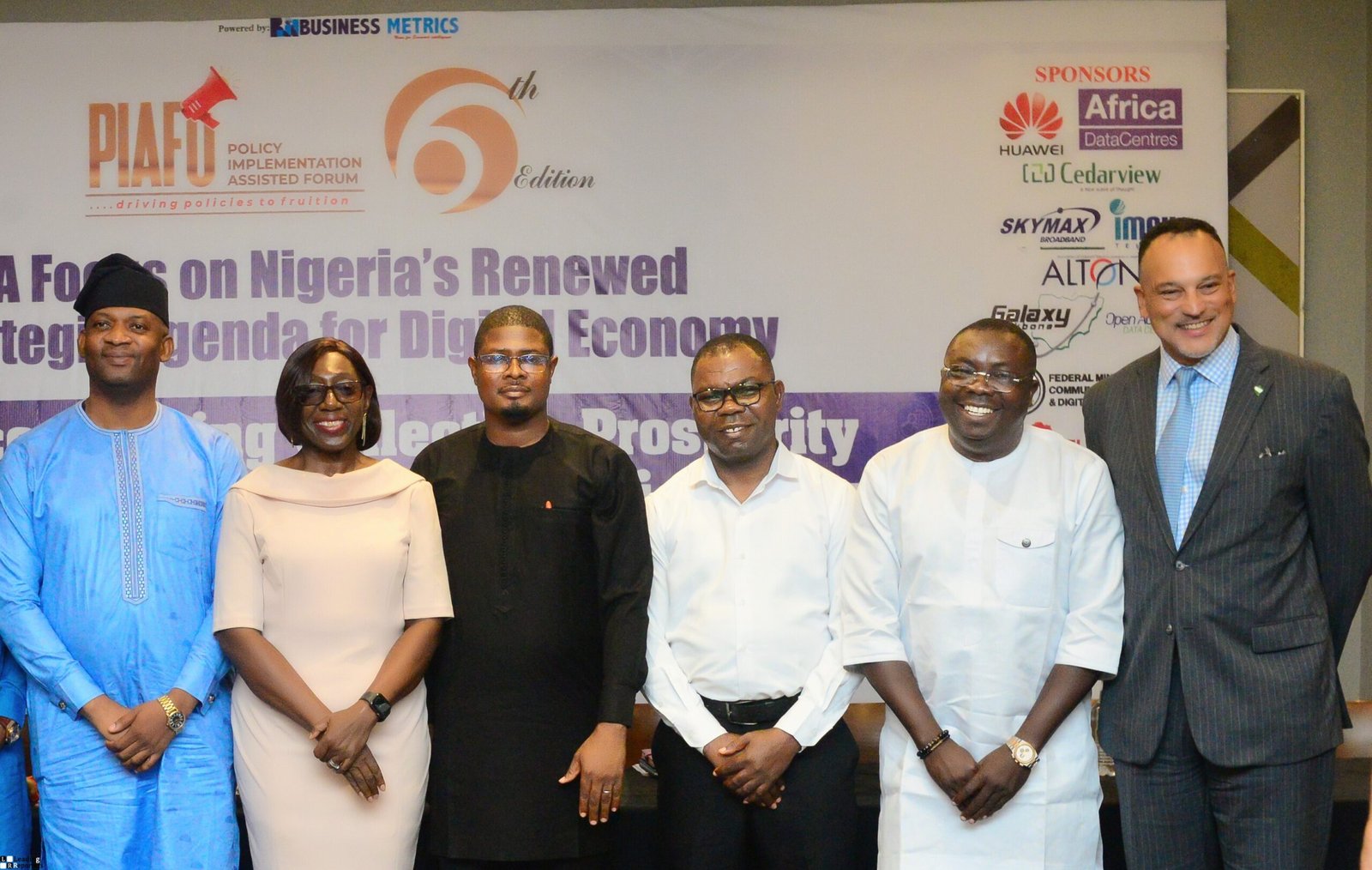
They made their position known during the Sixth Edition of the Policy Implementation Assisted Forum (PIAFO) in Lagos on Wednesday, which was a focus on Nigeria’s renewed strategic agenda for the digital economy.

They stressed the need to ensure the successful implementation of the project which was announced recently by the Federal Government to complement existing connectivity for universal access to the internet across Nigeria and provide the Nigerian digital economy with the backbone infrastructure it needed.

Executive Director of Broadbased Communications, Mr. Chidi Ibisi, who presenting a paper on the topic, ‘Harmonizing Nigeria’s Fibre Deployment Strategies for Effective Implementation’, said while the government’s SPV initiative was a good plan that could help the country bridge its current digital infrastructure gap, the government would need to address current challenges.

According to him, “The issues of high cost of Right of Way (RoW), destruction of fiber by road construction companies and vandals all need to be addressed for this new SPV initiative to be successful.”

Highlighting some of the challenges telecom operators faced when deploying infrastructure, the Group Chief Operating Officer of WTES Projects Limited, Mr. Chidi Ajuzie, said the biggest challenge to fibre cable laying in Nigeria is the informal RoW by hoodlums in states.

“For states, a formal right of way is set and some states are adopting it but the informal side of the right of way is where the complexity has come today.

“If I’m trying to lay fibre in some communities here in Lagos, the first thing that happens is the so-called land owners (omo onile) come out and a different set of people will keep coming from one street to another and they charge you.

“How do we achieve adequate broadband infrastructure in this kind of situation?” He asked.

The Chairman of the Association of Licensed Telecommunications Operators of Nigeria (ALTON) Engr. Gbenga Adebayo, pointed out that for the 90,000 kilometres fibre project to succeed, the state governments have to take ownership.

“For the project to succeed, I think the governments at sub-nationals should take ownership. This issue of state governments seeing right of way as IGR should be a thing of the past. We can’t talk about the digital economy on one side and the government is seeing those who provide the services as sources of revenue.

“The government has always come up with good policies, but the implantation, particularly when they are tested far afield, is the biggest problem. Governors will go to Abuja and say ‘in my state, I will give the right of way free of charge.’

“When you go to such a state, they may give you the right of way for zero or one Naira, but they will give you developmental levy, education levy, state impact levy, ecosystem levy. When you add all of these together, it is more than the right of way charges. So, who is playing who?” He queried.

Dr Ayotunde Coker, the Chief Executive Officer of Open Access Data Centre (OADC) stressed the need for the fibre project to be executed by the private sector even as the World Bank is expected to fund it with up to $3 billion.

“the World Bank can put money into the government but it needs private sector partnerships as the execution engine and that’s what we’ve been pushing in Africa.

“The key thing is that when the World Bank puts the money in, it should engage the private sector, figure out the policies that it needs to do and enable the private sector to execute them effectively and make it as open as possible. With that, they can achieve what they are trying to achieve,” he said.

He further stressed that for the success of the project, Nigeria should learn lessons of what didn’t work in the past, to achieve the new broadband penetration targets with the fibre range that is required.

“Meaningful broadband is what we need, rather than just a huge set of megabits per second implementation. We need superhighway fibres. We need the distribution of these backbone that allows us then to fan out,” he said.

He further urged state governors to be part of the project by providing an enabling environment for infrastructure roll-out, adding: “if you are a state governor and didn’t participate in it, the state won’t grow and it’s going to impact your state.”

The convener of PIAFo, Mr. Omobayo Azeez, said the conference was to create a midpoint dialogue platform for digital economy stakeholders across both the public and private divides to brainstorm, exchange perspectives, clear grey areas, harmonize thoughts and create a sense of collective responsibility towards accelerating our collective prosperity through technical efficiency.

The event focused on Nigeria’s renewed strategic agenda for the digital economy.

According to him, the new digital economy blueprint of the federal government does not only sustain existing policy directions, “it also challenges us on the possibilities of attaining new frontiers.”
July 12, 2024 0 comments
0 FacebookTwitterPinterestThreadsBlueskyEmail
Headlines

Telecommunications Subscribers To Pay 5% Tax On All Services

by Folarin Kehinde July 29, 2022
written by Folarin Kehinde

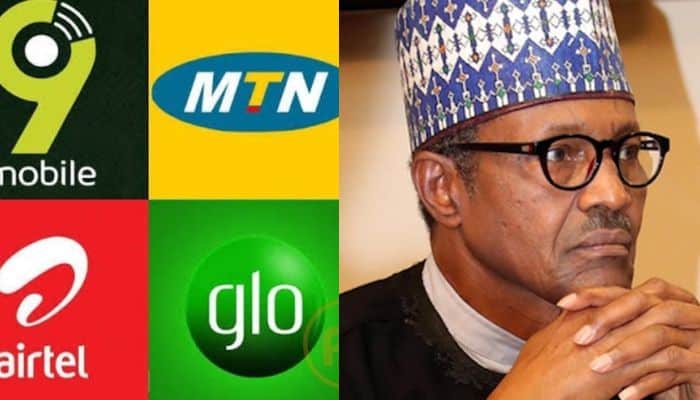
President Muhammadu Buhari regime has finalized plans to levy a 5% percent Excise Duty on all telecommunications services, including calls, SMS, and data services, a move that would further compound Nigerians’ economic woes

Finance Minister Zainab Ahmed shared the worrying news at a stakeholders’ forum organized by the Nigerian Communications Commission, NCC in Abuja on Thursday. Ms Ahmed said the decision was motivated by the federal government’s desperation to augment declining income from oil and gas.

 “The issue of revenue is not something that need to be shy away from, our revenue can no longer take care of our needs as a country,” Ms Ahmed asserted. “Also, Nigeria is no longer making enough money in oil revenue hence the attention is shifting to non-oil revenue.”

Ms Ahmed, represented by Musa Umar, Assistant Director, Tax and Policy, urged stakeholders to support the implementation of the five per cent exercise duty on telecommunications services.

The minister defended the recently enacted tax by claiming that several African nations, including Malawi, Tanzania, Uganda, and others, have successfully tapped into this method of generating revenue.

She did however assure Nigerians, that the government is committed to implementing the regulation in a seamless manner that will not negatively impact Nigerians.

In response to the development, Engr. Gbenga Adebayo, Chairman of the Association of Licensed Telecommunications Operators of Nigeria, ALTON, described the new tax regime as a strange move and unusual development.

He bemoaned that the newly imposed tax was a mishmash of 39 different taxes payable by the country’s telecom operators, implying that the new tax burden would be passed on to subscribers.

“It is a strange move; it appears a bit unusual. Excise duty is supposed to be apportioned to goods and products, but we are surprised this is on services,” he said.

 “We currently pay a lot of taxes, running into 39 of them, so we can’t add more to our existing burden. We won’t be able to absolve this on behalf of subscribers. The five per cent excise duty will be paid by the subscribers. It will collect by the operators on all voice and data services including OTT and remitted to the Nigerians Customs”, he added.

It was reported that telecommunication companies under the umbrella of ALTON recommended an upward adjustment in call and SMS tariffs to cushion the increasing cost of operation in Nigeria.

The association claimed that the telecommunications industry had been financially harmed by an economic downturn that occurred in 2020 and the ongoing Russia-Ukraine war.

They claimed the war had resulted in a 35 per cent increase in their operating expenses due to an increase in energy costs

July 29, 2022 0 comments
0 FacebookTwitterPinterestThreadsBlueskyEmail

Recent Posts

  • BREAKING: INEC announces timetable, schedule of 2027 elections

    February 13, 2026
  • Aso Rock to disconnect from nat’l grid in March – Perm Sec

    February 12, 2026
  • Valentine’s Day: FG bans money bouquets, warns against currency abuse

    February 12, 2026
  • INEC Proposes ₦873.78 Billion Budget for 2027 General Elections

    February 12, 2026
  • Engine Failure: Passengers escape death as Arik Air makes emergency landing

    February 11, 2026

Usefull Links

  • Contact Page
  • About Leading Reporters
  • Contact Us
  • Headlines
  • Investigation
  • Exclusives
  • Opinion
  • Business
  • Facebook
  • Twitter
  • Instagram
  • Linkedin

@2021 - All Right Reserved. Designed and Developed by PenciDesign


Back To Top
Leading Reporters
  • Featured
  • Politics
  • Opinion
  • Business
  • Entertainment
  • Sports
  • About Us
  • Contact