
Leading Reporters
  • Headlines
  • Health
  • Business
  • Exclusives
  • Investigation
  • Entertainment
  • Opinion
Tuesday, March 10, 2026
Hot
Fire Breaks Out At Federal Head Of Service...
Police reportedly remove force PRO Hundeyin 6 months...
BREAKING: Tinubu appoints Taiwo Oyedele as Minister
“If I Run for President, Nigerians Will Vote...
Fuel Price in Nigeria Set to Increase amid...
INEC Shifts 2027 General Elections to January, February...
TINUBU DECORATES DISU AS ACTING INSPECTOR GENERAL OF...
Gunmen invade church in Ondo, abduct six worshippers
FCT Bye-Law: Court bans AMAC from arresting private...
Alleged Attack on Obi: Enough Is Enough —...
  • About Leading Reporters
  • Contact Us
Leading Reporters
Advertise With Us
  • Headlines
  • Health
  • Business
  • Exclusives
  • Investigation
  • Entertainment
  • Opinion
Hot
Fire Breaks Out At Federal Head Of Service...
Police reportedly remove force PRO Hundeyin 6 months...
BREAKING: Tinubu appoints Taiwo Oyedele as Minister
“If I Run for President, Nigerians Will Vote...
Fuel Price in Nigeria Set to Increase amid...
INEC Shifts 2027 General Elections to January, February...
TINUBU DECORATES DISU AS ACTING INSPECTOR GENERAL OF...
Gunmen invade church in Ondo, abduct six worshippers
FCT Bye-Law: Court bans AMAC from arresting private...
Alleged Attack on Obi: Enough Is Enough —...
Leading Reporters
Leading Reporters
  • Headlines
  • Health
  • Business
  • Exclusives
  • Investigation
  • Entertainment
  • Opinion
Copyright 2024 - All Right Reserved
Home > STEM
Tag:

STEM

Uncategorized

WIDEN empowers women with inclusive AI solutions

by Folarin Kehinde March 4, 2026
written by Folarin Kehinde

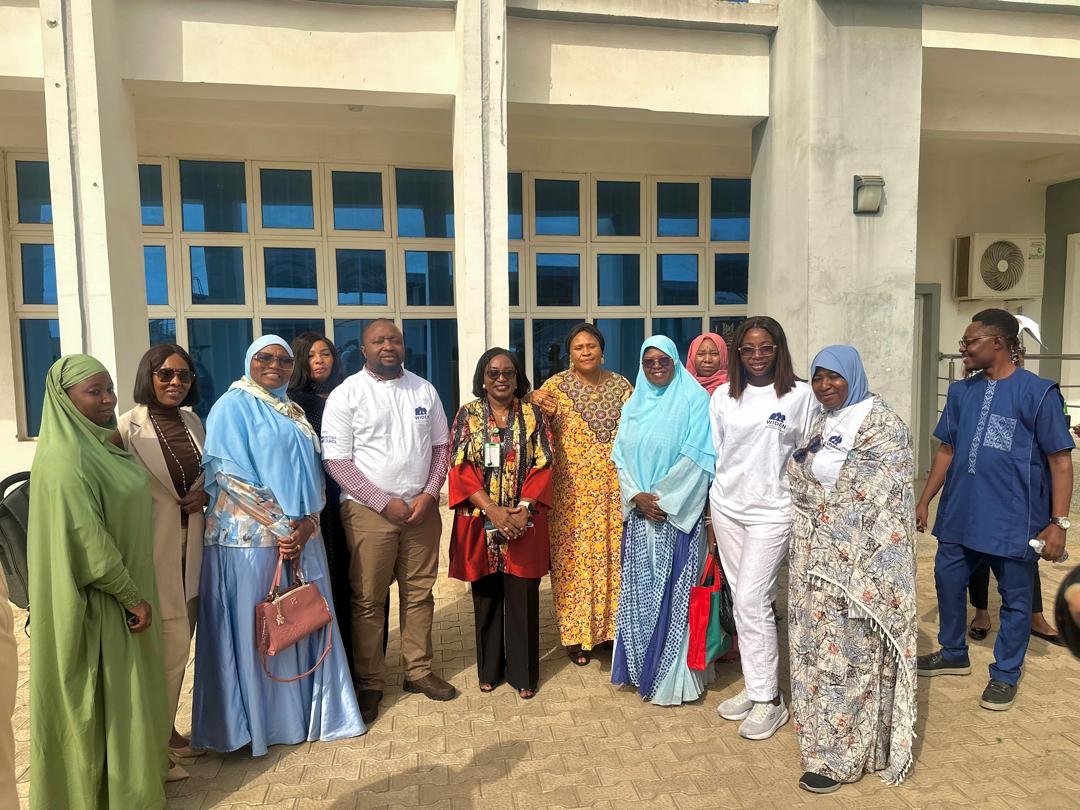
Stakeholders in academia and technology have intensified efforts to bridge the gender gap in Science, Technology, Engineering and Mathematics (STEM) through the Women in Digital Empowerment Network (WIDEN), a British Council-funded initiative designed to equip Nigerian women — including those with disabilities — with digital and artificial intelligence skills.

Speaking at the third workshop on the presentation of digital solutions under WIDEN, the Nigeria Principal Investigator, Prof. Ganiyat Adesina-Uthman, said the project was born out of concern over the persistent exclusion of women from the technology ecosystem.

“Whenever you hear about tech, it is always ‘tech boys, tech boys.’ What about tech ladies? It is not that women do not want to learn; many simply do not have access to education, digital tools and opportunities,” she said.

The WIDEN programme, sponsored by the British Council, was conceptualised to address these access gaps while ensuring inclusion of vulnerable groups, particularly persons with disabilities.

Adesina-Uthman explained that the team deliberately structured the training to accommodate participants who are deaf, blind, or physically challenged, with provisions such as sign language interpreters and audio adaptations.

Among the collaborators on the project are Dr. David Wilson of the University of London and disability advocate Dr. Lalu James, former Executive Secretary of the National Commission for Persons with Disabilities.

She disclosed that representatives of the Federal Ministry of Education and the National Universities Commission attended the second and third workshops, pledging support for scaling up the initiative across tertiary institutions.

“Our next step is to engage them formally so that the solutions developed can be improved, protected and implemented widely in Nigerian universities,” she said.

Over 200 participants registered for the current cohort, although about 70 are actively engaged. The project, which runs free of charge until April, is expected to transition into a paid model unless adopted by the Federal Government.

Adesina-Uthman also commended President Bola Ahmed Tinubu for lifting restrictions on research grant funds previously held by the Central Bank of Nigeria, noting that the directive allowing funds to be paid into commercial bank accounts would ease access for researchers.

Participants at the workshop showcased locally relevant AI-driven solutions. One innovation, “School Connect,” enables parents to monitor their children’s school attendance and academic performance remotely while maintaining data confidentiality.

Adesina-Uthman also developed a postgraduate progress monitoring platform to address prolonged study durations in Nigerian universities. The system requires periodic progress reports from students and supervisors, a model she said mirrors international best practices.

Co-Principal Investigator, Dr. David Botchie of Brunel Business School, Brunel University London, noted that while the challenges facing women in STEM are well documented, practical solutions have remained limited.

“We understand that enabling environments are not always there for women to thrive in tech-related jobs. WIDEN focuses on equipping women with practical digital skills so they can create useful products, monetise them and improve their welfare,” he said.

He acknowledged that internet connectivity and affordability remain barriers in Nigeria and across the Global South, urging governments to work closely with telecommunications providers to expand access.

Prof. Rashidah Olanrewaju, Co-Investigator and Professor of Artificial Intelligence and Computer Science at Nasarawa State University, emphasised the need for indigenous AI systems that reflect Nigerian culture and values.

“We have artificial intelligence everywhere, but something is missing — our indigenous knowledge, our proverbs, our respect culture. We need systems that reflect who we are,” she said.

She added that sustainability of the initiative would depend on mentorship and intergenerational knowledge transfer, stressing the importance of engaging young women to build long-term impact.

Adesina-Uthman encouraged women to embrace AI as a productivity tool rather than fear job displacement.

“Artificial intelligence will not take your job. It will take the jobs of those who do not use it. Use AI to enhance what you do, especially routine tasks, and focus your energy on creativity,” she advised.

Describing WIDEN as a movement rather than a one-off project, she called on women across Nigeria to seize the opportunity to gain digital skills and participate in shaping inclusive technological solutions for the country.
 

March 4, 2026 0 comments
0 FacebookTwitterPinterestThreadsBlueskyEmail
Headlines

Wi-STEM train girls in Science Technology Engineering and Mathematics education, target 1000 in Nigeria

by Folarin Kehinde September 7, 2024
written by Folarin Kehinde

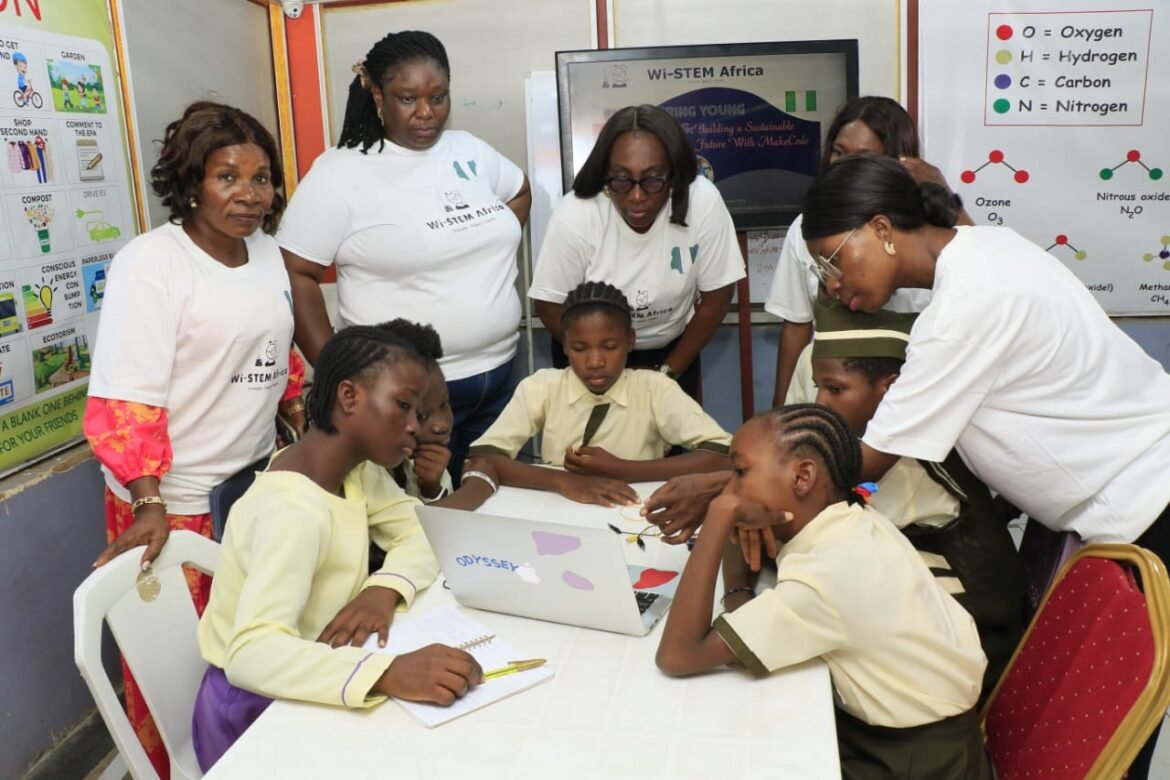
A non-governmental organization, Wi- STEM Africa in collaboration with odyssey foundation has trained 30 young girls from different Schools in Abuja in coding and Science Technology Engineering and Mathematics (STEM) education targeting 1000 in Nigeria.

The National coordinator, Wi- STEM Africa, Dr. Felicia Agubata while speaking with newsmen at the workshop titled: Empowering Young Innovators; Building a Sustainable Future with Makecode stated that the training aims at teaching the girls on how to use coding to boost agriculture production and other social science materials.

Agubata explained that the training also help to empower young ones, ignite passion for stem education among the girls while increasing the awareness and enthusiasm for stem discipline, whilst providing essential resources and mentorship to cultivate the next generation of female stem leaders and building confidence fostering team work and making leaning a fun.

“That’s why we are empowering them with a coding tool and it’s called Makecode using circuit and orange to read code and generate sound for sustainable development in social science.

“We are targeting girls working with two junior secondary school in Abuja, we are doing this all over Nigeria, every quarter we go to different geopolitical zones and in a year we work with 1000 girls.”

In her remarks, the Abuja coordinator, Wi-STEM and founder odyssey foundation Engr .Stella Uzo-chukwu Dennis on her part stated that the training aims at encouraging young girls to become engineers hence organising experiment on how electricity and coding activities work, with demonstration that human body is also a conductor for electricity.

Engr. Dennis explained that coding can also help to solve intricacies in agricultural mechanism such as knowing timing for good planting on farmland, soil and water gauge and a host of others which if applied will increase food production, ensure food security and appropriate timing for planting.

A beneficiary of the training, Sumisola Olugbaye, a student of Government secondary school Gwarimpa, commended the organizers and promised to implement Makecode technique in her path to learning more in STEM education.

September 7, 2024 0 comments
0 FacebookTwitterPinterestThreadsBlueskyEmail
Headlines

Foundation Harps on Technology, Engineering, STEM for the Girl-Child

by Folarin Kehinde February 10, 2023
written by Folarin Kehinde

The Country Director, Stella Denis
Odyssey Educational Foundation, OEF has said it was imperative for the girl child to be grounded in Technology, Engineering, and Mathematics, STEM in order to make a positive difference in the tech world.

Denis, who spoke during the launch of the Technovation Technology and Entrepreneurship for girls’, held in Abuja said the empowerment of the girl-child in technology would improve the esteem of the girl-child.

She explained that the Odyssey Educational Foundation has put a lot of effort into the Technovation Girls project over the last eight
years, creating over 1500 apps and instructing over 1000 students.

She said: “We have committed to promoting Science, Technology, Engineering, and Mathematics (STEM) education and application among young people, especially girls in Nigeria. We pursue the mission to promote STEM education and application with a view to catalyzing technological advancement and industrialization, while reducing the gender gap in low and middle income economies in the African region.

“Our approach is by staging intervention programs aimed at equipping especially
underprivileged young girls in public schools with 21st century technological skills. We
target the public schools because we realized that children from remote and
under-served communities are mostly found there.

“The wonderful initiative “Technovation Girls” encourages young women to use
technology to make a difference in the world. Girls have created smartphone apps over
the years to address issues in the community, including inadequate education, hunger
and poverty, gender inequality, corruption, and environmental challenges.

“I have to admit that one of the finest ways to learn how to code, develop products, collaborate with others, and begin thinking like an entrepreneur is through project-based competitions like Technovation Girls.

“Our girls’ confidence has increased
as a result of their involvement in this project, which has also given them skills in
teamwork, research, public speaking, and presenting.”

On his part, the assistant Cultural Affairs Officer, United States, US, Embassy, Peter Burba, while describing the initiative as best of its kind, said it would boost the girl-child’s Image, not just in Nigeria but in Africa.

He said that Nigeria has been implementing the Technovation program since 2013 and currently has six Technovation Regional Ambassadors.

He said that with the involvement of the girl-child in tech, the country is bound to experience major development in its economic, social, and political sectors.

“Technovation Girls Challenge 2023, a great initiative of the Odyssey Educational Foundation. Last year I had the good fortune to launch Technovation, and I understand one team of Nigerian girls went on to become regional winners, 1 in all of Africa.

“This is not the first time the U.S. Embassy has financially supported the Technovation Girls Challenge, which aims to train girls between the ages of 10 to 18 to use technology and employ those skills in solving problems in their community.

“Nigeria has been implementing the Technovation program since 2013 and by our latest count Nigeria has six Technovation Regional Ambassadors and three of the ambassadors are alumni of U.S. government exchange programs.

“Nigerian girls have a successful history in this program. In 2015, a group of Nigerian girls—Team Charis—won the 2015 Technovation challenge in San Francisco with their mobile app, Discardious, designed to solve the problem of waste disposal in Nigeria.

“In the broader context though, the participants in this program will learn skills that provide them with better chances to excel in their education and offer the opportunity to find meaningful employment.

“Women’s inclusion in the workforce, and in important fields like Science, Technology, Engineering and Math (or STEM for short) is key to a society’s economic, social, and political development.”

February 10, 2023 0 comments
0 FacebookTwitterPinterestThreadsBlueskyEmail

Recent Posts

  • Fire Breaks Out At Federal Head Of Service Building In Abuja

    March 9, 2026
  • Police reportedly remove force PRO Hundeyin 6 months after serving as Ex-IGP’s apologist

    March 5, 2026
  • WIDEN empowers women with inclusive AI solutions

    March 4, 2026
  • BREAKING: Tinubu appoints Taiwo Oyedele as Minister

    March 3, 2026
  • Chicwave By Rophie Redefines Thrift Fashion with Global Reach

    March 3, 2026

Usefull Links

  • Contact Page
  • About Leading Reporters
  • Contact Us
  • Headlines
  • Investigation
  • Exclusives
  • Opinion
  • Business
  • Facebook
  • Twitter
  • Instagram
  • Linkedin

@2021 - All Right Reserved. Designed and Developed by PenciDesign


Back To Top
Leading Reporters
  • Featured
  • Politics
  • Opinion
  • Business
  • Entertainment
  • Sports
  • About Us
  • Contact