Leading Reporters
  • Headlines
  • Health
  • Business
  • Exclusives
  • Investigation
  • Entertainment
  • Opinion
Tuesday, December 2, 2025
Hot
Tinubu Nominates Ex-CDS Christopher Musa As Defence Minister
BREAKING: FG Publishes List of 15 Alleged Terrorist...
FG Proposes 40% Salary Increase for ASUU Lecturers
Northern Governors Host Emergency Meeting Over Escalating Security...
Tinubu appoints ex-INEC Chair Yakubu, Fani-Kayode, Reno Omokri,...
Niger Delta Boss Jennifer Adighije Accused of Corruption,...
India Orders $570 Million Payout in Major Fraud...
Dangote Refinery Saves Nigeria over ₦10bn Annually in...
Bandits Abduct 16-year-old boy, six girls in FCT...
Social Security: A Missing Link in Nigeria’s Search...
  • About Leading Reporters
  • Contact Us
Leading Reporters
Advertise With Us
  • Headlines
  • Health
  • Business
  • Exclusives
  • Investigation
  • Entertainment
  • Opinion
Hot
Tinubu Nominates Ex-CDS Christopher Musa As Defence Minister
BREAKING: FG Publishes List of 15 Alleged Terrorist...
FG Proposes 40% Salary Increase for ASUU Lecturers
Northern Governors Host Emergency Meeting Over Escalating Security...
Tinubu appoints ex-INEC Chair Yakubu, Fani-Kayode, Reno Omokri,...
Niger Delta Boss Jennifer Adighije Accused of Corruption,...
India Orders $570 Million Payout in Major Fraud...
Dangote Refinery Saves Nigeria over ₦10bn Annually in...
Bandits Abduct 16-year-old boy, six girls in FCT...
Social Security: A Missing Link in Nigeria’s Search...
Leading Reporters
Leading Reporters
  • Headlines
  • Health
  • Business
  • Exclusives
  • Investigation
  • Entertainment
  • Opinion
Copyright 2024 - All Right Reserved
Home > South Africa
Tag:

South Africa

Africa & World

JUST IN: Ramaphosa sworn in as South Africa’s president for 2nd term

by Folarin Kehinde June 19, 2024
written by Folarin Kehinde

South Africa’s seventh democratically elected President Cyril Ramaphosa was officially sworn in Wednesday for a second term in office after his reelection by parliament last Friday.

Chief Justice Raymond Zondo administered the oath of office in a colorful ceremony attended by several heads of state and government in the capital Pretoria.

“I, Matamela Cyril Ramaphosa, swear that I will be faithful to the Republic of South Africa,’’ the 71-year-old said in his oath of office.

Zondo congratulated Ramaphosa and introduced him to the audience after signing a certificate, saying the president-elect has now been duly sworn in. Members of the public watching proceedings from the union building’s lawns erupted into loud cheers after Ramaphosa was sworn in.

Interfaith prayers were held before the swearing-in ceremony with religious leaders praying for the incoming president and the government of national unity.

Members of the South African parliament reelected Cyril Ramaphosa last Friday as president for a second term during the first sitting of the legislature.
June 19, 2024 0 comments
0 FacebookTwitterPinterestThreadsBlueskyEmail
Headlines

United States ‘Democracy’ Spreading Instability In Africa – South African Minister

by Folarin Kehinde August 11, 2022
written by Folarin Kehinde

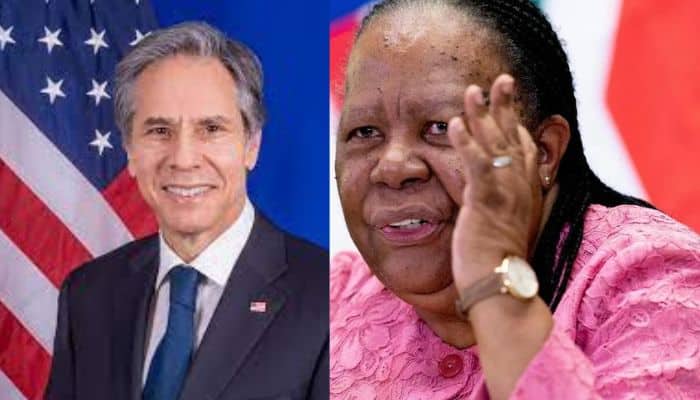
The South African minister of International Relations and Cooperation Naledi Pandor, has described the continuous conflicts in African countries as a consequence of external interference on the continent by the United States and other western countries.

She made this known in a Joint press availability with the United States Secretary of States Anthony Blinken, held in Pretoria, South Africa.

Minister Naledi accused the United States of trying to bully African nations into isolating nations like China and Russia which are at loggerheads with the USA.

A draft bill has been passed by the United States house of Representatives that seeks to penalize and sanction African countries who trade anything apart from grain with Russia. The passed bill is called ‘Containing Malign Russian Activities in Africa Act’.

While condemning the war by Russia on Ukraine, minister Naledi has called described the bill as ‘offensive legislation’. She opines that it is a bill that looks down on the sovereignty of African countries and its ability to choose who its want to relate with.

She defended South Africa’s neutrality on the conflict and called for the issue to be resolved diplomatically. She also berated the for giving lesser attention to the conflict in the middle east between Israel and Palestine. Saying all these conflicts should be giving same attention as no oppressed people is better than another oppressed people.

She said that Africa had a right to choose who it’s want to relate with and will not succumb to ‘patronizing bullying’ by the United States and other western powers.

In her words; ‘All nations are equal according to the United Nations Charter. Every nation can hold different opinions and are not under any obligation to make the United States enemies its own enemies’.

‘Though we might differ in economic might or ability to wield influence in other nations, African nations should still be treated with respect and should not be looked down upon.’

Minister Naledi went further to accused the United States of spreading instability in African countries in the guise of spreading democracy.

‘America comes to you, trying to teach you how democracy works when in reality, they are after your mineral resources in your country’.

The United States and other western powers are a destabilizing force only interested in exploiting the natural resources that can be obtained in your country.

We’ve seen this play out during the cold war era and most recently in Iraq and Afghanistan. Also in Africa, Libya has been on the receiving end of the brutality of western imperialist.

The minister opined that the presence of these mineral resources is what attracts the presence of the united states and other external influences who do not have the interest of Africa at heart.

August 11, 2022 0 comments
0 FacebookTwitterPinterestThreadsBlueskyEmail
Headlines

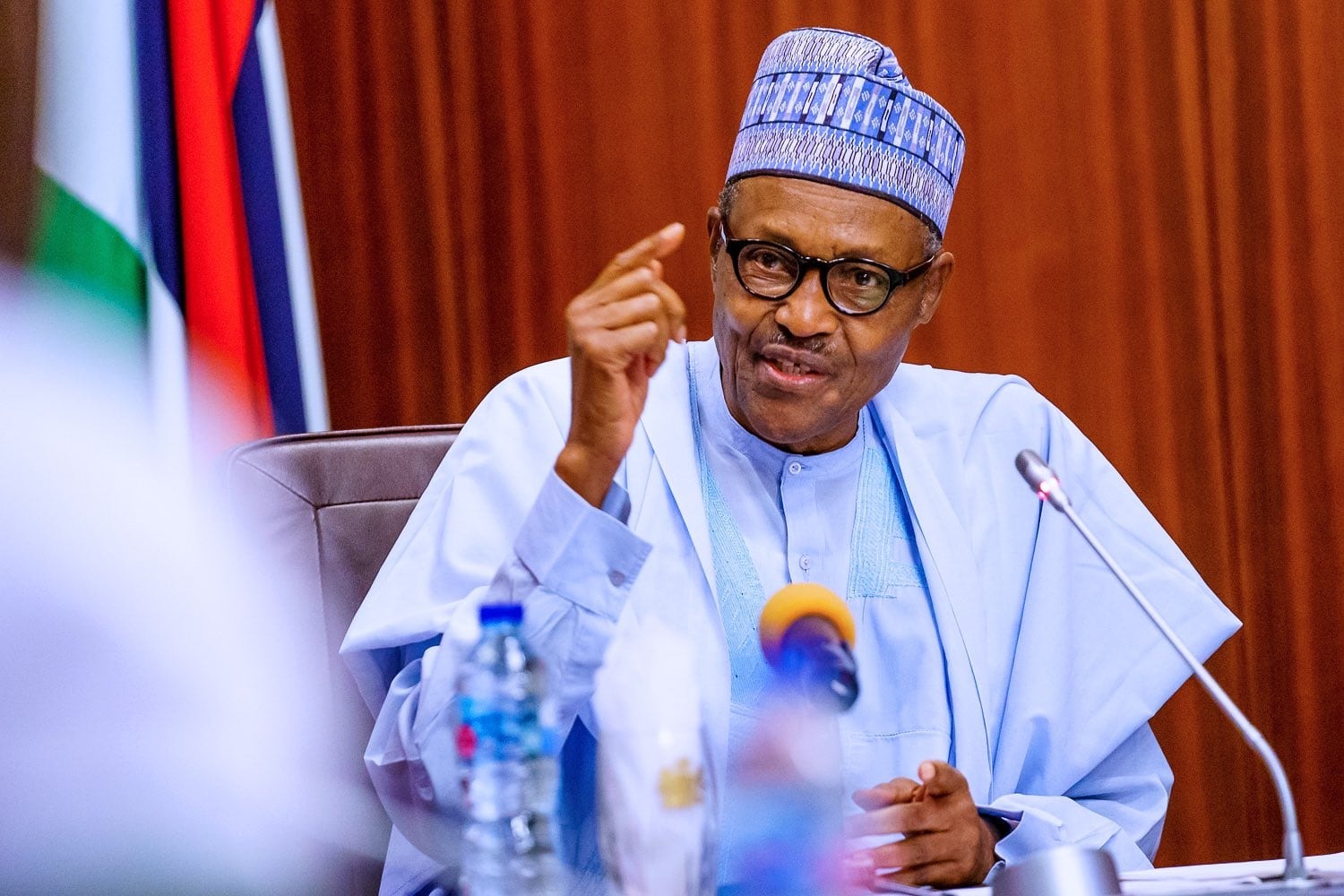
Nigeria’s Military Strength Under PMB Government

by Leading Reporters March 4, 2022
written by Leading Reporters

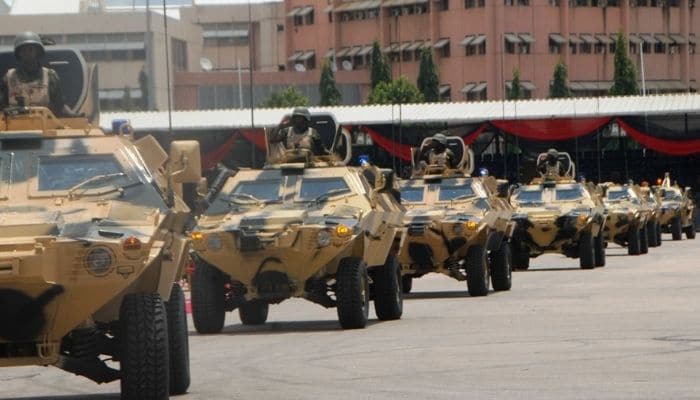
Nigeria’s military is ranked the fourth in Africa and thirty-fifth in the world with respect to strength.

This is according to data from Global Firepower. According to the data, Nigeria has had constant military growth since the beginning of the Buhari administration.

According to the Global Firepower ranking, the lower the power index of a country, the higher the military capability of such a country. 0.000 is considered a perfect power index.

The country’s military strength index currently stands at 0.5745, which is a slight improvement compared to 2021 when the power index was 0.62. 

The power index is determined by several factors which are grouped under 8 indicators. They include manpower, land system, airpower, naval power, resources, logistical, financial, and geographic.

In the last 7 years, Nigeria has maintained fourth and fifth position in Africa in terms of military strength out of the 54 countries. Egypt on the other hand has maintained the first position, making it the country with the strongest military strength in the period under review. 

Other countries that rank high on the list are Algeria, Ethiopia, South Africa, Kenya, Libya, and Morocco. 

Ranking of Military Strength of selected African Countries

Egypt ranks 12th globally in the 2022 ranking of military strength, while South Africa, Algeria, and Ethiopia, rank 26th, 31st, and 65th  respectively.  

Nigeria’s Military Strength Power Index Under the Buhari Administration

Global Firepower data shows that in 2015, Nigeria’s power index stood at 1.526, the worst in the period under review. However, in 2016, it reduced by a great deal when 0.786 was recorded. 0.575 is the latest power index recorded for Nigeria. 

Current data also reveals that Nigeria has a total military personnel of 215,000 out of which 135,000 are active and 80,000 make up the paramilitary.

So far under the Buhari Administration, the Nigerian Air force has acquired a total of 38 aircraft, the Nigerian navy acquired close to 400 new platforms since 2015 which includes 14 houseboats, 4 helicopters, 4 capital ships, 12 manta class/inshore patrol craft, and 22 fast attack boats among others. 

The president also gave a directive to the Nigerian Navy to establish a naval base in Baga, Borno State, an area prone to criminal activities near the nation’s coast. 

The President also mobilised international support for the fight against Boko Haram from countries like the United States of America, United Kingdom, France, Germany, ECOWAS, UN, and AU, which led to the United States agreeing to sell 12 Super Tucano aircrafts to Nigeria in 2017

March 4, 2022 0 comments
0 FacebookTwitterPinterestThreadsBlueskyEmail
Africa & World

Fact Check: Omicron was in Canadian wastewater in November before it was found in South Africa

by Leading Reporters January 11, 2022
written by Leading Reporters

Omicron was found in Nova Scotia wastewater weeks before it was discovered by the province — and even before the novel COVID-19 strain was reported by South Africa, according to new research from Dalhousie University in Canada. 

Explaining the situation, Professor Graham Gagnon, director of the Dalhousie University Centre for Water Resource Studies, said that “Our team detected Omicron , retrospectively, in Nova Scotia wastewater in mid-November and will be able to provide further information in the future.” 

In late November, the first Omicron case was reported in South Africa.

On December 13, the first cases in Nova Scotia were confirmed, and they were related to a COVID-19 epidemic at St. Francis Xavier University in Antigonish.

According to the university, the virus survives longer in the gastrointestinal tract than in the respiratory tract, which means genetic material can be identified in human waste despite the fact that COVID-19 is a respiratory sickness.

Since December 2020, the Dalhousie team has been monitoring wastewater for COVID-19 indicators at the Halifax region’s four main wastewater treatment plants: Halifax, Dartmouth, Mill Cove, and Eastern Passage, as well as the Dalhousie campus’s five student dormitories. 

“For us, it’s been a successful project,” said Gagnon. “It’s a tool that can be used to help make decisions.”

Other sections of Canada are undergoing similar tests.

Since Omicron was discovered in the province in December, the levels of the COVID-19 virus reported in wastewater have surged by nearly 88 percent in Saskatchewan.

According to Gagnon, a similar surge occurred in Nova Scotia, but he declined to be more precise until the data was double-checked. 

(With inputs from agencies)

January 11, 2022 0 comments
0 FacebookTwitterPinterestThreadsBlueskyEmail
Headlines

Nigerians are getting poorer contrary to Buhari’s claim

by Leading Reporters August 2, 2021
written by Leading Reporters

The good people of Nigeria will remain very poor for a long time to come, the 2021 report of the United Nations (UN) Sustainable Development Goals (SDGs) revealed.

Nigeria’s chances of achieving Goal 1 of the SDGs, which is the attainment of zero poverty among its people by the year 2030, appear slim, as the country’s poverty headcount is soaring high still, instead of reducing. 

The latest sustainable development report ranked Nigeria low at the 160th position out of 165 countries. The leadership of countries all over the world, through the UN, had committed themselves to achieve all the 17 SDG goals by the end of 2030.

The SDG report revealed that the Nigerian government is not effective at all in lowering poverty among its people if it is making any effort at all. Instead, the leadership in Nigeria is supervising increasing poverty in the country. 

Data showed that 43% of Nigeria’s estimated 206.1 million population is living below the lowest poverty threshold which is $1.90 a day. That is to say, more than 4 out of every 10 Nigerians live on less than N779, using the Central Bank of Nigeria’s official exchange rate of N410.

The outcome of the poverty headcount is far worse when it is based on the next international poverty threshold of $3.20. The UN data revealed that 74% of the country’s population survive on less than $3.20 or N1,312 a day. That means according to international standards, more than 7 persons out of every 10 Nigerian are poor. 

The recent SDG 1 figures present Nigerians as poorer than their fellow Africans in four other African countries from the North, South, East and West of the continent, namely Egypt, South Africa, Kenya and Ghana.

“In the last two years we lifted 10.5 million people out of poverty” True or False?

In his democracy speech on June 12, 2021, President Buhari claimed that his administration has lifted 10.5 million Nigerians out of poverty in the last two years. However, the Sustainable Development Report says the contrary. In fact, data showed that more people slipped into poverty within this period, either using the $1.90 or $3.20/day poverty threshold.

Nigeria’s poverty headcount ratio at $3.20 rose from 68.7% in 2018 to 70% in 2019. It further increased to 73.22% in 2020. These increasing incidents of poverty, particularly in the Buhari administration and the government’s denial of the same casts doubt on its ambitious plans to lift 100 million Nigerians out of poverty in 10 years. 

Not only this, just like the country did not achieve the Millennium Development Goals’ (MDGs) poverty targets by 2015, it might also be one of the countries that may not attain goal one of the SDGs by 2023, given its ever-increasing unemployment and inflation rate – two economic factors that prevent access to income and devalue people’s hard-earned income.

Between 2010 and 2020, Nigeria’s unemployment rate rose five-fold, from 6.4% in 2010 to 33.3% in 2020. According to a report by the Nigerian Economic Summit Group, the rise in the number of unemployed people is expected to push more people into the poverty trap, going forward. 

Already, inflation has pushed millions of Nigerians below the poverty threshold. The World Bank revealed this in its recent Nigeria Development Update report, noting that inflationary pressure pushed about 7 million Nigerians below the poverty line in 2020 alone.

The foregoing evidence from data suggests that unemployment and inflation contribute to extreme poverty in Nigeria, and together pose a major challenge for Nigeria in ending poverty – goal one of the SDGs. This is aside from the impact the COVID-19 may have had not only on Nigeria but the global community in achieving the SDGs. Acknowledging the effect of the global pandemic on the SDGs, the United Nations Secretary General noted that “the current crisis is threatening decades of development gains,… and throwing progress on the SDGs even further off track”

To get back on track to achieve Goal 1 of the SDGs, the government may need to adopt more effective economic measures, particularly in reducing the unemployment rate and inflationary pressure. 

August 2, 2021 0 comments
0 FacebookTwitterPinterestThreadsBlueskyEmail
Africa & WorldHealth

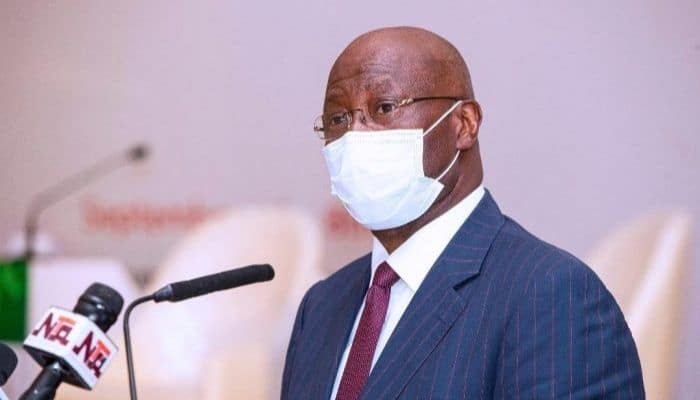
Nigerian govt to travellers from “South Africa Don’t come”

by Leading Reporters June 29, 2021
written by Leading Reporters

The Chairman of Presidential Steering Committee (PSC) on COVID-19 pandemic, and Secretary to Government of the Federation (SGF) Boss Mustapha, on Monday, announced the addition of South Africa to the list of countries from where travellers are banned because of the growing cases of COVID-19 in the country.

Mustapha made the announcement during a media briefing of the Committee in Abuja.

It could be recalled that the Federal Government had in May handed a similar ban on travellers from India, Brazil and Turkey over similar concerns.

He said: “A few weeks ago, we announced additional measures to be met by passengers arriving from Brazil, Turkey and India. This action was due to the prevalence of variants of concern and the dangers associated with the importation of the such virulent strain.

“The PSC has been reviewing these restrictions and is of the opinion that they should remain for another four weeks before it is further reviewed. South Africa, has, however, been added to this category once more.

“In addition to these three countries, the PSC has also shifted its focus on some African countries. South Africa, Zambia, Rwanda, Namibia and Uganda fall in this category.

“South Africa for example, recorded over 100, 000 cases in the last one week while 20,000 was recorded in the last 24 hours. The four major variants of concern are now classified as Alpha (UK), Beta (SA); Gamma (Brazil) and Delta (India).

“The Delta variant which has wreaked devastating havoc is not yet found in Nigeria hence the need to tighten our borders and be more vigilant.”

Concerning Emirates flights in and out of Nigeria, he noted that: “In all circumstances, however, conditions placed on such flights must conform with international civil aviation standards and must not be discriminatory and must respect our sovereignty.”

While noting that the PSC has escalated surveillance and risk communication, he added that it has similarly paid close attention to the issue of vaccination, especially matters relating to access and acquisition of vaccines.

The SGF urged members of the public not to lower their guards yet because of continued spikes in some countries (including African countries) and the emergence of variants of concern in several jurisdictions where the third wave has occurred.

Speaking on violators of COVID-19 travel protocol, he stated: “About six months ago, following the violation of protocols by some inbound passengers to Nigeria, travel documents were barred for a period of 6 months.

“We have received several appeals from those affected while we counselled on the importance of compliance with rules and regulations.

“The six-month period of ban for the first batch of 100 is almost complete and we use this opportunity to reassure Nigerians that sanctions will be imposed on violators of measures put in place to protect them and safeguard our nation.

“You will recall that Nigeria introduced the first international travel portal in September last year to facilitate the travel protocols. Following observations by users, the PSC took steps to improve the performance of the travel portal so as to ease the bottlenecks experienced by travellers.”

“Additional improvements have been recorded. The vaccination programme has progressed into the second phase for those who took the first jab. However, the sources and access to vaccines constitute major challenges given the developments in India, the attendant scarcity and the rise of vaccines nationalism.

“The PSC through the NPHCDA has continued to intensify efforts to acquire vaccines for the next phase.

“For over six months Federal Government employees on GL 12 and below have been observing work-from-home instructions. This restriction remains in place until further notice in order to avert a third wave.”

By John Chukwu…

June 29, 2021 0 comments
0 FacebookTwitterPinterestThreadsBlueskyEmail
Africa & World

South Africa Standing Up To Facebook

by Leading Reporters May 20, 2021
written by Leading Reporters

Facebook To Be Summonsed Before South Africa’s Parliament Over ‘Harmful Misinformation’ this marks that first time the social media giant has appeared before lawmakers in Africa.

Facebook has been called to appear before the South African Parliament on May 25, 2021 to explain what it is doing about the “harmful misinformation” spreading on its platform,

Facebook has been called to appear before South Africa’s Parliament this month to explain what it is doing about “harmful misinformation” spreading on its platform, marking the first time the social media giant has appeared before lawmakers in Africa.

Opposition MP Phumzile Van Damme says Facebook with appear before the Communications and Digital Technologies Committee on 25 May 2021.

“Facebook’s agreement to the meeting is historic and a source of pride for South Africa as a first in Africa, and one of a few countries in the world to successfully secure a meeting with Facebook. We commend Facebook for agreeing to the meeting which we hope will be constructive,” Van Damme told Stuff. [Disclosure: I am Stuff’s publisher.]

In an article, vocal opposition parliamentarian Phumzile Van Damme stated that, “the aim of discussions with Facebook will be to ensure that the interests of the people of South Africa are protected as well as upholding their constitutional right to freedom of speech. We will stand in opposition to any proposals that would curtail the right of South Africans to share their thoughts and opinions that fall under protected freedom of speech”.

“The reason for inviting Facebook was with the view of ascertaining what steps the tech giant will be taking in tackling harmful misinformation, particularly as we inch towards the 2021 Local Government Election. Facebook often tailors plans for countries ahead of elections to guard against harmful misinformation. We would like to see the same done for South Africa,” she added.

Along with concerns over misinformation, it will focus on South African users’ personal data being protected and “the beginning of discussions regarding the social media platform paying South African media houses for carrying their content as was recently successfully implemented in Australia”.

In February Van Damme said she was “summoning” Facebook – which has an office in the economic capital of Johannesburg – to appear before South African lawmakers to ascertain “what steps the tech giant will be taking in tackling harmful misinformation”.

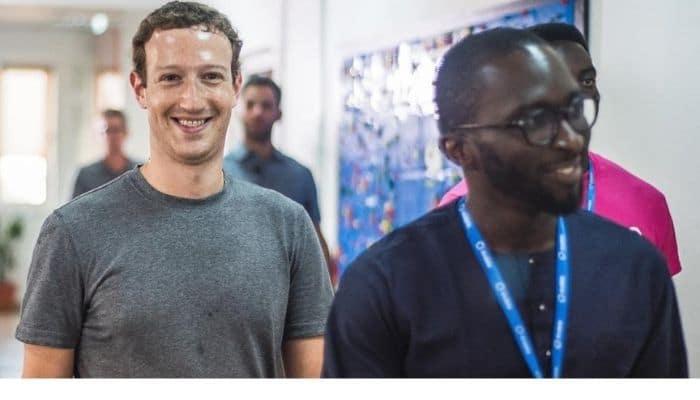
CEO Mark Zuckerberg in 2016 made a surprise trip to Lagos and Nairobi, where he said: “The thing that is striking is the entrepreneurial energy. This is where the future is going to be built”.

This week Van Damme said “the aim of discussions with Facebook will be to ensure that the interests of the people of South Africa are protected as well as upholding their constitutional right to freedom of speech. We will stand in opposition to any proposals that would curtail the right of South Africans to share their thoughts and opinions that fall under protected freedom of speech,” she said.

South Africa’s Constitution, which was implemented after Nelson Mandela was voted in as the country’s first democratic president in 1994, is considered one of the most progressive constitutions in the world. Current South African President Cyril Ramaphosa was the chief negotiator for the ruling African National Congress (ANC) in a landmark deal concluded with the Apartheid government, run by the then National Party.

Meanwhile, the South African Information Regulator recently announced that it was seeking legal advice to get Facebook owned messaging app WhatsApp to revise its privacy policy to the standard used in the EU as the country’s Protection of Personal Information Act (POPIA) has a similar privacy regime to the EU. It appears that citizens of the EU would receive significantly higher protection than South African citizens.

However, only 24 out of 53 countries in Africa have adopted #DataPrivacy #DataProtection laws!

May 20, 2021 0 comments
0 FacebookTwitterPinterestThreadsBlueskyEmail
Africa & World

Tensions Rise With the GERD Water

by Leading Reporters May 4, 2021
written by Leading Reporters

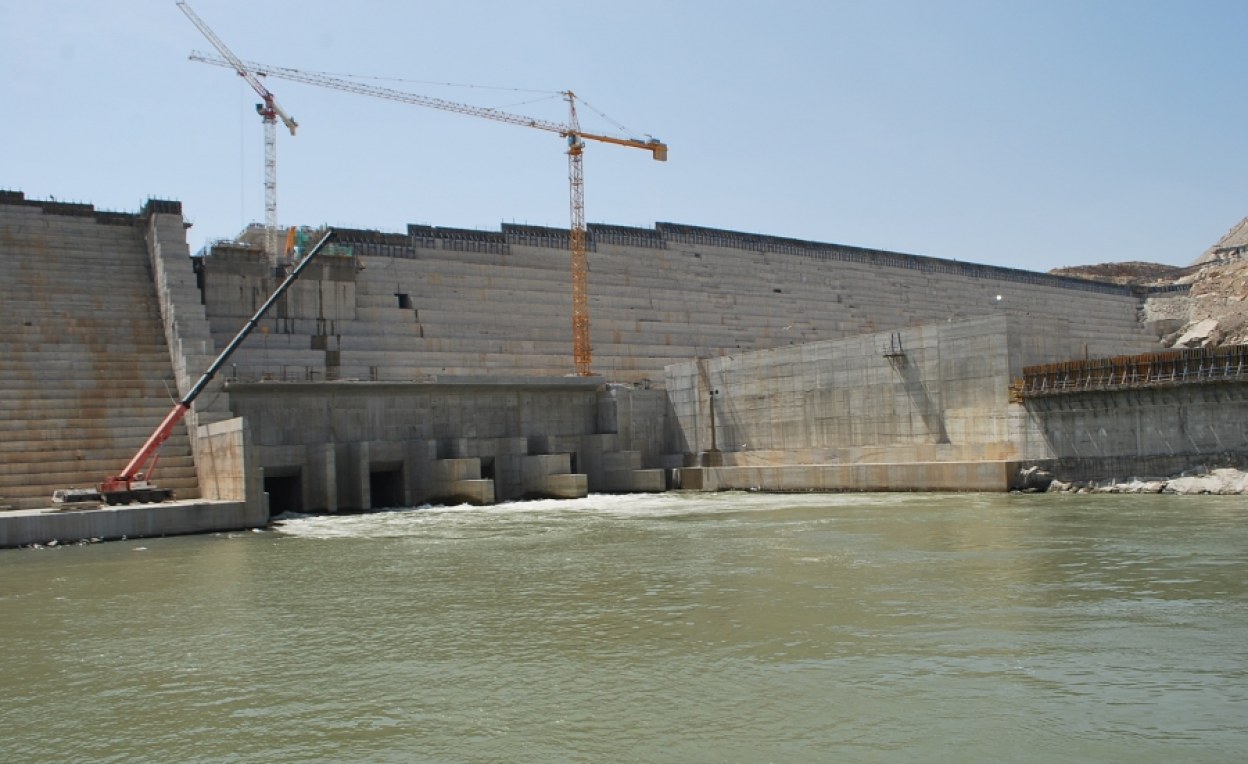
Tensions are once again rising among Ethiopia, Egypt and Sudan, along with the water in the Grand Ethiopian Renaissance Dam (GERD). The annual rainy season is fast approaching. Ethiopia will almost certainly undertake a second filling of the 74 billion cubic metre capacity reservoir if there is no prior agreement otherwise among the three disputants.

A deal seems remote, as there are no signs of even an imminent resumption of negotiations. The last round of African Union-led negotiations ended in Kinshasa on 5 April, without any glimpse of an accord on how to manage the huge dam Ethiopia is building on the Blue Nile, upstream of Egypt and Sudan, to generate 6.45 gigawatts of hydro-electric power.

Last week Egyptian Foreign Affairs Minister Sameh Shoukry travelled to six African countries – South Africa, Tunisia, Kenya, Senegal, the Democratic Republic of the Congo (DRC) and Comoros – to present Egypt’s case. Cairo is almost wholly dependent on the Nile for its fresh water and fears the GERD will significantly reduce its supply.

Egypt indicated before Shoukry’s tour that it might refer the dispute to the United Nations Security Council as it tried to do last July before South African President Cyril Ramaphosa intervened. As African Union (AU) chair at the time, he persuaded the parties to accept the AU as mediator. But Ramaphosa failed to clinch a deal in some six months of negotiations – and now his successor as AU chair, DRC President Félix Tshisekedi, has also failed.

The hints of Egypt’s intentions to try to go back to the Security Council included some sabre-rattling from President Abdel-Fattah el-Sisi, who warned Ethiopia not to ‘touch a drop of Egypt’s water, because all options are open.’ Another clue was a letter Shoukry wrote to the Security Council, urging it to persuade Ethiopia not to take any action on the dam before reaching a legally binding agreement with Egypt and Sudan.

He warned that failure to reach consensus would harm Egypt and Sudan’s water interests and security, increase tensions throughout East Africa and the Horn, and ‘constitute a serious threat to international peace and security.’ It is precisely the mandate of the Security Council to address such threats, so Shoukry appeared to be setting the stage to seek council intervention.

Sudan’s irrigation minister Yasser Abbas also mentioned referring the dispute to the Security Council if Ethiopia started a second filling of the dam without agreement among the three countries.

However at their meeting last week, Shoukry didn’t lobby Ramaphosa to support a Security Council referral. Instead he said Egypt would ask Tshisekedi to convene a special meeting of the AU Bureau to plot a path forward. There are no signs that such a meeting is imminent, despite the second filling’s looming deadline. Presumably, though, Egypt could still use the AU Bureau meeting to raise a request for the Security Council intervention.

Maybe that would provide the catalyst to kickstart the stalled negotiations. Or perhaps the parties should consider a different configuration. There seems little point in including the US and EU in a formal mediation role, but it might make sense to bring in the UN as co-chair with the AU. That could address Egypt’s apparent suspicion that the AU favours Ethiopia – while also addressing Ethiopia’s anxieties by keeping an AU hand in the process.

It’s hard to say where the standoff might end if no agreement is reached. El-Sisi’s sabre-rattling has been echoed by some Egyptian military analysts. They also point to recent joint military exercises between Egypt and Sudan as a warning that the two countries could resort to force if Ethiopia proceeds with the second filling.

Clearly the dispute is souring relations among three important African countries, and there is a danger of a flashpoint. This suggests the GERD dispute is a legitimate subject for Security Council attention, and that this option may be needed if negotiations don’t succeed soon.

Peter Fabricius, ISS Consultant

Read the original article on ISS.

May 4, 2021 0 comments
0 FacebookTwitterPinterestThreadsBlueskyEmail

Recent Posts

  • Tinubu Nominates Ex-CDS Christopher Musa As Defence Minister

    December 2, 2025
  • Poor Toilets Driving GBV, School Dropouts – Wateraid

    December 2, 2025
  • BREAKING: FG Publishes List of 15 Alleged Terrorist Financers in Nigeria [SEE LIST]

    December 1, 2025
  • FG Proposes 40% Salary Increase for ASUU Lecturers

    December 1, 2025
  • Northern Governors Host Emergency Meeting Over Escalating Security Concerns

    December 1, 2025

Usefull Links

  • Contact Page
  • About Leading Reporters
  • Contact Us
  • Headlines
  • Investigation
  • Exclusives
  • Opinion
  • Business
  • Facebook
  • Twitter
  • Instagram
  • Linkedin

@2021 - All Right Reserved. Designed and Developed by PenciDesign


Back To Top
Leading Reporters
  • Featured
  • Politics
  • Opinion
  • Business
  • Entertainment
  • Sports
  • About Us
  • Contact