Leading Reporters
  • Headlines
  • Health
  • Business
  • Exclusives
  • Investigation
  • Entertainment
  • Opinion
Tuesday, January 27, 2026
Hot
Strike: FCTA to open attendance register for staff
VIDEO: Tinubu stumbles briefly during reception parade in...
BREAKING: Nationwide Blackout as National Grid Collapses Again
FCTA Workers, NLC Storm Industrial Court, Demand Wike...
DisCos reject FG’s free meter plan
Nigerian-born nurse loses licence in Australia for sleeping...
BREAKING: Kano Gov Abba Yusuf dumps NNPP
National Grid Collapse For First Time in 2026
BREAKING: Tinubu approves posting of Ambassadors to U.S.,...
Insecurity: Kidnappers demand 17 motorcycles for release of...
  • About Leading Reporters
  • Contact Us
Leading Reporters
Advertise With Us
  • Headlines
  • Health
  • Business
  • Exclusives
  • Investigation
  • Entertainment
  • Opinion
Hot
Strike: FCTA to open attendance register for staff
VIDEO: Tinubu stumbles briefly during reception parade in...
BREAKING: Nationwide Blackout as National Grid Collapses Again
FCTA Workers, NLC Storm Industrial Court, Demand Wike...
DisCos reject FG’s free meter plan
Nigerian-born nurse loses licence in Australia for sleeping...
BREAKING: Kano Gov Abba Yusuf dumps NNPP
National Grid Collapse For First Time in 2026
BREAKING: Tinubu approves posting of Ambassadors to U.S.,...
Insecurity: Kidnappers demand 17 motorcycles for release of...
Leading Reporters
Leading Reporters
  • Headlines
  • Health
  • Business
  • Exclusives
  • Investigation
  • Entertainment
  • Opinion
Copyright 2024 - All Right Reserved
Home > Self Help Africa
Tag:

Self Help Africa

General

Self Help Africa Drives Innovative Rural Water Safety Pilots with FG Support

by Folarin Kehinde January 27, 2026
written by Folarin Kehinde

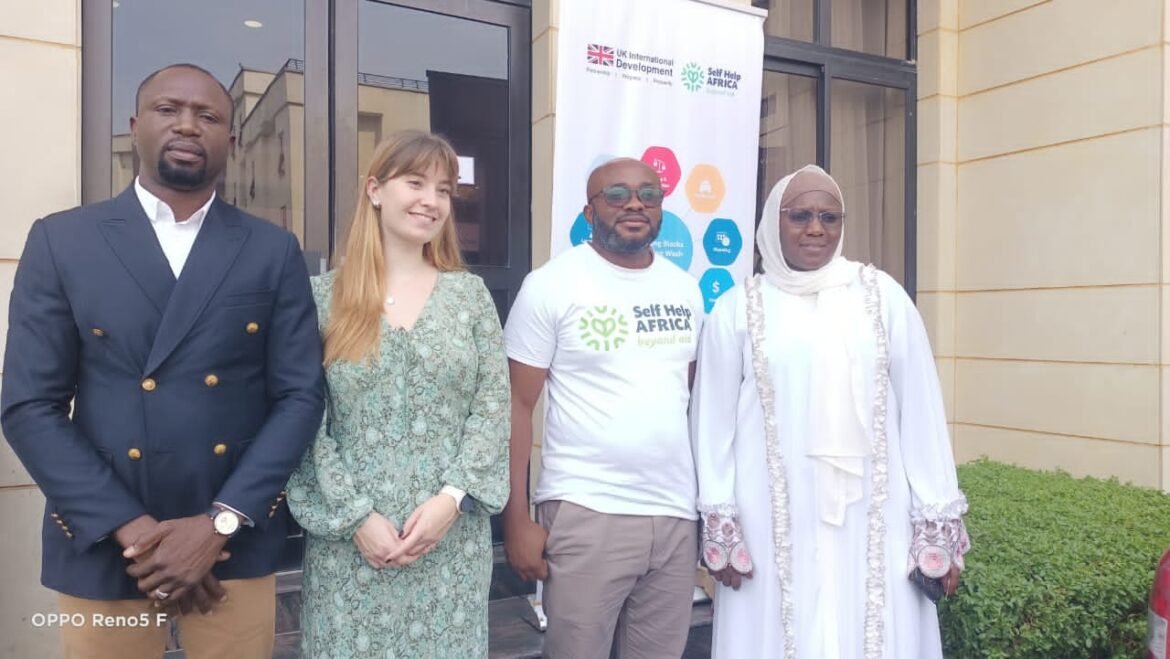
Self Help Africa (SHA), an Irish development charity, is leading the implementation of two innovative pilot projects designed to improve access to safe drinking water in rural Nigerian communities, in partnership with the Federal Government.

The initiatives—Dispensers for Sustainable Rural Water in Nigeria (DiSuRWIN) and Optimising the Benefits of Inline Chlorination in Nigeria (OPTIC)—were officially launched at a National Stakeholders’ Inception Workshop in Abuja, bringing together government agencies, development partners, civil society groups and private sector actors to align on implementation strategies.

Speaking at the workshop, Mr Dorgu Ebiye, Development Consultant and State Coordinator for Self Help Africa, said the projects reflect SHA’s commitment to practical, community-based solutions that address water contamination at the point of use.

“These interventions are designed to ensure that rural households not only have access to water, but to water that is safe for consumption,” Ebiye said. “Our focus is on prevention—reducing exposure to waterborne diseases through consistent and effective disinfection.”

Under the DiSuRWIN project, SHA will deploy 550 chlorine dispensers across Garin Malam and Danbatta Local Government Areas of Kano State, with each LGA receiving about 275 units.

The dispensers are calibrated to deliver a chlorine concentration of 1,100 grains per cent, using a standard 10 per cent chlorine formulation to meet approved water treatment standards.

According to Ebiye, the first phase of the project is expected to reach approximately 110,000 people, significantly improving the safety of drinking water at community level.

Beyond infrastructure, he noted that SHA is implementing a self-sustaining operational model, which includes professionalised maintenance services for dispensers and water facilities.

Community health extension workers, in collaboration with the Ministry of Health and the Primary Health Care Development Agency, will handle chlorine refilling, dosing, monitoring and reporting.

“We are also investing heavily in capacity building,” Ebiye added.

“Local mechanics and community health workers are being trained, while Rural Water Supply Agencies and health institutions are engaged to ensure scalability and long-term sustainability.”

The second initiative, OPTIC, is being rolled out in selected communities in Kano and Cross River states, where SHA is testing inline chlorination systems integrated directly into handpumps and piped water schemes.

The goal is to assess the effectiveness of automated chlorination technologies across different rural water supply contexts.

The projects align with Nigeria’s National Framework for Drinking Water Safety and the Nigerian Standard for Drinking Water Quality (NIS 554:2015), and complement ongoing government efforts to reduce cholera outbreaks and other waterborne diseases.

With an 18-month implementation period and a budget of about 721,995 dollars for DiSuRWIN alone, Self Help Africa says the pilots are intended to generate evidence that can inform nationwide scale-up of proven water safety solutions.

“Our approach is built on partnership, local ownership and evidence,” Ebiye said. “By working closely with government and communities, we aim to deliver lasting improvements in rural water safety across Nigeria.”
January 27, 2026 0 comments
0 FacebookTwitterPinterestThreadsBlueskyEmail
Headlines

$500m W/Bank Fund Idle while States Struggle for Water Solutions — Self Help Africa

by Folarin Kehinde November 24, 2025
written by Folarin Kehinde

Despite constant claims of underfunding in Nigeria’s (Water, Sanitation and Hygiene) WASH sector, Self Help Africa has stated that more than $500 million in World Bank-backed financing remains untouched by state governments.

Head of Programmes, Self Help Africa, Shadrack Guusu, while speaking in Abuja on Monday at the WASH learning forum lamented the chronic inability of states to access funds already available to them under the $700 million SURWASH programme.

“A lot of people look at funding as a gap in the water sector. It’s partly true, but on the other hand, it’s not so true, because currently we have a World Bank project, World Bank-supported Nigeria program called the SURWASH. The SURWASH is about, I might miss the exact figure, but it’s about 700 million US dollars program.

“For four years, all the states on the SURWASH program have not been able to draw down up to 200 million USD from this program. And we have a bulk of money, over 500 million USD, just lying down without being able to draw it. So will you say there’s no funding?

He described the situation as a stark example of deeper systemic weaknesses, pointing to limited technical capacity at state level, weak programme design skills, and poor leadership prioritisation.

Guusu argued that strengthening subnational systems state governments, local councils and the actors responsible for translating national policies into action is the missing piece in Nigeria’s WASH sector.

According to him, while Nigeria continues to debate funding shortages, states have consistently failed to access resources already earmarked for them.

“These are funding opportunities states have not taken advantage of. What is the problem? Technical capacity? Leadership? We need to beam the light on the subnational,” he insisted.

Guusu further highlighted the weakness of Nigeria’s local government system, stressing that development at the grassroots would remain stagnant until councils are strengthened financially and administratively.

“Development is local. If it doesn’t trickle down to the local government, we’re wasting our time,” he warned.

He also urged political leaders, especially governors and commissioners, to prioritise WASH services beyond large, politically attractive infrastructure projects.

Guusu however expressed optimism that insights from the forum combined with a high-level learning brief recently presented by the Federal Ministry of Water Resources will influence future policy and planning, especially at the subnational level.

Earlier, Associate Professor in WASH at the University of Leeds Dr. Paul Hutchins explained that the programme is deliberately designed to strengthen government systems rather than directly finance infrastructure.

He noted that decades of donor-funded water projects have suffered from poor sustainability, frequent breakdowns, and heavy dependence on external finance.

“We want to see domestic financing fund most infrastructural services, especially in a country like Nigeria.

“The goal is to make systems more investable, more sustainable, so people receive lasting services.” Hutchins said.

He acknowledged, however, that system-strengthening work takes time and is less politically attractive, which is why FCDO supports extensive research to evaluate its effectiveness.

The two-day forum, which brings together WASH partners from Nigeria, Sierra Leone, Malawi, Tanzania, Bangladesh and Nepal, aims to compare progress and share lessons on strengthening WASH systems.

November 24, 2025 0 comments
0 FacebookTwitterPinterestThreadsBlueskyEmail
Headlines

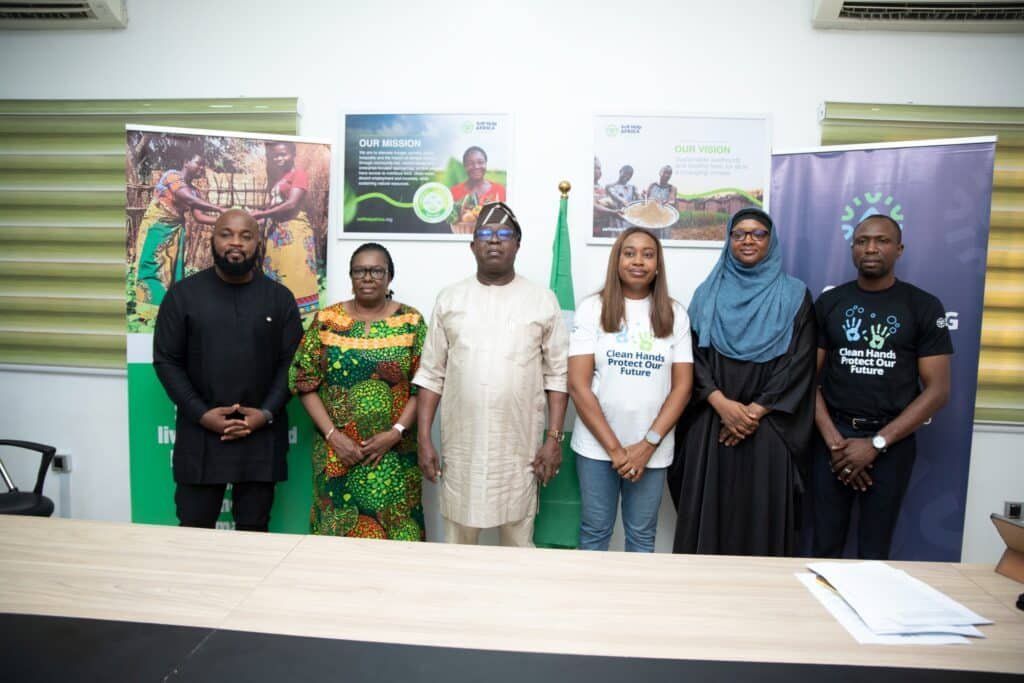
Self Help Africa, UK Govt leverages on Youth inclusion for Hand Washing Hygiene in Nigeria

by Folarin Kehinde October 27, 2024
written by Folarin Kehinde

In a deliberate effort to enhance hand washing with soap and water, the government of the United Kingdom in partnership with Self Help Africa (SHA), Federal Ministry of Water Resources, Sports Development and the National Youth Service Corps (NYSC) has leveraged on youth inclusion to drive hand hygiene in Nigeria.

The Country Director of Self Help Africa (SHA) Joy Aderele while speaking during the flag off of the campaign in Abuja said that SHA will be focusing on the inclusion of Nigeria’s youth, particularly corp members in driving hand hygiene awareness across grassroots communities, with the goal to empower young people to become champions of hand hygiene in their communities, in tandem with the National Youth WASH Strategy.

“Nigeria has one of the largest youth populations in the world, with 63% of the population under the age of 25. This demographic, while vulnerable to hygiene-related problems, represents a significant opportunity as advocates for change. This is why we will be engaging Nigerian youths through the NYSC scheme to inspire behaviour change among Nigerians and reinforce the importance of proper hygiene in public health,” .

Aderele said research has shown that 80 percent of germs are transmitted by unclean hands touching contaminated surfaces, which makes hand hygiene essential in preventing communicable diseases, saying in Nigeria, the significance of hand hygiene is even more important due to high incidences of hygiene-related diseases such as diarrhoea, cholera, and respiratory infections.

She said that with less than one-third of Nigerians demonstrating proper handwashing techniques with soap according to the 2021 WASHNORM report, hand washing practices still need to improve.

Adele noted that the campaign was launched digitally on 15 October through an Instagram Live session with Aproko Doctor (Dr. Chinonso Egemba), a popular Nigerian health influencer, and Shadrack Shaaperaga Guusu, Head of WASH Programmes at SHA, has already reached thousands of young Nigerians.

Adele explained that the campaign is a month -long series of engagement aimed at raising awareness about the importance of hand hygiene under the theme of the 2024 Global Hand Washing Day “why are clean hands still important”.

Also speaking, the Health Adviser at Foreign, Commonwealth, and Development Office (FCDO) Dr Chidera Chukwu said the UK government is supporting the initiative following the 2021 Water, Sanitation and Hygiene National Outcome Routine Mapping WASHNORM survey which indicates that despite 99% of Nigerians knowing when to wash their hands only 8% practice proper hand hygiene.

He said the campaign is a call on the Nigerian youths , most especially members of corp members to become hygiene champions and advocate for sustainable health practices.

He stressed that the campaign aligns with FCDO’s goal of working closely with the Nigerian government and partners to build stronger and resilient systems through youth leadership and community involvement, saying they are excited to see how the Water Sanitation and Hygiene (WASH) Systems for Health Programme will drive the operationalisation of the Nation Youth Strategy.”

The Director Water Supply, Resources Federal Ministry of Water Resources Mr Babarinde Olusegun commended SHA for the effort in scaling up hand washing practices to the grass root.

He said the youth WASH program was launched in partnership with the Federal Ministry of Sports Development,as well as Water Resources and implemented by the NYSC, saying the ministry is focused on improving WASH infrastructures and policy implementation.

October 27, 2024 0 comments
0 FacebookTwitterPinterestThreadsBlueskyEmail

Recent Posts

  • Strike: FCTA to open attendance register for staff

    January 27, 2026
  • Self Help Africa Drives Innovative Rural Water Safety Pilots with FG Support

    January 27, 2026
  • VIDEO: Tinubu stumbles briefly during reception parade in Turkey

    January 27, 2026
  • BREAKING: Nationwide Blackout as National Grid Collapses Again

    January 27, 2026
  • JUST IN: Super Eagles captain Wilfred Ndidi loses father to road accident

    January 27, 2026

Usefull Links

  • Contact Page
  • About Leading Reporters
  • Contact Us
  • Headlines
  • Investigation
  • Exclusives
  • Opinion
  • Business
  • Facebook
  • Twitter
  • Instagram
  • Linkedin

@2021 - All Right Reserved. Designed and Developed by PenciDesign


Back To Top
Leading Reporters
  • Featured
  • Politics
  • Opinion
  • Business
  • Entertainment
  • Sports
  • About Us
  • Contact