
Leading Reporters
  • Headlines
  • Health
  • Business
  • Exclusives
  • Investigation
  • Entertainment
  • Opinion
Tuesday, December 2, 2025
Hot
Tinubu Nominates Ex-CDS Christopher Musa As Defence Minister
BREAKING: FG Publishes List of 15 Alleged Terrorist...
FG Proposes 40% Salary Increase for ASUU Lecturers
Northern Governors Host Emergency Meeting Over Escalating Security...
Tinubu appoints ex-INEC Chair Yakubu, Fani-Kayode, Reno Omokri,...
Niger Delta Boss Jennifer Adighije Accused of Corruption,...
India Orders $570 Million Payout in Major Fraud...
Dangote Refinery Saves Nigeria over ₦10bn Annually in...
Bandits Abduct 16-year-old boy, six girls in FCT...
Social Security: A Missing Link in Nigeria’s Search...
  • About Leading Reporters
  • Contact Us
Leading Reporters
Advertise With Us
  • Headlines
  • Health
  • Business
  • Exclusives
  • Investigation
  • Entertainment
  • Opinion
Hot
Tinubu Nominates Ex-CDS Christopher Musa As Defence Minister
BREAKING: FG Publishes List of 15 Alleged Terrorist...
FG Proposes 40% Salary Increase for ASUU Lecturers
Northern Governors Host Emergency Meeting Over Escalating Security...
Tinubu appoints ex-INEC Chair Yakubu, Fani-Kayode, Reno Omokri,...
Niger Delta Boss Jennifer Adighije Accused of Corruption,...
India Orders $570 Million Payout in Major Fraud...
Dangote Refinery Saves Nigeria over ₦10bn Annually in...
Bandits Abduct 16-year-old boy, six girls in FCT...
Social Security: A Missing Link in Nigeria’s Search...
Leading Reporters
Leading Reporters
  • Headlines
  • Health
  • Business
  • Exclusives
  • Investigation
  • Entertainment
  • Opinion
Copyright 2024 - All Right Reserved
Home > poverty
Tag:

poverty

Social Security
Headlines

Social Security: A Missing Link in Nigeria’s Search for Peace

by Nelson Ugwuagbo November 27, 2025
written by Nelson Ugwuagbo

Nigeria’s struggle with insecurity is often discussed in terms of guns, surveillance, and military deployments. Yet one powerful tool remains underused: social security. A nation cannot be peaceful when millions of its citizens live without basic protection against poverty, unemployment, illness, and economic shocks.

Social security simply means safety nets cash transfers, pensions, health insurance, and programmes that help people survive and thrive. In Nigeria, these tools are often viewed as welfare perks, but their impact on peace and stability is far greater.

Fighting Poverty, Reducing Anger

No society can be stable when the majority of its people struggle to meet basic needs. Poverty fuels resentment, protests, and conflict. Strong social protection reduces desperation and gives families breathing room, easing social tension.

A Shield Against Crime and Extremism

Many of Nigeria’s security problems kidnapping, banditry, militancy, and extremist recruitment—are rooted in economic hardship. When young people lack jobs or opportunities, criminal activity becomes more attractive. Social security programmes that provide income support, skills training, and employment reduce this vulnerability and keep young Nigerians on a productive path.

Rebuilding Trust in Government

Trust in institutions is essential for national unity. When citizens feel abandoned, they become alienated from the state. Social protection sends the opposite message: that the government cares. This strengthens the social contract, making communities more cooperative and more likely to support peace efforts.

Protecting the Vulnerable = Protecting Society

Support for the elderly, persons with disabilities, widows, children, and internally displaced persons contributes to a more humane society. When vulnerable groups are ignored, crime, exploitation, and social resentment grow. Protecting them strengthens our collective security.

Economic Stability Creates Social Stability

Social security helps households withstand crises such as job loss, inflation, or illness. This stability prevents social unrest during tough economic times. When families survive shocks, society becomes more resilient.

A Security Investment, Not a Charity

If Nigeria hopes to reduce violence and build a peaceful future, social security must be seen as part of national security strategy. Expanding and properly funding these programmes will address the root causes of insecurity far more sustainably than force alone.

A nation that protects its people protects its peace. Nigeria must invest in both.

Alaribe Obinna Esq. is a social justice, social welfare, and human and girls child rights advocate. He lives in Abuja and can be reached via obinnaalaribe@yahoo.com

November 27, 2025 0 comments
0 FacebookTwitterPinterestThreadsBlueskyEmail
Business

‘You lied, 139 million Nigerians not living in poverty, FG tells World Bank

by Folarin Kehinde October 9, 2025
written by Folarin Kehinde

The Presidency has faulted the World Bank’s latest economic report, which estimated that about 139 million Nigerians are living in poverty, describing the figure as exaggerated and disconnected from the country’s prevailing realities.

LEADING REPORTERS gathered that the new figure by the organisation represents an increase from 129 million in April 2025.

President Bola Tinubu’s Special Adviser on Media and Public Communication, Sunday Dare, in a statement posted on his official X handle on Wednesday, said the World Bank’s poverty estimate must be “properly contextualised” within the framework of global poverty measurement models.

“While Nigeria values its partnership with the World Bank and appreciates its contributions to policy analysis, the figure quoted must be properly contextualised. It is unrealistic,” Dare said.

According to the Presidency, the global lender’s estimate was based on the $2.15 per person per day international poverty line, set in 2017 using Purchasing Power Parity (PPP). It said the figure should not be mistaken for an actual headcount of poor Nigerians.

The statement explained that, when converted to nominal terms, the $2.15 benchmark equals about N100,000 per month at the current exchange rate, which is significantly higher than Nigeria’s new minimum wage of N70,000.

It added that the PPP methodology relies on historical consumption data—Nigeria’s last major household survey was conducted in 2018/2019—and often fails to account for the large informal and subsistence sectors that sustain millions of Nigerian families.

“There must be caution against interpreting the World Bank’s numbers as a literal, real-time headcount,” the Presidency said. “The figure is an analytical construct, not a direct reflection of local income realities.”

The Presidency, therefore, described the World Bank’s estimate as a modelled global projection rather than an empirical reflection of living conditions in 2025.

Dare stressed that the administration’s focus was on changing the trajectory, not debating static figures, adding that Nigeria’s economy was now on a recovery and reform path aimed at achieving inclusive growth and social protection.

He noted that the administration has expanded a number of social welfare and economic initiatives under the Renewed Hope Agenda to cushion the impact of recent reforms while laying the foundation for long-term prosperity.

These, he said, include the Conditional Cash Transfer programme, which now covers 15 million households nationwide with digital verification through the National Social Register; the Renewed Hope Ward Development Programme targeting all 8,809 electoral wards with micro-infrastructure and social projects; and the strengthening of National Social Investment Programmes such as N-Power, GEEP micro-loans, and school feeding schemes to support jobs, businesses, and education.

He further cited food security initiatives involving the distribution of subsidised grains and fertilisers, mechanisation partnerships, and the revival of strategic food reserves to stabilise staple prices.

The Renewed Hope Infrastructure Fund, he said, is financing key road, housing, and power projects to lower living costs and create jobs, while the National Credit Guarantee Company is expanding affordable credit access for small businesses, women, and youth entrepreneurs through risk-sharing arrangements with commercial banks.

The Presidency maintained that the Tinubu administration was tackling Nigeria’s poverty challenge by addressing the structural distortions that have constrained productivity and inclusive growth for decades.

It explained that ongoing reforms such as the removal of fuel subsidy, exchange rate unification, and fiscal reallocation of funds toward productive sectors were “painful but necessary choices” aimed at fixing the root causes of poverty rather than its symptoms.

It noted that even the World Bank had acknowledged that these reforms are already restoring macroeconomic stability and growth momentum.

The government emphasised that economic recovery alone is not enough unless it translates into real welfare gains for ordinary Nigerians. According to the statement, the administration’s medium-term priority is to ensure that macroeconomic stability leads to affordable food, quality jobs, and reliable infrastructure.

It added that major investments were underway in agriculture, manufacturing, and power, including new gas-to-power projects and skill development hubs expected to boost job creation and reduce living costs. “Nigerians should begin to feel visible improvements in food prices, income, and purchasing power as these programmes mature,” the statement said.

The Presidency also revealed that efforts were ongoing to consolidate the nation’s social protection architecture under a unified, data-driven framework to enhance transparency and ensure that no vulnerable community is left behind. It said the administration was expanding the National Social Register and scaling up existing social investment schemes to provide targeted support to poor households.

The Presidency reaffirmed President Tinubu’s commitment to building a resilient and inclusive economy that directly improves living standards. “Nigeria rejects exaggerated statistical interpretations detached from local realities. The government remains focused on empowering households, expanding opportunity, and laying the foundation for a fairer, more prosperous nation,” the statement said.

October 9, 2025 0 comments
0 FacebookTwitterPinterestThreadsBlueskyEmail
OpinionHeadlines

Is N100m for presidential nomination not prohibitive?

by Leading Reporters April 24, 2022
written by Leading Reporters

By Tonnie Iredia

It is futile to argue with some Nigerians on any matter in which they have an interest or which they have cause to suspect might favour them even if tangentially. All that those in doubt of this conclusion need to do is to watch people on television marshaling points in support of any subject. They forcefully leave no stone unturned.

Those who do this are usually talented in public speaking or are senior lawyers especially those who have firm knowledge not only of the provisions of the Nigerian Constitution but the exact sections, subsections and schedules of relevant provisions. For instance, when the issue of defector-governors arose, they argued in support of the defectors eloquently sermonizing on the difference between law and morality adding that what matters is law. Those of us who often drew attention to the spirit of the law in querying unwholesome political behaviours were shocked a few days ago to see the pro-technicality analysts taking sides with us to condemn the decision of government to pardon convicted former governors Dariye and Nyame. It was as if no one remembered that our Constitution provides for state pardon. So, is it all about winning an argument or publicity consciousness?

Against this backdrop, my immediate reaction to the decision of the ruling All Progressives Congress APC to sell its nomination forms to presidential aspirants at the cost of One hundred million naira (N100m), was that it would not be difficult at all to find Nigerians who would instantly generate reasons to justify the apparent prohibitive cost. No surprises as the defences have since begun. To start with, there is already the argument that politics is capital intensive and that anyone who cannot raise the amount would not be strong enough to be President of the largest country in Africa. In fact, the argument that the funds can be raised with ease has already been proven. For example, two Abia state businessmen – Ukaegbu James and Nnanna Kalu have signified their intention to provide N200m to buy forms for two federal legislators, namely, Senate President Ahmad Lawan and the Chief Whip of the Senate, Orji Uzor Kalu. However, the public perception is that the two beneficiaries can afford to buy their own forms because as senators they are among the richest public office holders in the country

One candidate who is not likely to have any problem whatsoever in getting the form is Asiwaju Bola Ahmed Tinubu whose supporters are now competing for who will be the first to raise the amount. As soon as the figure was announced, the Asiwaju Project Beyond 2023 reportedly raised the amount and announced that “we will be storming the secretariat soon to get the form for him.” On his part, the Director General of the Tinubu Support Organization (TSO) Aminu Suleiman said he had already signed a cheque for the amount rendering unnecessary, the previous pledge of N10m made by some youths under the aegis of the Tinubulate Nigeria Agenda (TINA). Senator Kabiru Gaya, Chairman of the Progressive Project (TPP), the umbrella organization of Osinbajo support groups had similarly vowed to purchase the nomination form for Vice President Yemi Osinbajo. A pro-youth group, the North Central Coalition for Leadership (NCCL) had also planned to buy a form for another APC presidential aspirant, Governor Yahaya Bello of Kogi state. It is therefore obvious that the strategy which all the aspirants used in getting different groups to earnestly beg them to show interest in next year’s presidential contest, would be deployed again to make the same support groups to announce their readiness to buy forms for their preferred aspirants. Such donors or perceived fronts are aiming to be the next set of cabals in the corridors of power come 2023.

A second argument put forward in support of the rather high figure of N100m is that the calculation took into account the current realities in which everything has increased. Petroleum products especially kerosene and diesel, foodstuffs, government loans, bandits’ attacks, ASUU strikes, petroleum subsidy, poverty etc. have all gone up astronomically. The fear in some quarters however is that the exorbitant cost of nomination forms for elections can be counter-productive. If nothing else, it will shut out some aspirants with good ideas which are greatly needed for national development. Politicians are probably the only ones comfortable with heavy expenses on politics and elections. Indeed, those of them in the legislature had earlier ensured that they legalized huge election expenses. In the new Electoral Act, they jacked up spending ceilings from between 150 to 400 per cent. Yet, nothing was done to halt the old order where political parties always breached the rule requiring them to disclose their electoral expenditures to the Independent National Electoral Commission (INEC). This brands the advocacy for high cost of nomination forms as self-serving.

Party leaders in particular are quite comfortable with the high cost of nomination forms because it gives them opportunity to generate ample funds for running their political parties. Putting it aptly, the new publicity secretary of the ruling party, Felix Morka had argued that Nigeria was yet to get to the level where party members would faithfully pay membership dues for running the party. It would therefore mean that the costs of nomination forms across board are that high because this is the ideal time for collecting revenues from elusive members. The truth therefore is that party leaders are anxious to secure huge party finances to put an end to the practice of going cap in hand to beg elected office holders to come to their rescue on a monthly basis. The situation could be worse where a party loses an election and would therefore have no elected office holders in their party to look up to for assistance.

The debate on whether the huge cost of nomination forms is prohibitive or not is fruitless because for quite some time nothing has shown that an increase in finances affects our people positively. Even the revenue from nomination forms could be squandered because some party members believe that the struggle for party offices is usually influenced by the desire of party leaders to help themselves to such funds. The same is true of government finances. Only last week, the House of Representatives’ Adhoc Committee investigating the state of the nation’s refineries had to raise an alarm over suspected sharp practices on the subject. The Committee is bothered that after allegedly spending $3.7 billion on repairs, none of the refineries has been restored to any level of functionality. Yet, neither the Minister of State for Petroleum Resource, Timipre Sylva nor the Group Managing Director of the Nigerian National Petroleum Company Limited, Mele Kyari responded to calls by the Committee to throw light on the situation What the above narrative suggests is that instead of bickering over the cost of nomination forms, our civil society groups should rise up now to vote against non-performers. I

t is time to stop playing the victim and behaving as if citizens are hopeless and helpless the way Ekiti state pensioners projected themselves the other day. With an unpaid N37.8billion gratuities and pensions, Ekiti pensioners last Thursday began a prayer session seeking God’s face for swift intervention for the payment of their entitlements. If the pensioners come together to vote against the political party that placed them in their present predicament in the next governorship elections holding two months away, no state government would toy with them in the future. In other words, this is not a time to bother about the cost of nomination forms; it is also not the time for protests concerning poor governance, rather it is time to use the ballot to tell political leaders that they are elected to represent the people and not to turn them into objects instead of the subject of democracy. It is certainly not a time to beg leaders who previously failed to institute good governance to once more join the next race. Nigerians must take their nation’s destiny in their own hands.
April 24, 2022.

April 24, 2022 0 comments
0 FacebookTwitterPinterestThreadsBlueskyEmail
Headlines

Nigerians are getting poorer contrary to Buhari’s claim

by Leading Reporters August 2, 2021
written by Leading Reporters

The good people of Nigeria will remain very poor for a long time to come, the 2021 report of the United Nations (UN) Sustainable Development Goals (SDGs) revealed.

Nigeria’s chances of achieving Goal 1 of the SDGs, which is the attainment of zero poverty among its people by the year 2030, appear slim, as the country’s poverty headcount is soaring high still, instead of reducing. 

The latest sustainable development report ranked Nigeria low at the 160th position out of 165 countries. The leadership of countries all over the world, through the UN, had committed themselves to achieve all the 17 SDG goals by the end of 2030.

The SDG report revealed that the Nigerian government is not effective at all in lowering poverty among its people if it is making any effort at all. Instead, the leadership in Nigeria is supervising increasing poverty in the country. 

Data showed that 43% of Nigeria’s estimated 206.1 million population is living below the lowest poverty threshold which is $1.90 a day. That is to say, more than 4 out of every 10 Nigerians live on less than N779, using the Central Bank of Nigeria’s official exchange rate of N410.

The outcome of the poverty headcount is far worse when it is based on the next international poverty threshold of $3.20. The UN data revealed that 74% of the country’s population survive on less than $3.20 or N1,312 a day. That means according to international standards, more than 7 persons out of every 10 Nigerian are poor. 

The recent SDG 1 figures present Nigerians as poorer than their fellow Africans in four other African countries from the North, South, East and West of the continent, namely Egypt, South Africa, Kenya and Ghana.

“In the last two years we lifted 10.5 million people out of poverty” True or False?

In his democracy speech on June 12, 2021, President Buhari claimed that his administration has lifted 10.5 million Nigerians out of poverty in the last two years. However, the Sustainable Development Report says the contrary. In fact, data showed that more people slipped into poverty within this period, either using the $1.90 or $3.20/day poverty threshold.

Nigeria’s poverty headcount ratio at $3.20 rose from 68.7% in 2018 to 70% in 2019. It further increased to 73.22% in 2020. These increasing incidents of poverty, particularly in the Buhari administration and the government’s denial of the same casts doubt on its ambitious plans to lift 100 million Nigerians out of poverty in 10 years. 

Not only this, just like the country did not achieve the Millennium Development Goals’ (MDGs) poverty targets by 2015, it might also be one of the countries that may not attain goal one of the SDGs by 2023, given its ever-increasing unemployment and inflation rate – two economic factors that prevent access to income and devalue people’s hard-earned income.

Between 2010 and 2020, Nigeria’s unemployment rate rose five-fold, from 6.4% in 2010 to 33.3% in 2020. According to a report by the Nigerian Economic Summit Group, the rise in the number of unemployed people is expected to push more people into the poverty trap, going forward. 

Already, inflation has pushed millions of Nigerians below the poverty threshold. The World Bank revealed this in its recent Nigeria Development Update report, noting that inflationary pressure pushed about 7 million Nigerians below the poverty line in 2020 alone.

The foregoing evidence from data suggests that unemployment and inflation contribute to extreme poverty in Nigeria, and together pose a major challenge for Nigeria in ending poverty – goal one of the SDGs. This is aside from the impact the COVID-19 may have had not only on Nigeria but the global community in achieving the SDGs. Acknowledging the effect of the global pandemic on the SDGs, the United Nations Secretary General noted that “the current crisis is threatening decades of development gains,… and throwing progress on the SDGs even further off track”

To get back on track to achieve Goal 1 of the SDGs, the government may need to adopt more effective economic measures, particularly in reducing the unemployment rate and inflationary pressure. 

August 2, 2021 0 comments
0 FacebookTwitterPinterestThreadsBlueskyEmail
Headlines

Revealed! Nigeria Lost 50% of Her Youths, World Bank

by Leading Reporters July 25, 2021
written by Leading Reporters

Seeking to secure their future in a land with a viable economy and favourable economic conditions, it has been revealed that half of the Nigerian youths are seeking to travel out of the country.

According to the World Bank, an increasing number of Nigerian youths are planning to leave the country in search of greener pastures. This was revealed by the World Bank in a study titled “Of Roads Less Traveled: Assessing the Potential for Migration to Provide Overseas Jobs for Nigeria’s Youth,” which was released on the website of the World Bank this week.

future in a land with a viable economy and favourable economic conditions, it has been revealed that half of the Nigerian youths are seeking to travel out of the country.

According to the World Bank, an increasing number of Nigerian youths are planning to leave the country in search of greener pastures. This was revealed by the World Bank in a study titled “Of Roads Less Traveled: Assessing the Potential for Migration to Provide Overseas Jobs for Nigeria’s Youth,” which was released on the website of the World Bank this week.


Among the nations polled, Nigeria ranked third just behind Liberia (70 per cent) and Sierra Leone (60 per cent) in terms of respondents looking to permanently relocate to another country. Niger Republic came in at 10% ranking lowest in the study

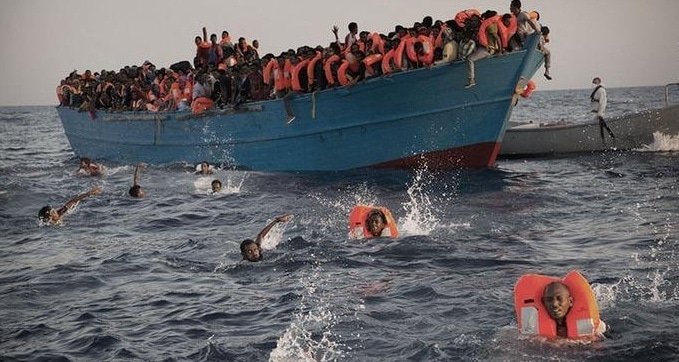
The study revealed further that Nigerians were the largest group of migrants from Sub-Saharan Africa entering Europe in 2016 and 2017, with almost 40,000 migrants landing in Italy in 2016, and over 90% arriving by sea.

“With rising migratory pressures created by poor employment conditions, Nigerians are increasingly choosing to migrate through irregular means,” the World Bank said.

“A larger number of Nigerian migrants arriving in Italy were women (32 per cent) more than migrants from the rest of Sub-Saharan Africa (24 per cent),” the bank stated.

“However, the underlying economic and demographic factors that create migratory pressures are unlikely to subside in the near future, with other potential irregular routes being reported through Sudan and Chad to Libya” it noted.

I Have Done My Best For Nigeria On Poverty And Insecurity, Buhari Insists

With the current insecurity and growing poverty in Nigeria, President Muhammadu has said that he has done his best to rescue the country’s situation. This is as the President met with some members of the All Progressives Congress (APC) on Thursday. In a statement by the Senior Special Assistant to the President on Media and Publicity, Garba Shehu, Buhari made this known when he hosted some APC governors at his hometown in Daura, Katsina state.

According to Buhari, things were worse at the time he assumed power in 2015. He also added the security situation in the North-East had improved compared to what was happening there before 2015 when some parts of the region were being controlled by terrorists. He noted that he had to change the security chiefs and did what was necessary to achieve a level of security.

July 25, 2021 0 comments
0 FacebookTwitterPinterestThreadsBlueskyEmail
Headlines

Nigeria economic growth lags Africa, poverty rising

by Leading Reporters June 16, 2021
written by Leading Reporters

Nigerian economic growth has resumed after the COVID shock but is lagging the rest of sub-Saharan Africa, with food inflation, heightened insecurity and stalled reforms slowing growth and increasing poverty, the World Bank said on Tuesday.

Presenting its six-monthly update on development in Africa’s most populous country, the organisation gave a GDP growth forecast for Nigeria of 1.9% in 2021 and 2.1% in 2022, compared with 3.4% this year and 4.0% next year for sub-Saharan Africa.

He said the COVID-induced crisis was expected to push over 11 million Nigerians into poverty by 2022, taking the total number of people classified as poor in the country to over 100 million. The total population is estimated at 200 million.

The World Bank expects the Nigerian inflation rate in 2021 to be 16.5%. The forecast for sub-Saharan Africa, excluding Nigeria, is 5.9%.

Hernandez said increased insecurity across the nation — ranging from mass abductions at schools, kidnappings for ransom, armed conflict between herdsmen and farmers, armed robberies and various insurgencies — was a drag on growth and job creation.

He said it was critical for the government to maintain reform momentum, but that some important reforms had stalled

He cited petrol subsidies, which have recently returned after the government had established a market-based pricing mechanism, and electricity tariff reform, an area where planned adjustments to bring prices in line with costs have been paused.

Hernandez said Nigeria had the largest number of people without access to electricity in the world, and that electricity subsidies benefited mainly richer households.

Only 22% of the poorest households have access to electricity, while 82% of the richest are able to access power.

June 16, 2021 0 comments
0 FacebookTwitterPinterestThreadsBlueskyEmail
Investigation

Revealed: How AEDC Spent Over N16b In a day On Admin. Expenses; Allegedly Evade Tax and Use Inflated Costs to Shortchange FG (Part 1)

by Leading Reporters March 30, 2021
written by Leading Reporters

Financial records unveiled by the League of Patriot, exclusively obtained by LeadingReporters, has alleged that AEDC uses different accounts, mainly domiciled with the United Bank of Africa, UBA and recently, Fidelity Bank to perpetrate these nefarious acts. 

The accounts include AEDC Impress Funding Account with UBA.  Account No. 22174094498.  This account has become a conduit through which Billions of Naira are fleeced under the subheading – Operational imprest.  For instance, between October and December, 2018, a total of N1,579,015,000 was mopped into the account as impress.

It was John Perkins, the author of “Confession of An Economic Hitman” who said that electricity, industrial parks, highways and ports are the things that made huge profits for companies that are sent to wreak havocs on the economies of target-nations.

Perkins’s confession in his widely-read book gives a clue to why Nigerians, the Federal Government and electricity consumers would remain at the mercy of companies like Abuja Electricity Distribution Company AEDC. Mr. Perkins went further to expose how they coopt local greedy economic jackals in government offices, the banking and other strategic sectors in any country of their interest to ensure that their appetite to ruin and hold the people in perpetual poverty are sealed.

AEDC activities, according to investigation carried out by group of concerned Nigerians under the umbrella of League of Patriots revealed that the company is structured to fleece Nigeria, exploit the people, defraud the system, evade tax and by extension divert all the proceeds of their loots to their agents both locally and internationally.

The group has promised to work with the anti-corruption agencies, especially the Economic and Financial Crime Commission under its new leadership that has expressed interest to institute a probe in the power sector.

Another Imprest Account as claimed by Leagues of Patriots is Account No. 1017666012, with United Bank of Africa, which is used for these alleged nefarious activities. Investigation carried out by the group revealed further that Account No. 1019034680 with UBA is used to sweep funds which are later diverted to yet another UBA account No 1017547366.

Furthermore, yet another account uncovered by the group is a UBA Account No.1017681365, allotted to AEDC WAMBA, Nasarawa State.  A close investigation revealed that the said account is not linked to any TIN no, which makes it hard for Government to collect its tax from AEDC.

AEDC Okene Area Office with Account No 1021027984 with UBA is one of the many accounts of AEDC that were structured to evade tax as all proceeds from Okene axis were technically structured to evade tax.

Kabba AEDC Account No 1017805387 is another porous and specially structured account allegedly used in fleecing the Federal Government.  Recall that the Federal Government of Nigeria has 40% stake in AEDC through its agency, Bureau of Public Enterprises.  The agency, according to League of Patriots has become a willing partner in crime in short-changing the Government and the people of Nigeria.

All efforts to get AEDC to address the issue proved abortive as no replies were given to mails sent to them, for official response despite series of promises from the communication and accounts units of AEDC to do so

March 30, 2021 0 comments
0 FacebookTwitterPinterestThreadsBlueskyEmail

Recent Posts

  • Tinubu Nominates Ex-CDS Christopher Musa As Defence Minister

    December 2, 2025
  • Poor Toilets Driving GBV, School Dropouts – Wateraid

    December 2, 2025
  • BREAKING: FG Publishes List of 15 Alleged Terrorist Financers in Nigeria [SEE LIST]

    December 1, 2025
  • FG Proposes 40% Salary Increase for ASUU Lecturers

    December 1, 2025
  • Northern Governors Host Emergency Meeting Over Escalating Security Concerns

    December 1, 2025

Usefull Links

  • Contact Page
  • About Leading Reporters
  • Contact Us
  • Headlines
  • Investigation
  • Exclusives
  • Opinion
  • Business
  • Facebook
  • Twitter
  • Instagram
  • Linkedin

@2021 - All Right Reserved. Designed and Developed by PenciDesign


Back To Top
Leading Reporters
  • Featured
  • Politics
  • Opinion
  • Business
  • Entertainment
  • Sports
  • About Us
  • Contact