Leading Reporters
  • Headlines
  • Health
  • Business
  • Exclusives
  • Investigation
  • Entertainment
  • Opinion
Monday, January 26, 2026
Hot
Nigerian-born nurse loses licence in Australia for sleeping...
BREAKING: Kano Gov Abba Yusuf dumps NNPP
National Grid Collapse For First Time in 2026
BREAKING: Tinubu approves posting of Ambassadors to U.S.,...
Insecurity: Kidnappers demand 17 motorcycles for release of...
FG to Abolish Hnd-Degree Dichotomy, Allow Polytechnics to...
AFCON Initiative drives stronger Nigeria Morocco cooperation
Obasanjo: I’ll Never Stop Having Children
JUST IN: Bandits abduct over 100 worshippers in...
Nigeria’s Non-oil exports hit record $6.1bn – NEPC
  • About Leading Reporters
  • Contact Us
Leading Reporters
Advertise With Us
  • Headlines
  • Health
  • Business
  • Exclusives
  • Investigation
  • Entertainment
  • Opinion
Hot
Nigerian-born nurse loses licence in Australia for sleeping...
BREAKING: Kano Gov Abba Yusuf dumps NNPP
National Grid Collapse For First Time in 2026
BREAKING: Tinubu approves posting of Ambassadors to U.S.,...
Insecurity: Kidnappers demand 17 motorcycles for release of...
FG to Abolish Hnd-Degree Dichotomy, Allow Polytechnics to...
AFCON Initiative drives stronger Nigeria Morocco cooperation
Obasanjo: I’ll Never Stop Having Children
JUST IN: Bandits abduct over 100 worshippers in...
Nigeria’s Non-oil exports hit record $6.1bn – NEPC
Leading Reporters
Leading Reporters
  • Headlines
  • Health
  • Business
  • Exclusives
  • Investigation
  • Entertainment
  • Opinion
Copyright 2024 - All Right Reserved
Home > NNPC > Page 2
Tag:

NNPC

Headlines

$1.5B Port Harcourt refinery will be ready in 42 months – NNPC

by Leading Reporters June 5, 2022
written by Leading Reporters

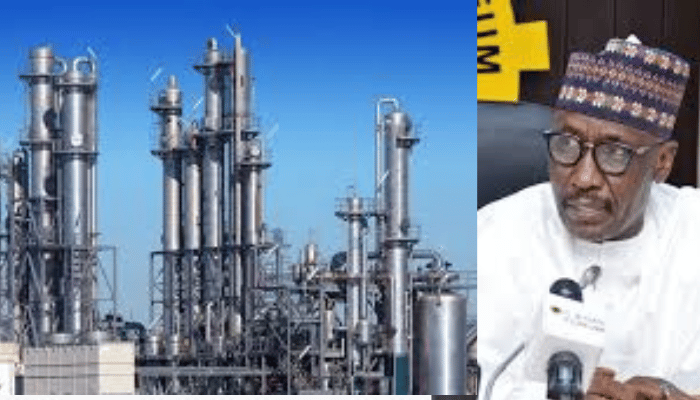
The Chief Executive Officer of the Nigerian National Petroleum Company (NNPC) Limited, Mele Kyari, said on Friday the ongoing rehabilitation of the Port Harcourt refinery would be completed by November 2023.

Kyari stated this when he appeared before the House of Representatives Ad-hoc Committee headed by Ganiyu Johnson in Abuja.

The NNPC chief, who was represented at the meeting by the company’s General Manager in charge of Refineries and Petrochemicals, Mustapha Yakubu, said the rehabilitation work which commenced on May 6, 2021 had attained 30 per cent completion level.

He said while part of the project would be delivered within 32 months, the entire project was expected to be completed within 42 months.

Kyari, who insisted that the contract for the survey of the refineries followed due process, said the contracts for the rehabilitation of Warri and Kaduna Refineries had not been awarded.

A representative of Saipem Engineering Company, who responded to questions from the committee on the project, said an additional sum of £2.3 million was approved for the inspection of both Warri and Kaduna refineries.

The committee, therefore, requested for Federal Executive Council’s approval of $1.5 billion for Port Harcourt refinery, $5.321 million for various expenditures incurred for comprehensive technical plants on July 26, 2017 and another $55 million paid on the same day.

The lawmakers alleged that the contract was awarded to Saipem without due diligence, adding that the contract was not subjected to competitive bidding.

They also directed NNPC management to recourse back to the committee before awarding the contract for the rehabilitation of Warri and Kaduna refineries since the pipelines are in bad shape.

June 5, 2022 0 comments
0 FacebookTwitterPinterestThreadsBlueskyEmail
Headlines

NNPC is Liable for Adulterated Fuel in Circulation, Oversight Failure – CAPPA

by Folarin Kehinde February 10, 2022
written by Folarin Kehinde

The Corporate Accountability and Public Participation Africa (CAPPA) has called on the Nigeria National Petroleum Corporation (NNPC) to own up and take full responsibility for the artificial fuel scarcity currently ravaging the country and the attendant long queues at petrol stations, depressing traffic snarls, and hikes in transportation fares, among other unpleasant consequences.

CAPPA made the call following the February 8, 2022, announcement by the Nigeria Midstream and Downstream Petroleum Regulatory Authority (NMDPRA) that the cause of the latest fuel scarcity is the current effort of the NNPC to recall from circulation and public consumption, over 100 million litres of harmful petroleum products with methanol quantities above Nigeria’s specification.

Media reports indicate that one of the business units of the NNPC imported the adulterated products which was then supplied to oil marketers by the Corporation for onward distribution across the federation.

Before the chapter of contaminated products in circulation, thousands of Nigerians had already besieged fuel stations in anticipation of a looming fuel scarcity premised on the possible removal of fuel subsidy by government, and threats by oil marketers to disrupt distribution upon an increment of ex-depot petrol price.

In a statement issued in Lagos, CAPPA said that the NMDPRA’s admission of contaminated petroleum products in circulation cannot be assuaged by the usual lip-service apologies to Nigerians, and mere withdrawal of the offensive product from circulation.

CAPPA Executive Director, Akinbode Oluwafemi said: “Once again, Nigerians are the victims of an industry that is not transparent and continues to demonstrate collusive lack of oversight on operators in the sector”.

“The disaster of toxic petroleum products in public circulation tellingly spotlights the mindboggling corruption orchestrated by thieving capitalists in the country’s oil sector, the lack of accountability systems in the country that fuel the irresponsibility and negligence of regulators to their oversight responsibilities, and the consequences of Nigeria’s failures to resuscitate its moribund refineries despite being led by a former Minister of Petroleum”.

“The incessant scarcity of petroleum products in Nigeria despite being the largest producer of crude oil in Africa once again lays bare the ineptitude of the ruling elite and unpleasant management systems of regulatory and administrative bodies empowered to exercise oversight of Nigeria’s oil and gas industry. It is a crying shame mainly because Nigeria’s situation is akin to a man who lives on the banks of the river yet washes his hand with spittle!”

CAPPA believes that it is also imperative to flag recent research studies conducted by veritable institutions that exposed the horrible fact that Nigeria’s dependence on imported petroleum products has created an international market of ‘’European refineries and commodity brokers’’ who collude with importers of petroleum products to ‘’blend crude oil with benzene and other carcinogenic chemicals that create fuels hundred times over limits’’. A situation that is causing significant particulate pollution in the environment and damage to cars.

A July 2020 report of the British newspaper, The Guardian reveals, this is not a new development as Nigeria has for long been a destination for “low-grade, dirty fuel, made in Dutch, Belgian, and other European refineries” which are found on the average too often exceed “EU pollution limits by as much as 204 times, and by 43 times the level for gasoline”.

Consequently, Nigeria ranks fourth in the world for deaths caused by air pollution with at least “114, 000 people dying prematurely from air pollution each year”.

Meanwhile, Nigeria not only ranks as the 6th largest crude oil producer in the world but also boasts of a crude oil reserve that majorly consists of the high quality, low sulfur “Bonny Light” crude which is sought all over the world because of its low corrosive effects on refinery infrastructure and low environmental impact of its byproducts.

Unfortunately, this is not available to Nigerians as 2 million barrels per day of this highly valued crude oil is daily extracted and exported out of the country by oil majors for consumption by the European populace.

The situation expressed above illustrates the paradox that continues to attend Nigeria’s oil and gas sector despite recent reforms including the signing of the Petroleum Industry ACT (PIA) 2021.

We are of the strong opinion that this present scarcity calls for a holistic reevaluation and redirection of the way and manner Nigeria’s oil and gas sector is being run.

CAPPA is not satisfied with the mere recall of the contaminated products which many Nigerians have already procured and will likely cause damage to their vehicles and other fuel-reliant machines. We call on the Federal government to issue appropriate sanctions against the culprit-supplier of the contaminated fuel product, and officials of the NNPC and other relevant national regulators for failing in their oversight functions.

Furthermore, we urge state authorities to boost efforts to resuscitate local refineries to ensure Nigeria’s access to affordable fuel products, end the opaque subsidy regime, arrest perpetual occurrences of fuel scarcity, and protect the environment from the harmful effects of the “dirty” fuel imported from Europe.

We demand adequate compensation for citizens whose cars, generators, and other fuel-reliant appliances may have been adversely affected by the adulterated petroleum product in circulation.

February 10, 2022 0 comments
0 FacebookTwitterPinterestThreadsBlueskyEmail
Headlines

Adulterated Petrol: NNPC, NMDPRA Commence Evacuation of Products

by Folarin Kehinde February 9, 2022
written by Folarin Kehinde

As a reaction to address the importation of over 80 million litres off specification Premium Motor Spirit, PMS, also known as petrol into the country, the Nigerian Midstream and Downstream Petroleum Regulatory Authority, Wednesday said that it has commenced the evacuation of the adulterated products.

This is also as the authority assured Nigerians of 20 days sufficiency volume of petrol in the country.

NMDPRA also advised Nigerians against panic buying as about 300 million litres of petrol is being discharged at the Apapa jetty.

Speaking during a stakeholders meeting comprising of Major Oil Marketers Association of Nigeria, MOMAN, Depot and Petroleum Marketers Association of Nigeria, DAPMAN, and Nigerian National Petroleum Company, Limited, NNPC, in Lagos, NMDPRA Chief Executive Officer, Farouk Ahmed, stated that a technical team has been set up to manage the development.

In his words, “Today, I am happy to say that loading is ongoing at various depots in the country, because we have been able to identify, isolate and quarantine the limited PMS that was affected by the methanol volume discovered.

“At the moment, six vessel ordered by the NNPC, arrived the country in the last few days, carrying a total volume of 300 million litres. This is a means to close the gap that was created by those affected volume of petrol we have withdrawn from the system.

“Today, we have about 20 days sufficiency of petrol in the country. Our ideal is to have 30 days volume level, because of the concern, we have to withdrawn those vessels which created this gap of 90 million litres to 20 days sufficiency. But with aggressive importation by the NNPC, this gap will be mitigated in the next few days, according to data we obtained from the NNPC program.

“Loading is ongoing in most of the depots that have confirmed one specification material, so there is no need to panic. Between now and tomorrow, the off specification product will be cleared.

Read Also: Flash Back: Politicians, Celebrities Keeps mum over Fuel Hike

“Currently, there is 39,000 Metric Tonnes, MT, vessel that is about to discharge at the Apapa Single Point Mooring, ASPM, and this vessels will be providing products to major oil marketers, including OVH, TotalEnergies, 11 plc, Conoil, and Ardova, according to loading program received from MOMAN.

“So once these vessels complete discharging and start pushing the products to marketers, I believe Lagos will be cleared of shortage. We have gotten that assurance from the marketers.

“Also, most of these vessels that are onground will also be providing volumes to most of the key members of DAPMAN. Offcourse, we have smaller vessels loading these off specification product which our technical team are trying to address.”

February 9, 2022 0 comments
0 FacebookTwitterPinterestThreadsBlueskyEmail
Headlines

Breaking: Buhari Appoints Margaret Chuba Okadigbo Chairman of NNPC

by Folarin Kehinde January 5, 2022
written by Folarin Kehinde

President Muhammadu Buhari has appointed Senator Margret Chuba Okadigbo as the Board Chairman of the Nigerian National Petroleum Company (NNPC) Limited.

This was announced in a statement issued Wednesday by the Special Adviser to the President on Media and Publicity, Femi Adesina.

The statement said the appointment was in accordance with the power vested in the President under Section 59(2) of the Petroleum Industry Act 2021.

It said the appointments took effect from the date of the incorporation of the NNPC Limited.

According to the statement, Mele Kolo Kyari is the Chief Executive Officer, and Umar I. Ajiya, Chief Financial Officer.

Other Board Members, the statement added, are; Dr Tajudeen Umar (North East), Mrs Lami O. Ahmed (North Central), Malam Mohammed Lawal (North West), Engr. Henry Obih (South East), Barrister Constance Harry Marshal (South South), and Chief Pius Akinyelure(South West).

The statement further read: “Also appointed are Executive Commissioners of the Nigerian Upstream Petroleum Regulatory Commission. They are: Dr Nuhu Habib (Kano), Executive Commissioner, Development and Production, Dr Kelechi Onyekachi Ofoegbu (Imo), Executive Commissioner, Economic Regulations and Strategic Planning, Capt. Tonlagha Roland John (Delta), Executive Commissioner, Health, Safety, Environment and Community, and Jide Adeola (Kogi), Executive Commissioner, Corporate Services and Administration.

Earlier appointed are the Board Chairman, CEO, Executive Commissioner, Exploration and Acreage Management, and Executive Commissioner, Finance and Accounts.

New appointees at the Nigerian Midstream and Downstream Petroleum Regulatory Authority are Francis Alabo Ogaree (Rivers), Executive Director, Hydrocarbon Processing, Mustapha Lamorde (Adamawa), Executive Director, Health, Safety, Environment and Community, Mansur Kuliya (Kano), Executive Director, Midstream and Downstream Gas Infrastructure Fund, Bashir Sadiq (Sokoto), Executive Director, Corporate Services and Administration, and Dr Zainab Gobir (Kwara), Executive Director, Economic Regulations and Strategic Planning.

“They join the Board Chairman, Executive Director, Downstream Systems, Storage and Retailing Infrastructure, the CEO, and Executive Director, Finance and Accounts, who had earlier been appointed.

For Midstream and Downstream Infrastructure Fund, new Council Members are; Mr Effiong Abia (Akwa Ibom), Bobboi Ahmed (Adamawa), and Engr. Abdullahi Bukar (Katsina).

It will be recalled that President Buhari had last September written the Senate on the administrative structure amendments to the Petroleum Industry Act, which included appointment of Non-Executive Board Members, removal of the Ministries of Petroleum and Finance from the Board of the two new institutions, and appointment of Executive Directors.”

January 5, 2022 0 comments
0 FacebookTwitterPinterestThreadsBlueskyEmail
Headlines

Sylva task NNPC on cost optimization for services and imported materials

by Leading Reporters June 11, 2021
written by Leading Reporters

Kenny Folarin, Abuja

The Minister of State for Petroleum Resources, H.E Timipre Sylva has task the Nigerian National Petroleum Corporation (NNPC) to optimize cost through reservoir research and in-country capacity to reduce cost of services and imported materials.

Sylva stated this in Abuja on Tuesday at the 2021 Nigeria International Petroleum Summit 2021.

According to Sylva, NNPC is the flagship in the oil and gas industry and as such, expect lots of development from them in cost optimization and innovation.

“If we are talking about cost optimization, one of the ways that we can actually optimize cost is to ensure that we are able to research into our reservoirs and develop in-country capacity and if we do that, am sure it is going to really bring down the cost of services and materials that are imported.”

Sylva further stated that cost optimization is one of the goals to be achieved which will make NNPC
an export solutions to Nigerian problems and other countries.

“That’s where are going at the end of the day, we want NNPC to become a truly Nigerian company, developing Nigerian solutions to Nigerian problems which we can export and that is where we are going and ultimately, I believe that is what is going to bring the cost reduction initiative”.

Meanwhile, Managing Director of the Shell Petroleum Development of Nigeria Ltd, Okunbor Osaghie berate the low contribution of gas to the Gross Domestic Product of the Country which has also affected the reserve, however opined stakeholders should pay much attention to it now than ever.

“Where my passion is the relatively modest contribution of huge gas reserves to GDP in this county.

“Quatar contributes over 50% contribution of gas to GDP, all our gas in our country together is still 10-12%, so it is clear to me that the ultimate catalyst on how we essentially make this reserves come to live sits around the gas value chain and that’s an area we must pay lots of attention to.”

Furthermore, Okunbor noted that execution of projects has been a major problem facing the industry.

According to him “Our problem at this stage is not policy, or framework, our issue now mostly is execution.

“Execution to get projects that derives from this policies and bring them to fruition.

“We have critical projects that are in flight that have been enabled by well top three policies, we need to ensure that the PIB when it is eventually passed support this project and by all means can we as a country, an as an industry growth, governance, regulators and operators ensure we focus on execution.

“The biggest problem we are going to have is years from now, we all leave this place, another set that thinks that they are too clever comes in and derail this project.

“That’s what we don’t want, we want to put our shoulders behind well articulated policies and pick this projects, find new ones and execute”. He added.

June 11, 2021 0 comments
0 FacebookTwitterPinterestThreadsBlueskyEmail
OpinionHeadlines

The cost of toying with insecurity.

by Leading Reporters May 14, 2021
written by Leading Reporters

Security or the lack of it is a very serious issue. In Nigeria, neither the government nor the people are doing anything about the bourgeoning insecurity beyond the usual condemnation.

The National Assembly is making permutations for the next round of elections in 2023. Remi Tinubu for instance, is already seeing herself in the seat of the first lady of the Federal Republic of Nigeria. Her desperate ambition would make her dismiss anyone who dares speak against the chaos in the land as a wailing opposition member. Her husband is no better either.

Tinubu of the ‘where are the cows’ fame sees the presidency as his legal right, and whatever hurdle in his way must be removed, even if it is the entire south west. If he has to rule over the ashes of a burned down Nigeria, so be it.

Muhammadu Buhari, the president of Nigeria is laid back. He watches as the conflagration continues to consume the country. One cannot tell whether he is incapable or unwilling to arrest the situation. He is just there, managed by abusive, ambitious and arrogant sycophants such as Femi Adesina and Garba Shehu. These two unprofessionally dish out statements that ought to be heard at peppersoup joints as ‘presidential’ position on sensitive issues of security.

The People’s Democratic Party,  Nigeria’s main opposition party is still trying to reconcile itself to the fact that it is not a non-government organisation but a political party whose major concern ought to be putting the monstrously chaotic APC on its toes. The PDP is still weeping from behind its secretary’s keypad, typing absolutely boring press statements that ordinary Nigerians are too hungry to read.

The people are more likely to be worse that all the political stakeholders mentioned above. They sit in the market, in the buses, in beer parlours, church fellowships, jumaat services and their village meetings talking in hushed tones about the unfolding carnage but none has the balls to join Sowore, Adeyanju and Aisha Yesufu in protesting.

So, we allow the marauders to go on rampage unabated. They kill, maim, rape, close down schools, destroy economies, scare people from the farms and do as they please. To make matters worse, the fear of the kidnappers and killers has caused schools to close down.

Recently, we heard that the horde of killers are converging on Abuja. And the army had taken steps to form a ring around the Villa, NNPC and the barracks. This sends only one signal to the vulnerable people: you are on your own. Veritas University and other schools around Abuja hurriedly closed down and students sent home.

No one is taking time to analyse the implications of these now until we appear in other countries after ten years from now and being to act like people from the stone age. The implications are too far reaching to be over emphasized. One of the results of this enchanted complacency and docility is that we are going to have to triple our efforts to catch up, if we ever will, with other countries in terms of technology and development, after Buhari’s reign of anachronism. Forget the joke about a certain Digital Economy. We know that we are opposite of being digital.

Microsoft and the Federal Government have decided to partner in the interest of the masses. According to reports, the partnership is to create thousands of direct jobs and hundreds of thousands of downline jobs. This is a very good initiative. It is quite commendable that the government is this thoughtful. But would Microsoft set up their office in a country where the president begs terrorists to release their victims? Would they endanger the lives of their staff to send them here only to be kidnapped? Would they take the most unreasonable risk of setting up an office with multimillion dollar equipment only to be bombed to ashes by a bad of pampered terrorists who would be arrested and rewarded?

Already, we have a very archaic educational system that churns out misfits for the evolving manpower demand. Then we are closing schools. In a decade from now, there would be a yawning human resources gap in Nigeria. We would have to import expertise and even mid level know how to man sensitive positions, leading to huge financial haemorrhage from an already pauperised economy.

Unless the next administration is manned by a learned, committed, patriotic and technocratic leader, the country is going to be so broke that citizens would migrate to hitherto poorer countries.

Another major consequence would be the already glaring famine. Given that bandits, herdsmen and Boko Haram have combined to kill farmers and farming in Nigeria, food supply has declined internally. Then the government has decided to block food importation. The only option left is to scramble for the little that’s within the country at very exorbitant prices. This is inflation. Now, the government is pronouncing itself broke. It is going to cut salaries but not that of the legislature and executive. Theirs is sacrosanct. The masses who form the bulk of everyday transactions are being rendered powerless. It can only mean one thing. Increased prices and inadequate purchasing power. A trader can’t sell below his cost price, and the buyer cannot buy at his new price. That’s a dilemma.

Another foreseeable problem is brain drain. We must not kid ourselves,  many people are running out of this country daily. Forget Lai Mohammed’s tantrums. The country is emptying its best into other countries. Doctors, engineers and other professionals are all running away from a collapsing Nigeria. After spending decades studying in Nigeria’s excruciating education climate, no one would wait for an unlettered member of a rag tag army of Boko Haram to waste him. The best is to run away.

The next president of Nigeria has a lot of work on his hands in an attempt to lift Nigeria out of the current abyss it has found itself in. And we all have a job on our hands before we begin to look up to Benin republic for regional leadership.

The time to salvage our country is now. We must all stand up to be counted.

To be continued.

Alex Agbo,

Writer, researcher and public policy analyst writes from Lagos.

May 14, 2021 0 comments
0 FacebookTwitterPinterestThreadsBlueskyEmail
HeadlinesOpinion

It Is Time For Legislators To Extend Their Oversight visit To Sambisa

by Leading Reporters May 14, 2021
written by Leading Reporters

Last Thursday, I was slightly amused listening to Senate President, Ahmed Lawan pouring encomiums on the service chiefs of Nigeria’s military.

When the report by the broadcast media on the event started playing, I had thought it was a valedictory session where some war veterans were taking a well-deserved bow. But when it became clearer that the day’s celebrants were the General Lucky Irabor led new service chiefs, I had to put off my initial doubt to watch more closely to find that the colorful reception by the Senate for the team was real and that it departed substantially from the old familiar song whose chorus was that no one knows into what use the military had put the huge resources appropriated and allegedly received by them.

It was as if the Senate had just discovered how well the funds had been meaningfully utilized. If so, what was the source of the new information? I mean was it credible evidence obtained from oversight function? I just hope the Senate’s position was not informed by the predictions of any of our vision-seeing members of the clergy!

Whatever the source, one thing which is certain, is that no one can blame a television viewer for being cynical; after all, the general narrative on ground has been one of despondence in which the public had been made to believe that funds meant for the military were usually diverted by the top hierarchy leaving nothing for the troops to prosecute the insurgency war.

Indeed, when the last service chiefs left office, there were reports of jubilation in military circles especially at the war front which tended to validate the rumour that military funds were truly misappropriated. Although there were official attempts to clarify the statement credited to the National Security Adviser NSA that weapons and equipment that should have been bought were not bought, the general feeling which subsisted was that the funds were missing. There was in fact the allegation by the International foundation against corruption that about N10.02 trillion spent on the security sector in Nigeria has had no audit report from 2015 till today.

So, why was the Senate President presenting a vote of thanks in favour of the military? Could it be that the legislature suddenly discovered that the military leaders were innocent of all charges against them and that the funds reportedly appropriated for the military never got to them? I found that slightly hard to believe because Zainab Ahmed, our Minister of finance, budget and national planning who should know, had confirmed two days earlier, that all the funds were released. The Minister spoke at an interactive session with members of the Senate Committee on the Army.

She also asserted that apart from funding the budget of the army almost 100 per cent, there had been a lot of instances where the security leaders went to the president, got special approvals and still got the funds. Interestingly, the Chairman of the same committee, Senator Alli Ndume had continuously complained that funds for the Army were not received by the Army. How then, can one understand our insurgency fight where the appropriation, delivery and receipt of the resources for the fight are turned into a story of several versions?

This confusion would not have arisen if oversight functions are implemented creditably in Nigeria. But painfully they are not. Elsewhere, what touches a nation most is the concern of all; in which case, Nigerians should have been mobilized by government to focus on our current major problem which incidentally concerns the security and welfare of the people. The legislature represented by her several committees on the military should have designed a monitoring framework covering when a request is made by the military, when it is approved, when it is dispatched, when it is received and how it is spent.

We ought not to have subjected our military to the distraction of spending much time pursuing approved funds. In other words, a team of legislators should have since been stationed in Sambisa by way of symbolically carrying supervision to the very point of assignment as they do, all the time, especially with lucrative agencies such as the NNPC. If that had been done, the new service chiefs would not have, on assumption of duty and indeed before settling in, be called to account for purchases made by their predecessors. Why was there no oversight at the appropriate time?

Honestly, oversight functions by the legislature have in the last one year dropped significantly. In August 2020, thirty-nine (39) Civil Society Organizations (CSOs) issued a joint statement accusing the National Assembly of not only a drop in her oversight functions but a general lack of commitment to duty. The CSOs arrived at this conclusion after a study of the performance of the lawmakers for the legislative year beginning from June 2019 to July 2020 in which they found that the legislators sat for only 149 days instead of the 181 days prescribed by the constitution. This may have been caused by the propensity of the legislators to enjoy several holidays and adjournments. For example, although all other public sector services had only two days declared as public holidays last month for Easter, the legislators were away for the same festivity for three weeks.

They have in the last three days already begun their own Sallah holidays, yet to be officially declared by government and they are not expected back till May 18th. We therefore agree with the CSOs that there ought not to be a drop in legislative activities by the National Assembly at a time when its role has become more critical than ever before, in joining the Executive to find solutions to the unprecedented challenges currently facing the country.

We also believe that our legislators should revive their mechanism for their constitutionally approved oversight functions provided, they remove from it, the tendency to commercialize the subject. The old order whereby legislators blackmailed some Ministries, Departments and Agencies into settling their travelling costs etc. must be halted. In addition, there is the need for the legislature to always get to the logical end of every investigation. Not many were pleased for instance, with how the allegations made publicly that NDDC contracts were cornered by legislators was swept under the carpet.

This attitude has always adversely affected public expectations whenever the legislature jumps into every matter as if nothing must go past them without their input. The posture no doubt has a fair share in the failure of Nigeria to have strong institutions. When for example, there is some emergency in any part of the country, and the very next day the legislature passes a resolution ‘directing’ NEMA to help the victims of the occurrence, it suggests that the entity has no capacity to independently face its mandate. It also removes from them, personal initiative and discretion. Such interventions are only rational in cases where the resolution was provoked by transparent lethargy on the part of the relevant societal institution.

It is worse when the legislature disrupts the schedule of duties of public bodies through incessant summoning of chief executives who are never allowed in what looks like ‘a show of ego’ to delegate their appearance. It is particularly offensive when it is done to the military that should be encouraged to completely face the nation’s current difficulty of incessant killings in several parts of the country.

By Tonnie Iredia

May 14, 2021 0 comments
0 FacebookTwitterPinterestThreadsBlueskyEmail
Gbajabiamila
Exclusives

House will pass PIB into law in April – Gbajabiamila

by Folarin Kehinde January 27, 2021
written by Folarin Kehinde

Gbajabiamila gave the assurance, while taking contributions at the public hearing, organized by the Ad-hoc Commitee of the House on PIB.

The Speaker promised that the speed of the passage would not diminish the thoroughness, expected of the Lawmakers, on the bill.

The Minister of State for Petroleum Resources, Timipre Silva said, he is optimistic that after 20 years of the introduction of the PIB to the National Assembly, that both the Senate and the House of Representatives would continue the sustained determination to pass the bill into law.

Similarly, the Group Managing Director of the Nigerian National Petroleum Corporation, NNPC, Mele Kyari, offered a glimpse of hope, that oil will still be relevant in the next 30 years.

Mele added that the passage of the bill into law, would bring about the needed vigour and transparency that would in turn, engender productivity in the petroleum industry.

In his submission, the Chairman, Federal Inland Revenue Service, FIRS, Mohammed Nami, explained that the bill would promote economic growth and make the petroleum sector competitive.

He stressed total support of the Service to the development of the oil and gas industry, inline with international best practices.

The bill, termed, “A Bill for an Act to Provide Legal, Governance, Regulatory and Fiscal Framework for the Nigerian Petroleum Industry, the Development of Host Communities and for Related Matters (HB. 1061)”, is an executive bill that debuted to the National Assembly 20 years ago.

But high profile multicoloured interests, according to reports, had stifled its legislative progress and passage.

With this development, President Muhammadu Buhari, on September 20, 2020, retransmitted the Bill to the National Assembly, for which the House is currently having a public hearing with keyplayers in attendance.

January 27, 2021 0 comments
0 FacebookTwitterPinterestThreadsBlueskyEmail
Newer Posts
Older Posts

Recent Posts

  • Nigerian-born nurse loses licence in Australia for sleeping on duty

    January 24, 2026
  • AI may outsmart humanity in five years — Musk

    January 24, 2026
  • BREAKING: Kano Gov Abba Yusuf dumps NNPP

    January 23, 2026
  • National Grid Collapse For First Time in 2026

    January 23, 2026
  • BREAKING: Tinubu approves posting of Ambassadors to U.S., UK, others

    January 22, 2026

Usefull Links

  • Contact Page
  • About Leading Reporters
  • Contact Us
  • Headlines
  • Investigation
  • Exclusives
  • Opinion
  • Business
  • Facebook
  • Twitter
  • Instagram
  • Linkedin

@2021 - All Right Reserved. Designed and Developed by PenciDesign


Back To Top
Leading Reporters
  • Featured
  • Politics
  • Opinion
  • Business
  • Entertainment
  • Sports
  • About Us
  • Contact