Leading Reporters
  • Headlines
  • Health
  • Business
  • Exclusives
  • Investigation
  • Entertainment
  • Opinion
Tuesday, January 27, 2026
Hot
FCTA Workers, NLC Storm Industrial Court, Demand Wike...
DisCos reject FG’s free meter plan
Nigerian-born nurse loses licence in Australia for sleeping...
BREAKING: Kano Gov Abba Yusuf dumps NNPP
National Grid Collapse For First Time in 2026
BREAKING: Tinubu approves posting of Ambassadors to U.S.,...
Insecurity: Kidnappers demand 17 motorcycles for release of...
FG to Abolish Hnd-Degree Dichotomy, Allow Polytechnics to...
AFCON Initiative drives stronger Nigeria Morocco cooperation
Obasanjo: I’ll Never Stop Having Children
  • About Leading Reporters
  • Contact Us
Leading Reporters
Advertise With Us
  • Headlines
  • Health
  • Business
  • Exclusives
  • Investigation
  • Entertainment
  • Opinion
Hot
FCTA Workers, NLC Storm Industrial Court, Demand Wike...
DisCos reject FG’s free meter plan
Nigerian-born nurse loses licence in Australia for sleeping...
BREAKING: Kano Gov Abba Yusuf dumps NNPP
National Grid Collapse For First Time in 2026
BREAKING: Tinubu approves posting of Ambassadors to U.S.,...
Insecurity: Kidnappers demand 17 motorcycles for release of...
FG to Abolish Hnd-Degree Dichotomy, Allow Polytechnics to...
AFCON Initiative drives stronger Nigeria Morocco cooperation
Obasanjo: I’ll Never Stop Having Children
Leading Reporters
Leading Reporters
  • Headlines
  • Health
  • Business
  • Exclusives
  • Investigation
  • Entertainment
  • Opinion
Copyright 2024 - All Right Reserved
Home > Europe
Tag:

Europe

Headlines

Tinubu leaves Abuja to begin annual leave in Europe

by Folarin Kehinde September 4, 2025
written by Folarin Kehinde

President Bola Tinubu will depart Abuja today, September 4, to commence a working vacation in Europe, as part of his 2025 annual leave.

The vacation will last 10 working days.

This was disclosed via a statement by the Presidential spokesperson, Bayo Onanuga.

According to the statement, “The vacation will last 10 working days.”

It further stated: “President Tinubu will spend the period between France and the UK and then return to the country.”

STATEHOUSE PRESS RELEASE

PRESIDENT TINUBU DEPARTS ABUJA TO BEGIN 2025 ANNUAL LEAVE

President Bola Ahmed Tinubu will depart Abuja today, September 4, to commence a working vacation in Europe, as part of his 2025 annual leave.

The vacation will last 10 working days.

President Tinubu will spend the period between France and the UK and then return to the country.

Bayo Onanuga

Special Adviser to the President

(Information & Strategy)

September 04, 2025.

 

September 4, 2025 0 comments
0 FacebookTwitterPinterestThreadsBlueskyEmail
Emmanuel Macron
Africa & World

Europe Trails China, U.S. in AI Innovation – Macron

by Nelson Ugwuagbo February 10, 2025
written by Nelson Ugwuagbo

French President Emmanuel Macron has warned that Europe is falling behind in artificial intelligence (AI) development and must take urgent steps to compete with the United States and China.

In an interview with CNN, Macron acknowledged that Europe is “not in the race today” and stressed the need for a clear AI agenda to bridge the gap.

“We are not in the race today, we are lagging behind,” he said. “We need an AI agenda because we have to bridge the gap with the United States and China on AI.”

He highlighted funding and computing power as major challenges, noting that Europe controls only three to five percent of global computing capacity. Macron emphasized the need to increase this share to at least 20 percent.

His remarks come ahead of the Paris AI Summit, which begins on Monday and will bring together global tech leaders to discuss AI innovation, investment, and regulation.

According to French publication TF1, France is set to announce €109 billion in AI investments at the summit’s opening session. This includes €20 billion from Canadian investment firm Brookfield for AI projects in France, with an additional €50 billion expected from the UAE in the coming years.

Macron’s call for AI advancement follows major developments in the sector, including China’s DeepSeek making significant breakthroughs and the United States launching its $500 billion Stargate project to expand data centers and strengthen AI dominance.

France is also making strides in AI through Mistral AI, a Paris-based startup specializing in open-weight large language models (LLMs), which officially launched on February 6, 2025.

February 10, 2025 0 comments
0 FacebookTwitterPinterestThreadsBlueskyEmail
Headlines

No China loan: No more ongoing project – Amaechi

by Leading Reporters February 1, 2022
written by Leading Reporters

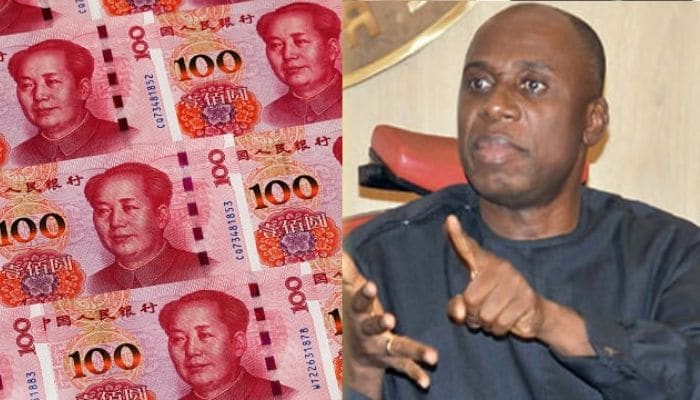
Minister of Transportation Rotimi Amaechi, has blamed the delay in the execution of major projects in the country including railways, on the failure of China to fund them. Rotimi sounded as though Nigeria will plunge if China does not give it loans. Recall that Amaechi in one of his leaked tape said that President Muhammadu has asked him to get loan wherever he finds it.

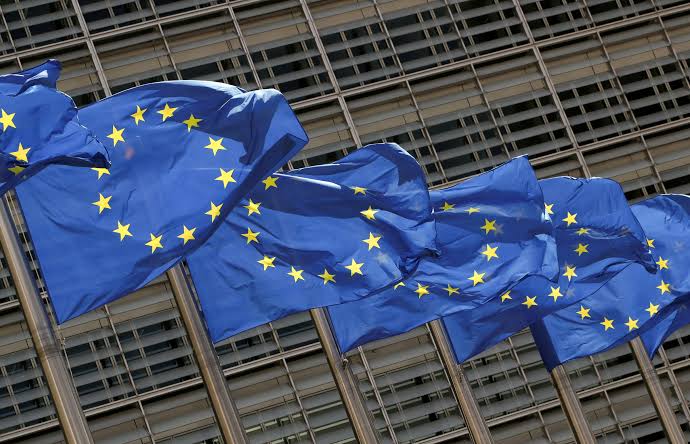
The minister who lamented the delays said the Federal Government has started looking towards Europe to get loans, following the refusal of the Chinese to fund Nigerian projects.

He expressed hope that if Nigeria could get loans from Europe, the existing projects will be completed.

According to Amaechi, “We are stuck with lots of our projects because we cannot get money. The Chinese are no longer funding. So, we are now pursuing money in Europe.

“And when I look at the money they are borrowing in other countries and compare it with the one we have borrowed, the kind of comments by Nigerians will put you off.”

Amaechi said the Abuja-Itakpe railway is underway, which will link the existing Itakpe-Delta rail line.

He said the link rail would have been completed but for a misunderstanding with the Chinese contractor.

February 1, 2022 0 comments
0 FacebookTwitterPinterestThreadsBlueskyEmail
Business

Six months after the Abuja Fire incident, Prince Ebeano Supermarket moves to Ontario Canada

by Leading Reporters January 23, 2022
written by Leading Reporters

There’s no need to travel the world for exotic, foreign foods anymore. Not when you can find them in one location in St. Catharines.

A month ago, international flavour came to Ontario Street when Ebeano Supermarket held its grand opening in what most here call the Value Village Plaza.

Spread over two units at 358 and 360 Ontario Street (right next door to Value Village), there are literally foods, spices, sauces, fruits and vegetable from Asia, Europe, Africa and South America up and down the aisle, giving the Garden City a trans-global selection like nowhere else in Niagara.

Among the grand opening visitors on December 3 was St. Catharines MP Chris Bittle, who raved at the selection in the grocery store run by Peters Andokari Ityohuna and his team.

Citing the 25 new jobs, nearly all full-time, created by the store, Bittle marveled, “A truly global market where foods from around the world can be found. It was exciting to see so many happy faces shopping this afternoon for products that may be difficult to find elsewhere.”

According to the company’s website, the international chain started up in Nigeria and the word “ebeano” is Nigerian slang for “where things are happening.”

Peters Andokari Ityohuna began his young life as a cashier in one of Ebeano’s first stores in Nigeria. The website continues, “From there he quickly grew to understand the grocery business and helped in developing more stores until he finally reached the position of General Manager.”

“In 2014, Peters made a life changing decision to immigrate to Canada and he, like many others who are newly immigrated, had difficulty finding the comforts of home in this new country.”

Shortly, he was joined by Chukwuma David Ojei, an old overseas friend and co-founder of the original Ebeano Supermarkets in Nigeria, who came to Canada for a visit. Before long, the pair created the concept for a Canadian version of Ebeano, often called Prince Ebeano in Africa.

“By offering a variety of products from around the globe, they created the first Global Food Market. From there the idea took hold and the next two years were spent finding the right location and preparing for the launch (in St. Catharines).”

The anticipation by local residents was strong. “It is a cosmopolitan addition to our Niagara landscape,” said one. Added another: “I look forward visiting soon. Love the diversity in our community.”

Those who have been need no convincing. “This is hands down the best place to shop for African groceries in this region. Staff are up and doing, friendly and helpful, store is clean and well stocked. Awesome experience will keep coming back here. Don’t rest on your oars, hopefully you’ll add online shopping and delivery to your store soon.”

Ebeano Supermarket is located at 358, 360 Ontario St Unit 3 and 4 in St. Catharines.

January 23, 2022 0 comments
0 FacebookTwitterPinterestThreadsBlueskyEmail
Africa & World

Stop mask and vaccine mandate: Europe starts considering Covid-19 as ‘flu’, endemic

by Leading Reporters January 20, 2022
written by Leading Reporters

Slowly but surely several governments are coming around to the idea that Covid may be endemic like the flu and asking people to live with it. 
While WHO is against such a conclusion, Spain became the first European country to move towards ending mask mandates. 

The idea has gradually been gaining traction and could prompt a re-evaluation of government strategies on dealing with the virus. British Education Secretary Nadhim Zahawi Sunday told the BBC that the U.K. is “on a path towards transitioning from pandemic to endemic.”

The omicron variant’s lower hospitalization and death rates despite record infections prompted Spanish Prime Minister Pedro Sanchez to hold out the tantalizing prospect of Europe moving beyond pandemic-style restrictions on normal life.

“We have to evaluate the evolution of Covid from pandemic to an endemic illness,” Sanchez said in a radio interview Monday, adding that European governments may need to assess the disease with different parameters than ones used so far.

Despite having some of the highest Covid rates in Europe, Ireland will maintain a system of voluntary vaccination, according to Prime Minister Micheal Martin. The Belgian government wants to give people a “free choice,” Prime Minister Alexander De Croo said.

Travel restrictions have also shown their limits. The U.K. was the first country to ban flights from southern Africa, where omicron was first identified. Yet it was the first place in Europe to suffer an omicron wave. Similarly, France overtook the U.K.’s case rate despite slapping limits on travel from Britain.

The Spanish government has been working on a new monitoring approach in the last weeks, and Health Minister Carolina Darias has brought the matter up with her European counterparts, Sanchez said.

The effort came as Spain reported almost 692,000 new cases in the last seven days, with 13.4% of hospital beds used for Covid patients, according to Health Ministry data. That compares with 13.8% a year earlier, when the number of recorded weekly cases was just above 115,000.

If European countries manage to relax restrictions in the coming weeks, last year’s experiences will remain a cautionary tale. Denmark removed all Covid restrictions last fall, while the Netherlands dropped all masking requirements.


January 20, 2022 0 comments
0 FacebookTwitterPinterestThreadsBlueskyEmail
Health

If poor countries go unvaccinated, rich ones will pay, says study

by Leading Reporters May 7, 2021
written by Leading Reporters

In monopolising the supply of vaccines against Covid-19, wealthy nations are threatening more than a humanitarian catastrophe: The resulting economic devastation will hit affluent countries nearly as hard as those in the developing world.

This is the crucial takeaway from an academic study to be released Monday (Jan 25). In the most extreme scenario – with wealthy nations fully vaccinated by the middle of this year, and poor countries largely shut out – the study concludes that the global economy would suffer losses exceeding US$9 trillion (S$12 trillion), a sum greater than the annual output of Japan and Germany combined.

Nearly half of those costs would be absorbed by wealthy countries like the United States, Canada and Britain.

In the scenario that researchers term most likely, in which developing countries vaccinate half their populations by the end of the year, the world economy would still absorb a blow of between US$1.8 trillion and US$3.8 trillion. More than half of the pain would be concentrated in wealthy countries.

Commissioned by the International Chamber of Commerce, the study concludes that equitable distribution of vaccines is in every country’s economic interest, especially those that depend most on trade. It amounts to a rebuke to the popular notion that sharing vaccines with poor countries is merely a form of charity.

“Clearly, all economies are connected,” said Professor Selva Demiralp, an economist at Koc University in Istanbul who previously worked at the Federal Reserve in Washington, and is one of study’s authors. “No economy will be fully recovered unless the other economies are recovered.”

Prof Demiralp noted that a global philanthropic initiative known as the ACT Accelerator – which is aimed at providing pandemic resources to developing countries – has secured commitments for less than US$11 billion toward a US$38 billion target. The study lays out the economic rationale for closing the gap. The remaining US$27 billion may, on its face, look like an enormous sum but is a pittance compared with the costs of allowing the pandemic to carry on.

The commonplace idea that the pandemic respects neither borders nor racial and class divides has been promoted by corporate chief executives and pundits. This comforting concept has been belied by the reality that Covid-19 has trained its death and destruction of livelihoods on low-wage service workers, and especially racial minorities, while white-collar employees have been able to largely work safely from home, and some of the world’s wealthiest people can ride out the pandemic on yachts and private islands.

But in the realm of international commerce, there is no hiding from the coronavirus, as the study brings home. Global supply chains that are vital to industry will continue to be disrupted so long as the virus remains a force.

A team of economists affiliated with Koc University, Harvard University and the University of Maryland examined trade data across 35 industries in 65 countries, producing an extensive exploration of the economic impacts of unequal vaccine distribution.

If people in developing countries remain out of work because of lockdowns required to choke off the spread of the virus, they will have less money to spend, reducing sales for exporters in North America, Europe and East Asia. Multinational companies in advanced nations will also struggle to secure required parts, components and commodities.

At the centre of the story is the reality that most international trade involves not finished wares but parts that are shipped from one country to another to be folded into products. Of the US$18 trillion worth of goods that were traded last year, so-called intermediate goods represented US$11 trillion, according to the Organisation for Economic Cooperation and Development.

The study finds that the continued pandemic in poor countries is likely to be worst for industries that are especially dependent on suppliers around the world, among them automotive, textiles, construction and retail, where sales could decline more than 5 per cent.

The findings add a complicating layer to the basic assumption that the pandemic will leave the world economy more unequal than ever. While this appears true, one striking form of inequality – access to vaccines – could pose universal problems.

In an extraordinary testament to the innovative capacities of the world’s most skilled scientists, pharmaceutical companies produced life-saving vaccines in a small fraction of the time thought possible. But the wealthiest countries in North America and Europe locked up orders for most of the supply – enough to vaccinate two and three times their populations – leaving poor countries scrambling to secure their share.

Many developing countries, from Bangladesh to Tanzania to Peru, will likely have to wait until 2024 before fully vaccinating their populations.

The initiative to supply poor countries with additional resources gained a boost as US President Joe Biden took office. The Trump administration did not contribute to the cause. Mr Biden’s chief medical officer for the pandemic, Dr Anthony Fauci, promptly announced that the United States would join the campaign to share vaccines.

In contrast to the trillions of dollars that governments in wealthy countries have spent to rescue companies and workers harmed by the health emergency and the wrenching economic downturn, developing countries have struggled to respond.

As migrant workers from poor countries have lost jobs during the pandemic, they have not been able to send as much money home, levelling a major blow to countries that have relied on these so-called remittances like the Philippines, Pakistan and Bangladesh.

The global recession has slashed demand for commodities, decimating copper producers like Zambia and Congo, and countries dependent on oil exports like Angola and Nigeria. As Covid-19 cases have soared, that has depressed tourism, costing jobs and revenue in Thailand, Indonesia and Morocco.

Many poor countries entered the pandemic with debt burdens that absorbed much of their government revenue, limiting their spending on healthcare. Private creditors have refused to participate in a modest debt suspension programme forged by the Group of 20. The World Bank and the International Monetary Fund both promised major relief but failed to produce significant dollars.

This, too, appears to be changing as new leadership takes over Washington. The Trump administration opposed a proposed US$500 million expansion of so-called special drawing rights at the IMF, a reserve asset that governments can exchange for hard currency. Mr Biden’s ascent has bolstered hopes among fund members that his administration will support the expansion. Democrats in Congress – now in control of both chambers – have signalled support for a measure that would compel the Treasury to act.

Still, in capitals like Washington and Brussels, the discussion about support for the developing world has been framed in moral terms. Leaders have debated how much they can spare to help the planet’s least fortunate communities while mostly tending to their own people.

The study challenges that frame. In failing to ensure that people in the developing world gain access to vaccines, it concludes, leaders in the wealthiest nations are damaging their own fortunes.

“No economy, however big, will be immune to the effects of the virus until the pandemic is brought to an end everywhere,” said Mr John Denton, secretary-general of the International Chamber of Commerce. “Purchasing vaccines for the developing world isn’t an act of generosity by the world’s richest nations. It’s an essential investment for governments to make if they want to revive their domestic economies.”

May 7, 2021 0 comments
0 FacebookTwitterPinterestThreadsBlueskyEmail

Recent Posts

  • FCTA Workers, NLC Storm Industrial Court, Demand Wike Sack

    January 26, 2026
  • DisCos reject FG’s free meter plan

    January 26, 2026
  • Nigerian-born nurse loses licence in Australia for sleeping on duty

    January 24, 2026
  • AI may outsmart humanity in five years — Musk

    January 24, 2026
  • BREAKING: Kano Gov Abba Yusuf dumps NNPP

    January 23, 2026

Usefull Links

  • Contact Page
  • About Leading Reporters
  • Contact Us
  • Headlines
  • Investigation
  • Exclusives
  • Opinion
  • Business
  • Facebook
  • Twitter
  • Instagram
  • Linkedin

@2021 - All Right Reserved. Designed and Developed by PenciDesign


Back To Top
Leading Reporters
  • Featured
  • Politics
  • Opinion
  • Business
  • Entertainment
  • Sports
  • About Us
  • Contact