
Leading Reporters
  • Headlines
  • Health
  • Business
  • Exclusives
  • Investigation
  • Entertainment
  • Opinion
Tuesday, January 27, 2026
Hot
FCTA Workers, NLC Storm Industrial Court, Demand Wike...
DisCos reject FG’s free meter plan
Nigerian-born nurse loses licence in Australia for sleeping...
BREAKING: Kano Gov Abba Yusuf dumps NNPP
National Grid Collapse For First Time in 2026
BREAKING: Tinubu approves posting of Ambassadors to U.S.,...
Insecurity: Kidnappers demand 17 motorcycles for release of...
FG to Abolish Hnd-Degree Dichotomy, Allow Polytechnics to...
AFCON Initiative drives stronger Nigeria Morocco cooperation
Obasanjo: I’ll Never Stop Having Children
  • About Leading Reporters
  • Contact Us
Leading Reporters
Advertise With Us
  • Headlines
  • Health
  • Business
  • Exclusives
  • Investigation
  • Entertainment
  • Opinion
Hot
FCTA Workers, NLC Storm Industrial Court, Demand Wike...
DisCos reject FG’s free meter plan
Nigerian-born nurse loses licence in Australia for sleeping...
BREAKING: Kano Gov Abba Yusuf dumps NNPP
National Grid Collapse For First Time in 2026
BREAKING: Tinubu approves posting of Ambassadors to U.S.,...
Insecurity: Kidnappers demand 17 motorcycles for release of...
FG to Abolish Hnd-Degree Dichotomy, Allow Polytechnics to...
AFCON Initiative drives stronger Nigeria Morocco cooperation
Obasanjo: I’ll Never Stop Having Children
Leading Reporters
Leading Reporters
  • Headlines
  • Health
  • Business
  • Exclusives
  • Investigation
  • Entertainment
  • Opinion
Copyright 2024 - All Right Reserved
Home > Debt
Tag:

Debt

President Tinubu
Headlines

FG Borrows N17.36tn in 10 Months, Exceeds 2025 Target by 55.6%

by Nelson Ugwuagbo November 10, 2025
written by Nelson Ugwuagbo

The Federal Government (FG) has borrowed N17.36 trillion from domestic and foreign sources in the first 10 months of 2025, N6.06 trillion (55.6%) above the prorated N10.9 trillion borrowing limit set in the 2025 Appropriation Act.
Domestic borrowing hit N15.8 trillion by October, while external loans reached N1.56 trillion in the first half.
An additional $2.35 billion (N3.384 trillion) Eurobond issuance, initiated last week, will push total borrowing to N20.74 trillion.

Projections based on current trends estimate full-year borrowing at nearly N23 trillion, N10 trillion (80%) over the N13.08 trillion annual budget ceiling.

The 2025 budget projected N54.99 trillion in expenditure against N41.91 trillion in revenue, leaving a N13.08 trillion deficit to be financed through borrowing.

Breakdown of Domestic Borrowing (Jan–Oct 2025):

Treasury Bills: N11.43tn (+4.6% YoY)

FGN Bonds: N4.042tn (-22% YoY)

FGN Savings Bonds: N40.19bn (+5.6% YoY)

Sukuk Bonds: N300bn (from zero in 2024)

Financial analysts warn that persistent overshooting amid weak revenue performance risks a debt trap, crowds out private sector credit, and undermines IMF-backed fiscal reforms.

Andrew Uviase, Managing Partner at Ecovis OUC, called it “a clear reflection of fiscal indiscipline and poor expenditure control,” urging drastic cuts in governance costs and improved transparency.

He noted that despite FIRS gains, non-oil revenue remains disappointing, fueling reliance on borrowing.

November 10, 2025 0 comments
0 FacebookTwitterPinterestThreadsBlueskyEmail
Bola Tinubu
Headlines

FG Approves ₦4trn Debt Refinancing Plan for Power Sector

by Nelson Ugwuagbo September 30, 2025
written by Nelson Ugwuagbo

The Federal Government has approved a ₦4 trillion debt refinancing plan to settle legacy debts owed to 27 power generation companies (GenCos) for electricity supplied between 2015 and 2023.

The intervention is designed to restore liquidity in the power sector, boost investor confidence, and stabilise electricity supply across the country.

The debts, estimated at ₦4 trillion, arose from unpaid invoices by the Nigeria Bulk Electricity Trading Company (NBET). The backlog triggered a chain reaction of withheld gas supply, reduced generation capacity, and weak performance by distribution companies (DisCos).

Under the refinancing arrangement, the government will restructure and clear verified debts through a mix of bonds, treasury instruments, and phased cash payments.

Officials say the plan will provide relief to GenCos and gas suppliers, strengthen balance sheets, and attract fresh capital into the sector. It will also enable prompt payments to gas suppliers, improved plant maintenance, and expanded generation capacity, ultimately reducing outages and supporting economic productivity.

The Ministry of Power and the Debt Management Office (DMO) will manage the disbursements, with strict verification and auditing measures in place. Periodic updates will be published to ensure transparency and prevent a repeat of debt accumulation.

September 30, 2025 0 comments
0 FacebookTwitterPinterestThreadsBlueskyEmail
OpinionHeadlines

Sri Lanka Crisis: “Lessons For Nigeria”

by Folarin Kehinde August 8, 2022
written by Folarin Kehinde

The recent crisis in Sri Lanka, a small country and developing economy with a population of 22 million people, has continued to take over a large space of world news.

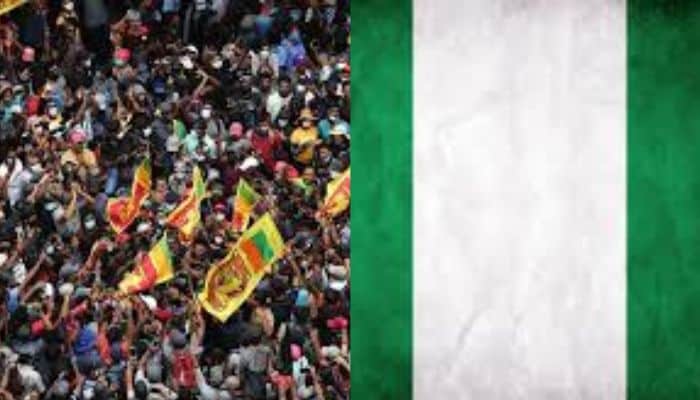
A massive crowd of protesters stormed the presidential palace despite efforts by security operatives to barricade the way to the palace, but the number of protesters was overwhelming, so it didn’t work.

The protesters marched peacefully into the official residence of Rajapaska and celebrated, after sending him to exile. They swarmed, entered and tasted the luxury of his bedrooms, toilets, gyms and banquet halls, where they took selfies.

Many keen watchers of the country, famous for its elephants, said they saw the crisis coming, citing years of mismanagement of the country’s economy by a few political elites.

 Analysts said like many developing nations, Sri Lanka also suffered from a combination of external economic shocks that landed its economy into a coma.

According to them, the economic coma was mainly generated by COVID-19 pandemic, the Russian-Ukraine war and internal political dysfunction – a predicament that equally affected Nigeria and other African states.

As a result of these shocks, Sri Lanka found itself in a crisis of severe shortages of food, fuel, electricity, medicine, shrinking foreign reserves and collapse in currency value.

Prior to that, the country also succumbed to foreign debt crisis, high inflation and paucity of money to pay for basic necessities, blaming President Gotabaya Rajapaska for mismanaging the country’s finances.

Rajapaska spent more than the national income and allowed deep tax cuts, destroying the economy to a level that the government can’t afford imports or to service the external debt.

 Reflecting on these, Nigeria and other developing economies should be on the watch because the Sri Lankan crisis could mutate and more countries would fall, “Colombo is just a canary in a coalmine,” some analysts described the situation.

 How did Sri Lanka drive itself into this crisis?

Sri Lanka’s tourist trade, one of its biggest foreign currency earners and agriculture, just like the oil and agriculture in Nigeria, was affected by COVID-19 pandemic.

Tourists were frightened off by a series of deadly bomb attacks beginning in 2019.

Things were made worse by Rajapaksa’s policy on agriculture, which employed millions of peasants, which saw the banning of the importation of fertiliser in addition to his other ways of poor economic mismanagement which totally ruined the sector.

This made Sri Lanka run out of money, and its foreign reserve was depleted. As an import-dependent country that buys almost everything from outside, it spent more than it earned, while taking unsustainable loans from the IMF, World Bank and China.

The country quickly ran short of money to import oil and there were massive power cuts, students shut out of schools, parents sacked from jobs, and sales of fuel severely restricted, then the protest began and spiralled out of control.

Many other developing countries are suffering similar crises, maybe on a lower scale. But what is obvious is that if not much is done, the world will have a similar situation in its hands

Looming debt crisis in 70 nations  

On February 15, days before Russia invaded Ukraine, World Bank had issued a warning that “developing nations faced a looming debt crisis”

The bank named 70 low and middle-income countries facing debt repayment worth $11 billion, and the report clearly stated that the debt burden could crush their economy in 2022.

Few days later, Russia invaded Ukraine and disrupted the supply chains, put the financial market into disarray and triggered a global oil crisis. The economic focus became darker.

In March, the United Nations released a report that there were 107 economies that faced “severe exposure” to the consequences of the Russia-Ukraine war. And, the risks are rising food crisis, rising energy crisis, and tougher financial conditions.

 Also, the report had projected that 1.4 billion people from the 107 countries would be affected (approximately one-fifth of the world’s population).

According to the report, a total of 75 countries would go Sri Lanka’s way to face the three risks of food, energy and finance crises. Twenty-five of the countries are in Africa, Twenty-five in Latin America and another Twenty-five in Asian-Pacific.

 Although the alarm bell rang in Africa, Nigeria was lucky to stand out, leaving Ghana, Kenya, South Africa and Ethiopia to be among the 25 countries to be the worst hit in sub-saharan Africa.

 In Ghana, the debt level is soaring, the interest payment is choking the economy and the debt crisis seems imminent. 

Also, in South Africa, the debt has risen 80 per cent of its economic Gross Domestic Product (GDP), despite higher revenue, which indicates that there’s a looming threat of state collapse, therefore, much needs to be done to avoid the rerun of the 2021 civil unrest.

In Kenya, the debt has also climbed to $70 billion, which is 70 per cent of the country’s Gross Domestic Product (GDP), and weeks back, Kenya secured $244 million from the International Monetary Fund (IMF) to weather its economic storm.

 Is Nigeria ready for the coming spite of the debt crisis?

Nigeria is lucky to be exempted this time around, but the World Bank report said, “Over the next 12 months, as many as a dozen of developing economies might not be able to service their debts.”

Data from Debt Management Office (DMO) has shown a sign that Nigeria is perhaps inching towards a debt crisis because as at first quarter of 2022, the country’s external debt stood at $39.96 billion with a foreign reserve of $38.483bn.

Nigeria’s inflation also spiked to 18.60 per cent and the naira slipped to N700 against the USD at the black market.

Economic analyst, Tope Fasua, has said Nigeria’s loan is already unsustainable because it is taking 95 to 97 per cent of the revenue generated. “That ratio is not sustainable,” he said.

Fasua warned that the huge debt that Nigerian government is incurring mostly is to cater for a lot of failures and they just borrow to keep some activities going.

 “How the loans are going to be paid is not in question for them and that’s very unfortunate.

“The loan is unsustainable from the perspective of revenue, from the perspective of corruption and value for money and from the perspective of project implementation.

“Only 30 per cent value for money is what we get especially on these loans, some of what we are taking is for very frivolous issues.

“In my opinion, we should take loans only for projects that have the ability to pay themselves back. If a project is not generating cash flow, it shouldn’t be taken.

“If we are taking loans for local roads and schools, who is going to pay? These are projects that should be funded from internally generated revenue,” he said.

He also attributed the currency challenges to Nigeria’s debt portfolio.

“We have a challenge with the naira presently, and one of the key things that throws your currency off is debt unsustainability.

“And mind you, most of the loans we are taking in recent times have not fallen due for payment. What we are doing is only paying the interest. Many of them have moratoriums on interest payments.

“These guys have actually booked for us a bad time and a lot of trouble upfront,” Fasua added.  Analysts said to avoid taking the path of Sri Lanka’s, African countries need multi-front solution to deal with their multi- dimensional crisis of rising food, rising energy and tougher financial conditions.

And, to achieve this, the governments must first defeat corruption and bring about reforms that would reduce their rising debt burden choking their economies, and be free from the 75 projected by the UN to go Sri Lanka’s way.

August 8, 2022 0 comments
0 FacebookTwitterPinterestThreadsBlueskyEmail

Recent Posts

  • FCTA Workers, NLC Storm Industrial Court, Demand Wike Sack

    January 26, 2026
  • DisCos reject FG’s free meter plan

    January 26, 2026
  • Nigerian-born nurse loses licence in Australia for sleeping on duty

    January 24, 2026
  • AI may outsmart humanity in five years — Musk

    January 24, 2026
  • BREAKING: Kano Gov Abba Yusuf dumps NNPP

    January 23, 2026

Usefull Links

  • Contact Page
  • About Leading Reporters
  • Contact Us
  • Headlines
  • Investigation
  • Exclusives
  • Opinion
  • Business
  • Facebook
  • Twitter
  • Instagram
  • Linkedin

@2021 - All Right Reserved. Designed and Developed by PenciDesign


Back To Top
Leading Reporters
  • Featured
  • Politics
  • Opinion
  • Business
  • Entertainment
  • Sports
  • About Us
  • Contact