Dangote
ECOWAS Appoints Aliko Dangote as Inaugural Chairman of Regional Business Council
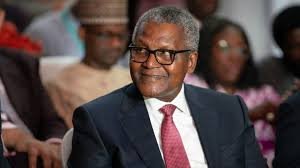
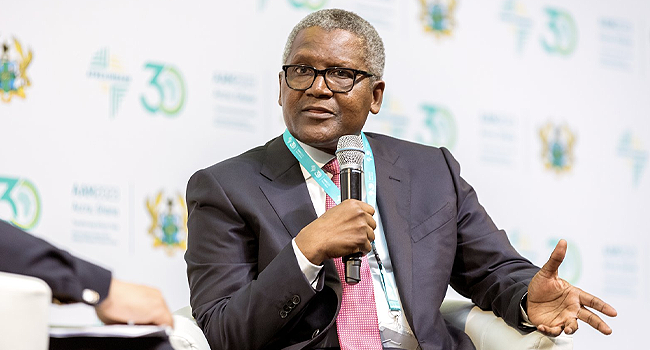
The Economic Community of West African States (ECOWAS) has appointed Alhaji Aliko Dangote, Chairman of the Dangote Group, as the pioneer Chairman of the ECOWAS Business Council (EBC).
ECOWAS President, Dr. Omar Touray, announced the appointment on Wednesday during the 95th Ordinary Session of the ECOWAS Council of Ministers in Abuja.
The EBC, an independent platform established by ECOWAS, is designed to strengthen the role of the private sector, stimulate sub-regional trade, attract investment, and enhance economic integration across West Africa. It is expected to serve as a bridge between the private sector and policymakers within the sub-region.
Touray explained that Dangote’s selection was informed by his extensive business expertise and the significant economic footprint of his enterprises, not only within the ECOWAS region but across the African continent.
He noted that momentum for intra-regional investment was increasing, citing recent economic forums such as the Forum Senegal Invest, the West African Economic Summit in Nigeria, and the “Invest in District Savanes” forum in Côte d’Ivoire.
“This growing appetite for intra-regional investment highlights the need to mobilise capital within our region to build our community, rather than relying on unstable foreign investments,” Touray said.
He added that with the scale of investments by business leaders such as Dangote, the region’s private sector could drive West Africa’s development if provided with the right incentives and opportunities.
Through the EBC, ECOWAS aims to convene private sector stakeholders to deliberate on economic integration and regional development, while facilitating stronger partnerships among private enterprises, government agencies, and ECOWAS institutions.
The Federal Government has resolved the dispute between the Dangote Petroleum Refinery and the Petroleum and Natural Gas Senior Staff Association of Nigeria (PENGASSAN) after two days of conciliation meetings.
Minister of Labour and Employment, Dr. Mohammed Maigari Dingyadi, announced the outcome in a statement issued early Wednesday, noting that the talks produced key agreements.
According to the statement, the parties agreed that unionisation is a fundamental right of workers under Nigerian law and must be respected.
On the issue of staff disengagement, the meeting resolved that the management of Dangote Group will immediately begin redeploying affected employees to other companies within the group, without any loss of pay.
The statement also affirmed that no worker would face victimisation over their role in the dispute.
PENGASSAN, on its part, pledged to commence the process of calling off its strike action, while both sides committed to implementing the resolutions in good faith.
The Dangote Petroleum Refinery was forced to shut down operations on Sunday as the Petroleum and Natural Gas Senior Staff Association of Nigeria (PENGASSAN) enforced a labour decision following the alleged mass dismissal of over 800 workers.
The development marks a further escalation in the dispute between the union and the management of Africa’s largest refining facility, located in the Lekki Free Zone, Lagos.
According to updates from PENGASSAN, the refinery has been completely shut down, with the fertiliser plant’s Train Two also fully halted, while Train One is operating at only 60 per cent capacity. The diesel plant, however, remains operational.
The union, which directed its members to down tools after an emergency National Executive Council (NEC) meeting on Saturday, September 27, said the shutdown extends beyond the refinery to other oil installations across the country. Crude oil and gas supply to the plant have also been disrupted.
PENGASSAN’s decision follows the dismissal of hundreds of workers allegedly for their involvement with the union. In a circular signed by its General Secretary, Lumumba Okugbawa, the association described the action as a necessary response to “anti-labour practices,” vowing not to resume operations until the sacked workers are reinstated and negotiations are held.
Reacting to the union’s move, Dangote Refinery described the directive as “economic sabotage” in a statement issued on Saturday. The company, however, has yet to officially confirm the extent of the shutdown.
Meanwhile, the Nigerian Upstream Petroleum Regulatory Commission (NUPRC) has called on both parties to engage in dialogue and resolve the dispute through peaceful negotiation.
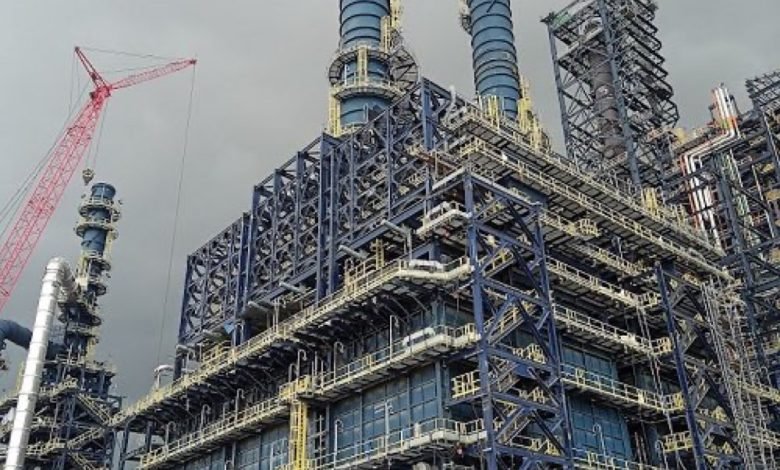
Since its partial commissioning, the $20 billion Dangote Refinery has been central to Nigeria’s strategy to reduce dependence on imported petroleum products and stabilise domestic supply.Nigerian real estate
The management of Dangote Petroleum Refinery has announced the termination of appointment of all its Nigerian staff.
The mass sack is happening less than 24 hours after majority of the workers joined the Petroleum and Natural Gas Senior Staff Association of Nigeria (PENGASSAN).
In a memo signed by the Chief General Manager of Human Asset Management, Femi Adekunle, the company said the action was part of a “total re-organisation” following alleged sabotage across several units of the refinery. Affected workers were ordered to return all company property and proceed for clearance.
The development has heightened tensions in the oil and gas sector, with PENGASSAN and Dangote Refinery already in a long-running dispute over unionisation rights.
Details loading…
Aliko Dangote, founder and president/chief executive of the Dangote Group has revealed that his company’s drivers earn significantly more than graduates.
Mr Dangote, in a video shared on the TVC X handle on Tuesday, made this known in reaction to the allegations made by the Nigeria Union of Petroleum and Natural Gas Workers (NUPENG).
NUPENG had recently accused Mr Dangote and Sayyu Aliu Dantata of engaging in alleged anti-union practices. The union claims the businessmen are trying to monopolise Nigeria’s downstream oil and gas distribution while suppressing workers’ rights.
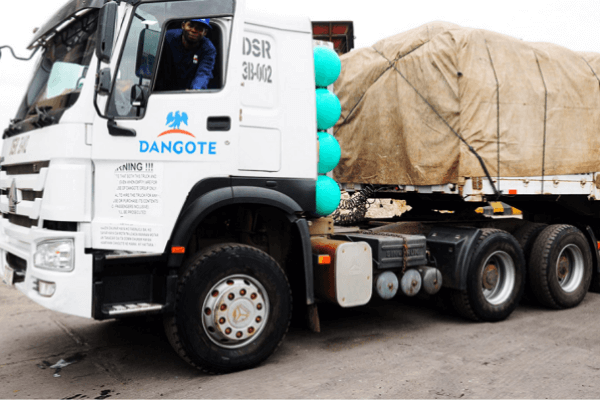
At the time, NUPENG said its members would commence a nationwide strike from Monday, 8 September in protest against what it described as anti-union labour practices, linked to the deployment of newly imported Compressed Natural Gas (CNG) trucks by the Dangote Refinery, for direct distribution of petroleum products.
NUPENG, whose membership includes petrol tanker drivers, in a statement jointly signed by its President, Williams Akhoreha, and General Secretary, Afolabi Olawale, alleged that the drivers recruited for the CNG trucks are being forced to sign undertakings not to belong to any existing union in the oil and gas industry.
At the time, the Nigerian Association of Road Transport Owners (NARTO) expressed support for NUPENG in its ongoing struggle against the Dangote Group.
NARTO National President, Othman Yusuf, in a statement, said it rejected Dangote’s plan for free distribution of petroleum products, citing its unsustainability and potential to eliminate independent transporters who operate over 30,000 trucks across the country.
Similarly, the Nigeria Labour Congress (NLC) backed NUPENG as its president, Joe Ajaero, accused the Dangote Group of “exploiting Nigerian workers while disregarding their constitutional rights.”
Speaking in the video, Mr Dangote said the launch of the trucks didn’t stop anyone from their work, noting that joining NUPENG should be voluntary.
According to him, his drivers earn almost three to four times the national minimum wage, with some earning more than many graduates.
He emphasised that the trucks his company launched will create 24,000 jobs, with each truck supporting about six people, noting that after five years of accident-free driving, drivers can apply for housing loans.
“So these trucks they are fighting over will create 24,000 jobs. What we are saying is that our salary is almost three or four times their own. After five years of free accidents, a driver can apply and get a house loan.
“Our drivers earn more than graduates. If you look at what they earn in a month, it’s almost four times the national minimum wage,” Mr Dangote said.
BREAKING: Dangote truck reportedly crushes entire family to death in Enugu
A Dangote truck has reportedly been involved in a fatal accident at Four Corner, Enugu State, leaving several people dead.
Eyewitnesses said the truck lost control and crushed people to death during the incident, which occurred on Wednesday.
The exact number of casualties has not yet been confirmed.
This marks yet another tragic accident involving trucks owned by the conglomerate, sparking growing outrage among residents and road users.
Many are now calling on the government to urgently introduce legislation regulating the movement of heavy-duty trucks across Nigerian highways.
As of the time of this report, authorities in Enugu are yet to issue an official statement.
Further details later….
Firm to Build $15bn Refinery in Ondo, Nigeria’s Second Largest After Dangote
Backbone Infrastructure will build a $15 billion refinery in Nigeria’s Ondo State, with a capacity of 500,000 barrels per day. This facility will be the country’s second largest, trailing only the Dangote refinery.
Backbone Infrastructure Nigeria Limited (BINL) announced on Wednesday, July 9, that it will construct a new crude oil refinery with a capacity of 500,000 barrels per day in Ondo State. The project, estimated at around $15 billion, will be developed in partnership with the state government through the Ondo State Development and Investment Promotion Agency (ONDIPA) within the Ilaje industrial free zone.
The memorandum of understanding is scheduled for signing on July 15, 2025. According to BINL officials, discussions are also underway with the state-owned Nigerian National Petroleum Company (NNPC) to include the public enterprise in the project.
No details have yet been provided regarding the mobilization of resources required for the infrastructure.
It is confirmed, however, that the project will be implemented in phases. The first phase, a 100,000-barrel-per-day unit, is scheduled for completion within 48 months. BINL also plans to develop related infrastructure such as roads, storage tanks, terminals, and handling equipment.
With its announced capacity, the future refinery will become the second largest in Nigeria, trailing only the Dangote Group’s facility, which has a capacity of 650,000 barrels per day. The Dangote refinery began production in 2023, following a construction process that cost nearly $20 billion, with expenditures largely inflated by COVID-19-related logistical delays.
According to Wale Adekola, Vice President of BINL, the project is designed to supply petroleum products to the domestic market, feedstock to local industries, and finished products for export.
The announcement is part of a broader strategy by BINL, which plans to invest $4 billion in Nigeria’s mining sector, relying on public-private partnerships.
If the initiative materializes, it could strengthen Nigeria’s energy sovereignty while boosting local growth and public revenue. However, its success will depend on financial close, regulatory stability, and the ability to stay on schedule in an environment where delays are common.
Dangote Petroleum Refinery has further reduced the gantry price of Premium Motor Spirit (PMS), popularly known as petrol, to N825 per litre, down from the previous price of N835 per litre.
This marks the second downward adjustment in recent weeks. In April, the 650,000 barrels per day refinery had lowered the gantry price from N865 to N835 per litre.
The latest price review is reportedly aimed at providing greater value to customers and strengthening the refinery’s competitive position in the domestic petroleum market.
Details Later….
Dangote Petroleum Refinery has announced suspension of sale of petroleum products in naira.
This was announced in a notice sent to petroleum marketers, on Wednesday afternoon.
In the notice obtained by Daily Trust, the company said the decision is temporary, explaining why it took the decision.
“We wish to inform you that, Dangote Petroleum Refinery has temporarily halted the sale of petroleum products in Naira. This decision is necessary to avoid a mismatch between our sales proceeds and our crude oil purchase obligations, which are currently denominated in U.S. dollars.”
“To date, our sales of petroleum products in Naira have exceeded the value of Naira-denominated crude we have received. As a result, we must temporarily adjust our sales currency to align with our crude procurement currency. Our attention has also been drawn to reports on the internet claiming that we are stopping loading due to an incident of ticketing fraud. This is malicious falsehood. Our systems are robust and we have had no fraud issues.
“We remain committed to serving the Nigerian market efficiently and sustainably. As soon as we receive an allocation of Naira-denominated crude cargoes from NNPC, we will promptly resume petroleum product sales in Naira. We appreciate your understanding and cooperation during this period.”