Leading Reporters
  • Headlines
  • Health
  • Business
  • Exclusives
  • Investigation
  • Entertainment
  • Opinion
Monday, February 16, 2026
Hot
BREAKING: DSS Sues El-Rufai for Intercepting NSA Ribadu’s...
Major Health Crisis Plagues Dape, Karmo Residents As...
BREAKING: INEC announces timetable, schedule of 2027 elections
Aso Rock to disconnect from nat’l grid in...
Valentine’s Day: FG bans money bouquets, warns against...
INEC Proposes ₦873.78 Billion Budget for 2027 General...
Engine Failure: Passengers escape death as Arik Air...
Senate adopts electronic, manual transmission of election results
BURSTED: NSITF CEO MOVES On ₦297Billion Fund, Operates...
Peter Obi joins #OccupyNationalAssembly protest over electronic transmission...
  • About Leading Reporters
  • Contact Us
Leading Reporters
Advertise With Us
  • Headlines
  • Health
  • Business
  • Exclusives
  • Investigation
  • Entertainment
  • Opinion
Hot
BREAKING: DSS Sues El-Rufai for Intercepting NSA Ribadu’s...
Major Health Crisis Plagues Dape, Karmo Residents As...
BREAKING: INEC announces timetable, schedule of 2027 elections
Aso Rock to disconnect from nat’l grid in...
Valentine’s Day: FG bans money bouquets, warns against...
INEC Proposes ₦873.78 Billion Budget for 2027 General...
Engine Failure: Passengers escape death as Arik Air...
Senate adopts electronic, manual transmission of election results
BURSTED: NSITF CEO MOVES On ₦297Billion Fund, Operates...
Peter Obi joins #OccupyNationalAssembly protest over electronic transmission...
Leading Reporters
Leading Reporters
  • Headlines
  • Health
  • Business
  • Exclusives
  • Investigation
  • Entertainment
  • Opinion
Copyright 2024 - All Right Reserved
Home > Agriculture
Tag:

Agriculture

Headlines

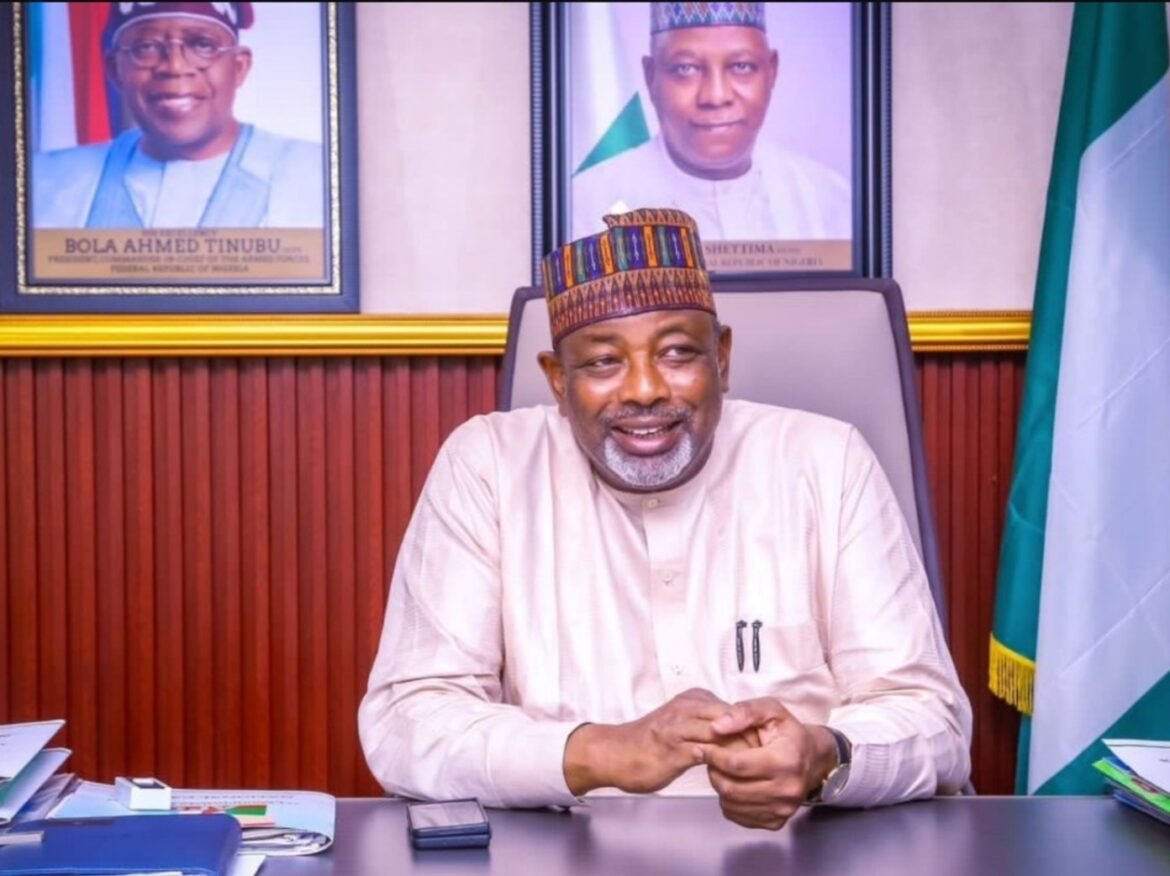
Food Security: Nigerian Government Calls for 3-Day Prayer and Fasting to End Hunger

by Folarin Kehinde June 14, 2025
written by Folarin Kehinde

The Federal Ministry of Agriculture and Food Security has declared a three-day period of prayer and fasting for divine intervention on food insecurity in the country.

The Ministry declared this via a circular dated June 11, 2025, and addressed to the ministry’s staff.

The ministry stated that the initiative was introduced by the ministry’s director of human resource management.

The ministry noted that the move aims to invoke spiritual support for the government’s agricultural objectives.

This is to invite all staff of the federal ministry of agriculture and food security to a solemn prayer session for God’s guidance and success in supporting the government’s efforts to achieve food security,” the circular read.

Themed “Divine Intervention for Protection and National Development,” the prayer sessions will be held at the ministry’s Conference Hall ‘B’, located at its headquarters in Area 11, Garki, Abuja. Each session will run from 12:00 p.m. to 12:30 p.m.

According to the directive, all staff are expected to fast and participate on three consecutive Mondays – June 16, June 23, and June 30, 2025.
June 14, 2025 0 comments
0 FacebookTwitterPinterestThreadsBlueskyEmail
Business

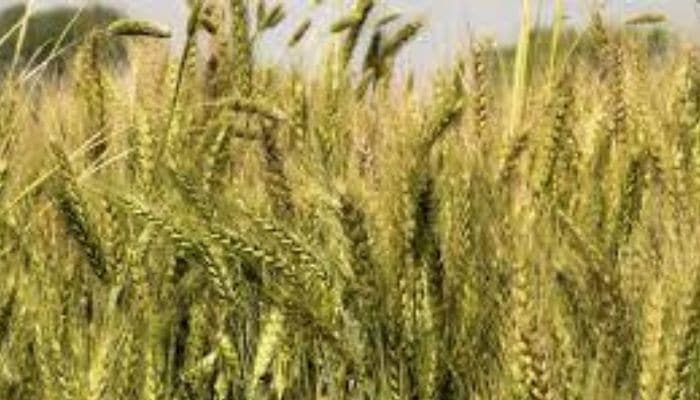
CBN needs bankable policy to reduce Nigeria’s $1.5 billion import bill on Wheat

by Leading Reporters May 27, 2021
written by Leading Reporters

Nigeria boasts of 34 million hectares of arable land area, with about 6.5 million hectares for permanent crops. Little wonder, Agriculture serves as the country’s main driver of the economy after oil.

But despite the goodies in the sector, the country imported wheat worth N2.2 trillion in the last four years.

According to data from the Food and Agriculture Organization (FAO) of the United Nations, Nigeria has witnessed low wheat yields amidst declining production in the last ten years. Within the period, the wheat area harvested reduced significantly. It also propelled the wheat yield to drop to the level of 10,678 hectograms (100 grams) per hectare (Hg ha) in 2018, the lowest since 1991 and one of such decline ever.


Between 2010 to 2019, wheat production was also on free fall, dropping to the range of 60,000 tonnes per annual from 165,000 tonnes production capacity in 2011. These staggering statistics (area farmed, yield, production) are the reasons why the country imported about 98 per cent of its total consumption. By implication, there are a vast population (market) but less capacity to produce one of its significant interest crops.

Why so much dependence on import Nigeria’s Minister of Agriculture and Rural Development, Mr Sabo Nanono, recently identified seeds’ unavailability as one major factor hampering investment and low production in the wheat value chain. He, however, said the ministry would provide quality seeds and agricultural inputs to Nigerian farmers.

Challenges facing the value chain include limited access to improved seed varieties, high production cost, inadequate irrigation infrastructure, insufficient funding systems, lack of a cohesive national strategy on wheat development, and unclear role of government and other stakeholders. These challenges factored in how Africa’s biggest economy managed to produce an average of 107,000 tonnes of wheat between 2001-2014. Africa produces more than 25 million tons of wheat on 10 million hectares (Mha) of land area, per FAO. Ethiopia and South Africa account for the largest production area with 1.7 Mha and 0.5 Mha, respectively.

Nigeria ranks low compared to other African peers in area harvested, yield, and production of wheat. While South Africa, Kenya and Ethiopia harvested hundreds of thousands of arable land, Nigeria only harvested on an average of 70,000 to 80,000 per annum.

What factors responsible for low local production
The reasons for low local production can be categorised into two main areas; technical and economic challenges. Analysis of the FAO data for sub-Saharan Africa showed that these factors influence farmers’ low yields in Nigeria’s wheat market. In 2011, when Nigeria harvested 128,992 hectares, its recorded peak production levels at 165,000 tonnes.

On the technical side, farmers in Nigeria have limited access to improved seed varieties, fertilizers & chemicals, high cost of production, and inadequate irrigation infrastructure, often leading to low yields. On the economic side, lack of investment opportunities, insufficient funding systems for research, and lack of a coordinated national strategy resulted in Nigeria’s dependence on imported wheat to meet its large population’s growing demands.

A Financial Derivatives Company’s report cited insecurity in Nigeria’s wheat belt, the lack of mechanized and modernized farming techniques, and uncompetitive pricing as challenges facing low wheat production.

Similarly, the International Food Policy Research Institute attributed a lack of policy support and support from international organisations to be responsible for low domestic production.

Low yield propels lack of investment despite the massive market for wheat in Nigeria, a perennial low yield often leads to low revenue and profits. This situation discourages the cultivation of wheat by farmers.

They instead divert their funds into more rewarding agricultural produce. Several reports, including direct comments from farmers, have decried the government’s lack of commitments as one significant factor. Due to this, farmers have shifted focus towards the cultivation of rice, while bakers go after imported wheat because it is cheaper.


A look at the 2011 figure of the FAO data showed that yield dictates the propensity for investment (Area farmed/harvested). Also, the area planted, in turn, determines output (production). A classic case is Ethiopia’s wheat value chain, which shows consistency in growth in the last decade. The country’s healthy production is influenced by its continued investment in seeds, fertilizers, and mechanization, according to the OECD-FAO Agricultural Outlook 2018-2027.


Presently, Nigeria has no actionable policy for its wheat market. The Anchor Borrowers’ Programme (ABP) captured wheat production, but the approach was mere paperwork for wheat farmers. Alhaji Salim Mohammed, the National President of the Wheat Farmers Association of Nigeria (WFAN), told Dataphyte that there is no specific outlined policy for Nigeria’s wheat market. He said both the FMA&RD and CBN have no serious concern about it. Wheat is an essential grain belonging to the grass family. When milled into flour, it makes a wide range of foods, including bread, noodles, pasta, biscuits, cakes, cookies, pastries, cereal bars, sweets and crackers. On another aspect, it is one of the most common grains which serve as feed for livestock. Research also suggests grain improves the calcium and energy status of cows to help them in transition.

Per a report by Emerald, Nigeria’s wheat importation stood at 4.2 MMT on average annually, costing $1.5 billion in import bill. For Nigeria to grow its wheat market, it needs to close the production gap and reduce the import bill as essential ingredients for best agric practices. These include improvement in seedlings, mechanizations, commercial agriculture, addressing insecurity in the North-East, a significant zone for Nigeria’s wheat.

The central bank and policymakers can also learn from Ethiopia and Egypt’s wheat value chain by giving full attention to crop production to ensure food security. The Nigerian Bureau of Statistics (NBS) recent report shows that crop production remains a significant portion of Nigeria’s GDP. In the fourth quarter, the Nigerian economy grew by 0.11% (year-on-year) in real terms, representing the first positive quarterly growth in the last three quarters. Quarter-on-quarter, crop production grew by 3.42 per cent compared to 1.39 per cent in Q3, nearly double the increase.

Investment and funding are also critical factors in expanding the wheat value chain, especially by supporting Lake Chad Research Institute in research and development to improve wheat seeds.

May 27, 2021 0 comments
0 FacebookTwitterPinterestThreadsBlueskyEmail
Headlines

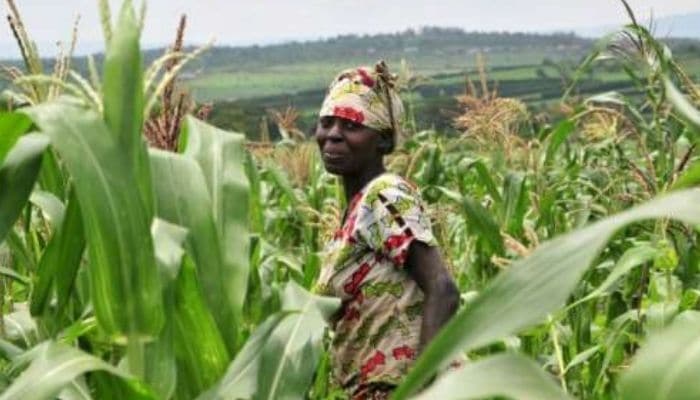
Do you know Government Interventions In Agriculture May Not Yield Any Positive Result?

by Leading Reporters May 22, 2021
written by Leading Reporters

That scares right? Nigeria Governments at Federal and State levels are desirous of feeding its exploding population and earn from export.

But all that may still equal zero despite hundreds of Billions of Naira Government has plunged into agriculture through NIRSAL/CBN. 

Have you wondered why despite all the intervention policies, prices of food are skyrocketing and shortage of food still persist? The answer is simple. Government is facing only a side of what needs to be done. We’re just scratching around the solutions. We’ve not fully delved into the solutions proper.

Perennially, our interventions have been that of brigade-approach without proper and result-oriented planning. We are trying to grow AGRIC sector without efforts at growing the technology that drives the desired growth.

I’m awed at how much India is leveraging technology to solve most of its problems. We just tidied up a two-week training on Disruptive Agri-Tech Initiatives, sponsored by African Asian Rural Development Organization New Delhi and National Institute for Micro Small and Medium Enterprises NiMSME Hyderabad.

It was 8 days of interactive session with presentation from some of the best tech-companies in India.  Today, you can have a clue of what the next farming season looks like vis-a-vis the soil texture, weather condition,  your farm vulnerability in terms of pest and bacterial attack and what the yield will look like even before you till the ground.

There are other simple technology in form of Apps that can increase growth by over 40%. Indian rural farmers are becoming players in the international market and export. All thanks to disruptive Agri-Tech and many interventions by the Indian Government. Agric sector contributes over 21% of Indian export of these AGRIC produce are coming from rural farmers in India.

In Nigeria, the Government is doing great in supporting farmers with low interest loans ans other forms of intervention policies. But Government intervention in Agri-Tech is almost zero. Most of the start-ups in Agri-Tech are private sector driven and they’re walking okay silken soft thread, all by themselves. 

21st century is a technology-driven century. Billions of Dollars intervention in agric will equate nothing if there’s no technology driving growth in AGRIC sector.

May 22, 2021 0 comments
0 FacebookTwitterPinterestThreadsBlueskyEmail
Opinion

Nigeria’s perennial recession; a result of policy somersault.

by Leading Reporters May 1, 2021
written by Leading Reporters

Nigeria will predictably be in recession for a long time. When you keep doing the same thing and expect different results, you will need to check yourself. It appears we are not in a hurry to live in the reality of the 21st century with others.

I sometimes wonder why we like to put the cart before the horse as a country. There  has never been a time when we did anything that was not opposite of what everyone else was doing. Fundamental economics teaches that before you stop importation, you need to have put in place import substitution strategy, and get them working properly before attempting any grandstanding.

Then again, timing is very important in making policy decisions. You cannot wake up from the wrong side of the bed and declare things banned. It is as insensitive as it is unconstructive.  People have often questioned the reasons for some government policies in Nigeria.

What is more heart breaking is where some ‘supporters’ get the kind of shameless illiteracy with which they defend retrogressive policies. Let us start with the Covid-19 decisions of the government.  As the pandemic was biting hard, incomes were shrinking. That was when we suddenly woke up to ban in a commando style,  a whopping 41 imported items, among which were foodstuff and other consumer goods critical to every day survival.

That is not all o. The people were losing jobs in droves. That means that purchasing power was falling rapidly and the country trapped itself in stagflation. Prices were skyrocketing and there was no purchasing power in the hands of the people. To my surprise, some people who I thought ‘know book’ were  just falling my hands in the halleluyah praise singing in honour of the courage with which the government was ‘tackling’ the economy. We would argue it until I had a headache. At some point I couldn’t tell if it was the argument that caused the headaches or the useless virus that trapped all of us in our homes.

Puerile arguments were advanced in support of the government. I took a look at my then none months old baby and asked her if at that age she could disgrace her father by saying such a meaningless thing. One of the headless statements was that China closed their borders and started agriculture. And boom! They became greater, the China you know today. I was torn between laughter and sorrow. 

The story that they did not verify is that China’s maximum ruler, chairman Mao Zedong, threaded the communist path. He closed the boarders and decided on a pilot execution of certain apocryphal economic policies. He closed the Chinese borders to neighbouring countries. And then starvation set in.

Chairman Mao’s decision led to one of the most catastrophic man made starvation in human history which left between 15 to 55 million people dead, and hundreds of people malnourished. That happened between 1959 and 1961. Zedong had no choice but to immediately take steps to reverse the policy.

But ridiculously, that policy was what Zedong called the Great Leap. By 1962, China having seen nwe, reversed themselves and opened their borders. They started an industrialization policy that embraced the domestication of technology. They started to produce for export.

It is the same as Nigeria’s great leap that happened in the midst of a world wide devastation. But wait, who exactly did Nigerians offend that is so unforgiving? Nigeria wanted to leap. Two things happened. She leaped in the darkness of a pandemic with its eyes wide shut! Where did we land? In a circle of inflationary pressures.

First, we ought to have had a solid import substitution plan before talking of shutting down importation. We do not have mechanised agriculture. We want to produce rice for a population of 200 million people with hoes and cutlasses on an unyielding soil. We have no reservoirs where we store excess grains for time of scarcity. What am I even saying, we do not even have enough. Where are we getting the excess from? We might as well be wasting money building silos.

Even the ones planted are being eaten by the holy cows. Private investors in agriculture have had their farms vandalised by cattle which roam across the country. The famine loving government has encouraged the increased devastation of the farms by failing to call the vandals and bandits to order.

People have abandoned the farms and run away to join the army of the hungry parading the streets in the cities to hustle for the little that’s available. That’s a double whammy. No money and the prices of food are high.

The north east and north west of Nigeria used to be the producer of grains and spices. But not anymore. Boko Haram has killed and maim many a farmer, destroyed promising Micro, Small and Medium Scale businesses like sales of rice, onions, fish etc that accompany farming. They have turned large swaths of thriving villages and towns into desolate, uninhabited lands. The best you get in such places in Borno, Yobe and environs are Internally Displaced People’s camps. Even when those at the camps Internally Displaced People’s camps. Even when those at the camps attempt to do little fishing here and farming there, they are traced to the camps and killed. The survivors have become dependent on the lean resources instead of the contributors that they used to be.

On all fronts, Nigeria is scoring abysmally low. In the midst of the confusion called policy, the youths decided to make themselves happy by trading in cryptocurrencies.  The government, like the proverbial village people, followed them there and blocked the channel.

Foreign exchange from that sector has been blocked. This is while the entire world is running towards digital currencies o. Big companies have started accepting Bitcoin as payment for their products, the risks not withstanding. Tesla is a major example. Nigeria nko? They banned it. This is digital currency. Then we have a Digital Economy ministry which knows next to nothing about how to rein in the volatility of digital currency. And some bishops, youths etc had the effrontery to carry placards under the hot Abuja sun to assault our collective intelligence that Pantami is doing well as the head of that ministry.

Nigeria will continue in this damnable trajectory unless things change from the anachronism it has adopted as a state policy to what the world has embraced. The worldview of the government is annoyingly too narrow.

May  Nigeria quickly realise that like the ostrich, it is burying its head in the sand while the entire body is outside. Very soon we will be forced to look inwards. The increase in prices are eroding profits and people are getting thrown out of jobs. The current unemployment rate in Nigeria is 33%. Nigeria is among the first three most terrorised country in the world. Nigeria took over from India as the poverty capital of the world in 2019, according to the Austria based World Poverty Clock and The World Bank in separate reports, with 1 person sliding into abject poverty every six minutes.

To be continued.

Alex Agbo is a writer and an economic researcher based in Lagos.

May 1, 2021 0 comments
0 FacebookTwitterPinterestThreadsBlueskyEmail

Recent Posts

  • BREAKING: DSS Sues El-Rufai for Intercepting NSA Ribadu’s Phone

    February 16, 2026
  • APC Senator Seeks 16-Year Single Tenure for Nigeria’s President

    February 16, 2026
  • Major Health Crisis Plagues Dape, Karmo Residents As Dust Pollution From AMAC Road Project Chokes Residents

    February 16, 2026
  • BREAKING: INEC announces timetable, schedule of 2027 elections

    February 13, 2026
  • Aso Rock to disconnect from nat’l grid in March – Perm Sec

    February 12, 2026

Usefull Links

  • Contact Page
  • About Leading Reporters
  • Contact Us
  • Headlines
  • Investigation
  • Exclusives
  • Opinion
  • Business
  • Facebook
  • Twitter
  • Instagram
  • Linkedin

@2021 - All Right Reserved. Designed and Developed by PenciDesign


Back To Top
Leading Reporters
  • Featured
  • Politics
  • Opinion
  • Business
  • Entertainment
  • Sports
  • About Us
  • Contact