


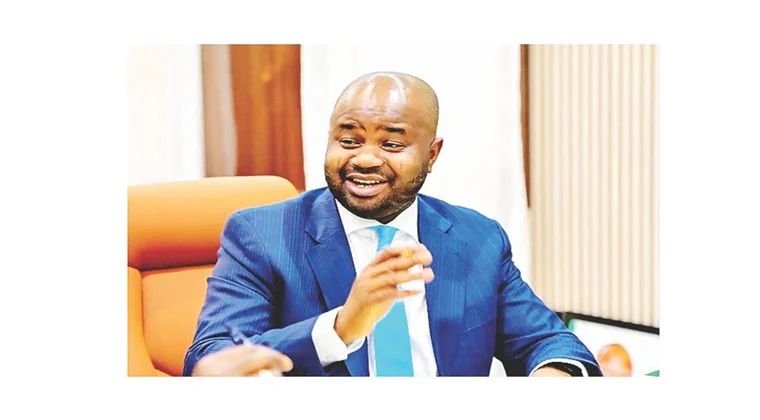
The Executive Chairman of the Nigeria Revenue Service, Dr Zacch Adedeji, on Tuesday sought to calm public fears over the new tax laws, insisting that neither the old regime nor the new one empowers any authority to tax money sitting in Nigerians’ bank accounts.
“Whether old tax law or new tax law has nothing to do with your personal bank account, whether you’re a company or you are an individual.
“Don’t forget that tax is a percentage of your profits. So if you have an asset, the asset is not to be taxed. We only tax the profits. We only tax the return,” Adedeji said on Journalists’ Hangout, a programme aired on TVC.
His comments come amid widespread rumours and anxiety around the reforms that took effect on January 1, 2026, including claims that transfers, account narrations, or savings balances could trigger automatic deductions by tax authorities.
Adedeji dismissed such claims as miscommunication, adding that there is “no law that allows anybody to go into your bank account and tax you because you transfer money or you keep money.”
According to him, personal transfers, gifts, and intra-account movements do not fall under the tax net by default.
“If you transfer money from your account to my brother, that is a personal transaction between both of you. It has nothing to do with tax authority, whether at the state level or at the federal level,” he said.
He also pushed back against the idea that banks can be instructed to debit accounts for tax simply because of the existence of funds or the description attached to a transfer.
“There’s no such provision in any tax act. Whether you describe it or you don’t put any description, tax law, both the old law or even the new law that we have now has not given anybody any right to come into your personal account and tax you and instruct the bank to debit you,” he said.
Adedeji used the interview to frame the transition from the Federal Inland Revenue Service to the Nigeria Revenue Service as more than a change of name, describing it as an institutional overhaul designed to simplify compliance and modernise collection.
He said the transition provisions were embedded in the law signed in June, with commencement on January 1, 2026, based on the national tax policy principle that major changes should allow adjustment time for businesses and administrators.
Adedeji claimed early market signals supported the direction of the reform, though he did not cite figures.
He argued that beyond “rumours”, Nigeria had begun seeing positive responses reflected in market activity and broader sentiment.
He also urged Nigerians to assess the new laws “based on facts and data, not on rumours, pointing to the absence of any widespread incident since the commencement date.
