Leading Reporters
  • Headlines
  • Health
  • Business
  • Exclusives
  • Investigation
  • Entertainment
  • Opinion
Wednesday, March 25, 2026
Hot
I am excelling in my job as minister...
MC Oluomo Visits NURTW National Secretariat After Failed...
JUST IN: Ex-AGF Malami Breaks Silence After EFCC...
Gunmen abduct worshippers during church service in Kwara
Tinubu’s Address at Windsor Castle State Banquet [FULL...
Three security agents collapsed during Soludo’s 2nd term...
Insecurity: Tinubu orders service Chiefs to relocate to...
Petrol Subsidy Removal Pushes 63% of Nigerians Below...
“We Are Not Miyetti Allah” — Plateau Fulani...
Reps prescribe 2-year jail term, 10m fine for...
  • About Leading Reporters
  • Contact Us
Leading Reporters
Advertise With Us
  • Headlines
  • Health
  • Business
  • Exclusives
  • Investigation
  • Entertainment
  • Opinion
Hot
I am excelling in my job as minister...
MC Oluomo Visits NURTW National Secretariat After Failed...
JUST IN: Ex-AGF Malami Breaks Silence After EFCC...
Gunmen abduct worshippers during church service in Kwara
Tinubu’s Address at Windsor Castle State Banquet [FULL...
Three security agents collapsed during Soludo’s 2nd term...
Insecurity: Tinubu orders service Chiefs to relocate to...
Petrol Subsidy Removal Pushes 63% of Nigerians Below...
“We Are Not Miyetti Allah” — Plateau Fulani...
Reps prescribe 2-year jail term, 10m fine for...
Leading Reporters
Leading Reporters
  • Headlines
  • Health
  • Business
  • Exclusives
  • Investigation
  • Entertainment
  • Opinion
Copyright 2024 - All Right Reserved
Home > Opinion > Page 7
Category:

Opinion

HeadlinesOpinion

Nigeria’s Election Peace Accords: More Signatories Needed

by Folarin Kehinde September 26, 2022
written by Folarin Kehinde

With only 72 hours to the official commencement of the 2023 general election in Nigeria, the National Peace Committee headed by Abdulsalam Abubakar retired Army general and former Head of State must be warming-up for the signing of the next set of peace accords.

At the end of a meeting of the members of his committee held 4 days ago in Minna, Niger State, Abdulsalam made it known that his committee would once again require top political leaders to sign an accord to maintain peace ahead of the 2023 general elections.

He attributed the expectation of his committee to the fact that during electioneering campaigns in Nigeria, politicians and their supporters create incitements which could endanger the country’s peace.

In the words of the committee chair, “the pattern of public communication among political actors, their publicity agents, spokespersons, and media consultants always amplify the potential for personal attacks, insults, and incitement.”
 
It is difficult to disagree with Abdulsalam’s observation because in Nigeria’s elections, there have always been reports by many people who witnessed attacks by politicians and their supporters on their opponents – a trend which had for long shifted focus away from issue-based campaigns to the politics of thuggery in the country.

Sadly, the situation has not changed since 2015 when the peace committee began its principled mandate of seeking to establish a reasonable level of civility and decency in public discourse and debates associated with electioneering.

Peace accords notwithstanding, the National Human Rights Commission, reported in 2015, a total of 61 incidences of election violence in 22 states in which at least 58 people were killed in different parts of the six geopolitical zones in Nigeria. Perhaps because the situation did not improve, the peace committee became more specific 4 years later.
 
The thrust of the committee’s demand as documented in the accord they prepared for the 2019 elections was for the political leaders to commit to run issue-based campaigns and refrain from statements that have capacity to incite any form of violence.  

Where any breach occurred, the same leaders were expected to forcefully and publicly speak out against provocative utterances. This clear documentation was not adhered to in spite of the peace accords that were signed by the respective party leaders.

A good example that Nigerian political parties perceive the peace accords as mere rituals which they would never follow is the case of Kogi state where some unknown persons in 2019 barred the SDP candidate from entry into the hall in Lokoja where the peace accord was to be signed. Is it politicians who can bar an opponent from the venue of the signing of a peace accord that would in all sincerity respect the so-called accord?
 
Whether or not the peace accords have continued to be observed in the breach or whether the situation has improved can best be understood from events of the last few months in which governorship elections were held in Ekiti and Osun states respectively.  In Ekiti state as many as 5 of the 16 parties shunned the peace accord signing ceremony.

According to the media, several violent clashes between rival political parties had made some of the parties and even voters to lose faith in the contest. Campaigns in the last few days to the election had been reportedly rancorous between the leading parties to the extent that deaths and injuries were recorded. In Osun state, a former Deputy Speaker of the House of Representatives and candidate of the Labour Party, Lasun Yussuf, was conspicuously absent at the signing ceremony. His absence  was said to have been influenced by an attack on him by unknown gun men late at night a few days earlier. One of his aides revealed that Lasun was still nursing fears from unending threats to his life as at the point of the signing of the peace accord, especially as he received no assurances of his safety from the law enforcement agencies.
 
From the above reports, it is now obvious that some political parties are increasingly beginning to see the peace accords as mere formalities as the more powerful candidates belonging to the ruling parties display more interest in the use of force to intimidate opponents. To start with, in virtually everywhere, such powerful forces do not allow for a level playing field.

They always deprive others of the use of public spaces like stadium for rallies just as they direct public broadcast stations to not transmit opposition campaign materials. This is particularly provocative as the electoral law specifically directs such organs of mass communication to provide equal opportunities to all parties. In Osun for example, the ruling party disallowed the opposition parties from using both the Osogbo stadium or the Freedom park to hold their mega rallies. What type of peace accord would endure under a circumstance in which different parties to the so-called accord are not equally positioned?
 
There are two issues which illuminate the fact that each of our peace accords in Nigeria is ill-fated. The first is the timing of the accord while the second is its scope. The problem with the first issue is tied to the erroneous impression that an election is in every respect the same as voting. In reality however, pre-voting issues such as party primaries and campaigns are part and parcel of election.

Therefore, to assume that the best time to appeal to politicians and voters for peace is the eve of voting is rather simplistic. Arrangements to short-change opponents that are made before voting day are usually too many and too devilish to be overlooked when they mature. Indeed, party members who had been cheated during party primaries are ever so willing to partake in whatever it takes to undo their party flag bearer who got the fag by fraud.

So, the National Peace Committee ought to be told that no Nigerian politician relies on peace accords to win an election and none believes that participating in the signing of a peace accord means adhering to its tenets.
 
The second issue at stake referred to as scope concerns the number of persons and groups that ought to sign the accord. Here, the belief that politicians are the only persons obstructing electoral peace in Nigeria is again a weak conclusion.

If the truth must be told, ample damage that impedes peace is the handiwork of some societal institutions that are sometimes invited to witness the signing of the accords. Peace certainly loses value if those who can stop unknown gunmen from hijacking ballot boxes are themselves overwhelmed. Indeed, on the day the SDP governorship candidate who was an accredited signatory was stopped by unknown gunmen from entering the venue of the Lokoja peace accord, our official gunmen who should have stopped them were not only on ground, their foremost boss, the then Inspector-General of Police was personally in attendance.

If unknown gunmen can successfully determine participation in the signing of an agreement, who will supervise the attainment of peace? My considered opinion is that it would make more sense if the police boss would also sign the accord committing his team to maximum enforcement of law which ensures peace  
     
Apart from what we see during the settlement of election disputes especially courts that wrongly grant injunctions and assume jurisdiction, there is plenty of evidence that the judiciary contributes greatly to political violence in the country. Here, it is hard to forget the revelation by a retired Justice of the Supreme Court, Justice Stanley Shenko Alagoa, that “some judges collect bribe from politicians and traditional rulers to pervert the course of justice.”

Considering that using the judiciary to win elections subsists in Nigeria, it is time to invite the relevant heads of courts to sign our famous peace accords committing themselves and their teams to ensuring peace through proper dispensation of justice. It is similarly in order to invite relevant INEC bosses to commit themselves and their colleagues to end insider abuses in the electoral body which always provoke violence.

If we are not prepared to go the whole hog, our peace accords would remain mere rituals notwithstanding that those who conceived the noble idea are transparently people of honour.
 
By Tonnie Iredia
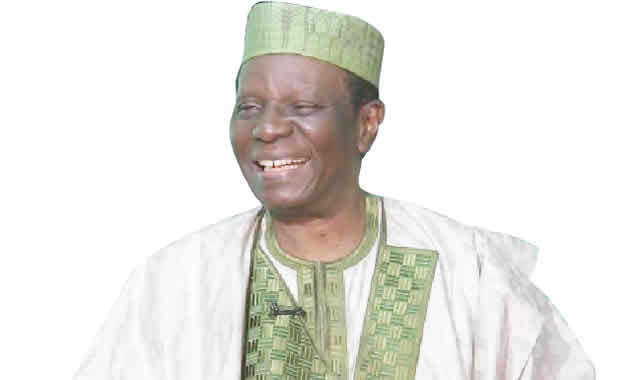
September 26, 2022 0 comments
0 FacebookTwitterPinterestThreadsBlueskyEmail
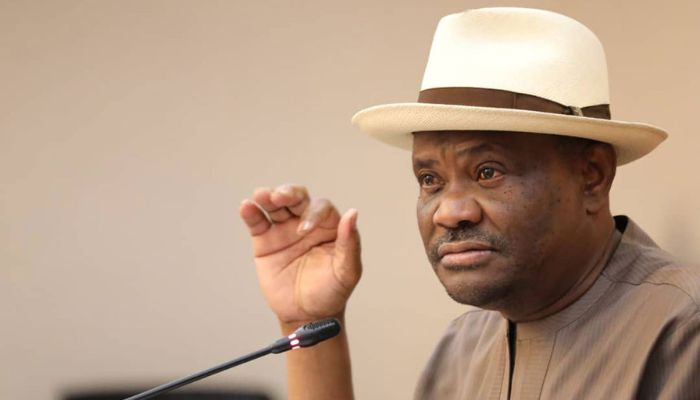
Governor Wike
HeadlinesOpinion

St Nyesom Wike: The Attention Seeking Champion Of Opportunistic Justice

by Folarin Kehinde September 24, 2022
written by Folarin Kehinde

By Dr. Ugoji Egbujo

Gov Wike spends days and nights hugging TV cameras and lamenting profusely about injustice in the PDP.

But he doesn’t tell his audience and backup singers that the deciding injury happened when Atiku jilted him for Okowa.

After all, Wike, who refused Power shift in 2015 to stubbornly succeed another Ikwerre man in Rivers state, rebuffing all equitable efforts to transfer power to other zones, has no moral right to discuss power rotation.

It’s comical watching Wike preach sermons on equity and power rotation.

Rivers state cried for power rotation in 2015. Had Atiku chosen Wike, Ayu would have been acceptable, and anybody demanding Ayu’s resignation would have met Wike’s venom.

Today, Wike wants Ayu booted out so he can regain control of the party with another lackey and fix a leash on the candidate.

When Wike discusses the current power structure in the PDP, he deliberately omits Gov Okowa and mentions only Atiku, Ayu and Tambuwal. Okowa isn’t thuggish, so Wike won’t reckon with him.

Well, he has even declared on TV that Okowa paid Atiku. Blackmailing fellow governors means boldness.

The only saint in the PDP is Wike, who wooed northern delegates with his academic credentials rather than money. 

Clowning is taking centre stage as diligence. Hypocrisy now wears garish suits and roams as the champion of social justice, ready to dance in self-adulation.

Opportunism has joined the parade, and it marches around as equity croaking for inclusiveness. Rascality has adorned the mask of courage, and it is more than willing to guttersnipe, blackmail and tarnish. 

When will the charade end? And who knows where Wike and his political gang will meet this weekend? They have been to Madrid and Turkey.

They have been to London too many times. They could be flying to California to continue their fight for justice for the ordinary man.

These days, it appears the fight for the ordinary man is best done in shiny suits with a backup choir singing hallelujah as the god of small things lobs bricks at his political opponents.

The last time Ortom appeared on Tv, he wore a crazy-coloured suit. 

If Wike were interested in true justice, he would have supported the call for power to shift not just to the South but to the Southeast.

But Wike, who champions self-interest as justice, wouldn’t have that.

Wike rightly insists a northerner shouldn’t succeed a northerner, but did he ever wonder why a man from the South-south should rule when a man from south South ruled the last time power came down south?

Why didn’t he remember that his zone had produced a president? And since he claims he is not Igbo, and couldn’t have hidden under the Igbo presidency project to push his ambitions, he ought not to have contested.

Why can’t Wike see that his failure to come all out for equity, his willingness to shortchange the Southeast, was the main reason the ticket was thrown open? Hadn’t Wike preached electability instead of inclusion and equity when equity meant Southeast or Igbo presidency?

Wike submitted to the primaries, contested and lost, yet he wouldn’t even want another qualified Igbo man to be vice president.

If Wike were fighting for Justice, shouldn’t he have fought for his friend Ikpeazu PhD or another member of his gang to be VP? Wike’s idea of justice is underlined by opportunism and self-service. Wike fought for half a power shift because with Rivers’ financial muscle, Wike would have been the clear favourite and beneficiary. It has always been about Wike.

Now, Wike is restless. The first problem for Wike is that his options are few. The stooge he wants to install as governor in Rivers is wanted by the EFCC.

He must keep him in holes and caves, out of the reach of the claws of the prowling Eagle.

He must support him trenchantly to win him immunity so that the can of the investigation into the 117 billion naira money laundering matter can be kicked further down the road.

Wike can’t openly defect to the APC or Labour party. That will leave the electorate jaded.

But having sworn never to leave the PDP, it now appears he has to remain a chameleon until he chooses whether to swallow his pride or accept some face-saving crumbs and support Atiku; or stay under the umbrella and damage PDP’s presidential quest from within.

To play a mole from within will be humbling because he can’t do it loquaciously.

If he stays in the PDP and supports Asiwaju, he might strengthen Tonye Cole inadvertently and risk temporary political oblivion. Staying in the PDP and supporting Obi might leave him with the least damage politically.

The second problem is that Atiku appears fairly fed up with the antics of a loudmouthed politician who was perhaps a jobless graduate when Atiku was aspiring to be president in 1992, and who was probably a Port Harcourt political hustler / peripatetic contractor when Atiku was vice president in 1999.

If Atiku wins, Wike might reap cold political consequences even if Wike repents today. We all know the young can grow rapidly, but nothing rankles the elderly to wing-clipping vengeance more than witnessing the humiliating self-indulgent rascality of moneyed youths.

On the day of judgment, we shall know how much Rivers state spent on media during the reign of this self-acclaimed important governor.

Wike can summon and fly in the senior executives of the four largest television houses in the country to Portharcourt to watch him belch and rehash worn-out gossips.

The chat was a gossip session, an obsequious banter with riverine Jeriamiah dropping rumours and dripping nuggets of blackmail without ‘receipts’.

It has become a habit of presumptuousness, petulance and profligacy. And perfidy. When he isn’t alleging that his party chairman collected a one billion naira bribe, he is concocting tales about the romantic interests of his former boss.

When he isn’t insinuating that the presidency is engaging in anti-party activity, he alleges that Tinubu might have toyed with it.

The same hackneyed beer parlour tales he has told at project commissioning ceremonies with backup singers.

Atiku was perhaps so tired of the bickering he left the country and returned to his country home in Dubai. 

As a matter of urgency, some elder statesmen must reach Atiku to accommodate Wike so that crayfish-bending circumstances don’t convert a serious governor into a flippant talebearer.

We can be our brother’s keeper.

September 24, 2022 0 comments
0 FacebookTwitterPinterestThreadsBlueskyEmail
Opinion

Imagining Kenya’s influence on Nigeria’s 2023 elections

by Leading Reporters September 11, 2022
written by Leading Reporters

By Tonnie Iredia

The next general elections in Nigeria have become close enough to make some citizens concentrate on a daily prediction of several possible outcomes. Will they as usual be a contest of entrenched interests by the two big divide, simply seen as two-horse race or will a third force emerge and succeed in changing the old order? Will our electoral body, the Independent National Electoral Commission (INEC) and our judiciary function like their counterparts in Kenya? How will the elections look like – transparent and credible or disrupted by unknown actors? Will the presidential election be a straight win by one of the parties or will the contest be pushed to a run-off? Will there be election petitions or will losers congratulate the winner and move on? If petitions are raised, will their handling by the judiciary be salutary? These questions might be difficult to answer now but the recent Kenyan election can be a base from where to imagine issues
 
Political developments across the globe already suggest a probable difference between the 2023 elections and previous ones in Nigeria. For example, with current alignments and positioning, the inclination to imagine that there could be landslide victories in certain locations appear improbable. The fielding again of a Northern candidate, this time by the People’s Democratic Party PDP and the same faith ticket by the All Progressive Congress APC will ruffle some feathers though its extent is hard to foresee. Peter Obi’s Labour Party and Musa Kwankwaso’s New Nigeria Peoples Party NNPP may push the country to a level in which big parties may still fly but not high enough. As Kenyans have shown, it was William Ruto, the candidate many voters were excited and enthusiastic about that carried the day despite opinion polls favouring Raila Odinga.
 
Unlike Kenya’s Independent Electoral and Boundaries Commission (IEBC), our own election officials have no business working at cross purposes with one another.  Since 1987, we have managed to install commissions that work by consensus in which the chair is not only the chief executive but also the accounting officer. INEC should therefore avoid what happens in many African societies, where some electoral officials are easily monetized to play dirty games. In Kenya last month, the good works of officials of the IEBC were disrupted by four electoral commissioners who at the point of the announcement of results suddenly broke away from their chairman to disown the results. The commissioners claimed there were mathematical errors in the prepared results.
 
One way of ensuring this does not happen is to make sure that only persons of proven integrity who are visibly non-partisan are appointed to INEC. This is why Nigeria has to take seriously, allegations making the rounds that at least 4 of the 19 newly nominated Resident Electoral Commissioners are tainted. Considering the familiarity with the terrain of those making the allegations, the argument that those penciled are victims of media trial is not enough. As the saying goes, INEC must like Caesar’s wife, be completely above board. Commissioners must not only be non-partisan they, should not be feared or suspected to have political interests that can becloud their capacity to be impartial in a country where every ruling political party has since 1999 showed the urge to surreptitiously influence INEC.
 
It is therefore necessary for INEC and our courts to take a look at the recent elections in Kenya with a view to distancing themselves from what can erode their credibility while embracing a few areas where Kenya’s IEBC and Supreme Court did well. The case of Nigerian top political office holders who sought to replace others after they had lost at a higher level is one which if not well handled can erode public confidence in the electoral referee.  INEC should be commended on its decision to reject APC’s nomination of a candidate for the Yobe North senatorial election because the nominee did not participate in the relevant primaries held earlier. By keeping to the monitoring report prepared by her Yobe state office, INEC has made a bold statement that its headquarters and state offices are one.
 
Also commendable is the decision of INEC to clarify the erroneous impression that she was prioritizing manual collation of results over the electronic transmission mode. No matter the pressure, the commission should insist on this because it was what saved the day in Kenya according to its Supreme Court. It should surprise no one if political parties collude with officials to resort to manual processes ostensibly because BVAS or any other technology introduced by INEC could not work in their localities. This has always been a ploy used to bring-in fake votes in the past. Convoluted outcomes like inconclusive elections arising from such smart games should not be entertained just as the judiciary should place premium on INEC documents and not those brought in by agents and security personnel.
 
Strict adherence to electoral guidelines and provisions of the Electoral Act 2022, would easily set empirical standards that would be hard to change at will. For this to be achieved, the Chairman of INEC, Professor Mahmood Yakubu must remember at all times that he has a date with history. As we have seen in the case of Kenya, it was the steadfastness of the chairman that made the 2022 presidential election of that country to be successfully concluded. The gang-up by the four commissioners had already cast huge doubts on the entire process which could have been exploited by a pro-establishment judiciary to set aside the elections. Unfortunately, the history of election petitions in Nigeria does not show that the dubious use of the judiciary to win elections is involuntary. One can only admonish INEC to close all possible loopholes that can be exploited to destroy a good work plan.
 
It is important to pay some attention to the frustrations of election petitioners in Nigeria against the backdrop of the commendable judgment of the Kenya Supreme Court which upheld the election of William Ruto. At the fore of Chief Justice Martha Koome’s lead judgment was the apt recognition of not just the letter but also the spirit of the law. She refused to allow her hands to be tied by technicalities which at the end of the day would not move the country forward.  One of the grudges of the electoral commissioners was that their chairman arrogated to himself the power to verify and tally the presidential election results. While agreeing that the law did not empower the chairman to so act, Justice Koome refused to nullify the result because “aside from their 11th-hour walkout, the four commissioners could not place before the court any document to show that the election result was altered.” Instead, they were into what the jurist called, “a last minute boardroom rapture.”    
 
In a recent workshop, one sociologist was greatly applauded when he drew attention to some naughty issues in our election petition process. One of them was the Osun governorship case of Adeleke V Oyetola of 2018 where Adeleke’s victory at the tribunal was upturned on appeal on the ground that the tribunal judge was reportedly absent for a few days during the proceedings. The sociologist wanted to know how the judge’s alleged absence increased Adeleke’s votes and why the latter was the one punished. On the defections of governors to other parties the sociologist agreed that the courts could not have sacked the governors but contended that since votes belong to parties and not individuals, the courts should have returned the governors to their original parties by declaring their defections null and void.
 
The point the sociologists was making was the need to curtail political rascality in Nigeria. Take the more difficult point of fake certificates and dates of birth. When such cases are dismissed because the petitioner was reportedly not the right person to sue or did not follow certain court rules, does it prove the innocence of holders of such fake documents? If not, how do we dissuade frauds from hiding under technicalities to get in or remain in office only to commit more fraudulent activities? While lawyers can see the issues differently, it would appear that Kenya may handle some of these cases differently in the interest of society.


September 11, 2022 0 comments
0 FacebookTwitterPinterestThreadsBlueskyEmail
HeadlinesOpinion

Bishop Kukah’s nation-building agenda: Matters arising

by Leading Reporters September 4, 2022
written by Leading Reporters

By Tonnie Iredia

For every event in Nigeria, the priority of most planners is to ensure that the big names in the country are pulled to the event. Politically exposed personalities such as president and governors are the most sought after in this regard. For me, there is some risk in relying on the big guys in town to make one’s event successful.  

This is because they often come late and disorganize the otherwise well-laid out plans for the day. Along the line, those tired of waiting begin to disperse, forcing the organizers to pick emergency chair/other actors in place of those originally empaneled. While much of this did not occur in last Wednesday’s celebrations of the 70th birthday anniversary of the Most Reverend Mathew Hassan Kukah, Catholic Bishop of Sokoto, ample attention still shifted from the celebrant to the presidential candidate of the Labour Party, Mr. Peter Obi, his colleague of the All Progressives Congress, Asiwaju Bola Ahmed Tinubu and his Vice, Kashim Shettima as well as a number of state governors.
 
It was probably impossible to prevent the event from turning into a political jamboree because it was held at a time of the year when persons seeking elective positions dutifully attend virtually all major functions to score some points ahead of a forthcoming general election. However, the presence of such highly placed politicians should not be taken to mean that they were on the same philosophical page as the day’s celebrant.  For example, while the fight for peace, justice and the rule of law are real to Kukah, they are mere slogans to many public office seekers. Whereas the politicians are looking forward to winning elections and exclusively appropriating the nation’s wealth, Kukah is bothered that many Nigerian politicians end up as accidental leaders, ill-prepared for public office. This is why he is proposing to use his foundation to build a N200million centre to provide leadership tools for accidental leaders and politicians in Nigeria. When completed the centre will have a main office complex; a school of government; halls, library, classrooms and offices; accommodation and lodging; an art gallery and studio. It will also focus its activities around interfaith dialogue, knowledge promotion and memory preservation.
 
It is worthy of note that President Muhammadu Buhari sent a goodwill message to the celebrating cleric, notwithstanding the general belief that Kukah is a not a friend of the present administration in view of his deep criticisms of its activities. In truth though, the Bishop does not appear ready to be a friend to any government for as long as the dwindling fortunes of Nigerians which have accumulated over the years are not redressed. Governor Aminu Tambuwal of Sokoto state who chaired the anniversary celebration virtually confirmed this in his opening address when he said, “Kukah’s writings over the years have become controversial and have drawn the ire of powers that be, but what is not in doubt is his undying love for Nigeria and Nigerians, and his belief in the possibility of a new Nigeria where justice and equity reigns.” Other messages followed the same thinking, with the Chairman of the Nigerian Governors’ Forum NGF, Kayode Fayemi concluding that Bishop Mathew Kukah’s love for ruffling the feathers of political leaders is essentially for the purpose of steering the country from the precipice.
 
Atiku Abubakar, presidential candidate of the Peoples Democratic Party PDP made about the same point when he described Kukah as ‘a remarkable public intellectual and formidable advocate for good governance whose contributions to Nigeria’s democracy are immeasurable and unquantifiable.’ Like President Buhari, Bola Tinubu and Kashim Shettima of the APC showed broadmindedness in celebrating their major critic at his point of glory. By describing the Tinubu/Shettima, Muslim-Muslim ticket of the APC as an unacceptable set-back for national integration, Kukah’s attack may have been quite frontal. Although many other leaders and citizens had made the same point, the Bishop’s eloquence and opinion-moulder status may have aggravated his own comments. The point must however be made that the numerous centrifugal forces in Nigeria’s heterogeneous polity would, any day, greatly support an attack on a same faith presidential ticket  
 
Many Nigerian critics of old, comrades and political activists have since joined the ruling class and forgotten the oppressed mases, but will Bishop Kukah at 70 also take a break? It is unlikely because he has continued to make many bold comments expected of a moral teacher and spiritual reformer after the anniversary celebration. We can hardly blame the Bishop as too many negatives have refused to leave Nigeria.  For instance, in spite of the passing of the Electoral Act 2022 and the recent vow by our president that the federal government will not allow anyone to misuse public institutions for the 2023 general elections, there are fresh and embarrassing allegations that well-placed politicians are at the verge of capturing an otherwise Independent National Electoral Commission INEC. Already, some opposition politicians are becoming scarred of the alleged nomination of politically tainted citizens to serve as Resident Electoral Commissioners. Should Kukah or any other patriot be quiet on this?
 
A Convocation Lecture titled, ‘Broken Truths: Nigeria’s Elusive Quest for National Cohesion’ delivered in June 2018 at the University of Jos had revealed too many negatives. Today, such things rather than ceasing are becoming more worrisome. One of them in the words of Bishop Kukah is that “recruitment and promotion in almost all sectors of the public service from the local governments through the state to the Federal Government depend on whom you know and not what you know.” If so, how can the nation make progress when its policies are not piloted by its first eleven team?  It would therefore be unreasonable for the next set of political leaders to expect that age 70 would stop Bishop Kukah from putting them under the same searchlight that their predecessors witnessed. In fact, that he will continue to serve as the conscience of human society is evidenced by his recent appointment by Pope Francis as a Member of the ‘Dicastery’ set up to advise and promote the Pope’s concerns on issues of justice and peace, human rights, torture, human trafficking, care of creation and other issues related to the promotion of human dignity and development.
 
Beyond a few critics, the unending socio-economic and political misfortunes of our people should at this point pull-up all citizens to take their destinies in their own hands and fix Nigeria. Many years back, Bishop Kukah had called on Nigerians to stop thinking that anti-corruption crusades directed at only top public office holders is all that is needed to fix the country. It is irrational according to the Bishop for our citizens to continue to line up all kinds of scapegoats among us whom they believe are responsible for our woes in Nigeria. While believing that the big people who steal huge sums are the ones that should flee with our sins into the desert so that our country can prosper, we often overlook the small people who cheat the bus conductor by not paying just as election rigging is seen as bad only when perpetuated by our opponents.
 
Again, we cannot scratch the surface of a problem and conclude that all is well that ends well. At the Bishop’s birthday event last week, former president Goodluck Jonathan spoke glowingly of how he resolved a four-month old ASUU strike one night. If he did so, why is ASUU still on strike over the same complaints? Why is the problem of ASUU still hinged on an official breach of a 2009 agreement? One of the matters arising now is for Nigerians to jointly beg the party to the agreement that did not play its part and not ASUU to reopen our universities. Secondly, should Bishop Kukah and his colleagues in the National Peace Committee continue to ask politicians to sign peace accords they do not believe in, while INEC officials especially the Ad hoc ones sourced from other bodies and some members of the judiciary continue to collude to render our elections incredible? While welcoming Bishop Mathew Kukah to the 7th floor of life, all citizens should work to resolve Nigeria’s outstanding matters

September 04, 2022  

September 4, 2022 0 comments
0 FacebookTwitterPinterestThreadsBlueskyEmail
INEC Elections
HeadlinesOpinion

Nigeria’s Election Disputes: Better Handling Overdue

by Folarin Kehinde August 28, 2022
written by Folarin Kehinde

Nigeria’s election process would be incomplete without the establishment of an electoral offences commission. This was the cogent statement made by The Chairman of the Independent National Electoral Commission (INEC) Professor Mahmood Yakubu, last week.

This is because one unending malaise in the nation’s election system from colonial times, is the ease with which elections are rigged in the country without consequences. It is a subject that is overdue for action. An election offences commission, if well-handled, can drastically reduce the high degree of electoral malpractices in the country.

Even those of us who have always cautioned against an increase in the number of public bodies in the country are persuaded that the commission can best be seen as an unavoidable structure for now, notwithstanding the position of the Economic and Financial Crimes commission EFCC that the proposed commission on election offences is perhaps one more law enforcement body too many.

Whereas it makes plenty of sense to call for the establishment of an electoral offences commission, it must be remembered that the work of the commission would also end up in the judiciary.  

Therefore, it is crucial to place high premium on how the framework for the settlement of election disputes is managed in the country. As the nullification of some election results by the judiciary has clearly shown, the announcement of election results and declaration of winners do not conclude an election process until the judiciary settles disputes arising from the process.

In other words, a candidate declared as winner of an election is only certain that he or she will hold the relevant office where there are no disputes or where whatever disputes that were disclosed are pronounced upon by the judiciary. Unfortunately, how the segment is currently managed is quite tardy with each party to a dispute taking whatever steps to outwit the opponent. Sometimes, because there is a constitutional time limit for dealing with election disputes, some candidates are able to manipulate the judiciary to introduce delays that would then overtake the dispute.

The handling of cases in the recently conducted governorship elections in Ekiti and Osun states aptly confirms the point that several hurdles are unduly placed on the way of petitioners. Since the declaration of a winner in the governorship election held in Ekiti state on June 18, 2022, the first runner-up, Engineer Segun Oni of the Social Democratic Party SDP has not been given a fair chance to follow the approved process of an election dispute. According to the SDP, INEC has been preventing the party’s legal team from having access to inspect the election materials as ordered by the election tribunal.

Considering that the settlement of election disputes is an integral part of the election process, is it really necessary for a party to first seek the assistance of a court before the umpire would make relevant materials available to her for inspection? It appears in bad taste for INEC to continue to hold-on to the materials after the relevant tribunal had ordered her “to give unhindered access to the petitioner to inspect the electoral materials which include, Bimodal Voter Accreditation System (BVAS) all ballot papers and voters registers.”

It is worse that the reason reportedly given for its action was that such materials had been moved from the state – Ekiti, to its headquarters. Why would INEC transfer materials for conducting an election in a state immediately after the declaration of a winner when the contest has been subjected to a dispute? It is more annoying that the INEC spokesperson in the state, Mrs. Rolake Odebunmi was quoted to have said that only half of the materials being requested by the SDP are in the custody of the Ekiti state office of INEC.

Again, the SDP had to formally apply to the tribunal to enable her use substituted service to serve the petition on all relevant bodies who had virtually vanished after the polls. In truth, after a winner is declared in a Nigerian election, it is customary for most of those required to defend the case to evade service so as to make a petition difficult to prosecute.

Evidence that election disputes are treated same way everywhere is established by the experience in Osun state where a governorship election was held on July 16, 2022. Governor Gboyega Oyetola who never provided a level playing field for the election until he lost it, is now at the receiving end. First, he has had to go to the tribunal to get an order for INEC to grant him access to inspect the materials used for the polls.

Second, it is now the turn of the winner of the election, Senator Ademola Adeleke to become elusive while the time allowed the tribunal is gradually running out. The report now is that security guards at his Ede residence have refused to let the bailiff serve Adeleke the notice of summons. In the interest of justice therefore, the chairman of the tribunal, Justice Tertsea Kume has appropriately directed that the notice be served through the substituted service of pasting the summons on the notice board of the tribunal

References to Ekiti and Osun states should not be taken to mean that the trend is restricted to both states, they are only the latest culprits.  In 2019, the election petition tribunal hearing cases concerning the governorship election in Nasarawa state had to order INEC to allow Musa Nagogo of the Peoples Democratic Movement PDM to inspect election materials over his original complaint that his name and party logo were omitted from the list.

At the federal level, the PDP candidate Atiku Abubakar spent precious time pleading to be allowed access to the presidential election materials for inspection. In 2015, the APC governorship candidate in Rivers state Dakuku Peterside was reported to have virtually abandoned his petition out of frustration from among other things, the refusal to grant him access to inspect election materials.

There have been other occasions where it was the judiciary itself that was used to frustrate an election petition. Here, let’s recall the classical case of the handling of the petition arising from the Adamawa state governorship election held on February 4, 2012. INEC had declared governor Murtala Nyako as winner which was upheld by the election tribunal. On appeal which the constitution says must be concluded in 60 days, the judiciary did nothing for as many as 58 days.

Some 48 hours before deadline, the then Chief Justice had to read the riot act following the protest of the opposition party. Alas, it was too late for meaningful justice to be served. Should anyone who deliberately slows down the process not be penalized for it? Well, even courts have been getting engaged in the collation of results while working to the answer only to credit the “winner” with more votes than the number of voters accredited to vote at the relevant election.

It can therefore be concluded that it is not enough to establish an electoral offences commission or an election tribunal if undemocratic practices would be used to desecrate the legal processes for ventilating grievances. As reforms are being made by INEC to improve upon the procedures and processes for voting, other bodies such as election tribunals must make copious plans to guarantee the continuation of a level playing field after voting till the end. To use technicalities to frustrate the grounds of protests put forward by some candidates can encourage the use of extra-legal means that can lead to general breakdown of law and order.

Whether it is accreditation, voting, counting of votes, declaration of winners or settlement of election disputes, Nigeria is overdue for a process that can add her to those nations whose elections are accepted as credible. The real prayer today is for all those concerned to bring an end to the unjust handling of election petitions which often sustains ample bitterness in the polity.

by: Tonnie iredia

August 28, 2022 0 comments
0 FacebookTwitterPinterestThreadsBlueskyEmail
HeadlinesOpinion

How Nigeria Can Curb Religious Violence

by Folarin Kehinde August 23, 2022
written by Folarin Kehinde

The international day commemorating the victims of acts of violence based on religion or belief is a day dedicated by the United Nations to raise awareness on religious intolerance, violence and discrimination based on religious belief and to protect human rights, particularly the freedom of religion and belief. The international day commemorating the victims of acts of violence based on religion or belief is marked on the 22nd of August of every year, it comes a day after the international day of remembrance and tribute to the victims of terrorism and has been in existence since 2019.

Christianity, African traditional religion and Islam are the 3 existent religions in Nigeria. Christianity and Islam are the two dominant religions in Nigeria with 87 million Christians and 90 million Muslims.

While religious violence in Nigeria has been linked to intolerance and extremism, the portrayal of incidents by the media also aggravates religious violence.

According to research by Accord between 1999 and 2012, Nigeria has experienced over 30 religious-based incidents of violence with the most attacks recorded in the northeast, northwest, and north central region of Nigeria.

From January 2021 to June 2022, there were 244 deaths in churches with a total of 65 attacks, 45 deaths and 12 attacks on mosques.

Nigeria has designed a number of policies and measures to curb religious violence, one such is the political application of the principle of power-sharing between the south and the north and Muslims and Christians, the promotion of interfaith cooperation and dialogue through the establishment of Nigeria’s inter-religious council in 2000, prohibition of registration of banks with religious appellations, the exclusion of religion as an index in the design, conduct, and reporting of national population census, non-registration of political parties with ethnic or religious colourations and the establishment of the federal character commission to prevent the predominance of one religious group in all government institutions.

Dr. Philip Olayoku, the coordinator of the West African Transitional Justice Center (WATJCenter) pointed out that the government and its policies are doing little to nothing to actually curb religious violence in the country, he stated that the issue of religion has been mixed with politics, citing the example of the candidates of the upcoming 2023 presidential election and the uproar on the Muslim-muslim ticket. According to Dr. Philip, the actions of the government towards such matters might degenerate into religious violence as religious violence also emerges from sentiments being mobilised in the system.

On how to curb religious intolerance in the country, He suggested that ethnic identity and religious identity should be segregated as a way to curb religious violence, holding that Nigerians are often identified by their religions and ethnicity first before identifying as a national of Nigeria. He stated that citizenship should be imposed as the first form of identification before ethnic and religious identity comes to play.

source: Dataphyte

August 23, 2022 0 comments
0 FacebookTwitterPinterestThreadsBlueskyEmail
HeadlinesOpinion

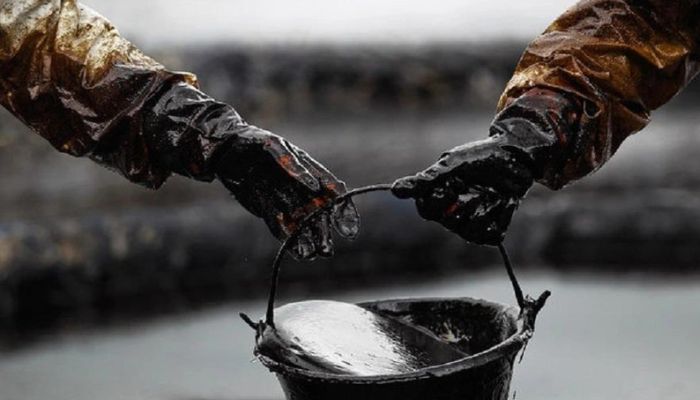
Analyzing Crude Theft In Nigeria

by Folarin Kehinde August 22, 2022
written by Folarin Kehinde

Nigeria loses 400,000 barrels of crude oil daily to theft, says Sylva”, “Nigeria loses $1.9billion to oil theft monthly — NNPC CEO”, “Elite behind oil theft, illegal refineries in N’Delta”. These are all telltale headlines which Nigerians are very much familiar with. So, they are hardly shocked about the stale news any longer. What is perhaps shocking is the fact that the very government that should ensure such a thing is reduced to the barest minimum if not eliminated outright is the one that is wringing its hands in frustration, suggesting helplessness on the rather curious and unsavoury development.

Minister of State for Petroleum Resources, Timipre Sylva, it was who reminded us of the notorious fact that the country loses about 400,000 barrels of crude oil to theft daily. The minister spoke when he led a delegation of some Federal Government officials on a courtesy visit to Governor Hope Uzodimma of Imo State, at the Government House in Owerri. Sylva, who described the phenomenon as a “national emergency” added that the delegation was in the state to solicit the assistance of the host communities in ending the menace, which has reduced the country’s OPEC quota from 1.8 million barrels to 1.4 million barrels.

At a conservative $100 per barrel, this means some N40million daily of monies that should accrue to the country going into private pockets.

We do not have to stress ourselves trying to find out what the loss is monthly, as the MD/Chief Executive Officer of the Nigerian National Petroleum Company Ltd. (NNPC Ltd), Mele Kyari, bailed us out; saying we lose a staggering $1.9 billion monthly to the illegality. This is a serious indictment, especially coming from a government agency with a vital role in checking crude theft.

But then, we should be more worried about the conflicting figures bandied by both the minister of state and the NNPC boss. Granted that there is so much volatility in the international oil market and even exchange rate fluctuations, still, these are not enough to justify posting of highly conflicting statistics by two officials who are supposed to be working under the same ministry.

Much as this exposed the lack of synergy between the ministry and the NNPC, it also signposts one odd fact about the country’s oil sector – that is lack of what could pass for authentic statistics. For instance, the question of what amount of fuel we consume locally has always remained contentious. This is not good enough in a sector that is the country’s cash cow.

What we have on our hands with regard to oil theft is a serious matter, considering the loss to Nigeria in revenue terms. It is only another manifestation of the banditry ravaging the land. With such stupendous easy money from sources such as the one in question, we need not look far for how bandits get funds. In the north, we have gold being mined illegally; the same applies to diamond and other mineral resources, with the proceeds going into private accounts.

Not even the very strong economies of the world can withstand the perennial financial hemorrhage from all these sources.

Interestingly, everyone seems to know those responsible for the theft, even if none has put names to them. Even, Igo Weli, Shell Petroleum Company’s general manager, corporate relations, made a similar allusion on August 8, that the elite in the region are behind the illegality.  He spoke during an engagement on ” “Crude Theft, Pipeline Vandalism and Illegal Refineries in the Niger Delta region”.

But Shell and other companies operating in the country’s oil sector can continue to bemoan their plight. Not the Nigerian government whose duty it is to provide security nationwide, including for vital oil assets. It should fish out these unpatriotic elements engaged in the illegality alongside their collaborators in the security agencies.

We however note the recent seemingly far-reaching decisions reached at a strategic meeting between NNPC Ltd and security agencies on the matter. These include retooling of the security agencies in the Niger Delta, establishment of command and control centre that monitors activities of crude oil value chain, from drilling to designated markets, the whistle blower policy that protects and financially rewards those who offer credible information that can lead to arrest of both crude thieves and pipeline vandals, among others. But these will amount to nothing without the political will to see them through.

It was good that eminent traditional rulers and other representatives of oil producing communities were at the meeting that Sylva had with Gov. Uzodimma. Others on the entourage  were the Minister of State for Education, Mr Goodluck Opiah, Kyari and the Chief of Defence Staff, Gen. Lucky Irabor. But this would not be the first of such visit to oil bearing communities. Why did the previous visits not achieve enduring legacies? The government must be interested in this and be ready to make amends. Here, fidelity to promises is key. The government must be faithful in implementing policies and programmes it promised to deliver to the oil communities to secure their cooperation.

So far, government’s lackadaisical handling of oil theft, in spite of its consequences for the national economy and wellbeing does not reflect the dire financial crisis the country is passing through.

by NigeriaDispatch.

August 22, 2022 0 comments
0 FacebookTwitterPinterestThreadsBlueskyEmail
HeadlinesOpinion

Rigging local elections in Nigeria: Where next?

by Leading Reporters August 21, 2022
written by Leading Reporters
By Tonnie Iredia  

One failed aspect of democracy in Nigeria is the conduct of elections into the country’s 774 local government councils. In most cases, the contests are handled by electoral commissions that are usually made up of cronies of the ruling party who are brought on board to ensure that their party` ‘sweeps’ the polls. Consequently, our local areas have remained undeveloped because persons that can evolve and implement viable socio-economic projects, are usually displaced through election chicanery.

Painfully, there are no visible prospects in the horizon to suggest that the trend might change soon. This completely reverses the goal of establishing a third tier of government which by virtue of its closeness to the grassroots should best meet the immediate needs of the locals. Based on this, whenever an election is fixed to hold in any local government area in the country, the expectation is that it would be rigged in favour of the ruling party.   Many have thus been taken aback by the decision of the outgoing Osun State Government to, in the guise of holding an election, instal its puppets as others do across the nation. Already, the chairman of the state electoral commission, Otunba Olusegun Oladuntan has announced October 15, 2022 for the contest across the state.

Surprisingly, his team seems to be going ahead with arrangements for the exercise not withstanding a case in court against it. As expected, the two leading political parties, the All Progressives Congress APC and the Peoples Democratic Party PDP are for and against the proposed elections respectively. While the latter alleges that the outgoing ruling APC is bent on holding the election at the eve of its departure so as to install those who can cover-up its alleged corrupt activities, the APC says for as long as governor Gboyega Oyetola’s tenure has not ended, his government has a legal right to hold local elections.  

But why did Oyetola not organize any local election until the last few weeks of his tenure? Why can’t he focus on proper handing-over notes to his successor instead of starting a fresh event at the 24th hour? Is the outgoing government unaware of the legal position that when a matter is pending in court, a notice of such matter acts as a stay of any action that may prejudice the matter in court? An objective answer to these questions would support the point that the government is anxious to empower its lackeys as alleged. Again, why is the PDP so bothered about an election that an electoral commission described as independent is proposing to conduct? While the PDP is skeptical about the performance of a tainted electoral body, would she herself not have done what the APC is about to do? If the truth must be told, the PDP only wants the election pushed forward to when her own Ademola Adeleke assumes office so that the PDP can magically ‘sweep’ the polls at that point.  

To understand the underlining theory that all ruling political parties are experts in rigging local elections, a review of the situation in Benue state would illuminate the subject. In 2017, when Governor Samuel Ortom was in the APC, his party swept the local elections held in the state. Although John Tsuwa who was chairman of the Benue state electoral commission could not convince people that the results he announced were not cooked-up, he did declare that the APC won ALL the 23 chairmanship seats as well as ALL the councillorship positions contested. However, the Conference of Nigeria Political Parties CNPP insisted that no local election took place anywhere in Benue on Saturday, June 03, 2017 for which landslide victories were announced. Some three years later, that is, May 2020 another local election took place.

This time around, the Peoples Democratic Party, to which Governor Ortom had defected won all the 23 chairmanship and 276 councillorship positions.   In seeking to underscore the unwholesome behavior of the political class at elections, it is important to note that the situation in Benue represents what happens in many other locations nationwide. In Ebonyi and Taraba states, the ruling PDP similarly swept the polls. The All Progressives Congress, APC also scored 100 percent in the elections held in states controlled by her. In Kogi state for example, the party reportedly won all the 21 chairmanship and 239 councillorship positions in the local government elections held in December 2020. 

In Jigawa state, the same APC was declared winner of all the 27 chairmanship positions in the State in the election held in 2021. But the PDP was allowed to take hold of just one ward – Kiyako, in Birninkudu local government area which happens to be the Ward of the PDP former governor of the state, Alhaji Sule Lamido. Even at that, voters in the area reportedly held the electoral officials hostage to stop them from changing the outcome of the results. All the other 286 councillorship positions were cleared by the ruling APC. The use of fake elections is not the only strategy political parties employ to emasculate the local government system. Quite often, elections are not held at all; instead, the ruling party merely appoints caretaker committees to manage the system in breach of the constitutional provision for local government councils to be democratically elected.

In Cross River state, it was an endless waiting game. Although the state electoral commission headed by Mike Ushien collected non-refundable deposits of N200,000 and N100,000 from chairmanship and councillorship candidates respectively for the election fixed for June 2017, no contest took place and monies were not refunded to the candidates. So, can anyone blame those who have no faith in local elections? Indeed, the fear of the PDP about the hurried attempt to organize an election in Osun state on the eve of the departure of Gboyega Oyetola who only realized the need for a local government election after he lost his reelection bid is not irrational. If the election holds on October 15, 2022 as proposed, the next rigging will most likely happen in Osun state.  

Another state which needs to be watched is Edo, where the state electoral commission is set to hold local government elections on January 14, 2023. With the tenure of governor Godwin Obaseki still beyond one full year to go, we cannot accuse him of the same hidden agenda that appears to be playing out in Osun. Besides, Obaseki’s consummate appetite for the use of technology can thwart any rigging plans in his state. But considering that many politicians around the governor are products of the “cut-for- me- cut-for-me” political culture in the state ingenious politicians in the ruling party may still use their ingenuity to adversely interfere with the proposed January 15, 2023 contest.

Here, one can recall that some years back when the officially endorsed candidate could not win the Esan North East chairmanship election, the contest had to be put off twice. When it eventually held and all relevant stakeholders were awaiting the collation of votes at Eguare Primary School Uromi – the designated centre, results against the run of play were announced from the seat of power in Benin, over 100 kilometres away.   The point that must be made is that it is time to end fake local elections in Nigeria.

Accordingly, all well-meaning citizens should prevail on governor Gboyega Oyetola of Osun state to concentrate on his election petition and discard the hurriedly arranged local elections fixed for October 15, 2022. At the same time, we call on governor Godwin Obaseki of Edo state to make it difficult for any of his overzealous aides to push the state electoral commission into any ignoble role during the proposed January 14, 2023 local elections in the state. It is also important to remind all politicians that by virtue of the new Electoral Act 2022 the procedure regulating elections conducted by INEC to Area Councils in the Federal Capital Territory now apply with equal force and sanctions as the procedure regulating elections conducted to Local Government Areas by any state electoral commission. August 21, 2022

Prof Tonnie Iredia  

August 21, 2022 0 comments
0 FacebookTwitterPinterestThreadsBlueskyEmail
OpinionHeadlines

Tinubu And Obi Will Either Affirm Or Destroy These Two Theories In 2023

by Leading Reporters August 14, 2022
written by Leading Reporters

Farooq Kperogi

TWO certainties have underpinned voting behavior in Nigeria, which APC’s Asiwaju Bola Ahmed Tinubu and Labour Party’s Mr. Peter Obi will either uphold or explode in next year’s presidential election. While one of the certainties is time-honored, the other is more contemporary and enabled by social media.

The most time-honored fixity in Nigerian electoral politics since independence is the certitude that the Yoruba electorate will always overwhelmingly vote for a Yoruba candidate in national elective contests in which other candidates are non-Yoruba. Will Tinubu uphold, modify, or disaffirm this age-old pattern? I’ll return to this shortly.

The second fixture in Nigeria’s electoral politics since at least 2011 is the almost inexorable nexus between candidates who dominate the social media discursive arena and candidates who win the presidential election. Peter Obi is now undoubtedly the undisputed favorite in Nigeria’s social media circles. Will he replicate previous patterns?

Let’s start with Tinubu and the Yoruba voting trajectory. On the surface, it seems outrageously accusatory and unfair to say Yoruba people inescapably vote for their kind in presidential elections. But that is what the historical evidence says.

Note, however, I am not by any means saying that every single Yoruba voter has always voted for Yoruba candidates in presidential elections. I am only saying that the majority of Yoruba voters always vote for their kind.

Chief Obafemi Awolowo enjoyed the kind of political dominance in Western Nigeria that Sir Ahmadu Bello didn’t have even in Hausaphone Muslim Northern Nigeria (he could never win over Kano, for example) and that Dr. Nnamdi Azikiwe didn’t enjoy in Eastern Nigeria.

Well, one can attribute Awolowo’s political iconicity in Western Nigeria to his admirable policies and inclusive strategies when he was a premier of the region. But how about Chief MKO Abiola?

Abiola spent the better part of his political career undermining Awolowo and swimming against the political mainstream in Yoruba land. His Concord newspaper was virulently and implacably anti-Awolowo.

Unlike Tinubu who used to subordinate his Muslim identity to the point of erasure until the last few years, Abiola wore his Islam on his sleeves.

He advocated the establishment of sharia in Yoruba land; built hundreds of mosques nationwide; openly supported Islamic causes in and outside Nigeria; was the Baba Adini of Yoruba land [i.e., the ceremonial head of Islam in Yoruba land); and aggressively worked for and defended Nigeria’s membership in the Organization of Islamic Conference (OIC), which caused the Christian Association of Nigeria (CAN) in 1986 to urge Christians to boycott the Concord newspaper.

Abiola was also the victim of a vicious whispering campaign in churches that he bought hundreds of thousands of bibles and intentionally sunk them in the sea. It was false but many Christians believed it.

So, when he chose a northern Muslim running mate in 1993, like Tinubu has done, the exact same reaction as we’re seeing today from Christians followed. Northern Christians kicked, and Yoruba Christians said they wouldn’t vote for him both because of his past and his choice of a Muslim running mate.

But when his opponent turned out to be Alhaji Bashir Tofa, a Kanuri Muslim born and raised in Kano, the Yoruba electorate closed ranks, eschewed religious divisions, accentuated Abiola’s ethnicity, and voted for him overwhelmingly.

We saw a repeat of this with Chief Olusegun Obasanjo. When his major opponent was Chief Olu Falae, another Yoruba man, he lost not only the Southwest but also his natal Ogun State. However, when his major opponent in 2003 was Major General Muhammadu Buhari, the Yoruba electorate voted for him massively.

Note that Obasanjo did things that made him unpopular in the Southwest. For example, he ordered the shooting on sight of OPC members, starved Lagos of federal allocations out of spite, and actively worked to disrupt the prevailing political consensus of the region. Yet, the Yoruba political elite not only preferred him to Buhari, they also merged their political party, the Alliance for Democracy (AD), with the Peoples Democratic Party (PDP) for the purpose of the 2003 presidential election, which led to the death of AD.

In a February 21, 2003, confidential cable revealed by WikiLeaks in 2011, the US Consul General reported Tinubu to have told him that Yoruba people would vote for Obasanjo against Buhari because even though Obasanjo was unlikeable, he was Yoruba and Buhari wasn’t.

The cable reads: “Turning to the presidential contest, Tinubu disclosed that he does not like President Obasanjo because he contributed to the end of democracy in Nigeria during his tenure as a military president and is now benefiting from that history.

“That said, Tinubu admitted that he and his party, the Alliance for Democracy, must support Obasanjo. Southwest Nigeria is Yoruba land and the President is Yoruba. Tinubu”s [sic] party had no choice since it has not fielded a presidential candidate. Moreover, Obasanjo is the only candidate who stands a chance of blocking his rival, General Muhammadu Buhari, whose ethnocentrism would jeopardize Nigeria’s [sic] national unity. Buhari and his ilk are agents of destabilization who would be far worse than Obasanjo….”

Tinubu and his group would later embrace the same Buhari the fear of whom had driven them to embrace and support an unlikeable Obasanjo.

If the Yoruba voting pattern that I have established is any guide, Tinubu will win the majority of votes in the Southwest in spite of the apparent religious dissension in the region now.

Should he, however, win only marginally or, worse, lose in the region, it would mean that religion, particularly Pentecostal Christianity, has finally succeeded in trumping ethnicity in Yoruba land. That would be seismic and invite a reworking of the sociology of the region, especially if Peter Obi makes significant inroads in Southwest states outside of Lagos (where Igbos constitute a significant voting bloc).

It would mean that, like in Northern Nigeria, religion has graduated to a more significant predictor of political behavior than ethnicity in Yorubaland. That would have far-reaching consequences for the mapping of the contours of the Yoruba political landscape going forward.

The second observational data that will be up for empirical corroboration or explosion in the 2023 election is the nexus between social media popularity and electoral triumph in presidential contests. I studied this systematically from 2011 to now.

In 2011, when social media was still at its inchoate stage in Nigeria, Dr. Goodluck Jonathan bestrode the social media scene like a colossus and pulverized Buhari in the election. Buhari returned the favor in 2015 after coalescing with the dominant political elites of the Southwest. Buhari dominated the social media space and ended up winning the election.

In 2019, Buhari’s online devotees lost their creative juices and left the stage for Alhaji Atiku Abubakar’s online foot soldiers. Atiku ruled the social media conversation during electioneering and went ahead to win the election but was rigged out in one of the most brazen electoral heists in Nigeria’s history. Both INEC insiders and U.S. State Department officials have confirmed that Buhari lost the 2019 election by close to 2 million votes.

The clamorousness of Peter Obi’s dominance of the Nigerian social media scene is uncannily redolent of Buhari’s 2015 social media supremacy. The temperaments of their supporters are eerily similar: like Buhari’s 2015 supporters, Obi’s votaries are aggressive, malicious, passionate, monomaniacal, worshipful in their admiration of their idol, intolerant of alternative views, self-righteous, and apt to invent easily falsifiable falsehoods to shore up their hero’s image.

Like Buharists in 2015, Obi adherents, who call themselves by the singularly headless and uninspired moniker “Obi-dient,” have succeeded in shutting out the voices of people who support other candidates with their venomous vituperative darts, although they met their match on Twitter in former Enugu State governor Dr. Chimaroke Nnamani who requitted their verbal violence and caused the hashtag #ObidiEND to trend for days.

Well, although the link between social media dominance and eventual electoral triumph in presidential contests is more correlational than causational, it nonetheless points to the symbiosis between online and offline political organizing.

In other words, there’s a mutually reinforcing relationship between online visibility and offline success. For example, the exponential rise in PVC registration in the last few weeks has been attributed to the energy Obi has infused into the political process.

But should Obi fall short in 2023 in spite of dominating social media, I would attribute his social media dominance to what we call the spiral of silence in communication theory. Spiral of silence occurs when vast swaths of people self-censor themselves because they fear that a vocal minority’s shrill opinions are the dominant and only acceptable opinions. Fear of insults and social isolation from the vocal minority keep the majority from expressing opinions that depart from the consensus of the vocal minority.

Whatever it is, the 2023 election is shaping up to be an election like no other in the history of Nigeria.

August 14, 2022 0 comments
0 FacebookTwitterPinterestThreadsBlueskyEmail
OpinionHeadlines

Allowing criticisms of government is overdue in Nigeria

by Leading Reporters August 14, 2022
written by Leading Reporters

Tonnie Iredia

Unlike today’s fresh journalists, those of us who joined the profession in the early 70s had golden opportunities of attending professional training courses outside Nigeria. One of the courses I attended which has  remained indelible to me even after several years of retirement from service was on how to develop journalistic courage. Interestingly, it is not the content of the course that has  refused to go, but the impact of an inscription on the office door of one of the resource persons. It read as follows: “If you speak, you will die. If you don’t speak you will still die.” The author’s  explanation of the purport of the inscription, was that those who are always petrified of speaking should realize that because such fears would not stop the ultimate reprisal- death, they stood the chance of dying without speaking.

 
Of course people have a right to speak whenever they have something they wish to convey to other people. That is the whole essence of the constitutional freedom of speech provided that in the exercise of his/her freedom, no one defames any other person. Indeed, in a free world, every country has since the 1970s been encouraged by UNESCO to operate as a communicating nation. If however people don’t feel obliged to talk to one another, there are by far too many cogent reasons for them to talk to government. First, it helps to shape public policies because people’s preferences are best reflected in what they say instead of what they fail to disclose. Second,  it is through feedbacks from people in a particular community that government can monitor and form judgment on the degree of success of public policy execution in each community.
 
Government is therefore better positioned to comprehend public rating of her performance. In other words, it is in the interest of government  to listen to public criticisms no matter how scathing they may appear to be. Where the criticisms are generally factual and devoid of malice, they constitute what can reasonably be deemed to be constructive and ought to be used by a good government to make amends. It is in fact ill-adviable for government officials to denounce public criticisms on the ground that they are restricted to only areas where government has not done well without correspondingly reflecting her areas of success. The point must also be made that where critics are pragmatic enough to offer solutions or alternative options, their criticisms are elegantly coated in a positive garb.
 
Considering that the third world accommodates an appreciable number of tyrannical government officials, it is heartwarming that Nigeria has some citizens both now and in the past who were and are always available to speak truth to power. Here, one remembers with eternal gratitude, the selfless fight against bad governance by the late irrepressible Gani Fawehinmi to enthrone justice and equity in the land.  Another great example of crusaders that cannot be forgotten in hurry is Anthony Cardinal Olubunmi Okogie. The Cardinal it was who courageously berated government for running down hitherto viable private schools which she took over without establishing any formidable strategies to run them. The courage to call out the government on many current political and socio-economic policies that are feebly formulated and ineffectually executed has been the main concern of Bishop Mathew Kukah of the Sokoto Catholic Diocese.
 
Only last week, another Catholic Bishop, John Ebebe Ayah of the Uyo Diocese joined the list of moral teachers and social reformers who are always drawing attention at the appropriate time to matters of public interest calling for change. At  a Thanksgiving service organized in honour of newly appointed Justice Emmanuel Agim Akomaye of the Supreme Court, Bishop Ayah subtly rejected a donation made by Governor Ben Ayade of Cross River State to the bewilderment of the congregration. In the words of the Bishop, “I want to appreciate the governor and tell him to package whatever he has for me, add to it and use it to pay the salaries of workers.” The Bishop according to the media received thunderous ovation from the congregation establishing clearly that someone needed to let political leaders know that  irregular payment of workers’ salaries ought to be deprecated. 
 
But was the top clergy playing to the gallery with no evidence that Governor Ayade belongs to the league of state governors that toy with workers’ pay? Those who listened to Ayade’s immediate rejoinder after the Bishop threw the bomb may have felt that it was an unfair attack because the governor reportedly confirmed that his administration has been faithful and consistent in the payment of salaries for well over seven years. However, there is doubt if the governor was not merely playing Nigerian politics where truth is often denied with confidence and oratory. This is because a group of civil servants in Cross River had recently protested publicly on the streets of Calabar that they had not been paid any salary since they were recruited in 2018.  Besides, there was the report from far away, Geneva, Switzerland that Ayuba Wabba, President of the Nigerian Labour Congress ( NLC) named Ayade of Cross River State and three other governors: Darius Ishaku of Taraba, Bello Matawalle of Zamfara and Okezie Ikpeazu of Abia  as the only four who are yet to pay the approved minimum wage in their states. 
 
It is significant that the minimum wage story came up; because one of the most insensitive things in our clime is the payment of huge salaries and allowances to top political office-holders who consistently insist that government cannot afford to meet the small figures that are to be paid to junior workers and university teachers. Failure to pay minimum wage is not only a social problem but also a legal issue because the minimum wage was approved by law, making it an offence to not pay it. Those who are ready to speak truth to power should direct attention to more than the executive arm of government. For example, Nigerians have remained perturbed about the huge allowances of members of the Nation Assembly. Although the legislators often speak of only their basic salaries, the huge allowances they allegedly pay themselves without the approval of the Salaries and Wages
Commission have remained worrisome. Under the relevant subheads, it is alleged that newspaper allowances of a legislator are far in excess of the salary of the highest paid university teacher.
 
Nigerians must continue to talk because many well-placed persons often hoard sensitive information away from those in top leadership positions until it is too late to nip the problem in the bud. It worthy of note that governor El Rufai is a good example of a leader who interrogates a public story at the appropriate time. The other day, it was him that was quoted by several media sources as the first to inform President Muhammadu Buhari of threats against his person by insurgents.  At the 7th Wole Soyinka Centre Media Lecture Series in Abuja in 2015, the governor had called for the dissolution of what he called the “corrupt” Nigerian National Petroleum Company NNPC or stand the risk of itself being destroyed. In 2017, it was the same governor that wrote a private letter to the president to apprise him of the negative comments by many Nigerians about his government and steps that can be taken to improve governance and move the country forward. Just four days ago, El Rufai also informed the president that terrorists were creating a parallel government in Kaduna. What the governor appears to be anxious to confirm is that it is better to speak before one dies.
 
In contrast, there are governors and other officials close to the corridors of power who operate the “silence is golden” approach in the new age of information technology in which the old order of stifling information and criminalizing dissent have become obsolete. Also overtaken by events is the old practice of placing the public media in a cooler in the hope that not much would in the process be said about government. It is time for political leaders who incarcerate  journalists and political opponents on account of their view points to close shop

August 13, 2022.

August 14, 2022 0 comments
0 FacebookTwitterPinterestThreadsBlueskyEmail
Newer Posts
Older Posts

Recent Posts

  • I am excelling in my job as minister of power – Adelabu

    March 24, 2026
  • MC Oluomo Visits NURTW National Secretariat After Failed Takeover Attempt

    March 24, 2026
  • JUST IN: Ex-AGF Malami Breaks Silence After EFCC Takes Over Abuja Residence

    March 24, 2026
  • Gunmen abduct worshippers during church service in Kwara

    March 23, 2026
  • REA, NDDC partner to boost electricity in Niger Delta

    March 22, 2026

Usefull Links

  • Contact Page
  • About Leading Reporters
  • Contact Us
  • Headlines
  • Investigation
  • Exclusives
  • Opinion
  • Business
  • Facebook
  • Twitter
  • Instagram
  • Linkedin

@2021 - All Right Reserved. Designed and Developed by PenciDesign


Back To Top
Leading Reporters
  • Featured
  • Politics
  • Opinion
  • Business
  • Entertainment
  • Sports
  • About Us
  • Contact