Leading Reporters
  • Headlines
  • Health
  • Business
  • Exclusives
  • Investigation
  • Entertainment
  • Opinion
Tuesday, January 27, 2026
Hot
Strike: FCTA to open attendance register for staff
VIDEO: Tinubu stumbles briefly during reception parade in...
BREAKING: Nationwide Blackout as National Grid Collapses Again
FCTA Workers, NLC Storm Industrial Court, Demand Wike...
DisCos reject FG’s free meter plan
Nigerian-born nurse loses licence in Australia for sleeping...
BREAKING: Kano Gov Abba Yusuf dumps NNPP
National Grid Collapse For First Time in 2026
BREAKING: Tinubu approves posting of Ambassadors to U.S.,...
Insecurity: Kidnappers demand 17 motorcycles for release of...
  • About Leading Reporters
  • Contact Us
Leading Reporters
Advertise With Us
  • Headlines
  • Health
  • Business
  • Exclusives
  • Investigation
  • Entertainment
  • Opinion
Hot
Strike: FCTA to open attendance register for staff
VIDEO: Tinubu stumbles briefly during reception parade in...
BREAKING: Nationwide Blackout as National Grid Collapses Again
FCTA Workers, NLC Storm Industrial Court, Demand Wike...
DisCos reject FG’s free meter plan
Nigerian-born nurse loses licence in Australia for sleeping...
BREAKING: Kano Gov Abba Yusuf dumps NNPP
National Grid Collapse For First Time in 2026
BREAKING: Tinubu approves posting of Ambassadors to U.S.,...
Insecurity: Kidnappers demand 17 motorcycles for release of...
Leading Reporters
Leading Reporters
  • Headlines
  • Health
  • Business
  • Exclusives
  • Investigation
  • Entertainment
  • Opinion
Copyright 2024 - All Right Reserved
Home > Opinion > Page 6
Category:

Opinion

Opinion

Nigerian media Must Reject Political Intimidation

by Folarin Kehinde November 7, 2022
written by Folarin Kehinde

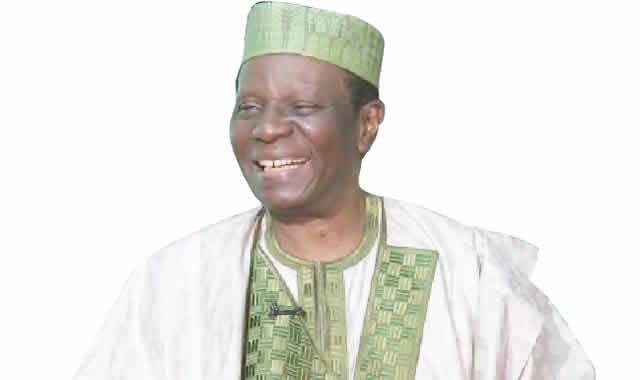
By Tonnie Iredia

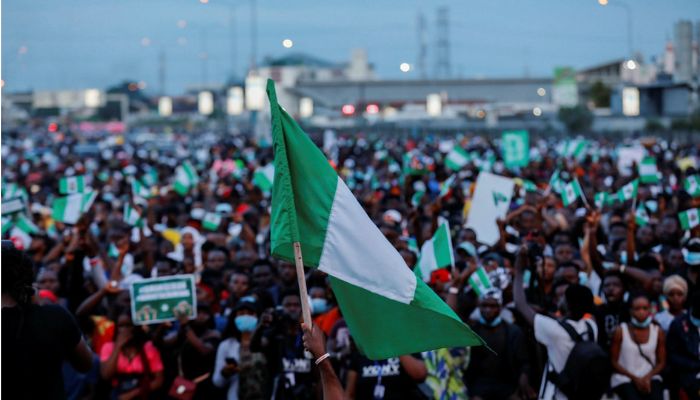
This year’s convocation lecture of the fast growing Edo State University, Uzairue, the 4th since its inception has been held at the university campus in Uzairue, Etsako local government area of Edo state. The topic was ‘Rethinking the role of mainstream and social media in national development’- a topic which aptly suited the times coming some 48 hours after this year’s International day to end impunity for crimes against journalists. The occasion gave me the opportunity as the convocation lecturer to make the point that in spite of hostility towards the media by politicians using the law enforcement agencies, Nigerian journalists must continue to push for more development in their country. They must reject political intimidation while remaining steadfast in meeting the obligation of their chosen profession. They did it before under a more severe and tense atmosphere and can do it better now if they are strategic and organized.

At several junctions in Nigeria’s history, the media has always faced persecution for fighting a noble cause in the interest of the nation. During the colonial era for instance, the anti-colonial posture of Nigerian activists made up mostly of journalists was countered by a plethora of legal anti-media provisions beginning with the Newspapers Ordinance No, 10 of 1903. The law required every prospective newspaper proprietor to make, sign and swear affidavits containing their addresses and those of their printers and publishers before embarking on any newspaper production. It also required each media proprietor, to execute a bond of 250 pounds with two sureties. This was to make it easy to trace any person who breached any of the provisions of the ordinance. Expectedly, many journalists were harassed, fined and jailed for their critical writings against alien rule.

At independence when everyone had imagined that peace had eventually come, media battles for the development of the nation did not abate. This time, the media was obliged to reflect the frustrations of Nigerians over the anti-democratic attitudes of the indigenous leaders of the first republic who criminalized dissent and rejected the democratic principles of accountability and credible elections. In 1961, regional elections in the North and the East were massively rigged. The 1964 elections into the federal house of representatives and the nation-wide workers strike which followed in the year were all poorly managed. The violence which greeted the fake election results in the 1965 elections in Western Nigeria gave the media the impetus to mount huge criticisms against the government of the day. This helped the military to seize political power in 1966.

The rigidity of military disposition showed through several military coups that the media would have to fight the military. Several decrees promulgated by the military put both the media and the average Nigerian in jeopardy. Activists were detained without trial while the few kangaroo prosecutions organized by the military were done using a strange law requiring accused persons and not the prosecution to prove innocence. Publishing strong editorials criticising the highhandedness of the military led to the banning of the circulation of several newspapers. Many journalists got bruised but the media survived. The implication of this therefore is that if the media could survive a battle with armed military leaders, nothing can successfully intimidate its professionals from continuing to act as the watch-dog and mirror of society as well as the voice of the voiceless.

Luckily two major developments have since occurred to embolden the media. To start with, for the first time in the history of Nigeria, the media was in 1999 specifically mandated to hold leaders accountable to the people. This assignment was embedded in the highest law of the land – the constitution, specifically Section 22. The provision makes sense because the sovereignty of the people is the highest feature of democracy; the rationale being that anyone in power is there to represent the people. Every leader ought to be accountable to the people. In other words, Nigerian media professionals are since 1999, legally empowered to take-on a function they assumed on their own in the past. There is thus no reason why the journalists of today should allow themselves to be intimidated from carrying out a constitutional assignment.

The second strong point which seamlessly strengthens the media is the efficacy of the digital platforms of the social media. Unlike the mainstream media, social media platforms are exceedingly pervasive. In the absence of allocation of frequencies used by government to curtail the broadcast media, they have no limitations as to scope of operations. The social media is interactive and conversational thereby attracting public participation. It is true that its availability for use by all stands the risk of its being used to propagate fake news and misinformation but media professionals who are trained to practice journalism know what to do to use the new media form to perform well. The digital platforms are quite useful for speedy gathering and prompt delivery of information to the public. The only caution is that while using the platforms, media professionals should always remember the highest ethical value of their profession which is the sanctity of truth. Put differently, the media should use the platforms provided they ascertain the veracity of every material they decide to use.

There is no better time than now for the Nigerian media to rise to rescue the nation. Apart from Nigeria’s current insecurity, the highest since its existence, the country has suddenly become the poverty capital of the world. It is time to halt the nation’s poor governance and in the spirit of section 22 of our constitution compel our politicians to stop replacing governance with unending electioneering campaigns. Ordinarily, this would not have been the best time to insist on this, because we are now in the normal time allocated to electioneering but we need to remember that the current electioneering began as soon the last elections ended. Politicians did not wait for the electoral body to signal the beginning of campaigns for the 2023 elections. There are indeed some politicians who are already allowing the 2027 contests to consume them right now. The media should never allow the campaign against social media by politicians to discourage them from using the digital platforms to create some political sanity in the country.

It is time for the leadership of the media at all levels to insist that when a journalist raises an allegation against a political leader, the subsisting collusion between government officials and the security agencies to immediately convert the allegation into a charge of treason and terrorism should stop. The way forward is for the allegation to be investigated. If it is false, the law should take its course and the journalist should be duly penalized. The present attitude of sweeping the allegation under the carpet by incarcerating the maker is not in the interest of the nation. It only festers unbridled corruption and impunity. By virtue of section 35 of our constitution, no security agency has a right to detain an accused person beyond 48 hours without a court order as they have been doing in Cross River, Imo and Ebonyi states. No political leader has a right to order the detention of journalists simply because the materials published by them are not in his favour. As I stated at Edo University last Friday, section 308 of our constitution gives immunity from prosecution to president and his vice as well as governors and their deputies while they are in office but that immunity from prosecution cannot be extended to immunity from criticism or immunity from being held accountable to the people.

The Nigerian Union of Journalists NUJ and the Nigerian Guild of Editors NGE must immediate depart from mundane unionism and offer robust leadership to their members. Both bodies must combine to take-on any authority that deprives the media from carrying out the assignment given to it by the constitution. This is electioneering time, the media particularly television should stop providing valuable air time to party representatives to tell us their different sides to intra or inter party conflicts. Such time should be given at all times between now and voting day to throw light on party manifestos and strategies for implementing them. Nigerians have since become tired of hearing campaigns that are devoid of the real issues that can uplift our nation.

November 6, 2022
November 7, 2022 0 comments
0 FacebookTwitterPinterestThreadsBlueskyEmail
Opinion

Terror Alert: Intelligencers Within Govt Working To Collapse Nigeria, Says Security Expert

by Leading Reporters October 30, 2022
written by Leading Reporters

A security adviser , Ladi Thompson says intelligencers in the government are working to collapse Nigeria.

“ It seems that some rudiments within the government, intelligencers within are working together with this docket to collapse this country from within, ” he said on Channels Television’s Sunrise programme on Saturday.
According to Thompson, the Federal Government’s programs of absorbing captured terrorists into the Nigerian society, failure to make given terror financiers, amongst others are signs of contended conspiracy.

“ There are intelligencers in high places in Nigeria and what’s passing to our people is that when terrorism is being used clinically, one of its objects is to break the will of the nation, ” he emphasised.
Thompson said the cautions of imminent terror attacks in Abuja released by the United Kingdom and the United States mustn’t be ignored.

“ Abuja is a matter of time if we do n’t change strategies, ” he said and advised that low- tech bias should be stationed in Abuja incontinently.
The security expert, still, expressed confidence that Nigeria will master the current security challenges.

“ We’ll beat this thing but for us to beat this thing, the whole nation must realise that the strategy that this government is putting together has not worked( and) it isn’t working, ” he stated.

‘ Focus On The Communication, Not The Messenger ’

On his part, a global security critic, Ademola Abbas prompted the Federal Government to forget the runner and concentrate on the communication.

“ Let’s for formerly forget the runner and concentrate on the communication – the communication is that there’s a trouble to our country We live with pitfalls every single day, ” Abbas submitted.

The US and Britain had on Sunday advised of possible terror attacks in Abuja, especially at government structures, places of deification, seminaries and other centres where large crowds gather. Both countries also commenced the evacuation of their citizens from the Nigerian political capital.

still, Nigerian Minister of Information and Culture, Lai Mohammed dismissed the terror cautions, saying the government wo n’t be stampeded and that Nigeria is safer than in May 2015 when President Muhammadu Buhari came into office.

torrent Of Attacks
Disturbingly, a number of daring terrorist attacks have been recorded in Abuja in 2022 and other corridor of the country. On July 5, 2022, mutineers raided the Kuje captivity in Abuja and freed hundreds of convicts including hardened Boko Haram fighters.

The looters also in the same month attacked the advance convoy of the President near Dutsinma in Katsina State. The inspired terrorists would latterly in August ambush and kill some members of the Presidential Guards Brigade in Abuja.
Also, on March 28, 2022, the ferocious terrorists attacked a Kaduna- Abuja train, killed scores, abducted numerous passengers and held them hostages for over six months before their eventual release before in October.

On June 5, 2022, terrorists also raided a unqualified church in Owo, the birthplace of Governor Rotimi Akeredolu of Ondo State, killed over 40 worshippers and injured scores of members.

October 30, 2022 0 comments
0 FacebookTwitterPinterestThreadsBlueskyEmail
Opinion

Electioneering: Will political appointees listen to Buhari?

by Folarin Kehinde October 23, 2022
written by Folarin Kehinde

By Tonnie Iredia

The beauty of democracy is the order it brings to bear on governance. Unlike other forms of government, democracy institutionalizes freedom and charts a clear path for the establishment and conduct of government business. Although politicians perceive elections as the preeminent segment of democracy, the reality is that there are other aspects of the system, that are more important than the selection of persons to hold political offices. Indeed, there is a school of thought which insists that the sovereignty of the people on whose behalf government is run is the basic foundation of democracy. Nothing in essence can be more important in any venture than its ownership. Therefore, any system which seeks to convert the people of a nation into the object rather than the subject of governance is not true democracy.

Another crucial feature of democracy is the rule of law which provides for equality of all citizens before the law and which abhors impunity and dictatorial tendencies. Again, for democracy to be said to exist in a country, majority rule and the protection of minority rights must also be provided for in such a country. Above all, there is the rational understanding that the purpose of democracy is the development of society and the improvement of the living standards of the people. This cannot be achieved if as is done in Nigeria, governance is permanently displaced by electioneering. Watchers of Nigeria’s democracy cannot but agree that the nation’s political class is forever consumed by arrangements for the next set of elections immediately after one set ends; thereby stultifying the growth and development of the country. It was for this reason that some analysts may have hailed last week’s warning by President Muhammadu Buhari to his Ministers and other political appointees to not abandon their duties for electioneering.

Buhari spoke last Tuesday at the closing session of the 2022 Ministerial Performance Review Retreat. He insisted and rightly too that the business of government must continue to receive the needed attention notwithstanding that the nation had entered the peak period of electioneering campaigns. Of course, the improvement of performance management as well as the coordination and implementation of presidential priorities for which the president signed Executive Order 012 on the occasion would be undermined if the attention of ministers is shared between governance and electioneering. In fact, ensuring that government business remains on course is crucial at this point because of the implication which a properly arranged performance has for the transition to another administration.
Although Buhari stated categorically that any breach of his warning would be viewed seriously, many believe that the warning was mere politics. Such cynics cannot be blamed because apart from the quiet dropping of two ministers – Mohammed Nanono and Saleh Mamman in charge of the Ministries of Agriculture/Rural Development and Power respectively in September 2021, the president is not known for sacking any minister or top political appointee. In another clime, many of Buhari’s ministers would hardly last beyond a year just as many citizens would have openly condemned governors particularly those of the ruling party who seem to cherish the excessive politicisation of their duties.

Surprisingly, President Buhari who is known for calling his party members to order whenever they derailed, did not halt the decision of his party to turn a governor who was elected to serve a state into the party’s national chairman. As we argued when it was done, the move was unconstitutional as governors were not expected to be distracted from running their states. Indeed, the reason our constitution provided for immunity for president and his vice as well as governors and their deputies was to stop Nigerians from using extreme litigation to distract them from governance. All the arguments about a political party having the power to ask any of its members to undertake certain assignments are in breach of the spirit of the constitution which requires governors to concentrate on societal development. As at today there is hardly any governor in any political party that is not engaged in such self-distraction for political consideration. It is in fact a major reason why governance is weak in Nigeria.

Against this backdrop, last week’s warning by the president to all his appointees to ensure that government business remained thriving is a step in the right direction though some analysts might see it as feeble because it was the third time this year that top political office holders have been so directed to remain dutiful. It will be recalled that some six months back, the federal government had formally directed those of them nursing political ambition to resign their appointments so to avoid divided loyalty. The Secretary to the Government of the Federation Boss Mustapha who issued the circular clarified that the directive affected “all ministers, heads and members of extra-ministerial departments, agencies and parastatals of government, ambassadors as well as other political appointees.” Again, when some ministers picked party nomination forms to run for elective offices, they were directed to stay in office or resign. The ministers of Science and Technology, Education (state) Niger Delta Affairs and Transportation duly resigned while others such as those in charge of Justice, Petroleum (state) and Labour stayed back.

If the real purpose of the occasional directives was to prioritize governance, it is difficult to see why any cabinet minister should be allowed to serve in the ruling party’s presidential campaign council when other members of cabinet such as vice president Yemi Osinbajo and SGF Boss Mustapha were rightly excluded from the list. Labour and Employment Minister (state), Festus Keyamo should similarly be excluded. If done it would offer ample time and opportunity for the president to use all (not some) of his appointees to assiduously supervise the completion of his legacy projects. In the case of Minister Keyamo in particular, the rising unemployment in the land clearly suggests that his schedule of engaging more hands in the special public works in our rural areas should be revived and expanded. The engagement of 774,000 Nigerians under the scheme should not be abandoned because it is a visible and worthy investment policy. Apart from the utility value of the digging and clearance of rural feeder roads and irrigation canals, the advantage of continuing to ensure that such a large number of citizens are gainfully engaged even on an ad hoc basis cannot be overemphasized.

In any case pulling out top political appointees to join the electioneering campaign team of the ruling party is not what should bother government at this point in time. Combative campaigns across the nation in the form of inter party attacks is a more problematic development that requires immediate action. The other day, the National Chairman of the Labour Party, Julius Abure, was forced to cry out over what he described as coordinated attacks on members of the party in Ebonyi, Enugu Lagos and some other states of the federation. At about the same time, the PDP claimed that her members were attacked by party thugs in Kaduna. INEC has since condemned the development and vowed to take up the matter with the leadership of the political parties.

Government should exercise greater control on law enforcement agencies that ought to prevent and or combat violent campaigns. The continued violence at campaign rallies and other political venues places a dark spot on law enforcement. The show of force exhibited at the Lekki toll gate last week to stop an otherwise peaceful protest which democracy permits would have made more sense if directed at political thugs. Instead law enforcement agents are habitually absent at venues of political violence making it appear that they had been compromised to look the other way during such lawlessness. It is time for government to sanction those in charge of law enforcement wherever violent campaigns occur.
October 23, 2022

October 23, 2022 0 comments
0 FacebookTwitterPinterestThreadsBlueskyEmail
social media
HeadlinesOpinion

WARNING!! How Social Media Is Used To Track Your Activities

by Folarin Kehinde October 12, 2022
written by Folarin Kehinde

For those who are not aware, social media applications and your phone hardware can be used to monitor your activities and track your location.

Tracking location is something your phone does all the time, and your social media applications harvest that information for malicious reasons.

These activities can pose a serious threat to your privacy and your physical safety.

HOW SOCIAL MEDIA APPLICATIONS TRACK YOU

Your mobile device’s hardware and its operating system work together to monitor your location.  The primary location tool is your GPS chipset, of course.  If you can see the sky from where you are, your phone can determine your location to within a yard or two.

That only works when you’re outdoors and aboveground, so your devices have other tricks they can use for location-finding.  One is by monitoring which cellular towers your phone “pings” as you go about your business. 

Another checks the Wi-Fi networks your phone finds along the way: those locations (IP addresses) can be looked up and used to define your location in something pretty close to real-time.

Your device (and your social media app) can even use subtler cues, like your phone’s accelerometer (to tell when you’re in motion) and altimeter (to monitor how far up you’ve gone) to place you accurately on a specific floor of a given building. 

When you have all of those things enabled, your devices can potentially pinpoint you within a given room.

DISADVANTAGES OF SOCIAL MEDIA TRACKING

The disadvantages of Social Media location tracking are enormous. Though no list may be comprehensive enough to outline all the disadvantages of Social Media tracking, a few of the most obvious include:

  1. The possibility of stalking and harassment.  This is the flip side of protecting yourself through location tracking: it allows stalkers, vindictive exes and pretty much anyone else to find you as well if you share your location.  It’s especially concerning for those in abusive or controlling relationships.
  2. It gives scammers a lot of additional leverage.  Phone scammers often “spoof” caller ID to show a number that’s local to you, or even your own number, which you’re more likely to answer.  It also gives them the info they need for plausible stories to con you with (“My kids go to Acme Elementary as well …”). 
  3. Aside from that, keeping location services turned on lets them match up your name to your address (anyone can do that) to target you personally, as opposed to a one-size-fits-all scam.
  4. When you check in from a popular vacation spot, you’re telling any burglars in your area that your home is empty, and ready to be looted.  That doesn’t make for a happy homecoming.

HOW TO PROTECT YOURSELF FROM SOCIAL MEDIA TRACKING

Keeping location services on, or turning them off, comes down to deciding whether the benefits outweigh your potential exposure to harm.  If you decide you’d rather opt out, you’ll need to change those settings.  For your convenience, here’s a quick guide to doing that.

Android 9 and Previous Versions

On a phone running any version of Android up to and including Android 9, tap the Settings icon, then Connections, and finally Location to turn location services on and off (there may be some slight differences between different phones and versions of Android).  This turns off location services for all apps, so you’ll need to turn it back on again to use GPS navigation or other location-centric apps.

Android 10 and Newer Versions

Newer versions of Android let you control permissions on an app-by-app basis, which is much more practical.  Tap Settings, then Apps & Notifications and See All Apps.  Scroll down the list and tap each of your social media apps, then find and turn off location services for each of them.  Alternatively, you can set it to ask every time before using location services or to only allow it while the app is active, but those options aren’t helpful if you always have the app open.

iOS and iPad OS

On an Apple device, tap Settings, then Privacy, then Location Services.  You can turn off Location Services entirely using the toggle at the top of your screen, or leave them on for the phone as a whole but turn them off for specific apps.  Scroll down to your social media apps, tap them one after the other and choose whether or when each app can use location services.

On a given social media platform, you may need to tweak other settings as well to maximize your privacy.  A few examples include:

Facebook

Facebook has already dropped several location-driven services from its platform, including Nearby Friends, Background Location and Location History.  Location History will be viewable until August 2022, but if you want to delete it now you can find it in your Profile Settings. You may also want to turn off the “Background Location” setting (Android app only), which lets Facebook track your location even when you aren’t using the app.  Bear in mind that even with Location Services turned off, Facebook will still use tools like your IP address or Wi-Fi connection to guess your location.

Instagram

Unlike Facebook, Instagram’s default is to not use location settings.  Turning them off on your phone is all you need to do, but you can manually add a location (if you want to) when uploading a photo.

Twitter

Twitter makes little use of your location, but there is one setting you might want to look at.  Tap Settings, then Privacy and Safety, and then Location Information.  You’ll see an option labeled “Add location information to your Tweets.”  If that’s turned on, you can turn it off for more privacy.  You also have the option of removing all location information attached to your tweets, if that setting has been turned on until now.

October 12, 2022 0 comments
0 FacebookTwitterPinterestThreadsBlueskyEmail
HeadlinesOpinion

Much Ado about campaign crowds in Nigeria

by Leading Reporters October 9, 2022
written by Leading Reporters


 Both the conventional and social media have in the last few days been replete with reports on large crowds of Nigerians gathering at different locations to celebrate their preferred presidential candidates ahead of the 2023 general elections.

There is nothing new about the tendency because in the country’s previous republics, the idea of large crowds to depict a seemingly high degree of popularity of certain politicians was common. Its continuation no doubt suggests that the disposition of Nigerians to politics is still same as that of the stone age.

However, the trend was bearable then because no one bothered about the gravity of using inaccurate statistics to conduct elections. Today, the developed world and all progressive thinkers have gone beyond the obsolescence of elections by trial and error. With improved technology, the global reality now is that analogue electoral methods are unacceptable to the international community.
 
Countries with stunted growth such as Nigeria which prioritize campaign crowds over and above real voter turn-out and actual votes are the only ones still engaged in organizing noisy rallies to show-off party strength. Last week, the nation witnessed a huge rally in Bauchi by the Peoples Democratic Party PDP, while those in support of the Labour Party and the ruling All Progressive Congress APC were similarly observed in several cities.

As a party that has been greatly underrated for its alleged inability to command big structures nationwide, the Labour Party rallies may not have been too difficult for many to rationalize as a segmented strategy to establish that the party believes more in people than structures. In the case of PDP, receiving high profile defectors to the party in Bauchi probably explains the mammoth crowd in that state.

But the strength the ruling APC sought to display with its women rallies in Lagos and the South-east region was not persuasive. First, as a party which claims to be the largest in Africa with a reported numerical strength of well over 40million members, a show of strength of large membership is superfluous.     

    
If its records are correct what the APC ought to be doing now is refining and updating its systems and structures for attaining a unity of direction for effortlessly delivering an outstanding presidential victory of a minimum of 50 million votes made up of those of its over 40 million members plus just a few million admirers. It is therefore baffling that our acclaimed largest party that should lead others is busy anxious to prove the same point that supposedly smaller parties are struggling to achieve!

It is also surprising that its rallies have been showing off colourfully adorned women as if it is a pro-women party when its legislators a few months back supervised the rejection of all bills seeking to uplift Nigerian women. However, it is not only the political parties that should be blamed on this.

A huge part of the blame goes to women who are always available to undertake mundane assignments while their male counterparts are busy sharing lucrative political offices among themselves. Nigerian women should be prominent in gatherings where major decisions of in-coming government are canvassed and not rallies where real issues are muzzled by music and dancing.
 
The point to be made is that those who take the lead in large political crowds should know that they are holding the cosmetic end of the political decision-making stick. Large crowds underscore nothing if not strategically handled. History has shown that in Nigeria, large political crowds are inconsequential as they are deliberately manipulated to achieve hidden agenda.

As great as party structures in the country are painted, no Nigerian political party has ever possessed an accurate membership list. As part of a recent research team that studied political party structures, systems and people in Abuja, the number of fake names in membership registers in our clime is embarrassing. The situation has indeed not changed from the findings in 1989 when the two registered political parties, SDP and NRC had several names of dead persons as well multiple names that could not be accounted for during verification of membership list by the electoral body  
 
In 2015, President Goodluck Jonathan scored less than 13 million votes or 44.96 percent of the total votes cast in the election. But before voting day, his supporters especially the ‘Transformation Ambassadors of Nigeria’ had gathered more than 30 million signatures begging Jonathan to seek reelection. Even if the over 15million votes scored by Muhammadu Buhari of the APC were added to Jonathan’s votes it would still be less than the number of Nigerians who appeared at different stadia in the country to indicate their support for Jonathan in the form of signatures that were received by government officials on behalf of the then president.

Similarly, in 2019, incumbent President Buhari could only score a little over 15million votes to win his reelection although the pledges earlier made by APC supporters at rallies in support of the President totaled over 100 million votes. Interestingly, the INEC register of voters at the time, had only a maximum figure of 84million. Once incredible figures such as these are reeled out, politicians begin to work towards them by renting crowds. Enough of that.
 
Luckily, there are new candidates who now distance themselves from those contraptions.  In his Independence message to the nation, the week before, the presidential candidate of the African Democratic Congress (ADC), Dumebi Kachikwu, took a swipe at political parties and candidates involved in renting crowds for campaign rallies. He described the multitude of people that always throng venues of campaign rallies as a manifestation of poverty and pledged that he would “rather address an empty room than a paid crowd.

” Kachikwu’s position is rational because a rented crowd would not be interested in what any politician says as a basis for understanding the issues at stake in an election. Nigerians must therefore begin to shun rented rallies and insist on issue-based campaigns that enable our citizens to vote wisely and elect credible candidates that can work towards improving the living standards of the people.
 
Against this backdrop, it is time to call on political parties to depart from the old ways of organizing rallies for music, dancing and acrobatics. Accordingly, those who are yet to make their manifestoes available to all and sundry must be clearly told that they are behind schedule as this is the critical aspect of electioneering in which the candidates must be ready to explain to the satisfaction of all, the gains derivable from electing any of them into office. This is the time for listening to campaign promises as distinct from the old method of appointing belligerent spokespersons who merely heat up the polity to buy time before voting day while promises have neither been heard nor fully assimilated.

The Labour Party and the PDP candidates who have come up with their manifestoes are free to remain in the lead by also explaining how they intend to implement their promises. For example, Nigerians applauded Atiku Abubakar for promising to among other things complete the Mambilla hydro power project that had been on the drawing board for 50 years, but we still want to know how, just as we await Peter Obi to illuminate the modalities for switching Nigeria from the consumption to the production template.
 
Ruling political parties must provide a level playing field for all candidates to showcase their potentials. Consequently, allegations such as women forced to participate in rallies in Lagos or pastors suspended in Akwa Ibom state for allowing opposition parties to use their churches for thanksgiving services must cease forthwith because they are anti-democratic. Those who prefer military rule should quit the democratic space, without first supervising the flogging of civil servants who were reportedly late to work in Ebonyi state.

Most importantly, Nigerians must be on the lookout for those who are empowered to endanger our democracy.  Since it is now an annual affair to beg the ruling party in vain to not appoint their members into INEC, the public searchlight should be on any tainted electoral commissioner. These are what should be of interest now and not large superficial political rallies.
 
October 9, 2022  

October 9, 2022 0 comments
0 FacebookTwitterPinterestThreadsBlueskyEmail
HeadlinesOpinion

Nigerian legislators in Canada: For what?

by Leading Reporters October 2, 2022
written by Leading Reporters

Nigerian politicians have in the last few months been preoccupied with arrangements to select flagbearers to represent their political parties in the 2023 general elections which are some 3months away.

As usual, rancorous party primaries tore the parties apart with governance placed on recess in both the executive and legislative arms of government.

But not many Nigerians would have imagined that in the heat of political contestations, some legislators would successfully arrange to give themselves a jamboree outside the shores of the country in what is popularly known as study tours where huge sums of money are expended.

But it happened as Speakers of State Houses of Assembly across the country took-off to Canada to gain some knowledge on the intricacies of lawmaking and general governance.

The tour has since ended and the delegates are back home but not without controversies.

Reading through one foreign newspaper the other week, I found a report on how the visiting Nigerian state legislators were engulfed in a scuffle with some Nigerians living in Canada.

The story was that one or two diaspora members had gone to the hotel where the legislators were lodged to hand-over to them a protest message to be delivered to President Muhammadu Buhari in Nigeria.

Among other things, the protest message was said to have been informed by the long drawn-out strike by university teachers which had kept students at home for about 7months. The newspaper report had blamed the diaspora members for going to a hotel to harass guests adding that the police should have picked them up because the guests were entitled to their peace. Well, not much details could be gathered to make informed comments on how the so-called scuffle began and ended.

It is however important for public officials who expend tax payer’s money on foreign trips to be exceedingly tolerant of the bitter disposition of the diaspora. Such privileged tourists should find time to serve as representatives of government wherever they find themselves.

The ordinary citizen, usually with a huge sense of deprivation sees every public official as part of the oppressors, no matter how far away the official might be from the super occupants of the corridors of power.

In the instant case, the legislators should have included in their programme, a meeting for the exchange of ideas with some select members of the diaspora, at the Nigerian Embassy. For a well-publicized study tour of Nigerian legislators to begin and end without a plan to meet with Nigerians who are on ground at any foreign location can hardly go down well with citizens. Even if it was a private visit, there would still be the expectation that government officials have a duty to account to the people. In truth, it is not too much to warmly accept a protest letter for onward delivery to the appropriate authorities.

On the other hand, diaspora groups should desist from thinking that they have a right to assault any public official they find visiting the country where they live. However, the conflict between our tourist-speakers who went to Canada and some Nigerians they met there is really not the issue of interest to this column. A more important subject is the objective of the study tour which was arranged to hold at the tail end of the current legislative year. While it is conceded that every form of knowledge is useful, it is unfair to use public funds to seek personal pleasure under the guise of searching for knowledge. It is true that Canada is a leading commonwealth nation from where ample knowledge can be gained but the programme organized for our legislators in that country appeared pedestrian. It was not a study visit to legislative bodies in Canada but a workshop which did not involve real Canadian legislators. The resource persons were essentially some generalist-panellists.

Besides, the duration of the study was confusing. Whereas it was advertised to be a-7day programme, the disclosed agenda hardly filled more than 2 days. Indeed, the organizers titled it “the Institute on Governance’s two-day learning program for the Delegation of Nigerian Legislators to provide a learning opportunity on the legislative processes in government in Canada.” The first day, that is, September 19, 2022 was to focus on providing an overview of Canada’s Westminster Model of Government, Orders and Accountability while the second day was to cover what was described as flash lights on the Judicial System and Election Process in Canada. The social aspect of the programme was put at the end of the first day where a reception was to be used to recognize the Nigerian Delegation on its visit to Canada with officials from Global Affairs Canada and the office of the High Commissioner of Nigeria to Canada in attendance.

It would also appear that some effort was made to colour the tour with more value than it deserved. A message reportedly sent by Prime Minister Trudeau to the opening session referred to a 7-day programme for National and State legislators from Nigeria. But would such a message have come if Trudeau’s office was properly informed that the programme was for a group of speakers of state legislatures only? The answer would no doubt be in the negative because Trudeau is not likely to be pulled to address a conference of provincial legislatures. It would be worse if the office of the Canadian Prime Minister got to know the condescending personality of the average state legislator in Nigeria. In fact, if many Nigerians in Canada had heard of the programme, they would have publicly discredited it as a medium to attract dubious estacode earnings.

Against this background, not many analysts would be convinced that whatever our state speakers learnt in Canada can stop them from continuing to operate as stooges of their state governors – a view which some legislators themselves had opined in the past. For example, when in May 2015, the then Senate President, David Mark, was invited to address newly elected lawmakers at an induction course organized by the National Institute for Legislative Studies, his main point was that since 1999, “legislators at the state level had reduced themselves to mere stooges of governors.” In the days when Imo state legislators cherished impeaching their successive deputy governors, Mike Iheanetu, representing Aboh Mbaise admitted that his colleagues across the country were in a banana state in which they conscientiously serve as stooges to their respective governors. In Kogi state, legislators were probably in that mood when they still impeached their deputy governor after a panel set up by them found him not guilty of the charges he was accused of.

In a veiled attempt to rationalize the behaviour of state legislators, Efa Esua, who represents Calabar Municipality in the Cross River State House of Assembly had argued that neither the legislature nor the Judiciary has autonomy and independence. In his words, “when you don’t have autonomy, why won’t you be seen as a rubber stamp? Even to drink water you will wait and depend on the executive. We largely depend on the executive arm of government to get money and survive.” But can pursuing doubtful foreign programmes redress the situation? Is it not better for state legislators to focus more on introspection for reforms so as to come out strongly as the nation grows democratically?

Honestly, our legislators must shelve their propensity to be undemocratic. They need to know that whereas democracy is a game of numbers in which the majority would always have its way, they ought not to clamp down heavily on the minority for exercising the freedom to have a say. It was therefore wrong for the Bauchi state house of Assembly to have in 2012 suspended Rifkatu Samson Danna representing Bogoro Constituency of the state for voicing out her peoples’ opposition to the ‘unconstitutional’ transfer of the headquarters of Tafawa Balewa Local Government Area from Tafawa Balewa town. The Kwara state legislature was similarly wrong last year to have suspended, Jimoh Agboola, the only member of the opposition in the 24-member House over comments deemed critical of Governor AbdulRazaq-led administration. These narratives can be stopped without visiting Canada.

October 2, 2022

October 2, 2022 0 comments
0 FacebookTwitterPinterestThreadsBlueskyEmail
Opinion

NBAIS vs Senate Committee on Finance: A Great Learning Moment Missed by a Self-Seeking Committee

by Folarin Kehinde September 30, 2022
written by Folarin Kehinde

For every observer who has been following national assembly committees’ sittings vis-a-vis probes, oversight functions and public hearings, it is easier to observe that, in most cases, the substance is left to pursue shadow.

The same could be said to have played out when the senate committee on finance led by Senator Olamilekan Solomon Adeola in its usual grandstanding of putting the cart before the horse and apportioning blames ‘harsh-hosted’ the management of the National Board for Arabic and Islamic Studies NBAIS on the 19th of September, 2022.

I followed with utmost unease, the intimidation strategy and conscious manipulations of facts adopted by the committee members. NBAIS registrar, Prof. Mohammad Shafi’u Abdullahi on the orders of Senator Adeola was asked to switch off his microphone midway when he tried to clear issues of revenues and remittances of the agency.

How could one be expected to explain, and clear issues when no attempt was made to avail the person an opportunity to do so? How could facts and figures be proven when a head of a government agency was ordered to switch off his mic? It was a simple psychological warfare strategy aimed at taking your target off-balance and thus having an edge over your target.

The committee brandished figures without detailed knowledge of revenue that accrued, how funds were utilized and possibly how much of the expected revenue hit the purse of the NBAIS.

It was deducible that the committee attended the session with a ready mindset on what to do and what to say, striving fruitlessly to demonize ASUU strike by making unsubstantiated claims.

This is not to deny the fact that there are many government chief executive officers whose stewardships to the Nigerian people are still questionable.

But in the case of the senate committee on finance and NBAIS, the committee denied itself and Nigerians the opportunity to be availed that stewardship report by the management of NBAIS.
In my opinion, the committee allowed itself to be swayed by emotions and thus created room for any discerning mind to puncture its allegations with facts and figures.

Invariably, one could still believe that the intimidation strategy adopted by the committee was a deliberate action aimed at being heard, hailed, seen and held as a pro-people committee.

What played out in the said date to a large extent has validated the widely held belief that when diligence and fair-hearing are thrown to the winds, what is got is a self-seeking exercise targeted at stirring emotional impressions, sensations and sentiments.

Following the incident, I delved to ascertain if the claims by the senate committee chairman and his team during the agency’s budget performance hearing were anything to write home about. Unfortunately, as it turned out, the session was laden with more fuss than a fact-finding exercise.

The registrar of NBAIS, Prof. Safiu Abdullahi was one of the chief executives invited by the committee to make a presentation on the agency’s annual budget performance.

During the hearing, the committee had made several allegations suggesting injudiciousness in the management of funds that accrue to the agency. Senator Adeola alluded that ASUU strike was a result of reckless spending and a lack of accountability by university authorities.

He went as far as suggesting that the federal government should withdraw from funding the salaries of lecturers since according to him, the universities’ authorities have not been accountable for the revenues that accrue to them.

Everyone who watched what played out in the said sitting could easily deduce that the NBAIS registrar was handed a hostile atmosphere where he was demobbed from explaining the facts behind the figures.

Instead of explanation around the figures brandished by the committee, he was confronted with questions that did not seek to unravel the issues on hand, but were laden with sensational questions such as “Is it the Federal Government that funds your agency 100%”? A question that suggests that the committee did not fully understand the workings of the agency vis-a-vis revenue generation, utilization and remittance.

Even though the registrar accepted that the agency was fully funded by the government, the question was as irrelevant as the confrontation. Another question that tended towards sensationalism rather than fact-finding is the question of whether N410million were recorded as collected by the agency for the year 2022.

Also, connecting ASUU strike and the unwillingness of the lecturers to go back to classes to the issue at hand at that material point in time seemed to be aimed at stirring emotions on issues that should be fact-based.

Indeed the committee missed a glaring opportunity to understand how and where the agency funds come from.

Perhaps, the Distinguished Senator should have been schooled on the fact that most examination councils and agencies in Nigeria are heavily owed by some state governments. One would have expected the committee to study the documents presented to it by NBAIS leadership and hinge their questions and points from there. Instead, the chairman and his committee members hastily made conclusions and immediately opted to set up an ad-hoc investigation committee.

The right thing to do if truly the committee was out to know about the application of funds that accrued to the agency was to seek an explanation from NBAIS management on the actual amount that hit their coffers and how the fund was utilized.

If the committee was diligent and willing to get facts rather than arouse sentiments, they would have ascertained how the ‘controversial’ sum of N410million was collected from the state governments and private individual schools across the country.

They would have understood firsthand that owing to the non-payment of the students’ examination fees by some state governments from 2018 – 2021, the agency was plunged into huge debt burdens with their contractors, and suppliers of examination materials. I, as an individual, was been able to unravel that as a concerned citizen. Why didn’t the committee unravel that and possibly aid the agency in its efforts at debt recovery from the state governments running into hundreds of millions of Naira?

Furthermore, the information I was able to obtain further revealed that within the said years under review, examiners were not paid their allowances, thereby putting the management of the agency in a fix where they were only able to pay around 40% of their debt obligation.

A fraction of those arrears of debts owed by some state governments only came in 2022 from information available. NBAIS, was able to settle some arrears of debts, conduct its June-July 2022 examination which gulped about N85million and still remitted about N35million to the federal coffers. The committee failed to understand that the bulk of the money that should have accrued as revenue is currently debts owed to the agency by some state governments and this ugly situation plunged the agency into owing its contractors, examination material suppliers and the examiners themselves.

It is only expedient that the committee should see itself as a partner in progress by liaising with NBAIS and other examination councils and bodies to prevail on the owing states to pay the huge debts owed to the Federal Government through these agencies. It is common knowledge that some states heavily owe most of the examination bodies in Nigeria, a trend that has consistently eroded the revenue generation and remittances of these examination boards and councils.

It was further unveiled, upon investigation that the management of NBAIS did not fold its hands over those debts owed to them. The information available showed that the supervisory ministry – ministry of education has been duly informed of this predicament the agency has been having with some state governments and that efforts have been made by the ministry to reach out to the executive governors of those states to pay up the monies their governments owe the agency.

In conclusion, despite the check and balances that brace the tenets of democracy, it is pertinent to mention that synergy is needed between the national assembly and government agencies, especially the examination bodies and councils to boost and recover debts owed to them by state governments.

Shedrack Iheoma writes from Abuja and can be reached via lightsheddie26@gmail.com

September 30, 2022 0 comments
0 FacebookTwitterPinterestThreadsBlueskyEmail
HeadlinesOpinion

Owners Of Nigeria, Let My People Go

by Folarin Kehinde September 30, 2022
written by Folarin Kehinde

Hurray! Tomorrow, Nigeria will be 62! This season in 1960, the British stranglehold of slavery was dismantled. Today all around the nation is an upbeat celebration replete with hope. The afflictions besieging the nation remain innumerable.

What torments Nigerians today are the backlashes of the cruel collusion between the British and Nigerians they handpicked pre-independence as “owners” of Nigeria who will not let my people breathe. Every year, Nigeria grows older but does not grow up. We are united but unity is far from many hearts. We face immense struggles in all shapes and on all fronts.

Many of the elements that make up this country are still groping through pages of history books to find the justification for why Lord Lugard amalgamated a people who can’t see eye-to-eye. The last century of the union has been tumultuous. The marriage doesn’t seem to make sense any longer to very many. The truth, however, is that behind our many travails are the actions and inactions of “owners” of Nigeria who will not let my people breathe.

In their diurnal gatherings, these “owners” of Nigeria determine who holds which specific gavel of authority and controls how much. In their nocturnal get-togethers, they position men and women of evil like-minds. They recycle their ilk in the purlieu of power and hold the country by the jugular.

As a result of the depravity, retrogression and backwardness become the portion of the populace. Who truly are these people who won’t let Nigeria and Nigerians breathe? Whom are these fellas with their knees on our neck as the prosperous and endowed nation struggles to suck in breath of life?

They are living and breathing human walking demons. They unleash miseries immeasurable on the people. This treatise is not about naming names; some names readily creep to mind. We know many of them while their agents operate from forlorn dark spaces destroying the beauty of our space, ruining our economy, impoverishing the people and deploying religion and ethnicity to create a lavish lacuna that helps them perpetrate their penchants for cornering our commonwealth.

No political party gets power except the ‘owners’ of Nigeria give a nod. No man becomes president except they assent a yes approval. These ‘owners’ bring only torment and torture on the people and aggrandizement for themselves. They are behind Nigeria’s freefall into Gehenna.

Walk down with me to where Nigeria once was and strut along with me to where we are today as we celebrate 62 years of freedom that exists only on paper. In the 1980s, the US dollar sold for a mere 0.78k. Today, $1 hovers around N700. Once upon a time, Nigeria was a net exporter of refined petroleum products.

As of today, imports currently account for over 80% of Nigeria’s refined product supply, creating a huge potential for local refining. Peugeot cars were once put together in Kaduna, Volkswagen cars in Lagos, Leyland in Ibadan, and ANAMCO in Enugu. Together, these giant structures flooded the market with locally assembled cars, buses and trucks.

What happened to us? Nigeria Airways was about the biggest in Africa at that time as Nigerians cruised around the world in the big bird. Greed and gluttony fashioned and permitted by ‘owners’ of Nigeria grounded the big bird and we are not sure if it will ever fly.

There is nothing Nigerians cannot do only if the ‘owners’ of Nigeria let them. We heard that our local automobile assembly, Innoson Motors, supplied 80% of the jeeps that the Nigerian Army’s been using over the last 10 years.

How long will Innoson stay afloat without the interruptive brigandage of the ‘owners’ of Nigeria? The Innoson testament affirms the fact that if only ‘owners’ of Nigeria will let Nigerians breathe, there’s nothing Nigerians cannot do for Nigeria.

I saw the picture of the official car of the Anambra State Governor, Charles Soludo. It was not made in America, not put together in Japan and not made anywhere in Europe. But it was made by Innoson Motors in Anambra State, Nigeria.

There is nothing Nigerians cannot do for Nigeria if the system lets them breathe!

Nigerians leave Nigeria in droves because of the very bitter environment created by the waggery and knavery of ‘owners’ of Nigeria in every area of Nigerian life. In almost all nations of the world, you will find Nigerians who are putting their brains to work for other nations.

Not too long ago, a Houston hospital witnessed a handful of Nigerian doctors successfully separating 10-month-old conjoined twins in a 26-hour surgery that made waves in America and the medical world. The 12-man medical team comprised Professor Oluyinka Olutoye, his anesthesiologist wife, Dr Toyin, and one Dr Mrs Oluyemisi Adeyemi-Fowode, a paediatric gynaecology fellow in the hospital.

A Nigerian engineer, Jude Igwemezie, who lives in Canada was commissioned by the Iraqi government to design and construct a $500m Iraqi rail system. The project includes the construction of what is described as a viable rail transportation network for the city of Najaf.

Men who build roads, tunnels and bridges for other nations have been chased away from their homeland by the ‘owners’ of Nigeria. Jelani Aliyu from Sokoto State is the talented mind behind the design of the Chevrolet Volt automobile, one of the most admired American specifications globally. Aliyu is a Senior Creative Designer with General Motors in Detroit. This Nigerian just made history.

Upon the doggedly dependable and broad shoulders of Nigerians rest the present and future of many nations. This is the story of Nigeria. Young and old are doing great exploits in their careers and scattered all over major cities all over the world. Presidents of foreign nations count on them; so do governors of states.

Multi-billion-dollar corporations desire them and small upcoming businesses do not ignore them. These men and women come from all ethnic backgrounds and their hearts pant for Nigeria; a nation blessed with men and endowed with means.

These are the brains that the misbehaviours of ‘owners’ of Nigeria have chased out of the nation. Nigerians will never breathe easy until these demons breathe their last. For now, Nigerians are stuck until they unstuck themselves.

If Nigerians don’t make aggressive demands for freedom from the hands of their oppressors and tormentors, ‘owners’ of Nigeria will continue to own Nigeria and enslave freeborn Nigerians.

But I rope my hope around millions of others, all around the world, that the best days for Nigeria are not too far out. We continue to dream that tomorrow will be greater than today and yesterday.

As we celebrate this particular year, I sense that something unusual is about to happen to, and for, Nigeria. I sense a quiet revolution of sorts at the polling booth. I sense a putting to sleep of those ‘owners’ of Nigeria who have killed Nigeria softly. I echo the voices of many who hope that this new year begins the end of misery and mess in Nigeria.

I believe that a new season is around the corner when a new Nigeria will be ushered in. The people are more than the ‘owners’ of Nigeria. Nigerians are more powerful than these phantom powers who see Nigeria as a plantation of slaves.

The voice of the people will be heard whether the ‘owners’ of Nigeria like it or not. The Nigerian environment will no longer condone the status quo of lockjaw’s deplorable mess. I sense a change.

I sense a sweet aroma. By this time next year, I sense a new and refreshing Nigeria. So, help us God.

by Fola Ojo

September 30, 2022 0 comments
0 FacebookTwitterPinterestThreadsBlueskyEmail
Election Campaign
HeadlinesOpinion

Important Electoral Provisions To Note As Campaigns Begins

by Folarin Kehinde September 28, 2022
written by Folarin Kehinde

From today, political parties will commence their campaigns for the 2023 general elections as contained in the announcement made by the Independent National Electoral Commission (INEC) earlier this month.

For the Presidential and National Assembly, campaigns commence today, Wednesday, September 28, 2022, while that of Governorship and State Houses of Assembly will kick off on October 12.

Campaigns are a time of some excitement, but it is not a free-for-all, there are important guidelines as contained in the Electoral Act that define the boundaries of campaigns, and it is important for everyone, including political parties, candidates, and citizens, to be aware.

What is the Role of Security Agencies?

Section 91 Sub-section of the Electoral Act mandates the Commissioner of Police in each State and the Federal Capital Territory (FCT) to provide adequate security for proper and peaceful conduct of political rallies and processions in their respective jurisdictions. The Nigerian Security and Civil Defence Corps and any other security agency of the federal government may also provide support to the Police for this purpose.

Section 91 Sub-section 3 limits the function of the Police and any other security agencies during political rallies, processions, and meetings strictly to the provision of adequate security.

Section 91 Sub-section 4 states that no registered political party or candidate shall be prevented from holding rallies, processions, or meetings at any time for their constitutional political purposes.

What Kind of Campaign Content is Allowed?

Section 92 warns that political campaigns or slogans should not be tainted with abusive language directly or indirectly that may provoke religious, ethnic, tribal, or sectional feelings.

Can your Church or Mosque Host Campaign Rallies?

Section 92 Sub-section 3 forbids the use of worship centers, police stations, and public offices for political campaigns, rallies, and processions. The aforementioned places are also not to be used to promote, propagate or attack political parties, candidates, or their programmes or ideologies.

Can Political Parties or Candidates Recruit or Pay for their Own Private Militia?

Section 92 Sub-section 5 prohibits political parties or candidates from training or equipping any person or group of persons for the purpose of using them to show force or coercion in promoting any political objective or interest.

Section 92 Sub-section 6 frowns at the use of armed private security organisation, groups, or individuals by any political party or candidates for the purpose of providing security or assisting during the campaigns in whatever capacity.

Can we Threaten the Opposition?

Also important is Section 93. It warns that no candidate or person or group of persons shall not directly or indirectly threaten any person with the use of force or violence during the campaigns in order to compel that person or any other person to support or refrain from supporting a political party or candidate.

Can Media Give Airtime Only to their Preferred Candidate?

Section 95 Sub-section frowns at the use of state apparatus, including the media, to the advantage or disadvantage of any political party or candidate.

Section 95 Sub-section 3 stipulates that media time should be allocated equally among the political parties or candidates at similar hours of the day.

Section 95 Sub-section 4 mandates all public electronic media to allot equal airtime to all political parties or candidates during prime times at similar hours each day, subject to the payment of appropriate fees.

Section 95 Sub-section 5 also states that equal coverage and visibility must be allotted to all political parties in any public print media.

What are the Consequences of Violation?

Any political party or candidate that violates any of the provisions of section 92 has committed an offence and is liable on conviction.

In the case of a candidate, the fine is N1 million or imprisonment for a term of 12 months, while for a political party, the fine is N2 million in the first instance, then subsequent offense attracts a fine of N1 million.

For section 92 Sub-section 5, the penalty for any person or group of persons who aids or abets a political party or a candidate in contravening the provision is a fine of N500,000 or imprisonment for a term of three years or both.

Any political party or candidate or person or group of persons found doing this has committed an offence and is liable on conviction. If it’s a candidate or a person or group of persons, the fine is N1 million or imprisonment for a term of 12 months. If it’s a political party, the fine at first instance is N2 million, then subsequent contravention of this provision, the fine is N500,000.

According to the Electoral Act, any person who goes contrary to the provisions of section 95 Sub-sections (3) and (4) commits an offence and is liable on conviction.

In the case of a public media, the fine is N2 million in the first instance and N5 million for a subsequent conviction.

While if the offense is committed by the principal officers and other officers of the media house, the fine is N1 million or imprisonment for a term of six months.

Section 97 Sub-section 1 states that any candidate, person, or association that engages in campaigning or broadcasting based on religious, tribal, or sectional reason for the purpose of promoting or opposing a particular political party or the election of a particular candidate, commits an offence and is liable on conviction.

If it is a candidate, the fine is N1 million or imprisonment for a term of 12 months or both, then, if it is a political party that is guilty of this, the fine is N10 million.

source

September 28, 2022 0 comments
0 FacebookTwitterPinterestThreadsBlueskyEmail
HeadlinesOpinion

Mass Housing and Deforestation: Of the Nigeria’s Ineptitude

by Folarin Kehinde September 27, 2022
written by Folarin Kehinde

Kenny Folarin, Abuja

Nigeria, one of the developing nations in the globe has witnessed exponential growth since independence in all sectors ranging from economy, health, education, information and communication technology (ICT) and Agriculture to mention but a few.

With over 200 million inhabitants of the country, the nation still battles with issues of insecurity, quest for political power, poor educational system and a host of others.

Meanwhile, the issue of housing in the country is of greater worry due to rising cases of building collapses that is always recorded on yearly basis especially during the raining season, despite interventions by the federal government and regulatory bodies to nip this to the bud, the story still remain the same.

The federal government in a bid to ensure decent shelter began housing policy as a measure aimed purposely at solving the housing problems in Nigeria, like other policies, it has its specific goals and how they can be achieved. In this regard, the main goal of the national housing policy is to make decent shelter available and affordable to all Nigerians.

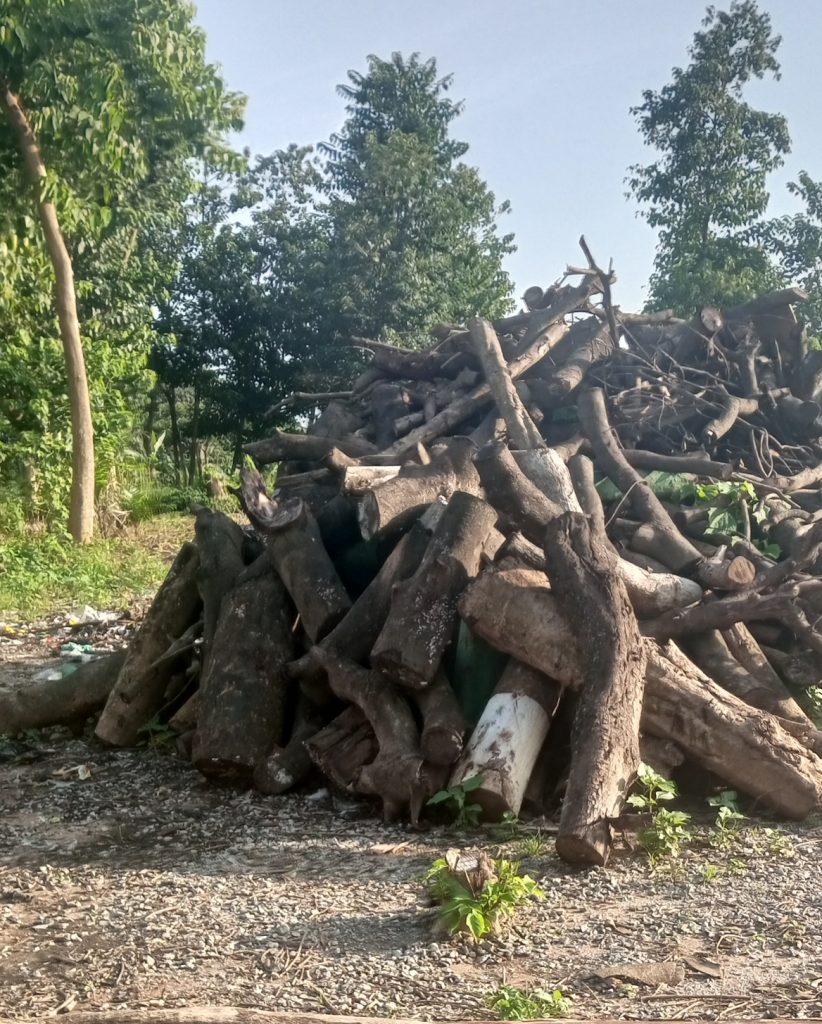
Fallen Trees, Airport Road Abuja.

State governments, Financial Institutions, Non-governmental Organizations are not left in this housing mirage as many of them birthed programs to ensure that all Nigerians have a decent shelter.

To achieve this especially in major cities like Lagos, Abuja and Porthacourt, estate developers are are contracted to deliver on housing units that would suit the financial statuses of Nigerians with different payment options available to choose from.

However, a fast growing city like Abuja is now the center of attraction for estate developers as almost every nooks and corners of the city is littered with one estate development or another, would this be one of the master plan of the city?

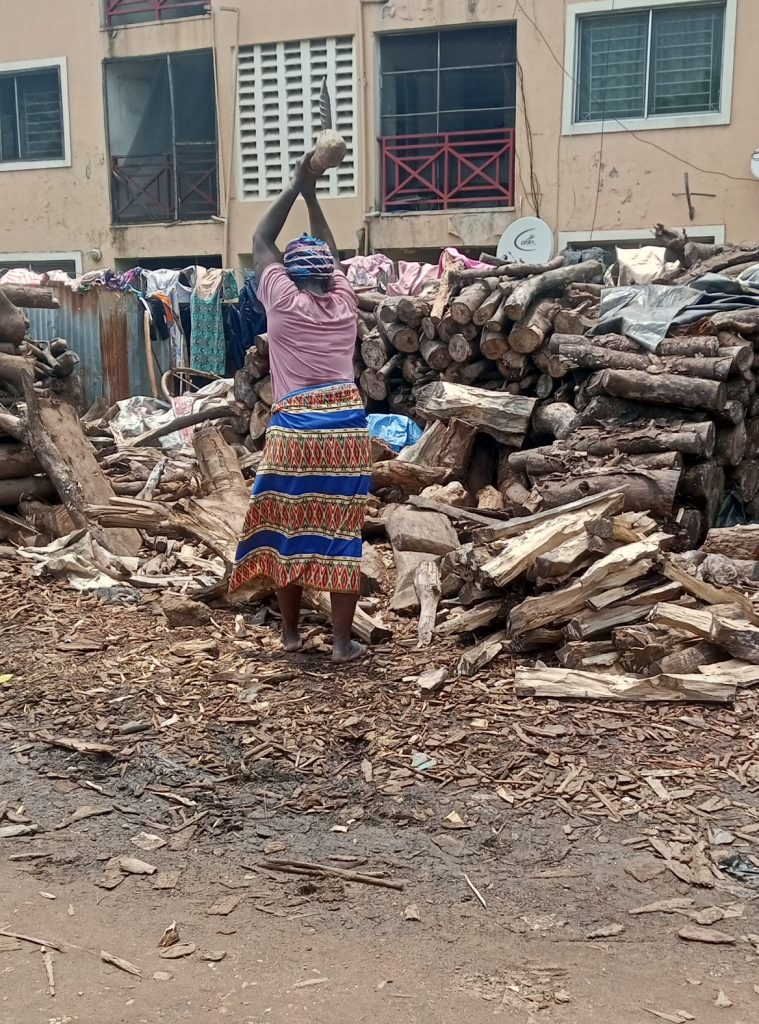
Whilst the city and many others witness this growth, Nigeria has thrown caution to the wind as trees falling (deforestation) has now become the order of the day, the annual rate of deforestation in Nigeria is 3.5%, approximately 350,000-400,000 hectares per year.

A Gbagi Woman Cutting Wood For Sale in Abuja

According to a report by reuters, from 2001 to 2021, Nigeria lost 1.14 million hectares of tree cover, equivalent to a 11% decrease in tree cover since 2000 and equal to 587 million tonnes of carbon dioxide emissions, according to Global Forest Watch, a platform that provides data and monitors forests.

Consequently, President Muhammadu Buhari told a COP15 meeting in Abidjan, Ivory Coast on May 9 that Nigeria had established a national forestry trust fund to help regenerate the country’s forests.

“That may not be enough as the country loses forests at a faster pace”.

Nigeria has lost 96 per cent of its forest due to deforestation, according to the Director-General, Nigerian Conservation Foundation (NCF), Dr Muhtari Aminu-Kano.

He said the country currently has only four per cent of its original forest cover.

“About 96 per cent of our original forest have been lost; it is catastrophic.

“It is sad that we are losing vegetation cover and there is absolute need to make concerted effort to grow more trees because the more the merrier not only in Lagos but across the country”.

Broken Wood, Ready for Sale in Abuja.

The impact of tree cutting on climate change is overwhelming,
Sustainable Development Goal 13 is about climate action and is one of 17 Sustainable Development Goals established by the United Nations General Assembly in 2015
with the official mission statement of this goal is to “Take urgent action to combat climate change and its impacts”.

Whilst trees in their millions are fallen for estates to be built especially in city like the federal capital territory and other major cities in Nigeria, none of the trees are being replanted for replacement.

Of greater worry is the high cost of renting and purchasing of these houses which makes many of them vacant for years and others uncompleted due to lack of financial resources.

Every year in Nigeria, despite early warning signal from Nigerian Meteorological Agency and other weather forecast agencies, the numbers of houses ravaged with flood with properties and lives lost is alarming, “We are now acustom to the fact that despite early warning signal, flood will ravage some parts of the country”.

To finally nip this to the bud, it is time Federal Government of Nigeria sit up and stop the falling of trees, sensitization in this area is key and regulatory bodies should man up to punish offenders who violate this rule, until this is done, Nigeria is yet to know what has befallen her and should be ready to face the negative impact of climate change vis-a-vis tree falling.

September 27, 2022 0 comments
0 FacebookTwitterPinterestThreadsBlueskyEmail
Newer Posts
Older Posts

Recent Posts

  • Strike: FCTA to open attendance register for staff

    January 27, 2026
  • Self Help Africa Drives Innovative Rural Water Safety Pilots with FG Support

    January 27, 2026
  • VIDEO: Tinubu stumbles briefly during reception parade in Turkey

    January 27, 2026
  • BREAKING: Nationwide Blackout as National Grid Collapses Again

    January 27, 2026
  • JUST IN: Super Eagles captain Wilfred Ndidi loses father to road accident

    January 27, 2026

Usefull Links

  • Contact Page
  • About Leading Reporters
  • Contact Us
  • Headlines
  • Investigation
  • Exclusives
  • Opinion
  • Business
  • Facebook
  • Twitter
  • Instagram
  • Linkedin

@2021 - All Right Reserved. Designed and Developed by PenciDesign


Back To Top
Leading Reporters
  • Featured
  • Politics
  • Opinion
  • Business
  • Entertainment
  • Sports
  • About Us
  • Contact