
Leading Reporters
  • Headlines
  • Health
  • Business
  • Exclusives
  • Investigation
  • Entertainment
  • Opinion
Tuesday, January 27, 2026
Hot
FCTA Workers, NLC Storm Industrial Court, Demand Wike...
DisCos reject FG’s free meter plan
Nigerian-born nurse loses licence in Australia for sleeping...
BREAKING: Kano Gov Abba Yusuf dumps NNPP
National Grid Collapse For First Time in 2026
BREAKING: Tinubu approves posting of Ambassadors to U.S.,...
Insecurity: Kidnappers demand 17 motorcycles for release of...
FG to Abolish Hnd-Degree Dichotomy, Allow Polytechnics to...
AFCON Initiative drives stronger Nigeria Morocco cooperation
Obasanjo: I’ll Never Stop Having Children
  • About Leading Reporters
  • Contact Us
Leading Reporters
Advertise With Us
  • Headlines
  • Health
  • Business
  • Exclusives
  • Investigation
  • Entertainment
  • Opinion
Hot
FCTA Workers, NLC Storm Industrial Court, Demand Wike...
DisCos reject FG’s free meter plan
Nigerian-born nurse loses licence in Australia for sleeping...
BREAKING: Kano Gov Abba Yusuf dumps NNPP
National Grid Collapse For First Time in 2026
BREAKING: Tinubu approves posting of Ambassadors to U.S.,...
Insecurity: Kidnappers demand 17 motorcycles for release of...
FG to Abolish Hnd-Degree Dichotomy, Allow Polytechnics to...
AFCON Initiative drives stronger Nigeria Morocco cooperation
Obasanjo: I’ll Never Stop Having Children
Leading Reporters
Leading Reporters
  • Headlines
  • Health
  • Business
  • Exclusives
  • Investigation
  • Entertainment
  • Opinion
Copyright 2024 - All Right Reserved
Home > Opinion > Page 4
Category:

Opinion

Opinion

Sex-for-grade: of the randy lecturers and students’ ‘misbehaviors’

by Folarin Kehinde August 26, 2023
written by Folarin Kehinde

Dorcas Egwuje

Nigeria’s citadel of learning is currently distressed with many issues such as hike in school fees, lack of infrastructure, and strike on the part of the students and refusal to pay salaries by government and poor working environment on the part of the lecturer, sadly, cases of sexual harassment by randy lecturers and immoral dressing on the part of female students has become an eyesore that urgently needs attention.

While sexual harassment of female students has been blamed on randy lecturers, university authorities are fighting back by allegedly blaming the “provocative” mode of dressing by female students for the harassment.

Female students have often complained that to pass their examinations, they have to sleep with the lecturers.

Meanwhile, visit to some campuses shows just how scantily and provocatively dressed some of the students could be, majority of the students in their efforts to follow the latest fashion trend, dress in tight fitting trousers or short skirts and tops which show off part of their navels and upper body.

Majority of higher institution as part of admission criteria tells students in their oath form to pledge to always dress decently while on campus, while others erect billboards to pass their message on campus.

Recently, the Vice-Chancellor, Ajayi Crowther University, Oyo, Prof Timothy Adebayo, said the university would not tolerate any form of immoral conduct among students. He added that the institution would not bend the rule for anyone found guilty of immoral practices.

In a speech he delivered at the matriculation for new students, Adebayo said, “ACU frowns severely at any form of misconduct. There are stern measures taken against students who engage in the slightest form of examination malpractice. Also, sexual immorality and any other shades of deviant behaviours are not tolerated in the university. The university frowns at indecent dressing, and strict actions are taken against erring students.”

He added that the school would not relent in its effort to produce graduates that are intellectually and morally sophisticated to meet up with the demands of the global market.

It should however be noted that the need to restore morality in Nigeria’s universities has led to the imposition of a mode of dressing or the banning of indecent dressing among female students by some of the higher institutions of learning.

Similarly, the federal polytechnic, ilaro ogun state ruled that no student should come to school without putting on pants and bra also any dress worn must cover intimate parts of the body.

The letter stressed the importance of female students of the polytechnic to add to their dressing while on campus a bra and pants .

It urged the female students to wear pants and bras for their safety, comfort and respect for their fellow students, also to avoid harassment from randy lecturers.

While reiterating the significance of the message, speaker of the student representative council, Sulaimon Adedamola in a letter said wearing pants and bras is a requirement and not a suggestion.

The letter read “It is important to remember that pants and bras are required while on campus. This is not only for your own comfort and safety, but, also out of respect for your fellow students.

“It is absolutely essential that you wear pants and a bra while on campus. This is not a suggestion, it is a requirement.

“If you do not comply, you will face the consequences and may face disciplinary action. Please respect your fellow students and the rules of the school by wearing appropriate clothing at all times.

“This could include warnings and even suspension. The school takes this rule very seriously, and any violation will be treated as a serious offence.”

To drive this home, authorities at the Nnamdi Azikiwe University, Awka, recently suspended a dean in the faculty of who was indicted of sexually assaulting female students.

In retaliation, several female law students of the University staged a protest in the institution, accusing the Dean of frequently harassing them sexually.

They were seen moving about in groups on the campus late Monday afternoon chanting ‘Ndifon, go! go!’

The students displayed placards with various inscriptions, including “Ndifon Must Go!” “We’re tired of sucking dicks for marks”, “Law Girls Are Not Bonanza”, “Prof Ndifon Must Stop Grabbing our Bum Bum”.

President of the Law Students Association of Nigeria, LAWSAN, Unical branch, Comrade Benedict Otu led the students in the protest against Ndifon

The concept of freedom has been abused in the university. As a result, the university has risen to address the issue of generational stigma by introducing a policy on mode of dressing for its students.

Accordingly students are expected to appear in corporate dressing to lectures and other university functions.

Recently, the senate passed into law bill for an Act to make provision for the prohibition and punishment of sexual harassment of students by lecturers in tertiary institutions.

The objective of the Bill is to prohibit the offence of sexual harassment in tertiary institutions and impose stiff penalties on perpetrators.

It also creates a strict liability offence by removing mutual consent as a defence in prosecution of sexual harassment cases, as it were in the extant law

The new Act when signed to law, will not only prohibit lecturers from having sexual intercourse with underage students; it will also punish lecturers who demand for sex from female students as a condition to giving passing grades.

As against the initial proposal of the sponsors of the Bill that any lecturer who harasses female student shall be liable to 3 years imprisonment; Senator Umaru said the clause has been amended.

“Any person who commits any of the acts specified in section 3 of this Act is guilty of an offence and shall, on conviction, be sentenced to imprisonment of up to 5 years but not less than 2 years and there shall be no option of fine”, the Bill reads.

It was, however, agreed upon presentation, that the penalty should be 5 years imprisonment or option of fine to the tune of N5m or both.

The Act also provides that the head of an institution upon receiving a written complaint of sexual harassment from a victim, shall set up a ‘Sexual Harassment Investigation Panel’ which shall submit its report in writing within 30 days.

While it will be an uphill struggle to combat the ‘indecent’ dressing in Nigeria where 40 percent of the country’s population is under the age of 18, as long as there exist higher institutions of learning, cases of sexual assault will still remain though may reduce when lecturers caught are named and shamed, also the bill should not just be paperwork but lecturers caught should serve as deterrent to others.

Students should know that dressing indecently does not just expose them to randy lecturers but to other male colleagues who may take advantage of them, of course there is no gain in exposing ones body in the public if not for an ‘intention’, however rather than engage in such immorality, they should face their studies squarely and be fully baked for the ‘bright’ future that lies ahead.
August 26, 2023 0 comments
0 FacebookTwitterPinterestThreadsBlueskyEmail
Opinion

Japa: The ignorance of Nigerian Youth and the dearth in intellectual property.

by Folarin Kehinde August 24, 2023
written by Folarin Kehinde

Dorcas Egwuje

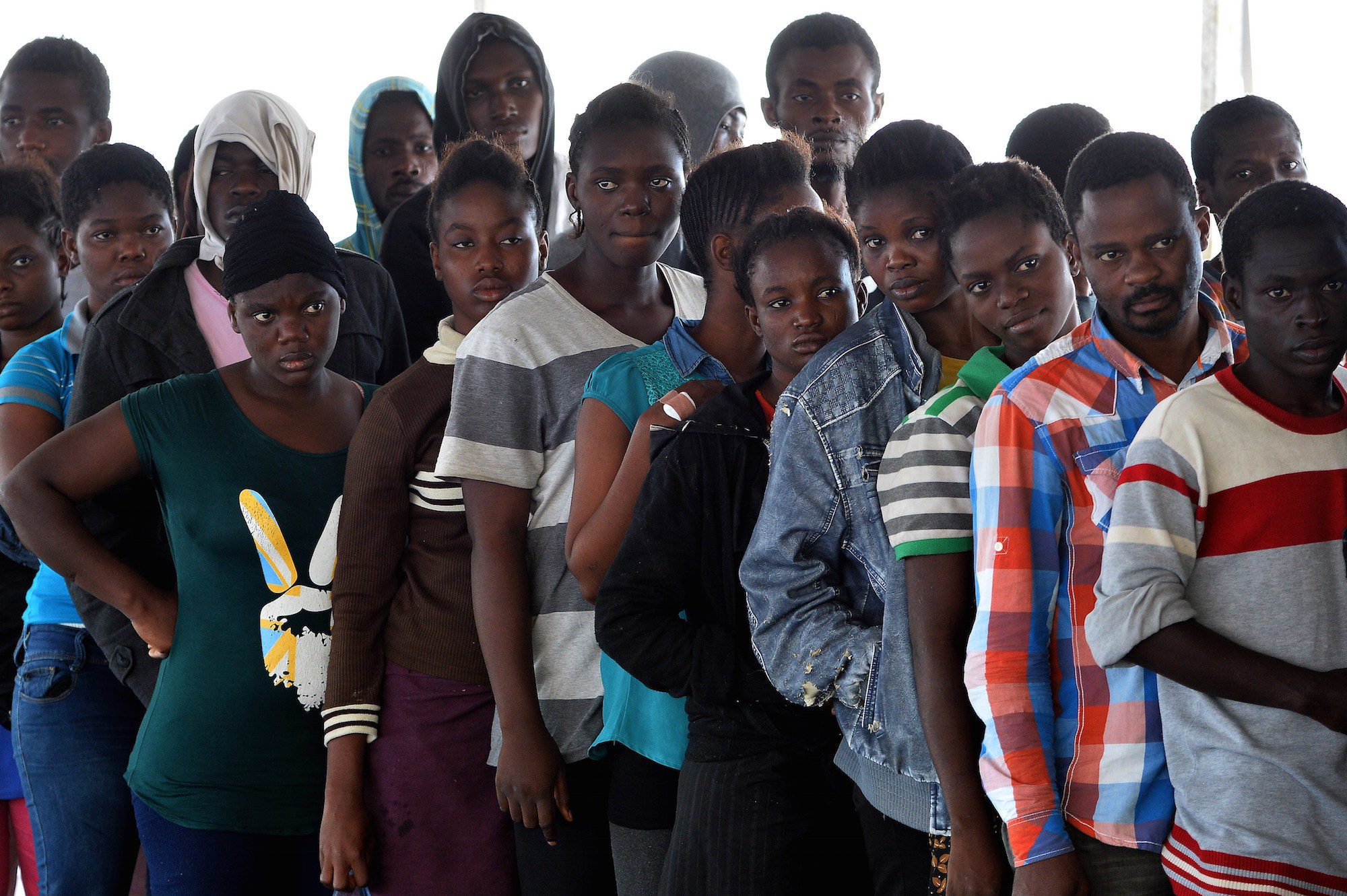
Japa’, a Yoruba word for “to run, flee, or escape,” has become a buzzword for the aspiration that young Nigerians have to leave the country and migrate elsewhere to seek greener pastures. It’s a response to the leadership failure across decades and governments – civilian and military. 

Nigeria has a population of over 200 million people, most of whom are youths. According to the Census Bureau of the United States, Nigeria’s population will surpass that of the United States in 2047. This is understandable, going by the data obtained from Macrotrends, and Statista, which put Nigeria’s annual population growth rate at 2.41 per cent; and the population growth of the US at 0.12 per cent in 2021. 

Nigeria’s large population should be a blessing for, according to China’s revolutionary founder, Mao Zedong: ‘…the contest of strength is not only a contest of military and economic power but also a contest of human power and morale.’  To make a meaning out of Zedong’s quote, let’s take a look at China. It is pleasing that Nigeria as a nation also has this strength; as the most populous country in Africa. But the question is why are we having issues of mass migration? 

For clearer insight, mass migration entails ‘large movement of people from one country to another; which could be voluntary or otherwise. Although migration is a global phenomenon, the rate at which Nigerians are leaving the shores of this country is worrisome.  

There is no doubt that mass migration has lots of debilitating effects on the economy and on various aspects of a country’s life. But what are the triggers? What could make youths weather the storms of a foreign travel and foreign land and abandon their own fatherland?  Nigerian youths’ desire for prosperity, the high cost of living and low standard of living,  weak economy, social distress, underemployment, poverty, hunger and mounting insecurity are the causes of ‘japa’ of the Nigerian youths. 

Some effects of mass migration include but are not limited to the following: 

Loss of investors’ confidence: When Nigerians are leaving in droves, it weakens the spirit of foreign investors to come and establish businesses that would translate to employment generations for our teeming youths.

The message this sends to the investors is that the country’s business environment will not be favourable to investments; and lack of jobs drives social ills. 

Brain drain: One of the consequences of mass migration on the economy is that of the brain drain. Our experienced and qualified hands both in the academia and healthcare sectors, for instance, leave the country in droves for greener pastures. This has left the young upcoming ones without requisite experiences in the sectors of the economy. 

In the healthcare sector, the old experienced hands that are supposed to groom and mentor the upcoming practitioners are being poached by foreign countries. This sad reality applies also to our universities and higher institutions today, where only few experienced hands are still found in the classrooms. 

Today in most of our tertiary institutions, it is only teaching that takes place in classes without corresponding learning experiences; as few lecturers battle with large populations of students. 

Low economic productivity: Optimal productivity is only possible when a good number of competent and skilled workforce perform their duties. Besides the fact that it saves time and energy, it also reduces possible cases of errors on the job. 

Higher cases of errors on the job resulting in deaths: Without hostile reference to medical professionals, a good number of skilled and talented Nigerians had lost their lives or suffered from medical negligence of some practitioners arising from their hurried and shallow medical examinations that require calm and thorough diagnoses either due to lack of experiences or larger number of doctor-to-patient ratio. 

Negative perception about the country: Mass migration of our people in a desperate manner would make ‘outsiders’ form unfavorable and unrealistic collective opinions about Nigeria. Our citizens would also be perceived abroad as those who had no good future in their homelands till they migrated. 

The cases of Ghana and even South Africa that had troubled our nationals in xenophobic attacks in the recent past cannot be forgotten in a hurry and not even at all.  

Hence, the following practical solutions are urgently needed to reverse this unfortunate trend. 

First, we must quickly embark on social mobilisation and behaviour change in communication by engaging and motivating relevant bodies and partners across board to instill the spirit of patriotism and confidence in our fellow citizens; using effective, repetitive communication and persuasion techniques. We need to make our fellow citizens believe that economic prosperity is attainable anywhere Nigeria inclusive. 

Also, governments at all levels must sincerely tackle triggers of mass migration such as poverty, hunger and unemployment; and invest in modern agriculture, ICT and digital economy. To achieve these, government must genuinely craft the right macro-economic policies that will make us competitive while putting us on the same pedestal as other countries. 

Furthermore, we need to promote social inclusion, plug growing wealth gaps and focus attention on programmes that will enhance standards of living and reduce costs of living. 

Also very necessary and timely, we must get relevant educational bodies to craft curricula that will especially teach our young population survival skills, beyond theoretical entrepreneurship being taught, innovation and problem-solving skills right from schools; and seek  to enhance our knowledge. 

August 24, 2023 0 comments
0 FacebookTwitterPinterestThreadsBlueskyEmail
Opinion

Bbnaija: How Nigeria’s Economy Failed Professionals, encouraged Youth Participation in reality shows

by Folarin Kehinde August 18, 2023
written by Folarin Kehinde

Egwuje Dorcas

It is no longer news that the Nigeria’s educational system with its various anomalies just shun out graduates in their thousands with “certificates” and no place in the labour market to fix them, but one would wonder, why would one pay heavily to go through school and at the end, no plan by the government to make one gainfully employed thereafter. Or is it that people especially Nigerian your just go to school only for the certificates?

Analysts have described the unemployment, harsh economic realities and the surging inflation currently bedeviling Nigeria as the major reason many Nigerian youths have resorted to seeking quick fame and fortune in the entertainment industry.

Research indicates that over 40% of Nigerian youths in the job market have dumped their professions to seek wealth on social media and most recently, in reality, television shows.

One could argue that the trend of young professionals choosing entertainment over professional careers is a reflection of Nigeria’s growth in that sector, unfortunately, many do not agree with this opinion.

They insist Nigerian youths run to entertainment because of unemployment, poverty and economic challenges.

Winners in educational competitions in Nigeria have been poorly rewarded, compared with those in entertainment competitions. Entertainment competitions receive more coverage, attention and sponsorship while participants of educational contests languish in misery.

As the Big Brother Naija reality TV show, is currently ongoing with a N120million grand prize for the winner, many Nigerians have asked why the attention given to the entertainment sector by government, brands and individuals is not extended to the education sector. Some educationists have asked why such huge sums of money are not channelled to the educational sector or used to fund the various innovations by students in secondary and tertiary schools.

Moreso, the best student in the just concluded west African senior school certificate Examination ( WASSCE) was awarded with just N2million Naira, while the best graduating student in the higher institution was given N5million Naira.

But the entertainment sector is said to be the second-highest employer in Nigeria after agriculture, assimilating over 60% of Nigerian youths who studied Performing Arts or other disciplines.

A case in study is the Big Brother Naija show which parades young professionals, doctors, lawyers, teachers and scientists who acquired their degrees from various reputable institutions across the world.

While many claim the show is not the best example of morality for young Nigerians, others insist the over ninety days production, employs a vast majority of professionals in cinematography, thereby reducing the rate of unemployment by fractions.

Contestants who made it into Big Brother’s House this season, is a lawyer, a medical doctor, a professional basketball player, a secondary school teacher, actors, musicians, fashion designers and undergraduates.

These young professionals chose to abandon careers in their fields of study for the reality show in search of a better life for themselves.

This contestants peculiar situation is one reason analysts say bad leadership, resulting in very harsh economic situations and unimaginable rates of joblessness for graduates have pushed youths into reality TV shows.

Some of the housemates say they are in the show to promote themselves, become popular and secure their future, claiming their university degrees cannot afford them such opportunities.

Barring one’s liberty to change career paths, many believe Nigeria’s socio-economic problems and desire for quick wealth are the driving forces behind these switches.

Christy Atuegwu, a female lawyer, who reacted to Jumoke’ decision said she was disappointed to hear that a young lady chose reality TV over her call to bar after six years of study.

”One wonders what message this comment you say she made sends to younger folks who are aspiring to be in the law profession”, Christy said.

”It says a lot about Nigeria and our priorities” She maintained.

An education expert, Innocent Chukwuma, said the Nigerian system forced the professionals into entertainment, a life path they would not have chosen if the country was any better.

The trend had started encouraging more students to focus on becoming entertainment stars instead of striving to become academic geniuses who stand a better chance of contributing to the development of the country.

“Quite a number of students tend to get more involved in being musicians or entertainment celebs rather than academic genius because they know you get faster reward being a player in the entertainment sector than working towards being great intellectuals, which takes more time, which is more demanding but serves the society better,” he added while calling on major stakeholders, including religious bodies, corporate organisations and the family to reverse the trend.

August 18, 2023 0 comments
0 FacebookTwitterPinterestThreadsBlueskyEmail
Opinion

Flooding, A Disaster that has come to stay

by Folarin Kehinde August 14, 2023
written by Folarin Kehinde

Egwuje Dorcas

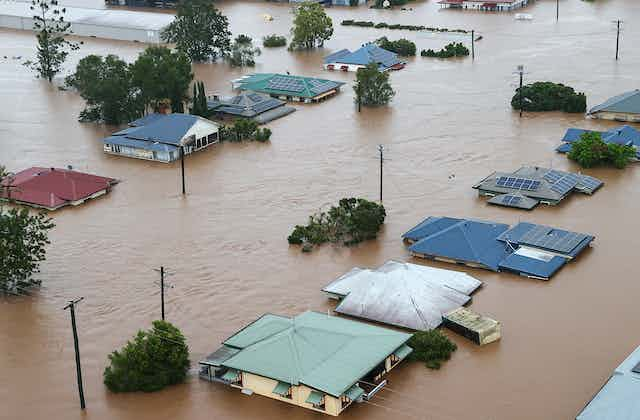
Nigeria, despite her economic, political and financial prowess still battles with flooding, a disaster that is no longer news as every year, the government, citizens and major stakeholders look forward to another disaster waiting to ravage the nation.

While the meteorological agencies predicts cases of emerging floods both nationally and internationally, the country and her citizens still loose billions of dollars to the disaster including lives that would have been saved.

What is more worrisome however is, why would there be preventive measures rather than curative?

According to report, the 2022 flood was the worse ever recorded since 2012, which affected many parts of the country. From the Federal Government Data, the floods had displaced over 1.4 million people, killed over 603 people, and injured more than 2,400 persons. About 82,035 houses had been damaged, and 332,327 hectares of land had also been affected.

Recently, Nigeria’s National Emergency Management Agency (NEMA) warned that at least 31 communities across 14 states of Nigeria would experience heavy downpours that may lead to devastating floods. They urged stakeholders to take precautionary measures to forestall its impact. 

This looks like a deja vu of last year’s experience when floods ravaged many communities across different regions of Nigeria. The floods were described as the worst in decades. According to the Federal Government of Nigeria, it claimed over 600 lives, displaced over 1.3 million people and more than 200,000 houses damaged. 

While there are many other causes of flood, especially in Nigeria, it is important to understand the critical role that climate change plays in the entire flooding episode. There is no doubt that climate change has contributed immensely to incessant precipitation. This is basically caused by unusual warmth around the planet, leading to warmer ocean waters and more moisture in the atmosphere thereby producing rains that could lead to flooding. Thus, don’t be surprised when the same drainage system that contained the penultimate year’s rain is unable to contain this year’s downpour. 

With the unpredictable nature of climate change across the world and the fact that the phenomenon has come to stay, there is no better time to educate young people, communities, schools, and community-based organisations on how to mitigate the potentially devastating impact of climate change, especially how it affects developing countries like Nigeria.

While there are general geography subjects in secondary schools, this is an opportunity to review the curriculum to include practical courses related to climate change and how it impacts even the school and surrounding environments. This can be achieved via laboratory sessions, showing how climate change can lead to flooding and how it can be mitigated. While schools are used to excursions to fancy and historical locations, an empirical experience of locations that have been or are vulnerable to flooding due to climate change will also go a long way in improving understanding of the process. Beyond experience-sharing sessions in schools, educating students on climate change could also trigger service projects supported by educational trust funds amongst others.

Community-based organizations also have a responsibility to educate members of their communities on actions to take in order to mitigate the negative impact of climate change. There is a need to integrate social and behavioural change communications into strategic programming on climate change to ensure beneficiaries take necessary actions that can help mitigate impacts like flooding. For instance, training on action points can be stepped down to traditional, religious rulers and other community influencers in a bid to promote more compliance among citizens of vulnerable communities.

Beyond just flooding as an important effect of climate change, there are immense opportunities to develop a comprehensive toolkit on every other aspect of human endeavours that climate change can potentially influence. A climate change education repertoire will not just decentralise knowledge about the potential impact but will prompt the right actions to prevent the escalation of any negative impact.

Citizens who are mostly affected should prioritize their safety by not building on water-ways or dumping refuse indiscriminately on dredges and all adhere to all government instructions.

Governments at all levels must take intentional steps by investing in both human and financial resources to decentralize climate change education ensuring climate change effects are cushioned. Thus, ministries, agencies and departments must develop a strategic framework and put the right structures in place to enable individuals, groups and communities to take effective action to mitigate the effects of climate change.

It time however for the government at all levels, stakeholders and citizens begin preventive measures rather than wait headlong for another flood to consume us all.

August 14, 2023 0 comments
0 FacebookTwitterPinterestThreadsBlueskyEmail
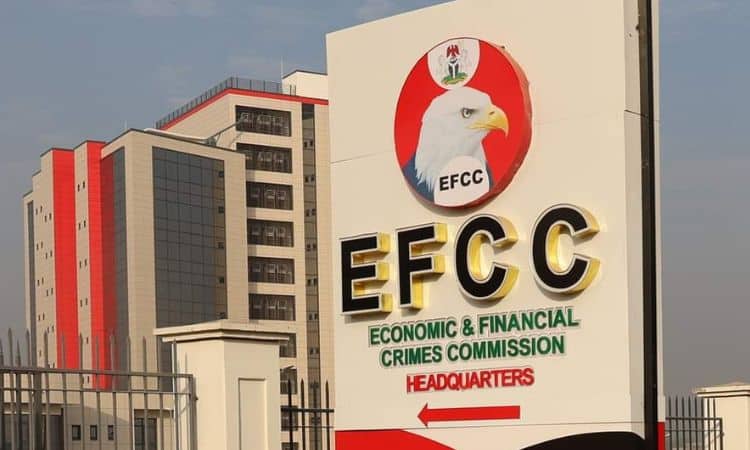
Why competence, seniority within the EFCC hierarchy should be considered in appointing the next chairman Leading Reporters
HeadlinesOpinion

Why competence, seniority within the EFCC hierarchy should be considered in appointing the next chairman

by Leading Reporters June 19, 2023
written by Leading Reporters

In 1999, when Obasanjo was to appoint the Inspector General of Police, I wrote that credibility, competence and seniority should be the consideration in his choice of who became the IG of police and it worked out. The recent suspension of the chairman of the Economic and Financial Crimes Commission took many Nigerians by surprise. As the Asiwaju Bola Ahmed Tinubu presidency sets to fill in the vacuum as expected, it is my opinion that mediocrity, godfatherism and man-know-man should be put aside.

It is only expedient that the most senior and competent director in EFCC should be appointed to head the commission and the idea of bringing an outsider should be buried.  This is because, since the establishment of the commission, only Bawa emerged from within the career officers. Nuhu Ribadu, Farida Waziri, Ibrahim Lamorde, and acting chairman DC Umar were all police officers. If the commission must succeed, a personality with proven integrity, impeccable character and patriotism should be the consideration. At the inception of the commission, a lot of controversies were recorded in the trial of corruption suspects ranging from top political office holders to Top security echelons and some private sector players, none of these accusations went unnoticed. President Bola Tinubu is a man of his word who believes in competence as such, much is expected from him on the appointment of the next chairman.

As an anti-graft activist, security analyst and media practitioner, I am a proponent of brilliance and competence and my clear demonstration of these virtues could be seen in how at the point of appointing Sanusi Lamido Sanusi as CBN chairman, I wrote an article published in the leadership newspaper titled “CBN governorship seat, matter of competence and not federal character’ And same method should be adopted in the choice of EFCC chairman by the President and Commander-in-Chief. When I also wrote Tinubu on the sustainability of Jakande’s legacy, little did I know that the President knows what is right, when and how. A standard maintained in the Police, Armed forces and regimented agencies where only internal succession takes place is necessary in the case of EFCC. So far, the commission has trained its own armed squad the same way a commandant of the EFCC institute ensured that all staff of the commission undergo compulsory cadet training for efficiency and meeting up of tasks.

Presently, a total restructuring of the commission is necessary going by the mess created by past and present headship. There was a particular chairman who stagnated promotion, and considered juniors above seniors due to mediocrity and interest. This show of personalizing the affairs of the esteemed commission created indiscipline, corruption, nepotism and self-centeredness against the mandate of the commission. When a foresighted most senior director with academic intelligence is allowed to head the commission, sanity and discipline in meeting goals and objectives could be achieved. As Mr. President is set to make a replacement capable of correcting the image of the country in the fight against corruption, he must erase the possible sycophantic gesture and infiltration of some political lobbyists, traditional rulers, retired police, military and paramilitary officers who might have their external candidates. The EFCC at this material time must be strengthened for achieving its mandate of fighting corruption through norms, ethics, standards and values. Administrative brouhaha in the commission must be addressed to move forward. Nigeria in the Comity of Nations has shown commitment to fighting corruption but corruption seems to be fighting back which ought not to be.

God bless the Federal Republic of Nigeria.

Salihu Dantata Mahmud is the director of security, Salute Nigeria initiative.  He is also a security and public affairs analyst.

June 19, 2023 0 comments
0 FacebookTwitterPinterestThreadsBlueskyEmail
Group call on Igbos to rekindle their kindred spirit, inventiveness Leading Reporters
Opinion

Group call on Igbos to rekindle their kindred spirit, inventiveness and their survival consciousness as anti-Igbo agenda may dominate Tinubu regime

by Leading Reporters May 30, 2023
written by Leading Reporters

Igbos have been advised to copy the fighting pattern of the Hyenas that fight and confront in groups if they must survive the rumoured anti-Igbo agenda that may characterize the Tinubu-Shettima administration.  USA Igbo Tink-Tank group, the “Igbo Patriots” gave the advice following a delegate meeting it held in Texas, USA on the 16th of May, 2023.

According to a communique exclusively obtained by LeadingReporters, the group’s Security and Economic Strategic Advisor” Dr Ben Chisombiri hinted that the group has a verifiable security report that suggests the vulnerability of Igbos under the President-Elect, Ahmed Bola Tinubu.  Dr. Chisombiri said that the Tinubu Government would be circled by anti-Igbo hawks who will ensure that Igbos are economically reduced, and their properties destroyed at will.

The group said that there is expected aggrandizement of anti-Igbo crusade and the peak of it may be witnessed under the Tinubu-Shettima administration.

“The choice of Tinubu and Shettima is not a decision that was abruptly taken.  It took years of strategizing, restrategizing, engaging and re-engaging.  For those that still believe that the war is over, it is high time for them to understand that there was an agenda so many decades ago.  Igbos seem to be slowing the agenda.  Simply put, that Agenda is anti-Igbo.

“Tinubu-Shettima administration was planned to manifest that agenda and unless igbos fight as a pack, just like hyenas do, they would be swallowed up if they dare fight as one single lion in the wood.bi

The group advised Igbos to temporarily halt investments that has to do with landed property in other parts and watch events as they unfold.  The group claimed that the report is not hinged on assumptions or sentiments of tribal affiliation, but on a valid intelligence report, it possesses.

The group advised Igbos to re-stir its kindred spirit and look out for each other.  It also advised Igbos, especially those in Abuja, Lagos, Kano and other vulnerable places in Nigeria to rekindle their communality and share strategic information.

The Patriots further counselled Igbos to plan beyond buying and selling but resort to other opportunities that abound in the entertainment industry, ICT, AI, vocations, and skills acquisition.

“Our message to our dear brothers and sisters is simple.  Don’t lose your guard.  You are in the middle of jackals that hates and prey on you; jackals that envy you, and question your inventiveness.  They would do everything humanly possible to end your existence.  We are not sharing tales with you.  We are sharing evidence-based intelligence report. Do not return hatred for hatred, but surprise them with your unity, communality; your kindred spirit and your ability to break odds and shine amidst storms.  That time is now”.  Dr Chisombiri said.

May 30, 2023 0 comments
0 FacebookTwitterPinterestThreadsBlueskyEmail
Plans to incapacitate Igbos economically, militarize South East unveiled Leading Reporters
HeadlinesOpinion

Plans to incapacitate Igbos economically, militarize South East unveiled:  El-Rufai, Kwakwanso,  FFK to lead anti-Igbo crusade

by Leading Reporters May 28, 2023
written by Leading Reporters

The 2023 general election has come and gone, but the dust it raised will last a time.  A close source of the President-Elect Bola Ahmed Tinubu has hinted at an impending plan by the Tinubu-Shettima-led APC government to decimate and incapacitate Igbos economically. 

Part of the plan is to review and revoke many Certificates of Occupancies traceable to Igbos as well as demolish and relocate markets hitherto dominated by the Igbos. Abuja, Lagos, and Kano fall within the first phase of the project of this anti-Igbo campaign.  

Nyesom Wike would be used as a strong anti-Igbo force in the South-South region, the source hinted.

Kaduna State Governor, Mallam Nasir El-Rufai, Kwakwanso of Kano State, Lagos State Governor Sanwo Olu, Femi Fani Kayode FFK and Barrister Festus Keyamo have been ‘mobilized’ to lead the anti-Igbo economic warfare.  They will hit the ground running immediately after the inauguration. Aside from the anti-Igbo economic warfare, there are plans to militarize the South East Geopolitical Zone. 

“The military would be massively detailed to Southeast to ensure that Igbos are suppressed, with a special target at the youths who they believe would mount a resistance through series of protest and a regional campaign for self-determination”.

Part of the plan is to woo the media as partners-in-the-game.  FFK would be in charge of managing the media and strategic media campaign that would see most media house either aligning with the government or having their stations constantly subjected to paying fine.  Few stations have been marked for total revocation of their licenses.

“Tinubu has already planned and voted billions of Naira to woo the media.  They are already identifying willing media partners who will suppress dissenting voices.   The media would be so controlled that anti-government remarks may earn instant closure or outrightly withdrawal of the operating licenses of media houses seen as not being part of the government.

“Currently, FFK is calling and reaching out to many pressmen from the Southern part of Nigeria.  Part of his job would be to lobby, finance and coerce the press into either looking away in silence or aligning with the -government’s anti-Igbo policies.

Another group stationed in Europe and America would serve as a lobby group for the government.  Their jobs would entail disrupting information and presenting it before the Western world as the collective desire of the people.

The source worries that since the fall of Libya, Nigeria has been targeted under a scheme called “expendable”.

Recall that the anti-Igbo campaign greeted the last election where Igbos were profiled, humiliated and thoroughly disfranchised in Lagos.  It was stated that the humiliation the President-Elect suffered in the last general election in Lagos State (considered his strongest hold) would not go unpunished. Recall that Senator Ahmed Bola Tinubu lost his stronghold Lagos to Mr. Peter Obi, a feat Tinubu was said to have vowed would be utterly altered.

Part of the plan is to ensure that Igbos are demoralized into participating in political activities, following their recent political reawakening which saw the President-Elect losing in their entire South East, and most states in South-South.  Aside from winning the Federal Capital Territory, Peter Obi is believed to have massively won in North Central States like Plateau, Benue, and Nasarawa.

The thematic objective of the exercise, according to the source is to box Igbos to a corner where they would recoil politically and rendered economically unstable.

May 28, 2023 0 comments
0 FacebookTwitterPinterestThreadsBlueskyEmail
Opinion

Census 2023: Nigerians expect more than assurances

by Folarin Kehinde April 2, 2023
written by Folarin Kehinde

By Tonnie Iredia

The lofty gains which experts say a nation can reap by premising its development on population figures probably leaves some people, especially foreigners, wondering why Nigeria has remained in existence from its origin without an acceptable census figure. Many Nigerian citizens and groups who permanently dispute their country’s figures are neither mad nor foolish; they know that each figure that the population commission has ever declared for Nigeria has always been fictitious. The people also know as of fact that whether a census exercise is credible or not, it would hardly be taken into consideration when national policies on development are being formulated for execution. What then makes the coming census scheduled to hold in Nigeria from May 3-5, 2023 important? Put differently, if demography and feasibility studies are irrelevant to policy makers, why should anyone bother about the 2023 National Population and Housing Census?

Both the government and the public body mandated to conduct a census have always told the people the opposite of how the exercise would be done. If they say they are set to organize a most credible event, it is likely to end with several hitches and manipulations. If the National Population Commission (NPC) affirms that she has all it needs to do a good job, what she actually means is that she has been assured that all the required resources would come-in before D-Day. This time around, she has said the census would be digital, but people may in reality expect failures and deliberate seizures, the way many now feel about the recent general elections in the country. What this suggests is that there is a natural trust deficit in Nigeria’s polity which cannot be filled by mere assurances. In fact, if the feeble assurances of the NPC fail at last, the body would not be as despised as INEC, whose cast-iron assurances are now perceived as self-destroyed.

As the NPC gears forward to May 3rd, it must beware of anything hazy around the time we are in. The government that directed her to conduct the census has 3 weeks remaining of its 8-year tenure. The political environment is charged with bitter laden- election petitions in which some candidates are accusing the electoral body of frustrating their petitions by refusing to grant them access to examine election materials. There is ample doubt if this period can serve as an auspicious time for another national exercise. In 2016, when census was due, it was shelved because as the NPC testified at the time, “the new regime of President Muhammadu Buhari needed to settle down in office before embarking on a huge project such as a national census.”

Another critical matter is the readiness of the NPC in terms of the human and material resources available to her. The NPC has not received as much support as she needs from government. Unlike INEC which got all it asked for, the NPC has only 46% of what it requires for a successful census in a large territory such as Nigeria. Clem Agba, Nigeria’s Minister of State for Budget and National Planning, revealed this while speaking at a high-level partners’ engagement in Abuja less than one month to the exercise. This is why the assurances of NPC’s central planning committee that it is set to conduct a successful exercise can only be a political statement which no one is obliged to believe. It is in essence a timid assurance which can further place Nigerians far from the NPC.

In addition, the scope of the assignment is quite large. Indeed, if the NPC believes that counting people in refugee camps is tedious, it may turn out to be far more complicated than the commission may have imagined. Only a few days ago, the federal government released the sum of N15 billion for the repatriation of Internally Displaced Nigerians from three neighbouring countries of Chad, Niger and Cameroun. The displaced persons were those who reportedly fled to neighbouring countries at the height of Boko Haram and other terrorists’ activities in the North-east. Speaking to newsmen in Abuja last Friday, Governor Babagana Zulum of Borno state said the repatriation takes immediate effect. The implication of this is that the NPC may midway into the census process get to learn of new refugees.

As we hear, the Commission requires well over 800, 000 officials to take part in the exercise. Have they all been recruited? If so when and what evidence is there that they will not “jump ship” before the start of the exercise? Would the NPC which has less than 50% of its required funding be able to settle the allowances of the recruits or are we likely to see protesters asking for payment midway through the process? These questions are relevant because assurances notwithstanding, failures always occur during elections and even during the recent registration for the National Identity Card, nationwide where what the operating body said and what their personnel and the general public witnessed were different. Even where those recruited are mobilized, there is no guarantee that they would be trained or be capable of assimilating the relevant processes.

Another assurance which may have been well-intentioned but which many are not likely to believe is the introduction of technology. The NPC has proudly revealed that the 2023 census would be the first digital attempt at compiling population data in the country. It is true that the use of technology for exercises such as census is in line with global reality and best practices, but as we have found from other events, the human dimension in digital events can render the entire exercise fruitless. It is therefore not enough for the NPC to suggest that the census will be hitch-free simply because it was designed to be technically handled. Unlike INEC again, not much is known by the public on what is to be done as well where when and how. The only salutary statement made so far by the NPC in the area of public enlightenment is that she has secured the support of the National Orientation Agency (NOA).

Of course NOA has the required structure to mobilize Nigerians to embrace any public policy because the Agency has offices and operatives in all the 774 local government areas of the country. In truth however, NOA is virtually moribund with no resources for operations. What keeps the Agency alive is that staff salaries are paid monthly as is done in all federal parastatals. NOA has no vehicles for effective movement from one place to another. Ordinarily, the Agency is exceedingly useful especially in grassroots mobilization which it accomplishes by using its capacity to address citizens in the local languages. This separates her from other organs of mass communication which inform but do not educate and which have no feedback mechanism to bridge the gap between government and the people. Can the NPC which has less than it needs raise up NOA from her involuntary slumber?

There is also the changing political disposition in some states, the best example being Lagos state where the matrilineal principle has suddenly become the most potent tool for categorizing citizens. During the last elections, certain forces successfully and violently silenced a candidate on the basis of the place of origin of his mother. With nothing done to those who perpetuated the abominable act, the NPC may not be able to stop some citizens from travelling away from their places of residence to their places of origin so as to be counted in a safe abode. Although the NPC has given assurances that prescriptive criteria such as religion and ethnicity are not part of the coming census, it will take more than assurances to get some people to buy into the idealistic sermon

In the past, a high level of mutual suspicion and distrust featured prominently in our census exercises. In 2006, for example, some states rejected the census exercise of that year which they claimed was manipulated against them. Lagos in particular said the exercise failed a credibility test and ran a parallel census. Considering that past exercises had been so bedevilled, the NPC, the government and all Nigerians cannot be simplistic about the 2023 census. It requires plenty of resources and time as well as little assurances that cannot be vouched for.

April 02, 2023

April 2, 2023 0 comments
0 FacebookTwitterPinterestThreadsBlueskyEmail
Leading Reporters Nigeria doesn’t need government of national unity Image
HeadlinesOpinion

Nigeria doesn’t need government of national unity

by Leading Reporters March 19, 2023
written by Leading Reporters

By Tonnie Iredia

Between Saturday, February 25, 2023 when the presidential and national assembly elections were held in Nigeria and today, the mass media have been replete with calls for the next president to compose a government of national unity (GNU).

The argument is that such a strategy could calm frayed nerves and create some measure of unity between winners and losers of elections.  However, an overview of elections in Nigeria does not reveal the commitment of our politicians to national unity.

What history seems to attribute to them is the propensity to always get into one office or the other only to perpetrate their hobby of primitive appropriation and accumulation of public funds. In which case, the call for unity government which is usually instigated by the political class is essentially to keep on course opportunities for their personal gains.

 
For example, in 2003, when General Muhammadu Buhari the then presidential candidate of the defunct All Nigeria Peoples Party ANPP was at the middle of an election petition to claim his mandate, officials of his party were scrambling to share the few positions allocated to their party in the government of national unity instituted by the victorious PDP.

The greedy officials neither put their presidential candidate into confidence nor did they follow the guidelines of the party for aligning with another party. The decision to be part of the so-called unity government was made by the party officials whose basic motivation was the material benefit they looked forward to from the arrangement.

In 2007, many of those who accused President Olusegun Obasanjo of a third term ambition were leading politicians from outside the PDP who had hoped that the third term government would be that of national unity that would include them.  In 2011, opposition parties didn’t show much interest in Goodluck Jonathan’s proposed unity government but ample background work was done concerning the idea.   
 
One of the pillars of democracy is majority rule. Consequently, good democrats have no business in a government formed by a political party to which they do not belong. Except a political system provides for proportional representation in which seats in the legislature are awarded to political parties in proportion to their strength in an election, government of national unity is unnecessary.

It is only in Nigeria where politicians seek to function as permanent state actors that those who lost elections always agitate for a government of national unity. After 24 years of continuous democratic rule, it is time for Nigerian politicians to grow up and allow the majority party to form a government which should be placed on its toes by a viable opposition. Otherwise, we shall continue to have a pseudo-democracy in which everyone bows to a ruling party so as to be appointed into some government position. It is for the same reason that the 9th national assembly under the guise of collaborative federalism functioned all through from the pocket of the executive.   
 
Luckily for our commercial politicians, the so-called victorious parties are always favourably disposed to the institution of a government of national unity because the acclaimed winners feel the way out is to placate owners of stolen mandate. Indeed, in many constituencies in the past, votes were swapped to make losers become winners while in some other locations, election results were simply procured for polling booths where voting did not happen.

Following the failure to put a halt to election rigging, it will certainly be difficult to stop the agitation for government of national unity. It is true that smooth talkers who can fluently defend our bogus elections abound in the nation but such partisan orators often look at election rigging from a narrow perspective.

Those who give pass marks to INEC and the election process often focus on the pictorial display of election materials arriving in different states in the country; orderly queuing and ballot casting in voting centres and the beautifully adorned conference centre where results are cosmetically finalized.
 
If the truth must be told, Nigerian elections have not been good. Our people should not allow themselves to be misled by the diplomatically coated reports of international election monitors and observers. What should always be noted is the unending caution which the same observers always put in an idiom that “the devil of Nigeria’s elections is in the details.”

What this idiom means is that Nigerian elections look simple on the surface but the details are usually convoluted and problematic. Our elections are likely to remain knotty if we continue to overlook the fraudulent details of the collation of results that are hurriedly declared with fanfare. Of course if the right process is followed, we could easily move one step away from incessant and selfish calls for government of national unity after every election. Such a trend would ensure good elections which are more likely to produce visionary leaders that would initiate and implement good public policies capable of improving the living standards of the people
 
The point that is being made is that what can best unite a given society is good governance and not the struggle for power by politicians. This presupposes that those declared winners of elections must be prepared to bring on board only persons who can add value to governance. Whereas a new president is free to appoint some of his supporters into his government, such appointees must first and foremost be visibly capable of doing the job.

Critical offices ought not to be used just for rewarding party supporters. A new president or governor must remember that many people who voted for them are not necessarily members of their party. In other words, being a member of the victorious party should essentially serve as an added advantage for appointing people. Governance is a tough task that requires the best hands, otherwise success may be hard to achieve.
 
In the case of heterogeneous societies such as Nigeria, the old order of emphasis on state of origin should change to a clear understanding of the expedience of good management of diverse cultures. One reason Nigeria wins more awards in sports than governance is because only the very best find their way into our sports teams while everyone no matter their visible deficiencies get into our governance teams. Today, Nigeria does not have a state which lacks strong hands, why not bring into government the best hands of every state as a double advantage that reduces the cry of marginalization and enhances the quality performance of officials? Nothing else can engender unity more than such an inclusive approach to governance which was in the first instance the framework which the federal principle in our constitution was designed to achieve. 
 
Nigeria had in the 1970s worked assiduously towards national unity by formulating strategic policies such as the National Youth Service Corps programme. Until quite recently, the NYSC served as tool for national unity and integration. But like many Nigerian policies, most of the lofty ideas of its founders have been greatly diluted.

The federal character principle on its part has been politicised and poorly managed. In fact, the commission which was set up to ensure the smooth implementation of the principle by other societal institutions has itself been found wanting in upholding the same principle. This is where elected leaders should pay greater attention to because what the nation desires is unity among its disparate groups and not the class unity which the politicians harp upon.  
 
In summary, Nigeria is in dire need of national development which can only be attained through the instrumentality of visionary leaders that are freely elected by voters. For this to happen, ruling parties must stop appointing partisan officials into INEC that is supposed to be an impartial umpire.

The electoral process must be credible and not the charade we watched on national television during yesterday’s governorship and houses of assembly elections in well-known volatile areas like Lagos. Painfully, the credibility of our security agencies who had earlier read riot acts while claiming to be battle ready to stop all disruptions was rubbished.  If this culture of electoral malpractices continues, government of national unity as a damage control strategy cannot help Nigeria to grow.
 
March 19, 2023

March 19, 2023 0 comments
0 FacebookTwitterPinterestThreadsBlueskyEmail
Leading Reporters INEC has to account for hidden voter cards Image
HeadlinesOpinion

INEC has to account for hidden voter cards

by Leading Reporters March 12, 2023
written by Leading Reporters

By Tonnie Iredia

Voter turn-out in Nigerian elections, that is, the number of voters who actually vote in comparison with the total number of registered voters is usually incredibly low. The general belief is that the trend is attributable to poor public enlightenment suggesting rather wrongly that many Nigerians are unaware of the fundamental importance of participating in elections.

It is probably for this reason that political parties and the nation’s organs of mass communication especially the poorly funded National Orientation Agency (NOA), are blamed for not doing enough to mobilize people to vote. However, the outcome of the presidential and national assembly elections held on Saturday, February 25, 2023 failed to give credence to the general belief which without any empirical evidence indicts Nigerians.

Of course, it is true that some people ignore voting in the country because of its huge security implications but a major contributory factor to low voter-turn out in the country, which is always discountenanced, is the electoral body’s incessant shoddy job.

The latest set of elections and all others before it, started several hours, after the scheduled time. In many polling stations, voting ensued into the dangerous dark hours of the night. In some other locations, polling stations were attacked and the voting process disrupted even in locations where security operatives were present. Into which segments would ballots in such locations be placed?

Will the owners of such ballots be categorized among voters or among those absent during elections? Is it rational to conclude that there was deliberate low voter turn-out on the part of Nigerians in locations where disruptions and other improper conduct adversely affected voting? None of these questions can be answered with ease because state actors in Nigeria are never required to be accountable.

A good example in this regard is the failure to hold our electoral body accountable for the inexplicable numbers it reels out at every election cycle as registered voters.

One can conveniently argue that the figures are unreliable. To start with, there are too many non-Nigerians who are strangely in possession of our voter cards. Who registered them? Less than two weeks to the February 25, 2023 elections, the Nigeria Immigration Service (NIS) claimed it seized 6,216 voter cards as well as Nigeria’s national identity cards from foreigners in a clampdown across the country.

Isah Idris, the Comptroller General of NIS, who spoke on the subject just before the election, disclosed that the arrested foreigners caught with the two important documents reserved for only Nigerian citizens, had been “eased out of the country.” It was not happening for the first time as there had been previous reports of the registration of foreigners to vote in Nigerian elections.

In what part of the country were such foreigners allowed to appropriate what is due to Nigerians? If as the NIS boss revealed, many non-Nigerians who were prohibited from having the cards had them, how they acquired the cards need not be traced far beyond insider abuses in Nigeria’s societal institutions – the immigration service inclusive.


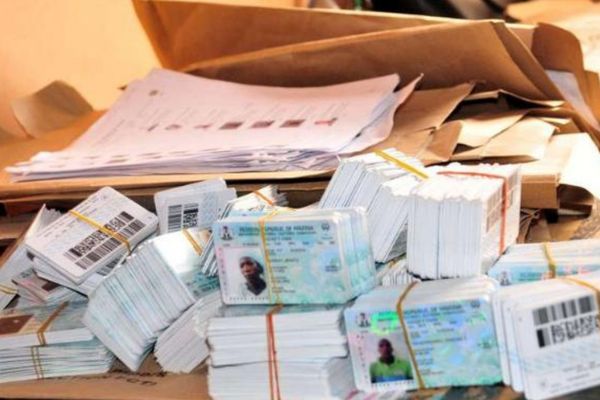
As for Nigerian citizens who are entitled to voter cards, the story is even more bizarre. Only three days ago, the Nigerian Army announced its retrieval of no less than 1,671 Permanent Voter Cards (PVC) in an apartment in the Olodi-Apapa area of Lagos State.

Three persons were also reportedly apprehended in the said apartment along with ballot papers, cutlasses and Indian hemp. As if to give credence to the story, General Isang Akpaumontia the Brigade Commander paraded the suspects and the recovered items before journalists at the Ikeja Cantonment.

Remarkably, Lagosians who could not access their voter cards before elections cried themselves hoarse while the authorities continued to argue that those who had no cards either did not register or were careless with their cards. It was also officially suggested that the dilemma of most of such persons was that they registered more than once. When will INEC be made to properly account for voter cards?

History tells us that many citizens whose cards are supposedly missing or who originally found it hard to get any cards are victims of sharp practices by officials of INEC. As far back as 2011 for example, registration materials sent to Anambra State found their way into centres located at a shrine in the deep Nziko forest of Nteje in Oyi local government area of the state.

Investigations by the media revealed that viable locations such as Onitsha Eke Awka, Ozubulu, Nnewi and parts of Anaocha had insufficient registration materials. Interestingly, the forest centres were officially documented in the records of INEC headquarters. For voter cards to get to the real people instead of forest ghosts, civil society groups need to vigorously monitor INEC with a view to making the Commission accountable for what it is mandated to do.

This could help its leadership to clearly perceive the lethargy in the institution in which an important function such as registration of voters is used to treat citizens as the object instead of the subject of democracy.

The admonition for people to always highlight the failures of a public body along with its successes and challenges, have painfully often led to unduly cosmetic assessments of INEC and other public bodies. There is need for analysts particularly the media to focus on specific cases and follow the issues to their logical conclusion. It would be unpatriotic for instance, to not make relevant officials account for the recent theft of 1671 cards in Lagos.

Where and when the army sends the suspects and the materials to; and how the case is handled till the end must be monitored and reported upon by all media organs that are empowered by section 22 of the Nigerian Constitution to hold those in authority answerable to the people. It is only if this approach is sustained in Lagos and similar notorious locations such as Kano, the home of ‘stunted’ voters and other centres bedevilled by subsisting electoral malpractices that Nigeria can begin to talk about credible elections.

The commendation which INEC got for introducing electoral innovations would have no meaning if the Commission is populated by rouge officials (no matter how few) who also thwart the innovations. Just before the 2023 elections, different groups fought gallantly to stop persons with substantial partisan political interests from getting into INEC but the ruling party led by the Senate Committee on INEC frustrated the efforts.

This left the electoral body with a heavy challenge akin to those of law enforcement agencies with many insider thieves. The announcements of innovations such as the introduction of a framework on how to replace and retrieve lost or damaged voter cards have thus remained good only on paper. INEC must for once find time to place huge emphasis not only on operations but also on how to manage the process, otherwise its workforce will continue to betray its leadership.

This piece cannot appropriately end without reference to the fact that what happens at INEC is hardly different from happenings in other organizations. Last year, the process of registering and obtaining a national identity card was no less tardy. The National Identity Management Commission (NIMC) fixed deadlines without proper planning, just as none of its centres had sufficient or reliable materials thereby leaving Nigerians to bear the brunt of poor official performance.

Last week, innocent citizens died from the reckless operations of a Lagos state staff bus which collided with a train further eroding public confidence in Nigeria’s fragile railway system. During the same period, a Lagos State Coroner indicted doctors of the Premier Hospital for medical negligence more particularly described as “failure of appropriate response, substandard and inadequate optimal care.” When will service delivery in Nigeria be institutionalized to prevent avoidable disasters?

Nigeria can no longer run away from bringing to book, those found wanting in the discharge of their duties. Here, it is expedient to reiterate the instructive point by Mike Okiro, a former chairman of the Police Service Commission that police authorities should deal decisively with their operatives who watched thugs that disrupted the last presidential elections.

If this is done, the point will be aptly underscored that those whose dereliction of duty complicate INEC’s work also have an obligation to be accountable. On its part, INEC should undertake an audit of voter cards it printed while making public, the account given by all Resident Commissioners and Electoral Officers nation-wide. It is time to stop blaming the general public for the lapses of state actors.

March 12, 2023

March 12, 2023 0 comments
0 FacebookTwitterPinterestThreadsBlueskyEmail
Newer Posts
Older Posts

Recent Posts

  • FCTA Workers, NLC Storm Industrial Court, Demand Wike Sack

    January 26, 2026
  • DisCos reject FG’s free meter plan

    January 26, 2026
  • Nigerian-born nurse loses licence in Australia for sleeping on duty

    January 24, 2026
  • AI may outsmart humanity in five years — Musk

    January 24, 2026
  • BREAKING: Kano Gov Abba Yusuf dumps NNPP

    January 23, 2026

Usefull Links

  • Contact Page
  • About Leading Reporters
  • Contact Us
  • Headlines
  • Investigation
  • Exclusives
  • Opinion
  • Business
  • Facebook
  • Twitter
  • Instagram
  • Linkedin

@2021 - All Right Reserved. Designed and Developed by PenciDesign


Back To Top
Leading Reporters
  • Featured
  • Politics
  • Opinion
  • Business
  • Entertainment
  • Sports
  • About Us
  • Contact