
Leading Reporters
  • Headlines
  • Health
  • Business
  • Exclusives
  • Investigation
  • Entertainment
  • Opinion
Sunday, January 25, 2026
Hot
Nigerian-born nurse loses licence in Australia for sleeping...
BREAKING: Kano Gov Abba Yusuf dumps NNPP
National Grid Collapse For First Time in 2026
BREAKING: Tinubu approves posting of Ambassadors to U.S.,...
Insecurity: Kidnappers demand 17 motorcycles for release of...
FG to Abolish Hnd-Degree Dichotomy, Allow Polytechnics to...
AFCON Initiative drives stronger Nigeria Morocco cooperation
Obasanjo: I’ll Never Stop Having Children
JUST IN: Bandits abduct over 100 worshippers in...
Nigeria’s Non-oil exports hit record $6.1bn – NEPC
  • About Leading Reporters
  • Contact Us
Leading Reporters
Advertise With Us
  • Headlines
  • Health
  • Business
  • Exclusives
  • Investigation
  • Entertainment
  • Opinion
Hot
Nigerian-born nurse loses licence in Australia for sleeping...
BREAKING: Kano Gov Abba Yusuf dumps NNPP
National Grid Collapse For First Time in 2026
BREAKING: Tinubu approves posting of Ambassadors to U.S.,...
Insecurity: Kidnappers demand 17 motorcycles for release of...
FG to Abolish Hnd-Degree Dichotomy, Allow Polytechnics to...
AFCON Initiative drives stronger Nigeria Morocco cooperation
Obasanjo: I’ll Never Stop Having Children
JUST IN: Bandits abduct over 100 worshippers in...
Nigeria’s Non-oil exports hit record $6.1bn – NEPC
Leading Reporters
Leading Reporters
  • Headlines
  • Health
  • Business
  • Exclusives
  • Investigation
  • Entertainment
  • Opinion
Copyright 2024 - All Right Reserved
Home > Health > Page 4
Category:

Health

Health

Nigeria lacks capacity to produce COVID-19 vaccines

by Leading Reporters October 26, 2021
written by Leading Reporters

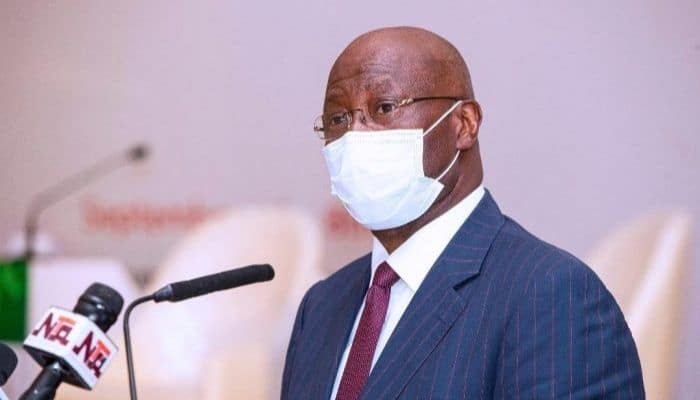
A pharmaceutical company, Pfizer has stated that Nigeria lacks the technical capacity for the development and production of COVID-19 vaccines.

This was stated by the Pfizer Country Manager Nigeria and Cluster Lead West Africa for Pfizer, Mr Olayinka Subair, during a courtesy visit to The PUNCH Headquarters in Magboro, Ogun State, on Thursday.

Subair based his assertion on the fact that the COVID-19 development is a long and technical process with prohibitive cost implications.

He said, “Vaccine development takes, on average, about 12 years. From discovery to experiments and trials, COVID-19 was an exceptional one as it was a global pandemic that needed a quick solution. At Pfizer, for example, most of the processes were done in parallel. Normally, the processes are meant to be done in sequence.

“Because we had already synthesised the vaccine already, we just scaled up from there. Whether Nigeria will be able to do a vaccine for a new disease, it will be very difficult. There are conventional diseases that their vaccines are just generic, like polio, measles, and others.

“But the technology transfer for a disease like COVID-19 that is mutating fast – and there are still so many studies going on around the virus – will take a lot of time.

“We do not have the technical competence or the capacity to develop a COVID-19 vaccine locally yet. For generic diseases like polio or measles, we can take up the end-stage manufacturing for them, but COVID-19 is still largely out of our reach for now.”

October 26, 2021 0 comments
0 FacebookTwitterPinterestThreadsBlueskyEmail
HeadlinesHealth

BREAKING: Nigeria Shuts UK Mission As Diplomats Test COVID-19 Positive

by Leading Reporters August 17, 2021
written by Leading Reporters

Reports reaching LeadingReporters that the Nigerian High Commission in London in the United Kingdom has been shut after officials tested positive for COVID-19.

Sources within the commission confirmed the letter informing of the closure, which will last 10 days beginning from Thursday, when the strains of the deadly disease were detected in the Diplomats.

Their infection with COVID-19 came to light when the Nigerian officials visited the UK Home office for a meeting and upon being subjected to mandatory tests at the entrance, they were found to be afflicted.

However, the High Commission did not name the concerned officials nor their ranks.

In the 12th August 2021 memo, titled, “Closure of Nigeria High Commission, London,” the country’s High Commission to UK detailed circumstances leading to the move.

It said: “This afternoon, the Head of Immigration Section and two other officials went for a meeting at the Home Office.

“At the entrance, COVID test was administered on them and one of them tested positive to COVID-19. The affected officer immediately isolated while the other officials, who tested negative, will also isolate for the next 10 days.

“In response to this challenge, the Mission embarked on testing all officials of the mission, after which another official of the Mission tested positive.

In line with COVID-19 regulation and the need to adhere to the rules and regulations of the host country, the Mission will close down for the next 10 days, in order to observe the mandatory isolation of those who were in contact with the affected officials.

“While the High Commission regrets any inconvenience that this may have caused, we solicit the cooperation of the general public.”

August 17, 2021 0 comments
0 FacebookTwitterPinterestThreadsBlueskyEmail
HeadlinesHealth

Upsurge in COVID-19 Cases as Lagos

by Leading Reporters August 10, 2021
written by Leading Reporters

Lagos State witnessed an upsurge in the daily new COVID-19 cases as the Nigeria Centre for Disease Control (NCDC), reported additional 422 infections on August 9, 2021.

The NCDC made this known via its verified website on Tuesday morning.

It confirmed that the additional 422 cases were from nine states and the FCT.

The agency said that Lagos state was standing at a dire inflection point, with the coronavirus cases surging and most of its population not yet fully vaccinated.

Driving the latest wave was the highly contagious Delta variant with Lagos continuing to report more than half of the daily cases in the country.

The state recorded the highest cases with 190 out of the 422 additional Infections.

The public health agency tracking the coronavirus case surges in states across the country said that the additional coronavirus cases were rising across the country with 86 in Rivers.

Ogun recorded 85, Oyo, 22, while FCT had 20,

Kwara had 7, Edo, 5, Abia, 4, and Bayelsa, 3.

The NCDC announced that 219 people had recovered and were discharged from various isolation centres in the country on Saturday.

August 10, 2021 0 comments
0 FacebookTwitterPinterestThreadsBlueskyEmail
Africa & WorldHealth

Nigerian govt to travellers from “South Africa Don’t come”

by Leading Reporters June 29, 2021
written by Leading Reporters

The Chairman of Presidential Steering Committee (PSC) on COVID-19 pandemic, and Secretary to Government of the Federation (SGF) Boss Mustapha, on Monday, announced the addition of South Africa to the list of countries from where travellers are banned because of the growing cases of COVID-19 in the country.

Mustapha made the announcement during a media briefing of the Committee in Abuja.

It could be recalled that the Federal Government had in May handed a similar ban on travellers from India, Brazil and Turkey over similar concerns.

He said: “A few weeks ago, we announced additional measures to be met by passengers arriving from Brazil, Turkey and India. This action was due to the prevalence of variants of concern and the dangers associated with the importation of the such virulent strain.

“The PSC has been reviewing these restrictions and is of the opinion that they should remain for another four weeks before it is further reviewed. South Africa, has, however, been added to this category once more.

“In addition to these three countries, the PSC has also shifted its focus on some African countries. South Africa, Zambia, Rwanda, Namibia and Uganda fall in this category.

“South Africa for example, recorded over 100, 000 cases in the last one week while 20,000 was recorded in the last 24 hours. The four major variants of concern are now classified as Alpha (UK), Beta (SA); Gamma (Brazil) and Delta (India).

“The Delta variant which has wreaked devastating havoc is not yet found in Nigeria hence the need to tighten our borders and be more vigilant.”

Concerning Emirates flights in and out of Nigeria, he noted that: “In all circumstances, however, conditions placed on such flights must conform with international civil aviation standards and must not be discriminatory and must respect our sovereignty.”

While noting that the PSC has escalated surveillance and risk communication, he added that it has similarly paid close attention to the issue of vaccination, especially matters relating to access and acquisition of vaccines.

The SGF urged members of the public not to lower their guards yet because of continued spikes in some countries (including African countries) and the emergence of variants of concern in several jurisdictions where the third wave has occurred.

Speaking on violators of COVID-19 travel protocol, he stated: “About six months ago, following the violation of protocols by some inbound passengers to Nigeria, travel documents were barred for a period of 6 months.

“We have received several appeals from those affected while we counselled on the importance of compliance with rules and regulations.

“The six-month period of ban for the first batch of 100 is almost complete and we use this opportunity to reassure Nigerians that sanctions will be imposed on violators of measures put in place to protect them and safeguard our nation.

“You will recall that Nigeria introduced the first international travel portal in September last year to facilitate the travel protocols. Following observations by users, the PSC took steps to improve the performance of the travel portal so as to ease the bottlenecks experienced by travellers.”

“Additional improvements have been recorded. The vaccination programme has progressed into the second phase for those who took the first jab. However, the sources and access to vaccines constitute major challenges given the developments in India, the attendant scarcity and the rise of vaccines nationalism.

“The PSC through the NPHCDA has continued to intensify efforts to acquire vaccines for the next phase.

“For over six months Federal Government employees on GL 12 and below have been observing work-from-home instructions. This restriction remains in place until further notice in order to avert a third wave.”

By John Chukwu…

June 29, 2021 0 comments
0 FacebookTwitterPinterestThreadsBlueskyEmail
Health

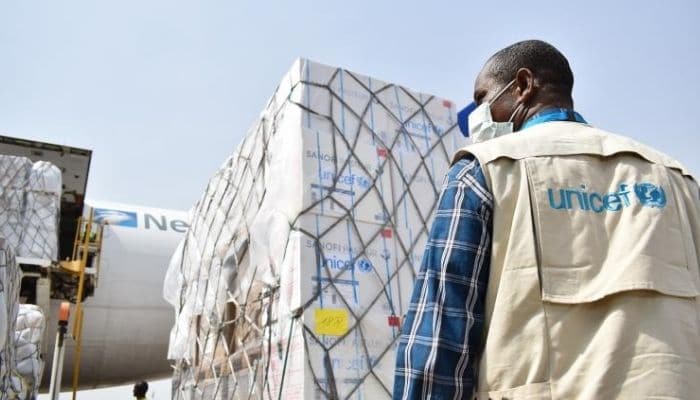
Donate COVID-19 Vaccine To Poor Countries Or Risk Resurgence UNICEF Ambassadors Tell G7 Countries

by Leading Reporters June 11, 2021
written by Leading Reporters

Ahead of G7 Leaders Summit in the UK this weekend, joint letter urges G7 leaders to share at least 20 per cent of available COVID-19 vaccine doses

UNICEF Goodwill Ambassadors Priyanka Chopra Jonas, David Beckham, Katy Perry, Orlando Bloom, Whoopi Goldberg, Angélique Kidjo, and Liam Neeson have joined an extraordinary call by 28 high-profile UNICEF Ambassadors and Supporters demanding that G7 leaders commit to donating doses of COVID-19 vaccines to poorer countries now.

The open letter, published today ahead of the three-day G7 Leaders’ Summit (Friday 11-Sunday 13 June) in Cornwall, UK, urges G7 leaders to commit to sharing a minimum of 20 per cent of COVID-19 vaccine dose supply urgently, to reduce the risk of the virus spreading further and the threat of mutant strains.

Ramla   Ali, Fernando Alonso, David Beckham, Orlando Bloom, José Manuel Calderón, Sofia Carson, Gemma Chan, Priyanka Chopra Jonas, Olivia Colman, Billie Eilish, Pau Gasol, Whoopi Goldberg, David Harewood, Sir Chris Hoy, Angelique Kidjo, Téa Leoni, Lucy Liu, Juan Manuel López Iturriaga, Ewan McGregor, Alyssa Milano, Andy Murray, Liam Neeson, Liam Payne, Katy Perry, Sergio Ramos, Claudia Schiffer, Teresa Viejo and P!nk joined UNICEF in calling on G7 world leaders to donate doses and ensure fair and equitable vaccine supply to low- and middle- income countries.

“The world has spent a year and a half battling the COVID-19 pandemic, but the virus is still spreading in many countries and producing new variants with the potential to put us all back where we started,” the letter reads. “This means more school closures, more healthcare disruptions, and greater economic fallout – threating the futures of families and children everywhere.”

The letter goes on to warn that COVAX, the global initiative supporting poorer countries in gaining access to vaccines, is already facing a shortfall of 190 million doses, and proposes that, in order to help cover this shortfall, G7 countries donate 20 per cent of their vaccines between June and August – over 150 million doses – as a temporary stopgap measure to compensate for this shortfall.

Recent data analysis provided by Airfinity, the life sciences research facility, and commissioned by the UK Committee for UNICEF (UNICEF UK), indicates that G7 nations could do so without significant delay to current plans to vaccinate domestic adult populations.

“As a UNICEF Goodwill Ambassador I believe in the crucial benefit of vaccinations,” said David Beckham, UNICEF Goodwill Ambassador. “The pandemic won’t be over until it’s over everywhere, so it’s vital that all communities around the world have fair access to Covid-19 vaccines urgently.”

UNICEF is also warning that without urgently ensuring fair and equitable access supply, the world will continue to be at risk of deadly virus mutations – like the devastating second wave of COVID-19 sweeping across India and other South Asian countries including Nepal, Pakistan and Afghanistan.

“The crisis at home in India and across the region of South Asia is devastating. This deadly surge of Covid-19 is placing an enormous strain on health facilities across India, with hospital beds, essential medical supplies and oxygen running out. It’s also of huge concern to all of us at UNICEF to hear about children falling ill with this new variant – while many are also losing parents and left alone and at risk, unable to access critical health care, vaccinations and education,” said Priyanka Chopra Jonas, UNICEF Goodwill Ambassador.

“The crisis in India shows why we must act now to avoid further deadly mutations ravaging low- and middle- income nations around the world. UNICEF and its COVAX partners are ensuring vaccines and treatments reaches the world’s most vulnerable populations, but cannot do it alone. A clear solution to this is G7 countries committing to sharing their surplus COVID-19 vaccine doses immediately with the countries whose health workers and vulnerable populations need them the most,” said Priyanka Chopra. “That’s exactly why I’ve joined my fellow UNICEF Goodwill Ambassadors in signing this letter, urgently asking G7 leaders to make this commitment at the UK summit this week, to keep families and children everywhere safe from COVID-19.”

Finally, the letter argues that “this weekend’s G7 Summit is a vital opportunity for you to agree the actions that will get vaccines where they are most needed, fast…” and urges leaders to set out a roadmap to scale-up donations as supplies increase, noting that forecasts suggest as many as one billion doses may be available for donation by year end.

“Countries need not choose between fighting the disease at home or fighting it abroad. We can, and must, do both simultaneously – and immediately,” said Henrietta Fore, UNICEF Executive Director.

“This is a pivotal time in the fight against COVID-19, as leaders meet to set priorities for what form this fight will take in the coming weeks and months. I am pleased so many UNICEF supporters are joining our call for emergency support for COVAX, so we can continue to wage this fight globally. After all, the disease is not respecting boundaries on a map. Our fight to get ahead of the virus, and its variants, should not either,” said Henrietta Fore.

June 11, 2021 0 comments
0 FacebookTwitterPinterestThreadsBlueskyEmail
Health

If poor countries go unvaccinated, rich ones will pay, says study

by Leading Reporters May 7, 2021
written by Leading Reporters

In monopolising the supply of vaccines against Covid-19, wealthy nations are threatening more than a humanitarian catastrophe: The resulting economic devastation will hit affluent countries nearly as hard as those in the developing world.

This is the crucial takeaway from an academic study to be released Monday (Jan 25). In the most extreme scenario – with wealthy nations fully vaccinated by the middle of this year, and poor countries largely shut out – the study concludes that the global economy would suffer losses exceeding US$9 trillion (S$12 trillion), a sum greater than the annual output of Japan and Germany combined.

Nearly half of those costs would be absorbed by wealthy countries like the United States, Canada and Britain.

In the scenario that researchers term most likely, in which developing countries vaccinate half their populations by the end of the year, the world economy would still absorb a blow of between US$1.8 trillion and US$3.8 trillion. More than half of the pain would be concentrated in wealthy countries.

Commissioned by the International Chamber of Commerce, the study concludes that equitable distribution of vaccines is in every country’s economic interest, especially those that depend most on trade. It amounts to a rebuke to the popular notion that sharing vaccines with poor countries is merely a form of charity.

“Clearly, all economies are connected,” said Professor Selva Demiralp, an economist at Koc University in Istanbul who previously worked at the Federal Reserve in Washington, and is one of study’s authors. “No economy will be fully recovered unless the other economies are recovered.”

Prof Demiralp noted that a global philanthropic initiative known as the ACT Accelerator – which is aimed at providing pandemic resources to developing countries – has secured commitments for less than US$11 billion toward a US$38 billion target. The study lays out the economic rationale for closing the gap. The remaining US$27 billion may, on its face, look like an enormous sum but is a pittance compared with the costs of allowing the pandemic to carry on.

The commonplace idea that the pandemic respects neither borders nor racial and class divides has been promoted by corporate chief executives and pundits. This comforting concept has been belied by the reality that Covid-19 has trained its death and destruction of livelihoods on low-wage service workers, and especially racial minorities, while white-collar employees have been able to largely work safely from home, and some of the world’s wealthiest people can ride out the pandemic on yachts and private islands.

But in the realm of international commerce, there is no hiding from the coronavirus, as the study brings home. Global supply chains that are vital to industry will continue to be disrupted so long as the virus remains a force.

A team of economists affiliated with Koc University, Harvard University and the University of Maryland examined trade data across 35 industries in 65 countries, producing an extensive exploration of the economic impacts of unequal vaccine distribution.

If people in developing countries remain out of work because of lockdowns required to choke off the spread of the virus, they will have less money to spend, reducing sales for exporters in North America, Europe and East Asia. Multinational companies in advanced nations will also struggle to secure required parts, components and commodities.

At the centre of the story is the reality that most international trade involves not finished wares but parts that are shipped from one country to another to be folded into products. Of the US$18 trillion worth of goods that were traded last year, so-called intermediate goods represented US$11 trillion, according to the Organisation for Economic Cooperation and Development.

The study finds that the continued pandemic in poor countries is likely to be worst for industries that are especially dependent on suppliers around the world, among them automotive, textiles, construction and retail, where sales could decline more than 5 per cent.

The findings add a complicating layer to the basic assumption that the pandemic will leave the world economy more unequal than ever. While this appears true, one striking form of inequality – access to vaccines – could pose universal problems.

In an extraordinary testament to the innovative capacities of the world’s most skilled scientists, pharmaceutical companies produced life-saving vaccines in a small fraction of the time thought possible. But the wealthiest countries in North America and Europe locked up orders for most of the supply – enough to vaccinate two and three times their populations – leaving poor countries scrambling to secure their share.

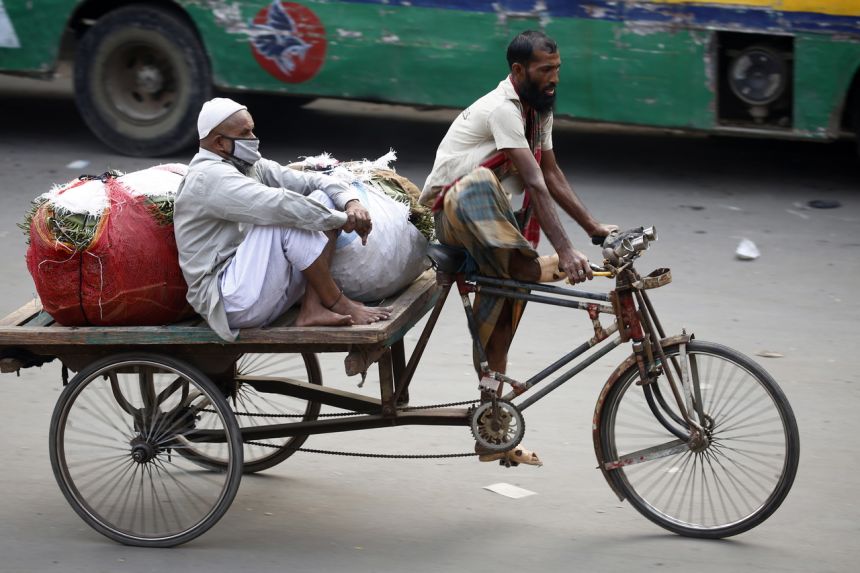
Many developing countries, from Bangladesh to Tanzania to Peru, will likely have to wait until 2024 before fully vaccinating their populations.

The initiative to supply poor countries with additional resources gained a boost as US President Joe Biden took office. The Trump administration did not contribute to the cause. Mr Biden’s chief medical officer for the pandemic, Dr Anthony Fauci, promptly announced that the United States would join the campaign to share vaccines.

In contrast to the trillions of dollars that governments in wealthy countries have spent to rescue companies and workers harmed by the health emergency and the wrenching economic downturn, developing countries have struggled to respond.

As migrant workers from poor countries have lost jobs during the pandemic, they have not been able to send as much money home, levelling a major blow to countries that have relied on these so-called remittances like the Philippines, Pakistan and Bangladesh.

The global recession has slashed demand for commodities, decimating copper producers like Zambia and Congo, and countries dependent on oil exports like Angola and Nigeria. As Covid-19 cases have soared, that has depressed tourism, costing jobs and revenue in Thailand, Indonesia and Morocco.

Many poor countries entered the pandemic with debt burdens that absorbed much of their government revenue, limiting their spending on healthcare. Private creditors have refused to participate in a modest debt suspension programme forged by the Group of 20. The World Bank and the International Monetary Fund both promised major relief but failed to produce significant dollars.

This, too, appears to be changing as new leadership takes over Washington. The Trump administration opposed a proposed US$500 million expansion of so-called special drawing rights at the IMF, a reserve asset that governments can exchange for hard currency. Mr Biden’s ascent has bolstered hopes among fund members that his administration will support the expansion. Democrats in Congress – now in control of both chambers – have signalled support for a measure that would compel the Treasury to act.

Still, in capitals like Washington and Brussels, the discussion about support for the developing world has been framed in moral terms. Leaders have debated how much they can spare to help the planet’s least fortunate communities while mostly tending to their own people.

The study challenges that frame. In failing to ensure that people in the developing world gain access to vaccines, it concludes, leaders in the wealthiest nations are damaging their own fortunes.

“No economy, however big, will be immune to the effects of the virus until the pandemic is brought to an end everywhere,” said Mr John Denton, secretary-general of the International Chamber of Commerce. “Purchasing vaccines for the developing world isn’t an act of generosity by the world’s richest nations. It’s an essential investment for governments to make if they want to revive their domestic economies.”

May 7, 2021 0 comments
0 FacebookTwitterPinterestThreadsBlueskyEmail
Health

Video: Southern Kaduna Woman Began Vomiting Blood After Taking Covid-19 Vaccine

by Leading Reporters April 6, 2021
written by Leading Reporters

In a bid to receive her salary, following Kaduna State Government. “No-Vaccine No-Pay” Order, a woman working with Government Hospital in Southern Kaduna, by name Anatu Tanko is currently fighting for her life in a specialist hospital after getting vaccinated with Covid-19 vaccine.

Southern Kaduna Woman Began Vomiting Blood After Taking Covid-19 Vaccine

The woman who works in the account section of a Government General Hospital in Kaduna South recounted how she began to vomit blood from her mouth and nose after getting vaccinated with Covid-19 vaccine in Kaduna South Secretariat where they have been directed to go for vaccination.

She said that her employer has threatened to withdraw her salary and that of other staff if they do not get vaccinated and show their vaccination card.

Watch video

April 6, 2021 0 comments
0 FacebookTwitterPinterestThreadsBlueskyEmail
HealthOpinion

Random musings about the Covid-19 vaccine

by Leading Reporters March 26, 2021
written by Leading Reporters

From the time that Covid-19 hit Nigeria in 2020, conspiracy theories started flying around about its origins, impact and objectives. It was agreed in some quarters that the end of the world had come.

The proponents of the eschatological belief and its adherents strongly advocated the institution of end time measures like total abstinence from sex, alcohol and any other thing.

These people, however, did not consider rumour peddling as a not too welcome attribute of an end time candidate. As a corollary to their end time gist, the same people went down memory lane to quote Nostradamus. Even when the guy did not say anything about Covid-19,  they tried to force him to say it.

Then Huawei spoiled everything. That’s the time they saw to launch their antichrist 5G network! My scientific neighbours did not give me a moment of rest. How Satan was going to move through our systems via the 5G, how he was going to live on the 5G mast. Around Okota, in Lagos, a certain company was laying some underground cable, probably for some intra company communication . Come and see the hullabaloo. I thank God Obama was not the president in 2020! He was already branded by the Nigerian school of end time studies as the antichrist.

If he was the president, and the vaccine was mooted under him, there was no way we would have stopped our religious Nigerians from running into the caves to hide from the impending tribulation.

So, I went out to observe out of curiosity the administering of the vaccine. First I observed that the jab was not given on the right hand compulsorily. Wait. I was not drunk. I saw it. A guy stretched out his left arm and he was given one jab, and that’s it! It may be that I do not understand how the vaccine works.

On my way home I was thinking. Could it be that this Antichrist doesn’t know what he is doing? The people were supposed to be given that injection on their right hands. Then he allowed the doctors to give it on any random hand.

Or could it be that he is using tricks on our people such that after they have collected it, the vaccine flows to their right hands? Are there not six hundred and sixty six drops of the vaccine in each jab? Perhaps that’s why there are two doses. When the first 333 has formed the first chip on your right hand, the second does would form the second chip on your forehead.  I don’t trust those doctors. Just imagine. They think they can fool us.

While the antichrist scare raged on, our people still buried themselves in our regular vices. Police still ‘obtained’ the motorists, to enforce the lockdown, our security agents were killing the people even when Covid-19 was yet to kill a single soul in the country.

The people who clamour for the religious houses to be opened were the same people who did not want to go to their offices for fear of contracting Covid-19. The people who were ready to fight for their religions not to be attacked were the same people who raised the price of gari from N800 for a 4 litre paint container to N1500 in one fell swoop!

In the same country, crime rate rose beyond our imagination. 1 million boys went on rampage in Lagos. Armed robbery surged in northern Nigeria and its environs, stories went up about rituals and arsons.

It appears to me that our religion in Nigeria is good at fashioning conspiracies. Our prayers are placed with suspicions and conspiracies. If it is not a certain black tall woman that’s doing her neighbour’s son because of his brilliance, it is Britain stealing our oil. If it is not one boss in the office tormenting his staff using Otumokpor, it is America refusing to support Nigeria because of our potentials. That reminds me. I am old enough to call myself an elder states youth. How come Nigeria is perpetually potentially great?

Oh, I understand now. It is Britain. They are the one looking the money for our roads. They are the ones buying what they don’t need, using our commonwealth to buy houses in Dubai or Maryland. They are the one who share guns on election days. They imported bandits to take lands and turn it to an underdeveloped country.

We must continue our conspiracies o. At least our religions teach us not to argue with leaders. Docility is the greatest virtue in the happiest but poorest nation on earth.

Only when we wake up will good things start happening here. Until then, we await another conspiracy theory.

Alex Agbo

Writer and researcher based in Lagos.

March 26, 2021 0 comments
0 FacebookTwitterPinterestThreadsBlueskyEmail
Africa & WorldHealth

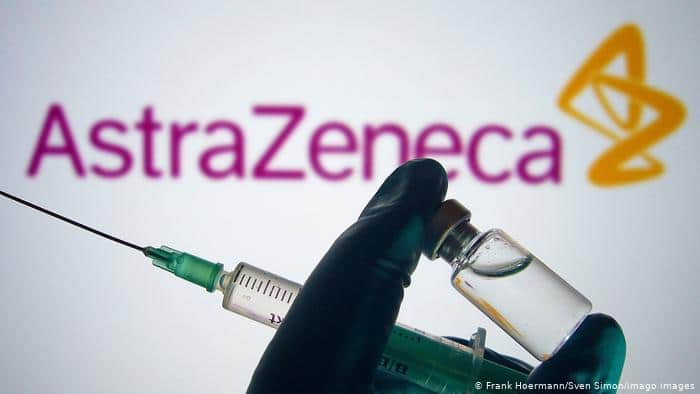
New EU Covid-19 vaccine setback as AstraZeneca announces shortfall

by Leading Reporters March 14, 2021
written by Leading Reporters

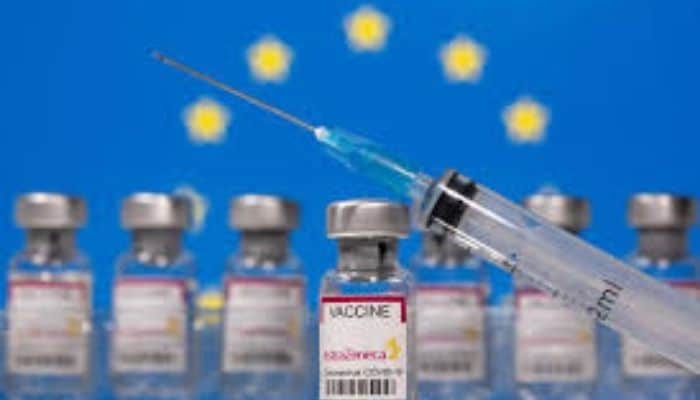
The European Union was faced with another setback in its coronavirus vaccination programme after AstraZeneca announced a shortfall, as countries across the world try to step up their Covid-19 immunisation drives.

The pharmaceutical company’s image had already taken a hit, with several countries suspending the roll-out of its vaccine over blood clot fears, though the World Health Organisation (WHO) said there was no reason to stop using it in the fight against the pandemic.

Mass vaccinations are considered critical to ending the pandemic, which has claimed more than 2.6 million lives globally, and the AstraZeneca announcement was another blow for EU leaders, who have already faced criticism for the stumbling start to the jab drive on the hard-hit continent.

“AstraZeneca is disappointed to announce a shortfall in planned Covid-19 vaccine shipments to the European Union… despite working tirelessly to accelerate supply,” the firm said on Saturday (March 13).

It previously warned of shortfalls from its European supply chain due to lower-than-expected production output, and was hoping to compensate by sourcing shots from its global network.

“Unfortunately, export restrictions will reduce deliveries in the first quarter, and are likely to affect deliveries in the second quarter,” the company said.

AstraZeneca’s shot is among the cheapest available, and forms a bulk of deliveries to poorer nations under the WHO-backed Covax initiative, which aims to ensure the equitable global distribution of vaccines.

The supply issues added to the firm’s troubles, with some countries including Denmark, Norway and Iceland suspending the use of its shot over concerns over side effects such as blood clots.

The WHO, which said its vaccines advisory committee was examining the safety data, stressed that no causal link has been established between the clots and the jab. AstraZeneca has also insisted that the shot is safe.

Global coronavirus infections are approaching 120 million and even as nations around the world ramp up vaccinations, social distancing and movement restrictions are being used at varying levels to counter the spread of Covid-19.

French Prime Minister Jean Castex did not rule out a new lockdown in the region that is home to the capital Paris, describing the situation as “on a razor’s edge”, while the head of Germany’s disease control agency warned that “the third wave has already started” there.

Italy had already announced new restrictions on Friday, with schools, restaurants, shops and museums ordered to close across most regions.

In Africa, Tunisia and Ethiopia both launched vaccination campaigns on Saturday, but Ethiopian officials flagged an alarming rise in cases too.

The drives are crucial in reviving the global economy, which was battered by the pandemic as most travel was curbed and people forced to stay home, with no nation spared the impact.

Millions were left jobless in the United States, the world’s biggest economy, and those who could not work from home had to balance the risk of Covid-19 with the need to make ends meet.

For Mr Matt Valentin, who worked at a cafe in the state of Michigan, the job became an increasingly anxiety-ridden environment last year as the pandemic worsened.

“It went from ‘get these drinks and orders done as fast as possible’ to ‘do all of that, and try not to bring a deadly virus home to your vulnerable family,'” the 21-year-old told AFP.

After a much-criticised start to its vaccination programme, the US has accelerated the roll-out of shots, with the Centre for Disease Control and Prevention saying 100 million doses have been administered.

That is just less than a third of the total given worldwide so far.

There was also a sign of recovery at American airports, which saw their largest number of passengers in a year.

Just over 1.35 million travellers were checked in at US airports on Friday, the most since March 15 last year, according to the Transportation Safety Administration.

And hopes for international travel were boosted as officials said Australia and Singapore were working to create a travel bubble as early as July, which would allow travellers between the two countries to avoid quarantine.

March 14, 2021 0 comments
0 FacebookTwitterPinterestThreadsBlueskyEmail
HealthHeadlines

Covid – 19: FG imported Worse Vaccines for Nigerians – Dino Melaye

by Leading Reporters March 11, 2021
written by Leading Reporters

By: Kenny Folarin

Former Senator representing Kogi West, Senator Dino Melaye has alleged that the Federal Government imported a worse vaccine for Nigerians.

The Senator in an interview with Root TV noted that the Federal Government did not take the interest of Nigerians at heart but imported a vaccine with most side effect and less potency.

According to Maleye, there are four notable vaccines and the least potent of the four is the one Nigeria government imported and the one imported by the Nigerian government has the worst side effect.

“What am saying is that Nigerians deserve the best, Federal government must carry out citizen diplomacy, they must show that they love there citizen and desire the best for there citizens.”

“If you go through this four vaccines, Johnson and Johnson is far better than what they have brought, Pfizer is also better, so if you look at the total trial effectiveness of this vaccines, you will find out that AstraZeneca is 62%, 14 days after second doze while Pfizer is 95% 28 days after the second doze and again, modena is 94% while Johnson and Johnson is about 70%.”

“So what am saying in essence is that the one that Nigeria government brought is the one with the least potency of effectiveness.”

Dino also added that “If you also look at the side effect, this same one imported by the Nigerian government has the worse side effect which include pain, headache, tiredness, muscle ache, fever, joint ache and nausea.”

He further stated that the 300 billion Naira budgeted by central bank is on the high side considering its side effects.

“So what am saying is that the Nigeria Government did not go for the best putting Nigerians into consideration and with the budget the central bank made available for this vaccine (300billion), it is outrageously calamitous”

“it is very unfair for them to have gone with the least vaccine and anything produced in India, you can not compare it with the ones produced in America or United Kingdom.”

However, Dino said that his submission is not against Nigerians not taking the vaccine, though it is now a business venture and the federal government is not fair in importing the least effective vaccine for Nigerians.

“I bought kits for people in kogi state, I wear face mask too, so i believe in the existence of the virus,

“But what am saying is that it has been monetized people are making business out of it and I did not see the patriotic nature that is expected of the federal government in protecting our citizens.”

“If you have a drug that has least potency and leave the one that has higher potency, I think it is not a good one, it is not fair at all.”. He added.

March 11, 2021 0 comments
0 FacebookTwitterPinterestThreadsBlueskyEmail
Newer Posts
Older Posts

Recent Posts

  • Nigerian-born nurse loses licence in Australia for sleeping on duty

    January 24, 2026
  • AI may outsmart humanity in five years — Musk

    January 24, 2026
  • BREAKING: Kano Gov Abba Yusuf dumps NNPP

    January 23, 2026
  • National Grid Collapse For First Time in 2026

    January 23, 2026
  • BREAKING: Tinubu approves posting of Ambassadors to U.S., UK, others

    January 22, 2026

Usefull Links

  • Contact Page
  • About Leading Reporters
  • Contact Us
  • Headlines
  • Investigation
  • Exclusives
  • Opinion
  • Business
  • Facebook
  • Twitter
  • Instagram
  • Linkedin

@2021 - All Right Reserved. Designed and Developed by PenciDesign


Back To Top
Leading Reporters
  • Featured
  • Politics
  • Opinion
  • Business
  • Entertainment
  • Sports
  • About Us
  • Contact