Leading Reporters
  • Headlines
  • Health
  • Business
  • Exclusives
  • Investigation
  • Entertainment
  • Opinion
Friday, March 20, 2026
Hot
Tinubu’s Address at Windsor Castle State Banquet [FULL...
Three security agents collapsed during Soludo’s 2nd term...
Insecurity: Tinubu orders service Chiefs to relocate to...
Petrol Subsidy Removal Pushes 63% of Nigerians Below...
“We Are Not Miyetti Allah” — Plateau Fulani...
Reps prescribe 2-year jail term, 10m fine for...
Row In Senate As Natasha Akpoti-Uduaghan Dropped From...
Fire Breaks Out At Federal Head Of Service...
Police reportedly remove force PRO Hundeyin 6 months...
BREAKING: Tinubu appoints Taiwo Oyedele as Minister
  • About Leading Reporters
  • Contact Us
Leading Reporters
Advertise With Us
  • Headlines
  • Health
  • Business
  • Exclusives
  • Investigation
  • Entertainment
  • Opinion
Hot
Tinubu’s Address at Windsor Castle State Banquet [FULL...
Three security agents collapsed during Soludo’s 2nd term...
Insecurity: Tinubu orders service Chiefs to relocate to...
Petrol Subsidy Removal Pushes 63% of Nigerians Below...
“We Are Not Miyetti Allah” — Plateau Fulani...
Reps prescribe 2-year jail term, 10m fine for...
Row In Senate As Natasha Akpoti-Uduaghan Dropped From...
Fire Breaks Out At Federal Head Of Service...
Police reportedly remove force PRO Hundeyin 6 months...
BREAKING: Tinubu appoints Taiwo Oyedele as Minister
Leading Reporters
Leading Reporters
  • Headlines
  • Health
  • Business
  • Exclusives
  • Investigation
  • Entertainment
  • Opinion
Copyright 2024 - All Right Reserved
Home > Business > Page 25
Category:

Business

Ncc chrome extensions
BusinessHeadlines

Five Chrome Extensions Stealing User Information – NCC Warns

by Folarin Kehinde September 16, 2022
written by Folarin Kehinde

The Nigerian Communications Commission (NCC) has identified five malicious chrome extensions that they urge Nigerians to delete immediately.

According to the commission, the extensions surreptitiously track online browser activities and steal users’ data.

These extensions were identified by the Computer Security Incident Response Team of the NCC (NCC – CSIRT) and announced it on their website at ncc.gov.ng.

The five malicious extensions are McAfee Mobile, Netflix Party, Netflix Party, Full Page Screenshot Capture Screenshotting, FlipShope Price Tracker Extension, and AutoBuy Flash Sales.

These extensions have been downloaded over 1 million times at the time of writing this report. Their sole intentions are to steal user data and monitor their online activities.

According to NCC-CSIRT the five google chrome extensions identified have a high probability and damage potential, have been downloaded more than 1.4 million times, and serve as access to steal users’ data.

Part of the advisory from NCC reads: “The users of these chrome extensions are unaware of their invasive functionality and privacy risk.

Malicious extensions monitor victims’ visits to e-commerce websites and modify the visitor’s cookie to appear as if they came through a referrer link.

Consequently, the extensions’ developers get an affiliate fee for any purchases at electronic shops.

NCC also stated that although the google team removed several browser extensions from its Chrome Web Store, keeping malicious extensions out may be difficult.

The NCC-CSIRT, thus, recommended that telecom consumers observe caution when installing any browser extension.

These include removing all listed extensions from their chrome browser manually. Internet users are to pay close attention to the promptings from their browser extensions, such as the permission to run on any website visited and the data requested before installing it.

Although, some extensions are seemingly legit, due to the high number of user downloads, these hazardous add-ons make it imperative for users to ascertain the authenticity of extensions they access.

September 16, 2022 0 comments
0 FacebookTwitterPinterestThreadsBlueskyEmail
BusinessHeadlines

Breaking: Nigerian Inflation Hits 20.52 In 2022

by Folarin Kehinde September 15, 2022
written by Folarin Kehinde

The National Inflation rate has hit 20.52 percentage in August, 2022.

The Consumer Price Index (CPI) which measures inflation rose to 20.52 per cent year on year in August compared to 17.01 per cent in the corresponding period in 2021, the National Bureau of Statistics (NBS) said Thursday, 15 September 2022.

It said the 3.52 per cent rise indicated that the headline inflation rate increased in August 2022 when compared to the same month in the preceding year.

According to the CPI report for August 2022,  which was posted on the NBS website, food hike stood at 23.12  per cent on a year-on-year basis in the period under review,  which was 2.82 per cent higher than the 20.30 per cent recorded in August 2021.

However, core inflation, which excludes the prices of volatile ag­ricultural produce stood at 17.20 per cent year on year in August,  up by 3.79 per cent when compared to 13.41 per cent recorded in August 2021.

Details later…

September 15, 2022 0 comments
0 FacebookTwitterPinterestThreadsBlueskyEmail
BusinessHeadlines

Google Launches $4 Million Dollars Fund For African Startups

by Folarin Kehinde September 8, 2022
written by Folarin Kehinde

Google has announced the selection of 60 eligible startups across Africa with $4 million dollars funding to enable them scale up their ongoing work; Nigeria came tops with 23 slots.

The programme, which is called Google Black Founders Fund (BFF) for startups in Africa, is the second phase of the global tech giant’s funding for African startups.

Folarin Aiyegbusi, Google’s Head of Startup Ecosystem, Sub Sahara Africa, said in a statement on Tuesday that the startups joining the programme would receive a total of $4m in funding

Aiyegbusi said that the startups would also receive support to enable them to scale up their ongoing work.

He said that the programme reinforced Google’s commitment to empowering entrepreneurs and startups in the region as a vital prerequisite to driving employment and growth on the continent.

“Africa is a diverse continent with massive opportunities, but the continent is faced with the challenge of limited diversity in venture capital funding flow.

“We hope that the Black Founders Fund programme will be able to bridge the gap of disproportionate funding between expat startups over local and black-led companies

“Each of the selected startups would receive support in the form of a six-month training programme that includes access to a network of mentors to assist in tackling challenges,’’ Aiyegbusi said.

According to him, the startups will also be part of tailored workshops, support networks and community building sessions.

Aiyegbusi said that the 60 grantees would also get non-dilutive awards of between $50,000 and $100,000 and up to $200,000 in Google Cloud credit.

He said that grantees, made up of 50 per cent women-led businesses, hailed from Botswana, Cameroon, Ethiopia, Ghana, Kenya, Nigeria, Rwanda, Senegal, South Africa and Uganda.

According to Aiyegbusi, the startups specialised in sectors such as fintech, healthcare, e-commerce, logistics, agtech, education, hospitality and smart cities.

He listed the top five countries with the most startups selected for the programme as Nigeria with 23 grantees, Kenya with 12 grantees, and Rwanda with six grantees.

Aiyegbusi said that South Africa had five grantees and Uganda had four grantees.

According to him, Botswana and Senegal have one selected startup each, Cameroon and Ghana both have three grantees each while Ethiopia has two selected grantees.

Aiyegbusi said that the Google for Startups programme, which was launched in April 2012, had created over 4,600 jobs and raised more than $290 million dollars in funding.

He added that the programme would introduce the grantees in Africa to Google’s products, connections, and best practices.

Aiyegbusi said that it would help the founders to level the playing field as they built better products and services that added value to the African economy.

According to him, funding for the programme will be distributed through Google’s implementation partner, CcHUB.

Aiyegbusi said that the equity-free cash assistance to startups would enable the startups to take care of immediate needs such as paying staff, funding inventory, and maintaining software licences.

He explained that this was to help the grantees buffer the cost of taking on debt in the early stages of their businesses, as many of them had no steady revenue streams yet.

Aiyegbusi said that funding Black Founders in Africa fueled generational and systemic change.

Also speaking at the event was the Director General, National Information Technology Development Agency, Kashifu Inuwa, who said that the recently passed Nigeria Startup Bill by the National Assembly will help to institutionalize legal frameworks that will enhance startup growth in Nigeria.

source: pointblanknews

September 8, 2022 0 comments
0 FacebookTwitterPinterestThreadsBlueskyEmail
BusinessHeadlines

FG Approves Nigeria-Kuwait Air Deal

by Folarin Kehinde September 8, 2022
written by Folarin Kehinde

The Federal Government’s, Federal Executive Council (FEC) has approved the signing of a Bilateral Air Services Agreement between Nigeria and Kuwait.

Minister of Aviation, Hadi Sirika, disclosed this on Wednesday while briefing State House Correspondents after FEC meeting presided over by President Muhammadu Buhari.

Sirika said that the agreement would open up airline services between the two countries in accordance with the provisions of the International Civil Aviation Organisation (ICAO).

“That memo has to do with the signing of Bilateral Air Service Agreement between the Federal republic of Nigeria and the State of Kuwait.

“ In that memorandum as approved, the text was earlier on initialled and was cleared by the Federal Ministry of Justice.

“It provided that the content of the agreement should have reciprocal rights and privileges for both Nigeria and Kuwait with the airlines involved.

“This will open up opportunities for air transportation between the two countries, in accordance with the International Civil Aviation Organisation (ICAO) convention of Dec. 7, 1944, to which both countries are signatories.’’

The minister debunked media reports alleging that N14 billion had been spent on the planned floating of a National carrier for the country.

He said that that Nigeria Air would be a reality as it would be introduced for the benefit of Nigeria and the rest of Africa.

Sirika said that FEC also approved a contract for the hiring of consultants for revalidation and collection of aviation height clearance for high rise buildings and masts that could obstruct flight operations in Nigeria.

He said that the contract would run at no cost to the budget because the revenues accrued there-in would be used to pay the consultants.

“We got approval for the award of contract for the engagement of consultants for revalidation and collection of aviation height clearance on behalf of the Nigerian Civil Aviation Authority (NCAA).

“ The contract was approved with a scale and at no cost to the budget.

“For more clarity, the aviation height clearance is extremely important to the safety of air operations.

“What concerns us in civil aviation is how efficient you depart from point A to point B.’’

He said there had been air crashes in the past due to the location of communication masts citing the incident in Jos, Plateau.

Sirika said that having masts around the airport, or its vicinity or even a building, so long as it caused unsafe operations, needed to be regulated by the NCAA.

He said that the consultants would go after people with such masts or buildings, to ensure they abided by the regulations.

September 8, 2022 0 comments
0 FacebookTwitterPinterestThreadsBlueskyEmail
innoson automotive
BusinessHeadlines

Nigeria’s Automotive Policy Attracts $1bn Dollar Investment

by Folarin Kehinde September 6, 2022
written by Folarin Kehinde

Director-General of the National Automotive Design and Development Council (NADDC), Mr. Jelani Aliyu, has insisted the National Automotive Industry Development Plan (NAIDP) also known as auto policy which the council is implementing is working and has attracted over $1bn investment.

According to him, Nigeria has now become a major vehicle assembling country and more companies have indicated interest to take advantage of the automotive market in Nigeria.

“We are generally implementing the NAIDP and I think it is very important to set some facts straight. The industry has come a long way. It is succeeding and will continue to succeed,” he said.

He spoke in an interview on the NTA Network Service monitored by our correspondent.

Daily Trust reports that the DG made his remark despite the agitation for the passage of the auto policy Bill which has suffered several delays over the years with players and stakeholders in the sector lamenting the absence of a legal framework that would aid their investment in the sector.

But despite the delay in the passage of the NAIDP Act, he said the sector has reported exponential growth in the last few years while more jobs have been created.

He said, “The industry has come a long way. It is succeeding and will continue to succeed. Let us look at where we were in the 70’s and 80’s. The industry was looking up. Then in 86, the price of crude oil crashed from 24 dollars per barrel to below 10 dollars per barrel. At that time, that was the one commodity that Nigeria was still dependent on, it sent Nigeria into recession.

“People could no longer buy those Peugeots and Volkswagens, they had to close shop and leave. The Federal Government said that wouldn’t be allowed to happen. So the NAIDP implementation began. NADDC is championing that policy.

“When we talk about automotive policy, it has yielded results that is why we have over 1 billion dollars invested in Nigeria by many companies in Lagos, Akwa Ibom, Anambra, Kano and many other places.

“These companies are actively producing quite a number of vehicles. We have a whole lot more than six companies that are actively operating in Nigeria. These companies have a combined capacity of over 400,000 vehicles per annum.

“So both the government and the investors have delivered. The challenge being faced is the market. It takes certain measures for the market to really grow. We need vehicle financing, we need the economy itself to grow and it has continued to grow because you are talking about the purchasing power of the average Nigerian that needs to grow.”

He said the auto industry in Nigeria cannot be divorced from the global economic forces, adding, “Just like the price of crude oil depends on global forces, so also the price of various components used in producing a vehicle.”

“There is a certain level of affordability that you cannot go below. But yet there are companies who have invested in Nigeria, invested in producing vehicles. These vehicles are available for purchase,” Aliyu stated.

He explained that the Executive orders three and five passed by President Muhammadu Buhari “will go a long way in ensuring that all MDAs purchase Made-in-Nigeria vehicles.

“We additionally call on government agencies to also patronize vehicles made in Nigeria. We also call on companies, especially those working on government contracts and projects to purchase vehicles made in Nigeria. We believe this will go a long way in unlocking the potential of the country. But the capacity to build 100 thousand vehicles in Nigeria already exists,” he stated.

September 6, 2022 0 comments
0 FacebookTwitterPinterestThreadsBlueskyEmail
Nigeria Debt
BusinessHeadlines

Why Nigeria Is In Debt

by Folarin Kehinde September 2, 2022
written by Folarin Kehinde

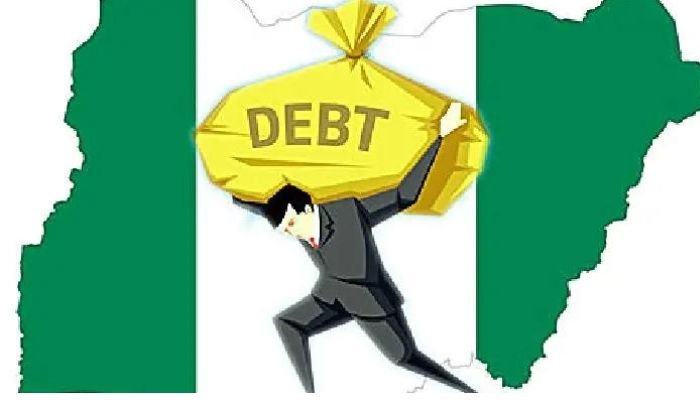
The Director-General of the Debt Management Office, DMO, Mrs. Patience Oniha, yesterday attributed Nigeria high debt profile to lack of revenues and approval of the annual budget with a deficit by the National Assembly, which increased the debt stock of the country.

She said Nigeria had been running on budget deficit for many decades, which in turn affected its revenue profile.

Appearing before the House of Representatives Committee on Finance interfacing with the DMO on the heels of the consideration of Medium-Term Expenditure Framework MTEF and Fiscal Strategy Paper FSP from 2023 to 2025, Oniha said Nigeria was indebted to the tune of N41. 6 trillion

According to her, until the issues of personnel, overhead and capital expenditure are properly addressed in the budget, borrowing will not stop.

She said:  “As you know, we publish the debt numbers quarterly which is why there is a lot of discussions around it. But let me just give some numbers. As at December 2020, the debt stock of Nigeria and that includes the federal, state governments and the Federal Capital Territory, FCT, was N32.92 trillion.

”By December 2021, it was N39.556 trillion. As at March of this year, we publish quarterly, it was N41.6triilion. On the average, (federal government) it is about 85 per cent of the total. Technically, the bulk of it is the federal government’s.

“Debt has grown and that has come really from the annual budget. There are three levels where those borrowings have increased. We have been running deficit budget for many, years. So, each time you approve a budget with a deficit, by the time we raise that money, because when you approve, it is giving us a mandate, authority to borrow.

”It will reflect in the debt stock, so debt stock will increase. Also remember that states are equally borrowing. So we add their own. They also have laws governing their borrowings.

“The Second leg to that really is as debt stock increases, so does debt service. And so, the clear message is go through the budget, we have been having deficit budget for many years and have been borrowing significantly.

How to reduce debt profile

“From COVID in 2020, the level of borrowing had increased significantly as you know. Those budgets pass through this House. The issue is how do you reduce that debt?  One of it is revenues, which we have talked about.

”So, if revenues are high, your deficit will be lower and your new borrowing will be lower and then your new borrowing will be less and your debt stock will be slower and debt service to revenue will now be so high.

“So, the challenge is, we have been borrowing because of shortfalls. So, the other thing to do is let’s look at our expenditure profile, what can we do to reduce this because you are asking me what is the remedy.

”It is from the budget. There is revenue, there is expenditure listed in various categories – personnel, overhead and capital. So, those are what bring out the deficit we borrow for. It is those things that should be interrogated, in addition to increasing revenue significantly.

“Let me say that a World Bank report just showed that in terms of debt-to=GDP ratio, Nigeria is low but for debt-service-to revenue ratio, we are very high. So, if you look at tax-to-GDP ratio of these other countries, they are in multiples of Nigeria.

”The World Bank report did a survey and I think it’s about 197 countries and Nigeria is number 195, meaning we beat only two countries and that was Yemen and Afghanistan and I don’t think we want to be at those places.

”So, we can’t talk about borrowing without talking about revenues and we can’t say why is the debt stock growing. It’s growing because we are running deficit budget and some of you may be aware we are also issuing promissory note to refinance arrears of government, which also comes to the National Assembly for approval.

“What we as DMO have been saying particularly since 2020, when the MTEF for 2021 to 2023 was being prepared, is to say hey, let’s begin to look at revenues because as debt is growing, debt services are increasing.

”So, the language we used was for debt to be sustainable in the medium term, sustainable means you can service your debt without difficulty, without it consuming all your revenues because you have very little for other projects.

”You must look at revenues very closely and I think the discussions you have had with the Customs is one part of it. There are many other revenue generating agencies. So, we must increasingly begin to look at our revenue for funding  activities as opposed to deficit.

“We talk about N11 trillion deficit and borrowing for 2023, how much is the revenue there? That’s one. When we looked at the first tranche that was N10 trillion for full year of subsidy and N9 trillion for subsidy next year, the size of the borrowing was 62 per cent of the budget. That’s high.

”The responsibilities, I think, are on both sides. Query the various expenditure lines and see what it is we can handle. So, if the deficit is lower, the borrowing will be lower and that’s how to grow on a slower pace.”

The DMO DG justified the past borrowings, pointing to the modernization of the airports and the construction of more rail-lines and roads.

“I think we should be fair to ourselves as people serving Nigeria to say we can’t see what we use the borrowing for.  This might not be exactly true. Look at the airports. How many do you have?

”You have a new international airport in Abuja, you have the modernization in Kano, even Enugu that is now international. Those came from borrowings. The rail-lines have also come from borrowings.

”So, it is not a zero performance. Those things generate revenue in some other countries. We have those projects not just this one in Abuja, then on Sukuk, which is a project tied borrowing, you have seen those ones,” she said.

In his remarks, deputy chairman of the committee, Saidu Abdullahi, who presided over the session, said that the country was on a good pedestal to keep borrowing.

“I want to appreciate the fact that for a developing country, the need for borrowing will always be there. It doesn’t matter how much we make, the country must borrow.

”What we should be interested in is the sustainability of what we are borrowing and from what she has said, the country is on a good pedestal in terms of managing its borrowing,” he said.

source: vanguard

September 2, 2022 0 comments
0 FacebookTwitterPinterestThreadsBlueskyEmail
Risevest
BusinessHeadlines

Risevest CEO Resigns Over Sexual Misconduct

by Folarin Kehinde August 31, 2022
written by Folarin Kehinde

Risevest Chief Executive Officer and founder, Eke Urum, has stepped down to allow investigation into his alleged sexual misconduct.

The company disclosed this on Tuesday as pressure on the embattled CEO intensified.

The company was founded in 2019 by three partners Bosun Olanrewaju, Eke Urum, and Tony Odiba, to help people invests money in dollar denominated assets.

“Following allegations of sexual and non-sexual impropriety from someone who can be reasonably expected to have knowledge of such, investors of Risevest have asked Eke Urum to step aside from his role as founder and CEO and an independent investigation is ongoing,” Risevest said in an earlier statement.

The company on Tuesday however said that Urum has resigned from his role.

Risevest said, “In light of allegations of abuse of power and sexual impropriety, Eke Urum, willingly agreed to step aside as the CEO of Risevest as of August 3, 2022, to allow for a six-week investigation, set up by Risevest’s investors, to run its course.

“We are committed to getting to the root of the matter and have launched a formal investigation to achieve this. The situation is being handled with utmost transparency through an independent panel with no affiliation to employees of Risevest.

“We want to assure our stakeholders and the general public that we continue to operate optimally as a company, and our customers will continue to enjoy the highest quality of services and support. Here are answers to some of the questions you may immediately have.”

“The current Head of Operations, Tony Odiba, who has been with Risevest since its inception, has been leading the company as the interim CEO, while Otasowie Evbuomwan still leads Risevest’s United States Operations. Risevest as a company has zero tolerance for abuse, harassment, and misconduct and is committed to establishing the truth of this matter while also reviewing policies to ensure a safer workplace.

source: thewhistler

August 31, 2022 0 comments
0 FacebookTwitterPinterestThreadsBlueskyEmail
SMEDAN
BusinessHeadlines

A Report On SMEDAN Boss Address To Journalists

by Folarin Kehinde August 30, 2022
written by Folarin Kehinde

The last report of the SMEDAN/NBS National Survey of the Micro, Small and Medium Enterprises (MSMEs) put the total number of enterprises in the sub-sector at well over 39 million providing a total of over 61 million employments and about 49% of total Gross Domestic Product (GDP) in Nigeria. As important as the sub-sector is to the national economy, it is still encumbered with several challenges which the COVID-19 pandemic and the ongoing Ukraine-Russia have further worsened.

Essentially, the challenges of MSMEs usually border on access to finance, market, equipment, information, technical and entrepreneurial skills and workspace. These were some of the fundamental challenges that informed the establishment of the Small and Medium Enterprises Development Agency of Nigeria (SMEDAN) vide the SMIDA Act in 2003.

Having existed for close to two decade, the Agency has had four past Director-Generals to pilot the structured, sustainable and efficient development of the MSMEs in Nigeria. It will interest ladies and gentlemen of the Press to note that my appointment as the Director-General by Mr. President on June 6th, 2022 is the first time that a staff of the Agency will be at the helms of affairs to drive the sustainable and inclusive development of the sub-sector.

The import of this is that expectations from Stakeholders are expectedly and justifiably high to help address the problems of MSMEs in Nigeria. Having worked very closely with all the past Director-Generals, I owe it a duty to significantly build on the foundations laid by my predecessors so as to cause a positive shift in the MSMEs development narratives in Nigeria. It is in view of this that I have the rare privilege of engaging with you to enable me share my vision for this very important but highly endangered sector of Nigeria’s economy and also get feedbacks from you.

It may interest you to learn that I have already started engaging with the Staff of the Agency and other MSME-enabling Stakeholders. It is going to be continuous both locally and internationally. I will be paying courtesy visits to key Agencies of Government and non-government stakeholders. I will be meeting some key Stakeholders here in Lagos tomorrow to enable me harvest inputs directly from real MSME players. I am however aware that they were consulted during the process of reviewing the National Policy but the MSME space is very dynamic requiring regular engagements and feedbacks.

Like you are aware, there are programs and projects in the Agency that were carefully designed to address some of the challenges of MSMEs but it has become necessary to start reviewing such based on the feedbacks that this ongoing engagements from the MSMEs will give us.

Part of what we hope to achieve during my tenure is to ensure that I have capable, competent, skilled and healthy workforce. In this regard, I have instructed the appropriate Department to put in place specific trainings to bridge identified gaps among staff. I have also directed that every staff of the Agency must be afforded an opportunity to check their health status at least twice a year. This will help in early detection of ailments that could become life threatening and with negative impacts on staff productivity.

D-8 Centre for SMEs is a proposal we have submitted to the D8 Secretariat. D8 also referred to as Developing-8 is an international organisation specifically established for the development cooperation among the following countries: Bangladesh, Egypt, Indonesia, Iran, Malaysia, Nigeria, Pakistan and Turkey. This is intended to help promote, encourage, advance and support the activities of MSMEs at the national level as well as within the D-8 region to further strengthen economic, trade and commercial integration and linkages. Therefore, the establishment of the D-8 Centre for Small and Medium Enterprises (SMEs) will unleash substantial development impacts. Synergies between and among the Centre and relevant national agencies/authorities, D-8 Secretariat and other bodies will provide tremendous opportunities for MSMEs to connect and jointly explore opportunities on transforming scientific innovations at the national level into development solutions for the D-8 family. In line with the foregoing, we are currently working with the Ministry of Foreign Affairs, Ministry of

Industry, Trade and Investment, Nigeria Export Promotion Council and other stakeholders to host a D8 SME forum in Nigeria towards the end of August 2022.

Submission of request to the Commonwealth Secretariat to access the Commonwealth’s technical assistance on Women and Youth Support Programs with specific focus on:

The training of women entrepreneurs on e-commerce known as “Digital Boot Camp” for women to know how to design their website and carry out trade across borders;

Participation in the activities of the Intra-Commonwealth MSME Association with the mandate to create a platform for MSMEs across the Commonwealth to meet, interact and trade through some partnerships;

TECHNICAL SUPPORT FOR RESEARCH ACTIVITIES BY THE AGENCY.

Phased movement to a more strategically located Headquarters within the IDC, Idu. The present location of the Agency’s headquarters has become very inadequate and not easily accessible because of the massive vehicular traffic. The relocation, which is to begin towards the end of the year will create space for the Agency’s proposed Micro Finance Bank, MSME Innovation Hub, Training Resource Centre, SMEDAN FCT office, etc.

Establishment of the SMEDAN Micro Finance Bank is aimed at addressing the peculiar challenges of MSMEs with regards to access to funds. The Agency had in the time past advocated for special Funding window for MSMEs but this has not been achieved even with the creation of some development banks. Consequently, we are partnering with some BMOs as investors for the seamless take-off of the Bank.

The Agency is present in all the 36 States of the Federation with Zonal Offices in different parts. Part of my focus is to ensure that both the Zonal and State Offices are adequately staffed in enabling environments. Our Abuja Office will occupy part of the present location of the Agency’s headquarters by the time we conclude relocation to the new Head Office in Idu. In view of funding constraints, we shall be working more closely with State Governments and development partners to achieve this.

Implementation of the National Business Skills Development Initiative (NBDSI) designed to enhance the operational capacities of MSMEs in Nigeria through intensive training and distribution of starter packs. The Agency intend to empower a minimum of 90 participants in each State of the Federation. So, we should be able to produce a minimum of 3,330 new and existing entrepreneurs before the close of 2022.

One-Local Government One Product (OLOP) seeks to develop enterprises in rural communities in line with the available resources for wealth creation through tailored enterprise management development skills and access to incremental technology. The target for this year is to assist 214 Cooperatives in 214 LGAs across 29 States of the Federation.

Conditional Grant Scheme essentially seeks to formalise some of the Nano/Micro enterprises that have growth potentials. The package includes tailored capacity building, provision of grants and establishing relationships with the formal banking sector and other critical compliance institutions. The 2022 target is 10,000 beneficiaries that will be spread across 9 States of the Federation.

The implementation of the recommendations of the revised National Policy on MSMEs has commenced with the Honourable Minister of State, Federal Ministry of Industry, Trade and Investment inauguration of the Focal Persons Group. This will be followed up with a capacity building jointly organised between SMEDAN and the GIZ. The Policy Implementation Coordination Mechanism drives the entire process for delivering the objectives of the National Policy. The inauguration of the National Technical Implementation Committee, Monitoring and Evaluation Committee and the National Council on MSMEs are scheduled for the later part of the year. Till date, 21 States have inaugurated their State Councils to work closely with the National Secretariat on the implementation of the National Policy on MSMEs recommendations. Let me use this opportunity to appeal to States that have not inaugurated or with moribund State Councils to establish or reactivate them.

The 1st ever Agency-wide Strategic Plan was initiated in 2021 to position the Agency to perform its primary role of defining the direction for MSMEs growth and development. It is also to help coordinate MSME programs across all relevant MDAs. The Plan which is woven around the revised National Policy on MSMEs and with clear Key Performance Indicators (KPI) is ready for implementation and we intend to implement it to the latter.

As a step towards improving the productivity of the Agency’s staff, we have initiated the process with the appropriate approving authorities for an improved condition of service

One of the major challenges that have stalled most start-ups and hindered the growth of existing enterprises is the poor access to functional workspace. Our target is to re-purpose the 23 Industrial Development Centres (IDCs) into affordable workspaces for MSMEs located within the precinct of the IDCs.

The SMEDAN Tertiary Institution Entrepreneurship Development Programme (TINEDEP) is a component of the Mind Shift Entrepreneurship Programme implemented in partnership with the Enterprise Development Centre (Pan-Atlantic University, Lekki, Lagos. Our target for 2022 is to ensure that 25 tertiary institutions (Universities and Polytechnics) are randomly and competitively selected to participate in the TINEDEP program.

The objectives include but not limited to the followings:

Assist students in exhibiting creativity and innovations;

Help students to identify their potentials early enough and help them develop it;

Stimulate students to value enduring wealth creating possibilities and become wealth creating warriors;

Channel the energy of youths to positive and productive ends, etc.

There is no doubt that SMEDAN has done so much with regards to the provision of supports to MSMEs across the country. The National Survey on MSMEs however reported that awareness about the Agency is still relatively low. Regular engagements with the Media, CSOs and other stakeholders will help in publicising some of the achievements of the Agency.

State Level Annual Impact Assessment is an initiative of the Agency that seeks to measure the post-intervention effects on beneficiaries. The report considers the changes in employment, access to new markets, use of improved processing methods, access to funds and several other variables that indicate growth in enterprises.

Participation of MSMEs in local and international fairs allows participating MSMEs to have access to both local and international markets and new technologies. The Agency has facilitated the participation of several MSMEs in different Fairs either within or outside the shores of this country.

The MSMEs Competitiveness Research is to understand the challenges that have over time limited Nigerian MSMEs from taking advantages of the global markets and other initiatives such as the AGOA and AfCTA initiatives. This is expected to address such challenges in a more coordinated and sustainable manner with the hope of increasing their contributions to the national GDP.

The Agency is also working on the possibility of creating a pool of Business Development Service volunteers that will regularly visit MSMEs to provide critical support and advisory services. To complement this, the Agency is to deploy the technically trained staff of the Agency to deliver intensive Business Development Services to MSMEs.

As part of the efforts of the Agency to attend to the challenges of workspace that most MSMEs usually encounter, the Agency is re-purposing the 23 IDCs to provide functional workspace and business incubation to MSMEs either on a temporary or permanent basis.

In the Agency’s attempt to ensure inclusiveness in our programs we have initiated a special capacity building program for people with Special abilities. This is with a view of providing them with an opportunity for economic self-reliance and reduction of the stigma.

The Agric Development Enterprise program seeks to train farmers on necessary technical skills required to develop the value chain of specific agricultural products through the National Agro-Entrepreneurship Training Scheme. It also seeks to, through the Product and Marketing Enhancement Scheme develop products to meet minimum export requirements.

The Matching Fund is an initiative that seeks to bridge the funding gaps experienced by MSMEs through partnership with interested financial institutions. MSMEs are able to access funds with a single digit interest rate. Efforts are also being made to leverage on international grants and funding for MSMEs.

The Garment Cluster initiative of the Agency is targeted at providing support to those in the garment industry through the delivery of tailored capacity building to garment makers with a view to go into mass production for both the local, national, regional and international markets.

Towards bridging the huge information gaps that exist within the MSME community, SMEDAN has built the capacities of Head Office, Zonal and State officers to offer Business Clinic in all the States. This is intended to provide diagnostic solution to business challenges in a structured manner.

As part of the new approach, deliberate efforts will be made to ensure regular inter-Agency cooperation and networking with Stakeholders to leverage on available opportunities and close the gaps that exist among key players within the MSME space.

There is no doubt that the media will help in achieving the mandate of the Agency hence today’s interactive session which is intended to be on a regular basis.

I want to thank you all for your past supports and I sincerely will crave for more support from you all to enable the Agency succeed in achieving her mandate.

August 30, 2022 0 comments
0 FacebookTwitterPinterestThreadsBlueskyEmail
BusinessHeadlines

Nigerians Become Second Highest Visa Recipients in UK

by Folarin Kehinde August 29, 2022
written by Folarin Kehinde

Nigerians have emerged the second highest recipients of United Kingdom’s Worker Visa from December 2019 to June 2022. Nigeria was only topped by Indian nationals whose recipients increased from 57,087 to 102,981 in the same period.

This was disclosed by the UK Home Office in its National Statistics report titled, “Why do people come to the UK? To work”, published on Thursday, August 25, 2022.

The report disclosed that the UK Government Worker Visa approvals increased from 113,555 in 2019 to 222,349 by year ending, June 2022, a 96% increase.

The report revealed that Nigerian visa approvals had increased by 11,854, a 303% level change from 3,918 in December 2019 to 15,772 in June 2022, making Nigerians the second highest recipients.

Meanwhile, in the same period, Indian workers grew 80%, a growth of 45,894, from 57,087 in December 2019 to 102,981 by June 2022.

It added that the “Worker” visa category which was previously known as “Skilled worker” visa, includes sponsored visas which typically lead to settlement.

The report stated, “In the year ending June 2022, ‘Worker’ visa grants increased by 96% (+108,794) to 222,349 compared with 2019, and now represent 67% of all work visas.

“There were 87,266 grants of ‘Skilled Worker’ visas and an additional 96,249 grants of ‘Skilled Worker – Health & Care’ visas. Grants for ‘Skilled Worker’ visas have grown every quarter since they were first introduced in December 2020, and together represent over half (55%) of all work visas granted in the latest year.

“The ‘Senior or Specialist Worker (Global Business Mobility)’ route was launched in April 2022 to replace the ‘Intra-company Transfer (ICT)’ visa and there have been 2,927 grants to main applicants up to the end of June 2022. Excluding dependants, ICT-related visas together represented 18,247 grants which is 33% lower than the 27,138 visas granted in Tier 2 ICT routes in 2019, continuing the decline since 2016 seen in these visa routes.

The report also added that Indian nationals continue to be the top nationality granted ‘Worker’ visas, accounting for 46%. It also saw the greatest increase across all nationalities, increasing by 45,894 (+80%). In contrast, grants to nationals of the United States fell by 1,474 (-16%).

August 29, 2022 0 comments
0 FacebookTwitterPinterestThreadsBlueskyEmail
eNaira lanuching with President Buhari
BusinessHeadlines

CBN: eNaira Records Over 4bn Naira Transactions

by Folarin Kehinde August 26, 2022
written by Folarin Kehinde

The Central Bank of Nigeria (CBN), digital currency, eNaira has recorded 200,000 volumes and four billion Naira value of transactions since its inauguration in 2021.

Mr Godwin Emefiele, the CBN Governor said this on Thursday in Abuja at the grand finale of the “eNaira Hackathon”.

The News Agency of Nigeria (NAN) reports that the hackathon is a CBN’s collaborative initiative with the African Fintec Foundry (AFF).

it is aimed at bringing together teams of talented entrepreneurs, developers, designers, solution developers, problem-solvers and ‘code magicians’ from Africa to develop innovative solutions for improved adoption of the eNaira.

The competition was part of efforts by the CBN to drive financial inclusion, facilitate macroeconomic growth and integrate the Nigerian economy into the world-leading economies through innovation and cutting-edge emerging technologies.

NAN also recalls that the eNaira was inaugurated on Oct. 25, 2021 by President Muhammadu Buhari, making Nigeria the first African country to launch a Central Bank Digital Currency (CBDC).

Emefiele said since its inauguration, eNaira had reached 840,000 downloads, with about 270,000 active wallets comprising more than 252,000 consumer wallets and 17,000 merchant wallets.

According to him, the digital currency will enhance financial inclusion, support poverty reduction, enable direct welfare disbursement to citizens, support a resilient payments ecosystem and improve availability and usability of central bank money.

“The eNaira will also facilitate diaspora remittances, reduce the cost of processing cash, and also reduce cost and improve efficiency of cross-border payment,” he said.

The apex bank governor, however, said that the eNaira was the same Naira with far more possibilities.

“The eNaira will make a significant positive difference to Nigeria and Nigerians. It was also developed to provide Nigerians with a cheap, safe and trusted means of payment.

“It is unlike the offline payments channels like agent networks, USSD, wearables, cards and near field communication technology.

“The eNaira would give access to financial services to underserved and unbanked segments of the population,” he said.

He said that innovative products and services built on the eNaira would enhance Nigerians’ participation in the digital economy and promote further development of a burgeoning Fintech ecosystem.

“To achieve these set out objectives, the project adopted a phased- approach with the first phase focusing on banked users, while the policy objective of the second phase borders around financial inclusion.

“In addition, the eNaira platform possesses an innovation layer for products and services to be built with the aim of enhancing Nigerians’ participation in the digital economy,” he said.

According to Emefiele, the second phase of the project has begun and is intended to drive financial inclusion by onboarding unbanked and underserved users leveraging offline channels.

He said that the CBN was now ready to accommodate unbanked Nigerians in the eNaira platform

“Greater success is envisioned for the project with phase two expected to deliver more gains with a target of about eight million active users based on estimations using the diffusion of innovation model.

“When we launched the eNaira, we promised to increase the level of financial inclusion in the Country because just like the Naira, the eNaira is expected to be accessible to all Nigerians .

“It will provide more possibilities to bring in the unbanked into the digital economy.

” I am pleased to inform you that by next week, Nigerians, both banked and unbanked, will be able to open an eNaira wallet and conduct transactions by simply dialling *997 from their phones,” he said.

According to Mr kingsley Obiora, CBN’s Deputy Governor, Economic Policy, the use of physical cash is gradually getting out of fashion across the globe due to the growth of digital currencies.

“In south Korea, 77 per cent no longer use cash to do payment, while in the Philippines it is 30 per cent.

“In Nigeria, we are also seeing the same decline in the use of cash, the minting of currencies in the CBN has been reducing in the last couple of years.

“So alongside this reduction in the use of cash has also been an explosion in e-business and we have seen the value of e-business grow from 393 billion dollars in 2014 to about 2.4 trillion dollars now.

“If you look at this movement, you will realise that the central banks in the world are responding to yearnings of citizens.

“That is why 96 per cent of central banks in the world are either working on digital currencies or they have done so already,” he said.

Daniel Awe, the Group head, AFF, said that the CBN had transformed from traditional regulator to a smart regulator.

Awe said that the Hackathon was a platform that brings entrepreneurs, coders and product managers together to solve problems and build new business model.

“All over the world, there has been disagreement between innovators and regulators.

“This is because regulators usually look at impact on financial stability, impact of those innovators on consumers as well as the risk, while the innovators look at the opportunity in their ideas.

“However, this CBN is different as it has over the years partnered with innovators that will create jobs and bring value,” he said.

source: vanguard

August 26, 2022 0 comments
0 FacebookTwitterPinterestThreadsBlueskyEmail
Newer Posts
Older Posts

Recent Posts

  • Tinubu’s Address at Windsor Castle State Banquet [FULL STATEMENT]

    March 19, 2026
  • Three security agents collapsed during Soludo’s 2nd term inauguration

    March 17, 2026
  • Insecurity: Tinubu orders service Chiefs to relocate to Maiduguri

    March 17, 2026
  • WikiLeaks’ Assange says ‘no dirt’ on Trump, praises former US President

    March 15, 2026
  • Tinubu: BAT Movement Reaffirms Support for Second Term

    March 14, 2026

Usefull Links

  • Contact Page
  • About Leading Reporters
  • Contact Us
  • Headlines
  • Investigation
  • Exclusives
  • Opinion
  • Business
  • Facebook
  • Twitter
  • Instagram
  • Linkedin

@2021 - All Right Reserved. Designed and Developed by PenciDesign


Back To Top
Leading Reporters
  • Featured
  • Politics
  • Opinion
  • Business
  • Entertainment
  • Sports
  • About Us
  • Contact