
Leading Reporters
  • Headlines
  • Health
  • Business
  • Exclusives
  • Investigation
  • Entertainment
  • Opinion
Saturday, April 11, 2026
Hot
U.S. Evacuates Staff, Suspends Visa Processing in Abuja
Multiple Factions Emerge in Ruling APC Sparking Leadership...
Dangote Refinery Slashes Petrol Price to N1200
FG Budgets N135bn For 2027 INEC Lawsuits
New Terror Group, Mamudawa, Kills 4 in Kebbi...
BREAKING: Kebbi assembly speaker dies in Egypt
Exposed: Investigation Reveals Questionable Direct Payments in Nigeria...
Easter: Student playing Jesus hospitalised after intense Good...
Easter: NSCDC deploys 57,000 personnel nationwide
Tinubu summons Plateau governor over Jos attack
  • About Leading Reporters
  • Contact Us
Leading Reporters
Advertise With Us
  • Headlines
  • Health
  • Business
  • Exclusives
  • Investigation
  • Entertainment
  • Opinion
Hot
U.S. Evacuates Staff, Suspends Visa Processing in Abuja
Multiple Factions Emerge in Ruling APC Sparking Leadership...
Dangote Refinery Slashes Petrol Price to N1200
FG Budgets N135bn For 2027 INEC Lawsuits
New Terror Group, Mamudawa, Kills 4 in Kebbi...
BREAKING: Kebbi assembly speaker dies in Egypt
Exposed: Investigation Reveals Questionable Direct Payments in Nigeria...
Easter: Student playing Jesus hospitalised after intense Good...
Easter: NSCDC deploys 57,000 personnel nationwide
Tinubu summons Plateau governor over Jos attack
Leading Reporters
Leading Reporters
  • Headlines
  • Health
  • Business
  • Exclusives
  • Investigation
  • Entertainment
  • Opinion
Copyright 2024 - All Right Reserved
Home > Business > Page 24
Category:

Business

fasanya Smedan
BusinessHeadlines

Fasanya Task MSMEs to Embrace Innovation for Global Relevance

by Folarin Kehinde October 11, 2022
written by Folarin Kehinde

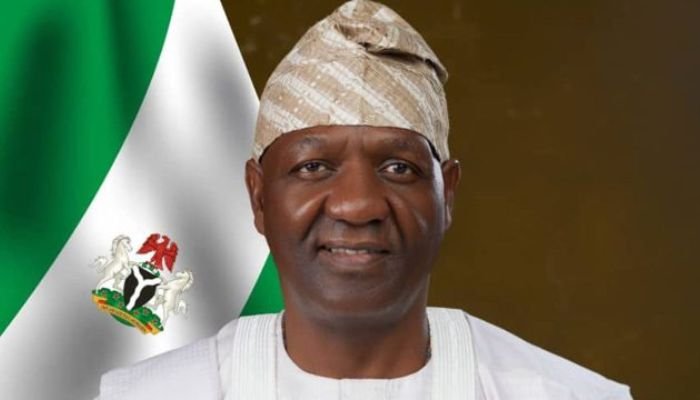
SMEDAN DG, Olawale Fasanya has encouraged MSMEs to adopt innovative packaging and branding to ensure their products remain relevant in the international market.

The Director-general of the Small and Medium Enterprise Development Agency of Nigeria (SMEDAN) Olawale Fasanya,, made this statement in Abuja, at the implementation of packaging and branding programme for small and medium enterprises (SMEs) products on the Africa Continental Free Trade Area (AfCFTA).

Fasanya said SMEDAN intends to push Nigeria’s export target further to $35 billion over the next five years through sustained and vigorous implementation of the packaging and branding programme for SMEs.

According to him, Nigerian businesses must wake up and begin to think and act creatively, become measured risk takers, and problem solvers.

“They must also pursue the highest standards attainable in production and service delivery so as to remain relevant in the international market,” he said.

“One of the challenges confronting Nigerian exports is rejection and under-pricing of their products in the international market,” the SMEDAN boss said.

“Some of the reasons adduced for this trend include poor product quality, poor packaging and branding, lack of information on the nature and dynamics of global market and disregard for basic requirements.

“Others are inadequate policy arrangements between Nigeria and export-destination countries and delays at the Nigerian ports leading to expiration of the product shelf life or depreciation of product value.”

Fasanya further noted that innovative packaging protects products along the value chain and provides essential information about the maker and the exporter.

It is also essential for cleaner, more convenient product presentation and less susceptible to losses from theft, evaporation, spilling, spoilage and damage while innovative branding offers ease of product identification and enhances corporate image among others,” Fasanya added.

The director-general further highlighted high export trade as a catalyst for sustainable economic development, adding that through export trade Nigeria earns vital foreign exchange, increases her revenue base, foreign reserve and avoids trade deficit.

“The Observatory of Economic Complexity (OEC) once ranked Nigeria as the 49th largest export economy in the world, having exported goods worth $47.8 billion and imported goods worth $39.5 billion,” he said.

“Nigeria’s non-oil export is projected to hit $25 billion by 2025, from $2.7 billion in 2022, according to the Nigerian Export Promotion Council (NEPC),” he said.

Fasanya added that the programme would increase the number of SMEs that would meet AfCFTA standards as well as enhance cluster development and improve common processing facilities and value addition.

October 11, 2022 0 comments
0 FacebookTwitterPinterestThreadsBlueskyEmail
BusinessHeadlines

Inside Details of China’s Link in Nigeria Mining sector

by Folarin Kehinde October 10, 2022
written by Folarin Kehinde

Numbers published in an audit report by the Nigeria Extractive Industry Transparency Initiative (NEITI) suggest a significantly healthy China and Nigeria bilateral relation. At least, the country’s mining sector gives a glimpse of it.

Data sourced from NEITI, a transparency watchdog, showed companies owned by Chinese nationals are the largest mining companies in Africa’s biggest economy.

The NEITI’s report showed mining activities in Nigeria in 2020 were carried out by 102 companies. Information about beneficial ownership was provided for 65 of these companies.

Details of ownership show that 28 of them were owned by Chinese nationals. This means 43.08percent of the companies that mined minerals in 2020 were owned by Chinese nationals.

Further insight showed Nigerians owned 23 of these total 102 companies. The companies owned by Nigerians made up 35.38 percent of the total that mined minerals in 2020.

Beneficial ownership of other companies showed Lebanese owned 3 of these companies, and two were owned by Germans. One company was owned by an Indian, a Liberian, and an American.

The NEITI also showed that 102 companies produced 64.61 million tons of 38 different minerals. The top five minerals were limestone, granite, sand, laterite, and clay.

Production output by the company’s national ownership shows companies owned by Nigerians produced the highest output in 2020. These companies were able to produce 33.49 million tons of mineral products in the year. These made up 51.85percent of the total mineral output.

Companies whose owners were not specified produced the second largest output in the year. Their output, which amounted to 21.39 million tons, comprised 33.12percent of the total output.

The Chinese company produced the third largest output in the year. These companies produced 4.24 million tons of mineral products, accounting for 6.57percent of the total.

German and Lebanese-owned companies produced the fourth and fifth largest output. 3.46 million tons were produced by German-owned companies, while those owned by Lebanese produced 1.45 million tons.

The market value of these minerals as of 2020 summed up to N120.49 billion. Of these, the minerals mined by Nigerian companies were N28.76 billion. This was 23.87percent of the total market value.

Those whose owners were unknown were valued at N76.81 billion, comprising 66.24percent.

The Chinese-owned companies placed third behind those by Nigerians. These companies produced output valued at N5.68 billion, comprising 4.71percent of the total market value.

However, China was the primary benefactor of the output from the mineral sector in 2020. The total export volume in 2020 was 32,992 tons from 30 different minerals. Out of this, 26,550 tons of these were exported to China. This represented 80.48percent of the total export volume.

This means other countries with export destinations received 19.52percent of the 32,992 tons exported.

Inside details of China’s link in Nigeria’s mining sector

The export value shows that 85.07percent of the $42.46 million in exports went to China. China’s export value of the mineral product in 2020 was $32.12 million. The other countries exported 14.93percent of $42.46 million worth of mineral products from Nigeria in the year.

A report by KPMG, a multinational professional services network, and one of the Big Four accounting organisations showed despite the widespread economic impacts of the coronavirus in 2020, Nigeria’s mining sector exceeded the budgeted revenue of the Federal Government (FG) in 2020 by about 10 percent (N2.09billion as against N1.9billion).

The sector also increased its contribution to the Nation’s Gross Domestic Product (GDP) by about 23percent in 2020.

Despite its huge potential, researchers at CSL Stockbrokers warned that illegal mining activities had continued to wipe gains in the sector.

They said, “Despite the endowment of mineral resources in Nigeria, the solid minerals sector has significantly underperformed with a meagre contribution of less than one percent to the GDP over the years.

“The figure is, however, solely from formal channels as the artisanal and small-scale mining activities that constitute over 80 percent of the current mining activities in the country are unaccounted for.”

This is where Nigeria’s mining problem lies. Nigerians, noted the Capstone report, have practised informal artisanal mining for centuries.

It said, “Today, the activity is largely poverty-driven and supports the livelihoods of at least 500,000 people. Partly due to its informality, artisanal mining is associated with many negative externalities such as environmental degradation, crime and health hazards.

“One tragic example is the 2010 lead poisoning outbreak in Nigeria’s northwestern Zamfara State, which killed approximately 400 children and has affected thousands more.”

Job creation is another benefit Nigeria is missing out on by leaving the sector underdeveloped.

Australia has about 320,000 direct jobs attributable to the mining sector, while over 200,000 jobs have been created in Canada through the mining sector.

Nigeria, rich in over 34 solid minerals, has over 23 million of its citizens with no jobs.

source

October 10, 2022 0 comments
0 FacebookTwitterPinterestThreadsBlueskyEmail
SMEDAN
BusinessHeadlines

SMEDAN Empowers Over 40 Retirees In Ondo State

by Folarin Kehinde October 10, 2022
written by Folarin Kehinde

The Small and Medium Enterprises Development Agency of Nigeria (SMEDAN) has trained over 40 retirees from Ondo State on special skills development.

The programme was organized as a part of SMEDAN’s efforts towards skill development and financial independence for the retirees.

Over 40 retirees were drawn from both State and Federal government civil service.

They were trained under the specialized skills development for Micro, Small and Medium Enterprises (MSME) and were empowered with tools like Vulcanizer Machines, sewing machines and Shoe making equipment.

Those tools were given according to the area of speciality the retirees were trained under.

Speaking during the programme, the Director General of SMEDAN, Mr Olawale Fasanya, said the programme was put together to alleviate poverty among retirees and to promote self-reliance, saying the retirees would also contribute to the economic development through job creation.

Fasanya who disclosed that the programme took place in the six geo-political zones in the country, explained that the programme was specially developed to address boredom and lack of financial security, which were some of the major challenges confronting retirees.

He expressed confidence that the training would support the retirees in attaining a stress-free retirement period and also ensure the development of new skills towards self-reliance and financial independence.

He said “I implore you to ensure you utilise the knowledge acquired from the vocational and entrepreneurship training to start or improve your existing business and take it to the next level.

“Most importantly, the equipment the agency is providing for you to run your business is expected to be used for the business and not to be diverted to other uses or sold outrightly.

“The agency’s business development service team will always be with you and support you to effectively translate the newly acquired knowledge, information and equipment to visible and concrete improvements in your business,”

The Director-General assured stakeholders that the agency would continue to support all entrepreneurs towards ensuring job creation, wealth creation, poverty alleviation and food security.

October 10, 2022 0 comments
0 FacebookTwitterPinterestThreadsBlueskyEmail
Buhari
Business

President Buhari Presents 2023 Budget To National Assembly

by Folarin Kehinde October 7, 2022
written by Folarin Kehinde

President Muhammadu Buhari has today presented the budget of 2023 Fiscal year to the national Assembly.

Security operatives were seen in around the National Assembly Complex Abuja as the President, Major General Muhammadu Buhari (retd.), lays the 2023 Appropriation Bill before a joint session of the National Assembly on Friday.

The President entered the temporary chamber of the House of Representatives, venue of the ceremony, at 10:07am.

Buhari is to present the N19.76tn budget of the Federal Government to the parliament at a ceremony scheduled to commence at 10am.

There is heavy presence of personnel from military, paramilitary and safety agencies on the premises.

Men of the Nigerian Army, Nigeria Police Force, Nigerian Security and Civil Defence Corps, Department of State Services, Federal Road Safety Corps, Federal Fire Service and sergeants-at-arms were deployed for the special duty.

The security operatives have manned strategic points in and around the building, with stricter security checks on vehicles and persons entering the building.

Select members of staff, essential service providers and journalists were issued tags to gain access into the premises.

October 7, 2022 0 comments
0 FacebookTwitterPinterestThreadsBlueskyEmail
BusinessHeadlines

SMEDAN Trains Bauchi Residents On Digital Marketing

by Folarin Kehinde October 6, 2022
written by Folarin Kehinde

The Small and Medium Enterprises Development Agency of Nigeria (SMEDAN) has commenced training of 30 business men and women on digital skills in marketing of their businesses in Bauchi State.

The Manager, SMEDAN, Bauchi office, Mr Abdulrasheed Aliyu, said this at the training on Thursday.

Aliyu said that the programme was designed under the digital skill training of the agency, in collaboration with a digital institution known as ‘Mind the Gap Nigeria’.

Aliyu, who said that 19 states were picked across the country for the training, added that the participants were representatives of various unions in the markets.

According to him, things are changing in the business world where more people embrace online shopping, hence the training to equip the participants with skills to operate their businesses online and to compete with their counterparts from other developed countries.

“We understand that most businesses now go online and most people are doing their businesses virtually traditionally and one of the missions of SMEDAN is to develop small and medium enterprises to boost their businesses.

“We introduced this training to give them knowledge of how they can go online to do their businesses both nationally and internationally, and that’s why we call it digital skill marketing.

“We want to train our small business owners on how to go online and do their businesses by marketing their products and get more customers for them to get more profit,” he said.

Aliyu also said that the trainer, an expert in Information Communication Technology (ICT), would teach the participants how to go online, and also how to protect their websites as well as how to evade hackers or scammers.

He advised the trainees to take the training very seriously, adding that they would have spent nothing less than N50,000 to acquire the training from a private individual but they were now being given free of charge.

Speaking, Mr Zack Ibrahim, the Trainer and the Community Manager, Mind the Gap Nigeria, Bauchi State Chapter, said the trainees would be trained on how to operate their businesses online locally and internationally.

Ibrahim also said they would be trained on how to provide their services to the people beyond their reach and locality.

“A time will come when people won’t go physically to buy things and this is already happening, especially in advanced countries.

“They should take the training very seriously because by the time they know how to make use of the skills, it will help their businesses.

“It would grow their businesses very well, in fact even in their finances, they will see changes,” he said.

Responding on behalf of the participants, Malam Bala Wunti appreciated the Federal Government and SMEDAN for the ‘laudable’ training, adding that it would enhance their businesses.

He promised to pass the knowledge acquired during the training to other business people not lucky to have been selected for the training.

source

October 6, 2022 0 comments
0 FacebookTwitterPinterestThreadsBlueskyEmail
BusinessHeadlines

World Bank Predicts Nigeria Economy Shrink To 3.2% In 2023

by Folarin Kehinde October 5, 2022
written by Folarin Kehinde

The World Bank has lowered its economic growth forecast for Nigeria in 2023 to 3.2 per cent from 3.3 per cent, citing slowdown in global growth, the war in Ukraine and including declining demand from China for commodities produced in Africa.

Citing similar conditions, the World Bank also projected that the Sub-Saharan African region will record a lower economic growth of 3.3 per cent in 2022 from 4.1 per cent recorded in 2021.

Consequently, the World Bank called on the governments in the Sub-Saharan African region to urgently implement measures to restore macro-economic stability and protect the poor in a context of slow growth, high inflation.

The forecasts were contained in the October edition of the World Bank’s Africa’s Pulse, a biannual analysis of the near-term regional macroeconomic outlook, and economic growth in Sub-Saharan Africa (SSA).

Highlighting the growth factors for Nigeria’s economy, the World Bank said: “The Nigerian economy is projected to slow in 2023, down to 3.2 per cent (from 3.3 per cent) and persist at this level the following year.

Growth will be supported mainly by the rebound in private consumption prompted mostly by accommodative monetary policy as inflationary pressures subside.

“Private consumption expenditure is forecast to decrease this year and grow next year. This performance will likely continue in 2024.

On the production side, growth in 2023 will be supported by industry (with the growth of 5.1 per cent) with the mega-refinery project.”

On its growth forecast for the Sub-Saharan African region, the World Bank said: “Economic growth in Sub-Saharan Africa (SSA) is set to decelerate from 4.1% in 2021 to 3.3% in 2022, a downward revision of 0.3 percentage points since April’s Pulse forecast, mainly as a result of a slowdown in global growth, including flagging demand from China for commodities produced in Africa.

On the factors undermining economic growth in SSA, the World Bank said: “The war in Ukraine is exacerbating already high inflation and weighing on economic activity by depressing both business investments and household consumption. As of July 2022, 29 of 33 countries in SSA with available information had inflation rates over 5% while 17 countries had double-digit inflation.

October 5, 2022 0 comments
0 FacebookTwitterPinterestThreadsBlueskyEmail
BusinessHeadlines

SMEDAN Committed To Job and Wealth Creation For MSMEs – Fasanya

by Folarin Kehinde October 5, 2022
written by Folarin Kehinde

The Director General and Chief Executive officer of the Small and Medium Enterprises Development Agency of Nigeria (SMEDAN), Mr Olawale Tunde Fasanya has disclosed that his agency is committed to the growth and improvement of MSME’S in the nation.

According to him, The Micro, Small and Medium Enterprises (MSMEs) are globally acknowledged as the oil required for lubricating the engine of socio-economic transformation of any nation.

The MSME sector is strategically positioned to absorb up to 80% of jobs, improve per capita income, increase value addition to raw materials supply, improve export earnings and step-up capacity utilisation in key industries.

The Micro, Small and Medium Enterprises (MSMEs) represent one of the most important sectors of our economy. Of the 39.6 million NMSMEs (as at 31st December, 2020) in Nigeria that employs over 62.5 million people (80.2% of the national labour force) and contributes about 46.31% to the GDP and 6.21% to exports, about 38.4 million are micro-enterprises (96.9%).

Thus, growth in this sector is directly correlated with growth in the economy as a whole and in the level of employment throughout Nigeria.

One of the most critical challenges confronting us as a nation is how to ensure that our strong macro-economic performances translate to improvements in the living standards of our citizens and growth in the MSMEs sub-sector.”

The sector is structured across other key sectors, including Agriculture, Mining and Quarrying, Building and Construction, Manufacturing, Solid Minerals, etc, and thus has strong linkages with the entire range of economic activities in the country.

 They play a pivotal role through several pathways that go beyond job creation. They are growth-supporting sectors that not only contribute significantly to improve living standards, but also bring substantial local capital formation and are responsible for driving innovation and competition in developing economies.

Governments at all levels have undertaken initiatives to promote the growth International Journal of Innovative Development & Policy Studies and development of MSMEs.

The general perspective is that MSMEs are seen as accelerating the attainment of broad socio-economic objectives, including poverty reduction, employment generation, wealth creation, among others.

Meanwhile, for us at SMEDAN, we are more concerned about how you can run your vocation as a business. That is, even after acquiring a vocation, how do you run it successfully as a business and that is where we step in. My analogy is that the world has gone beyond the era of “teach me how to fish”, what is more important now is “what do you do with the fish”?

The Agency is also saddled with the responsibility of contributing to the attainment of every policy of the Federal government of Nigeria and the Cluster Development Approach of the Ministry of Trade and Investment.

SMEDAN’s activities are geared towards building capacity for people to run their business profitably. You can be a graduate of Medicine or a qualified doctor does not mean you can run a hospital, profitably and sustainably.

SMEDAN provide the support to put young and old entrepreneurs on a right path to success and by extension grow the nation’s economy.

As part of its unwavering commitment to job creation, wealth creation, poverty alleviation and food security and entrepreneurship training in Nigeria, recently, SMEDAN, in partnership with the Prisons Fellowship of Nigeria, the Nigerian Correctional Service and the Covenant University organized a training programme which culminated in the graduation and matriculation ceremony of the inmates of the medium security prisons in Kirikiri, Apapa, Lagos.

Also, Fasanya disclosed that “In an effort to ensure a credible access to more affordable finance for MSMEs in Nigeria, the Agency is partnering with an NGO, the African Centre for Global Entrepreneurial Leadership (ACGEL) to implement the Leadership Entrepreneurial Game Show (LEGS) where successful participants will be given N5,000,000.00 (Five million naira only) worth of grants and tools.

The game show is on-going now and all existing and potential entrepreneurs are encouraged to log into www.legs.africa for free registration. You may be the next lucky winner.

The Agency is also partnering with the Bank of Agriculture (BOA), Jaiz Bank and Sterling Bank to implement the Matching Fund Programme for Micro and Small Enterprises towards increasing access to finance.

This intervention is delivering credit, as a promotional mechanism to enhance enterprise output, competitiveness and job creation. Prospective beneficiaries can have access to loans between N2.1 million and N5.0 million.

This programme had been executed in the following States: FCT, Kaduna, Oyo, Plateau, Kano, Imo and Edo and are set for disbursement at the moment. While enterprises from Katsina, Kogi, Nasarawa,

Niger, Jigawa, Bauchi and Adamawa States have submitted their business plans and awaiting processing.

Very soon, the programme will commence in Ondo, Osun, Lagos, Cross River, Anambra, Delta and Enugu States.

The portal for the application will open by the end of August, 2022. All suitably qualified MSEs in the agribusiness sub-sector are to apply via the SMEDAN website www.smedan.gov.ng by clicking SMEDAN/STERLING matching fund programme icon.

Those of you that will go into agribusiness can also benefit from this initiative.

October 5, 2022 0 comments
0 FacebookTwitterPinterestThreadsBlueskyEmail
SMEDAN
BusinessHeadlines

Majority of Nigerian MSMEs are Nano-Businesses – SMEDAN

by Folarin Kehinde October 4, 2022
written by Folarin Kehinde

Against popular notion, the new national policy on MSMEs categorizes Nigerian businesses with an annual turnover of less than 3 million naira as nano or micro-micro businesses and not even small businesses.

This was one of the revealing takeaways from the maiden edition of the virtual MSMEs Educational Series with the theme Understanding the New National Policy on MSMEs, organized by the Small and Medium Enterprises Development Agency of Nigeria (SMEDAN) and facilitated by Femi Boyede Consulting Limited.

Distinguishing the new classifications, Mr Onesi-Lawani Daberuje, SMEDAN’s Deputy-Director at the Department of Policy, Planning, Research, Monitoring & Evaluation explained that, “the bulk of the supposed microenterprises under the old policy are ‘Mom-and-Pop’ enterprises (i.e. Tiny and family-owned, controlled and operated businesses).

If a business has an annual turnover of less than 3 million naira, it is a nano business or a micro-micro/homestead business, while businesses with an annual turnover of 3 – 9 million naira are classified as small businesses.”

Mr. Onesi-Lawani also shared some of the priority areas of the new national policy on MSMEs which includes the empowerment of women and youths, as the policy has created provision for access to women funding as well as linkages to MSMEs export.

Highlighting the key points from the webinar, the convener, Mr. Femi Boyede explained that the main concerns of participants during the event will be formally presented to SMEDAN.

Stressing that information remains one of the key ingredients for success in business, he regretted the poor level of business education among the over 30 million registered Nigerian MSMEs.

“In the next series, we will customize the webinar to be more constructive and beneficial for participants.

It is not only about SMEDAN, we are exploring the possibilities of bringing other relevant government agencies such as NAFDAC and commercial banks to this platform.”

The webinar which took place on Saturday, 24th September 2022 was officially opened by Mr. Monday Ewans, the Director, Enterprise Development who represented Mr. Olawale Fasanya, the Director General of the Small and Medium Enterprises Development Agency of Nigeria (SMEDAN).

In his opening remark, he explained that the webinar series is meant to serve as an MSMEs clinic for the Small and Medium Enterprises Development Agency of Nigeria (SMEDAN).

“Through this educational series, we want to bring the MSMEs together to practically learn, and to give them an opportunity to table their challenges and get practical solutions from experts with a view of becoming conversant with issues that affect their businesses, starting with the new national policy on MSMEs.” Mr. Ewans said.

October 4, 2022 0 comments
0 FacebookTwitterPinterestThreadsBlueskyEmail
NCC
BusinessHeadlines

FG To Make N500 Billion From 5G in 2023 – NCC

by Folarin Kehinde September 21, 2022
written by Folarin Kehinde

The Nigerian Communication Commission (NCC) has announced that it plans to generate over N500 billion for the Federal Government in 2023 fiscal year, by auctioning 5G spectrum technology.

Executive Vice Chairman of the NCC, Prof. Umar Danbatta disclosed this at an  interactive meeting on 2023-2025 Medium Term Expenditure Framework and Fiscal Strategy Paper, MTEF-FSP, organised by the Senate Committee on Finance.

Danbatta said the projected revenue would be realised from the auctioning of two 5G spectrums,saying that the bidding process for auctioning of the spectrums  for 2023 had began.

He also disclosed that NCC had generated N257 billion in the first quarter, of 2022, while N195 billion was remitted to the government coffers.

Danbatta further said from April to August, N318 billion was generated, while N214 was remitted.

According to him, the fund realised was occasioned by the auctioning  of  two 5G spectrums at the rates of N263 million and N273 million dollars.

On broadband penetration in Nigeria, he said stood at 44 per cent, saying that about 150 million Nigerians have access to the Internet, with over 80 million having access to high speed internet.

According to him, the target was to hit 75 per cent penetration in 2025, adding that it was hopeful of achieving 50 per cent penetration by end of 2022.

He advised Nigerians to make use of the 112 emergency national number to report issues of  emergency, like fire outbreak, accidents, among others and toll free number 622 to lodge complaints on issues relating to drop calls.

September 21, 2022 0 comments
0 FacebookTwitterPinterestThreadsBlueskyEmail
Business

Nigeria’s Debt Hits N42.8trillion – DMO

by Folarin Kehinde September 20, 2022
written by Folarin Kehinde

Nigeria’s total public debt stock rose from N41.60trillion (100.07 billion dollars) in March to N42.84trillion (103.31 billion dollars) in June.

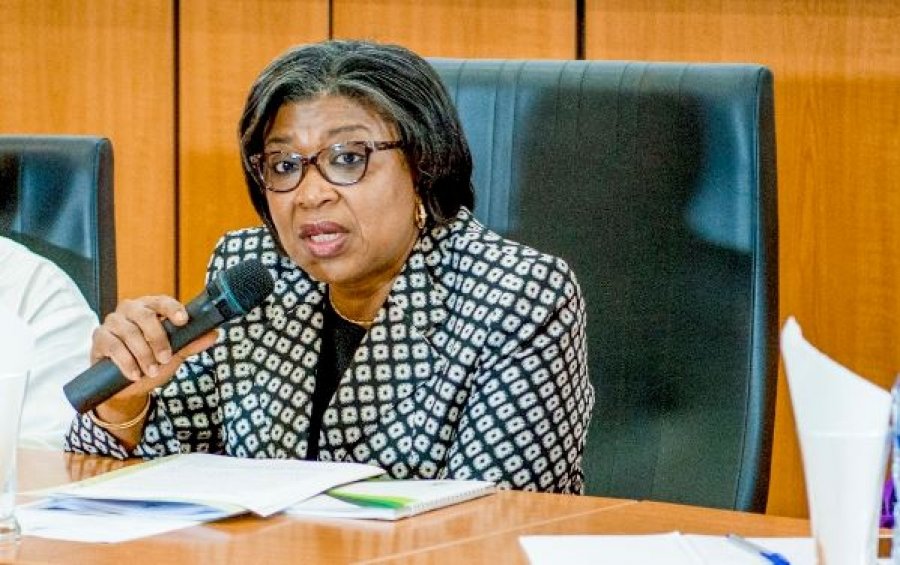
The Debt Management Office (DMO), led by Patience Oniha, provided the figure in a statement on Tuesday.

The total debt represents the domestic and external debt stocks of the Federal Government, the 36 State Governments and the Federal Capital Territory (FCT).

Though the foreign component of the debt remained at the same level of N16.61trillion (39.96 billion dollars), the local component increased to N26.23trillion (63.24 billion dollars).

The DMO noted that more than 58 per cent of the external debt stock are concessional and semi-concessional loans.

They were obtained from the World Bank, International Monetary Fund, Afrexim and African Development Bank, and countries including Germany, China, Japan, India and France.

The total domestic debt stock went up from N24.98trillion (60.1billion dollars) in March to N26.23 trillion (63.24 billion dollars) in June.

This followed Federal Government’s borrowings to part-finance the deficit in the 2022 Appropriation (Repeal and Enactment) Act, as well as new borrowings by state governments and the FCT.

“The Debt-to-GDP as at June 30, was 23.06 per cent compared to the ratio of 23.27 as at March 30. It remains within Nigeria’s self-imposed limit of 40 per cent”, the statement added.

September 20, 2022 0 comments
0 FacebookTwitterPinterestThreadsBlueskyEmail
Newer Posts
Older Posts

Recent Posts

  • APC’ll rule Nigeria for 100 years – Yobe chairman, Gadaka

    April 10, 2026
  • World Bank Deletes Nigeria Development Report Three Days After Release

    April 10, 2026
  • U.S. Evacuates Staff, Suspends Visa Processing in Abuja

    April 9, 2026
  • Multiple Factions Emerge in Ruling APC Sparking Leadership Tussle

    April 8, 2026
  • Dangote Refinery Slashes Petrol Price to N1200

    April 8, 2026

Usefull Links

  • Contact Page
  • About Leading Reporters
  • Contact Us
  • Headlines
  • Investigation
  • Exclusives
  • Opinion
  • Business
  • Facebook
  • Twitter
  • Instagram
  • Linkedin

@2021 - All Right Reserved. Designed and Developed by PenciDesign


Back To Top
Leading Reporters
  • Featured
  • Politics
  • Opinion
  • Business
  • Entertainment
  • Sports
  • About Us
  • Contact