Leading Reporters
  • Headlines
  • Health
  • Business
  • Exclusives
  • Investigation
  • Entertainment
  • Opinion
Wednesday, April 8, 2026
Hot
Multiple Factions Emerge in Ruling APC Sparking Leadership...
Dangote Refinery Slashes Petrol Price to N1200
FG Budgets N135bn For 2027 INEC Lawsuits
New Terror Group, Mamudawa, Kills 4 in Kebbi...
BREAKING: Kebbi assembly speaker dies in Egypt
Exposed: Investigation Reveals Questionable Direct Payments in Nigeria...
Easter: Student playing Jesus hospitalised after intense Good...
Easter: NSCDC deploys 57,000 personnel nationwide
Tinubu summons Plateau governor over Jos attack
We’re Not Building One-Party State — Tinubu Assures...
  • About Leading Reporters
  • Contact Us
Leading Reporters
Advertise With Us
  • Headlines
  • Health
  • Business
  • Exclusives
  • Investigation
  • Entertainment
  • Opinion
Hot
Multiple Factions Emerge in Ruling APC Sparking Leadership...
Dangote Refinery Slashes Petrol Price to N1200
FG Budgets N135bn For 2027 INEC Lawsuits
New Terror Group, Mamudawa, Kills 4 in Kebbi...
BREAKING: Kebbi assembly speaker dies in Egypt
Exposed: Investigation Reveals Questionable Direct Payments in Nigeria...
Easter: Student playing Jesus hospitalised after intense Good...
Easter: NSCDC deploys 57,000 personnel nationwide
Tinubu summons Plateau governor over Jos attack
We’re Not Building One-Party State — Tinubu Assures...
Leading Reporters
Leading Reporters
  • Headlines
  • Health
  • Business
  • Exclusives
  • Investigation
  • Entertainment
  • Opinion
Copyright 2024 - All Right Reserved
Home > Business
Category:

Business

Business

REA, NDDC partner to boost electricity in Niger Delta

by Folarin Kehinde March 22, 2026
written by Folarin Kehinde

The Rural Electrification Agency (REA) and the Niger Delta Development Commission (NDDC) have partnered to boost electricity in the Niger Delta region.

REA Managing Director/Chief Executive Officer (MD/CEO), Dr. Abba Aliyu, made the announcement on Wednesday via a post on his official X account, saying that “partnership is powerful but partnership backed by action is transformational”.

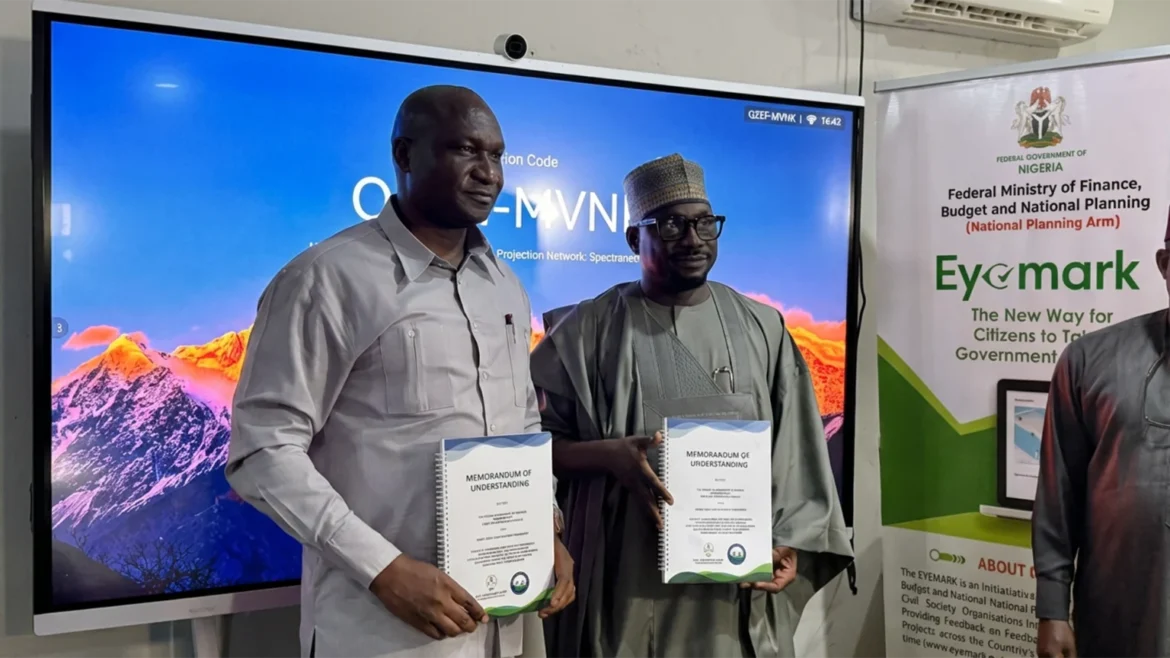
“Yesterday, the Rural Electrification Agency and the Niger Delta Development Commission formalised our collaboration with the signing of an MoU (Memorandum of Understanding), an important step toward closing the electricity access gap across the Niger Delta,” Aliyu said.

He stated that this is more than a document, calling the MoU a clear statement of readiness from the NDDC to move decisively in delivering reliable and sustainable power to communities that have waited too long for stable electricity.

According to him, the Niger Delta is central to Nigeria’s economic story, and its development must be supported by infrastructure that enables productivity, enterprise, and dignity.

Aliyu seized the opportunity to thank the Managing Director of NDDC, Chief Dr. Samuel Ogbuku, for his strong leadership and commitment in bringing this collaboration to life.

“His resolve to ensure that this partnership translates into real impact on the ground is commendable,” Aliyu said.

“This marks the beginning of sustained, coordinated action. Together, we will align resources, planning, and execution to ensure that communities in the Niger Delta are not just connected but empowered.”


March 22, 2026 0 comments
0 FacebookTwitterPinterestThreadsBlueskyEmail
Business

NDDC, Ibom Air Seal Pact to Boost Regional Aviation Hub Prospects

by Folarin Kehinde March 22, 2026
written by Folarin Kehinde

Partnership between the Niger Delta Development Commission (NDDC) and the Ibom Air of Akwa Ibom State may lead to emergence of a regional aviation power in the Niger Delta.

It could help to boost the aircraft fleet in Ibom Air and maybe other emerging airlines in the oil region and help air patronage in travel and hire services, thus creating a strong hub in aviation in the region like in Lagos.

This as Samuel Ogbuku, managing director of the NDDC, has urged fleeing businesses and investments to head back to the oil region. He has also called on indigenes of the region to think of investing in the region first, regretting that the trend on ground is investing outside the region.

On collaboration, the NDDC re-emphasised the importance of strategic collaborations through the Public-Private Partnerships (PPP) arrangement to drive sustainable development in the Niger Delta region.

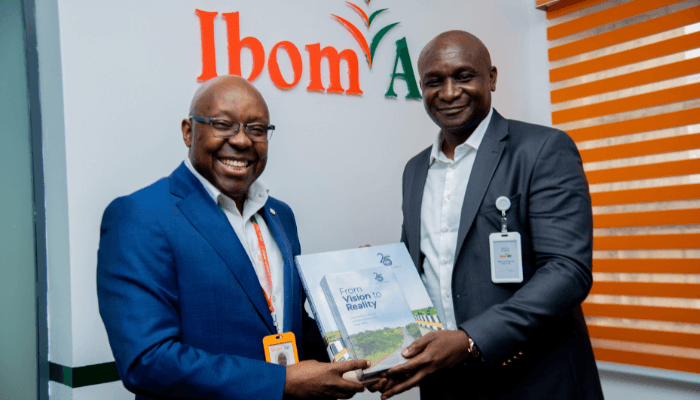
Ogbuku stated this during a meeting with the management of Ibom Air led by George Uriesi, the Chief Executive Officer, at their headquarters in Uyo, Akwa Ibom State.

Ogbuku led a delegation that included Victor Antai, the Executive Director (Projects), Ifedayo Abegunde, Executive Director (Corporate Services), Abasiandikan Nkono, the Akwa Ibom State Representative on the NDDC board, and other directors of the Commission.

The NDDC boss observed that the engagement was part of the Commission’s ongoing commitment to strengthening PPPs that pave the way for landmark infrastructure projects and boost investor confidence.

He stressed that collaboration would expedite the growth and development of the Niger Delta region, noting that the NDDC was partnering with the Delta State Government and Chevron Nigeria Limited on the 70.75 km Omadino-Okerenkoko-Escravos Road and bridges in the Warri North Local Government Area of Delta State.

Ogbuku recalled that the partnership between the Shell Petroleum Development Company of Nigeria Limited and the NDDC facilitated the construction of the 25.7 km Ogbia-Nembe Road.

He added that the Commission was currently collaborating with the Nigeria Liquefied Natural Gas (NLNG) on the construction of the Okrika-Borikiri Road and bridges project, the Kaa-Ataba Road and Bridge, and the Bonny Ring Road

March 22, 2026 0 comments
0 FacebookTwitterPinterestThreadsBlueskyEmail
CBN
Business

CBN directs banks to block loan defaulters from accessing credit facilities

by Folarin Kehinde March 13, 2026
written by Folarin Kehinde

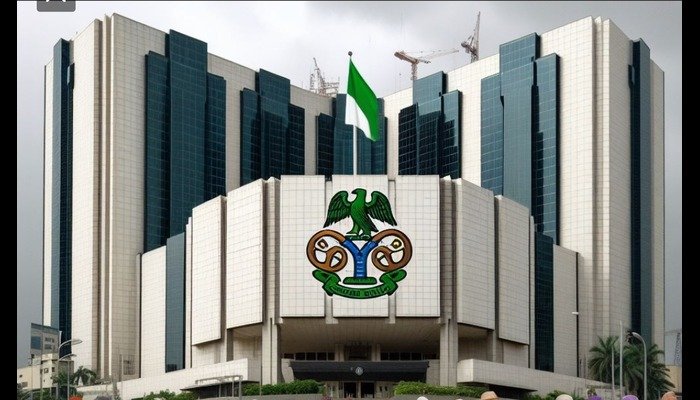
The Central Bank of Nigeria (CBN) has asked commercial banks to restrict loan defaulters, specifically large-ticket obligors, from accessing credit facilities.

A large ticket obligor is a borrower (an individual or company) that owes a very large amount of money to a bank.

The latest instruction comes almost a week after the CBN asked financial institutions to stress test.

It is uncertain if the two directives are connected or what may have triggered the loan-related instruction, but the apex bank said it furthers its mandate to protect Nigeria’s financial system.

“In furtherance of its mandate to promote a sound financial system, protect depositors, and enhance prudential compliance within the banking sector, the Central Bank of Nigeria (CBN) hereby directs all banks to restrict non-performing large ticket obligors, whose activities pose systemic risk to the financial system, from accessing specified banking services,” the circular reads in part.

On strengthening collateral coverage, the CBN asked financial institutions to obtain additional realisable collateral from such obligors to adequately secure existing exposures.

The CBN said large ticket obligors are borrowers whose exposures are as defined under Clause 3.2 (d) of the prudential guidelines for deposit money banks in Nigeria 2010, or a customer with a combined exposure across banks, as shown in the credit risk management system (CRMS), and/or as shown in the reports of a licensed private credit bureau, “that exceed the Single Obligor Limit (SOL), which materially affect a bank’s Capital Adequacy Ratio (CAR) or otherwise pose a systemic risk to the financial system”.

“This directive reinforces earlier measures, particularly the circular titled “Prohibition of Loan Defaulters from Further Access to Credit Facilities in the Banking System” issued on June 30, 2014 (Ref: BSD/DIR/GEN/LAB/07/015). This is to ensure consistency and effectiveness in curbing credit abuse by large-ticket obligors,” the circular further reads.


March 13, 2026 0 comments
0 FacebookTwitterPinterestThreadsBlueskyEmail
Business

Tatum Bank Meets CBN’s New Recapitalization, within 10 Months of Operation

by Folarin Kehinde March 10, 2026
written by Folarin Kehinde

Tatum Bank has announced that it has met the capitalisation requirement set by the Central Bank of Nigeria for financial institutions operating in the country.

The bank disclosed this in a statement on Monday, noting that the milestone strengthens its financial base and positions it to expand its role in Nigeria’s financial services sector.

According to the statement, the achievement also reinforces the bank’s commitment to providing a secure and dependable financial platform for its growing customer base.

The Managing Director of Tatum Bank, Niyi Adeseun, said the development reflects the institution’s strong foundation and readiness for sustainable growth.

“This milestone is a strong affirmation of the solid foundation upon which Tatum Bank was built.

Our vision has always been to create a safe financial haven where customers can confidently pursue their financial goals,” he said.

Adeseun added that the bank would continue to strengthen its commitment to delivering seamless and reliable banking services to customers.

Also commenting, the Chairman of the bank, Samuel Ologunorisa (SAN), said the institution would continue to leverage digital banking solutions to expand access to financial services across the country.

“Our strategy is firmly anchored on leveraging digital banking solutions to drive financial inclusion while supporting the growth of businesses and large corporations,” he said.

Ologunorisa noted that the bank’s operations are guided by strong corporate governance principles, responsible environmental, social and governance practices, and a robust enterprise risk management framework.

He added that these principles would continue to guide the bank in building a resilient and transparent financial institution within Nigeria’s evolving financial landscape.

The bank stated that it achieved the capitalisation milestone less than a year after commencing full banking operations in May 2025.

It added that the strengthened capital base would support its commitment to innovation, operational excellence and improved banking experiences for customers.

March 10, 2026 0 comments
0 FacebookTwitterPinterestThreadsBlueskyEmail
Business

Bag of cement jumps to N11,000

by Folarin Kehinde February 27, 2026
written by Folarin Kehinde

Consumers and builders across several states are groaning under the weight of fresh increases in cement prices, with a bag now selling between N10,500 and N11,000 in many parts of the country.

Market surveys conducted in Kwara, Abuja, Kano, Kaduna, Jigawa and other northern states indicate that the upward review has become widespread, cutting across major brands and leaving household builders, block makers and contractors struggling to adjust their budgets.

In Ilorin and other parts of Kwara State, cement that previously sold for around N9,300 to N9,700 per bag last month now averages between N10,500 and N10,700 depending on the brand and location.

At major building material hubs in the state capital, a bag of Dangote Cement which earlier sold for about N9,500 now goes for between N10,500 and N10,600.

Similarly, BUA Cement has risen from roughly N9,500–N9,600 to about N10,600–N10,700.

Lafarge Africa products are also being sold within the same N10,600 to N10,700 range, while Mangal Cement, which was the most affordable at about N9,300–N9,400, now sells for between N10,500 and N10,600.

Traders attribute the development to what they describe as rising supply chain costs and increased production expenses.


February 27, 2026 0 comments
0 FacebookTwitterPinterestThreadsBlueskyEmail
Business

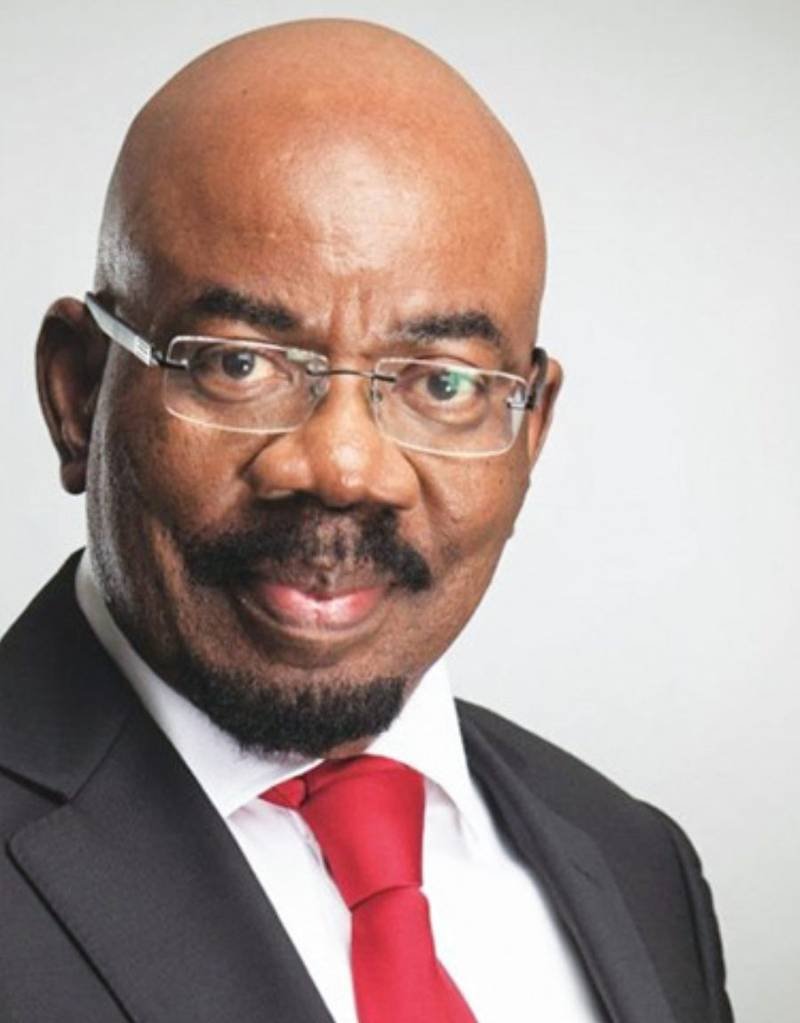
Investment Platform Allegedly Linked to Jim Ovia Promises High Returns

by Folarin Kehinde January 31, 2026
written by Folarin Kehinde

A new investment platform reportedly linked to businessman Jim Ovia has generated widespread attention across Nigeria following claims of guaranteed multi-million naira returns for participants.

At a recent presentation, promoters of the project stated that every Nigerian who joins the platform is assured of an income of ₦2 million, describing the initiative as a technology-driven financial solution built by “some of the world’s best financial experts.”

According to the presentation, the platform was designed with inclusivity in mind, setting an entry point of ₦380,000 to enable participation by traders, teachers and commercial drivers across the country.

“We deliberately structured this project so that the trader in Oshodi market, the teacher in Enugu and the driver in Abuja can all participate and change their story,” the speaker said, adding that the platform allegedly enjoys full government backing and guarantees from the Central Bank of Nigeria (CBN).

Another promoter, Emmanuel Nwodo, expressed confidence in the project, claiming to have personally tested the platform.

“The only thing we can feel is gratitude,” Nwodo said. “I personally tested the platform and I can confirm that it works. Registration is simple, and consultants guide users step by step.”

He further claimed that the project had been under development for two years and was already providing additional income to thousands of Nigerians.

Promoters insist the platform does not promise instant wealth but can deliver earnings of up to ₦300,000 daily, translating to ₦2 million weekly and ₦8 million monthly, powered by artificial intelligence said to predict market trends and automate trading decisions.

“This has nothing to do with pyramid schemes or shady deals.

The algorithm does all the work,” Nwodo stated, expressing confidence that participants’ income could surpass their current salaries within 30 days.

Some users have also shared testimonials online. One participant claimed to have doubled an initial investment within two days, while another said investing over ₦2 million had yielded “serious money.”

However, financial analysts have urged caution, noting that promises of guaranteed returns and claims of regulatory backing should be independently verified.

Experts warn that Nigerians should conduct due diligence and seek confirmation from relevant authorities before committing funds to any investment opportunity.

As of the time of filing this report, there has been no official confirmation from the Central Bank of Nigeria regarding its alleged involvement or guarantee of the platform.


January 31, 2026 0 comments
0 FacebookTwitterPinterestThreadsBlueskyEmail
Business

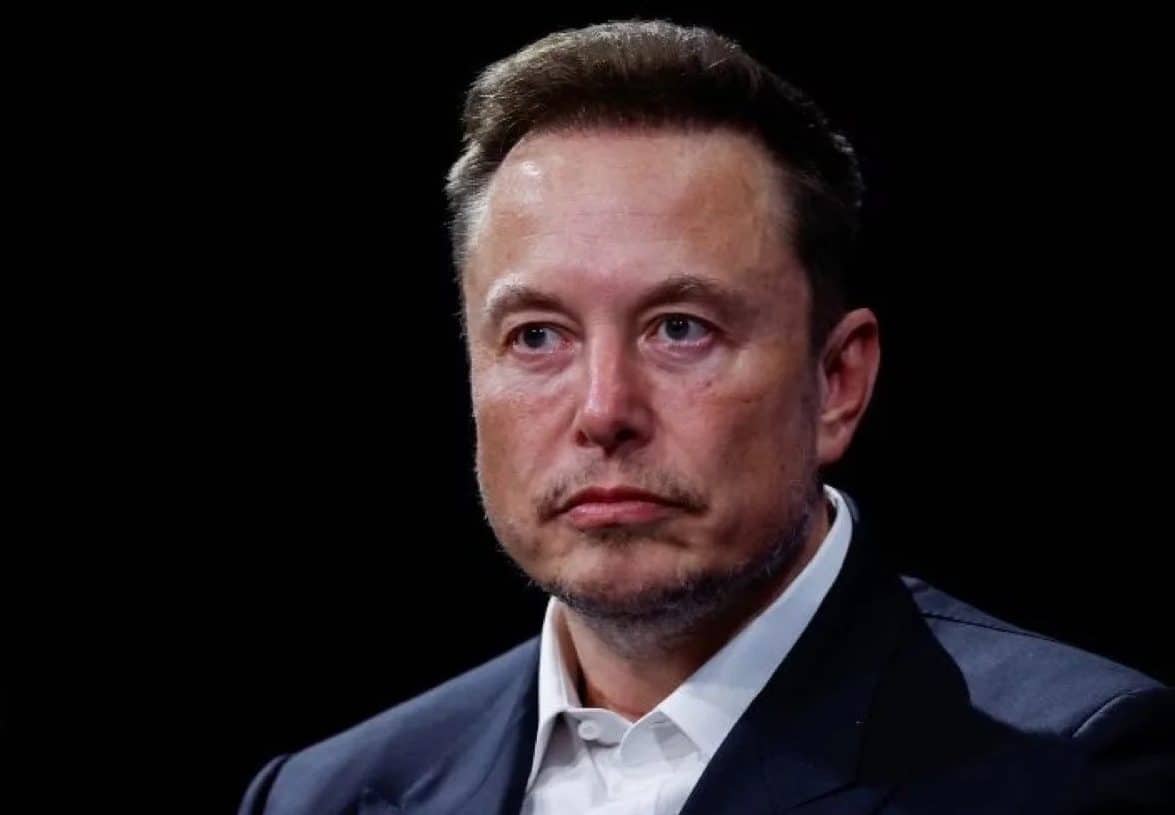
AI may outsmart humanity in five years — Musk

by Folarin Kehinde January 24, 2026
written by Folarin Kehinde

Billionaire entrepreneur and Tesla Chief Executive Officer, Elon Musk, has warned that artificial intelligence (AI) could surpass the combined intelligence of humanity within the next five years, a development he said would fundamentally alter how people live, work and find purpose.

Musk made the assertion at the World Economic Forum (WEF) in Davos during a discussion with BlackRock CEO, Larry Fink, noting that the pace of AI development has exceeded earlier expectations.

“AI could be smarter than any individual human this year,” Musk said, adding that “within five years, it may be smarter than all of humanity combined.”

Beyond software, Musk linked the rapid growth of AI to advances in humanoid robotics, which he said could significantly reshape the global economy.

According to him, Tesla’s Optimus humanoid robots are already performing basic tasks within the company’s factories, with more advanced capabilities expected in the near future.

“If things go well, we expect to sell humanoid robots to the public by the end of next year,” Musk said, stressing that safety and human control would remain critical considerations before large-scale deployment.

On autonomous vehicles, the Tesla boss claimed the company’s Full Self-Driving (FSD) software has reached a level of maturity that has prompted insurers to offer “significant discounts” to users of the technology.

He also disclosed that Tesla is seeking regulatory approval to expand supervised self-driving operations across Europe as early as next month, with China expected to follow.

“If regulated and supervised, it will be widespread,” Musk said, reiterating his vision of a future dominated by driverless vehicles and significantly reduced road accidents.

Shortly after his remarks, Tesla announced the launch of its Robotaxi service in Austin, Texas, marking the company’s first public operation of fully driverless rides without a human safety driver in the vehicle.

Confirming the development in a post on X (formerly Twitter), Musk wrote: “Just started Tesla Robotaxi drives in Austin with no safety monitor in the car. Congrats to the @Tesla_AI team!”

The move represents a major milestone in Tesla’s autonomous driving ambitions, allowing passengers to travel without anyone behind the wheel.

January 24, 2026 0 comments
0 FacebookTwitterPinterestThreadsBlueskyEmail
Business

NNPCL: Group Urges EFCC To Probe Alleged $1.5m Crude Oil Systemic Fraud

by Leading Reporters January 23, 2026
written by Leading Reporters

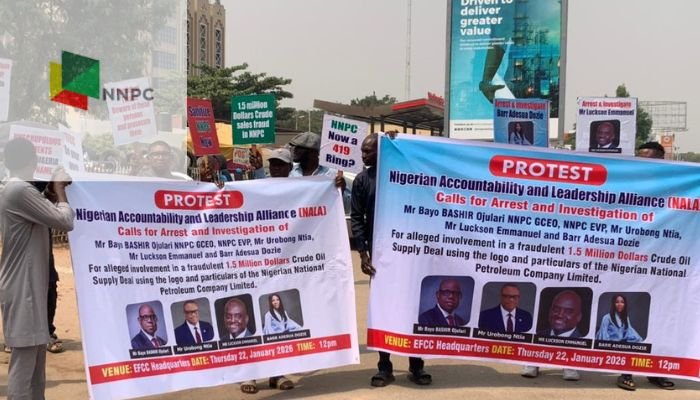
The Nigerian Accountability and Leadership Alliance (NALA) has urged the Economic and Financial Crimes Commission (EFCC) and the Nigerian Police to investigate alleged $1.5 million crude oil supply fraud involving some top officials in the NNPCL.

Speaking during a protest in Abuja, spokesperson of the group, Comrade Lion Agorry, said the EFCC and police need to give swift attention to the investigation and see to its conclusive end.

The group said: “We have through series of investigations uncovered myriads of documents and petitions indicting some serving and non-serving members of staff, lawyers and certain individuals who through false pretense collected $1,536,000 million dollars in a manner that epitomises the classic advance fee fraud known popularly as 419.

“In documents already in the public domain, it was revealed that one Mr Luckson Emmanuel of L/J Holdings (the purported seller and representative of the NNPC) on June 2, 2025 in a purchase and sales agreement signed by Licena the DMCC (the victim) brazenly used the logo and particulars of the NNPC to collect funds for the purpose of crude oil sales.

“In these documents, the Executive Vice President (Upstream) Mr Udobong Ntia, signed in his capacity, while Danny Kwon signed in the capacity of the Escrow agent/attorney for the NNPCL. These actions consolidated the faith of LICENA on the authenticity of the deal.

“In fulfilment of the Escrow agreement, Licena transferred the following funds to the law office of Danny Kwon, the purported lawyer to escrow funds of the NNPC to wit: $136,000 on August 10 2025; $200,000 on November 13, 2025; $645,000 on September 26, 2025; $500,000 on November 12, 2025 and $55,000 on November 13, 2025 totalling $1,536,000.

“In a letter signed by the NNPC Limited General Counsel and Company Secretary, Mrs Adesua Dozie, dated January 13, 2026, the NNPC denied involvement in the deal.

“According to the letter, the NNPC is not involved in the fraud scheme adding that the documents in question did not emanate from the NNPCL.

“Meanwhile, contrary to the NNPC’s position in another letter signed by the Chairman/CEO of the LJ Holdings LLC, Mr Luckson Emmanuel, dated January 20, 2026, he insisted that the particulars and documents including those from the NNPC are very valid and authentic to the parameters of the deal.

“However, the Executive Vice President (Upstream), Mr Udobong Ntia, whose name featured prominently in the deal has till press time refused to respond to letters sent to his desk.

“The law is trite on the use of false pretense (a lie of misleading act) to dishonestly obtain property that can be stolen or induce someone to deliver it. Section 419 of Nigeria’s Criminal Code Act deals decisively with obtaining by false pretences, making it a felony to use false statements or conduct, with intent to defraud, to get anything capable of being stolen, punishable by imprisonment for three to seven years.

“The federal republic of Nigeria under the leadership of President Bola Tinubu, is employing tremendous effort to not only get things right but to reshape the narrative surrounding the good image of our beloved country, Nigeria.

“It is thus ignoble on the part of any public officer, particularly the management of Nigerian National Petroleum Company Limited, under the leadership of Mr Bayo Ojulari, which is a major economic hub of Nigeria, to sabotage the efforts of this government.

“Given Nigeria’s battered image abroad, and the rampant fraud allegations within and outside the NNPCL, we humbly call on the Economic and Financial Crimes Commission (EFCC), and the Nigerian Police to give swift attention to the investigation and see to its conclusive end.

“We also call on the management of the NNPCL, particularly, the GCEO Mr Bayo Ojulari, and the Executive Vice President (Upstream), Mr Udobong Ntia, to better exonerate themselves by officially writing to relevant anti-graft agencies to investigate the use of the logo and particulars of the NNPC by unauthorised persons.” News credit: Independent.ng

January 23, 2026 0 comments
0 FacebookTwitterPinterestThreadsBlueskyEmail
Peter Obi
Business

31 errors in New Tax laws – Obi slams FG

by Folarin Kehinde January 13, 2026
written by Folarin Kehinde

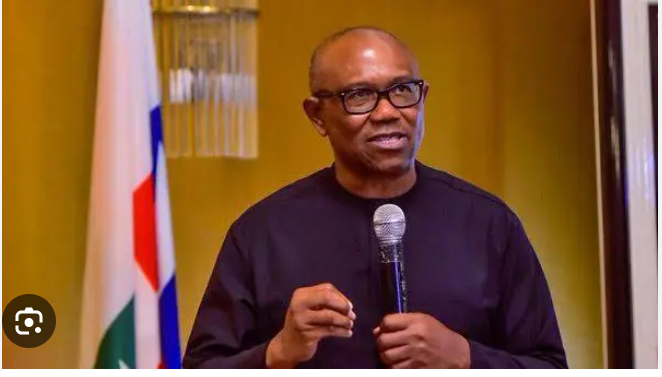
The 2023 Labour Party presidential candidate, Peter Obi, has urged the Federal Government to suspend the rollout of Nigeria’s newly gazetted tax laws, warning that the framework contains significant mistakes, contradictions, and loopholes.

In a statement shared on his X (formerly Twitter) handle on Tuesday, Obi cited an analysis by KPMG Nigeria, which identified possible concerns around the taxation of shares, dividend handling, obligations of non-residents, and foreign exchange deductions.

Obi, the report identified “31 critical problem areas, from drafting errors to glaring policy contradictions and administrative gaps,” noting that the complexity of the issues was such that “it took private meetings between the National Revenue Service and KPMG for these serious issues to be acknowledged.

If experts require closed-door discussions to navigate the complexities of our tax laws, what hope does the average Nigerian have of comprehending the obligations being imposed on them?”

Obi maintained that taxation should function as a social contract between citizens and the state and criticised the absence of broad public engagement before the laws were finalised.

“Typically, months, if not years, are dedicated to consulting with businesses, workers, and civil society before tax drafts are presented for public discussion, with the ramifications clearly explained.

“Yet, in Nigeria, we have seen no such public consultations or discussions regarding the final tax laws, leaving ordinary citizens completely in the dark about both the regulations and the benefits of the taxes they’re expected to pay.”

Peter Obi also faulted the government’s implementation strategy, stating, “We have hastily pursued collection without securing a consensus and imposed enforcement without providing adequate explanations.

“Even after the removal of subsidies, Nigerians remain in limbo, waiting for tangible benefits or relief. Instead, they are grappling with skyrocketing food prices, exorbitant transport costs, dwindling purchasing power, and escalating poverty levels.”

He further described the tax framework as “riddled with inconsistencies and producing 31 alarming red flags from a leading global accounting firm.

This is not the hallmark of responsible governance. Without trust, taxation feels like punishment. Without clarity, it breeds confusion. Without evident public value, it amounts to robbery.”

“Nigeria cannot afford to place further burdens on its already struggling citizens. What we need is a government that listens, communicates effectively, and prioritises building national consensus. This is the only viable path to genuine reform, unity, growth, and shared prosperity,” Obi concluded.

January 13, 2026 0 comments
0 FacebookTwitterPinterestThreadsBlueskyEmail
Refinery
Business

FG Petroleum Imports Crashes 54% to $6.7bn After Improved Local Refining

by Nelson Ugwuagbo January 13, 2026
written by Nelson Ugwuagbo

Nigeria’s spending on the importation of petroleum products has fallen sharply by 54 per cent over the past two years, dropping from $14.58bn in the first nine months of 2023 to $6.71bn in the corresponding period of 2025, according to data from the Central Bank of Nigeria (CBN).

A review of the CBN’s Balance of Payments reports for 2023, 2024 and the third quarter of 2025 shows a steady year-on-year decline in fuel import bills, reflecting reduced foreign exchange outflows linked to petroleum product imports.

The figures indicate that fuel import costs declined from $14.58bn between January and September 2023 to $11.38bn in the same period of 2024, representing a reduction of $3.20bn or 21.9 per cent. The downward trend intensified in 2025, with imports falling further by $4.67bn, or 41 per cent, to $6.71bn within the first nine months of the year.

Overall, Nigeria spent $7.87bn less on refined petroleum product imports in the first nine months of 2025 compared with the corresponding period of 2023, highlighting a significant easing of pressure on foreign exchange outflows.

CBN data also showed a 41 per cent year-on-year decline in refined fuel imports by the third quarter of 2025, signaling early signs of import substitution as new and rehabilitated refineries begin to scale up operations.

The reduction in foreign exchange spending comes amid broader structural reforms and market adjustments aimed at strengthening Nigeria’s external reserves and stabilizing the naira.

For decades, Nigeria depended heavily on imports, particularly refined petroleum products due to limited domestic refining capacity, weak industrial output and underinvestment in critical infrastructure. This reliance made fuel imports one of the largest drains on the country’s foreign exchange earnings.

The removal of petrol subsidies in 2023 marked a major turning point, as higher pump prices reduced consumption and curtailed arbitrage-driven demand. Combined with tighter foreign exchange management by the CBN, the policy shift helped moderate import volumes and speculative FX demand linked to fuel imports.

Analysts also attribute the decline to the gradual expansion of domestic refining capacity in the downstream oil sector. Industry experts note that increased competition, particularly from the $20bn Dangote Petroleum Refinery in Lekki, has intensified pressure on fuel importers and reduced Nigeria’s dependence on imported refined products.

January 13, 2026 0 comments
0 FacebookTwitterPinterestThreadsBlueskyEmail
Newer Posts
Older Posts

Recent Posts

  • Multiple Factions Emerge in Ruling APC Sparking Leadership Tussle

    April 8, 2026
  • Dangote Refinery Slashes Petrol Price to N1200

    April 8, 2026
  • FG Budgets N135bn For 2027 INEC Lawsuits

    April 7, 2026
  • New Terror Group, Mamudawa, Kills 4 in Kebbi Community

    April 7, 2026
  • BREAKING: Kebbi assembly speaker dies in Egypt

    April 7, 2026

Usefull Links

  • Contact Page
  • About Leading Reporters
  • Contact Us
  • Headlines
  • Investigation
  • Exclusives
  • Opinion
  • Business
  • Facebook
  • Twitter
  • Instagram
  • Linkedin

@2021 - All Right Reserved. Designed and Developed by PenciDesign


Back To Top
Leading Reporters
  • Featured
  • Politics
  • Opinion
  • Business
  • Entertainment
  • Sports
  • About Us
  • Contact