Leading Reporters
  • Headlines
  • Health
  • Business
  • Exclusives
  • Investigation
  • Entertainment
  • Opinion
Saturday, May 16, 2026
Hot
EFCC Arraigns Bank MD Over 19m, $30,000 Fraud
Seyi Makinde Declares For President in PDP/APM Alliance
BREAKING: EFCC Arrests Energy DG, Mustapha Abdullahi over...
Court Sentence Former Minister of Power, Saleh Mamman...
FG to Borrow Fresh $1.25 Billion Loan From...
Senate, Reps Approve N1.75tn NDDC Budget for 2026
Gunmen Kill 13 in Plateau Fresh Attacks
Jabi Lake takeover stands even if God comes...
Fuel Scarcity Looms As Dangote Refinery Hikes Fuel...
IGP scraps SWAT nationwide
  • About Leading Reporters
  • Contact Us
Leading Reporters
Advertise With Us
  • Headlines
  • Health
  • Business
  • Exclusives
  • Investigation
  • Entertainment
  • Opinion
Hot
EFCC Arraigns Bank MD Over 19m, $30,000 Fraud
Seyi Makinde Declares For President in PDP/APM Alliance
BREAKING: EFCC Arrests Energy DG, Mustapha Abdullahi over...
Court Sentence Former Minister of Power, Saleh Mamman...
FG to Borrow Fresh $1.25 Billion Loan From...
Senate, Reps Approve N1.75tn NDDC Budget for 2026
Gunmen Kill 13 in Plateau Fresh Attacks
Jabi Lake takeover stands even if God comes...
Fuel Scarcity Looms As Dangote Refinery Hikes Fuel...
IGP scraps SWAT nationwide
Leading Reporters
Leading Reporters
  • Headlines
  • Health
  • Business
  • Exclusives
  • Investigation
  • Entertainment
  • Opinion
Copyright 2024 - All Right Reserved
Home > Archives for > Page 359
Author

Folarin Kehinde

Folarin Kehinde

Headlines

Breaking: FG Lifts Ban on Twitter

by Folarin Kehinde January 12, 2022
written by Folarin Kehinde

The Federal Government has lifted the suspension of Twitter operations in Nigeria after approval by President Muhammadu Buhari

The decision was announced by the Chairman Technical Committee Nigeria-Twitter Engagement and Director-General National Information Technology Development Agency (NITDA), Kashifu Inuwa Abdullahi, CCIE.

Kashifu, in a statement in Abuja, said the approval was given following a memo written to the President by Minister of Communications and Digital Economy, Prof Isa Ali Ibrahim.

He said: “The Federal Government of Nigeria (FGN) directs me to inform the public that President Muhammadu Buhari, GCFR, has approved the lifting of the suspension of Twitter operation in Nigeria effective from 12am tonight, 13th January 2022.

“The approval was given following a memo written to the President by the Honourable Minister of Communications and Digital Economy, Prof Isa Ali Ibrahim.

“In the Memo, the Minister updated and requested the President’s approval for the lifting based on the Technical Committee Nigeria-Twitter Engagement’s recommendation.”

January 12, 2022 0 comments
0 FacebookTwitterPinterestThreadsBlueskyEmail
Headlines

NHGSFP: Over 9 Million Students Fed, As WFP Pledges Technical Support

by Folarin Kehinde January 12, 2022
written by Folarin Kehinde

The Federal Ministry of Humanitarian Affairs, Disaster Management and Social Development (FMHADMSD) has said that over 9 million students in 530,000 public primary schools has benefitted from the National Home-Grown School Feeding Programme (NHGSFP), launched by the Federal Government of Nigeria in 2016.

The Ministry and United Nations World Food Programme (WFP) made this known in a joint press statement in Abuja on Tuesday stated that the breakthrough feeding initiative has made it one of the largest school feeding programmes in Africa.

They noted that the initiative has led to a significant increase in school enrollment across the country with a much-needed boost to local economies by buying the products of smallholder farmers and providing jobs to more than 107,000 cooks from low-income families.

The initiative also made schools provide local farmers with a predictable outlet for their products, leading to a stable income, more investments and higher productivity while children enjoy healthy, diversified food; thus making it more likely that they will stay in school, perform better, and improve their adult job prospects. 

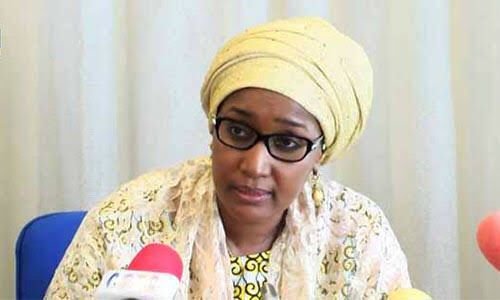
According to the Minister of the Federal Ministry of Humanitarian Affairs, Disaster Management and Social Development, Sadiya Farouq noted that the NHGSFP remains an important intervention of the administration of President Muhammadu Buhari.

Farouq explained that through it, hunger, malnutrition, poverty, education can all be addressed. It is an investment that is fully funded by the Federal Government of Nigeria because of its sheer potential as a development driver.

“We at the FMHADMSD are here to ensure that this programme is strengthened and sustained so that it can continue to support the needs of the children, families, women and communities it targets”.

WFP Country Director, Ronald Sibanda stated that one of the best ways of fighting hunger and preventing malnutrition among children is to provide them with a healthy school meal.

He explained that Nigeria is a good example of where the Government has taken the lead from day one and invested resources and funding into the design and implementation of its National Home-Grown School Feeding Programme.

“WFP is backing the next stage with a significant transfer of ICT equipment. This includes tablets with access to the PLUS Schools Menus – a free tool to help state Nutrition Officers design nutritious menus for schools”

He opined that the hardware will not only support the Ministry’s efforts to digitalize its monitoring and evaluation system, but also enable the national roll out of the PLUS School Menu Tool developed by WFP to standardize cost-effective menu development. 

“This is a great initiative and WFP is very pleased to provide technical support for the Government of Nigeria”.

January 12, 2022 0 comments
0 FacebookTwitterPinterestThreadsBlueskyEmail
Headlines

Bizarre: Man Sets Bank On Fire For Loan Rejection

by Folarin Kehinde January 11, 2022
written by Folarin Kehinde

A man has allegedly set a bank on fire over the bank’s inability to process and favourably consider his loan application.

The incident was said to have occured in Karnataka’s Haveri district in India. From reports, the accused who is currently in police custody wanted a loan and he approached the bank. However, the bank denied his loan application after the verification of documents.

According to the police, the accused wanted a loan and he approached the bank. However, the bank denied his loan application after the verification of documents.

The accused, who came on a bike in the early hours on Sunday, poured petrol after breaking the window panes of the bank before setting it on fire.

It was reported that the bank’s documents, furniture, computers and other office equipment were reduced to ashes by the ravaging fire.

Subsequently, the villagers saw smoke emanating from the bank and rushed to the spot. They called the fire brigade and also caught the accused and handed him over to the police. Kaginele police have recorded the statements of the villagers. The police have registered the case under Sections 436, 477, 435 of the Indian Penal Code.

January 11, 2022 0 comments
0 FacebookTwitterPinterestThreadsBlueskyEmail
Headlines

Mohamed Salah Fails To Shine As Super Eagles Defeat Egypt In AFCON Opener

by Folarin Kehinde January 11, 2022
written by Folarin Kehinde

The Super Eagles of Nigeria have defeated Egypt in the Group D clash of the African Cup of Nations.

Coach Austin Eguavoen’s men extended Nigeria’s head to head advantage against the Pharaohs after securing a 1:0 victory.

The Egyptians were faced with an unexpected defeat with Leicester City forward, Kelechi Iheanacho, scoring a dramatic opener in the 30th minute of the first half.

Both teams have met 19 times with Nigeria defeating their Egyptian rival nine times, while five draws were recorded.

Prior to the start of the match, Liverpool striker, Mohamed Salah, was tipped as the man to watch in the clash between the two former AFCON Champions.

Salah have scored 16 goals in the 2021-2022 Premier League season.

But he failed to create a chance for the Pharaohs at the 30,000-capacity Stade Roumdé Adjia in Cameroon.

Some prediction sites had predicted Egypt to kick off their campaign with victory.

But the Super Eagles dominated the match with 58 per cent of the ball possession and nine shots on goal against Egypt’s three.

January 11, 2022 0 comments
0 FacebookTwitterPinterestThreadsBlueskyEmail
Headlines

Ernest Shonekan: FG Orders National Flag to Fly at Half-Mast

by Folarin Kehinde January 11, 2022
written by Folarin Kehinde

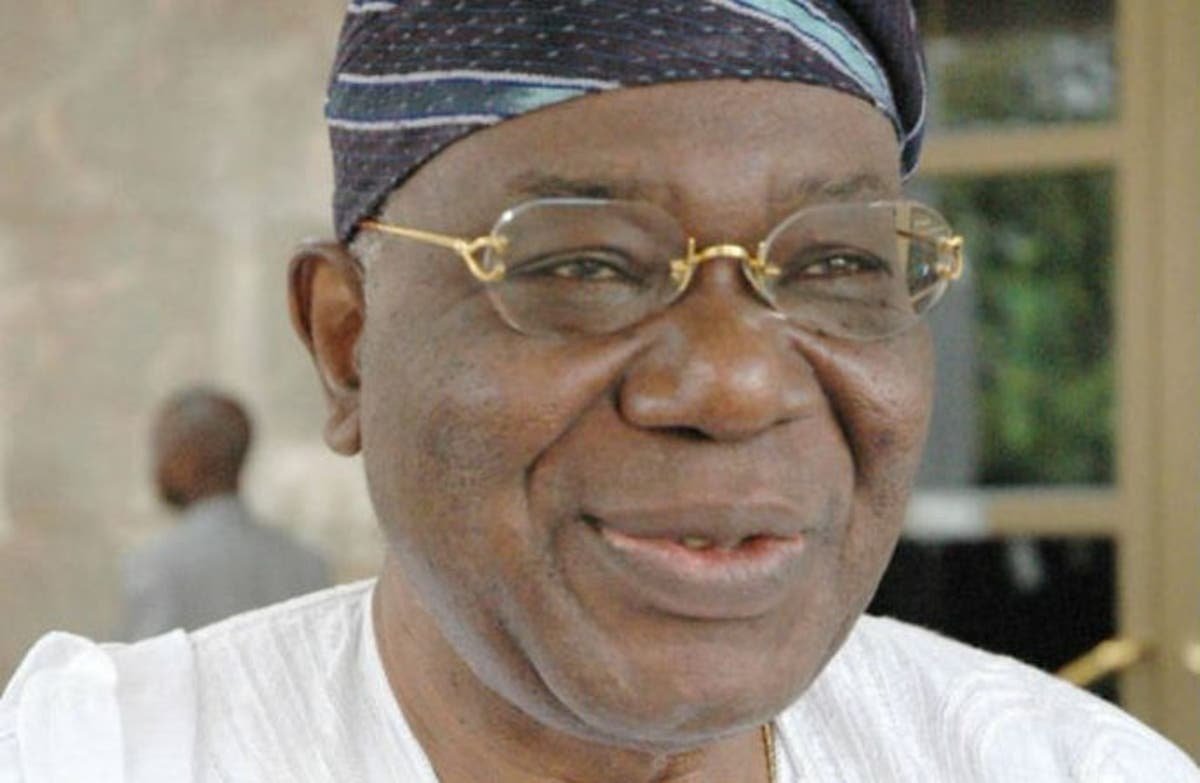
Following the death of the former Head of the Interim Government, Late Chief Ernest Adegunle Oladeinde Shonekan, GCFR, President Muhammadu Buhari, has directed that the national flag be flown at half-mast, effective from Wednesday 12th – Friday 14th, January, 2022 as a mark of respect for the former Head of State who died on Tuesday 11th January, 2022 at the age of 85.

-SIGNED-

Boss Mustapha
Secretary to the Government of the Federation

January 11, 2022 0 comments
0 FacebookTwitterPinterestThreadsBlueskyEmail
Headlines

Former Nigerian leader Ernest Shonekan is dead

by Folarin Kehinde January 11, 2022
written by Folarin Kehinde

Chief Ernest Shonekan who headed the Interim National Government that succeeded the junta of General Ibrahim Babangida, has died.

Shonekan died in Lagos at the age of 85.

He was the interim head of the Nigerian Government between August 26 and November 17 1993 when he was ousted in a coup led by late General Sani Abacha.

January 11, 2022 0 comments
0 FacebookTwitterPinterestThreadsBlueskyEmail
Headlines

Afcon 2021: Nigeria has enough talent to reach the final – Ighalo

by Folarin Kehinde January 11, 2022
written by Folarin Kehinde

Al Shabab striker Odion Ighalo believes Nigeria has a talented squad to reach the final of the 2021 Africa Cup of Nations.

Ighalo rued his absence from Austin Eguavoen’s team after his Saudi Professional Football League club declined to release him for the competition in Cameroon.

He came back from international retirement last year and he was included in Nigeria’s 28-man squad for the African football fiesta.

Back in the 2019 edition, the former Manchester United star was the top scorer in Egypt with five goals to his name for the Super Eagles.

Ahead of the Group D opening match against Egypt at the Roumde Adjia Stadium on Tuesday, Ighalo encouraged the Super Eagles to fight for glory and better their last performance when they finished third.

“Here is me wishing the Super Eagles all the very best in the Afcon tournament. Sorry I can not be there, but I will be supporting the boys all the way,” Ighalo told NFF TV.

“We need prayers from Nigerians to support the team because with their prayers and support, we will make Nigeria proud. Go boys and make us proud, you guys can do it. We have enough talents in the team that can take us to the final.”

Following the refusal of Al Shabab to release the striker, Nigeria will not be able to select a replacement for Ighalo and will participate in the competition in Cameroon with 27 players.

January 11, 2022 0 comments
0 FacebookTwitterPinterestThreadsBlueskyEmail
Headlines

Kano Bans Men, Women from Swimming in Same Pool

by Folarin Kehinde January 10, 2022
written by Folarin Kehinde

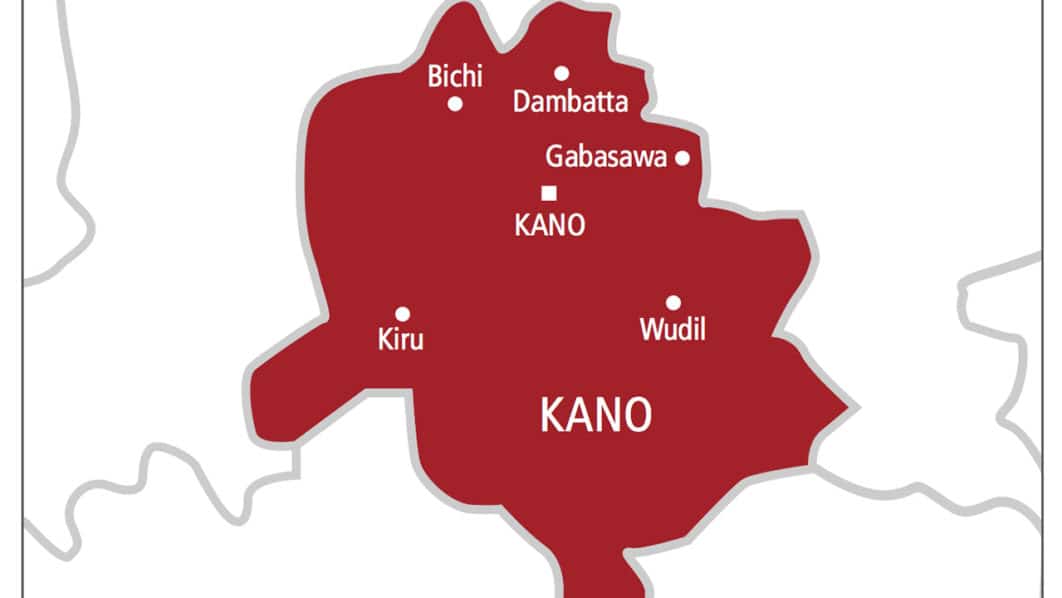
The Kano State Government has banned men and women from swimming in the same pool, smoking shisha, and entry of children into hotels.

These laws were enforced by the state’s Task Force on Tourism Development Levy, according to Sahara Reporters.

The Chairman of the Committee, Baffa Dan-Agundi, stated these laws following a meeting with hotel and event centre owners.

He said, “Part of our term of reference is to stop underage children from entering hotels without their parents, banning shisha smoking, swimming between men and women in the pool, lesbianism, and gay practices.

“The committee will further oversee the activities of DJs at wedding ceremonies and event centres. All events centres should be closed by 11 pm.”

January 10, 2022 0 comments
0 FacebookTwitterPinterestThreadsBlueskyEmail
Headlines

Nigeria’s Debt Hits 26 Trillion 7years – Report

by Folarin Kehinde January 10, 2022
written by Folarin Kehinde

Barely 16 months to the end of President Muhammadu Buhari’s second and final term in office, the window of opportunity to deliver the promised strong economy and the secured nation is becoming narrow.

Indices such as dwindling earnings, mounting debts, unaffordable debt servicing, deepening macro instability, rising insecurity, and waning public goodwill appear to be working against the President’s desire to finish strong.

And as he inches closer to retirement from public life after about five decades of service, part of which he had spent as military head of state and minister of petroleum before being democratically elected, Nigeria’s huge debt profile could be the most resounding talking point in the assessment of post-Buhari era.

To be sure, from May 2015, when the President inherited what his cabinet members have described as “a dying economy,” till date, Nigeria’s public debt stock has increased by over threefold. Precisely, the country has added N25.94 trillion to its initial debt in less than seven years.

As of the first quarter of 2015, the country’s public debt stood at N12.06 trillion, a figure that has ballooned to N38 trillion as of last September, recording a growth of 208 per cent.

Still, the official statistics under-reports the actual amount owed. Last year, the Fitch Ratings, a global research institution, raised the alarm that the government’s reliance on ways and means facility (WMF), facilities sourced from the Central Bank of Nigeria (CBN) to fund budget shortfalls, to finance its deficit was a major cause of the country’s rising inflation.

The Debt Management Office (DMO) did admit the existing WMF was a challenge and disclosed a plan to convert it to a 30-year debt instrument. As at early 2021, the amount, which is not captured by the national debt reporting, was estimated at N10 trillion. At a media function later last year, the DMD Director-General, Patience Oniha, could not give the updated figure but confirmed that, “it was estimated at N10 trillion earlier in the year.”

Since about a year ago when DMO said it would convert the opaque WMF to a long-term instrument, no update on the intention or the status of the debt has been given again. The absence of full disclosure of the WMF outstanding is but one of the many pieces of information about the country’s debts shrouded in secrecy.

The Minister of Finance, Budget and National Planning, Zainab Ahmed, had also disclosed at a forum by the African Development Bank (AfDB) that what had been reported as national debt did not capture some obligations of some states. She promised that efforts were ongoing to document all states’ debts.

The World Bank had warned that poor transparency was a challenge in the discussion of debt sustainability of developing countries, including Nigeria. AfDB President and former Nigeria’s Minister of Agriculture, Akinwumi Adesina, and the Director-General of the World Trade Oragnisation, Ngozi Okonjo-Iweala, had also warned at the same forum where Ahmed spoke, that Nigeria could be heading toward debt distress again.

In deviance from the warnings, the Finance Minister, President of the Senate, Ahmad Lawan, and many other public officials said Nigeria has no feasible alternative debt funding. The Senate President said Nigeria, being a poor country, had no option than to borrow to fund its programmes – a statement that foreclosed any hope of restraint in what has become a culture in the management of the national economy.

Successive administrations have bandied low debt-to-GDP ratio as a licence to borrow more. Interestingly, the government falls back to revenue, not GDP, to service or amortise debt instruments. Agriculture contributes over 20 per cent to the country’s nominal GDP. Sadly, the mainstay of the country’s revenue is neither agriculture nor manufacturing but oil, which contributes less than 10 per cent of the national output.

In the same logic, agricultural activities are majorly tax-exempted, implying that the sector is not a cash cow. This suggests that sectors that drive GDP, which historically informs government’s borrowing, do not provide the liquidity needed to service debt, economists have argued.

Dr. Bongo Adi, an economist at the Pan-Atlantic University had maintained that revenue consideration is a major factor, much more relevant than GDP, when analysing debt sustainability.

In 2020, which is still the most recent complete data on economic performance, the government spent N2.43 trillion, which was 71 per cent of the amount available for budget funding, on debt servicing. This was contained in the budget implementation report released by the Ministry of Finance, Budget and National Planning a few weeks ago. The overall figure was a modest deceleration from 99 per cent recorded in Q1 2020 when the government earned N950.56 billion and incurred N943.12 billion on debt-servicing.

As at September last year, the debt servicing to revenue ratio of the running budget was 65 per cent. The Federal Government had spent N2.57 trillion servicing debt within the period its earned revenue was N3.95 trillion.

David Adonri, Vice Chairman of Highcap Securities Limited, said the near-70 per cent debt servicing to revenue ratio and the fact that the government is refining some existing debt obligations indicates that the country’s debt situation is already in crisis.

“When debt gets to the level we are in now, there is a crisis. When your debtor has to raise a new debt instrument to settle the previous one, the country is tending towards sovereign default. And that is alarming,” he said.

Adonri said the government must rationalise its expenditure and stop ‘over-trading’, which he said has no real value other than helping the government to score a political point.

“We are already in a debt trap due to the recklessness of the government. And the government is going further. There is a clear signal that the current debt is not sustainable. The government must rationalise its spending and look inward for funding. It has to cede certain responsibilities to the private sector to prevent a situation where external partners would not have confidence in us and all our transactions will be cash-based. It can actually get to that stage, and happens soon if we don’t take urgent steps to remedy the situation,” the economist noted.

Also speaking, Prof. Godwin Owoh, a debt management expert, said the government is excessively carried away by the desire for mechanical infrastructure growth. He insisted that every society that intends to grow inorganically – growth that is not supported by the expansion in the incomes of households – falls into the mess the country is currently in.

According to him, the country will still achieve much-needed sustainable development if the government concentrates only on fighting corruption and insecurity while allowing the economy to drive itself.

“We don’t need that bogus infrastructure. Who will use the infrastructure when most people are hungry? Provide basic infrastructure and allow the economy grow organically. That will create a reasonable surplus that will drive further growth. Every state wants to have an airport. What is the need?” he said, adding that research has established that the growth of conduction has a positive correlation with the level of corruption in a society.

He insisted that the infrastructure Nigeria borrows to deploy is not supported by the growth of household income, noting that “expensive outlay does not lead to development” but that development happens when household incomes improve on a sustainable basis.

Prof. Sheriffdeen Tella of the Olabisi Onabanjo University aligned with Owoh’s argument, saying that the government should prioritise health and education while scaling down investment in road and airport infrastructure. The scholar said the persistent uncertainty around revenue makes the times more “precarious.”

“Government should also align the cost of governance with the economic realities. We cannot continue to run a bogus structure while we continue to borrow money. In delivering infrastructure, we can also explore public private partnerships (PPP); that is for essential infrastructure. In reality, we can do without some of the infrastructure till when the economy improves and we have the capacity to execute them,” Tella said.

Unfortunately, bureaucrats and public office holders do not want to bite the bullet even in the face of dwindling public fortune. The 2022 appropriation is believed to have been padded by the National Assembly to the tune of 0.7 trillion for selfish interests. As the year drew to an end last year, ministries, departments and agencies (MDAs) engaged in activities, including retreats, workshops and seminars, considered by many as frivolous as they were under pressure to deflate unspent allocation ahead of new budget approval. Tella said this behaviour is a major leakage the country must deal with to enhance probity in public office and strengthen fiscal stability.

While debt servicing is rising and increasingly sapping the entire retained revenues of the government, incomes are falling. For instance, a total of N3.42 trillion, N1.4 trillion (41.2 per cent) oil revenue and N2 trillion (58.8 per cent) non-oil revenue, was received to fund the 2020 budget. The amount received was N1.9 billion or 36 per cent short of the amount contained in the year’s amended annual revenue estimate and N701.8 billion (17 per cent) less than the N4.1 trillion recorded in 2019.

Add to this complication is the fiscal deficit, which is rising at an alarming magnitude. The Federal Government recorded an all-time high fiscal deficit of N6.6 trillion in 2020 – an equivalent of 14.2 per cent of the 2020 GDP. The amount was also N2 trillion, which is 43.2 per cent, higher than the projected N4.6 higher and 57 per cent above the 2019 deficit. The shortfall was partly financed through domestic borrowing to the tune of N2 trillion.

A senior fellow at the Global Governance Institute, Brussels, Belgium, and ex-Nigerian diplomat, Ejeviome Otobo, said “Nigeria needs major reform to up its taxes from its current seven per cent to GDP to catch up with the rest of African countries, which averages 18 per cent.”

The World Bank and the International Monetary Fund (IMF) have severally described the country’s tax as paltry considering its economic potential. The advisories have underscored historical overreliance on unstable oil incomes, and the tendency towards borrowing when there are shocks. In a policy document on Nigeria, the IMF said major tax reform was critical and inevitable as the country looks forward to a resilient recovery.

Currently Nigeria’s per capita public debt, the current officially declared debt translates to N190, 300, which is 53 per cent or over half of yearly minimum earning of a civil servant. This amount is the nominal amount the government has incurred on behalf of every Nigerian, including 23 million unemployed citizens. But Okonjo-Iweala had said that the real cost of Nigeria’s rising public debt is the inability of the country to fund projects that could positively affect the socio-economic life of an average citizen.

Amid disturbing and growing debt burden, the government contemplates total fresh loans of over N15 trillion in the 2022 – 2024 Medium-Term Expenditure Framework/Fiscal Stability Paper (MTEF/FSP). Already, N6.25 trillion, or approximately 3.39 per cent of the GDP was captured in the original 2022 budget. The amount is slightly above the three per cent ceiling prescribed in the Fiscal Responsibility Act of 2007 (FRA). The huge shortfall, which Adonri, an economist and stockbroker, said is driven by the desire for big government, is to be funded with fresh borrowings and privatization.

With the appropriation raised by 4.5 per cent, from 16.391trillion to 17.126 trillion, the estimated fiscal deficit would have also adjusted upward. In 2018, an estimated deficit of 1.95 trillion almost doubled at the end of the fiscal year to N3.64 trillion. That has been the trend in recent years, with much of the shortfall being financed by a supposedly temporary window offered by WMF.

January 10, 2022 0 comments
0 FacebookTwitterPinterestThreadsBlueskyEmail
Opinion

Bravo to Nigeria’s Current Auditor General

by Folarin Kehinde January 10, 2022
written by Folarin Kehinde

Former US President, Donald Trump had attempted to do what many African leaders do, which is to win elections by rigging.

He tried to circumvent the system using the power of incumbency to frustrate the American electoral process but failed simply because the strength of the United States is inherently located in its strong institutions.

In Africa, those who possess political and economic power can do and undo. They can as we do in Nigeria, draft the military into voting centres to achieve a ‘peaceful’ process notwithstanding subsisting judicial pronouncements illegalizing the act. Law enforcement agencies and even the judiciary are known to now and again help parties to swap election results.

A few days ago, there were allegations that many compromised operatives were rewarded with reappointment into our electoral body. Consequently, although Professor Mahmood Yakubu has since exhibited ample integrity in the management of elections in Nigeria, if the recent allegation against his Independent National Electoral Commission (INEC) is true, the electoral body may have elements that could render nugatory all his innovations only because he is a strong man in a weak entity.

The picture just painted is, unfortunately, a common occurrence in most societal institutions in Nigeria. Many appointees in our public offices are usually led by the nose, while several others are victims of self-censorship, often demonstrating incapacity to do what is right. Instead, they take solace in doing what in their imagination can help them keep their jobs.

In fairness, it is difficult to ignore the dilemma of such persons who sacrifice their initiatives and discretion bearing in mind that the few resourceful persons in our clime are either unceremoniously removed or their appointments are never renewed. If so, where is Adolphus Aghughu Arhotomhenla, the new Auditor General of the federation coming from? The other day the office he leads did not only indict our Almighty National Assembly, they also touched our Police.

From where did he acquire this new vigour he is bringing to our audit arrangement? Let no one tell me that it is due to the fact that Aghughu’s authority flows directly from the Constitution without explaining why his predecessors in office failed to wear the same constitutional garment of autonomy and independence which they successively inherited since 1999.

For those who may not have followed the story of the new audit posture, it is necessary to recall what has happened so far. The Office of the Auditor General of the Federation (OAuGF) a few months ago exposed several improprieties in many government organizations through the instrumentality of the audit report for 2019. For lack of space, let’s highlight only three of the reports. First, it was reported that the House of Representatives spent over N5.2 billion at different intervals and on different projects, with no evidence to show what the funds were used for.

The House also granted advances of N258 million to 59 staff and went ahead to grant fresh advances to the same staff when they were yet to retire the previous grant.

Again, another sum of N107 million was said to have been granted to two staff for “repairs and maintenance of unknown residential quarters.” Apart from the fact that no evidence was provided on request to show that the advances were retired, the Federal Government was reportedly deprived of the statutory Value Added Tax and Withholding Tax of N10.7 million accruable if the work had been awarded to contractors.

He tried to circumvent the system using the power of incumbency to frustrate the American electoral process but failed simply because the strength of the United States is inherently located in its strong institutions.

In Africa, those who possess political and economic power can do and undo. They can as we do in Nigeria, draft the military into voting centres to achieve a ‘peaceful’ process notwithstanding subsisting judicial pronouncements illegalizing the act. Law enforcement agencies and even the judiciary are known to now and again help parties to swap election results.

A few days ago, there were allegations that many compromised operatives were rewarded with reappointment into our electoral body. Consequently, although Professor Mahmood Yakubu has since exhibited ample integrity in the management of elections in Nigeria, if the recent allegation against his Independent National Electoral Commission (INEC) is true, the electoral body may have elements that could render nugatory all his innovations only because he is a strong man in a weak entity.

The picture just painted is, unfortunately, a common occurrence in most societal institutions in Nigeria. Many appointees in our public offices are usually led by the nose, while several others are victims of self-censorship, often demonstrating incapacity to do what is right. Instead, they take solace in doing what in their imagination can help them keep their jobs.

In fairness, it is difficult to ignore the dilemma of such persons who sacrifice their initiatives and discretion bearing in mind that the few resourceful persons in our clime are either unceremoniously removed or their appointments are never renewed. If so, where is Adolphus Aghughu Arhotomhenla, the new Auditor General of the federation coming from? The other day the office he leads did not only indict our Almighty National Assembly, they also touched our Police.

From where did he acquire this new vigour he is bringing to our audit arrangement? Let no one tell me that it is due to the fact that Aghughu’s authority flows directly from the Constitution without explaining why his predecessors in office failed to wear the same constitutional garment of autonomy and independence which they successively inherited since 1999.

For those who may not have followed the story of the new audit posture, it is necessary to recall what has happened so far. The Office of the Auditor General of the Federation (OAuGF) a few months ago exposed several improprieties in many government organizations through the instrumentality of the audit report for 2019. For lack of space, let’s highlight only three of the reports. First, it was reported that the House of Representatives spent over N5.2 billion at different intervals and on different projects, with no evidence to show what the funds were used for.

The House also granted advances of N258 million to 59 staff and went ahead to grant fresh advances to the same staff when they were yet to retire the previous grant.

Again, another sum of N107 million was said to have been granted to two staff for “repairs and maintenance of unknown residential quarters.” Apart from the fact that no evidence was provided on request to show that the advances were retired, the Federal Government was reportedly deprived of the statutory Value Added Tax and Withholding Tax of N10.7 million accruable if the work had been awarded to contractors.

This seems to suggest that our legislators who always harassed others in the name of transparency and good governance are themselves found wanting.

In the case of the Police, the report disclosed that about 178,459 different types of arms and ammunition got missing from the Police armoury in 2019 without any trace or formal report on their whereabouts.

The figure which was made up of88,078 AK-47 rifles, 3,907 assorted rifles and pistols from different formations nationwide could not be accounted for. This no doubt calls for concern considering the daily calls for an increase in Police Budget which people can now imagine would be used to repurchase disappearing weapons.

The Police hierarchy was also indicted for expending the sum of N3,271,439,688:30 as payment for the irregular award of contracts.

He tried to circumvent the system using the power of incumbency to frustrate the American electoral process but failed simply because the strength of the United States is inherently located in its strong institutions.

In Africa, those who possess political and economic power can do and undo. They can as we do in Nigeria, draft the military into voting centres to achieve a ‘peaceful’ process notwithstanding subsisting judicial pronouncements illegalizing the act. Law enforcement agencies and even the judiciary are known to now and again help parties to swap election results.

A few days ago, there were allegations that many compromised operatives were rewarded with reappointment into our electoral body. Consequently, although Professor Mahmood Yakubu has since exhibited ample integrity in the management of elections in Nigeria, if the recent allegation against his Independent National Electoral Commission (INEC) is true, the electoral body may have elements that could render nugatory all his innovations only because he is a strong man in a weak entity.

The picture just painted is, unfortunately, a common occurrence in most societal institutions in Nigeria. Many appointees in our public offices are usually led by the nose, while several others are victims of self-censorship, often demonstrating incapacity to do what is right. Instead, they take solace in doing what in their imagination can help them keep their jobs.

In fairness, it is difficult to ignore the dilemma of such persons who sacrifice their initiatives and discretion bearing in mind that the few resourceful persons in our clime are either unceremoniously removed or their appointments are never renewed. If so, where is Adolphus Aghughu Arhotomhenla, the new Auditor General of the federation coming from? The other day the office he leads did not only indict our Almighty National Assembly, they also touched our Police.

From where did he acquire this new vigour he is bringing to our audit arrangement? Let no one tell me that it is due to the fact that Aghughu’s authority flows directly from the Constitution without explaining why his predecessors in office failed to wear the same constitutional garment of autonomy and independence which they successively inherited since 1999.

For those who may not have followed the story of the new audit posture, it is necessary to recall what has happened so far. The Office of the Auditor General of the Federation (OAuGF) a few months ago exposed several improprieties in many government organizations through the instrumentality of the audit report for 2019. For lack of space, let’s highlight only three of the reports. First, it was reported that the House of Representatives spent over N5.2 billion at different intervals and on different projects, with no evidence to show what the funds were used for.

The House also granted advances of N258 million to 59 staff and went ahead to grant fresh advances to the same staff when they were yet to retire the previous grant.

Again, another sum of N107 million was said to have been granted to two staff for “repairs and maintenance of unknown residential quarters.” Apart from the fact that no evidence was provided on request to show that the advances were retired, the Federal Government was reportedly deprived of the statutory Value Added Tax and Withholding Tax of N10.7 million accruable if the work had been awarded to contractors.

This seems to suggest that our legislators who always harassed others in the name of transparency and good governance are themselves found wanting.

In the case of the Police, the report disclosed that about 178,459 different types of arms and ammunition got missing from the Police armoury in 2019 without any trace or formal report on their whereabouts.

The figure which was made up of88,078 AK-47 rifles, 3,907 assorted rifles and pistols from different formations nationwide could not be accounted for. This no doubt calls for concern considering the daily calls for an increase in Police Budget which people can now imagine would be used to repurchase disappearing weapons.

The Police hierarchy was also indicted for expending the sum of N3,271,439,688:30 as payment for the irregular award of contracts.

The figure did not only exceed the approval threshold of the Police leadership; no evidence of project execution was presented to the auditors on demand.

The Police Force was also faulted for paying the sum of N924.985 million for eleven (11) contracts in some selected Commands and Formations in the country without evidence of project execution.

In addition, 10 contracts worth N1,136,715,200.00 were reportedly awarded to a single proprietor in the name of different companies while the details of the three companies were found to be the same.

The third of our highlights which also involved the Police has to do with irregularities in the nation’s public personnel payroll system. Here, the report listed 2,605 personnel of the Nigeria Police Force, who had spent 35 years in service and were due for retirement but still retained in the payroll data sets referred to as the Integrated Personnel and Payroll Information System (IPPIS).

At the Ahmadu Bello University (ABU), Zaria, some 996 names of workers were repeated in the nominal rolls, while records of 178 employees at the Federal Road Safety Corps (FRSC) were also repeated.

The same breach which was recorded in other government agencies totalled Seven thousand, and sixteen (7,016) staff in the Nigerian Correctional Services as well as the ministries of Defence, Agriculture, Education and Works.

It is surprising that unlike what happens in many other countries, the introduction of the IPPIS technology to wipe out irregularities is yet to show any efficacy in Nigeria.

With the performance of Adolphus Aghughu so far, it is not irrational to agree with those who believe that our auditors can serve as the most virulent anti-corruption marshals in Nigeria.

As President Muhammadu Buhari opined in Benin only last month at the conference of Auditors-General in Nigeria (COAGN), efforts to enthrone good governance and accountability across ties of government could not yield the desired positive results if auditors-general did not stand up to play their constitutional role as the people’s watchdog.

There are 73 Auditors-General in the country, made up of one at the federal level and 36 for states and another 36 in charge of local government accounts and finances. With such a large number of auditors, a figure larger than those of the rest of Africa combined, Nigeria ought to be able to build a formidable audit framework that would be hard to experiment with even by politicians who are in search of material gains often subvert due process. But will our auditors-general in the states rise up to embraceAdolphus Aghughu’s posture?

Nonetheless, we cannot expect auditors to perform magic if the institutional environment is not conducive to excellent performance.

Taking the case of the office of the Auditor- General of the federation, for instance, we agree with the case for better office space for improved performance made months back by Senate President, Ahmed Lawan when he argued that “a practice where some of the Auditors are resident in organizations they are supposed to audit is not acceptable.

We need to do a lot more to support the Auditor-General for the Federation to be more effective and efficient.” Indeed, the daily interactions between auditors and regular staff of organizations where they are domiciled can adversely affect their freedom to report issues that are critical of such organizations.

At the same time, we agree that in order to ensure that the office of the auditor-general is also subject to checks, the National Assembly can make laws for the watchdog to also be watched.

This cannot derogate from our commendations for the admirable performance of Adolphus Aghughu who has shown that if we have strong institutions, our numerous ad-hoc bodies that often complicate the national challenges they were set up to resolve would be superfluous.

January 10, 2022 0 comments
0 FacebookTwitterPinterestThreadsBlueskyEmail
Newer Posts
Older Posts

Recent Posts

  • EFCC Arraigns Bank MD Over 19m, $30,000 Fraud

    May 15, 2026
  • Seyi Makinde Declares For President in PDP/APM Alliance

    May 14, 2026
  • BREAKING: EFCC Arrests Energy DG, Mustapha Abdullahi over N500bn Fraud

    May 13, 2026
  • Court Sentence Former Minister of Power, Saleh Mamman to 75 Years Imprisonment for Embezzling N33.8 Billion

    May 13, 2026
  • FG to Borrow Fresh $1.25 Billion Loan From World Bank

    May 12, 2026

Usefull Links

  • Contact Page
  • About Leading Reporters
  • Contact Us
  • Headlines
  • Investigation
  • Exclusives
  • Opinion
  • Business
  • Facebook
  • Twitter
  • Instagram
  • Linkedin

@2021 - All Right Reserved. Designed and Developed by PenciDesign


Back To Top
Leading Reporters
  • Featured
  • Politics
  • Opinion
  • Business
  • Entertainment
  • Sports
  • About Us
  • Contact