Leading Reporters
  • Headlines
  • Health
  • Business
  • Exclusives
  • Investigation
  • Entertainment
  • Opinion
Thursday, October 1, 2026
Hot
Turning Urgent 2k Calls Into Real Relief: The...
How The Group Managing Director/CEO of Fidelity Bank...
34 years after 159 died, foundation challenges FG...
Ocean swallowing Okun Alfa, residents risk extinction –...
Dalung Condemns Wike Over Conduct During Amaechi’s Mother’s...
Atiku Decries High Rate of Kidney Sale Among...
Four Kidnappers Killed As Police Rescue 15 Kidnapped...
FCT Senatorial Seat: Ndigbo Urged to Back Philip...
Medical Lecturers Association (NAMDA) To Begin Strike September...
Local Government Autonomy Is a Scam” Tinubu, Governors...
  • About Leading Reporters
  • Contact Us
Leading Reporters
Advertise With Us
  • Headlines
  • Health
  • Business
  • Exclusives
  • Investigation
  • Entertainment
  • Opinion
Hot
Turning Urgent 2k Calls Into Real Relief: The...
How The Group Managing Director/CEO of Fidelity Bank...
34 years after 159 died, foundation challenges FG...
Ocean swallowing Okun Alfa, residents risk extinction –...
Dalung Condemns Wike Over Conduct During Amaechi’s Mother’s...
Atiku Decries High Rate of Kidney Sale Among...
Four Kidnappers Killed As Police Rescue 15 Kidnapped...
FCT Senatorial Seat: Ndigbo Urged to Back Philip...
Medical Lecturers Association (NAMDA) To Begin Strike September...
Local Government Autonomy Is a Scam” Tinubu, Governors...
Leading Reporters
Leading Reporters
  • Headlines
  • Health
  • Business
  • Exclusives
  • Investigation
  • Entertainment
  • Opinion
Copyright 2024 - All Right Reserved
Home > Archives for > Page 24
Author

Leading Reporters

Leading Reporters

HeadlinesOpinion

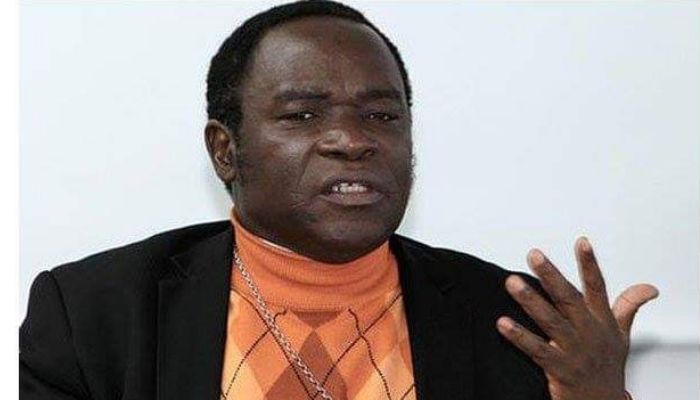
Bishop Kukah’s nation-building agenda: Matters arising

by Leading Reporters September 4, 2022
written by Leading Reporters

By Tonnie Iredia

For every event in Nigeria, the priority of most planners is to ensure that the big names in the country are pulled to the event. Politically exposed personalities such as president and governors are the most sought after in this regard. For me, there is some risk in relying on the big guys in town to make one’s event successful.  

This is because they often come late and disorganize the otherwise well-laid out plans for the day. Along the line, those tired of waiting begin to disperse, forcing the organizers to pick emergency chair/other actors in place of those originally empaneled. While much of this did not occur in last Wednesday’s celebrations of the 70th birthday anniversary of the Most Reverend Mathew Hassan Kukah, Catholic Bishop of Sokoto, ample attention still shifted from the celebrant to the presidential candidate of the Labour Party, Mr. Peter Obi, his colleague of the All Progressives Congress, Asiwaju Bola Ahmed Tinubu and his Vice, Kashim Shettima as well as a number of state governors.
 
It was probably impossible to prevent the event from turning into a political jamboree because it was held at a time of the year when persons seeking elective positions dutifully attend virtually all major functions to score some points ahead of a forthcoming general election. However, the presence of such highly placed politicians should not be taken to mean that they were on the same philosophical page as the day’s celebrant.  For example, while the fight for peace, justice and the rule of law are real to Kukah, they are mere slogans to many public office seekers. Whereas the politicians are looking forward to winning elections and exclusively appropriating the nation’s wealth, Kukah is bothered that many Nigerian politicians end up as accidental leaders, ill-prepared for public office. This is why he is proposing to use his foundation to build a N200million centre to provide leadership tools for accidental leaders and politicians in Nigeria. When completed the centre will have a main office complex; a school of government; halls, library, classrooms and offices; accommodation and lodging; an art gallery and studio. It will also focus its activities around interfaith dialogue, knowledge promotion and memory preservation.
 
It is worthy of note that President Muhammadu Buhari sent a goodwill message to the celebrating cleric, notwithstanding the general belief that Kukah is a not a friend of the present administration in view of his deep criticisms of its activities. In truth though, the Bishop does not appear ready to be a friend to any government for as long as the dwindling fortunes of Nigerians which have accumulated over the years are not redressed. Governor Aminu Tambuwal of Sokoto state who chaired the anniversary celebration virtually confirmed this in his opening address when he said, “Kukah’s writings over the years have become controversial and have drawn the ire of powers that be, but what is not in doubt is his undying love for Nigeria and Nigerians, and his belief in the possibility of a new Nigeria where justice and equity reigns.” Other messages followed the same thinking, with the Chairman of the Nigerian Governors’ Forum NGF, Kayode Fayemi concluding that Bishop Mathew Kukah’s love for ruffling the feathers of political leaders is essentially for the purpose of steering the country from the precipice.
 
Atiku Abubakar, presidential candidate of the Peoples Democratic Party PDP made about the same point when he described Kukah as ‘a remarkable public intellectual and formidable advocate for good governance whose contributions to Nigeria’s democracy are immeasurable and unquantifiable.’ Like President Buhari, Bola Tinubu and Kashim Shettima of the APC showed broadmindedness in celebrating their major critic at his point of glory. By describing the Tinubu/Shettima, Muslim-Muslim ticket of the APC as an unacceptable set-back for national integration, Kukah’s attack may have been quite frontal. Although many other leaders and citizens had made the same point, the Bishop’s eloquence and opinion-moulder status may have aggravated his own comments. The point must however be made that the numerous centrifugal forces in Nigeria’s heterogeneous polity would, any day, greatly support an attack on a same faith presidential ticket  
 
Many Nigerian critics of old, comrades and political activists have since joined the ruling class and forgotten the oppressed mases, but will Bishop Kukah at 70 also take a break? It is unlikely because he has continued to make many bold comments expected of a moral teacher and spiritual reformer after the anniversary celebration. We can hardly blame the Bishop as too many negatives have refused to leave Nigeria.  For instance, in spite of the passing of the Electoral Act 2022 and the recent vow by our president that the federal government will not allow anyone to misuse public institutions for the 2023 general elections, there are fresh and embarrassing allegations that well-placed politicians are at the verge of capturing an otherwise Independent National Electoral Commission INEC. Already, some opposition politicians are becoming scarred of the alleged nomination of politically tainted citizens to serve as Resident Electoral Commissioners. Should Kukah or any other patriot be quiet on this?
 
A Convocation Lecture titled, ‘Broken Truths: Nigeria’s Elusive Quest for National Cohesion’ delivered in June 2018 at the University of Jos had revealed too many negatives. Today, such things rather than ceasing are becoming more worrisome. One of them in the words of Bishop Kukah is that “recruitment and promotion in almost all sectors of the public service from the local governments through the state to the Federal Government depend on whom you know and not what you know.” If so, how can the nation make progress when its policies are not piloted by its first eleven team?  It would therefore be unreasonable for the next set of political leaders to expect that age 70 would stop Bishop Kukah from putting them under the same searchlight that their predecessors witnessed. In fact, that he will continue to serve as the conscience of human society is evidenced by his recent appointment by Pope Francis as a Member of the ‘Dicastery’ set up to advise and promote the Pope’s concerns on issues of justice and peace, human rights, torture, human trafficking, care of creation and other issues related to the promotion of human dignity and development.
 
Beyond a few critics, the unending socio-economic and political misfortunes of our people should at this point pull-up all citizens to take their destinies in their own hands and fix Nigeria. Many years back, Bishop Kukah had called on Nigerians to stop thinking that anti-corruption crusades directed at only top public office holders is all that is needed to fix the country. It is irrational according to the Bishop for our citizens to continue to line up all kinds of scapegoats among us whom they believe are responsible for our woes in Nigeria. While believing that the big people who steal huge sums are the ones that should flee with our sins into the desert so that our country can prosper, we often overlook the small people who cheat the bus conductor by not paying just as election rigging is seen as bad only when perpetuated by our opponents.
 
Again, we cannot scratch the surface of a problem and conclude that all is well that ends well. At the Bishop’s birthday event last week, former president Goodluck Jonathan spoke glowingly of how he resolved a four-month old ASUU strike one night. If he did so, why is ASUU still on strike over the same complaints? Why is the problem of ASUU still hinged on an official breach of a 2009 agreement? One of the matters arising now is for Nigerians to jointly beg the party to the agreement that did not play its part and not ASUU to reopen our universities. Secondly, should Bishop Kukah and his colleagues in the National Peace Committee continue to ask politicians to sign peace accords they do not believe in, while INEC officials especially the Ad hoc ones sourced from other bodies and some members of the judiciary continue to collude to render our elections incredible? While welcoming Bishop Mathew Kukah to the 7th floor of life, all citizens should work to resolve Nigeria’s outstanding matters

September 04, 2022  
September 4, 2022 0 comments
0 FacebookTwitterPinterestThreadsBlueskyEmail
Headlines

Despite “Nigeria’s Failed Economy,” 27 Ex-Governors Still Jostle to Remain in Empty System as Senators

by Leading Reporters September 4, 2022
written by Leading Reporters

The idea of a lifetime of near unbelievable salaries, allowances and privileges are clearly appealing to state governors whose terms are limited to a “mere” 8 years and even that is subject to winning their re-election bid which is not guaranteed as the current governor of Osun State can attest to. Out of the 109 available seats in the upper chamber (Senate) of the National Assembly, 27 seats may be occupied by former and outgoing governors come June 2023. 

If these 27 ex-governors or soon-to-be former governors win their respective senatorial seats in the upcoming election, it will mark a 42% increase from the number of ex-governors, 19 of them in the current senate, making the upper chamber an abode of former “Excellencies.”

Nigeria operates a bicameral legislature — the upper and lower chamber. The upper chamber is referred to as the Senate, while the lower chamber is the House of Representatives. The Senate has 109 members, and the House of Representatives has 360 members.

Unlike the elected executive positions (President and Governor) with a maximum of 2-term constitutional limit, the members of the National Assembly have no term limit. This means that as long as you play your politics well, you can always return to the chamber every four years as a “Distinguished Senator” or an “Honourable Member”. 

To date, the exact amount these 469 lawmakers earn is unknown to Nigerians; however, in 2018, Senator Shehu Sani, who represented Kaduna Central Senatorial District in the 8th National Assembly, said that a senator earns N13.5 million monthly as a running cost and an additional N750,000 as consolidated salary and allowances. On the other hand, a house of representatives member is reported to pocket N9.3 million monthly. 

This, alongside the allure of staying within the loop of power, might account for the number of former “Excellencies” turning to “Distinguished Senators” on the rise with each election cycle since 2007.

In the 6th Assembly (2007-2011), 8 former governors made the Senate their home. 

NameStateServed as Governor
Kabiru GayaKano1992-1993
Adamu AlieroKebbi1999-2007
Ahmed MakarfiKaduna1999-2007
Bukar IbrahimYobe1999-2007
Chimaroke NnamaniEnugu1999-2007
George AkumeBenue1999-2007
Sani YarimaZamfara1999-2007
Saminu TurakiJigawa1999-2007

These 8 individuals joined the Senate immediately after they completed their 2-term constitutional limit as governors, except for Kabiru Gaya who served as a governor of Kano state from 1992-1993, about 1 year. 

The next Assembly (2011-2015) saw an increase in the number of those who have served as governors going to the Senate. This time, the number increased to 9. Ahmed Aliero and 4 others who served in the 6th Assembly retained their seats, while Abdullahi Adamu, Bukola Saraki, and 2 others joined them as first-time Senators.

NameStateServed as GovernorNumber of times in the Senate
Adamu AlieroKebbi1999-2007Second time
Ahmed MakarfiKaduna1999-2007Second time
Bukar IbrahimYobe1999-2007Second time
George AkumeBenue1999-2007Second time
Kabiru GayaKano1992-1993Second time
Abdullahi AdamuNasarawa1999-2007First time
Bukola SarakiKwara2003-2011First time
Danjuma GojeGombe2003-2011First time
Joshua DariyePlateau1999-2007First time

In the 8th National Assembly, the number increased to 13, a 44% increase from the figure recorded in the 7th Assembly, possibly signalling increasing interest in the Senate.

George Akume, who went to the Senate House immediately after he completed his 8 years as Governor of Benue state (1999-2007), retained his seat as a third-term Senator. Same as Kabiru Gaya of Kano state.

Adamu, Saraki, Goje, Dariye, and Yarima, who all served their 2-terms as governors of their respective states, returned to the Senate for their second term. Others on the list were first-time Senators. 

NameStateServed as GovernorNumber of times in the Senate
George AkumeBenue1999-2007Third time
Kabiru GayaKano1992-1993Third time
Abdullahi AdamuNasarawa1999-2007Second time
Bukola SarakiKwara2003-2011Second time
Danjuma GojeGombe2003-2011Second time
Joshua DariyePlateau1999-2007Second time
Sani YarimaSokoto1999-2007Second time
Aliyu WamakkoSokoto2007-2015First time
Godswill AkpabioAkwa-Ibom2007-2015First time
Jonah JangPlateau2007-2015First time
Rabiu KwankwasoKano1999-2003; 2011-2015First time
Sam EgwuEbonyi1999-2007First time
Theodore OrjiAbia2007-2015First time

Two former governors of Plateau and Sokoto states were in the 8th National Assembly. Joshua Dariye, the governor of Plateau state from 1999-2007, was in the 8th Assembly as a second-term Senator, while Jonah Jang, who had completed his 2 terms as governor, joined as a first-timer.

Aliyu Wamakko joined his predecessor Sani Yarima in the senate; they both had served as governors of Sokoto state. Rabiu Kwankwasnso also joined Kabiru Gaya, both having served as governors of Kano state. This means that out of the 3 senatorial seats available to these states, 2 were occupied by former governors of the states (Plateau, Sokoto, and Kano). 

In 2019 when the 9th Assembly members assumed office, the number of former state governors rose to 19. An increase from the 13 recorded in the 8th Assembly. 

Kabiru Gaya is in the Senate for his  fourth term. Two other former governors in the current 9th Assembly are there for their third term as Senators, while 5 are serving their second term in the Senate. The others are first-time Senators. 

Abdul’aziz Abubakar Yari, the former Governor of Zamfara is not in the current Assembly, but only because his Senatorial election was nullified on May 24, 2019, by the Supreme court.

NameStateServed as GovernorNumber of times in the Senate
Kabiru GayaKano1992-1993Fourth time
Adamu AlieroKebbi1999-2007Third time
Danjuma GojeGombe2003-2011Third time
Abdullahi AdamuNasarawa1999-2007Second time
Aliyu WamakkoSokoto2007-2015Second time
Chimaroke NnamaniEnugu1999-2007Second time
Sam EgwuEnugu2007-2015Second time
Theodore OrjiAbia2007-2015Second time
Abdul’aziz Abubakar YariZamfara2011-2019First time (Election nullified)
Gabriel SuswamBenue2007-2015First time
Ibikunle AmosunOgun2011-2019First time
Ibrahim GeidamYobe2009-2019First time
Ibrahim ShekarauKano2003-2011First time
Kashim ShettimaBorno2011-2019First time
Orji KaluAbia1999-2007First time
Rochas OkorochaImo2011-2019First time

Chimaroke Nnamani, who served as Enugu state Governor from 1999-2007, and his successor, Theodore Orji are both in the Senate as second-time Senators. The two former Governors of Nasarawa state are also in the Senate. Abdullahi Adamu is a second-time Senator, while Tanko Al-Makura is a first-timer. This implies that 2 out of the 3 seats available to each of the states (Enugu and Nasarawa) are occupied by those who have served as governors for two terms.

The 10th Senate, which will commence in June 2023, is likely to see an increase in the number of former governors and soon-to-be- ex-governors who will be referred to as Distinguished Senators.

Thus far, in the lead-up to the 2023 general elections, 27 former governors and soon-to-be ex-governors are senatorial candidates in their respective states for the 2023 general election.

Out of the 27 candidates, Kabiru Gaya, testing the hypothesis of the senate being an unofficial “lifetime” employment, is returning for a fifth term, while two others are going for their fourth term in the Senate.

Aliyu Wammako, Chimaroke Nnamani, and Sam Egwu are all going for a third term in the Senate. 

NameStateServed as GovernorNumber of times in the Senate
Kabiru GayaKano1992-1993Returning for a 5th term
Adamu AlieroKebbi1999-2007Returning for a 4th term
Danjuma GojeGombe2003-2011Returning for a 4th term
Aliyu WammakoSokoto2007-2015Returning for a 3rd term
Chimaroke NnamaniEnugu1999-2007Returning for a 3rd term
Sam EgwuEbonyi1999-2007Returning for a 3rd term
Abdul’aziz Abubakar YariZamfara2011-2019Returning for a 2nd term
Gabriel SuswamBenue2007-2015Returning for a 2nd term
Godswill AkpabioAkwa Ibom2007-2015Returning for a 2nd term
Ibrahim GaidamYobe2009-2019Returning for a 2nd term
Ibrahim ShekarauKano2003-2011Returning for a 2nd term
Orji KaluAbia1999-2007Returning for a 2nd term
Saminu TurakiJigawa1999-2007Returning for a 2nd term
Seriake DicksonBayelsa2012-2020Returning for a 2nd term
Tanko Al-MakuraNasarawa2011-2019Returning for a 2nd term
Abubakar Sani BelloNiger2015-2023Contestesting for the 1st time
Adams OshiomholeEdo2008-2016Contestesting for the 1st time
Aminu TambuwalSokoto2015-2023Contestesting for the 1st time
Atiku BaguduKebbi2015-2023Contestesting for the 1st time
Darius IshakuTaraba2015-2023Contestesting for the 1st time
Dave UmahiEbonyi2015-2023Contestesting for the 1st time
Gbenga DanielOgun2003-2011Contestesting for the 1st time
Ibrahim DankwamboGombe2011-2019Contestesting for the 1st time
Ifeanyi UgwuanyiEnugu2015-2023Contestesting for the 1st time
Okezie IkpeazuAbia2015-2023Contestesting for the 1st time
Samuel OrtomBenue2015-2023Contestesting for the 1st time
Simon LalongPlateau2015-2023Contestesting for the 1st time

Nine former governors are contesting for their second term as Senators. The other 12, if successful at the polls, will be serving their first term as Senators, having served two terms as governors of their respective states. 

Apart from the increase in the number of former governors who may become Senators, there will also be an increase in the number of states whose former governors will occupy 2 out of their 3 senatorial seats.

For instance, Abia state has 3 seats in the Senate, the same as every other state in the country. Of these 3 seats, 2 will be occupied by those who have served as governors if they win in the upcoming elections. 

It will be the same story for Benue, Ebonyi, Kano, and 4 other states as 2 of their former governors are contesting for 2 of the available 3 senatorial seats.

NameStateServed as GovernorNumber of times in the Senate
Kabiru GayaKano1992-1993Fourth time
Adamu AlieroKebbi1999-2007Third time
Danjuma GojeGombe2003-2011Third time
Abdullahi AdamuNasarawa1999-2007Second time
Aliyu WamakkoSokoto2007-2015Second time
Chimaroke NnamaniEnugu1999-2007Second time
Sam EgwuEnugu2007-2015Second time
Theodore OrjiAbia2007-2015Second time
Abdul’aziz Abubakar YariZamfara2011-2019First time (Election nullified)
Gabriel SuswamBenue2007-2015First time
Ibikunle AmosunOgun2011-2019First time
Ibrahim GeidamYobe2009-2019First time
Ibrahim ShekarauKano2003-2011First time
Kashim ShettimaBorno2011-2019First time
Orji KaluAbia1999-2007First time
Rochas OkorochaImo2011-2019First time

With every election cycle, the possibility of a young politician who desires to represent his/her people someday at the Senate appears slimmer as the hallowed chamber is becoming increasingly filled with individuals who have once served as state governors.

If the trend continues, it’s only a matter of time before a majority of the legislature’s upper chamber seats become filled with former state governors.

If you’re wondering when the sorosoke generation might be able to take a stab at governance, it is anybody’s guess. News Source dataphyte.com

September 4, 2022 0 comments
0 FacebookTwitterPinterestThreadsBlueskyEmail
Group raises alarm over plans to ‘empty’ the national treasury by serving political office holders
Exclusives

Group raises alarm over plans to ‘empty’ the National treasury by serving political office holders

by Leading Reporters September 2, 2022
written by Leading Reporters

A group, League of Patriots has raised alarm over what it described as plans by public office holders serving under President Muhammadu Buhari-led government to empty the treasury through fictitious expenses. 

The group said it has information that most serving ministers, director generals and other political appointees have perfected plans to sweep the treasury using newly floated companies as well as that of their proxies.

According to information exclusively obtained by LeadingReporters, top management officers of NNPC, Ministry of Finance, Ministry of Interior, Ministry of Humanitarian Affairs and Ministry of Foreign Affairs and agencies under them have been fingered in these accusation.

The group, according to its spokesman said that they have been following events and information in all the MDAs as it relates to the activities of the top management staff and they have information which greatly suggests an impending financial disaster that would be occasioned by last minutes looting of the treasury by outgoing political office holders.

Rising from a meeting in  Austin Texas, the group spokesman Andrew Madaki said that membership of the league are drawn from patriotic Nigerians mostly within the ICT industry.  Madaki said they have placed surveillance on some companies, some financial institutions and individuals who are mostly likely going to serve as a conduit for this illegal transfers and unpatriotic act.

The group says they have alerted Interpol, Financial Action Task Force FAFI,  USA Department of the Treasury,  and other local and international anti-laundering organizations and agencies.

Group raises alarm over plans to ‘empty’ the national treasury by serving political office holders

A group, League of Patriots has raised alarm over what it described as plans by public office holders serving under President Muhamadu Buhari-led government to empty the treasury through fictitious expenses.  The group said it has information that most serving ministers, director generals and other political appointees have perfected plans to sweep the treasury using newly floated companies as well as that of their proxies.

According to information exclusively obtained by LeadingReporters, top management officers of NNPC, Ministry of Finance, Ministry of Interior, Ministry of Humanitarian Affairs and Ministry of Foreign Affairs and agencies under them have been fingered in these accusation.

The group, according to its spokesman said that they have been following events and information in all the MDAs as it relates to the activities of the top management staff and they have information which greatly suggests an impending financial disaster that would be occasioned by last minutes looting of the treasury by outgoing political office holders.

Rising from a meeting in  Austin Texas, the group spokesman Andrew Madaki said that membership of the league are drawn from patriotic Nigerians mostly within the ICT industry.  Madaki said they have placed surveillance on some companies, some financial institutions and individuals who are mostly likely going to serve as a conduit for this illegal transfers and unpatriotic act.

The group says they have alerted Interpol, Financial Action Task Force FAFI,  USA Department of the Treasury,  and other local and international anti-laundering organizations and agencies.

September 2, 2022 0 comments
0 FacebookTwitterPinterestThreadsBlueskyEmail
Obasanjo, Wike, Peter Obi Meet In London
Headlines

BREAKING Anxiety In Atiku’s Camp As Obasanjo, Wike, Peter Obi, Others Meet In London

by Leading Reporters August 25, 2022
written by Leading Reporters

Former president Olusegun Obasanjo, on Thursday, met with the presidential candidate of Labour Party, Peter Obi; and the Rivers State Governor, Nyesom Wike, in London.

Although details of the meeting were still sketchy as of the time of filing this report, LeadingReporters gathered that it was part of negotiations ahead of the 2023 presidential election.

Wike attended the meeting with his allies including Governor Seyi Makinde of Oyo State; Governor Samuel Ortom of Benue State; Governor Okezie Ikpeazu of Abia State and former Cross River State Governor, Donald Duke, among others.

Obasanjo, Wike, Peter Obi, Others Meet In London

Our correspondent gathered Atiku Abubakar”s camp is in panic over the meeting.

August 25, 2022 0 comments
0 FacebookTwitterPinterestThreadsBlueskyEmail
Former Accountant General of the Federation Ahmed Idris
Headlines

Breaking: Former Accountant General of the Federation Ahmed Idris In a Plea-Bargain Deal with FG

by Leading Reporters August 25, 2022
written by Leading Reporters

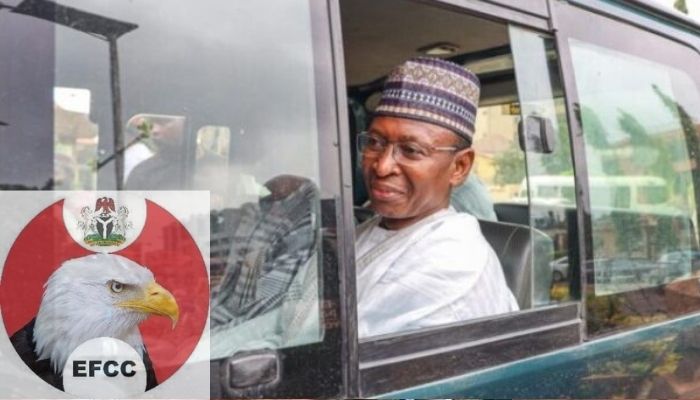
Former Accountant General of the Federation, Ahmed Idris who is currently being investigated for corrupt practices and diversion of public funds  is pushing for a plea-bargain with the Economic and Financial Crime Commission, LeadingReporters has been authoritatively informed .

A source who is in the know said that Idris is using powerful persons within the corridors of power to press on the Economic and Financial Crime Commission EFCC to drop the charges on the Accountant General and opt out of the court.

Recall that Idris Ahmed was charged alongside Godfrey Olusegun and Mohammed Kudu Usman on 14-count charge of stealing and criminal diversion of N109.5billion.

The source revealed that part of the deal was to remove certain people who were earlier indicted from the charge sheet.  These people, LeadingReporters learnt would be responsible for destroying possible evidence and thus make all the moves necessary towards getting Ahmed out.  One of the persons, it was  said, is the Permanent Secretary, Ministry of Finance who, this platform learnt was indicted earlier, but was let out of the hook when some powerful forces intervened.

It was further learnt that the former Accountant General hopes to let go some of the monies and property traced to him in the new deal he is proposing to the Federal Government. He was said to have mentioned in one of his meetings with associates that he was willing to let go some of those monies and property if that would soften the ground for him.

August 25, 2022 0 comments
0 FacebookTwitterPinterestThreadsBlueskyEmail
HeadlinesOpinion

Rigging local elections in Nigeria: Where next?

by Leading Reporters August 21, 2022
written by Leading Reporters
By Tonnie Iredia  

One failed aspect of democracy in Nigeria is the conduct of elections into the country’s 774 local government councils. In most cases, the contests are handled by electoral commissions that are usually made up of cronies of the ruling party who are brought on board to ensure that their party` ‘sweeps’ the polls. Consequently, our local areas have remained undeveloped because persons that can evolve and implement viable socio-economic projects, are usually displaced through election chicanery.

Painfully, there are no visible prospects in the horizon to suggest that the trend might change soon. This completely reverses the goal of establishing a third tier of government which by virtue of its closeness to the grassroots should best meet the immediate needs of the locals. Based on this, whenever an election is fixed to hold in any local government area in the country, the expectation is that it would be rigged in favour of the ruling party.   Many have thus been taken aback by the decision of the outgoing Osun State Government to, in the guise of holding an election, instal its puppets as others do across the nation. Already, the chairman of the state electoral commission, Otunba Olusegun Oladuntan has announced October 15, 2022 for the contest across the state.

Surprisingly, his team seems to be going ahead with arrangements for the exercise not withstanding a case in court against it. As expected, the two leading political parties, the All Progressives Congress APC and the Peoples Democratic Party PDP are for and against the proposed elections respectively. While the latter alleges that the outgoing ruling APC is bent on holding the election at the eve of its departure so as to install those who can cover-up its alleged corrupt activities, the APC says for as long as governor Gboyega Oyetola’s tenure has not ended, his government has a legal right to hold local elections.  

But why did Oyetola not organize any local election until the last few weeks of his tenure? Why can’t he focus on proper handing-over notes to his successor instead of starting a fresh event at the 24th hour? Is the outgoing government unaware of the legal position that when a matter is pending in court, a notice of such matter acts as a stay of any action that may prejudice the matter in court? An objective answer to these questions would support the point that the government is anxious to empower its lackeys as alleged. Again, why is the PDP so bothered about an election that an electoral commission described as independent is proposing to conduct? While the PDP is skeptical about the performance of a tainted electoral body, would she herself not have done what the APC is about to do? If the truth must be told, the PDP only wants the election pushed forward to when her own Ademola Adeleke assumes office so that the PDP can magically ‘sweep’ the polls at that point.  

To understand the underlining theory that all ruling political parties are experts in rigging local elections, a review of the situation in Benue state would illuminate the subject. In 2017, when Governor Samuel Ortom was in the APC, his party swept the local elections held in the state. Although John Tsuwa who was chairman of the Benue state electoral commission could not convince people that the results he announced were not cooked-up, he did declare that the APC won ALL the 23 chairmanship seats as well as ALL the councillorship positions contested. However, the Conference of Nigeria Political Parties CNPP insisted that no local election took place anywhere in Benue on Saturday, June 03, 2017 for which landslide victories were announced. Some three years later, that is, May 2020 another local election took place.

This time around, the Peoples Democratic Party, to which Governor Ortom had defected won all the 23 chairmanship and 276 councillorship positions.   In seeking to underscore the unwholesome behavior of the political class at elections, it is important to note that the situation in Benue represents what happens in many other locations nationwide. In Ebonyi and Taraba states, the ruling PDP similarly swept the polls. The All Progressives Congress, APC also scored 100 percent in the elections held in states controlled by her. In Kogi state for example, the party reportedly won all the 21 chairmanship and 239 councillorship positions in the local government elections held in December 2020. 

In Jigawa state, the same APC was declared winner of all the 27 chairmanship positions in the State in the election held in 2021. But the PDP was allowed to take hold of just one ward – Kiyako, in Birninkudu local government area which happens to be the Ward of the PDP former governor of the state, Alhaji Sule Lamido. Even at that, voters in the area reportedly held the electoral officials hostage to stop them from changing the outcome of the results. All the other 286 councillorship positions were cleared by the ruling APC. The use of fake elections is not the only strategy political parties employ to emasculate the local government system. Quite often, elections are not held at all; instead, the ruling party merely appoints caretaker committees to manage the system in breach of the constitutional provision for local government councils to be democratically elected.

In Cross River state, it was an endless waiting game. Although the state electoral commission headed by Mike Ushien collected non-refundable deposits of N200,000 and N100,000 from chairmanship and councillorship candidates respectively for the election fixed for June 2017, no contest took place and monies were not refunded to the candidates. So, can anyone blame those who have no faith in local elections? Indeed, the fear of the PDP about the hurried attempt to organize an election in Osun state on the eve of the departure of Gboyega Oyetola who only realized the need for a local government election after he lost his reelection bid is not irrational. If the election holds on October 15, 2022 as proposed, the next rigging will most likely happen in Osun state.  

Another state which needs to be watched is Edo, where the state electoral commission is set to hold local government elections on January 14, 2023. With the tenure of governor Godwin Obaseki still beyond one full year to go, we cannot accuse him of the same hidden agenda that appears to be playing out in Osun. Besides, Obaseki’s consummate appetite for the use of technology can thwart any rigging plans in his state. But considering that many politicians around the governor are products of the “cut-for- me- cut-for-me” political culture in the state ingenious politicians in the ruling party may still use their ingenuity to adversely interfere with the proposed January 15, 2023 contest.

Here, one can recall that some years back when the officially endorsed candidate could not win the Esan North East chairmanship election, the contest had to be put off twice. When it eventually held and all relevant stakeholders were awaiting the collation of votes at Eguare Primary School Uromi – the designated centre, results against the run of play were announced from the seat of power in Benin, over 100 kilometres away.   The point that must be made is that it is time to end fake local elections in Nigeria.

Accordingly, all well-meaning citizens should prevail on governor Gboyega Oyetola of Osun state to concentrate on his election petition and discard the hurriedly arranged local elections fixed for October 15, 2022. At the same time, we call on governor Godwin Obaseki of Edo state to make it difficult for any of his overzealous aides to push the state electoral commission into any ignoble role during the proposed January 14, 2023 local elections in the state. It is also important to remind all politicians that by virtue of the new Electoral Act 2022 the procedure regulating elections conducted by INEC to Area Councils in the Federal Capital Territory now apply with equal force and sanctions as the procedure regulating elections conducted to Local Government Areas by any state electoral commission. August 21, 2022

Prof Tonnie Iredia  

August 21, 2022 0 comments
0 FacebookTwitterPinterestThreadsBlueskyEmail
Headlines

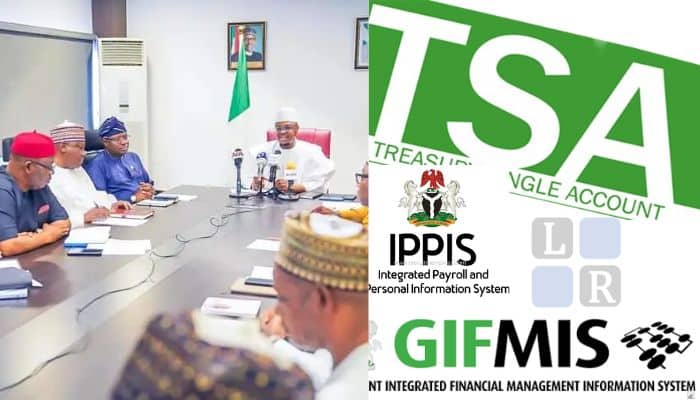
7 Years After, Deployment of IPPIS, GIFMIS, TSA, didn’t follow Nigeria’s law – Pantami

by Leading Reporters August 14, 2022
written by Leading Reporters

The latest revelations about the challenges with the IPPIS by the minister has been described as a vindication of ASUU’s position on the payment system.

The Minister of Communications and Digital Economy, Isa ‘Pantami’ Ibrahim, has said the deployment of the Integrated Personnel Payroll Information System (IPPIS), Government Integrated Financial Management Information System (GIFMIS), and the Treasury Single Account (TSA), did not follow relevant laws as put in place by the Nigerian government.

The minister said the section of the NITDA Act that requires the standardisation and certification, application and delivery of such systems in Nigeria were not followed during the deployment of IPPIS, GIFMIS and TSA.

“At the time they were deployed, the provision of NITDA Act under section A, of setting the standardisation of ICT deployment in federal public institutions was not followed. Because of this, these three systems were not subjected to government certification and IT project clearance as encouraged by law and many other government policies,” he said.

Mr Ibrahim said following allegations that the systems are being used to syphon money from the treasury, the National Information Technology and Development Agency (NITDA) reviewed the IPPIS critically, “and found errors in high, medium and low magnitudes.”

President Muhammadu Buhari has, therefore, approved the constitution of a Presidential Steering Committee on critical technical review of the three payment systems used by the government, he said.

The minister spoke on Friday while inaugurating the members of the committee on behalf of the President.

He said the results of the test conducted on IPPIS have been submitted to relevant government agencies including the Ministries of Finance, Budget and National Planning, Labour and Employment as well as the Presidency.

The minister said the tests will also be carried out on GIFMIS and TSA and the final report will be submitted to the President.

He said: “Prior to this meeting as part of the government’s processes, testing and certifying systems IPPIS was recently subjected to critical review by NITDA. A report has been submitted to the relevant ministries including Finance, Budget and National Planning, Ministry of Labour and Employment, and a copy was sent to the Presidency.

“There is no doubt, we discovered there are high errors. There are challenges with IPPIS. There is no doubt about this. But in spite of all the challenges we have recorded, there are high, medium and low errors in these systems.”

The suspended Accountant General of the Federation, Ahmed Idris, who is currently facing corruption trial, was alleged by the Economic and Financial Crimes Commission (EFCC) to have diverted funds through IPPIS, GIFMIS and TSA.

Benefits of IPPIS, others

However, despite the irregularities identified in the system, Mr Ibrahim said the systems have proved to be useful, saying they have saved the government over N10 trillion.

He said: “Inspite of that, many achievements have been recorded. For example, based on the report from the relevant institutions of government that IPPIS saved the government over N120 billion naira, while Treasury Single Account (TSA) saved over N10 trillion for the government.”

The committee

The technical committee, which was inaugurated by Mr Ibrahim, is also to be chaired by him. He said its activities will be supervised by his ministry while NITDA serves as the secretariat for the committee.

“The main work is to ensure that there is no leakage in these systems, and to ensure that the process is of high quality,” he said.

He said all the institutions managing the platforms to be reviewed must provide unlimited access to the committee to do its job.

He said any institution that fails to cooperate with the committee will report the president for punishment.

“Any institution that failed to give access to it will be reported to the President immediately. And in addition to that recommendation, a punishment is going to be recommended to the president for implementation.

“It is the mandate of this ministry and the relevant parastatals under the ministry to ensure that any system deployed in government, there is value for money and we must continue to improve on that.”

Members of the committee, according to the minister, include NITDA’s Director General, Kashifu Inuwa, who serves as the secretary; the Minister of Finance, Budget and National Planning, Zainab Ahmed; Head of Civil Service of the Federation, Folashade Yemi-Esan; Auditor General of the Federation, Aghughu Arhotomhenla; and the Chairman, Economic and Financial Crimes Commission (EFCC), Abdulrasheed Bawa.

Others include the Director General, Bureau of Public Service Reforms, Dasuki Arabi; Chairman, Salaries Income and Wages Commission, Richard Egbule; and the Managing Director, Galaxy Backbone Limited, Muhammed Abubakar, a professor.

Backstory

The striking university workers’ unions have consistently opposed the deployment of IPPIS for the payment of its members’ emoluments, saying the system is a product of fraud and an imposition by foreign economic interests.

The Academic Staff Union of Universities (ASUU) has insisted on the replacement of the payment platform with an alternative its members designed which the union tagged; University Transparency and Accountability System (UTAS).

Meanwhile, both the Senior Staff Association of Nigerian Universities (SSANU) and the Non-Academic Staff Union of Educational and other Associated Institutions (NASU) have also developed its alternative solution tagged; “University Peculiar Payroll Payment System (U3PS).

The chairman of the Lagos zone of ASUU, ‘Laja Odukoya, described as a vindication of the union’s position the minister’s latest revelation about the challenges with IPPIS.

August 14, 2022 0 comments
0 FacebookTwitterPinterestThreadsBlueskyEmail
OpinionHeadlines

Tinubu And Obi Will Either Affirm Or Destroy These Two Theories In 2023

by Leading Reporters August 14, 2022
written by Leading Reporters

Farooq Kperogi

TWO certainties have underpinned voting behavior in Nigeria, which APC’s Asiwaju Bola Ahmed Tinubu and Labour Party’s Mr. Peter Obi will either uphold or explode in next year’s presidential election. While one of the certainties is time-honored, the other is more contemporary and enabled by social media.

The most time-honored fixity in Nigerian electoral politics since independence is the certitude that the Yoruba electorate will always overwhelmingly vote for a Yoruba candidate in national elective contests in which other candidates are non-Yoruba. Will Tinubu uphold, modify, or disaffirm this age-old pattern? I’ll return to this shortly.

The second fixture in Nigeria’s electoral politics since at least 2011 is the almost inexorable nexus between candidates who dominate the social media discursive arena and candidates who win the presidential election. Peter Obi is now undoubtedly the undisputed favorite in Nigeria’s social media circles. Will he replicate previous patterns?

Let’s start with Tinubu and the Yoruba voting trajectory. On the surface, it seems outrageously accusatory and unfair to say Yoruba people inescapably vote for their kind in presidential elections. But that is what the historical evidence says.

Note, however, I am not by any means saying that every single Yoruba voter has always voted for Yoruba candidates in presidential elections. I am only saying that the majority of Yoruba voters always vote for their kind.

Chief Obafemi Awolowo enjoyed the kind of political dominance in Western Nigeria that Sir Ahmadu Bello didn’t have even in Hausaphone Muslim Northern Nigeria (he could never win over Kano, for example) and that Dr. Nnamdi Azikiwe didn’t enjoy in Eastern Nigeria.

Well, one can attribute Awolowo’s political iconicity in Western Nigeria to his admirable policies and inclusive strategies when he was a premier of the region. But how about Chief MKO Abiola?

Abiola spent the better part of his political career undermining Awolowo and swimming against the political mainstream in Yoruba land. His Concord newspaper was virulently and implacably anti-Awolowo.

Unlike Tinubu who used to subordinate his Muslim identity to the point of erasure until the last few years, Abiola wore his Islam on his sleeves.

He advocated the establishment of sharia in Yoruba land; built hundreds of mosques nationwide; openly supported Islamic causes in and outside Nigeria; was the Baba Adini of Yoruba land [i.e., the ceremonial head of Islam in Yoruba land); and aggressively worked for and defended Nigeria’s membership in the Organization of Islamic Conference (OIC), which caused the Christian Association of Nigeria (CAN) in 1986 to urge Christians to boycott the Concord newspaper.

Abiola was also the victim of a vicious whispering campaign in churches that he bought hundreds of thousands of bibles and intentionally sunk them in the sea. It was false but many Christians believed it.

So, when he chose a northern Muslim running mate in 1993, like Tinubu has done, the exact same reaction as we’re seeing today from Christians followed. Northern Christians kicked, and Yoruba Christians said they wouldn’t vote for him both because of his past and his choice of a Muslim running mate.

But when his opponent turned out to be Alhaji Bashir Tofa, a Kanuri Muslim born and raised in Kano, the Yoruba electorate closed ranks, eschewed religious divisions, accentuated Abiola’s ethnicity, and voted for him overwhelmingly.

We saw a repeat of this with Chief Olusegun Obasanjo. When his major opponent was Chief Olu Falae, another Yoruba man, he lost not only the Southwest but also his natal Ogun State. However, when his major opponent in 2003 was Major General Muhammadu Buhari, the Yoruba electorate voted for him massively.

Note that Obasanjo did things that made him unpopular in the Southwest. For example, he ordered the shooting on sight of OPC members, starved Lagos of federal allocations out of spite, and actively worked to disrupt the prevailing political consensus of the region. Yet, the Yoruba political elite not only preferred him to Buhari, they also merged their political party, the Alliance for Democracy (AD), with the Peoples Democratic Party (PDP) for the purpose of the 2003 presidential election, which led to the death of AD.

In a February 21, 2003, confidential cable revealed by WikiLeaks in 2011, the US Consul General reported Tinubu to have told him that Yoruba people would vote for Obasanjo against Buhari because even though Obasanjo was unlikeable, he was Yoruba and Buhari wasn’t.

The cable reads: “Turning to the presidential contest, Tinubu disclosed that he does not like President Obasanjo because he contributed to the end of democracy in Nigeria during his tenure as a military president and is now benefiting from that history.

“That said, Tinubu admitted that he and his party, the Alliance for Democracy, must support Obasanjo. Southwest Nigeria is Yoruba land and the President is Yoruba. Tinubu”s [sic] party had no choice since it has not fielded a presidential candidate. Moreover, Obasanjo is the only candidate who stands a chance of blocking his rival, General Muhammadu Buhari, whose ethnocentrism would jeopardize Nigeria’s [sic] national unity. Buhari and his ilk are agents of destabilization who would be far worse than Obasanjo….”

Tinubu and his group would later embrace the same Buhari the fear of whom had driven them to embrace and support an unlikeable Obasanjo.

If the Yoruba voting pattern that I have established is any guide, Tinubu will win the majority of votes in the Southwest in spite of the apparent religious dissension in the region now.

Should he, however, win only marginally or, worse, lose in the region, it would mean that religion, particularly Pentecostal Christianity, has finally succeeded in trumping ethnicity in Yoruba land. That would be seismic and invite a reworking of the sociology of the region, especially if Peter Obi makes significant inroads in Southwest states outside of Lagos (where Igbos constitute a significant voting bloc).

It would mean that, like in Northern Nigeria, religion has graduated to a more significant predictor of political behavior than ethnicity in Yorubaland. That would have far-reaching consequences for the mapping of the contours of the Yoruba political landscape going forward.

The second observational data that will be up for empirical corroboration or explosion in the 2023 election is the nexus between social media popularity and electoral triumph in presidential contests. I studied this systematically from 2011 to now.

In 2011, when social media was still at its inchoate stage in Nigeria, Dr. Goodluck Jonathan bestrode the social media scene like a colossus and pulverized Buhari in the election. Buhari returned the favor in 2015 after coalescing with the dominant political elites of the Southwest. Buhari dominated the social media space and ended up winning the election.

In 2019, Buhari’s online devotees lost their creative juices and left the stage for Alhaji Atiku Abubakar’s online foot soldiers. Atiku ruled the social media conversation during electioneering and went ahead to win the election but was rigged out in one of the most brazen electoral heists in Nigeria’s history. Both INEC insiders and U.S. State Department officials have confirmed that Buhari lost the 2019 election by close to 2 million votes.

The clamorousness of Peter Obi’s dominance of the Nigerian social media scene is uncannily redolent of Buhari’s 2015 social media supremacy. The temperaments of their supporters are eerily similar: like Buhari’s 2015 supporters, Obi’s votaries are aggressive, malicious, passionate, monomaniacal, worshipful in their admiration of their idol, intolerant of alternative views, self-righteous, and apt to invent easily falsifiable falsehoods to shore up their hero’s image.

Like Buharists in 2015, Obi adherents, who call themselves by the singularly headless and uninspired moniker “Obi-dient,” have succeeded in shutting out the voices of people who support other candidates with their venomous vituperative darts, although they met their match on Twitter in former Enugu State governor Dr. Chimaroke Nnamani who requitted their verbal violence and caused the hashtag #ObidiEND to trend for days.

Well, although the link between social media dominance and eventual electoral triumph in presidential contests is more correlational than causational, it nonetheless points to the symbiosis between online and offline political organizing.

In other words, there’s a mutually reinforcing relationship between online visibility and offline success. For example, the exponential rise in PVC registration in the last few weeks has been attributed to the energy Obi has infused into the political process.

But should Obi fall short in 2023 in spite of dominating social media, I would attribute his social media dominance to what we call the spiral of silence in communication theory. Spiral of silence occurs when vast swaths of people self-censor themselves because they fear that a vocal minority’s shrill opinions are the dominant and only acceptable opinions. Fear of insults and social isolation from the vocal minority keep the majority from expressing opinions that depart from the consensus of the vocal minority.

Whatever it is, the 2023 election is shaping up to be an election like no other in the history of Nigeria.

August 14, 2022 0 comments
0 FacebookTwitterPinterestThreadsBlueskyEmail
OpinionHeadlines

Allowing criticisms of government is overdue in Nigeria

by Leading Reporters August 14, 2022
written by Leading Reporters

Tonnie Iredia

Unlike today’s fresh journalists, those of us who joined the profession in the early 70s had golden opportunities of attending professional training courses outside Nigeria. One of the courses I attended which has  remained indelible to me even after several years of retirement from service was on how to develop journalistic courage. Interestingly, it is not the content of the course that has  refused to go, but the impact of an inscription on the office door of one of the resource persons. It read as follows: “If you speak, you will die. If you don’t speak you will still die.” The author’s  explanation of the purport of the inscription, was that those who are always petrified of speaking should realize that because such fears would not stop the ultimate reprisal- death, they stood the chance of dying without speaking.

 
Of course people have a right to speak whenever they have something they wish to convey to other people. That is the whole essence of the constitutional freedom of speech provided that in the exercise of his/her freedom, no one defames any other person. Indeed, in a free world, every country has since the 1970s been encouraged by UNESCO to operate as a communicating nation. If however people don’t feel obliged to talk to one another, there are by far too many cogent reasons for them to talk to government. First, it helps to shape public policies because people’s preferences are best reflected in what they say instead of what they fail to disclose. Second,  it is through feedbacks from people in a particular community that government can monitor and form judgment on the degree of success of public policy execution in each community.
 
Government is therefore better positioned to comprehend public rating of her performance. In other words, it is in the interest of government  to listen to public criticisms no matter how scathing they may appear to be. Where the criticisms are generally factual and devoid of malice, they constitute what can reasonably be deemed to be constructive and ought to be used by a good government to make amends. It is in fact ill-adviable for government officials to denounce public criticisms on the ground that they are restricted to only areas where government has not done well without correspondingly reflecting her areas of success. The point must also be made that where critics are pragmatic enough to offer solutions or alternative options, their criticisms are elegantly coated in a positive garb.
 
Considering that the third world accommodates an appreciable number of tyrannical government officials, it is heartwarming that Nigeria has some citizens both now and in the past who were and are always available to speak truth to power. Here, one remembers with eternal gratitude, the selfless fight against bad governance by the late irrepressible Gani Fawehinmi to enthrone justice and equity in the land.  Another great example of crusaders that cannot be forgotten in hurry is Anthony Cardinal Olubunmi Okogie. The Cardinal it was who courageously berated government for running down hitherto viable private schools which she took over without establishing any formidable strategies to run them. The courage to call out the government on many current political and socio-economic policies that are feebly formulated and ineffectually executed has been the main concern of Bishop Mathew Kukah of the Sokoto Catholic Diocese.
 
Only last week, another Catholic Bishop, John Ebebe Ayah of the Uyo Diocese joined the list of moral teachers and social reformers who are always drawing attention at the appropriate time to matters of public interest calling for change. At  a Thanksgiving service organized in honour of newly appointed Justice Emmanuel Agim Akomaye of the Supreme Court, Bishop Ayah subtly rejected a donation made by Governor Ben Ayade of Cross River State to the bewilderment of the congregration. In the words of the Bishop, “I want to appreciate the governor and tell him to package whatever he has for me, add to it and use it to pay the salaries of workers.” The Bishop according to the media received thunderous ovation from the congregation establishing clearly that someone needed to let political leaders know that  irregular payment of workers’ salaries ought to be deprecated. 
 
But was the top clergy playing to the gallery with no evidence that Governor Ayade belongs to the league of state governors that toy with workers’ pay? Those who listened to Ayade’s immediate rejoinder after the Bishop threw the bomb may have felt that it was an unfair attack because the governor reportedly confirmed that his administration has been faithful and consistent in the payment of salaries for well over seven years. However, there is doubt if the governor was not merely playing Nigerian politics where truth is often denied with confidence and oratory. This is because a group of civil servants in Cross River had recently protested publicly on the streets of Calabar that they had not been paid any salary since they were recruited in 2018.  Besides, there was the report from far away, Geneva, Switzerland that Ayuba Wabba, President of the Nigerian Labour Congress ( NLC) named Ayade of Cross River State and three other governors: Darius Ishaku of Taraba, Bello Matawalle of Zamfara and Okezie Ikpeazu of Abia  as the only four who are yet to pay the approved minimum wage in their states. 
 
It is significant that the minimum wage story came up; because one of the most insensitive things in our clime is the payment of huge salaries and allowances to top political office-holders who consistently insist that government cannot afford to meet the small figures that are to be paid to junior workers and university teachers. Failure to pay minimum wage is not only a social problem but also a legal issue because the minimum wage was approved by law, making it an offence to not pay it. Those who are ready to speak truth to power should direct attention to more than the executive arm of government. For example, Nigerians have remained perturbed about the huge allowances of members of the Nation Assembly. Although the legislators often speak of only their basic salaries, the huge allowances they allegedly pay themselves without the approval of the Salaries and Wages
Commission have remained worrisome. Under the relevant subheads, it is alleged that newspaper allowances of a legislator are far in excess of the salary of the highest paid university teacher.
 
Nigerians must continue to talk because many well-placed persons often hoard sensitive information away from those in top leadership positions until it is too late to nip the problem in the bud. It worthy of note that governor El Rufai is a good example of a leader who interrogates a public story at the appropriate time. The other day, it was him that was quoted by several media sources as the first to inform President Muhammadu Buhari of threats against his person by insurgents.  At the 7th Wole Soyinka Centre Media Lecture Series in Abuja in 2015, the governor had called for the dissolution of what he called the “corrupt” Nigerian National Petroleum Company NNPC or stand the risk of itself being destroyed. In 2017, it was the same governor that wrote a private letter to the president to apprise him of the negative comments by many Nigerians about his government and steps that can be taken to improve governance and move the country forward. Just four days ago, El Rufai also informed the president that terrorists were creating a parallel government in Kaduna. What the governor appears to be anxious to confirm is that it is better to speak before one dies.
 
In contrast, there are governors and other officials close to the corridors of power who operate the “silence is golden” approach in the new age of information technology in which the old order of stifling information and criminalizing dissent have become obsolete. Also overtaken by events is the old practice of placing the public media in a cooler in the hope that not much would in the process be said about government. It is time for political leaders who incarcerate  journalists and political opponents on account of their view points to close shop

August 13, 2022.

August 14, 2022 0 comments
0 FacebookTwitterPinterestThreadsBlueskyEmail
OpinionHeadlines

Nigeria’s insecurity: One impeachment not enough

by Leading Reporters July 31, 2022
written by Leading Reporters

By Tonnie Iredia

Over 80 senators across political parties and a majority of House of Representatives members, have reportedly agreed to begin impeachment proceedings against President Muhammadu Buhari, if the growing insecurity across the nation persisted beyond the next six weeks. It was a rather stern ultimatum given by the federal legislators on the eve of their departure to a 2-month vacation. Anyone who thinks the legislators are ready for a hard time with the executive needs to take a second look at their subsisting posture which portrays them as members of a rubber stamp legislature.

They actually showed the turf they are made up of when in line with their feeble outlook, they allowed as long as six weeks for the presidency to make amends not withstanding that they had had cause more than once to show ample frustration over the prosecution of the fight against insurgency and every form of insecurity in the land.  

Senator Call To Impeach President Buhari


No empirical reason was given for how the ultimatum of six weeks was arrived at; making it appear that it was influenced by their desire to avoid a disruption to their vacation. With the rash of attacks which led to several killings in the last few weeks, one would have expected the representatives of the people to put off their vacation for now so as to squarely face the severe issue of widespread fear and anxiety in the nation. It was an error of judgment that the legislators kept to their schedule of incessant vacations at this crucial point.

Time there was when Nigerian legislators cut short their vacation to deal with what they often called “urgent matters of national importance” even though such matters were essentially always about their welfare. So, not many people are able to comprehend why our legislators faithfully go on vacation as if it is one of their critical functions.  Besides, the same legislators do not only enjoy every public holiday, they usually go away for weeks before and after every holiday for which  other public officers enjoy no more than the two days officially declared for it
 
The National Assembly has a constitutional right to follow the impeachment process it is threatening to invoke and we are not anxious to dispute their power but if the recent tough talks end up only as half-hearted sermons, the legislature would merely place the nation in jeopardy. To start with, it is difficult to understand why the minority leader of the House of Representatives, Ndudi Elumelu was begging his colleagues to take advantage of their long holiday to stay away from what has become the highly unsafe Abuja. The plea no doubt unveils many posers.

First, was Elumelu encouraging legislators to abandon Nigerians who have no option but to stay in the location?  Second, bearing in mind that there is hardly any safe place today, where precisely would legislators who buy the plea head to? On at least two occasions, in the last couple of weeks, the city of Owo in Ondo state has been attacked twice. In Niger state, the media reported no fewer than 12 villagers abducted last Tuesday by suspected gunmen in Shaddadi village in the Mariga Local Government Area of the state.  Would legislators leave Abuja for any of these volatile areas or would those of them from Enugu state prefer to go home to nearby Ozalla town where the Actors Guild of Nigeria raised alarm the other day of the alleged kidnap of two veteran film stars who had gone missing after they left a movie location in the state?
 
If Elumelu’s plea to legislators is taken as a joke, from a leader not generally given to frivolity, many analysts would be on the same page with  Idris Wase, Deputy Speaker who accused the minority leader of playing politics with the lives of citizens. However, Wase’s sharp reaction is a sign that at the appropriate time, disagreements may as usual displace the seeming consensus of legislators on the nation’s grave insecurity.

Indeed, many of them would stay away from voting as they did during the crucial issue of the bill on electronic transmission of election results. Some other lawmakers might choose to pay lip service to the so called impeachment proceedings by supporting it during debates and rejecting it during voting as they did while considering the numerous pro-women bills. Already, in spite of the claim by Senator Smart Adeyemi that the impeachment threat was bipartisan, at least one member of the House of Representatives from Imo state, Chike Okafor has vowed that lawmakers of the ruling All Progressive Congress APC will resist any attempt to impeach the president by those he described to be grandstanding just to be noticed by their constituents
 
This unpredictable disposition of some legislators to the subject was already visible within the National Assembly on the day of the threat. Senate President Ahmad Lawan, was not comfortable with the subject and objected to its discussion on the floor of the senate. About seven other senators, that reportedly included Opeyemi Bamidele and Gabriel Suswam were also said to have shared Lawan’s sentiment. It was perhaps the unpredictable environment created by their ambivalence that influenced the reaction of the presidency to the impeachment that those behind the threat were merely “performative, babyish and playing to the gallery.” The reaction can hardly be dismissed as every wrong the legislators wish to blame Buhari for, exposes their own unquantifiable contributory negligence. A National Assembly whose leadership stated unequivocally from the beginning that they would approve whatever the president presented to them cannot be seen at this point to be isolating the same president. If impeachment is an option, it cannot affect only one side.
 
There is much for which the nation can justifiably blame the legislature concerning the worsening insecurity in our clime. More often than not, this column has had to berate our legislature for the simple reason that its power to check the executive is hardly done with the interest of the nation in mind. Huge sums of monies were appropriated for the military to combat insecurity with no evidence that the funds were used for the purposes for which they were approved. How come the relevant committees of the National Assembly were never able to use oversight to identify lapses in military spending? The former service chiefs under the leadership of General Gabriel Olonisakin were accused by many of misappropriation of funds, yet it was only after the team left office that legislators started summoning their successors to appear to brief them on the state of affairs. Even the opportunity our lawmakers had to interrogate the team during their screening for their new appointments as ambassadors was frittered away in pursuit of shadows.
 
The legislature also distracted the president many times especially in its passage of convoluted budgets. It became so much that at the signing of this year’s budget,, Buhari was constrained to openly condemn what he described as “worrisome changes” to the budget by the National Assembly. The changes amounted to N378.9 billion covering   460 duplicated items inserted in the budget – a figure that has 144 items more than the 316 items inserted in last year’s budget. To make matters worse, many of the projects were surreptitiously placed under MDAs that have no bearing with them. For example, the sum of N67.8 million for the construction of “Gun Armouries” was found in the budget of the Ministry of Environment which is not a security organization. Interestingly, the blame game is never extended to the unwholesome initiatives of those that have a final say in the preparation of the budget
 
It is true that Nigerians have endured enormous pains in the last few years. It is also true that as the overall boss of the nation, the president ought to take much of the blame on the basis of vicarious liability. But considering that much of what has gone wrong in Nigeria is criminal, no one can be held to account for the crime committed by others. This is why the current threat of impeachment of the president is too narrow. Nigerians should clamour for the removal of all conniving public office holders.

July 31, 2022

July 31, 2022 0 comments
0 FacebookTwitterPinterestThreadsBlueskyEmail
Newer Posts
Older Posts

Recent Posts

  • Turning Urgent 2k Calls Into Real Relief: The Urgent2k App Launches This Independence Day

    October 1, 2026
  • How The Group Managing Director/CEO of Fidelity Bank Nneka Onyeali-Ikpe Doubled Her Personal Loan From Fidelity Bank; Other Directors Left ₦1Billion In Insider Loans Deals

    September 28, 2026
  • 34 years after 159 died, foundation challenges FG over fallen heroes’ memorials

    September 28, 2026
  • Ocean swallowing Okun Alfa, residents risk extinction – RDI

    September 12, 2026
  • Dalung Condemns Wike Over Conduct During Amaechi’s Mother’s Burial

    September 7, 2026

Usefull Links

  • Contact Page
  • About Leading Reporters
  • Contact Us
  • Headlines
  • Investigation
  • Exclusives
  • Opinion
  • Business
  • Facebook
  • Twitter
  • Instagram
  • Linkedin

@2021 - All Right Reserved. Designed and Developed by PenciDesign


Back To Top
Leading Reporters
  • Featured
  • Politics
  • Opinion
  • Business
  • Entertainment
  • Sports
  • About Us
  • Contact