Leading Reporters
  • Headlines
  • Health
  • Business
  • Exclusives
  • Investigation
  • Entertainment
  • Opinion
Wednesday, February 18, 2026
Hot
Kaduna Terror Victims Demand Accountability for Rights Abuses...
BREAKING: DSS Sues El-Rufai for Intercepting NSA Ribadu’s...
Major Health Crisis Plagues Dape, Karmo Residents As...
BREAKING: INEC announces timetable, schedule of 2027 elections
Aso Rock to disconnect from nat’l grid in...
Valentine’s Day: FG bans money bouquets, warns against...
INEC Proposes ₦873.78 Billion Budget for 2027 General...
Engine Failure: Passengers escape death as Arik Air...
Senate adopts electronic, manual transmission of election results
BURSTED: NSITF CEO MOVES On ₦297Billion Fund, Operates...
  • About Leading Reporters
  • Contact Us
Leading Reporters
Advertise With Us
  • Headlines
  • Health
  • Business
  • Exclusives
  • Investigation
  • Entertainment
  • Opinion
Hot
Kaduna Terror Victims Demand Accountability for Rights Abuses...
BREAKING: DSS Sues El-Rufai for Intercepting NSA Ribadu’s...
Major Health Crisis Plagues Dape, Karmo Residents As...
BREAKING: INEC announces timetable, schedule of 2027 elections
Aso Rock to disconnect from nat’l grid in...
Valentine’s Day: FG bans money bouquets, warns against...
INEC Proposes ₦873.78 Billion Budget for 2027 General...
Engine Failure: Passengers escape death as Arik Air...
Senate adopts electronic, manual transmission of election results
BURSTED: NSITF CEO MOVES On ₦297Billion Fund, Operates...
Leading Reporters
Leading Reporters
  • Headlines
  • Health
  • Business
  • Exclusives
  • Investigation
  • Entertainment
  • Opinion
Copyright 2024 - All Right Reserved
Home > Archives for > Page 23
Author

Leading Reporters

Leading Reporters

Opinion

Imagining Kenya’s influence on Nigeria’s 2023 elections

by Leading Reporters September 11, 2022
written by Leading Reporters

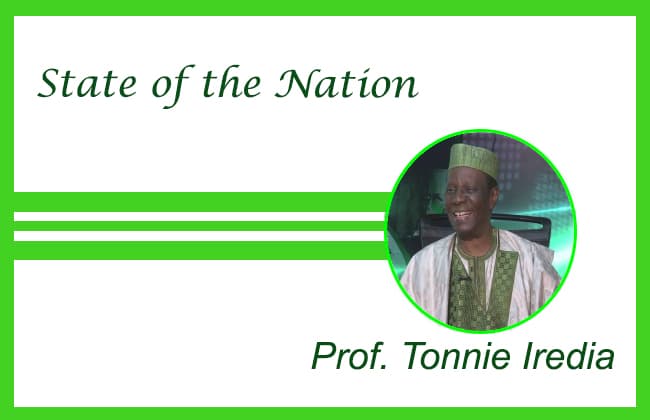
By Tonnie Iredia

The next general elections in Nigeria have become close enough to make some citizens concentrate on a daily prediction of several possible outcomes. Will they as usual be a contest of entrenched interests by the two big divide, simply seen as two-horse race or will a third force emerge and succeed in changing the old order? Will our electoral body, the Independent National Electoral Commission (INEC) and our judiciary function like their counterparts in Kenya? How will the elections look like – transparent and credible or disrupted by unknown actors? Will the presidential election be a straight win by one of the parties or will the contest be pushed to a run-off? Will there be election petitions or will losers congratulate the winner and move on? If petitions are raised, will their handling by the judiciary be salutary? These questions might be difficult to answer now but the recent Kenyan election can be a base from where to imagine issues
 
Political developments across the globe already suggest a probable difference between the 2023 elections and previous ones in Nigeria. For example, with current alignments and positioning, the inclination to imagine that there could be landslide victories in certain locations appear improbable. The fielding again of a Northern candidate, this time by the People’s Democratic Party PDP and the same faith ticket by the All Progressive Congress APC will ruffle some feathers though its extent is hard to foresee. Peter Obi’s Labour Party and Musa Kwankwaso’s New Nigeria Peoples Party NNPP may push the country to a level in which big parties may still fly but not high enough. As Kenyans have shown, it was William Ruto, the candidate many voters were excited and enthusiastic about that carried the day despite opinion polls favouring Raila Odinga.
 
Unlike Kenya’s Independent Electoral and Boundaries Commission (IEBC), our own election officials have no business working at cross purposes with one another.  Since 1987, we have managed to install commissions that work by consensus in which the chair is not only the chief executive but also the accounting officer. INEC should therefore avoid what happens in many African societies, where some electoral officials are easily monetized to play dirty games. In Kenya last month, the good works of officials of the IEBC were disrupted by four electoral commissioners who at the point of the announcement of results suddenly broke away from their chairman to disown the results. The commissioners claimed there were mathematical errors in the prepared results.
 
One way of ensuring this does not happen is to make sure that only persons of proven integrity who are visibly non-partisan are appointed to INEC. This is why Nigeria has to take seriously, allegations making the rounds that at least 4 of the 19 newly nominated Resident Electoral Commissioners are tainted. Considering the familiarity with the terrain of those making the allegations, the argument that those penciled are victims of media trial is not enough. As the saying goes, INEC must like Caesar’s wife, be completely above board. Commissioners must not only be non-partisan they, should not be feared or suspected to have political interests that can becloud their capacity to be impartial in a country where every ruling political party has since 1999 showed the urge to surreptitiously influence INEC.
 
It is therefore necessary for INEC and our courts to take a look at the recent elections in Kenya with a view to distancing themselves from what can erode their credibility while embracing a few areas where Kenya’s IEBC and Supreme Court did well. The case of Nigerian top political office holders who sought to replace others after they had lost at a higher level is one which if not well handled can erode public confidence in the electoral referee.  INEC should be commended on its decision to reject APC’s nomination of a candidate for the Yobe North senatorial election because the nominee did not participate in the relevant primaries held earlier. By keeping to the monitoring report prepared by her Yobe state office, INEC has made a bold statement that its headquarters and state offices are one.
 
Also commendable is the decision of INEC to clarify the erroneous impression that she was prioritizing manual collation of results over the electronic transmission mode. No matter the pressure, the commission should insist on this because it was what saved the day in Kenya according to its Supreme Court. It should surprise no one if political parties collude with officials to resort to manual processes ostensibly because BVAS or any other technology introduced by INEC could not work in their localities. This has always been a ploy used to bring-in fake votes in the past. Convoluted outcomes like inconclusive elections arising from such smart games should not be entertained just as the judiciary should place premium on INEC documents and not those brought in by agents and security personnel.
 
Strict adherence to electoral guidelines and provisions of the Electoral Act 2022, would easily set empirical standards that would be hard to change at will. For this to be achieved, the Chairman of INEC, Professor Mahmood Yakubu must remember at all times that he has a date with history. As we have seen in the case of Kenya, it was the steadfastness of the chairman that made the 2022 presidential election of that country to be successfully concluded. The gang-up by the four commissioners had already cast huge doubts on the entire process which could have been exploited by a pro-establishment judiciary to set aside the elections. Unfortunately, the history of election petitions in Nigeria does not show that the dubious use of the judiciary to win elections is involuntary. One can only admonish INEC to close all possible loopholes that can be exploited to destroy a good work plan.
 
It is important to pay some attention to the frustrations of election petitioners in Nigeria against the backdrop of the commendable judgment of the Kenya Supreme Court which upheld the election of William Ruto. At the fore of Chief Justice Martha Koome’s lead judgment was the apt recognition of not just the letter but also the spirit of the law. She refused to allow her hands to be tied by technicalities which at the end of the day would not move the country forward.  One of the grudges of the electoral commissioners was that their chairman arrogated to himself the power to verify and tally the presidential election results. While agreeing that the law did not empower the chairman to so act, Justice Koome refused to nullify the result because “aside from their 11th-hour walkout, the four commissioners could not place before the court any document to show that the election result was altered.” Instead, they were into what the jurist called, “a last minute boardroom rapture.”    
 
In a recent workshop, one sociologist was greatly applauded when he drew attention to some naughty issues in our election petition process. One of them was the Osun governorship case of Adeleke V Oyetola of 2018 where Adeleke’s victory at the tribunal was upturned on appeal on the ground that the tribunal judge was reportedly absent for a few days during the proceedings. The sociologist wanted to know how the judge’s alleged absence increased Adeleke’s votes and why the latter was the one punished. On the defections of governors to other parties the sociologist agreed that the courts could not have sacked the governors but contended that since votes belong to parties and not individuals, the courts should have returned the governors to their original parties by declaring their defections null and void.
 
The point the sociologists was making was the need to curtail political rascality in Nigeria. Take the more difficult point of fake certificates and dates of birth. When such cases are dismissed because the petitioner was reportedly not the right person to sue or did not follow certain court rules, does it prove the innocence of holders of such fake documents? If not, how do we dissuade frauds from hiding under technicalities to get in or remain in office only to commit more fraudulent activities? While lawyers can see the issues differently, it would appear that Kenya may handle some of these cases differently in the interest of society.


September 11, 2022 0 comments
0 FacebookTwitterPinterestThreadsBlueskyEmail
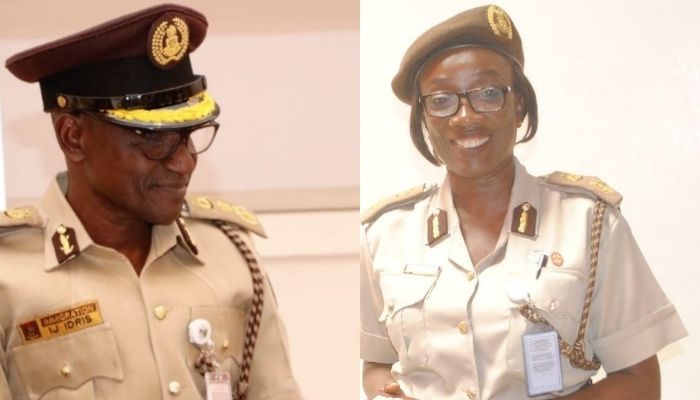
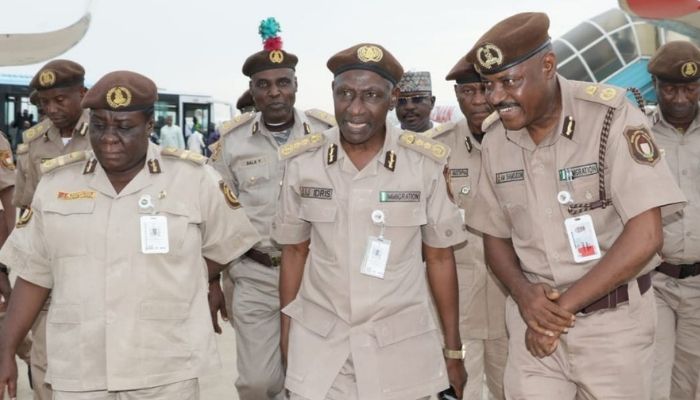
Leading Reporters Allegations of bribery for tenure elongation has been made against the current Comptroller General of Nigeria Immigrations Service Idris isah Jere and the DCG Directorate of Passport and Other Travel Documents Mrs Modupe Anyalechi. Image
Exclusives

Bribery for tenure elongation rocks Nigeria Immigration Service: CGI Idris; DCG Anyalechi fingered

by Leading Reporters September 5, 2022
written by Leading Reporters

Allegations of bribery for tenure elongation has been made against the current Comptroller General of Nigeria Immigrations Service Idris isah Jere and the DCG Directorate of Passport and Other Travel Documents Mrs Modupe Anyalechi.  A close source who spoke to LeadingReporters on condition of anonymity revealed that the CGI may have parted with nothing less than N3billion in securing a one year tenure extension. It was learnt the CGI embarked on massive lobbying in the Villa and among other stakeholders who billed him in hundreds of millions. 

“I am certain that as much as over N3billion was collected by one single individual who is a power broker in the government today.  Other hundreds of millions were given to other stakeholders to facilitate the illegal tenure extension.  It has become a norm in Nigeria that top government functionaries who desire to stay put in their positions expends billions of tax payers money in bribery to remain in office.

The source further hinted that DCG Modupe Anyalechi leveraged her connection and tribal affiliation with some big shots in the ministry of interior to elongate her stay in the office.  DCG Anyalechi who is in charge of Directorate of Passport and Other Travel Documents was said to have attained her retirement age on 17th May, 2022.

“She refused to retire because of backing from Ministry of Interior”.

“DCG Anyalechi refused to go when she found out the game played by the CGI for his tenure renewal.  It was a case of I know what you know”.  The source said.

It was learnt that the CGI refused to compel DCG Anyalechi to proceed on her terminal leave for fear that the later would hit back by exposing what she knew about the CGI.

All efforts by this online news platform to get the issues addressed by immigration management were unsuccessful as at the time of filing this report.

September 5, 2022 0 comments
0 FacebookTwitterPinterestThreadsBlueskyEmail
Headlines

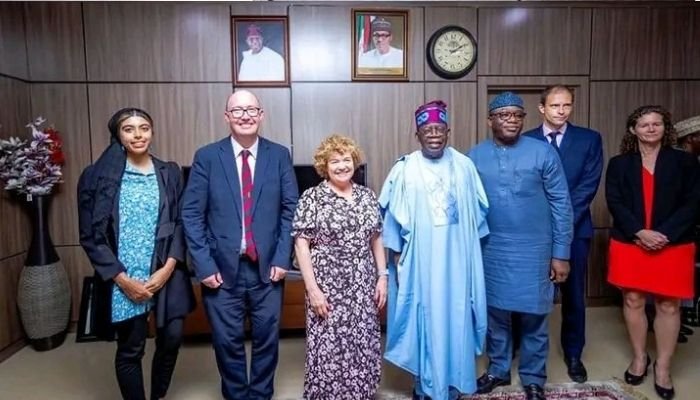
PHOTO NEWS: APC presidential candidate, Asiwaju Bola Ahmed Tinubu, receives a delegation from the UK High Commission

by Leading Reporters September 5, 2022
written by Leading Reporters

APC presidential candidate, Asiwaju Bola Ahmed Tinubu, receives a delegation from the UK High Commission led by Catriona Wendy Campbell Laing, on Monday.

September 5, 2022 0 comments
0 FacebookTwitterPinterestThreadsBlueskyEmail
HeadlinesOpinion

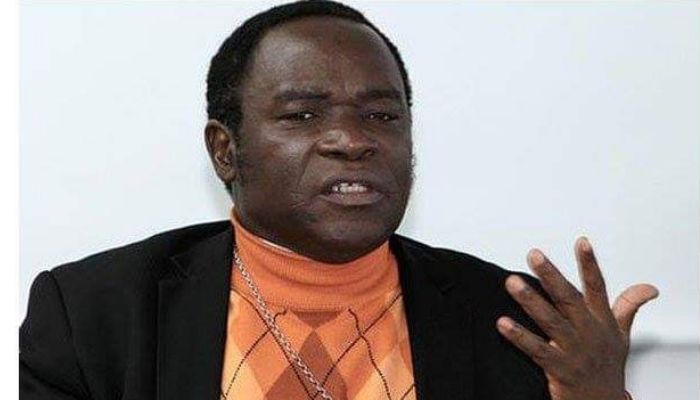
Bishop Kukah’s nation-building agenda: Matters arising

by Leading Reporters September 4, 2022
written by Leading Reporters

By Tonnie Iredia

For every event in Nigeria, the priority of most planners is to ensure that the big names in the country are pulled to the event. Politically exposed personalities such as president and governors are the most sought after in this regard. For me, there is some risk in relying on the big guys in town to make one’s event successful.  

This is because they often come late and disorganize the otherwise well-laid out plans for the day. Along the line, those tired of waiting begin to disperse, forcing the organizers to pick emergency chair/other actors in place of those originally empaneled. While much of this did not occur in last Wednesday’s celebrations of the 70th birthday anniversary of the Most Reverend Mathew Hassan Kukah, Catholic Bishop of Sokoto, ample attention still shifted from the celebrant to the presidential candidate of the Labour Party, Mr. Peter Obi, his colleague of the All Progressives Congress, Asiwaju Bola Ahmed Tinubu and his Vice, Kashim Shettima as well as a number of state governors.
 
It was probably impossible to prevent the event from turning into a political jamboree because it was held at a time of the year when persons seeking elective positions dutifully attend virtually all major functions to score some points ahead of a forthcoming general election. However, the presence of such highly placed politicians should not be taken to mean that they were on the same philosophical page as the day’s celebrant.  For example, while the fight for peace, justice and the rule of law are real to Kukah, they are mere slogans to many public office seekers. Whereas the politicians are looking forward to winning elections and exclusively appropriating the nation’s wealth, Kukah is bothered that many Nigerian politicians end up as accidental leaders, ill-prepared for public office. This is why he is proposing to use his foundation to build a N200million centre to provide leadership tools for accidental leaders and politicians in Nigeria. When completed the centre will have a main office complex; a school of government; halls, library, classrooms and offices; accommodation and lodging; an art gallery and studio. It will also focus its activities around interfaith dialogue, knowledge promotion and memory preservation.
 
It is worthy of note that President Muhammadu Buhari sent a goodwill message to the celebrating cleric, notwithstanding the general belief that Kukah is a not a friend of the present administration in view of his deep criticisms of its activities. In truth though, the Bishop does not appear ready to be a friend to any government for as long as the dwindling fortunes of Nigerians which have accumulated over the years are not redressed. Governor Aminu Tambuwal of Sokoto state who chaired the anniversary celebration virtually confirmed this in his opening address when he said, “Kukah’s writings over the years have become controversial and have drawn the ire of powers that be, but what is not in doubt is his undying love for Nigeria and Nigerians, and his belief in the possibility of a new Nigeria where justice and equity reigns.” Other messages followed the same thinking, with the Chairman of the Nigerian Governors’ Forum NGF, Kayode Fayemi concluding that Bishop Mathew Kukah’s love for ruffling the feathers of political leaders is essentially for the purpose of steering the country from the precipice.
 
Atiku Abubakar, presidential candidate of the Peoples Democratic Party PDP made about the same point when he described Kukah as ‘a remarkable public intellectual and formidable advocate for good governance whose contributions to Nigeria’s democracy are immeasurable and unquantifiable.’ Like President Buhari, Bola Tinubu and Kashim Shettima of the APC showed broadmindedness in celebrating their major critic at his point of glory. By describing the Tinubu/Shettima, Muslim-Muslim ticket of the APC as an unacceptable set-back for national integration, Kukah’s attack may have been quite frontal. Although many other leaders and citizens had made the same point, the Bishop’s eloquence and opinion-moulder status may have aggravated his own comments. The point must however be made that the numerous centrifugal forces in Nigeria’s heterogeneous polity would, any day, greatly support an attack on a same faith presidential ticket  
 
Many Nigerian critics of old, comrades and political activists have since joined the ruling class and forgotten the oppressed mases, but will Bishop Kukah at 70 also take a break? It is unlikely because he has continued to make many bold comments expected of a moral teacher and spiritual reformer after the anniversary celebration. We can hardly blame the Bishop as too many negatives have refused to leave Nigeria.  For instance, in spite of the passing of the Electoral Act 2022 and the recent vow by our president that the federal government will not allow anyone to misuse public institutions for the 2023 general elections, there are fresh and embarrassing allegations that well-placed politicians are at the verge of capturing an otherwise Independent National Electoral Commission INEC. Already, some opposition politicians are becoming scarred of the alleged nomination of politically tainted citizens to serve as Resident Electoral Commissioners. Should Kukah or any other patriot be quiet on this?
 
A Convocation Lecture titled, ‘Broken Truths: Nigeria’s Elusive Quest for National Cohesion’ delivered in June 2018 at the University of Jos had revealed too many negatives. Today, such things rather than ceasing are becoming more worrisome. One of them in the words of Bishop Kukah is that “recruitment and promotion in almost all sectors of the public service from the local governments through the state to the Federal Government depend on whom you know and not what you know.” If so, how can the nation make progress when its policies are not piloted by its first eleven team?  It would therefore be unreasonable for the next set of political leaders to expect that age 70 would stop Bishop Kukah from putting them under the same searchlight that their predecessors witnessed. In fact, that he will continue to serve as the conscience of human society is evidenced by his recent appointment by Pope Francis as a Member of the ‘Dicastery’ set up to advise and promote the Pope’s concerns on issues of justice and peace, human rights, torture, human trafficking, care of creation and other issues related to the promotion of human dignity and development.
 
Beyond a few critics, the unending socio-economic and political misfortunes of our people should at this point pull-up all citizens to take their destinies in their own hands and fix Nigeria. Many years back, Bishop Kukah had called on Nigerians to stop thinking that anti-corruption crusades directed at only top public office holders is all that is needed to fix the country. It is irrational according to the Bishop for our citizens to continue to line up all kinds of scapegoats among us whom they believe are responsible for our woes in Nigeria. While believing that the big people who steal huge sums are the ones that should flee with our sins into the desert so that our country can prosper, we often overlook the small people who cheat the bus conductor by not paying just as election rigging is seen as bad only when perpetuated by our opponents.
 
Again, we cannot scratch the surface of a problem and conclude that all is well that ends well. At the Bishop’s birthday event last week, former president Goodluck Jonathan spoke glowingly of how he resolved a four-month old ASUU strike one night. If he did so, why is ASUU still on strike over the same complaints? Why is the problem of ASUU still hinged on an official breach of a 2009 agreement? One of the matters arising now is for Nigerians to jointly beg the party to the agreement that did not play its part and not ASUU to reopen our universities. Secondly, should Bishop Kukah and his colleagues in the National Peace Committee continue to ask politicians to sign peace accords they do not believe in, while INEC officials especially the Ad hoc ones sourced from other bodies and some members of the judiciary continue to collude to render our elections incredible? While welcoming Bishop Mathew Kukah to the 7th floor of life, all citizens should work to resolve Nigeria’s outstanding matters

September 04, 2022  

September 4, 2022 0 comments
0 FacebookTwitterPinterestThreadsBlueskyEmail
Headlines

Despite “Nigeria’s Failed Economy,” 27 Ex-Governors Still Jostle to Remain in Empty System as Senators

by Leading Reporters September 4, 2022
written by Leading Reporters

The idea of a lifetime of near unbelievable salaries, allowances and privileges are clearly appealing to state governors whose terms are limited to a “mere” 8 years and even that is subject to winning their re-election bid which is not guaranteed as the current governor of Osun State can attest to. Out of the 109 available seats in the upper chamber (Senate) of the National Assembly, 27 seats may be occupied by former and outgoing governors come June 2023. 

If these 27 ex-governors or soon-to-be former governors win their respective senatorial seats in the upcoming election, it will mark a 42% increase from the number of ex-governors, 19 of them in the current senate, making the upper chamber an abode of former “Excellencies.”

Nigeria operates a bicameral legislature — the upper and lower chamber. The upper chamber is referred to as the Senate, while the lower chamber is the House of Representatives. The Senate has 109 members, and the House of Representatives has 360 members.

Unlike the elected executive positions (President and Governor) with a maximum of 2-term constitutional limit, the members of the National Assembly have no term limit. This means that as long as you play your politics well, you can always return to the chamber every four years as a “Distinguished Senator” or an “Honourable Member”. 

To date, the exact amount these 469 lawmakers earn is unknown to Nigerians; however, in 2018, Senator Shehu Sani, who represented Kaduna Central Senatorial District in the 8th National Assembly, said that a senator earns N13.5 million monthly as a running cost and an additional N750,000 as consolidated salary and allowances. On the other hand, a house of representatives member is reported to pocket N9.3 million monthly. 

This, alongside the allure of staying within the loop of power, might account for the number of former “Excellencies” turning to “Distinguished Senators” on the rise with each election cycle since 2007.

In the 6th Assembly (2007-2011), 8 former governors made the Senate their home. 

NameStateServed as Governor
Kabiru GayaKano1992-1993
Adamu AlieroKebbi1999-2007
Ahmed MakarfiKaduna1999-2007
Bukar IbrahimYobe1999-2007
Chimaroke NnamaniEnugu1999-2007
George AkumeBenue1999-2007
Sani YarimaZamfara1999-2007
Saminu TurakiJigawa1999-2007

These 8 individuals joined the Senate immediately after they completed their 2-term constitutional limit as governors, except for Kabiru Gaya who served as a governor of Kano state from 1992-1993, about 1 year. 

The next Assembly (2011-2015) saw an increase in the number of those who have served as governors going to the Senate. This time, the number increased to 9. Ahmed Aliero and 4 others who served in the 6th Assembly retained their seats, while Abdullahi Adamu, Bukola Saraki, and 2 others joined them as first-time Senators.

NameStateServed as GovernorNumber of times in the Senate
Adamu AlieroKebbi1999-2007Second time
Ahmed MakarfiKaduna1999-2007Second time
Bukar IbrahimYobe1999-2007Second time
George AkumeBenue1999-2007Second time
Kabiru GayaKano1992-1993Second time
Abdullahi AdamuNasarawa1999-2007First time
Bukola SarakiKwara2003-2011First time
Danjuma GojeGombe2003-2011First time
Joshua DariyePlateau1999-2007First time

In the 8th National Assembly, the number increased to 13, a 44% increase from the figure recorded in the 7th Assembly, possibly signalling increasing interest in the Senate.

George Akume, who went to the Senate House immediately after he completed his 8 years as Governor of Benue state (1999-2007), retained his seat as a third-term Senator. Same as Kabiru Gaya of Kano state.

Adamu, Saraki, Goje, Dariye, and Yarima, who all served their 2-terms as governors of their respective states, returned to the Senate for their second term. Others on the list were first-time Senators. 

NameStateServed as GovernorNumber of times in the Senate
George AkumeBenue1999-2007Third time
Kabiru GayaKano1992-1993Third time
Abdullahi AdamuNasarawa1999-2007Second time
Bukola SarakiKwara2003-2011Second time
Danjuma GojeGombe2003-2011Second time
Joshua DariyePlateau1999-2007Second time
Sani YarimaSokoto1999-2007Second time
Aliyu WamakkoSokoto2007-2015First time
Godswill AkpabioAkwa-Ibom2007-2015First time
Jonah JangPlateau2007-2015First time
Rabiu KwankwasoKano1999-2003; 2011-2015First time
Sam EgwuEbonyi1999-2007First time
Theodore OrjiAbia2007-2015First time

Two former governors of Plateau and Sokoto states were in the 8th National Assembly. Joshua Dariye, the governor of Plateau state from 1999-2007, was in the 8th Assembly as a second-term Senator, while Jonah Jang, who had completed his 2 terms as governor, joined as a first-timer.

Aliyu Wamakko joined his predecessor Sani Yarima in the senate; they both had served as governors of Sokoto state. Rabiu Kwankwasnso also joined Kabiru Gaya, both having served as governors of Kano state. This means that out of the 3 senatorial seats available to these states, 2 were occupied by former governors of the states (Plateau, Sokoto, and Kano). 

In 2019 when the 9th Assembly members assumed office, the number of former state governors rose to 19. An increase from the 13 recorded in the 8th Assembly. 

Kabiru Gaya is in the Senate for his  fourth term. Two other former governors in the current 9th Assembly are there for their third term as Senators, while 5 are serving their second term in the Senate. The others are first-time Senators. 

Abdul’aziz Abubakar Yari, the former Governor of Zamfara is not in the current Assembly, but only because his Senatorial election was nullified on May 24, 2019, by the Supreme court.

NameStateServed as GovernorNumber of times in the Senate
Kabiru GayaKano1992-1993Fourth time
Adamu AlieroKebbi1999-2007Third time
Danjuma GojeGombe2003-2011Third time
Abdullahi AdamuNasarawa1999-2007Second time
Aliyu WamakkoSokoto2007-2015Second time
Chimaroke NnamaniEnugu1999-2007Second time
Sam EgwuEnugu2007-2015Second time
Theodore OrjiAbia2007-2015Second time
Abdul’aziz Abubakar YariZamfara2011-2019First time (Election nullified)
Gabriel SuswamBenue2007-2015First time
Ibikunle AmosunOgun2011-2019First time
Ibrahim GeidamYobe2009-2019First time
Ibrahim ShekarauKano2003-2011First time
Kashim ShettimaBorno2011-2019First time
Orji KaluAbia1999-2007First time
Rochas OkorochaImo2011-2019First time

Chimaroke Nnamani, who served as Enugu state Governor from 1999-2007, and his successor, Theodore Orji are both in the Senate as second-time Senators. The two former Governors of Nasarawa state are also in the Senate. Abdullahi Adamu is a second-time Senator, while Tanko Al-Makura is a first-timer. This implies that 2 out of the 3 seats available to each of the states (Enugu and Nasarawa) are occupied by those who have served as governors for two terms.

The 10th Senate, which will commence in June 2023, is likely to see an increase in the number of former governors and soon-to-be- ex-governors who will be referred to as Distinguished Senators.

Thus far, in the lead-up to the 2023 general elections, 27 former governors and soon-to-be ex-governors are senatorial candidates in their respective states for the 2023 general election.

Out of the 27 candidates, Kabiru Gaya, testing the hypothesis of the senate being an unofficial “lifetime” employment, is returning for a fifth term, while two others are going for their fourth term in the Senate.

Aliyu Wammako, Chimaroke Nnamani, and Sam Egwu are all going for a third term in the Senate. 

NameStateServed as GovernorNumber of times in the Senate
Kabiru GayaKano1992-1993Returning for a 5th term
Adamu AlieroKebbi1999-2007Returning for a 4th term
Danjuma GojeGombe2003-2011Returning for a 4th term
Aliyu WammakoSokoto2007-2015Returning for a 3rd term
Chimaroke NnamaniEnugu1999-2007Returning for a 3rd term
Sam EgwuEbonyi1999-2007Returning for a 3rd term
Abdul’aziz Abubakar YariZamfara2011-2019Returning for a 2nd term
Gabriel SuswamBenue2007-2015Returning for a 2nd term
Godswill AkpabioAkwa Ibom2007-2015Returning for a 2nd term
Ibrahim GaidamYobe2009-2019Returning for a 2nd term
Ibrahim ShekarauKano2003-2011Returning for a 2nd term
Orji KaluAbia1999-2007Returning for a 2nd term
Saminu TurakiJigawa1999-2007Returning for a 2nd term
Seriake DicksonBayelsa2012-2020Returning for a 2nd term
Tanko Al-MakuraNasarawa2011-2019Returning for a 2nd term
Abubakar Sani BelloNiger2015-2023Contestesting for the 1st time
Adams OshiomholeEdo2008-2016Contestesting for the 1st time
Aminu TambuwalSokoto2015-2023Contestesting for the 1st time
Atiku BaguduKebbi2015-2023Contestesting for the 1st time
Darius IshakuTaraba2015-2023Contestesting for the 1st time
Dave UmahiEbonyi2015-2023Contestesting for the 1st time
Gbenga DanielOgun2003-2011Contestesting for the 1st time
Ibrahim DankwamboGombe2011-2019Contestesting for the 1st time
Ifeanyi UgwuanyiEnugu2015-2023Contestesting for the 1st time
Okezie IkpeazuAbia2015-2023Contestesting for the 1st time
Samuel OrtomBenue2015-2023Contestesting for the 1st time
Simon LalongPlateau2015-2023Contestesting for the 1st time

Nine former governors are contesting for their second term as Senators. The other 12, if successful at the polls, will be serving their first term as Senators, having served two terms as governors of their respective states. 

Apart from the increase in the number of former governors who may become Senators, there will also be an increase in the number of states whose former governors will occupy 2 out of their 3 senatorial seats.

For instance, Abia state has 3 seats in the Senate, the same as every other state in the country. Of these 3 seats, 2 will be occupied by those who have served as governors if they win in the upcoming elections. 

It will be the same story for Benue, Ebonyi, Kano, and 4 other states as 2 of their former governors are contesting for 2 of the available 3 senatorial seats.

NameStateServed as GovernorNumber of times in the Senate
Kabiru GayaKano1992-1993Fourth time
Adamu AlieroKebbi1999-2007Third time
Danjuma GojeGombe2003-2011Third time
Abdullahi AdamuNasarawa1999-2007Second time
Aliyu WamakkoSokoto2007-2015Second time
Chimaroke NnamaniEnugu1999-2007Second time
Sam EgwuEnugu2007-2015Second time
Theodore OrjiAbia2007-2015Second time
Abdul’aziz Abubakar YariZamfara2011-2019First time (Election nullified)
Gabriel SuswamBenue2007-2015First time
Ibikunle AmosunOgun2011-2019First time
Ibrahim GeidamYobe2009-2019First time
Ibrahim ShekarauKano2003-2011First time
Kashim ShettimaBorno2011-2019First time
Orji KaluAbia1999-2007First time
Rochas OkorochaImo2011-2019First time

With every election cycle, the possibility of a young politician who desires to represent his/her people someday at the Senate appears slimmer as the hallowed chamber is becoming increasingly filled with individuals who have once served as state governors.

If the trend continues, it’s only a matter of time before a majority of the legislature’s upper chamber seats become filled with former state governors.

If you’re wondering when the sorosoke generation might be able to take a stab at governance, it is anybody’s guess. News Source dataphyte.com

September 4, 2022 0 comments
0 FacebookTwitterPinterestThreadsBlueskyEmail
Group raises alarm over plans to ‘empty’ the national treasury by serving political office holders
Exclusives

Group raises alarm over plans to ‘empty’ the National treasury by serving political office holders

by Leading Reporters September 2, 2022
written by Leading Reporters

A group, League of Patriots has raised alarm over what it described as plans by public office holders serving under President Muhammadu Buhari-led government to empty the treasury through fictitious expenses. 

The group said it has information that most serving ministers, director generals and other political appointees have perfected plans to sweep the treasury using newly floated companies as well as that of their proxies.

According to information exclusively obtained by LeadingReporters, top management officers of NNPC, Ministry of Finance, Ministry of Interior, Ministry of Humanitarian Affairs and Ministry of Foreign Affairs and agencies under them have been fingered in these accusation.

The group, according to its spokesman said that they have been following events and information in all the MDAs as it relates to the activities of the top management staff and they have information which greatly suggests an impending financial disaster that would be occasioned by last minutes looting of the treasury by outgoing political office holders.

Rising from a meeting in  Austin Texas, the group spokesman Andrew Madaki said that membership of the league are drawn from patriotic Nigerians mostly within the ICT industry.  Madaki said they have placed surveillance on some companies, some financial institutions and individuals who are mostly likely going to serve as a conduit for this illegal transfers and unpatriotic act.

The group says they have alerted Interpol, Financial Action Task Force FAFI,  USA Department of the Treasury,  and other local and international anti-laundering organizations and agencies.

Group raises alarm over plans to ‘empty’ the national treasury by serving political office holders

A group, League of Patriots has raised alarm over what it described as plans by public office holders serving under President Muhamadu Buhari-led government to empty the treasury through fictitious expenses.  The group said it has information that most serving ministers, director generals and other political appointees have perfected plans to sweep the treasury using newly floated companies as well as that of their proxies.

According to information exclusively obtained by LeadingReporters, top management officers of NNPC, Ministry of Finance, Ministry of Interior, Ministry of Humanitarian Affairs and Ministry of Foreign Affairs and agencies under them have been fingered in these accusation.

The group, according to its spokesman said that they have been following events and information in all the MDAs as it relates to the activities of the top management staff and they have information which greatly suggests an impending financial disaster that would be occasioned by last minutes looting of the treasury by outgoing political office holders.

Rising from a meeting in  Austin Texas, the group spokesman Andrew Madaki said that membership of the league are drawn from patriotic Nigerians mostly within the ICT industry.  Madaki said they have placed surveillance on some companies, some financial institutions and individuals who are mostly likely going to serve as a conduit for this illegal transfers and unpatriotic act.

The group says they have alerted Interpol, Financial Action Task Force FAFI,  USA Department of the Treasury,  and other local and international anti-laundering organizations and agencies.

September 2, 2022 0 comments
0 FacebookTwitterPinterestThreadsBlueskyEmail
Obasanjo, Wike, Peter Obi Meet In London
Headlines

BREAKING Anxiety In Atiku’s Camp As Obasanjo, Wike, Peter Obi, Others Meet In London

by Leading Reporters August 25, 2022
written by Leading Reporters

Former president Olusegun Obasanjo, on Thursday, met with the presidential candidate of Labour Party, Peter Obi; and the Rivers State Governor, Nyesom Wike, in London.

Although details of the meeting were still sketchy as of the time of filing this report, LeadingReporters gathered that it was part of negotiations ahead of the 2023 presidential election.

Wike attended the meeting with his allies including Governor Seyi Makinde of Oyo State; Governor Samuel Ortom of Benue State; Governor Okezie Ikpeazu of Abia State and former Cross River State Governor, Donald Duke, among others.

Obasanjo, Wike, Peter Obi, Others Meet In London

Our correspondent gathered Atiku Abubakar”s camp is in panic over the meeting.

August 25, 2022 0 comments
0 FacebookTwitterPinterestThreadsBlueskyEmail
Former Accountant General of the Federation Ahmed Idris
Headlines

Breaking: Former Accountant General of the Federation Ahmed Idris In a Plea-Bargain Deal with FG

by Leading Reporters August 25, 2022
written by Leading Reporters

Former Accountant General of the Federation, Ahmed Idris who is currently being investigated for corrupt practices and diversion of public funds  is pushing for a plea-bargain with the Economic and Financial Crime Commission, LeadingReporters has been authoritatively informed .

A source who is in the know said that Idris is using powerful persons within the corridors of power to press on the Economic and Financial Crime Commission EFCC to drop the charges on the Accountant General and opt out of the court.

Recall that Idris Ahmed was charged alongside Godfrey Olusegun and Mohammed Kudu Usman on 14-count charge of stealing and criminal diversion of N109.5billion.

The source revealed that part of the deal was to remove certain people who were earlier indicted from the charge sheet.  These people, LeadingReporters learnt would be responsible for destroying possible evidence and thus make all the moves necessary towards getting Ahmed out.  One of the persons, it was  said, is the Permanent Secretary, Ministry of Finance who, this platform learnt was indicted earlier, but was let out of the hook when some powerful forces intervened.

It was further learnt that the former Accountant General hopes to let go some of the monies and property traced to him in the new deal he is proposing to the Federal Government. He was said to have mentioned in one of his meetings with associates that he was willing to let go some of those monies and property if that would soften the ground for him.

August 25, 2022 0 comments
0 FacebookTwitterPinterestThreadsBlueskyEmail
HeadlinesOpinion

Rigging local elections in Nigeria: Where next?

by Leading Reporters August 21, 2022
written by Leading Reporters
By Tonnie Iredia  

One failed aspect of democracy in Nigeria is the conduct of elections into the country’s 774 local government councils. In most cases, the contests are handled by electoral commissions that are usually made up of cronies of the ruling party who are brought on board to ensure that their party` ‘sweeps’ the polls. Consequently, our local areas have remained undeveloped because persons that can evolve and implement viable socio-economic projects, are usually displaced through election chicanery.

Painfully, there are no visible prospects in the horizon to suggest that the trend might change soon. This completely reverses the goal of establishing a third tier of government which by virtue of its closeness to the grassroots should best meet the immediate needs of the locals. Based on this, whenever an election is fixed to hold in any local government area in the country, the expectation is that it would be rigged in favour of the ruling party.   Many have thus been taken aback by the decision of the outgoing Osun State Government to, in the guise of holding an election, instal its puppets as others do across the nation. Already, the chairman of the state electoral commission, Otunba Olusegun Oladuntan has announced October 15, 2022 for the contest across the state.

Surprisingly, his team seems to be going ahead with arrangements for the exercise not withstanding a case in court against it. As expected, the two leading political parties, the All Progressives Congress APC and the Peoples Democratic Party PDP are for and against the proposed elections respectively. While the latter alleges that the outgoing ruling APC is bent on holding the election at the eve of its departure so as to install those who can cover-up its alleged corrupt activities, the APC says for as long as governor Gboyega Oyetola’s tenure has not ended, his government has a legal right to hold local elections.  

But why did Oyetola not organize any local election until the last few weeks of his tenure? Why can’t he focus on proper handing-over notes to his successor instead of starting a fresh event at the 24th hour? Is the outgoing government unaware of the legal position that when a matter is pending in court, a notice of such matter acts as a stay of any action that may prejudice the matter in court? An objective answer to these questions would support the point that the government is anxious to empower its lackeys as alleged. Again, why is the PDP so bothered about an election that an electoral commission described as independent is proposing to conduct? While the PDP is skeptical about the performance of a tainted electoral body, would she herself not have done what the APC is about to do? If the truth must be told, the PDP only wants the election pushed forward to when her own Ademola Adeleke assumes office so that the PDP can magically ‘sweep’ the polls at that point.  

To understand the underlining theory that all ruling political parties are experts in rigging local elections, a review of the situation in Benue state would illuminate the subject. In 2017, when Governor Samuel Ortom was in the APC, his party swept the local elections held in the state. Although John Tsuwa who was chairman of the Benue state electoral commission could not convince people that the results he announced were not cooked-up, he did declare that the APC won ALL the 23 chairmanship seats as well as ALL the councillorship positions contested. However, the Conference of Nigeria Political Parties CNPP insisted that no local election took place anywhere in Benue on Saturday, June 03, 2017 for which landslide victories were announced. Some three years later, that is, May 2020 another local election took place.

This time around, the Peoples Democratic Party, to which Governor Ortom had defected won all the 23 chairmanship and 276 councillorship positions.   In seeking to underscore the unwholesome behavior of the political class at elections, it is important to note that the situation in Benue represents what happens in many other locations nationwide. In Ebonyi and Taraba states, the ruling PDP similarly swept the polls. The All Progressives Congress, APC also scored 100 percent in the elections held in states controlled by her. In Kogi state for example, the party reportedly won all the 21 chairmanship and 239 councillorship positions in the local government elections held in December 2020. 

In Jigawa state, the same APC was declared winner of all the 27 chairmanship positions in the State in the election held in 2021. But the PDP was allowed to take hold of just one ward – Kiyako, in Birninkudu local government area which happens to be the Ward of the PDP former governor of the state, Alhaji Sule Lamido. Even at that, voters in the area reportedly held the electoral officials hostage to stop them from changing the outcome of the results. All the other 286 councillorship positions were cleared by the ruling APC. The use of fake elections is not the only strategy political parties employ to emasculate the local government system. Quite often, elections are not held at all; instead, the ruling party merely appoints caretaker committees to manage the system in breach of the constitutional provision for local government councils to be democratically elected.

In Cross River state, it was an endless waiting game. Although the state electoral commission headed by Mike Ushien collected non-refundable deposits of N200,000 and N100,000 from chairmanship and councillorship candidates respectively for the election fixed for June 2017, no contest took place and monies were not refunded to the candidates. So, can anyone blame those who have no faith in local elections? Indeed, the fear of the PDP about the hurried attempt to organize an election in Osun state on the eve of the departure of Gboyega Oyetola who only realized the need for a local government election after he lost his reelection bid is not irrational. If the election holds on October 15, 2022 as proposed, the next rigging will most likely happen in Osun state.  

Another state which needs to be watched is Edo, where the state electoral commission is set to hold local government elections on January 14, 2023. With the tenure of governor Godwin Obaseki still beyond one full year to go, we cannot accuse him of the same hidden agenda that appears to be playing out in Osun. Besides, Obaseki’s consummate appetite for the use of technology can thwart any rigging plans in his state. But considering that many politicians around the governor are products of the “cut-for- me- cut-for-me” political culture in the state ingenious politicians in the ruling party may still use their ingenuity to adversely interfere with the proposed January 15, 2023 contest.

Here, one can recall that some years back when the officially endorsed candidate could not win the Esan North East chairmanship election, the contest had to be put off twice. When it eventually held and all relevant stakeholders were awaiting the collation of votes at Eguare Primary School Uromi – the designated centre, results against the run of play were announced from the seat of power in Benin, over 100 kilometres away.   The point that must be made is that it is time to end fake local elections in Nigeria.

Accordingly, all well-meaning citizens should prevail on governor Gboyega Oyetola of Osun state to concentrate on his election petition and discard the hurriedly arranged local elections fixed for October 15, 2022. At the same time, we call on governor Godwin Obaseki of Edo state to make it difficult for any of his overzealous aides to push the state electoral commission into any ignoble role during the proposed January 14, 2023 local elections in the state. It is also important to remind all politicians that by virtue of the new Electoral Act 2022 the procedure regulating elections conducted by INEC to Area Councils in the Federal Capital Territory now apply with equal force and sanctions as the procedure regulating elections conducted to Local Government Areas by any state electoral commission. August 21, 2022

Prof Tonnie Iredia  

August 21, 2022 0 comments
0 FacebookTwitterPinterestThreadsBlueskyEmail
Headlines

7 Years After, Deployment of IPPIS, GIFMIS, TSA, didn’t follow Nigeria’s law – Pantami

by Leading Reporters August 14, 2022
written by Leading Reporters

The latest revelations about the challenges with the IPPIS by the minister has been described as a vindication of ASUU’s position on the payment system.

The Minister of Communications and Digital Economy, Isa ‘Pantami’ Ibrahim, has said the deployment of the Integrated Personnel Payroll Information System (IPPIS), Government Integrated Financial Management Information System (GIFMIS), and the Treasury Single Account (TSA), did not follow relevant laws as put in place by the Nigerian government.

The minister said the section of the NITDA Act that requires the standardisation and certification, application and delivery of such systems in Nigeria were not followed during the deployment of IPPIS, GIFMIS and TSA.

“At the time they were deployed, the provision of NITDA Act under section A, of setting the standardisation of ICT deployment in federal public institutions was not followed. Because of this, these three systems were not subjected to government certification and IT project clearance as encouraged by law and many other government policies,” he said.

Mr Ibrahim said following allegations that the systems are being used to syphon money from the treasury, the National Information Technology and Development Agency (NITDA) reviewed the IPPIS critically, “and found errors in high, medium and low magnitudes.”

President Muhammadu Buhari has, therefore, approved the constitution of a Presidential Steering Committee on critical technical review of the three payment systems used by the government, he said.

The minister spoke on Friday while inaugurating the members of the committee on behalf of the President.

He said the results of the test conducted on IPPIS have been submitted to relevant government agencies including the Ministries of Finance, Budget and National Planning, Labour and Employment as well as the Presidency.

The minister said the tests will also be carried out on GIFMIS and TSA and the final report will be submitted to the President.

He said: “Prior to this meeting as part of the government’s processes, testing and certifying systems IPPIS was recently subjected to critical review by NITDA. A report has been submitted to the relevant ministries including Finance, Budget and National Planning, Ministry of Labour and Employment, and a copy was sent to the Presidency.

“There is no doubt, we discovered there are high errors. There are challenges with IPPIS. There is no doubt about this. But in spite of all the challenges we have recorded, there are high, medium and low errors in these systems.”

The suspended Accountant General of the Federation, Ahmed Idris, who is currently facing corruption trial, was alleged by the Economic and Financial Crimes Commission (EFCC) to have diverted funds through IPPIS, GIFMIS and TSA.

Benefits of IPPIS, others

However, despite the irregularities identified in the system, Mr Ibrahim said the systems have proved to be useful, saying they have saved the government over N10 trillion.

He said: “Inspite of that, many achievements have been recorded. For example, based on the report from the relevant institutions of government that IPPIS saved the government over N120 billion naira, while Treasury Single Account (TSA) saved over N10 trillion for the government.”

The committee

The technical committee, which was inaugurated by Mr Ibrahim, is also to be chaired by him. He said its activities will be supervised by his ministry while NITDA serves as the secretariat for the committee.

“The main work is to ensure that there is no leakage in these systems, and to ensure that the process is of high quality,” he said.

He said all the institutions managing the platforms to be reviewed must provide unlimited access to the committee to do its job.

He said any institution that fails to cooperate with the committee will report the president for punishment.

“Any institution that failed to give access to it will be reported to the President immediately. And in addition to that recommendation, a punishment is going to be recommended to the president for implementation.

“It is the mandate of this ministry and the relevant parastatals under the ministry to ensure that any system deployed in government, there is value for money and we must continue to improve on that.”

Members of the committee, according to the minister, include NITDA’s Director General, Kashifu Inuwa, who serves as the secretary; the Minister of Finance, Budget and National Planning, Zainab Ahmed; Head of Civil Service of the Federation, Folashade Yemi-Esan; Auditor General of the Federation, Aghughu Arhotomhenla; and the Chairman, Economic and Financial Crimes Commission (EFCC), Abdulrasheed Bawa.

Others include the Director General, Bureau of Public Service Reforms, Dasuki Arabi; Chairman, Salaries Income and Wages Commission, Richard Egbule; and the Managing Director, Galaxy Backbone Limited, Muhammed Abubakar, a professor.

Backstory

The striking university workers’ unions have consistently opposed the deployment of IPPIS for the payment of its members’ emoluments, saying the system is a product of fraud and an imposition by foreign economic interests.

The Academic Staff Union of Universities (ASUU) has insisted on the replacement of the payment platform with an alternative its members designed which the union tagged; University Transparency and Accountability System (UTAS).

Meanwhile, both the Senior Staff Association of Nigerian Universities (SSANU) and the Non-Academic Staff Union of Educational and other Associated Institutions (NASU) have also developed its alternative solution tagged; “University Peculiar Payroll Payment System (U3PS).

The chairman of the Lagos zone of ASUU, ‘Laja Odukoya, described as a vindication of the union’s position the minister’s latest revelation about the challenges with IPPIS.

August 14, 2022 0 comments
0 FacebookTwitterPinterestThreadsBlueskyEmail
Newer Posts
Older Posts

Recent Posts

  • Kaduna Terror Victims Demand Accountability for Rights Abuses Under El-Rufai Administration

    February 17, 2026
  • BREAKING: DSS Sues El-Rufai for Intercepting NSA Ribadu’s Phone

    February 16, 2026
  • APC Senator Seeks 16-Year Single Tenure for Nigeria’s President

    February 16, 2026
  • Major Health Crisis Plagues Dape, Karmo Residents As Dust Pollution From AMAC Road Project Chokes Residents

    February 16, 2026
  • BREAKING: INEC announces timetable, schedule of 2027 elections

    February 13, 2026

Usefull Links

  • Contact Page
  • About Leading Reporters
  • Contact Us
  • Headlines
  • Investigation
  • Exclusives
  • Opinion
  • Business
  • Facebook
  • Twitter
  • Instagram
  • Linkedin

@2021 - All Right Reserved. Designed and Developed by PenciDesign


Back To Top
Leading Reporters
  • Featured
  • Politics
  • Opinion
  • Business
  • Entertainment
  • Sports
  • About Us
  • Contact