Leading Reporters
  • Headlines
  • Health
  • Business
  • Exclusives
  • Investigation
  • Entertainment
  • Opinion
Friday, May 8, 2026
Hot
Gunmen Kill 13 in Plateau Fresh Attacks
Jabi Lake takeover stands even if God comes...
Fuel Scarcity Looms As Dangote Refinery Hikes Fuel...
IGP scraps SWAT nationwide
17 Reps Dump ADC for NDC
Bride’s father, hypeman shot dead at Lagos wedding...
Xenophobia: 130 Nigerians apply for evacuation as tensions...
Abuja Female Pastor Kneels, Begs Wike Not to...
Obi, Kwankwaso Join NDC, Demand Litigation Free Elections
Tinubu nominates economic reform expert, Tegbe as minister...
  • About Leading Reporters
  • Contact Us
Leading Reporters
Advertise With Us
  • Headlines
  • Health
  • Business
  • Exclusives
  • Investigation
  • Entertainment
  • Opinion
Hot
Gunmen Kill 13 in Plateau Fresh Attacks
Jabi Lake takeover stands even if God comes...
Fuel Scarcity Looms As Dangote Refinery Hikes Fuel...
IGP scraps SWAT nationwide
17 Reps Dump ADC for NDC
Bride’s father, hypeman shot dead at Lagos wedding...
Xenophobia: 130 Nigerians apply for evacuation as tensions...
Abuja Female Pastor Kneels, Begs Wike Not to...
Obi, Kwankwaso Join NDC, Demand Litigation Free Elections
Tinubu nominates economic reform expert, Tegbe as minister...
Leading Reporters
Leading Reporters
  • Headlines
  • Health
  • Business
  • Exclusives
  • Investigation
  • Entertainment
  • Opinion
Copyright 2024 - All Right Reserved
Home > Africa & World > Page 25
Category:

Africa & World

Africa & WorldBusiness

Among 20 Companies Behind World Environmental Pollution, One Operates in Nigeria

by Leading Reporters May 20, 2021
written by Leading Reporters

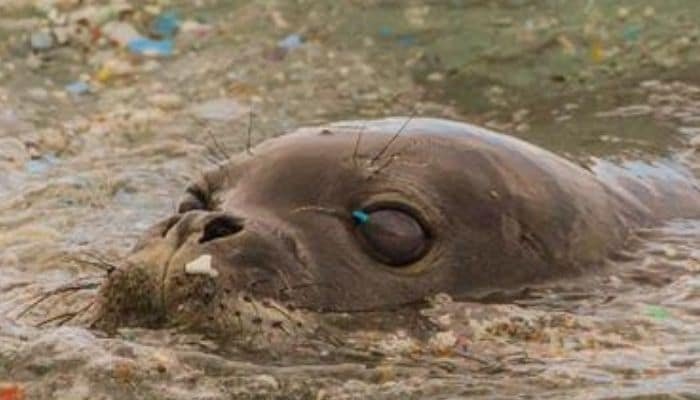
In 2019, more than 130 million metric tons of single-use plastics were thrown away, with most of that waste burned, buried in a landfill or dumped directly into the ocean or onto land.

Now, a new report finds that just 20 companies account for more than half of all single-use plastic waste generated worldwide. One of the companies, according to the study is Exxon Mobil, an oil exploration company operating in Nigeria through its affiliate company, Mobil Producing Nigeria Unlimited.

The report, published Tuesday by Australia’s Minderoo Foundation, offers one of the fullest accounting, to date, of the companies behind the production of single-use plastics that researchers believe could account for as much as 10% of global greenhouse emissions by 2050.

Single-use plastics are meant to be thrown out immediately after use, such as bags, drinking straws, bottles and packaging.

The study identifies 20 companies as the source of 55% of the world’s single-use plastic waste, while the top 100 companies account for more than 90%.

Nearly all the single-use plastic manufactured by these companies — 98% according to the report — is made from ” ‘virgin’ (fossil-fuel-based) feedstocks” rather than recycled materials.

At the top of what the foundation calls its “Plastic Waste Makers Index” is the energy giant Exxon Mobil, followed by the Dow Chemical Co. and China’s Sinopec. The report found that Exxon Mobil was responsible for 5.9 million metric tons of such waste in 2019, while Dow and Sinopec contributed 5.6 million and 5.3 million, respectively. Taken together, the three companies account for 16% of all waste from single-use plastics such as bottles, bags and food packaging, according to the report.

In a statement, Exxon Mobil said it “shares society’s concern about plastic waste.” The company said it is “taking action to address plastic waste” but said the problem requires collective action from “industry, governments, nongovernmental organizations and consumers” alike.

The report also traced the money invested in the production of single-use plastics, finding that 20 institutional asset managers hold shares worth close to $300 billion in the parent companies that make up the foundation’s rankings. The top three investors are U.S.-based Vanguard Group, BlackRock and Capital Group, which according to the report have an estimated $6 billion invested in the production of single-use plastics.

“The trajectories of the climate crisis and the plastic waste crisis are strikingly similar — and increasingly intertwined,” former Vice President Al Gore said in a statement that accompanied the report.

“Since most plastic is made from oil and gas — especially fracked gas — the production and consumption of plastic are becoming a significant driver of the climate crisis, already producing greenhouse gas emissions on the same scale as a large country and causing the emission of other harmful toxins from plastics facilities into nearby communities — disproportionately harming people of color and those in low-income communities,” he wrote.

The report warned that in the next five years, the global capacity to produce the materials needed for single-use plastics could grow by more than 30%.

“An environmental catastrophe beckons: much of the resulting single-use plastic waste will end up as pollution in developing countries with poor waste management systems,” according to the report.

Solving the issue will require drastic changes from producers, investors and banks, the authors wrote. The report said that producers of polymers — known as the building blocks of plastics — should begin disclosing their single-use plastic waste “footprint,” while banks and investors should move to “phase out entirely” any financing that goes toward the production of single-use plastics.

But confronting the challenge will also require “immense political will,” according to the authors, who noted that roughly 30% of the sector, by value, is state-owned.

May 20, 2021 0 comments
0 FacebookTwitterPinterestThreadsBlueskyEmail
Africa & WorldBusiness

World’s third Climate Clock arrives in South Korea

by Leading Reporters May 14, 2021
written by Leading Reporters

Herald Corp. installs Climate Clock on roof of Seoul headquarters to raise awareness about climate crisis…

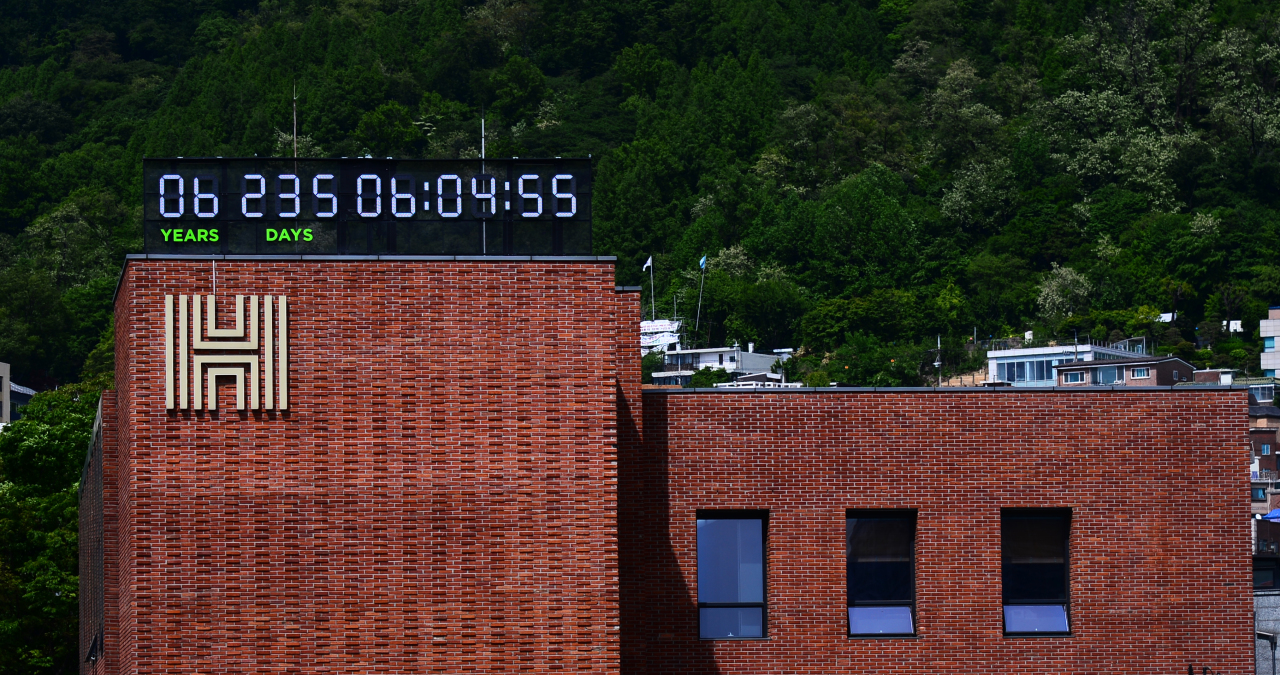
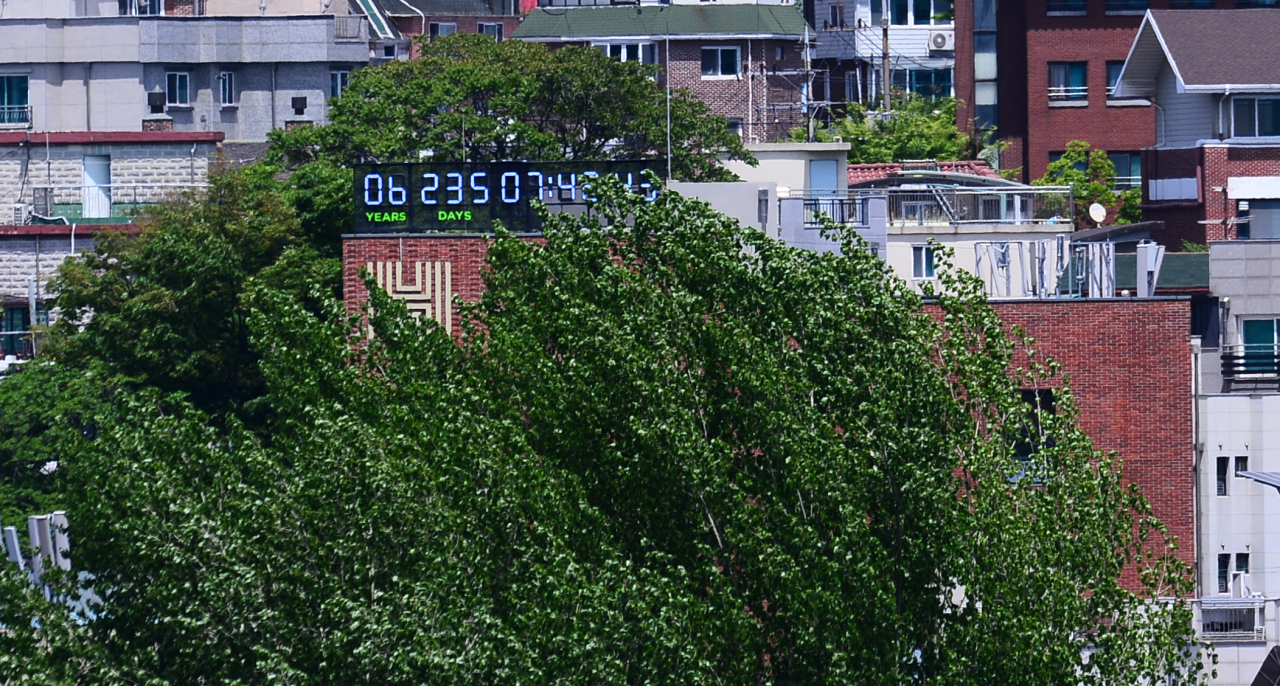
At a glance, the series of numbers — six years, 235 days, six hours, four minutes and 55 seconds — makes little sense.

But they are arguably the most important numbers for humanity. They represent the time we have left until the Earth’s deadline: the “point of no return” in the climate crisis.

The monument-sized Climate Clock showing the numbers was unveiled Thursday on the roof of the Herald Corp. headquarters in Seoul, sending a chilling warning that the Earth is racing toward catastrophe.

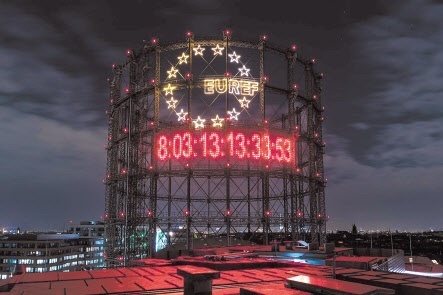
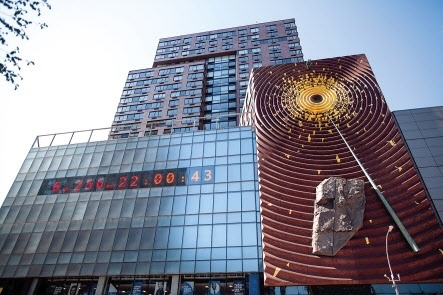
The digital clock, which is 8.5 meters wide and 1.8 meters long, is the first permanent Climate Clock in Asia and the third in the world. The first was set up in Berlin in 2019 and the second in New York in 2020. 

With South Korea’s landmark N Seoul Tower in the background, the Climate Clock in Seoul shows that as of Thursday the Earth had about six years, 235 days, six hours, four minutes and 55 seconds before global warming reaches irreversible levels, based on current emission rates.

The Climate Clock installed in Berlin, Germany in 2019. (The Climate Clock)
The Climate Clock installed in New York City, the US in 2020. (The Climate Clock)

Created by artists Gan Golan and Andrew Boyd, the Climate Clock counts down how much time is left before we deplete the Earth’s carbon budget — that is, the amount of carbon dioxide we can still release into the atmosphere while limiting global warming to 1.5 degrees Celsius above preindustrial levels.

According to scientists, keeping the world from warming by more than 1.5 degrees Celsius from preindustrial levels is crucial if we are to avoid the catastrophic impact of climate change — rising sea levels, flooding, droughts, extreme heat waves, wildfires and other disasters.

“Grounded in the latest climate science, the Climate Clock tells us what we need to do by when,” Boyd told The Korea Herald. “In short, we need to build a 100 percent renewable-powered future in less than seven years.”

The numbers on the Climate Clock are based on the amount of global carbon emissions as well as the amount of the world’s energy supplied from renewable sources, currently at 12 percent and slowly rising. The data comes from the Mercator Research Institute on Global Commons and Climate Change, and from One World in Data, respectively.

The arrival of the Climate Clock is part of the Herald Corp.’s campaign to address the climate emergency, which the company sees as the defining challenge of our time.

Through the campaign, Herald Corp., which owns two of Korea’s major newspapers, The Korea Herald and The Herald Business, seeks to draw attention to the climate crisis and remind Koreans that the Earth has a deadline, it said. 

The monument-sized Climate Clock, which is the third of its kind in the world and the first in Korea, is set up on the roof of the Herald Corp. headquarters office in Huam-dong, Yongsan-gu, Seoul. (Park Hae-mook/The Herald Business)

The Climate Clock’s co-creators welcomed its presence in Seoul.

“After too many years where governments and major media platforms did not take the climate crisis seriously enough, it is incredibly heartening to partner with Herald Corp., who are making the climate emergency a priority focus of their reporting and advocacy,” Boyd said.

“Media companies and organizations such as The Korea Herald play an indispensable role in highlighting the urgency of the climate crisis as well as the many solution pathways, particularly the rapid deployment of renewable energy, available to address it,” he added.

The installation of the Climate Clock comes at a critical point for the global efforts to combat the climate crisis.

This year is marked by significant political events, including the P4G summit — Partnering for Green Growth and the Global Goals 2030 — to be held in Seoul on May 30-31, as well as the UN Climate Change Conference, also known as COP26, set for Glasgow on Nov. 1-12.

“We hope the Seoul Climate Clock will serve as a lightning rod for South Korea’s climate movement and raise the country-wide emission-reduction targets that South Korea brings to the COP26 UN Climate Summit in Glasgow, Scotland later this year,” said co-creator Golan.

“With luck, Seoul’s Climate Clock will not only spark momentum nationally, but also encourage other key countries in East Asia to raise their climate ambitions,” he added. 

The monument-sized Climate Clock, which is the third of its kind in the world and the first in Korea, is set up on the roof of the Herald Corp. headquarters office in Huam-dong, Yongsan-gu, Seoul. (Park Hae-mook/The Herald Business)

The Climate Clock project, which involves a team of artists, scientists, engineers, designers and activists from around the globe, is an open-source project presenting a “critical window” for internationally-coordinated action to reduce emissions and avert climate disaster.

According to the founders, the Climate Clocks — some small, others large — are being built temporarily or permanently at homes, schools and public spaces all over the world from Sydney to Istanbul. Another monumental clock is set to be unveiled in Rome in May at the earliest.

The creators said they had previously made a small-sized climate clock for Greta Thunberg, the teenage activist from Sweden, before her appearance at the United Nations Climate Action Summit in 2019.

In an effort to contribute to achieving climate equity and justice, the Climate Clock team charges licensing fees to for-profit organizations, municipalities and governments that want to set up the clocks. The funds are spent on activists seeking to bring the Climate Clocks to their cities, according to the organization.

For individuals hoping to make their own watches or portable clocks, free kits are available on its website.

By Ock Hyun-ju (laeticia.ock@heraldcorp.com)

May 14, 2021 0 comments
0 FacebookTwitterPinterestThreadsBlueskyEmail
Africa & World

Global Covid-19 vaccine crisis sends ominous signal for fighting climate change

by Leading Reporters May 7, 2021
written by Leading Reporters

The stark gap in vaccination rates between the world’s rich and poor countries is emerging as a test for how the world responds to that other global challenge: Averting the worst effects of climate change.

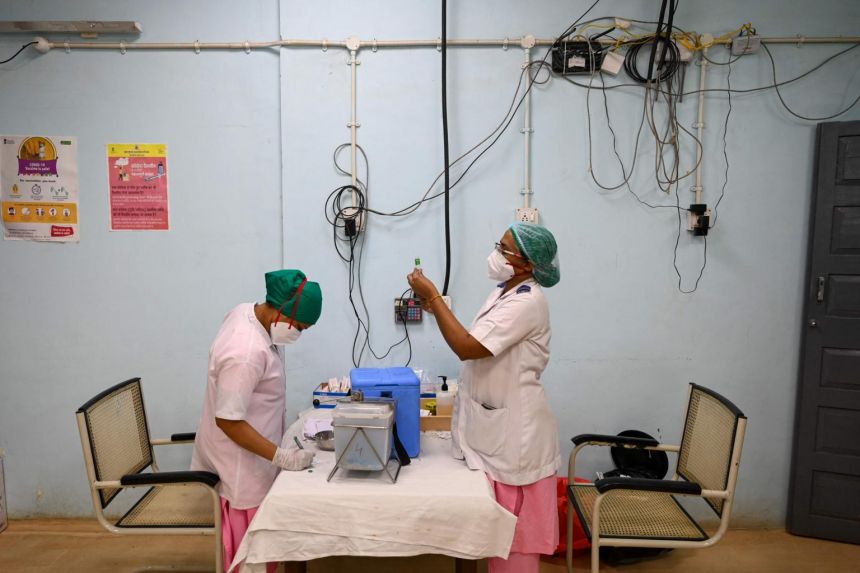
Of the more than 1.1 billion vaccinations administered globally, the vast majority have gone into the arms of people who live in the wealthiest countries. The United States, where nearly half the population has received at least one dose, sits on millions of surplus doses, while India, with a 9 per cent vaccination rate, shatters records in new daily infections. In New York City, you hear cries of relief at the chance to breathe free and unmasked; in New Delhi, cries for oxygen.

The vaccine gap presents an object lesson for climate action because it signals the failure of richer nations to see it in their self-interest to urgently help poorer ones fight a global crisis. That has direct parallels to global warming. Poor countries consistently assert that they need more financial and technological help from wealthier ones if the world as a whole is going to avoid the worst consequences of climate change. So far, the richest countries – which are also the biggest emitters of greenhouse gases – haven’t come up with the money.

More immediately, this year’s vaccine shortages in the nations of the global South could hinder their ability to participate in the United Nations-led climate talks in Glasgow set for November, minimising their voice in critical policy decisions about how to wean the global economy away from fossil fuels.

“Equity is not on the agenda,” said Gregg Gonsalves, assistant professor of epidemiology at the Yale School of Public Health and a veteran activist for global access to AIDS drugs. “If we can’t do it for the worst pandemic in a century, how are we going to do it for climate change?”

The case for sharing technology

Prof Gonsalves is among those who favour waiving drug-company patents for Covid-19 vaccines, sharing technology with vaccine manufacturers and ramping up production around the world. Pharmaceutical industry groups and their backers in the White House have opposed freely sharing intellectual property with rival drugmakers, and some in the administration have argued that vaccine raw materials are needed for production of vaccines for Americans.

India has pushed to relax Covid-19 vaccine patents and United States export rules on vaccine raw materials to allow Indian companies to ramp up production. In Brazil, several lawmakers have recently sought to suspend patents for Covid-19 vaccines and medicines. The US has so far blocked efforts at the World Trade Organisation to relax patent rules.

Of course, the devastation of the pandemic in countries like Brazil and India can’t be laid at the feet of rich-world patent holders alone.

Brazil’s right-wing populist president, Mr Jair Bolsonaro, scorned public health guidance and insisted that lockdowns and mobility restrictions would be a bigger threat to the country’s weak economy. Brazil now has one of the world’s highest death tolls and its economy is in tatters.

India’s right-wing populist prime minister, Mr Narendra Modi, who earlier this year boasted of conquering the virus, allowed large religious and political gatherings. And instead of securing vaccines for India’s 1.4 billion citizens, India began exporting Indian-made doses to other countries. Today, India has become the worst-hit country in the world, with close to 380,000 new infections daily over the past seven days.

The long-running global battle over intellectual property rights to medicines has a parallel to climate action, too, with the Paris climate agreement explicitly calling for the transfer of technology to develop clean energy infrastructure. Developing countries have long said they cannot cope with the effects of climate change if the rich world does not share money and technology, and that problem is only made more acute by the economic collapse brought on by the pandemic and the inequitable access to vaccines.

Not least, the consequences of global warming are unequal, hurting the poorest people in poor countries hardest.

“If this is the way rich countries conducted themselves in a global crisis – where they took care of their own needs first, took care of companies, did not recognise that this is an opportunity to reach out and demonstrate solidarity – then there’s no good track record for how they will conduct themselves in the face of other global crises, such as the climate crisis, where poorer countries will bear the highest burdens,” said Mr Tasneem Essop, a former government official from South Africa who is now executive director of Climate Action Network, an advocacy group.

Money is at the heart of the distrust.

The Biden administration promised to double grants and loans to developing countries to US$5.7 billion (S$7.6 billion) a year, a target that is widely seen as both insufficient and lagging behind the pledges of other wealthy industrialised nations, notably in Europe. Many low- and middle-income countries are carrying so much debt, they say it leaves them nothing left to retool their economies for the climate era. In addition, the rich world has yet to fulfill its promise to raise US$100 billion a year that could be used for green projects, whether solar farms or mangrove restoration.

“In both cases, it’s about a willingness to redistribute resources,” said Ms Rohini Pande, a Yale University economist.

In the case of coronavirus response, it’s about helping vaccine makers around the world manufacture billions of doses in a matter of months. In the case of climate change, huge sums of money are needed to help developing countries retool their energy systems away from dirty sources like coal.

The next few weeks will be critical, as world leaders gather for meetings of the seven richest countries, the Group of 7, in June and then of the finance ministers of the world’s 20 biggest economies, the Group of 20, in July. Those meetings will then be followed by the UN-led climate negotiations in Glasgow in November.

Those negotiations, known as the 26th Conference of the Parties to the Paris Agreement, or COP26, to a significant degree could determine whether the world can slow down the rate of warming that is already causing Arctic ice melt, worsening wildfires and other crises. At that meeting, countries big and small are set to present more ambitious plans to keep the average global temperature from rising past 1.5 degrees Celsius compared with preindustrial times.

“We will not have a successful outcome at COP26,” said Ms Christiana Figueres, a former UN climate diplomat who helped negotiate the Paris Agreement in 2015, “unless we have financial commitments that are commensurate with the impacts that many developing countries are feeling.”

credit: .straitstimes.com

May 7, 2021 0 comments
0 FacebookTwitterPinterestThreadsBlueskyEmail
Africa & World

Bill Gates out of Billionaire List After Divorce

by Leading Reporters May 4, 2021
written by Leading Reporters

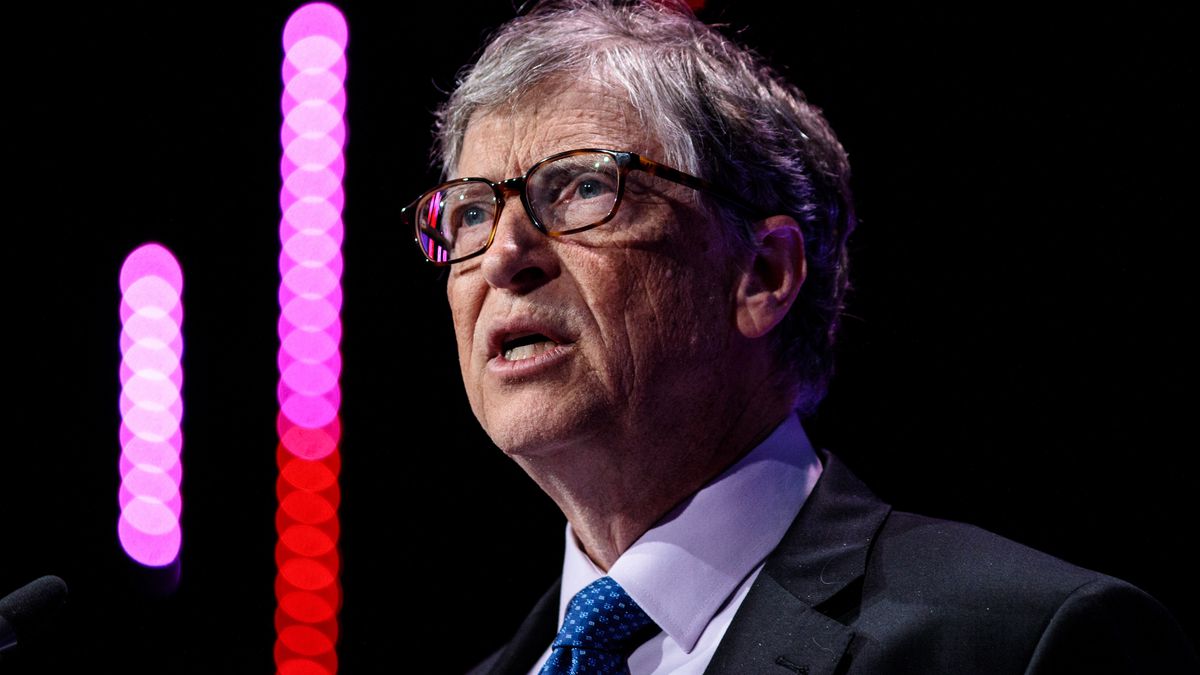
Bill Gates, co-Founder of Microsoft, off its billionaire list. The highly respected business platform Bloomberg took the action shortly after the news of his crashed marriage.

Bloomberg has yanked Bill Gates, co-Founder of Microsoft, off its billionaire list.

The highly respected business platform took the action shortly after the news of Gates divorce to his wife of 27 years, went viral.

Bill and Melinda announced their decision to go separate ways on Monday night, seeking privacy.

“After a great deal of thought and a lot of work on our relationship, we have made the decision to end our marriage.”

“Over the last 27 years, we have raised three incredible children and built a foundation that works all over the world to enable all people to lead healthy, productive lives.

“We continue to share a belief in that mission and will continue our work together at the foundation, but we no longer believe we can grow together as a couple in this next phase of our lives.

“We ask for space and privacy for our family as we begin to navigate this new life,” they said in a joint statement.

Before he was taken off the list, Gates was on the fourth spot after Jeff Bezos, Elon Musk and Bernard Arnault.

Financial details of their parting ways are not yet clear but Melinda may take half of her estrange husband’s wealth.

Gates, who has a net worth of $130 billion, owns 1.37% of Microsoft’s outstanding shares, which are worth more than $26 billion.

May 4, 2021 0 comments
0 FacebookTwitterPinterestThreadsBlueskyEmail
Africa & World

Tensions Rise With the GERD Water

by Leading Reporters May 4, 2021
written by Leading Reporters

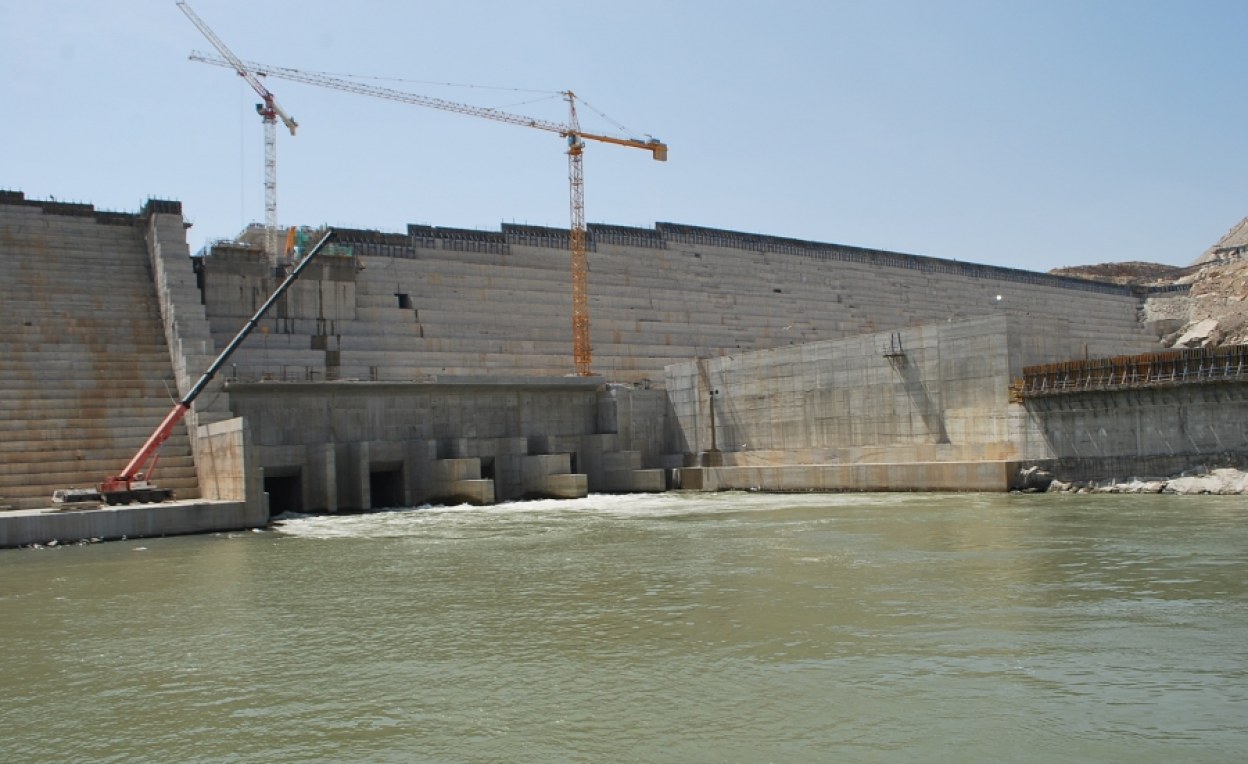
Tensions are once again rising among Ethiopia, Egypt and Sudan, along with the water in the Grand Ethiopian Renaissance Dam (GERD). The annual rainy season is fast approaching. Ethiopia will almost certainly undertake a second filling of the 74 billion cubic metre capacity reservoir if there is no prior agreement otherwise among the three disputants.

A deal seems remote, as there are no signs of even an imminent resumption of negotiations. The last round of African Union-led negotiations ended in Kinshasa on 5 April, without any glimpse of an accord on how to manage the huge dam Ethiopia is building on the Blue Nile, upstream of Egypt and Sudan, to generate 6.45 gigawatts of hydro-electric power.

Last week Egyptian Foreign Affairs Minister Sameh Shoukry travelled to six African countries – South Africa, Tunisia, Kenya, Senegal, the Democratic Republic of the Congo (DRC) and Comoros – to present Egypt’s case. Cairo is almost wholly dependent on the Nile for its fresh water and fears the GERD will significantly reduce its supply.

Egypt indicated before Shoukry’s tour that it might refer the dispute to the United Nations Security Council as it tried to do last July before South African President Cyril Ramaphosa intervened. As African Union (AU) chair at the time, he persuaded the parties to accept the AU as mediator. But Ramaphosa failed to clinch a deal in some six months of negotiations – and now his successor as AU chair, DRC President Félix Tshisekedi, has also failed.

The hints of Egypt’s intentions to try to go back to the Security Council included some sabre-rattling from President Abdel-Fattah el-Sisi, who warned Ethiopia not to ‘touch a drop of Egypt’s water, because all options are open.’ Another clue was a letter Shoukry wrote to the Security Council, urging it to persuade Ethiopia not to take any action on the dam before reaching a legally binding agreement with Egypt and Sudan.

He warned that failure to reach consensus would harm Egypt and Sudan’s water interests and security, increase tensions throughout East Africa and the Horn, and ‘constitute a serious threat to international peace and security.’ It is precisely the mandate of the Security Council to address such threats, so Shoukry appeared to be setting the stage to seek council intervention.

Sudan’s irrigation minister Yasser Abbas also mentioned referring the dispute to the Security Council if Ethiopia started a second filling of the dam without agreement among the three countries.

However at their meeting last week, Shoukry didn’t lobby Ramaphosa to support a Security Council referral. Instead he said Egypt would ask Tshisekedi to convene a special meeting of the AU Bureau to plot a path forward. There are no signs that such a meeting is imminent, despite the second filling’s looming deadline. Presumably, though, Egypt could still use the AU Bureau meeting to raise a request for the Security Council intervention.

Maybe that would provide the catalyst to kickstart the stalled negotiations. Or perhaps the parties should consider a different configuration. There seems little point in including the US and EU in a formal mediation role, but it might make sense to bring in the UN as co-chair with the AU. That could address Egypt’s apparent suspicion that the AU favours Ethiopia – while also addressing Ethiopia’s anxieties by keeping an AU hand in the process.

It’s hard to say where the standoff might end if no agreement is reached. El-Sisi’s sabre-rattling has been echoed by some Egyptian military analysts. They also point to recent joint military exercises between Egypt and Sudan as a warning that the two countries could resort to force if Ethiopia proceeds with the second filling.

Clearly the dispute is souring relations among three important African countries, and there is a danger of a flashpoint. This suggests the GERD dispute is a legitimate subject for Security Council attention, and that this option may be needed if negotiations don’t succeed soon.

Peter Fabricius, ISS Consultant

Read the original article on ISS.

May 4, 2021 0 comments
0 FacebookTwitterPinterestThreadsBlueskyEmail
Africa & World

ECOWAS Ambassador to UN receives new Climate Clock in NYC

by Leading Reporters April 26, 2021
written by Leading Reporters

Monday morning, in advance of President Biden’s Earth Day Leaders Summit on Climate, the UN Ambassador of ECOWAS (Economic Community of West African States), which represents 15 African nations, was gifted a handheld climate clock in front of the monumental Climate Clock in Union Square, New York City.

Climate Clock Action

The clock was presented to the UN Ambassador, his excellency Mahama Kappiah, by Jerome Ringo, former chair of the National Wildlife Federation, and currently Goodwill Ambassador to the Pan African Parliament.

Kappiah is the first UN ambassador to receive a climate clock, with the hope that more of these clocks continue to spread throughout the UN. Ringo will be taking more handheld clocks to several African leaders when he travels there later this week.

Ringo stated: “This clock is a call to action. Future solutions are great, but we need NOW solutions. Solutions that create green jobs that can replace the fossil fuel economy.” The moment was celebrated by a significant change in the now famous giant clock: a sign of hope.

Climate Clock Action

The Deadline that has been displayed since it’s launch in September is now joined by a new “Lifeline” that displays the percentage of global energy currently supplied from renewable sources — 12.2 percent, and going up, but it needs to be going up much faster to meet our deadline. For more information on the science behind the clock:  https://climateclock.world/science.

Ringo used the shift in the clock to speak to the different responsibilities that different nations had for meeting our climate deadline. “Africa, like other developing regions who suffer climate impacts from CO2 historically released by industrialized nations, deserves a lifeline.

Climate Clock Action

They need countries like the US, that are the greatest contributors to the problem, to contribute the most to this renewable lifeline that is on the clock. The United States is only 5% of the world’s population but is responsible for 25% of the world’s carbon emissions.”

As President Mohammadu Buhari also took part in the the virtual Leaders Summit on Climate, being hosted by the US President Joe Biden, and attended by 40 world leaders.

Also at the event were climate activists Xiye Bastida, Alexandria Villasenor, and Ayisha Saddiqa, many of whom are also receiving clocks and taking them to the Biden Global Leaders summit in Wash. DC on Earth Day.

April 26, 2021 0 comments
0 FacebookTwitterPinterestThreadsBlueskyEmail
Africa & World

Burkina ex-president Compaore to face trial for predecessor’s murder: lawyers

by Leading Reporters April 14, 2021
written by Leading Reporters

The exiled former president of Burkina Faso, Blaise Compaore, is to be tried for the murder of the man he ousted in a 1987 coup, Thomas Sankara, lawyers told AFP on Tuesday.

Compaore and 13 others were being charged with harming state security, complicity in murder and complicity in the concealment of corpses, lawyer Guy Herve Kam told AFP.

Diendere is currently serving a 20-year sentence in Burkina Faso for masterminding a plot in 2015 against the west African country’s transitional government.

Even more people had been accused, but “many of them have died since,” Kam said.

Diendere’s lawyer, Mathieu Some, said that while a trial date had not yet been set, it “could happen soon”.

Sankara took power in a coup in 1983, but was killed on October 15, 1987, when he was 37, in a putsch led by Compaore, who was himself ousted in 2014 by a popular uprising after 27 years in power.

An arrest warrant was issued against Compaore in March 2016. He currently lives in Ivory Coast, where he fled after being toppled and where he has since taken nationality. AFP

April 14, 2021 0 comments
0 FacebookTwitterPinterestThreadsBlueskyEmail
Africa & World

16yr Old Boys Lured and Killed Their 10yr Old Friend For Money Ritual

by Leading Reporters April 6, 2021
written by Leading Reporters

A horror-filled incident has reportedly occured when two boys aged around 16 years, visited and lured out their 10 year old playmate and killed him for money rituals in Kasoe Ghana

Abdul Hameed who shared news of the unfortunate incident said that the victim whose name was not mentioned at the time of this report was studying at home when the other two older friends visited and convinced him to go on a playing spree with them in the spirit of Easter Holidays, not knowing that they have hatched evil plan to kill him for money rituals.

“The ten year old boy was studying and the two 16 year olds lured him to come out and play with them. He obliged not knowing they had another plan. An evil plan. They killed him, cut off his ear for the purpose of money rituals.

“This is not a movie. This happened in Kasoa this Easter Saturday. A father of one of the boys saw them wrap the dead body in a cloth and quickly called the police on them.

I am not shocked, are you?” I’m shocked and shaken!

Leadingreporters learnt that the police has already arrested the culprits who have made confessional statement.

April 6, 2021 0 comments
0 FacebookTwitterPinterestThreadsBlueskyEmail
Africa & World

Australian Researchers Say Dead Bodies Keep Moving For Over A Year After Death

by Leading Reporters March 30, 2021
written by Leading Reporters
  • Australian scientists found that bodies kept moving for 17 months after being pronounced dead.
  • Researchers used photography capture technology in 30-minute intervals every day to capture the movement.
  • This study could help better identify time of death.

We’re learning more new things about death everyday. Much has been said and theorized about the great divide between life and the Great Beyond. While everyone and every culture has their own philosophies and unique ideas on the subject, we’re beginning to learn a lot of new scientific facts about the deceased corporeal form.

An Australian scientist has found that human bodies move for more than a year after being pronounced dead. These findings could have implications for fields as diverse as pathology to criminology.

Researcher Alyson Wilson studied and photographed the movements of corpses over a 17 month time frame. She recently told Agence France Presse about the shocking details of her discovery.

Reportedly, she and her team focused a camera for 17 months at the Australian Facility for Taphonomic Experimental Research (AFTER), taking images of a corpse every 30 minutes during the day. For the entire 17 month duration, the corpse continually moved.

“What we found was that the arms were significantly moving, so that arms that started off down beside the body ended up out to the side of the body,” Wilson said.

The researchers mostly expected some kind of movement during the very early stages of decomposition, but Wilson further explained that their continual movement completely surprised the team:

“We think the movements relate to the process of decomposition, as the body mummifies and the ligaments dry out.”

During one of the studies, arms that had been next to the body eventually ended up akimbo on their side.

The team’s subject was one of the bodies stored at the “body farm,” which sits on the outskirts of Sydney. (Wilson took a flight every month to check in on the cadaver.)

Her findings were recently published in the journal, Forensic Science International: Synergy.

Implications of the study

The researchers believe that understanding these after death movements and decomposition rate could help better estimate the time of death. Police for example could benefit from this as they’d be able to give a time frame to missing persons and link that up with an unidentified corpse. According to the team:

“Understanding decomposition rates for a human donor in the Australian environment is important for police, forensic anthropologists, and pathologists for the estimation of PMI to assist with the identification of unknown victims, as well as the investigation of criminal activity.”

While scientists haven’t found any evidence of necromancy. . . the discovery remains a curious new understanding about what happens with the body after we die.

Newscredit: Bigthink

March 30, 2021 0 comments
0 FacebookTwitterPinterestThreadsBlueskyEmail
Africa & World

Joe Biden: ‘When I came to the U.S. Senate 120 years ago’

by Leading Reporters March 28, 2021
written by Leading Reporters

Speaking on the future of the filibuster at the first press conference of his presidency, President Joe Biden, 78, said he came to the Senate “120 years ago.”

“With regard to the filibuster, I believe we should go back to the position of the filibuster that existed just when I came to the United State’s Senate 120 years ago.”

Biden became a Senator when he was 29 and served for 36 years.

Joe Biden says he came to the Senate “120 years ago” https://t.co/PIDxgsCrq5 pic.twitter.com/CG1hCqGTHu

— RNC Research (@RNCResearch) March 25, 2021

Many top Democrats have argued that the filibuster is a ‘racist’ practice and have advocated for its demise. Republicans, like Senate Minority Leader Mitch McConnell, however, say that argument is meant “to justify a partisan power grab in the present.”

Biden has made it a priority to fight the filibuster.

March 28, 2021 0 comments
0 FacebookTwitterPinterestThreadsBlueskyEmail
Newer Posts
Older Posts

Recent Posts

  • Gunmen Kill 13 in Plateau Fresh Attacks

    May 8, 2026
  • Jabi Lake takeover stands even if God comes down – Wike

    May 6, 2026
  • Fuel Scarcity Looms As Dangote Refinery Hikes Fuel Price to N1350

    May 6, 2026
  • Why I moved to Kenya – Femi Lazarus

    May 5, 2026
  • IGP scraps SWAT nationwide

    May 5, 2026

Usefull Links

  • Contact Page
  • About Leading Reporters
  • Contact Us
  • Headlines
  • Investigation
  • Exclusives
  • Opinion
  • Business
  • Facebook
  • Twitter
  • Instagram
  • Linkedin

@2021 - All Right Reserved. Designed and Developed by PenciDesign


Back To Top
Leading Reporters
  • Featured
  • Politics
  • Opinion
  • Business
  • Entertainment
  • Sports
  • About Us
  • Contact