Leading Reporters
  • Headlines
  • Health
  • Business
  • Exclusives
  • Investigation
  • Entertainment
  • Opinion
Tuesday, January 27, 2026
Hot
FCTA Workers, NLC Storm Industrial Court, Demand Wike...
DisCos reject FG’s free meter plan
Nigerian-born nurse loses licence in Australia for sleeping...
BREAKING: Kano Gov Abba Yusuf dumps NNPP
National Grid Collapse For First Time in 2026
BREAKING: Tinubu approves posting of Ambassadors to U.S.,...
Insecurity: Kidnappers demand 17 motorcycles for release of...
FG to Abolish Hnd-Degree Dichotomy, Allow Polytechnics to...
AFCON Initiative drives stronger Nigeria Morocco cooperation
Obasanjo: I’ll Never Stop Having Children
  • About Leading Reporters
  • Contact Us
Leading Reporters
Advertise With Us
  • Headlines
  • Health
  • Business
  • Exclusives
  • Investigation
  • Entertainment
  • Opinion
Hot
FCTA Workers, NLC Storm Industrial Court, Demand Wike...
DisCos reject FG’s free meter plan
Nigerian-born nurse loses licence in Australia for sleeping...
BREAKING: Kano Gov Abba Yusuf dumps NNPP
National Grid Collapse For First Time in 2026
BREAKING: Tinubu approves posting of Ambassadors to U.S.,...
Insecurity: Kidnappers demand 17 motorcycles for release of...
FG to Abolish Hnd-Degree Dichotomy, Allow Polytechnics to...
AFCON Initiative drives stronger Nigeria Morocco cooperation
Obasanjo: I’ll Never Stop Having Children
Leading Reporters
Leading Reporters
  • Headlines
  • Health
  • Business
  • Exclusives
  • Investigation
  • Entertainment
  • Opinion
Copyright 2024 - All Right Reserved
Home > Visa
Tag:

Visa

Headlines

US govt excludes UK, Nigeria, others from visa-free entry for 2025

by Folarin Kehinde February 25, 2025
written by Folarin Kehinde

The United States has published a list of eligible countries for its 2025 Visa Waiver Program, VWP.

The United Kingdom has been removed from the program but remains eligible under specific conditions.

The list, however, does not include African countries such as Nigeria, Ghana, or South Africa.

The VWP list remains mostly unchanged, though Romania has been added in a significant update.

According to the U.S. Bureau of Consular Affairs, the Visa Waiver Program allows most citizens of eligible countries to travel to the U.S. for tourism or business for up to 90 days without requiring a visa.

The agency stated, “Travelers must have a valid Electronic System for Travel Authorization (ESTA) approval prior to travel and meet all requirements explained below.

“If you prefer to have a visa in your passport, you may still apply for a visitor visa.”

The 2025 Visa Waiver Program has also introduced policy updates on permit eligibility, revisions to the list of participating countries, and new travel policies.

February 25, 2025 0 comments
0 FacebookTwitterPinterestThreadsBlueskyEmail
Headlines

Visa-Renewal: US scraps in-person interview for Nigerian applicants

by Folarin Kehinde February 10, 2025
written by Folarin Kehinde

The United States, US has suspended its visa dropbox service in Nigeria, requiring all visitor visa applicants to attend in-person interviews for renewals.

The dropbox system previously allowed eligible applicants, particularly those with recent U.S. travel history, to submit passports without interviews, reducing wait times.

The removal of this option has sparked concerns over increased delays, as visa interview dates are already stretched over a year in some cases.

Many Nigerians, including students and business travelers, may now face disruptions to their travel plans.

While the U.S. Embassy has not provided an official explanation, some observers link the decision to the lingering impact of Donald Trump’s restrictive immigration policies.

His administration previously imposed travel bans on several African nations, including Nigeria, citing security concerns.

February 10, 2025 0 comments
0 FacebookTwitterPinterestThreadsBlueskyEmail
Headlines

Japa: Germany launches online visa application portal for Nigerians, others

by Folarin Kehinde January 4, 2025
written by Folarin Kehinde

German authorities have launched an online visa application portal for Nigerians and other applicants worldwide.

This was announced in a statement by Germany’s Federal Foreign Office on January 1.

“The Consular Services Portal is being launched worldwide today, 1 January 2025, enabling people around the world to submit applications for German visas online,” the statement reads.

According to the statement, 28 categories of national visas can now be applied for online by those who want to work, study, or join their families in Germany.

Germany’s Foreign Minister Annalena Baerbock described the online visa application portal as a positive development that will help the country meet its demand for skilled workers.

“Every year, Germany is short of at least 400,000 skilled workers. 400,000 clever minds and even more agile hands to keep our country running – in the skilled crafts sector, in the care sector, in tech companies. Our national economy is also in a global competition to attract trainees, apprentices, and students.

“At times like these, we cannot afford to downright put the best off coming here to roll up their sleeves because of long paper application forms and even longer waiting periods. At times like these, as one of the biggest economies and as a modern country of immigration, we need a national visa process that is state-of-the-art – modern, digital and secure,” Ms Baerbock said.

January 4, 2025 0 comments
0 FacebookTwitterPinterestThreadsBlueskyEmail
Africa & World

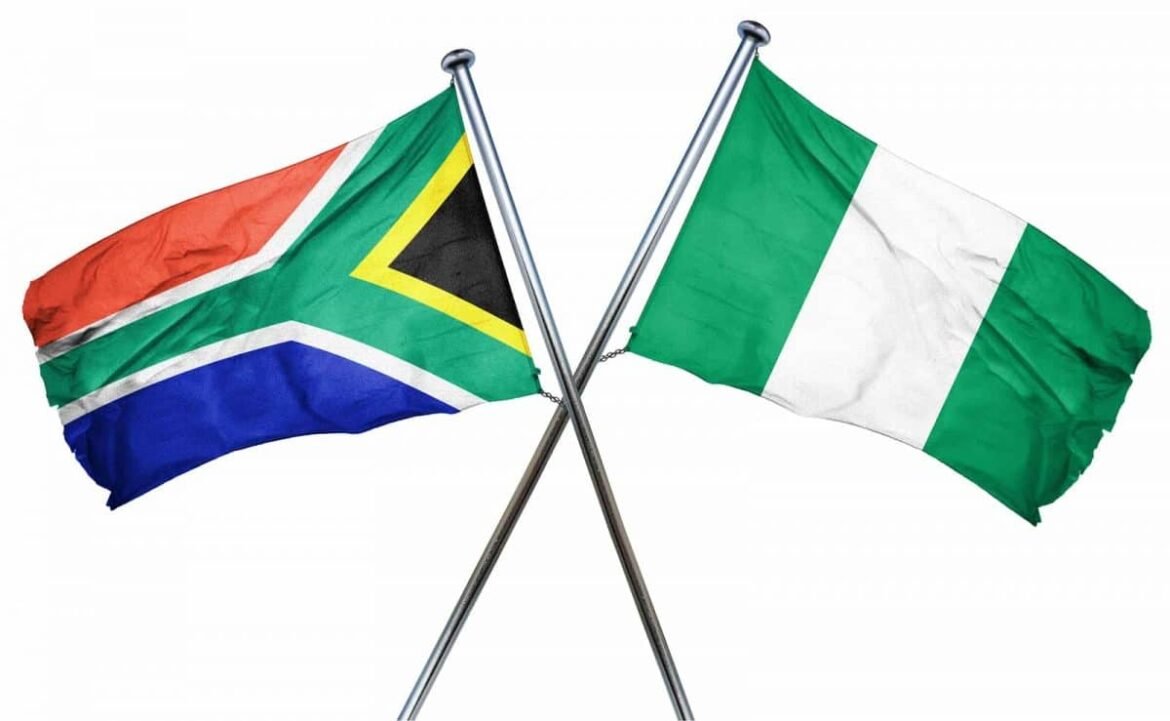
Nigerians can now apply for South African Visas Without Passports – SA President

by Folarin Kehinde December 3, 2024
written by Folarin Kehinde

President Cyril Ramaphosa announced that tourists from Nigeria can now apply for visas without submitting a passport.

Ramaphosa stated this on Tuesday at the opening of the 11th session of the Nigeria-South Africa Bi-National Commission (BNC) in Cape Town with President Bola Tinubu in attendance.

According to presidential spokesman, Bayo Onanuga, South Africa has simplified its visa processes to facilitate travel for Nigerian business people and tourists, with measures such as five-year multiple entry visas.

“Our efforts to create a favourable environment include our simplified visa process for Nigerian business people to travel to South Africa. Qualifying Nigerian business people can be granted a five-year multiple entry visa,” he said.

He also pledged South Africa’s commitment to removing constraints on greater investment and addressing the challenges faced by companies in both countries.

“As we mark 30 years since the establishment of diplomatic relations, we see a bright future for our relationship. Our strong bonds of friendship provide a firm foundation for more meaningful economic cooperation.

“Nigeria is host to a number of South African companies. South Africa has always been open to Nigerian business, reflected in the number of investments and operations established in this country.

“But there is much more we need to do. We need to remove the remaining constraints to greater investment, just as we need to address some of the challenges that companies have experienced.”

Ramaphosa acknowledged the Nigerian government’s reforms to further strengthen and foster a business environment that offers assurances to investors, including from South Africa.

Our government continues with its efforts to improve the ease of doing business in South Africa. We want to enable investors to operate, trade and pursue opportunities in various sectors.

“We look forward to seeing more Nigerian companies investing in South Africa,” he said.

The South African leader said Africa’s development and the challenges facing countries of the Global South would be firmly placed on the G20 agenda.

“It will be the first time the G20 Leaders’ Summit will be held on African soil. We will seek to galvanise support for the AU’s Agenda 2063 as we pursue an inclusive global agenda.

“For South Africa, it is our view that in shaping global discourse, programmes should be tailored to ensure that in our societies, no one is left behind,” he said.

December 3, 2024 0 comments
0 FacebookTwitterPinterestThreadsBlueskyEmail
Headlines

Nigeria Loses Over N5b to UK Annually: Call For Scrapping of IELTS Intensifies

by Leading Reporters February 1, 2022
written by Leading Reporters

Nigerians have intensified campaign asking foreign institutions to stop demanding an English proficiency test — the International English Language Testing System (IELTS).

IELTS is one of the world’s known English language tests for work, study and migration.

It is an international standardised test of English language proficiency.

Annually, thousands of young Nigerian migrants take IELTS tests physically in different locations all over Nigeria, as part of the requirements to secure admissions into universities overseas or work abroad.

The Nation learnt the test costs over N80,000 and N90,000 per time and expires after two years. One has to re-sit if they have not been successful with their applications for UK scholarships.

Nigerians are questioning why they have to prove they can speak English ㅡ every two years

In 2020, the UK Home office, which is said to be primarily in charge of the test, had said that it did not have evidence that the majority of Nigerians speak English as a first language.

Many Nigerians took to social media with the hashtags — #ReformIELTSPolicy, #IELTS and #TOEFL calling on the UK home office to remove Nigeria from the list of countries whose citizens are required to take English Proficiency tests.

Some other requests include cancellation of two-year expiry clause, including Nigeria in the UKVI exemption list, and reducing test cost and increasing validity period.

Meanwhile, the UK home office is yet to react as at the time of report. while we await further engagement by the Ministry of Foreign Affairs.

IELTS: Why we impose language tests on Nigerians – UK

The statement noted that UK uses the Common European Framework of Reference for Languages (CEFR), an international standard for describing language ability, to set level of competence required to integrate in the UK.

The United Kingdom High Commission in Nigeria has reacted to Nigerians’ quest for the review of the International English Language Testing System (IELTS) which mandates Nigerians seeking to study or work in the United Kingdom to sit and pass the test.

On Saturday, in a response to an earlier enquiry by PREMIUM TIMES shared by the head of communications at the British High Commission in Abuja, Nigeria’s Federal Capital Territory, Dean Hurlock, the UK home office said it is important that anyone willing to either work or study in the UK shows evidence of language competence to integrate in the country.

The statement noted that UK uses the Common European Framework of Reference for Languages (CEFR), an international standard for describing language ability, to set level of competence required to integrate in the UK.

“We use CEFR (Common European Framework of Reference) levels to provide a common set of standards, and set them on a route by route basis, taking into account the types of activities and nature of the route. CEFR standards are an important common baseline to ensure applicants meet the required language standard,” the response noted.

How much English is English enough?

The British Council states that IELTS test results provide evidence of English language skills in most countries where it is the main language. But one big grouse many have with the initiative is: English is also the main language in Nigeria.

Having been a colony of Great Britain for nearly eight decades, it is both the country’s lingua franca and language of instruction in schools — even, some observe, to the detriment of native languages.

Nigeria’s history as an anglophone country is reflected in the people’s generally good grasp of the language. The country is ranked third-best in Africa and 29th best in the world by the 2019 EF English Proficiency Index. Also, out of over 140 countries who wrote the General IELTS in 2018, Nigerians had the sixth-best performance on average.

“Most of our systems have been set up in the English language. In fact, we even learn our own indigenous languages in secondary schools as electives,” observes Ebenezar Wikina, a development practitioner and editor of NDLink. “We have pretty much learnt English all our lives; so why then do I need to prove to you that I can speak it if we can communicate via email and you understand what I am saying?”

The Harvard-trained journalist had, in January, applied for a programme at Nexford University, an online institution based in the US, which then told him it needed to verify his English proficiency. He says he has never written the IELTS and just doesn’t bother putting in for opportunities that require it.

On fees charged

Speaking on the allegation of charging exorbitant fees, the response explained that individual test providers set the fees but these must be comparable to what is charged globally.

The statement reads in part; “Individual test providers set the fees for SELT. UK Visas & Immigration stipulate that the fees providers charge our customers must be comparable to the fees they charge others for the same or similar English language tests.”

Exception

The Home Office, however, explained that Bachelor’s Degree holders or its equivalent will not need to take a Secure English Language Test (SELT) if it is verified by UK Ecctis if it “meets, or exceeds the recognised standard of a UK bachelor’s degree, master’s degree or doctorate”.

It said on behalf of UK national agencies, Ecctis provides evidence of the level of qualifications and, or English language proficiency for the UK Home Office.

It provides services on behalf of the UK Government in qualifications, skills, and migration.

The United Kingdom also added in its response that, “An accurate and reliable SELT process is highly important to ensure people coming to work and study have the skills they need to complete the activity they are coming to the UK to do.”

How much English is English enough?

The British Council states that IELTS test results provide evidence of English language skills in most countries where it is the main language. But one big grouse many have with the initiative is: English is also the main language in Nigeria.

Having been a colony of Great Britain for nearly eight decades, it is both the country’s lingua franca and language of instruction in schools — even, some observe, to the detriment of native languages.

Nigeria’s history as an anglophone country is reflected in the people’s generally good grasp of the language. The country is ranked third-best in Africa and 29th best in the world by the 2019 EF English Proficiency Index. Also, out of over 140 countries who wrote the General IELTS in 2018, Nigerians had the sixth-best performance on average.

“Most of our systems have been set up in the English language. In fact, we even learn our own indigenous languages in secondary schools as electives,” observes Ebenezar Wikina, a development practitioner and editor of NDLink. “We have pretty much learnt English all our lives; so why then do I need to prove to you that I can speak it if we can communicate via email and you understand what I am saying?”

The Harvard-trained journalist had, in January, applied for a programme at Nexford University, an online institution based in the US, which then told him it needed to verify his English proficiency. He says he has never written the IELTS and just doesn’t bother putting in for opportunities that require it.

More difficult than necessary

The British Council’s head of IELTS, James Shipton, once described the test as “a reliable indicator of a person’s ability to communicate in English”. But the IELTS is designed to do much more than to simply ascertain fluency. The IDP admits that test questions are not only checking comprehension skills and are demanding — “even for native English speakers”.

When Jay Merlo wrote the test in 2017, he got a disappointing score of 6.5 even though he is a native speaker from Australia who was top of his English class at high school, studied English Literature at university, has a masters degree with first-class honours in Applied Linguistics from the University of Melbourne, and had taught English for nine years at universities in different countries.

“If the IELTS Academic were the only measurement of my English abilities then I think my confidence would now be destroyed,” he concedes.

Laurie Mitchell, another native speaker from the US who has written the test, describes it as difficult and stressful to take.

“It involves a lot of logical thinking and attention to detail, which can trip anyone up,” she says. “For the listening part, the recorded voices have various accents (Irish, Australian, American, etc.) and it can be challenging to understand everything they say because they may use pronunciations and vocabulary different than the English one is used to.”

Liadi in Nigeria has written the test twice already but is not satisfied with his results, and he does not agree he didn’t do well because of the quality of his English. “I am going to write it for the third time not because I can’t speak English,” he insists. “At least speaking with you, you can tell that I have control over the language.”

He also blames poor performances partly on the tension and anxiety that come with examinations. While he has friends who have written the test three or more times, Elizabeth’s coaching centre has seen worse cases.

“We’ve met someone who has taken the test 16 times before coming here. He shared his testimony and said that was his 17th time,” she tells The ICIR. 

A money-making machine

Writing the IELTS costs an average of $225 depending on the test centre and country. In Nigeria, the cost ranges between N85,000 – N90,000 for academic and general tests designed for UK Visas and Immigration.

But there are additional expenses as well. If a candidate is not satisfied with his result, for instance, they may apply for the paper to be remarked, which costs N 20,000 — refundable if the score increases.

Coaching centres also charge applicants separately for training sessions, with the price ranging between N30,000 and N60,000 per month.

Emails sent to the British Council multiple times to ask for how many Nigerians apply for the IELTS yearly and what the pass rate is were not acknowledged or replied — except with autoresponders. A call placed to Maryam Thomas, the Nigerian office’s Operations Resource Pool Manager, was also not answered, nor were texts sent on different days replied.

But, in 2017, the organisation had announced that as many as three million people wrote the test within a one-year period. Using this figure, gross profits should have averaged $675 million (N245 billion).

In Nigeria, there are 11 test centres run by the British Council, sometimes “with up to five test dates per month”. An exams invigilator working with the organisation informed The ICIR that an average of 120 people write the test at a centre on each day.

If there is a minimum of four test dates in a month and each applicant pays at least N75,000, then at the end of a year Nigerians would have paid at least N5.15 billion to the Council — and this does not include fees paid for remarking and certificate authentication.

According to the British Council’s as at 2017-18 financial review, it “achieved almost 9 per cent growth in total income to £1,172.3 million principally due to strong performance from its English teaching and examinations activities together with higher income from contract work”.

The contribution of exams to its income that year was 41 per cent (£486.9 million, N229 billion). The following year, exams together with teaching contributed 58 per cent of its total income (£727 million, N341 billion).

“I don’t see a reason why it should be that expensive,” says Liadi, referring to the IELTS. “They are using the avenue to milk us. When you go to their office, you’ll know these people are definitely in for business.”

Seyi Kolawole, another Nigerian seeking to migrate to Canada, however, considers the pricing fair especially for people whose goal is to relocate or study abroad. “Even though a reduction won’t be bad,” he adds.

Edited by: LeadingReporters, PremiumTimes and The ICIR

February 1, 2022 0 comments
0 FacebookTwitterPinterestThreadsBlueskyEmail
HeadlinesBusiness

U.S. Announces Priority Appointments for Student Visa Applicants

by Leading Reporters May 1, 2021
written by Leading Reporters

The U.S. Mission will prioritize student visa applicants and ensure Nigerian students resuming this Fall get visa interview appointments well in advance of their program start date.

U.S. Mission Country Consular Coordinator Susan Tuller announced on Friday that the Embassy in Abuja and Consulate General in Lagos will make every effort to assist student visa applicants in a timely fashion while keeping personnel and customers safe.

“As we continue to prioritize the health and safety of our staff and customers, processing student visas remains a high priority for the U.S. Mission in Nigeria,” Country Consular Coordinator Tuller said.

“We will increase the number of student visa appointments in May and June to ensure that we can offer appointments to as many students as possible.

If your U.S. studies are scheduled to begin this Fall, we encourage you to schedule your appointment as quickly as possible.”

Tuller explained that all student visa appointments must be booked through the U.S. Travel Docs website at www.ustraveldocs.com/ng/.

She warned applicants against the use of third-party services, including touts, and fixers who broker visa appointments.

According to her, agents or third parties often seek to benefit by charging a fee for their services and they may not always provide the correct information, which can harm an applicant’s chances of qualifying for the visa.

“Both Nigeria and the United States benefit when Nigerian students study at one of our world-class educational institutions.

To prepare for your U.S. educational opportunity, we encourage you to check out EducationUSA Advising Centers at our American Spaces in Abuja, Lagos, Ibadan, and Calabar, or at educationUSA.state.gov,” she added.

Nigeria sends more students to American colleges and universities than any other country in Africa and is the eleventh largest source worldwide of international students to the United States.

In academic year 2019-2020, a record-breaking number of nearly 14,000 Nigerians pursued graduate and undergraduate degrees in the United States.

Over the last 21 years, the EducationUSA Advising Centers in Nigeria have directly contributed to an increase in the number of highly qualified Nigerian applicants to U.S. institutions.

In 2020, advisees of EducationUSA services received scholarships worth $28 million.

Additional information on U.S. travel and student visas is available at travel.state.gov or ng.usembassy.gov.

May 1, 2021 0 comments
0 FacebookTwitterPinterestThreadsBlueskyEmail

Recent Posts

  • FCTA Workers, NLC Storm Industrial Court, Demand Wike Sack

    January 26, 2026
  • DisCos reject FG’s free meter plan

    January 26, 2026
  • Nigerian-born nurse loses licence in Australia for sleeping on duty

    January 24, 2026
  • AI may outsmart humanity in five years — Musk

    January 24, 2026
  • BREAKING: Kano Gov Abba Yusuf dumps NNPP

    January 23, 2026

Usefull Links

  • Contact Page
  • About Leading Reporters
  • Contact Us
  • Headlines
  • Investigation
  • Exclusives
  • Opinion
  • Business
  • Facebook
  • Twitter
  • Instagram
  • Linkedin

@2021 - All Right Reserved. Designed and Developed by PenciDesign


Back To Top
Leading Reporters
  • Featured
  • Politics
  • Opinion
  • Business
  • Entertainment
  • Sports
  • About Us
  • Contact