
Leading Reporters
  • Headlines
  • Health
  • Business
  • Exclusives
  • Investigation
  • Entertainment
  • Opinion
Tuesday, December 2, 2025
Hot
Tinubu Nominates Ex-CDS Christopher Musa As Defence Minister
BREAKING: FG Publishes List of 15 Alleged Terrorist...
FG Proposes 40% Salary Increase for ASUU Lecturers
Northern Governors Host Emergency Meeting Over Escalating Security...
Tinubu appoints ex-INEC Chair Yakubu, Fani-Kayode, Reno Omokri,...
Niger Delta Boss Jennifer Adighije Accused of Corruption,...
India Orders $570 Million Payout in Major Fraud...
Dangote Refinery Saves Nigeria over ₦10bn Annually in...
Bandits Abduct 16-year-old boy, six girls in FCT...
Social Security: A Missing Link in Nigeria’s Search...
  • About Leading Reporters
  • Contact Us
Leading Reporters
Advertise With Us
  • Headlines
  • Health
  • Business
  • Exclusives
  • Investigation
  • Entertainment
  • Opinion
Hot
Tinubu Nominates Ex-CDS Christopher Musa As Defence Minister
BREAKING: FG Publishes List of 15 Alleged Terrorist...
FG Proposes 40% Salary Increase for ASUU Lecturers
Northern Governors Host Emergency Meeting Over Escalating Security...
Tinubu appoints ex-INEC Chair Yakubu, Fani-Kayode, Reno Omokri,...
Niger Delta Boss Jennifer Adighije Accused of Corruption,...
India Orders $570 Million Payout in Major Fraud...
Dangote Refinery Saves Nigeria over ₦10bn Annually in...
Bandits Abduct 16-year-old boy, six girls in FCT...
Social Security: A Missing Link in Nigeria’s Search...
Leading Reporters
Leading Reporters
  • Headlines
  • Health
  • Business
  • Exclusives
  • Investigation
  • Entertainment
  • Opinion
Copyright 2024 - All Right Reserved
Home > United States > Page 2
Tag:

United States

Headlines

Why US removed Nigeria from religious violators’ list

by Folarin Kehinde November 18, 2021
written by Folarin Kehinde

The United States has removed Nigeria from its list of religious violators, even as it blacklisted Russia, China and eight other countries “as Countries of Particular Concern for having engaged in or tolerated ‘systematic, ongoing, and egregious violations of religious freedom.”

US Secretary of State Antony Blinken made this known in a statement on Wednesday titled, ‘Religious Freedom Designations’.

While the US had in 2020 placed Nigeria and six other countries on its special watch list of states that had engaged in or tolerated the severe violation of religious freedom, Nigeria was missing from the list of countries designated in the 2021 list for religious violations.

Blinken, who is currently in East African nation Kenya on an official visit, is scheduled to physically visit Nigeria this week and meet with the Nigerian President, Major General Muhammadu Buhari (retd.), and other members of his cabinet.

The US Secretary of State, in his statement on Wednesday, said,

“The United States will not waiver in its commitment to advocate for freedom of religion or belief for all and in every country. In far too many places around the world, we continue to see governments harass, arrest, threaten, jail, and kill individuals simply for seeking to live their lives in accordance with their beliefs.

This Administration is committed to supporting every individual’s right to freedom of religion or belief, including by confronting and combating violators and abusers of this human right.

“Each year the Secretary of State has the responsibility to identify governments and non-state actors, who, because of their religious freedom violations, merit designation under the International Religious Freedom Act.

“I am designating Burma, the People’s Republic of China, Eritrea, Iran, the DPRK, Pakistan, Russia, Saudi Arabia, Tajikistan, and Turkmenistan as Countries of Particular Concern for having engaged in or tolerated “systematic, ongoing, and egregious violations of religious freedom.”

“I am also placing Algeria, Comoros, Cuba, and Nicaragua on a Special Watch List for governments that have engaged in or tolerated “severe violations of religious freedom.

” Finally, I am designating al-Shabab, Boko Haram, Hayat Tahrir al-Sham, the Houthis, ISIS, ISIS-Greater Sahara, ISIS-West Africa, Jamaat Nasr al-Islam wal-Muslimin, and the Taliban as Entities of Particular Concern.

“The challenges to religious freedom in the world today are structural, systemic, and deeply entrenched. They exist in every country.

They demand sustained global commitment from all who are unwilling to accept hatred, intolerance, and persecution as the status quo. They require the international community’s urgent attention.

“We will continue to press all governments to remedy shortcomings in their laws and practices, and to promote accountability for those responsible for abuses.

The United States remains committed to working with governments, civil society organizations, and members of religious communities to advance religious freedom around the world and address the plight of individuals and communities facing abuse, harassment, and discrimination on account of what they believe, or what they do not believe.”

November 18, 2021 0 comments
0 FacebookTwitterPinterestThreadsBlueskyEmail
Health

If poor countries go unvaccinated, rich ones will pay, says study

by Leading Reporters May 7, 2021
written by Leading Reporters

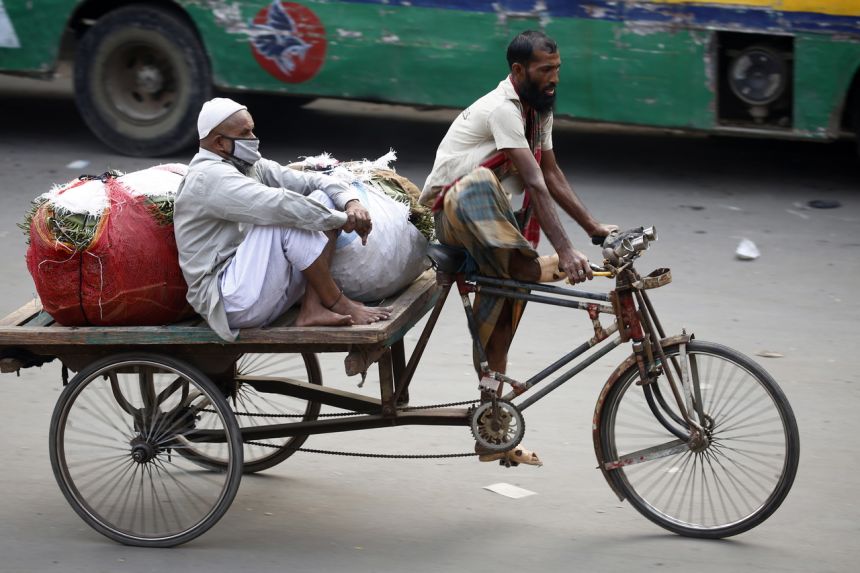
In monopolising the supply of vaccines against Covid-19, wealthy nations are threatening more than a humanitarian catastrophe: The resulting economic devastation will hit affluent countries nearly as hard as those in the developing world.

This is the crucial takeaway from an academic study to be released Monday (Jan 25). In the most extreme scenario – with wealthy nations fully vaccinated by the middle of this year, and poor countries largely shut out – the study concludes that the global economy would suffer losses exceeding US$9 trillion (S$12 trillion), a sum greater than the annual output of Japan and Germany combined.

Nearly half of those costs would be absorbed by wealthy countries like the United States, Canada and Britain.

In the scenario that researchers term most likely, in which developing countries vaccinate half their populations by the end of the year, the world economy would still absorb a blow of between US$1.8 trillion and US$3.8 trillion. More than half of the pain would be concentrated in wealthy countries.

Commissioned by the International Chamber of Commerce, the study concludes that equitable distribution of vaccines is in every country’s economic interest, especially those that depend most on trade. It amounts to a rebuke to the popular notion that sharing vaccines with poor countries is merely a form of charity.

“Clearly, all economies are connected,” said Professor Selva Demiralp, an economist at Koc University in Istanbul who previously worked at the Federal Reserve in Washington, and is one of study’s authors. “No economy will be fully recovered unless the other economies are recovered.”

Prof Demiralp noted that a global philanthropic initiative known as the ACT Accelerator – which is aimed at providing pandemic resources to developing countries – has secured commitments for less than US$11 billion toward a US$38 billion target. The study lays out the economic rationale for closing the gap. The remaining US$27 billion may, on its face, look like an enormous sum but is a pittance compared with the costs of allowing the pandemic to carry on.

The commonplace idea that the pandemic respects neither borders nor racial and class divides has been promoted by corporate chief executives and pundits. This comforting concept has been belied by the reality that Covid-19 has trained its death and destruction of livelihoods on low-wage service workers, and especially racial minorities, while white-collar employees have been able to largely work safely from home, and some of the world’s wealthiest people can ride out the pandemic on yachts and private islands.

But in the realm of international commerce, there is no hiding from the coronavirus, as the study brings home. Global supply chains that are vital to industry will continue to be disrupted so long as the virus remains a force.

A team of economists affiliated with Koc University, Harvard University and the University of Maryland examined trade data across 35 industries in 65 countries, producing an extensive exploration of the economic impacts of unequal vaccine distribution.

If people in developing countries remain out of work because of lockdowns required to choke off the spread of the virus, they will have less money to spend, reducing sales for exporters in North America, Europe and East Asia. Multinational companies in advanced nations will also struggle to secure required parts, components and commodities.

At the centre of the story is the reality that most international trade involves not finished wares but parts that are shipped from one country to another to be folded into products. Of the US$18 trillion worth of goods that were traded last year, so-called intermediate goods represented US$11 trillion, according to the Organisation for Economic Cooperation and Development.

The study finds that the continued pandemic in poor countries is likely to be worst for industries that are especially dependent on suppliers around the world, among them automotive, textiles, construction and retail, where sales could decline more than 5 per cent.

The findings add a complicating layer to the basic assumption that the pandemic will leave the world economy more unequal than ever. While this appears true, one striking form of inequality – access to vaccines – could pose universal problems.

In an extraordinary testament to the innovative capacities of the world’s most skilled scientists, pharmaceutical companies produced life-saving vaccines in a small fraction of the time thought possible. But the wealthiest countries in North America and Europe locked up orders for most of the supply – enough to vaccinate two and three times their populations – leaving poor countries scrambling to secure their share.

Many developing countries, from Bangladesh to Tanzania to Peru, will likely have to wait until 2024 before fully vaccinating their populations.

The initiative to supply poor countries with additional resources gained a boost as US President Joe Biden took office. The Trump administration did not contribute to the cause. Mr Biden’s chief medical officer for the pandemic, Dr Anthony Fauci, promptly announced that the United States would join the campaign to share vaccines.

In contrast to the trillions of dollars that governments in wealthy countries have spent to rescue companies and workers harmed by the health emergency and the wrenching economic downturn, developing countries have struggled to respond.

As migrant workers from poor countries have lost jobs during the pandemic, they have not been able to send as much money home, levelling a major blow to countries that have relied on these so-called remittances like the Philippines, Pakistan and Bangladesh.

The global recession has slashed demand for commodities, decimating copper producers like Zambia and Congo, and countries dependent on oil exports like Angola and Nigeria. As Covid-19 cases have soared, that has depressed tourism, costing jobs and revenue in Thailand, Indonesia and Morocco.

Many poor countries entered the pandemic with debt burdens that absorbed much of their government revenue, limiting their spending on healthcare. Private creditors have refused to participate in a modest debt suspension programme forged by the Group of 20. The World Bank and the International Monetary Fund both promised major relief but failed to produce significant dollars.

This, too, appears to be changing as new leadership takes over Washington. The Trump administration opposed a proposed US$500 million expansion of so-called special drawing rights at the IMF, a reserve asset that governments can exchange for hard currency. Mr Biden’s ascent has bolstered hopes among fund members that his administration will support the expansion. Democrats in Congress – now in control of both chambers – have signalled support for a measure that would compel the Treasury to act.

Still, in capitals like Washington and Brussels, the discussion about support for the developing world has been framed in moral terms. Leaders have debated how much they can spare to help the planet’s least fortunate communities while mostly tending to their own people.

The study challenges that frame. In failing to ensure that people in the developing world gain access to vaccines, it concludes, leaders in the wealthiest nations are damaging their own fortunes.

“No economy, however big, will be immune to the effects of the virus until the pandemic is brought to an end everywhere,” said Mr John Denton, secretary-general of the International Chamber of Commerce. “Purchasing vaccines for the developing world isn’t an act of generosity by the world’s richest nations. It’s an essential investment for governments to make if they want to revive their domestic economies.”

May 7, 2021 0 comments
0 FacebookTwitterPinterestThreadsBlueskyEmail
HeadlinesBusiness

U.S. Announces Priority Appointments for Student Visa Applicants

by Leading Reporters May 1, 2021
written by Leading Reporters

The U.S. Mission will prioritize student visa applicants and ensure Nigerian students resuming this Fall get visa interview appointments well in advance of their program start date.

U.S. Mission Country Consular Coordinator Susan Tuller announced on Friday that the Embassy in Abuja and Consulate General in Lagos will make every effort to assist student visa applicants in a timely fashion while keeping personnel and customers safe.

“As we continue to prioritize the health and safety of our staff and customers, processing student visas remains a high priority for the U.S. Mission in Nigeria,” Country Consular Coordinator Tuller said.

“We will increase the number of student visa appointments in May and June to ensure that we can offer appointments to as many students as possible.

If your U.S. studies are scheduled to begin this Fall, we encourage you to schedule your appointment as quickly as possible.”

Tuller explained that all student visa appointments must be booked through the U.S. Travel Docs website at www.ustraveldocs.com/ng/.

She warned applicants against the use of third-party services, including touts, and fixers who broker visa appointments.

According to her, agents or third parties often seek to benefit by charging a fee for their services and they may not always provide the correct information, which can harm an applicant’s chances of qualifying for the visa.

“Both Nigeria and the United States benefit when Nigerian students study at one of our world-class educational institutions.

To prepare for your U.S. educational opportunity, we encourage you to check out EducationUSA Advising Centers at our American Spaces in Abuja, Lagos, Ibadan, and Calabar, or at educationUSA.state.gov,” she added.

Nigeria sends more students to American colleges and universities than any other country in Africa and is the eleventh largest source worldwide of international students to the United States.

In academic year 2019-2020, a record-breaking number of nearly 14,000 Nigerians pursued graduate and undergraduate degrees in the United States.

Over the last 21 years, the EducationUSA Advising Centers in Nigeria have directly contributed to an increase in the number of highly qualified Nigerian applicants to U.S. institutions.

In 2020, advisees of EducationUSA services received scholarships worth $28 million.

Additional information on U.S. travel and student visas is available at travel.state.gov or ng.usembassy.gov.

May 1, 2021 0 comments
0 FacebookTwitterPinterestThreadsBlueskyEmail
Newer Posts
Older Posts

Recent Posts

  • Tinubu Nominates Ex-CDS Christopher Musa As Defence Minister

    December 2, 2025
  • Poor Toilets Driving GBV, School Dropouts – Wateraid

    December 2, 2025
  • BREAKING: FG Publishes List of 15 Alleged Terrorist Financers in Nigeria [SEE LIST]

    December 1, 2025
  • FG Proposes 40% Salary Increase for ASUU Lecturers

    December 1, 2025
  • Northern Governors Host Emergency Meeting Over Escalating Security Concerns

    December 1, 2025

Usefull Links

  • Contact Page
  • About Leading Reporters
  • Contact Us
  • Headlines
  • Investigation
  • Exclusives
  • Opinion
  • Business
  • Facebook
  • Twitter
  • Instagram
  • Linkedin

@2021 - All Right Reserved. Designed and Developed by PenciDesign


Back To Top
Leading Reporters
  • Featured
  • Politics
  • Opinion
  • Business
  • Entertainment
  • Sports
  • About Us
  • Contact