
Leading Reporters
  • Headlines
  • Health
  • Business
  • Exclusives
  • Investigation
  • Entertainment
  • Opinion
Tuesday, February 17, 2026
Hot
BREAKING: DSS Sues El-Rufai for Intercepting NSA Ribadu’s...
Major Health Crisis Plagues Dape, Karmo Residents As...
BREAKING: INEC announces timetable, schedule of 2027 elections
Aso Rock to disconnect from nat’l grid in...
Valentine’s Day: FG bans money bouquets, warns against...
INEC Proposes ₦873.78 Billion Budget for 2027 General...
Engine Failure: Passengers escape death as Arik Air...
Senate adopts electronic, manual transmission of election results
BURSTED: NSITF CEO MOVES On ₦297Billion Fund, Operates...
Peter Obi joins #OccupyNationalAssembly protest over electronic transmission...
  • About Leading Reporters
  • Contact Us
Leading Reporters
Advertise With Us
  • Headlines
  • Health
  • Business
  • Exclusives
  • Investigation
  • Entertainment
  • Opinion
Hot
BREAKING: DSS Sues El-Rufai for Intercepting NSA Ribadu’s...
Major Health Crisis Plagues Dape, Karmo Residents As...
BREAKING: INEC announces timetable, schedule of 2027 elections
Aso Rock to disconnect from nat’l grid in...
Valentine’s Day: FG bans money bouquets, warns against...
INEC Proposes ₦873.78 Billion Budget for 2027 General...
Engine Failure: Passengers escape death as Arik Air...
Senate adopts electronic, manual transmission of election results
BURSTED: NSITF CEO MOVES On ₦297Billion Fund, Operates...
Peter Obi joins #OccupyNationalAssembly protest over electronic transmission...
Leading Reporters
Leading Reporters
  • Headlines
  • Health
  • Business
  • Exclusives
  • Investigation
  • Entertainment
  • Opinion
Copyright 2024 - All Right Reserved
Home > United Nation
Tag:

United Nation

Africa & World

Corruption Exposed: Musk vows to sell Tesla stock if UN shows the World how $6B solve world hunger

by Leading Reporters November 9, 2021
written by Leading Reporters

But it must be open source accounting, so the public sees precisely how the money is spent.— Elon Musk

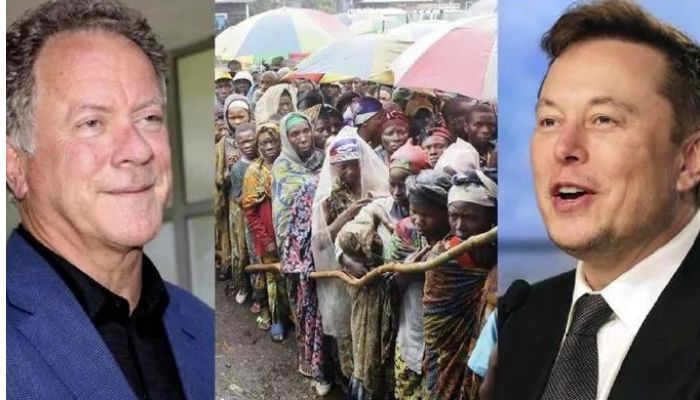
The statement from the richest person in the world came after a UN executive challenged Elon Musk and some other billionaires in an interview to help end starvation in the world.

Elon Musk, the richest person in the world, has said he will sell $6 billion worth of Tesla stock and donate the proceeds to the United Nations’ food agency if it could show how the money would solve world hunger.

The SpaceX founder posted on Sunday on Twitter: “If WFP can describe on this Twitter thread exactly how $6B will solve world hunger, I will sell Tesla stock right now and do it.”

“But it must be open source accounting, so the public sees precisely how the money is spent,” he added.

His statement came after UN World Food Programme Executive Director David Beasley challenged Musk, Amazon founder Jeff Bezos and other billionaires in a CNN interview last week, calling on them to step up on “a one-time basis” to help end starvation.

In the interview, Beasley said billionaires could give ”$6 billion to help 42 million people that are literally going to die if we don’t reach them.” “It’s not complicated,” he said.

That money would be approximately 2% of Musk’s fortune, nearly $300 billion, according to Forbes. 

His wealth and the wealth of many American multi-billionaires has grown quickly during the Covid-19 pandemic, thanks to increased stock and home equity, even more than before the virus struck.

But it must be open source accounting, so the public sees precisely how the money is spent.— Elon Musk (@elonmusk) October 31, 2021

Beasley responded to Musk on Twitter, writing $6 billion will not solve world hunger,

“but it WILL prevent geopolitical instability, mass migration and save 42 million people on the brink of starvation”

An unprecedented crisis and a perfect storm due to Covid/conflict/climate crises.”

He also offered to meet with Musk to discuss the topic.

“Please publish your current & proposed spending in detail so people can see exactly where money goes,” Musk said in a Twitter reply. “Sunlight is a wonderful thing.”

It remained unclear Monday whether a meeting will be set.

In 2020, the UN had received $8.4 billion in donations, which it says was $5.3 billion short of its requirements. Its top donors include the United States, Germany and the United Kingdom.
November 9, 2021 0 comments
0 FacebookTwitterPinterestThreadsBlueskyEmail
Headlines

Nigerians are getting poorer contrary to Buhari’s claim

by Leading Reporters August 2, 2021
written by Leading Reporters

The good people of Nigeria will remain very poor for a long time to come, the 2021 report of the United Nations (UN) Sustainable Development Goals (SDGs) revealed.

Nigeria’s chances of achieving Goal 1 of the SDGs, which is the attainment of zero poverty among its people by the year 2030, appear slim, as the country’s poverty headcount is soaring high still, instead of reducing. 

The latest sustainable development report ranked Nigeria low at the 160th position out of 165 countries. The leadership of countries all over the world, through the UN, had committed themselves to achieve all the 17 SDG goals by the end of 2030.

The SDG report revealed that the Nigerian government is not effective at all in lowering poverty among its people if it is making any effort at all. Instead, the leadership in Nigeria is supervising increasing poverty in the country. 

Data showed that 43% of Nigeria’s estimated 206.1 million population is living below the lowest poverty threshold which is $1.90 a day. That is to say, more than 4 out of every 10 Nigerians live on less than N779, using the Central Bank of Nigeria’s official exchange rate of N410.

The outcome of the poverty headcount is far worse when it is based on the next international poverty threshold of $3.20. The UN data revealed that 74% of the country’s population survive on less than $3.20 or N1,312 a day. That means according to international standards, more than 7 persons out of every 10 Nigerian are poor. 

The recent SDG 1 figures present Nigerians as poorer than their fellow Africans in four other African countries from the North, South, East and West of the continent, namely Egypt, South Africa, Kenya and Ghana.

“In the last two years we lifted 10.5 million people out of poverty” True or False?

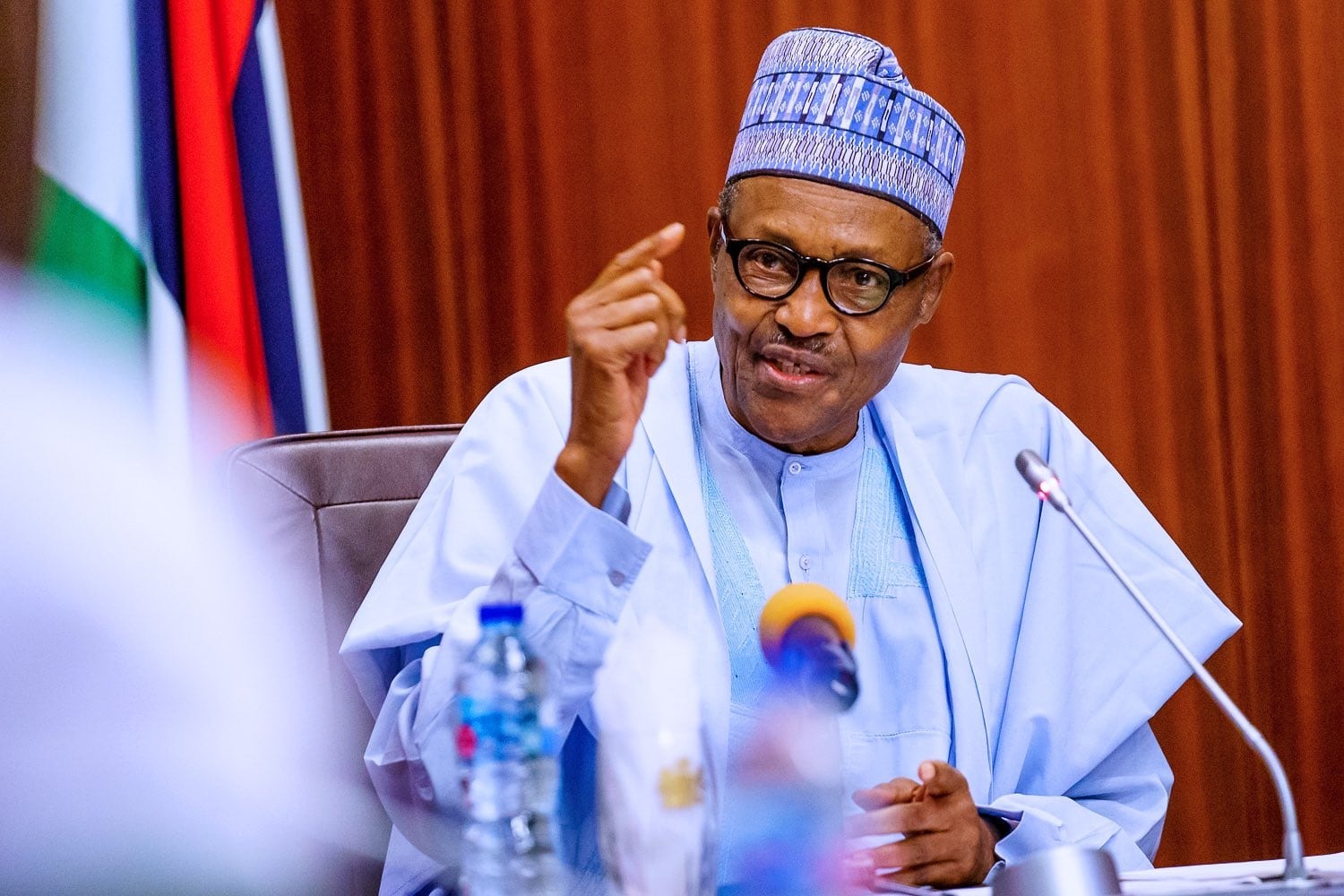
In his democracy speech on June 12, 2021, President Buhari claimed that his administration has lifted 10.5 million Nigerians out of poverty in the last two years. However, the Sustainable Development Report says the contrary. In fact, data showed that more people slipped into poverty within this period, either using the $1.90 or $3.20/day poverty threshold.

Nigeria’s poverty headcount ratio at $3.20 rose from 68.7% in 2018 to 70% in 2019. It further increased to 73.22% in 2020. These increasing incidents of poverty, particularly in the Buhari administration and the government’s denial of the same casts doubt on its ambitious plans to lift 100 million Nigerians out of poverty in 10 years. 

Not only this, just like the country did not achieve the Millennium Development Goals’ (MDGs) poverty targets by 2015, it might also be one of the countries that may not attain goal one of the SDGs by 2023, given its ever-increasing unemployment and inflation rate – two economic factors that prevent access to income and devalue people’s hard-earned income.

Between 2010 and 2020, Nigeria’s unemployment rate rose five-fold, from 6.4% in 2010 to 33.3% in 2020. According to a report by the Nigerian Economic Summit Group, the rise in the number of unemployed people is expected to push more people into the poverty trap, going forward. 

Already, inflation has pushed millions of Nigerians below the poverty threshold. The World Bank revealed this in its recent Nigeria Development Update report, noting that inflationary pressure pushed about 7 million Nigerians below the poverty line in 2020 alone.

The foregoing evidence from data suggests that unemployment and inflation contribute to extreme poverty in Nigeria, and together pose a major challenge for Nigeria in ending poverty – goal one of the SDGs. This is aside from the impact the COVID-19 may have had not only on Nigeria but the global community in achieving the SDGs. Acknowledging the effect of the global pandemic on the SDGs, the United Nations Secretary General noted that “the current crisis is threatening decades of development gains,… and throwing progress on the SDGs even further off track”

To get back on track to achieve Goal 1 of the SDGs, the government may need to adopt more effective economic measures, particularly in reducing the unemployment rate and inflationary pressure. 

August 2, 2021 0 comments
0 FacebookTwitterPinterestThreadsBlueskyEmail
Business

CBN needs bankable policy to reduce Nigeria’s $1.5 billion import bill on Wheat

by Leading Reporters May 27, 2021
written by Leading Reporters

Nigeria boasts of 34 million hectares of arable land area, with about 6.5 million hectares for permanent crops. Little wonder, Agriculture serves as the country’s main driver of the economy after oil.

But despite the goodies in the sector, the country imported wheat worth N2.2 trillion in the last four years.

According to data from the Food and Agriculture Organization (FAO) of the United Nations, Nigeria has witnessed low wheat yields amidst declining production in the last ten years. Within the period, the wheat area harvested reduced significantly. It also propelled the wheat yield to drop to the level of 10,678 hectograms (100 grams) per hectare (Hg ha) in 2018, the lowest since 1991 and one of such decline ever.


Between 2010 to 2019, wheat production was also on free fall, dropping to the range of 60,000 tonnes per annual from 165,000 tonnes production capacity in 2011. These staggering statistics (area farmed, yield, production) are the reasons why the country imported about 98 per cent of its total consumption. By implication, there are a vast population (market) but less capacity to produce one of its significant interest crops.

Why so much dependence on import Nigeria’s Minister of Agriculture and Rural Development, Mr Sabo Nanono, recently identified seeds’ unavailability as one major factor hampering investment and low production in the wheat value chain. He, however, said the ministry would provide quality seeds and agricultural inputs to Nigerian farmers.

Challenges facing the value chain include limited access to improved seed varieties, high production cost, inadequate irrigation infrastructure, insufficient funding systems, lack of a cohesive national strategy on wheat development, and unclear role of government and other stakeholders. These challenges factored in how Africa’s biggest economy managed to produce an average of 107,000 tonnes of wheat between 2001-2014. Africa produces more than 25 million tons of wheat on 10 million hectares (Mha) of land area, per FAO. Ethiopia and South Africa account for the largest production area with 1.7 Mha and 0.5 Mha, respectively.

Nigeria ranks low compared to other African peers in area harvested, yield, and production of wheat. While South Africa, Kenya and Ethiopia harvested hundreds of thousands of arable land, Nigeria only harvested on an average of 70,000 to 80,000 per annum.

What factors responsible for low local production
The reasons for low local production can be categorised into two main areas; technical and economic challenges. Analysis of the FAO data for sub-Saharan Africa showed that these factors influence farmers’ low yields in Nigeria’s wheat market. In 2011, when Nigeria harvested 128,992 hectares, its recorded peak production levels at 165,000 tonnes.

On the technical side, farmers in Nigeria have limited access to improved seed varieties, fertilizers & chemicals, high cost of production, and inadequate irrigation infrastructure, often leading to low yields. On the economic side, lack of investment opportunities, insufficient funding systems for research, and lack of a coordinated national strategy resulted in Nigeria’s dependence on imported wheat to meet its large population’s growing demands.

A Financial Derivatives Company’s report cited insecurity in Nigeria’s wheat belt, the lack of mechanized and modernized farming techniques, and uncompetitive pricing as challenges facing low wheat production.

Similarly, the International Food Policy Research Institute attributed a lack of policy support and support from international organisations to be responsible for low domestic production.

Low yield propels lack of investment despite the massive market for wheat in Nigeria, a perennial low yield often leads to low revenue and profits. This situation discourages the cultivation of wheat by farmers.

They instead divert their funds into more rewarding agricultural produce. Several reports, including direct comments from farmers, have decried the government’s lack of commitments as one significant factor. Due to this, farmers have shifted focus towards the cultivation of rice, while bakers go after imported wheat because it is cheaper.


A look at the 2011 figure of the FAO data showed that yield dictates the propensity for investment (Area farmed/harvested). Also, the area planted, in turn, determines output (production). A classic case is Ethiopia’s wheat value chain, which shows consistency in growth in the last decade. The country’s healthy production is influenced by its continued investment in seeds, fertilizers, and mechanization, according to the OECD-FAO Agricultural Outlook 2018-2027.


Presently, Nigeria has no actionable policy for its wheat market. The Anchor Borrowers’ Programme (ABP) captured wheat production, but the approach was mere paperwork for wheat farmers. Alhaji Salim Mohammed, the National President of the Wheat Farmers Association of Nigeria (WFAN), told Dataphyte that there is no specific outlined policy for Nigeria’s wheat market. He said both the FMA&RD and CBN have no serious concern about it. Wheat is an essential grain belonging to the grass family. When milled into flour, it makes a wide range of foods, including bread, noodles, pasta, biscuits, cakes, cookies, pastries, cereal bars, sweets and crackers. On another aspect, it is one of the most common grains which serve as feed for livestock. Research also suggests grain improves the calcium and energy status of cows to help them in transition.

Per a report by Emerald, Nigeria’s wheat importation stood at 4.2 MMT on average annually, costing $1.5 billion in import bill. For Nigeria to grow its wheat market, it needs to close the production gap and reduce the import bill as essential ingredients for best agric practices. These include improvement in seedlings, mechanizations, commercial agriculture, addressing insecurity in the North-East, a significant zone for Nigeria’s wheat.

The central bank and policymakers can also learn from Ethiopia and Egypt’s wheat value chain by giving full attention to crop production to ensure food security. The Nigerian Bureau of Statistics (NBS) recent report shows that crop production remains a significant portion of Nigeria’s GDP. In the fourth quarter, the Nigerian economy grew by 0.11% (year-on-year) in real terms, representing the first positive quarterly growth in the last three quarters. Quarter-on-quarter, crop production grew by 3.42 per cent compared to 1.39 per cent in Q3, nearly double the increase.

Investment and funding are also critical factors in expanding the wheat value chain, especially by supporting Lake Chad Research Institute in research and development to improve wheat seeds.

May 27, 2021 0 comments
0 FacebookTwitterPinterestThreadsBlueskyEmail

Recent Posts

  • BREAKING: DSS Sues El-Rufai for Intercepting NSA Ribadu’s Phone

    February 16, 2026
  • APC Senator Seeks 16-Year Single Tenure for Nigeria’s President

    February 16, 2026
  • Major Health Crisis Plagues Dape, Karmo Residents As Dust Pollution From AMAC Road Project Chokes Residents

    February 16, 2026
  • BREAKING: INEC announces timetable, schedule of 2027 elections

    February 13, 2026
  • Aso Rock to disconnect from nat’l grid in March – Perm Sec

    February 12, 2026

Usefull Links

  • Contact Page
  • About Leading Reporters
  • Contact Us
  • Headlines
  • Investigation
  • Exclusives
  • Opinion
  • Business
  • Facebook
  • Twitter
  • Instagram
  • Linkedin

@2021 - All Right Reserved. Designed and Developed by PenciDesign


Back To Top
Leading Reporters
  • Featured
  • Politics
  • Opinion
  • Business
  • Entertainment
  • Sports
  • About Us
  • Contact