Leading Reporters
  • Headlines
  • Health
  • Business
  • Exclusives
  • Investigation
  • Entertainment
  • Opinion
Tuesday, January 27, 2026
Hot
FCTA Workers, NLC Storm Industrial Court, Demand Wike...
DisCos reject FG’s free meter plan
Nigerian-born nurse loses licence in Australia for sleeping...
BREAKING: Kano Gov Abba Yusuf dumps NNPP
National Grid Collapse For First Time in 2026
BREAKING: Tinubu approves posting of Ambassadors to U.S.,...
Insecurity: Kidnappers demand 17 motorcycles for release of...
FG to Abolish Hnd-Degree Dichotomy, Allow Polytechnics to...
AFCON Initiative drives stronger Nigeria Morocco cooperation
Obasanjo: I’ll Never Stop Having Children
  • About Leading Reporters
  • Contact Us
Leading Reporters
Advertise With Us
  • Headlines
  • Health
  • Business
  • Exclusives
  • Investigation
  • Entertainment
  • Opinion
Hot
FCTA Workers, NLC Storm Industrial Court, Demand Wike...
DisCos reject FG’s free meter plan
Nigerian-born nurse loses licence in Australia for sleeping...
BREAKING: Kano Gov Abba Yusuf dumps NNPP
National Grid Collapse For First Time in 2026
BREAKING: Tinubu approves posting of Ambassadors to U.S.,...
Insecurity: Kidnappers demand 17 motorcycles for release of...
FG to Abolish Hnd-Degree Dichotomy, Allow Polytechnics to...
AFCON Initiative drives stronger Nigeria Morocco cooperation
Obasanjo: I’ll Never Stop Having Children
Leading Reporters
Leading Reporters
  • Headlines
  • Health
  • Business
  • Exclusives
  • Investigation
  • Entertainment
  • Opinion
Copyright 2024 - All Right Reserved
Home > UNICEF
Tag:

UNICEF

Headlines

Africa CDC, UNICEF Collaborate On Vaccine Production And Immunization

by Nelson Ugwuagbo March 1, 2024
written by Nelson Ugwuagbo

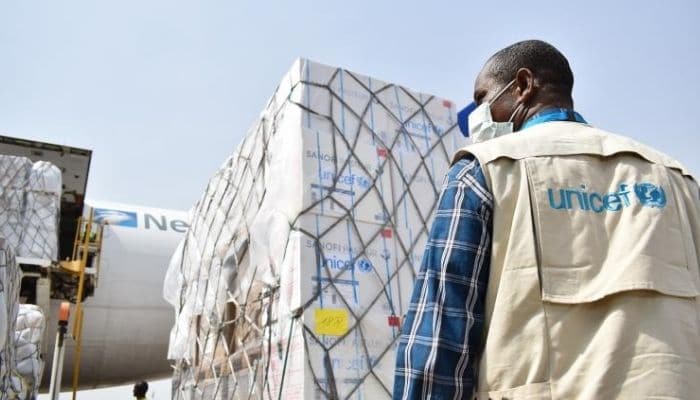
The Africa Centres for Disease Control and Prevention and the United Nations International Children’s Emergency Fund have signed an extended partnership dedicated to strengthening primary healthcare, supply chain management, pooled procurement and local manufacturing, and emergency response in Africa.

The collaboration builds on the 2022-2024 Partnership Framework Agreement between the Africa CDC and the UNICEF, which aims to achieve the goals outlined in the African Union Agenda
2063: The Africa We Want.

The partnership which was extended to 2027 is expected to have a significant impact on public health in Africa by strengthening procurement and supply chain systems, with a particular focus on immunisation for children across the continent.

Immunisation is one of the most effective public health interventions globally. However, millions of African children are still deprived of life-saving vaccinations.

The 2023 UNICEF’s State of the World’s Children vaccination report revealed that 12.7 million children were under-vaccinated in 2021, including 8.7 million who did not receive a single dose, also called “zero-dose” children.

The expanded partnership between the Africa CDC and the UNICEF signifies a concerted effort to address Africa’s pressing health challenges.

By prioritising immunisation, strengthening health systems, and promoting local production, both organisations are poised to make sustainable impacts on the health and well-being of children and communities across the continent while safeguarding Africa’s health security.

A joint press statement from the Africa CDC and UNICEF on Thursday noted that the Director General of Africa CDC, Dr Jean Kaseya and the UNICEF Deputy Executive Director for Humanitarian Action and Supply Operations, Ted Chaiban, signed the expanded partnership agreement in Addis Ababa.

It said the COVID-19 pandemic exposed the fragility of many healthcare systems and highlighted deficiencies and challenges in medical supply chains.

It also noted that while countries with strong primary healthcare systems were better able to cope, the disruption caused by the pandemic left others facing shortages of vital medical commodities.

“Over the next four years, Africa CDC and UNICEF will work together to establish robust institutional backing for supply chain management and enhance pooled procurement mechanisms to fortify Africa’s healthcare infrastructure, ensuring timely and adequate access to essential medical supplies for its population,” it said.

DR Kaseya said, ‘‘The partnership will optimise supply chain management, operationalise the pool procurement mechanism for Africa CDC, empower community health workers, and advance local manufacturing. Ultimately, these efforts will strengthen immunisation systems and reduce outbreaks and epidemics on the continent.”

Chaiban said, “This partnership is a commitment to the well-being of children and their families, affirming their right to health. By strengthening our partnership with Africa CDC and the Joint Emergency Action Plan for Africa, we can ensure communities get the support they need without delay.

“The push forward on paid and protected community health workers, medical supplies made in Africa, for Africans, remains one of our highest priorities.”

The statement also highlighted UNICEF and Africa CDC have achieved significant milestones in strengthening Africa CDC’s institutional capacity and catalysing community health programmes, immunisation systems, emergency response, and supply chain enhancement in the past two years.

“Collaborative efforts secured the procurement of COVID-19 vaccine doses and essential cold chain equipment for routine immunisation. Joint high-level advocacy initiatives focused on immunisation, community health, and response to public health emergencies.

“Africa imports 99 percent of its vaccines and 70 to 90 percent of its medicines and medical devices, which is a significant challenge. Africa CDC aims to achieve sustainable production and supply of essential health commodities through African manufacturers, considered Africa’s second independence by Africa CDC.

“Africa CDC’s goal is to work with African Union Member States and partners to actively advocate for and support the procurement of vaccines made in Africa and prioritise initiatives that strengthen local manufacturing.

“Through the Partnership for Vaccine Manufacturing, Africa CDC aims to manufacture 60 percent of the
continent’s vaccine needs by 2040, paving the way toward robust and self-reliant health systems, ensuring that people can obtain and use health commodities when and where required,” it added.

March 1, 2024 0 comments
0 FacebookTwitterPinterestThreadsBlueskyEmail
Headlines

International Day of the Girl-Chid: No Digital Revolution Without Nigerian Girls – One Day Minister

by Folarin Kehinde October 11, 2021
written by Folarin Kehinde

Kenny Folarin, Abuja

14 year Old Dorcas Joshua has said that there can not be a digital revolution without access to the digital world by the Nigerian Girls.

Joshua while speaking in Abuja on Monday at the commemoration of the 2021 International Day of the Girl-Child in Abuja that noted there is a huge gender divide in access to digital literacy in favour of boys and as such, digital revolution therefore cannot be without Nigerian girls.

Joshua expressed concern over the poor transition of the Girl-Child from the lower basic education to the upper basic education.

Joshua explained that 58 per cent for the northern states of Kano, Katsina, Kebbi, Sokoto and Zamfara are affected, the national average for girls’ transition from primary to junior secondary stands at 64 percent, a record which is unacceptable.

She added that girls’ enrollment, and transition, continue to be jeopardized and even where enrolled, girls are less likely than boys to complete secondary education due many obvious reasons.

She however assured that she will in her own capacity ensure that more secondary schools are built in all states to match the number of
girls graduating from primary schools with maximum of 2 km distance from their homes.

Also ensure school connectivity to internet with modern facilities for all Nigerian children, increase investment in education to close the gender digital divide and Invest in knowing more about girls’ and young women’s digital realitiand supporting the learning solutions that is fit for their digital world.

“Invest in knowing more about girls’ and young women’s digital realitiand supporting the learning solutions that is fit for their digital world, support safe spaces for girls such as Girls for Girls (G4G) groups adolescent girls in schools.

Also support mentoring and Life skills in schools especially for girls and work with community based structures especially Traditional
Religious leaders in addressing social and gender norms in the society.

UNICEF, Innovation Manager, Mr Minu Limbu stated that over 1.3 million Nigerian adolescent girls are estimated to drop out every year before reaching the last year of lower secondary school.

Limbu explained that the gender digital in connectivity, access to devices and the skills to use are real but girls are less privileged in this area.

He disclosed that on digital access, in low and middle income countries such as Nigeria, more than 50% of women are offline, and 20% less likely than men to own a smart phone.

He therefore ask for improved access to digital skills and other life skills by girls for transition to secondary education.

October 11, 2021 0 comments
0 FacebookTwitterPinterestThreadsBlueskyEmail
Health

Donate COVID-19 Vaccine To Poor Countries Or Risk Resurgence UNICEF Ambassadors Tell G7 Countries

by Leading Reporters June 11, 2021
written by Leading Reporters

Ahead of G7 Leaders Summit in the UK this weekend, joint letter urges G7 leaders to share at least 20 per cent of available COVID-19 vaccine doses

UNICEF Goodwill Ambassadors Priyanka Chopra Jonas, David Beckham, Katy Perry, Orlando Bloom, Whoopi Goldberg, Angélique Kidjo, and Liam Neeson have joined an extraordinary call by 28 high-profile UNICEF Ambassadors and Supporters demanding that G7 leaders commit to donating doses of COVID-19 vaccines to poorer countries now.

The open letter, published today ahead of the three-day G7 Leaders’ Summit (Friday 11-Sunday 13 June) in Cornwall, UK, urges G7 leaders to commit to sharing a minimum of 20 per cent of COVID-19 vaccine dose supply urgently, to reduce the risk of the virus spreading further and the threat of mutant strains.

Ramla   Ali, Fernando Alonso, David Beckham, Orlando Bloom, José Manuel Calderón, Sofia Carson, Gemma Chan, Priyanka Chopra Jonas, Olivia Colman, Billie Eilish, Pau Gasol, Whoopi Goldberg, David Harewood, Sir Chris Hoy, Angelique Kidjo, Téa Leoni, Lucy Liu, Juan Manuel López Iturriaga, Ewan McGregor, Alyssa Milano, Andy Murray, Liam Neeson, Liam Payne, Katy Perry, Sergio Ramos, Claudia Schiffer, Teresa Viejo and P!nk joined UNICEF in calling on G7 world leaders to donate doses and ensure fair and equitable vaccine supply to low- and middle- income countries.

“The world has spent a year and a half battling the COVID-19 pandemic, but the virus is still spreading in many countries and producing new variants with the potential to put us all back where we started,” the letter reads. “This means more school closures, more healthcare disruptions, and greater economic fallout – threating the futures of families and children everywhere.”

The letter goes on to warn that COVAX, the global initiative supporting poorer countries in gaining access to vaccines, is already facing a shortfall of 190 million doses, and proposes that, in order to help cover this shortfall, G7 countries donate 20 per cent of their vaccines between June and August – over 150 million doses – as a temporary stopgap measure to compensate for this shortfall.

Recent data analysis provided by Airfinity, the life sciences research facility, and commissioned by the UK Committee for UNICEF (UNICEF UK), indicates that G7 nations could do so without significant delay to current plans to vaccinate domestic adult populations.

“As a UNICEF Goodwill Ambassador I believe in the crucial benefit of vaccinations,” said David Beckham, UNICEF Goodwill Ambassador. “The pandemic won’t be over until it’s over everywhere, so it’s vital that all communities around the world have fair access to Covid-19 vaccines urgently.”

UNICEF is also warning that without urgently ensuring fair and equitable access supply, the world will continue to be at risk of deadly virus mutations – like the devastating second wave of COVID-19 sweeping across India and other South Asian countries including Nepal, Pakistan and Afghanistan.

“The crisis at home in India and across the region of South Asia is devastating. This deadly surge of Covid-19 is placing an enormous strain on health facilities across India, with hospital beds, essential medical supplies and oxygen running out. It’s also of huge concern to all of us at UNICEF to hear about children falling ill with this new variant – while many are also losing parents and left alone and at risk, unable to access critical health care, vaccinations and education,” said Priyanka Chopra Jonas, UNICEF Goodwill Ambassador.

“The crisis in India shows why we must act now to avoid further deadly mutations ravaging low- and middle- income nations around the world. UNICEF and its COVAX partners are ensuring vaccines and treatments reaches the world’s most vulnerable populations, but cannot do it alone. A clear solution to this is G7 countries committing to sharing their surplus COVID-19 vaccine doses immediately with the countries whose health workers and vulnerable populations need them the most,” said Priyanka Chopra. “That’s exactly why I’ve joined my fellow UNICEF Goodwill Ambassadors in signing this letter, urgently asking G7 leaders to make this commitment at the UK summit this week, to keep families and children everywhere safe from COVID-19.”

Finally, the letter argues that “this weekend’s G7 Summit is a vital opportunity for you to agree the actions that will get vaccines where they are most needed, fast…” and urges leaders to set out a roadmap to scale-up donations as supplies increase, noting that forecasts suggest as many as one billion doses may be available for donation by year end.

“Countries need not choose between fighting the disease at home or fighting it abroad. We can, and must, do both simultaneously – and immediately,” said Henrietta Fore, UNICEF Executive Director.

“This is a pivotal time in the fight against COVID-19, as leaders meet to set priorities for what form this fight will take in the coming weeks and months. I am pleased so many UNICEF supporters are joining our call for emergency support for COVAX, so we can continue to wage this fight globally. After all, the disease is not respecting boundaries on a map. Our fight to get ahead of the virus, and its variants, should not either,” said Henrietta Fore.

June 11, 2021 0 comments
0 FacebookTwitterPinterestThreadsBlueskyEmail
Life Style

36% Of Nigerian Married Women Suffer Emotional, Sexual, Physical Violence – Experts

by Leading Reporters June 4, 2021
written by Leading Reporters

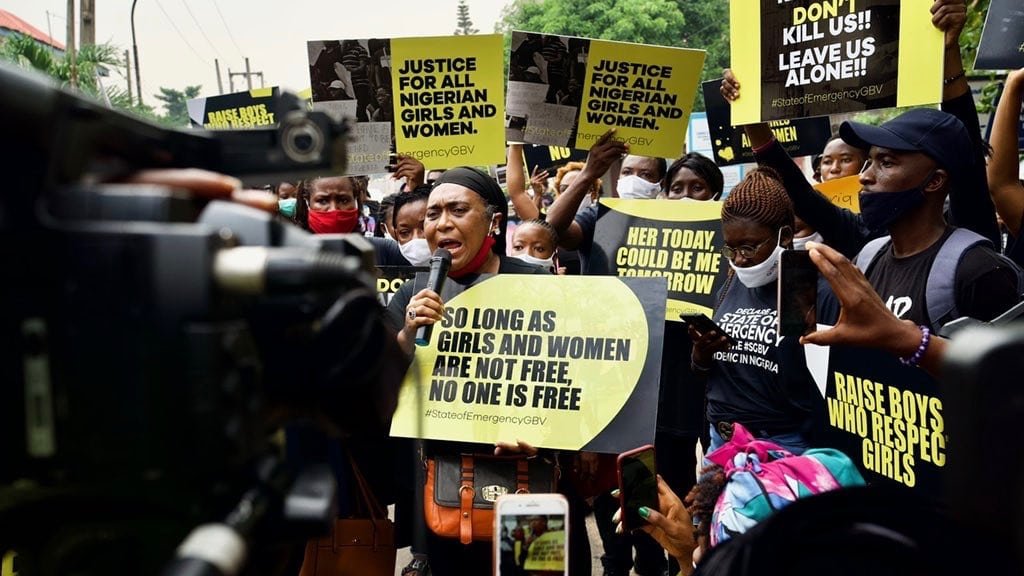
Stakeholders in the campaign against gender-based violence against women and girls, on Wednesday raised the alarm over increasing cases of  Violence Against Women And Girls, VAWG,

Disclosing 36 per cent of ever-married women have experienced physical, sexual or emotional violence in the hand of their spouses while 1 in 4 girls have equally experienced sexual violence.

In Lagos alone, a total of 455 cases of child protection concerns were recorded in one year.

Disclosing these and more during the opening of a 4 -day Media Dialogue with Journalists on Ethical Reporting and  Advocacy to Eliminate Violence Against Women And Girls jointly organised by Spotlight Initiative Nigeria, Federal Ministry of Information and Culture in partnership with the United Nations Children’s Fund, UNICEF, they lamented that the perpetrators of this violence against the women were mostly spouses and intimate partners.

In her submission, the Coordinator, Spotlight Initiative Lagos, Foluke Omoworare said violence was rarely an isolated incident and majority of children surveyed experienced violence in the home.

Continuing, she said the most affected are women and girls with disabilities who are twice likely to experience violence of any form.

Speaking, an Assistant Director, Lagos State Ministry of Youth and Social Development, Mrs Olasunbo Daniel who also raised concern over cases of violence against women and girls said, the child protection unit has attended to 455 cases of child protection concerns in the last one year.

According to her, the state has activated a surveillance response team into local governments in the state, Imorodu and Yaba, to escalate the reporting of gender-based violence cases in the grassroots to authorities for proper management of the issues.

Earlier, the Chief of Operations, UNICEF Lagos, Muhammad Okorie said violence against women was a global issue, adding that, the trend was threatening women’s achievement of their full potential.

” Before 25 years, a girl must have been violated either sexually or physically. If we do not end violence against women, we can reduce it to the nearest minimum.”

He said the 4 day training for journalists was to ensure that the country ends violence against women and girls..

”The media has a vintage position to reach a larger audience since they have more access through their report to speak to stakeholders.”

On his part, the Director, National Orientation Agency, Lagos, Mr Waheed Ishola said the media dialogue was to beam the spotlight on women and girls as well as address the negative socio-cultural norms attached to reporting cases of violence.

Ishola identified some of the perceived reasons for prevalence of abuse of women and girls to include, poverty, indecent dressing among adolescent girls, missing parental care, quest for money, fame and political position by women.

Others he listed are, neglect of family values, inability of men to manage their home, illicit drug/substance abuse, ritualistic purposes, and fear of stigmatization.

June 4, 2021 0 comments
0 FacebookTwitterPinterestThreadsBlueskyEmail
Health

UNICEF: $1 Billion More Needed For COVAX COVID-19 Vaccine Rollout

by Leading Reporters March 11, 2021
written by Leading Reporters

The UNICEF on Wednesday urged countries to contribute more money to help poor countries to access Coronavirus (COVID-19) vaccines, saying around $1 billion was needed.

UNICEF, the world’s single largest vaccine buyer, is part of the World Health Organisation-backed COVAX programme to supply COVID-19 shots to emerging economies.

“We have been asking the world for more funding for UNICEF and our distribution to countries we still need about $1 billion,” UNICEF Executive Director Henrietta Fore said at Dubai’s World Government Summit.

That funding could be used to strengthen health systems in poorer nations and support the distribution of vaccines there, she said.

The COVAX initiative aims to deliver at least 2 billion COVID-19 vaccine doses this year, including 1.3 billion doses to lower-income countries.

Fore urged vaccine makers to sign licensing agreements so vaccines could be made locally, singling out Africa as one market that needed it.

She also said it was unlikely that the COVAX scheme would be able to cover the world in 2021.

“There is still more to do and we could do with more help and assistance,” Fore said. 
[22:33, 10/03/2021] Kenny Hod New: Silence Of Rape Victims Helping Sexual Violence Boom In Nigeria – NHRC

The silence of victims of sexual assaults has been identified by the National Human Rights Commission, as one of the reasons Sexual and Gender-Based Violence (SGBV) thrive across Nigeria.

NHRC’s Executive Secretary, Tony Ojuku Esq. who disclosed this at a meeting in Rivers State, said unless victims summon the courage to report such unsavory incidents to relevant authorities, those who engage in abominable behaviors like SGBV may not stop.

In a statement made available by NHRC’s Deputy Director Public Affairs, Fatimah Agwai Mohammed, on Wednesday, Ojukwu noted that the commission was currently handing 40 related cases in the state, adding it would ensure that justice was served.

However, he advised others who were in similar situation across the country not to remain silent but be rest assured that the Commission’s panel would give them a voice as well as change the narrative of allowing sexual assaults perpetuators go free.

“Sexual and gender-based violence is a human problem which even though affects both sexes weigh heavily against women and girls.

“SGBV has been booming in Nigeria because most victims do not come out to speak for fear of stigma and discrimination, coupled with the lack of remedy for victims,” he added.

Furthermore, Ojukwu urged traditional and religious leaders to come out hard on those engaged in SGBV as that would send a strong message to others.

“Traditional and religious leaders are frustrating our fight on SGBV because they use cultural and traditional practices to settle cases which in itself encourages perpetrators to commit more sexual violence,” he added.

The UN Initiative has a mandate to end all “forms of violence against women and girls by 2030” and it has about €500 million seed funding commitment aimed at helping it achieve its objective globally.

March 11, 2021 0 comments
0 FacebookTwitterPinterestThreadsBlueskyEmail

Recent Posts

  • FCTA Workers, NLC Storm Industrial Court, Demand Wike Sack

    January 26, 2026
  • DisCos reject FG’s free meter plan

    January 26, 2026
  • Nigerian-born nurse loses licence in Australia for sleeping on duty

    January 24, 2026
  • AI may outsmart humanity in five years — Musk

    January 24, 2026
  • BREAKING: Kano Gov Abba Yusuf dumps NNPP

    January 23, 2026

Usefull Links

  • Contact Page
  • About Leading Reporters
  • Contact Us
  • Headlines
  • Investigation
  • Exclusives
  • Opinion
  • Business
  • Facebook
  • Twitter
  • Instagram
  • Linkedin

@2021 - All Right Reserved. Designed and Developed by PenciDesign


Back To Top
Leading Reporters
  • Featured
  • Politics
  • Opinion
  • Business
  • Entertainment
  • Sports
  • About Us
  • Contact