Leading Reporters
  • Headlines
  • Health
  • Business
  • Exclusives
  • Investigation
  • Entertainment
  • Opinion
Sunday, January 25, 2026
Hot
Nigerian-born nurse loses licence in Australia for sleeping...
BREAKING: Kano Gov Abba Yusuf dumps NNPP
National Grid Collapse For First Time in 2026
BREAKING: Tinubu approves posting of Ambassadors to U.S.,...
Insecurity: Kidnappers demand 17 motorcycles for release of...
FG to Abolish Hnd-Degree Dichotomy, Allow Polytechnics to...
AFCON Initiative drives stronger Nigeria Morocco cooperation
Obasanjo: I’ll Never Stop Having Children
JUST IN: Bandits abduct over 100 worshippers in...
Nigeria’s Non-oil exports hit record $6.1bn – NEPC
  • About Leading Reporters
  • Contact Us
Leading Reporters
Advertise With Us
  • Headlines
  • Health
  • Business
  • Exclusives
  • Investigation
  • Entertainment
  • Opinion
Hot
Nigerian-born nurse loses licence in Australia for sleeping...
BREAKING: Kano Gov Abba Yusuf dumps NNPP
National Grid Collapse For First Time in 2026
BREAKING: Tinubu approves posting of Ambassadors to U.S.,...
Insecurity: Kidnappers demand 17 motorcycles for release of...
FG to Abolish Hnd-Degree Dichotomy, Allow Polytechnics to...
AFCON Initiative drives stronger Nigeria Morocco cooperation
Obasanjo: I’ll Never Stop Having Children
JUST IN: Bandits abduct over 100 worshippers in...
Nigeria’s Non-oil exports hit record $6.1bn – NEPC
Leading Reporters
Leading Reporters
  • Headlines
  • Health
  • Business
  • Exclusives
  • Investigation
  • Entertainment
  • Opinion
Copyright 2024 - All Right Reserved
Home > Tony iredia
Tag:

Tony iredia

OpinionHeadlines

Nigeria’s insecurity: One impeachment not enough

by Leading Reporters July 31, 2022
written by Leading Reporters

By Tonnie Iredia

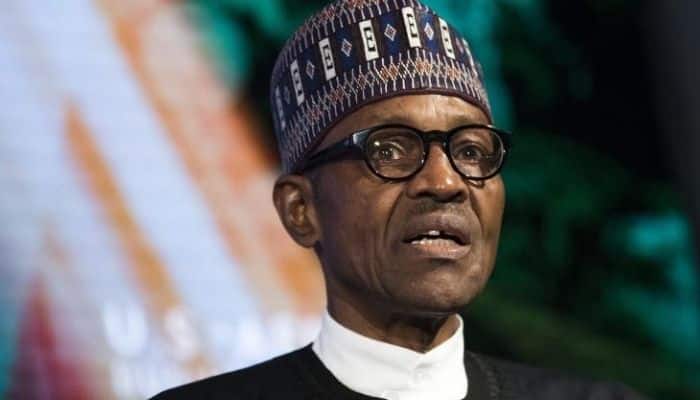
Over 80 senators across political parties and a majority of House of Representatives members, have reportedly agreed to begin impeachment proceedings against President Muhammadu Buhari, if the growing insecurity across the nation persisted beyond the next six weeks. It was a rather stern ultimatum given by the federal legislators on the eve of their departure to a 2-month vacation. Anyone who thinks the legislators are ready for a hard time with the executive needs to take a second look at their subsisting posture which portrays them as members of a rubber stamp legislature.

They actually showed the turf they are made up of when in line with their feeble outlook, they allowed as long as six weeks for the presidency to make amends not withstanding that they had had cause more than once to show ample frustration over the prosecution of the fight against insurgency and every form of insecurity in the land.  

Senator Call To Impeach President Buhari


No empirical reason was given for how the ultimatum of six weeks was arrived at; making it appear that it was influenced by their desire to avoid a disruption to their vacation. With the rash of attacks which led to several killings in the last few weeks, one would have expected the representatives of the people to put off their vacation for now so as to squarely face the severe issue of widespread fear and anxiety in the nation. It was an error of judgment that the legislators kept to their schedule of incessant vacations at this crucial point.

Time there was when Nigerian legislators cut short their vacation to deal with what they often called “urgent matters of national importance” even though such matters were essentially always about their welfare. So, not many people are able to comprehend why our legislators faithfully go on vacation as if it is one of their critical functions.  Besides, the same legislators do not only enjoy every public holiday, they usually go away for weeks before and after every holiday for which  other public officers enjoy no more than the two days officially declared for it
 
The National Assembly has a constitutional right to follow the impeachment process it is threatening to invoke and we are not anxious to dispute their power but if the recent tough talks end up only as half-hearted sermons, the legislature would merely place the nation in jeopardy. To start with, it is difficult to understand why the minority leader of the House of Representatives, Ndudi Elumelu was begging his colleagues to take advantage of their long holiday to stay away from what has become the highly unsafe Abuja. The plea no doubt unveils many posers.

First, was Elumelu encouraging legislators to abandon Nigerians who have no option but to stay in the location?  Second, bearing in mind that there is hardly any safe place today, where precisely would legislators who buy the plea head to? On at least two occasions, in the last couple of weeks, the city of Owo in Ondo state has been attacked twice. In Niger state, the media reported no fewer than 12 villagers abducted last Tuesday by suspected gunmen in Shaddadi village in the Mariga Local Government Area of the state.  Would legislators leave Abuja for any of these volatile areas or would those of them from Enugu state prefer to go home to nearby Ozalla town where the Actors Guild of Nigeria raised alarm the other day of the alleged kidnap of two veteran film stars who had gone missing after they left a movie location in the state?
 
If Elumelu’s plea to legislators is taken as a joke, from a leader not generally given to frivolity, many analysts would be on the same page with  Idris Wase, Deputy Speaker who accused the minority leader of playing politics with the lives of citizens. However, Wase’s sharp reaction is a sign that at the appropriate time, disagreements may as usual displace the seeming consensus of legislators on the nation’s grave insecurity.

Indeed, many of them would stay away from voting as they did during the crucial issue of the bill on electronic transmission of election results. Some other lawmakers might choose to pay lip service to the so called impeachment proceedings by supporting it during debates and rejecting it during voting as they did while considering the numerous pro-women bills. Already, in spite of the claim by Senator Smart Adeyemi that the impeachment threat was bipartisan, at least one member of the House of Representatives from Imo state, Chike Okafor has vowed that lawmakers of the ruling All Progressive Congress APC will resist any attempt to impeach the president by those he described to be grandstanding just to be noticed by their constituents
 
This unpredictable disposition of some legislators to the subject was already visible within the National Assembly on the day of the threat. Senate President Ahmad Lawan, was not comfortable with the subject and objected to its discussion on the floor of the senate. About seven other senators, that reportedly included Opeyemi Bamidele and Gabriel Suswam were also said to have shared Lawan’s sentiment. It was perhaps the unpredictable environment created by their ambivalence that influenced the reaction of the presidency to the impeachment that those behind the threat were merely “performative, babyish and playing to the gallery.” The reaction can hardly be dismissed as every wrong the legislators wish to blame Buhari for, exposes their own unquantifiable contributory negligence. A National Assembly whose leadership stated unequivocally from the beginning that they would approve whatever the president presented to them cannot be seen at this point to be isolating the same president. If impeachment is an option, it cannot affect only one side.
 
There is much for which the nation can justifiably blame the legislature concerning the worsening insecurity in our clime. More often than not, this column has had to berate our legislature for the simple reason that its power to check the executive is hardly done with the interest of the nation in mind. Huge sums of monies were appropriated for the military to combat insecurity with no evidence that the funds were used for the purposes for which they were approved. How come the relevant committees of the National Assembly were never able to use oversight to identify lapses in military spending? The former service chiefs under the leadership of General Gabriel Olonisakin were accused by many of misappropriation of funds, yet it was only after the team left office that legislators started summoning their successors to appear to brief them on the state of affairs. Even the opportunity our lawmakers had to interrogate the team during their screening for their new appointments as ambassadors was frittered away in pursuit of shadows.
 
The legislature also distracted the president many times especially in its passage of convoluted budgets. It became so much that at the signing of this year’s budget,, Buhari was constrained to openly condemn what he described as “worrisome changes” to the budget by the National Assembly. The changes amounted to N378.9 billion covering   460 duplicated items inserted in the budget – a figure that has 144 items more than the 316 items inserted in last year’s budget. To make matters worse, many of the projects were surreptitiously placed under MDAs that have no bearing with them. For example, the sum of N67.8 million for the construction of “Gun Armouries” was found in the budget of the Ministry of Environment which is not a security organization. Interestingly, the blame game is never extended to the unwholesome initiatives of those that have a final say in the preparation of the budget
 
It is true that Nigerians have endured enormous pains in the last few years. It is also true that as the overall boss of the nation, the president ought to take much of the blame on the basis of vicarious liability. But considering that much of what has gone wrong in Nigeria is criminal, no one can be held to account for the crime committed by others. This is why the current threat of impeachment of the president is too narrow. Nigerians should clamour for the removal of all conniving public office holders.

July 31, 2022

July 31, 2022 0 comments
0 FacebookTwitterPinterestThreadsBlueskyEmail
Opinion

Let’s watch APC’s 22 transactional senators

by Folarin Kehinde July 3, 2022
written by Folarin Kehinde

By Tonnie Iredia

President Muhammadu Buhari has met with some 22 senators of the All Progressives Congress (APC) who were reportedly aggrieved over the outcome of the recent party primaries to select flagbearers of the party for the 2023 general elections.

Before the meeting, there was a report that the senators were planning to defect from the party. The chief whip of the senate, Orji Uzor Kalu led his colleagues to the meeting which took place last Tuesday at the State House in Abuja.

Interestingly, it would appear that all that the president did was to appeal to the senators to exercise restraint in the interest of the party. Kalu later explained that the meeting was successful and that the issue of defection of the senators had been laid to rest.
 
The details of the grievances of the senators other than that they were unhappy with their party primaries were not made known. Also not made public were the exact promises made to them by the president which placated them enough for them to jettison the much publicized plan to quit the party.  

Let no one tell us that such details were purely internal party matters because if they were, we should not have been told in the first instance about the defection plan and why the meeting was arranged to distract the president from his busy governance issues. In any case, did all the 22 senators have exactly the same grievance and why were other senators able to win their own primaries?
 
Quotes by the media from the president’s prepared speech on the occasion, suggested that what assuaged the feelings of the senators consisted of a) an opportunity to be part of a meeting at the flamboyant council chambers, b) an address by the president himself and c) a group photograph with the president.

The ease with which the alleged issue at stake was resolved tended to give the impression that none of the 22 senators had any point. They only wanted to be returned to the senate on the basis of automatic ticket, without regards for the provisions of the new Electoral Act which had made it hard for them to face stiff competition from their rivals.

As transactional politicians, they had looked forward to their continued stay in the senate so as to hold-on to huge material benefits accorded Nigeria’s federal legislators whose individual remuneration surpasses that of the American president.
 
Indeed, there was nothing the president said that the senators were unaware of. For instance, the president spoke about the importance of a level-playing field, which was no longer an issue for discussion after the primaries. Besides, the senators themselves had made huge efforts to pass a bill that was tilted in their own favour but which fate frustrated.

It is also obvious that senators are too senior within the hierarchy of the party to be brought together for the president to persuade on the importance of the party’s bigger picture.

In addition, their national chairman senator Abdullahi Adamu who had earlier met with them had made a similar appeal.  Could it be that they wanted to hear it from the president himself or was it that they had expected some concrete rewards or ‘approvals’ which did not happen?
 
Analysts who are familiar with the nature of Nigeria’s electoral system know that APC’s transactional senators had nowhere to go, otherwise they would have followed the option of other senators who defected to opposition parties to get tickets to contest the 2023 elections.

According to media reports, no less than 13 members of the Senate defected from the APC to various opposition parties. Among them were: Senate leader, Yahaya Abdullahi (Kebbi North), Adamu Aliero (Kebbi Central), Ahmad Babba-Kaita (Katsina-North), and Francis Alimikhena (Edo-North) who defected to the PDP while Dauda Jika (Bauchi-Central); Lawal Gumau (Bauchi-South), and Ibrahim Shekarau (Kano-Central) defected to NNPP.

The defections surprised no one because the superiority of personal interest over loyalty to a political party by politicians is well known.  How many of the 22 senators started off in the APC?   
 
It is to be hoped that in an attempt to placate senators who claimed to have dropped their defection plans, the APC would not overheat the polity by displacing those who won their primaries.

Already, there has been tension over the Yobe North and Akwa Ibom Northwest senatorial districts where efforts had been made to substitute some candidates. Not many in the polity have been able to comprehend how aspirants who were part of the presidential primaries held between June 6 and 8, 2022 could also have been part of the senatorial elections held earlier on May 27, 2022. Perhaps APC leaders had imagined that some winners could be persuaded to step down.

Unfortunately, the new law does not allow the old order where party supremacy was used to coerce members into submission; now a member must voluntarily withdraw in writing from the process before he or she can be replaced.
 
The issue of the moment now is the plan by some losers to blackmail officials of the Independent National Electoral Commission (INEC) in the attempt to illegally replace some candidates.

Aides and lawyers of the privileged candidates are now busy accusing some electoral officials of partisanship. In the Akwa Ibom case, it has been argued that the resident electoral commissioner deliberately went to the wrong venue of the repeat primaries.

They forgot that he was in that same ‘wrong’ venue with the state commissioner of police. Was the latter also partisan? Again, the nation is yet to know the infraction that necessitated a repeat primary election. Instead, great efforts have been made to educate the public on the importance of party supremacy and how primary elections are the internal affairs of a political party.

This is simplistic because it forgets that Nigeria’s failed elections in the past were largely caused by poor internal democracy processes which now required INEC to ensure that the conduct of primaries follows extant rules.
 
There is also the viewpoint that a resident electoral commissioner (REC) is not a member of INEC but just an INEC representative in a state and that only INEC’s determination is valid. We are also told that it is only the judiciary and not INEC that has power to reject a party nomination.  

This is a smart legal argument that has always been used to weaken our societal institutions by those who often claim that when elected to power they would strengthen societal institutions.

In other parts of the world, administrative bodies are empowered to act while courts can review how such bodies exercise their powers.  

In Nigeria, politicians prefer to have public agencies that have no powers or discretion but mere on-lookers. Such an approach had in the past over-burdened the judiciary leading to the type of judgement in which a governorship candidate declared by our supreme court as winner of an election had more votes than available voters.

How can INEC which monitored primaries accept submissions that are made to her which contradict the results of the primaries she monitored?
 
As we prepare for the 2023 general elections it is time to appeal to our politicians that it is not only those that previously won primaries or general elections that would continue to be victorious in fresh political contestations.

Whenever a candidate loses an election, he or she should recognize that someone has to be in the opposition for democracy to grow. It is the role of the opposition to create a shadow cabinet that would keep the government in power in check.

The transactional approach of always wanting to be in government can lead to a one-party state which is not different from dictatorship.

It is worse when those in power manipulate elections so as to remain in power. INEC, must never allow politicians whose only focus is to remain in power by all means to divide its ranks because such politicians are only political traders and nothing more.  
    
July 3, 2022

July 3, 2022 0 comments
0 FacebookTwitterPinterestThreadsBlueskyEmail
Opinion

Much Ado About Nigeria’s Electoral Law

by Folarin Kehinde December 26, 2021
written by Folarin Kehinde

The dominant story in today’s Nigeria is the fate of the nation’s latest electoral bill. The decision of President Muhammadu Buhari to return the bill to the National Assembly un-assented to, on account of the provision on compulsory direct mode of party primaries, has continued to elicit diverse reactions.

While a few people are rationalizing the President’s reasoning, very many are quite upset by the high degree of political uncertainty which the subject has created for the country. At about the same time, there has been a spark in the level of vicious killings in different parts of the country particularly the Northern Region. Considering the primacy of the right to life among all freedoms, one would have thought that Nigerians would not bother much about the electoral act.

But that has not been the case because our politicians have over the years successfully made politics the main agenda of the nation; nothing else appears to matter. As a result, the electoral bill diverted attention from the more profound latest killings of 47 people in Kaduna, North-West, Nigeria among others.

The intriguing thing is that many Nigerians are bothered about elections even though they know that there is hardly any politician in the country that is sincerely interested in elections let alone those that are free and fair. They just want to get into office. Under the circumstance, what is the real value of our electoral law? Many of those in support of or against the President’s failure to assent to the electoral bill are merely motivated by self-interest.

As events have shown, the initial belief that state governors were against direct primaries can no longer be sustained in view of the posture of governors such as Kayode Fayemi (APC, Ekiti) and Samuel Ortom (PDP, Benue). Yet, many governors are vehemently opposed to direct primaries. As for law makers, the situation is the same. Although the bill emanated from the legislature, not all members are truly in support of direct primaries.

Those who saw it as an opportunity to reduce the power and influence of their governors and thereby led the support group have fizzled away within the twinkle of an eye. Indeed, the threat to collect signatures to override the President’s veto which on the first day of the threat reportedly rose above 70 was merely theoretical.

In truth, the problem with the electoral bill is not the mode of primary elections, the real fear as some people have observed has since 2015 remained the electronic transmission of election results. With it, rigging is made more difficult to achieve, hence whatever can be done to keep it away would be strongly canvassed or surreptitiously inserted in a law.

The argument that direct primaries would expand participation and give ownership of the voting process to the people is misconceived because the mode like its indirect counterpart, can be subjected to manipulation and used to achieve ignoble goals. As we saw in the recent Anambra governorship election, the mode was ‘used’ by the ruling All Progressive Congress APC, to select flag bearers for the contest which at the end produced contentious results that the judiciary has now invalidated.

It can therefore be argued that the last minute smuggling of a compulsory mode of direct primaries into the electoral bill was done with the understanding that its controversial nature will make it impossible for the bill to see the light of day. The schemers appeared to have done some deep forecasting. One of the arguments that direct primaries would be expensive to handle was expected to be countered by the explanation that no matter the cost, it is well if it is successfully rigged. It was however forgotten that it is the parties that would bear the cost.

They and not INEC are the ones to select and secure venues, print ballot papers and other logistics while INEC is only to monitor the primaries. But why will legislators who are themselves politicians deliberately weaken their parties by dictating how they should be subverted? Does that not run counter to the wishes of the same politicians that parties should be allowed to manage their internal affairs? This contradiction suggests that many politicians are not really interested in any form of control or indeed, any electoral law. They only want to rig elections which explains why they always scheme to destabilize INEC.

Politicians have continued to give the impression that there is no law which empowers INEC to transmit results electronically; whereas, on March 26, 2015, President Goodluck Jonathan signed into law an amendment to the Electoral Act which stated that “Voting at an election under this Act shall be in accordance with the procedure determined by the Independent National Electoral Commission.”

What is the difference between this amendment by Jonathan and all the pretensions by legislators since 2015 of working on a bill that can empower INEC to transmit results in any particular manner? This is why we have argued that Nigerian legislators have always taken the Nigerian people for a ride without consequences. They do not even want an independent electoral commission that would handle an election as a game that is played by its rules. Our premise therefore is that, if the main contention in Nigeria today is transparency of the conduct of elections in which the votes of the electorate are allowed to count, we do not need any amendment to the 2015 provision stated above.

Besides, why should Nigerians continue to tolerate politicians who scheme to control the nation’s electoral body notwithstanding its constitutionally guaranteed independence? At first, the struggle was to foist on INEC, an election time table determined by the legislature. It failed. The next scheme which also failed was the attempt to subordinate INEC to some communication entity. Now that the people have overwhelmingly demanded the electronic transmission of results, the schemers are trying to kill the Electoral Act as a whole so that what they detest the most, does not survive.

There are at least two therapies here. First, there is nothing in the Nigerian Constitution which empowers anybody to supervise INEC. Consequently, any attempt to make a law purportedly for the good governance of the country but which in any way seeks to direct INEC is illegal. Second, the current INEC led by Professor Mahmood Yakubu has courageously declared, close to a dozen times this year, that nothing can stop her from electronic transmission of election results. Instead, Yakubu insists that INEC will “continue to deepen the use of technology in the conduct of elections, especially the electronic transmission of polls results and the Bimodal Voter Accreditation System (BVAS).”

Read Also: Boring legal cases against Governor Obaseki

The cost of handling the process INEC has designed for elections is quite high. Only a few days ago, the commission put her needs at N305 billion. Many people are already unhappy with expending such huge sums on elections. As observed by the South-West Zone D of the National Association of Nigerian Students NANS, “the country might not be able to manage the implications of such expenditure during a precarious economic climate.” Should we in all honesty push INEC to spend more to monitor primaries? If an election is a game such as football, is it the duty of the referee to guide a team to select its players?

Why are we looking forward to mature political parties that can effectively and efficiently handle their internal matters while at the same time insisting on directing them on how to select their flag bearers? Could it be that we are unable to depart from the military’s transition to civil rule political programme of old where the electoral body was made to draw up party manifestos and constitutions? If not, what is this game of allowing candidates whose elections were conducted by INEC into the legislature to later produce bogus instruments in the name of electoral law that obstructs free and fair elections? It is certainly time to talk less of electoral law in Nigeria.

Tonnie O. Iredia

December 26, 2021 0 comments
0 FacebookTwitterPinterestThreadsBlueskyEmail

Recent Posts

  • Nigerian-born nurse loses licence in Australia for sleeping on duty

    January 24, 2026
  • AI may outsmart humanity in five years — Musk

    January 24, 2026
  • BREAKING: Kano Gov Abba Yusuf dumps NNPP

    January 23, 2026
  • National Grid Collapse For First Time in 2026

    January 23, 2026
  • BREAKING: Tinubu approves posting of Ambassadors to U.S., UK, others

    January 22, 2026

Usefull Links

  • Contact Page
  • About Leading Reporters
  • Contact Us
  • Headlines
  • Investigation
  • Exclusives
  • Opinion
  • Business
  • Facebook
  • Twitter
  • Instagram
  • Linkedin

@2021 - All Right Reserved. Designed and Developed by PenciDesign


Back To Top
Leading Reporters
  • Featured
  • Politics
  • Opinion
  • Business
  • Entertainment
  • Sports
  • About Us
  • Contact