Leading Reporters
  • Headlines
  • Health
  • Business
  • Exclusives
  • Investigation
  • Entertainment
  • Opinion
Wednesday, February 11, 2026
Hot
Engine Failure: Passengers escape death as Arik Air...
Senate adopts electronic, manual transmission of election results
BURSTED: NSITF CEO MOVES On ₦297Billion Fund, Operates...
Peter Obi joins #OccupyNationalAssembly protest over electronic transmission...
Tension As Popular Gospel Singer, 3 crew members...
2027: Wike Establishes Radio Station For Tinubu Campaign...
2026 budget: Borno Govt allocates N150m to feed...
Former NEXIM MD bags 490-year jail term
Three Die as Lassa Fever Breaks Out in...
EFCC Arrests Kannywood Actress for Using Naira to...
  • About Leading Reporters
  • Contact Us
Leading Reporters
Advertise With Us
  • Headlines
  • Health
  • Business
  • Exclusives
  • Investigation
  • Entertainment
  • Opinion
Hot
Engine Failure: Passengers escape death as Arik Air...
Senate adopts electronic, manual transmission of election results
BURSTED: NSITF CEO MOVES On ₦297Billion Fund, Operates...
Peter Obi joins #OccupyNationalAssembly protest over electronic transmission...
Tension As Popular Gospel Singer, 3 crew members...
2027: Wike Establishes Radio Station For Tinubu Campaign...
2026 budget: Borno Govt allocates N150m to feed...
Former NEXIM MD bags 490-year jail term
Three Die as Lassa Fever Breaks Out in...
EFCC Arrests Kannywood Actress for Using Naira to...
Leading Reporters
Leading Reporters
  • Headlines
  • Health
  • Business
  • Exclusives
  • Investigation
  • Entertainment
  • Opinion
Copyright 2024 - All Right Reserved
Home > Tonnie Iredia > Page 2
Tag:

Tonnie Iredia

OpinionHeadlines

Is N100m for presidential nomination not prohibitive?

by Leading Reporters April 24, 2022
written by Leading Reporters

By Tonnie Iredia

It is futile to argue with some Nigerians on any matter in which they have an interest or which they have cause to suspect might favour them even if tangentially. All that those in doubt of this conclusion need to do is to watch people on television marshaling points in support of any subject. They forcefully leave no stone unturned.

Those who do this are usually talented in public speaking or are senior lawyers especially those who have firm knowledge not only of the provisions of the Nigerian Constitution but the exact sections, subsections and schedules of relevant provisions. For instance, when the issue of defector-governors arose, they argued in support of the defectors eloquently sermonizing on the difference between law and morality adding that what matters is law. Those of us who often drew attention to the spirit of the law in querying unwholesome political behaviours were shocked a few days ago to see the pro-technicality analysts taking sides with us to condemn the decision of government to pardon convicted former governors Dariye and Nyame. It was as if no one remembered that our Constitution provides for state pardon. So, is it all about winning an argument or publicity consciousness?

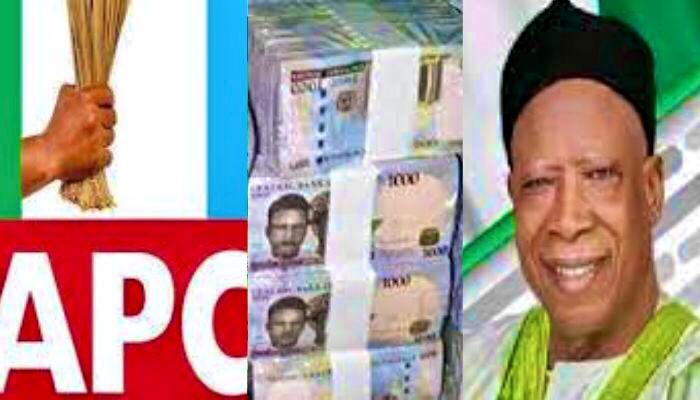
Against this backdrop, my immediate reaction to the decision of the ruling All Progressives Congress APC to sell its nomination forms to presidential aspirants at the cost of One hundred million naira (N100m), was that it would not be difficult at all to find Nigerians who would instantly generate reasons to justify the apparent prohibitive cost. No surprises as the defences have since begun. To start with, there is already the argument that politics is capital intensive and that anyone who cannot raise the amount would not be strong enough to be President of the largest country in Africa. In fact, the argument that the funds can be raised with ease has already been proven. For example, two Abia state businessmen – Ukaegbu James and Nnanna Kalu have signified their intention to provide N200m to buy forms for two federal legislators, namely, Senate President Ahmad Lawan and the Chief Whip of the Senate, Orji Uzor Kalu. However, the public perception is that the two beneficiaries can afford to buy their own forms because as senators they are among the richest public office holders in the country

One candidate who is not likely to have any problem whatsoever in getting the form is Asiwaju Bola Ahmed Tinubu whose supporters are now competing for who will be the first to raise the amount. As soon as the figure was announced, the Asiwaju Project Beyond 2023 reportedly raised the amount and announced that “we will be storming the secretariat soon to get the form for him.” On his part, the Director General of the Tinubu Support Organization (TSO) Aminu Suleiman said he had already signed a cheque for the amount rendering unnecessary, the previous pledge of N10m made by some youths under the aegis of the Tinubulate Nigeria Agenda (TINA). Senator Kabiru Gaya, Chairman of the Progressive Project (TPP), the umbrella organization of Osinbajo support groups had similarly vowed to purchase the nomination form for Vice President Yemi Osinbajo. A pro-youth group, the North Central Coalition for Leadership (NCCL) had also planned to buy a form for another APC presidential aspirant, Governor Yahaya Bello of Kogi state. It is therefore obvious that the strategy which all the aspirants used in getting different groups to earnestly beg them to show interest in next year’s presidential contest, would be deployed again to make the same support groups to announce their readiness to buy forms for their preferred aspirants. Such donors or perceived fronts are aiming to be the next set of cabals in the corridors of power come 2023.

A second argument put forward in support of the rather high figure of N100m is that the calculation took into account the current realities in which everything has increased. Petroleum products especially kerosene and diesel, foodstuffs, government loans, bandits’ attacks, ASUU strikes, petroleum subsidy, poverty etc. have all gone up astronomically. The fear in some quarters however is that the exorbitant cost of nomination forms for elections can be counter-productive. If nothing else, it will shut out some aspirants with good ideas which are greatly needed for national development. Politicians are probably the only ones comfortable with heavy expenses on politics and elections. Indeed, those of them in the legislature had earlier ensured that they legalized huge election expenses. In the new Electoral Act, they jacked up spending ceilings from between 150 to 400 per cent. Yet, nothing was done to halt the old order where political parties always breached the rule requiring them to disclose their electoral expenditures to the Independent National Electoral Commission (INEC). This brands the advocacy for high cost of nomination forms as self-serving.

Party leaders in particular are quite comfortable with the high cost of nomination forms because it gives them opportunity to generate ample funds for running their political parties. Putting it aptly, the new publicity secretary of the ruling party, Felix Morka had argued that Nigeria was yet to get to the level where party members would faithfully pay membership dues for running the party. It would therefore mean that the costs of nomination forms across board are that high because this is the ideal time for collecting revenues from elusive members. The truth therefore is that party leaders are anxious to secure huge party finances to put an end to the practice of going cap in hand to beg elected office holders to come to their rescue on a monthly basis. The situation could be worse where a party loses an election and would therefore have no elected office holders in their party to look up to for assistance.

The debate on whether the huge cost of nomination forms is prohibitive or not is fruitless because for quite some time nothing has shown that an increase in finances affects our people positively. Even the revenue from nomination forms could be squandered because some party members believe that the struggle for party offices is usually influenced by the desire of party leaders to help themselves to such funds. The same is true of government finances. Only last week, the House of Representatives’ Adhoc Committee investigating the state of the nation’s refineries had to raise an alarm over suspected sharp practices on the subject. The Committee is bothered that after allegedly spending $3.7 billion on repairs, none of the refineries has been restored to any level of functionality. Yet, neither the Minister of State for Petroleum Resource, Timipre Sylva nor the Group Managing Director of the Nigerian National Petroleum Company Limited, Mele Kyari responded to calls by the Committee to throw light on the situation What the above narrative suggests is that instead of bickering over the cost of nomination forms, our civil society groups should rise up now to vote against non-performers. I

t is time to stop playing the victim and behaving as if citizens are hopeless and helpless the way Ekiti state pensioners projected themselves the other day. With an unpaid N37.8billion gratuities and pensions, Ekiti pensioners last Thursday began a prayer session seeking God’s face for swift intervention for the payment of their entitlements. If the pensioners come together to vote against the political party that placed them in their present predicament in the next governorship elections holding two months away, no state government would toy with them in the future. In other words, this is not a time to bother about the cost of nomination forms; it is also not the time for protests concerning poor governance, rather it is time to use the ballot to tell political leaders that they are elected to represent the people and not to turn them into objects instead of the subject of democracy. It is certainly not a time to beg leaders who previously failed to institute good governance to once more join the next race. Nigerians must take their nation’s destiny in their own hands.
April 24, 2022.
April 24, 2022 0 comments
0 FacebookTwitterPinterestThreadsBlueskyEmail
OpinionHeadlines

What Soludo should avoid as Anambra Governor

by Leading Reporters March 20, 2022
written by Leading Reporters

By Tonnie Iredia

Charles Chukwuma Soludo, the new governor of Anambra state is a well-known reformer in Nigeria’s public sector. He had served creditably as governor of the Central Bank of Nigeria (2004-9) and only those who refused to renew his appointment after the Obasanjo years know what criteria they used to stop Nigeria from continuing to benefit from the services of pragmatic Soludo.

Each time I met him in those days when we were in government, I always subconsciously imagined that he deservedly possessed what Warren Bennis identified as features of strategic leadership, namely: Vision, Passion and Integrity. Bennis was the man who invented leadership as a business idea and whose legacy has since been honored with a prize for the best articles on leadership every year in the Harvard Business Review. If nothing else, Soludo showed ample visionary leadership in his reformist agenda at the CBN. Will he be able to extend same to Anambra state?

Listening to his inauguration speech last Thursday, it was obvious that Governor Soludo had mastered the strategy for arriving at the location he envisages Anambra ought to be some 4 years ahead. A few minutes after the inauguration, he began an active governance project starting appropriately from Okpoko – a local community empirically determined as the weakest link in the state which had been abandoned over the years.

Part of those who waited to receive the new governor there were: several heaps of refuse along with street traders and sweepers who could not immediately fathom what sanctions their lethargy would attract. The starting point no doubt resonated a number of institutional statements; first, that everywhere will be touched and second that it was time for everyone to work in view of the transparent leadership by example posture of the first 48 hours of Soludo’s tenure.

The governor’s occupational antecedents of executing every project with a commercial mindset would certainly impact greatly on the state. One obvious advantage of the mindset is that just as an increase in revenue generation would be easily quantifiable, many intangible goals would similarly be transparently recorded as profits in the sense of democracy dividends. Under the circumstance, there are a legion of things governor Soludo needs to watch or avoid.

The first is that although the ‘spoils system’ which patronizes party members who played active roles in elections is followed across the globe, Governor Soludo must not allow his party to pressure him to appoint unqualified persons into critical positions in which they can hardly add value to society. The same is true of the awards of contracts for several works which must be channeled to only persons and firms that have cognate experience in each venture. This would encourage first class jobs.

One way of doing this is to sensitize party leaders on the qualifications and competences for each position/project so as to drastically reduce the nomination of misfits for any assignment. An area where party members often agitate to make contributions centres around arrangements for internally generated revenue. Here, the ingenuity of officials at all levels should never be underrated. For example, the existence of receipts for payments does not in our system guarantee the destination of the payments. They may still end up (in the case of markets and parks), in private pockets of individuals and union officials. In today’s world of technology, Soludo is certainly fully aware of the many platforms devoid of bureaucracy that can secure revenue because funding is key to successful project execution

Anambra is one of the states greatly affected by insecurity hence Soludo’s determination to work towards ending senseless killings of his people particularly able-bodied youths. But while his plan to aggregate the efforts of all stakeholders in the attainment of peace is salutary, he should avoid making the mistake of some of his colleagues who converted state security to individual affair.

Government must at all times be seen to be playing the pivotal role because that is its primary purpose. Arguments such as everyone should defend himself does not only validate state abdication from its primary responsibility, it also gives an impression that the state has tacitly emboldened criminal elements to freely operate. In addition, political leaders must stop showing more interest in political meetings and social events while overlooking security breaches that result in fatalities. The life of every citizen should matter.

Most importantly, Soludo should avoid distractions. For example, he should be cautious about the numerous meetings of the Nigerian Governors’ Forum which as a body has long lost its usefulness. Since when Jonathan’s government recognized the governor with 16 followers as the leader of the forum instead of the one with 19 followers, the forum has been distracted from its original goal of serving as a tool for peer review. It has indeed broken into partisan segments. However, the All Progressives Grand Alliance (APGA) to which Soludo belongs, does not have other governors and as such will not be tempted to create an APGA Governors’ Forum for partisan politics. Besides, the governor has no business serving as the leader of the party which would pull him unnecessarily into the unending Nigerian electioneering during governance. As soon as a candidate is elected governor, he translates into a statesman and the father of the entire state and not a leader of his party which in any case is merely a design for channelling government funds into party coffers.

It is logical to assume that having served as CBN governor, the quest by Soludo to become a state governor was altruistically to make his state – Anambra, greater than it has been. He is therefore in a different position from many politicians who struggle to become senators after having served as governors or ministers. Thus, Soludo has no business distracting himself. As Anambra governor, it would be a tragedy if Soludo later defects to another party so as to win a second term election or to get any corrupt practices covered for him as we see of many defectors who proffer absurd reasons for such conduct. A governor who performs brilliantly in his first term, hardly needs a second term to put his name in gold; his salary is free for him, so is his feeding and accommodation. He therefore has no need to run from pillar to post for reelection because with a sincere performance, a second term is virtually guaranteed.

The nation certainly looks forward to standards to be set in Anambra during Soludo’s tenure. Unlike many political leaders, he needs to abide by the letter and spirit of the constitution. He should avoid the practice of frustrating the existence of a local government system of government. Accordingly, it is wrong to do as many others have done to constitute party loyalists into the state’s “independent” electoral commission to conduct fake elections just as it is immoral to use whatever strategy to divert local government funds. Anambra state legislature as a distinct arm of government should be allowed to function freely. Consequently, there would be no need to bribe the legislators to pass any bills. If these are followed and Anambra becomes a reference point in our clime, credit would go to governor Soludo.

It is also important to draw attention to the need for the governor to be on top of state issues. Many officials would bring up very articulate narratives which if not properly interrogated could turn out to be incorrect. For instance, on a lighter note, last Thursday, two over-grown girls virtually marred Soludo’s inauguration through fisticuffs. The narrative to the whole world was that one of them, the immediate governor’s wife slapped the wife of the former warlord. When a video coverage later showed that it was the reverse, the narrative changed to ‘the slap was due to provocation.’ The lesson here is that our narratives are usually never detailed and are always affected by prejudice. A last minute disruption to great efforts introduced by someone close can take the shine off great achievements. So Chukwuma Soludo must beware.

March 20, 2022 0 comments
0 FacebookTwitterPinterestThreadsBlueskyEmail
HeadlinesOpinion

Buhari and his National Assembly friends

by Leading Reporters February 20, 2022
written by Leading Reporters

By Tonnie Iredia

Mutual distrust and suspicion between the Saraki-led 8th National Assembly and the Buhari-led Executive arm of government was an open secret.

However, the problem did not begin with delayed passage of annual budgets as some people tended to amplify; it was there from the very beginning because Bukola Saraki, the then Senate President and Yakubu Dogara, Speaker of the House of Representatives got into office against the arrangement of their party, the All Progressives Congress APC. If the 8th National Assembly was recalcitrant, the APC and the Presidency did much to hurt the leadership of the legislature. The case against Saraki at the Code of Conduct Tribunal and the refusal of the Senate to clear certain presidential nominees for critical political offices and many other antagonistic acts were all perceived as part of the cat and rat game which characterized the era. It was obviously not the best environment for good governance and President Muhammadu Buhari never missed any opportunity to denounce the development. Indeed, it was not a conducive option for attaining national development which the different of arms of government must be collaboratively committed to.

The end of tenure of the 8th Assembly presented to a reelected President an opportunity to ensure that the rancour of the last 4 years did not recur. So, the reelected ruling APC stringently avoided the elements that prompted the unnecessary bitterness of the past. The leadership of the National Assembly had greater personal reasons to act as good party members. The new Senate President Ahmad Lawan and his colleague in the House of Representatives Femi Gbajabiamila, were the same two party members previously anointed for their jobs which were overturned. They were thus not positioned to exhibit any headstrong signs. It was therefore a good beginning for both arms of government. The lack of understanding of this background was what made some analysts to express apprehension over a likely rubberstamp legislature – an apprehension exacerbated by the publicized manifesto of the leadership of the legislature as a team prepared to support anything from the Presidency.

The current National Assembly has understandably been run like what may go down in history as the most cooperative relationship with the Presidency in Nigeria. But how genuine is this friendship between both arms? This question is relevant because while many see the National Assembly as malleable, others suspect the deliberate underdog position as a ploy to insulate its members from public scrutiny of hidden illicit gains. None of the two elements can help the country’s growth because a positive aspect of the separation of powers is the opportunity the design gives to all arms of government to function together in the interest of the people. In other words, wherever one arm goes wrong should be corrected by the other; none should by commission or omission facilitate the perpetuation of any wrong by the other. This may not be easy to attain as both parties may not wish to roughen the feathers of the other even where the silence hurts society.

The 2022 Budget and the Electoral Act Amendment Bill have however left gaps for criticisms of a supposed cooperative relationship between arms of government that is hardly beneficial to the public. At the signing of this year’s budget into law, President Muhammadu Buhari was constrained to deprecate what he called “worrisome changes” to the budget by the National Assembly. We disagree with those who misunderstood the President as envisaging a situation where the legislature would pass the budget without ensuring that it would facilitate good governance. What should bother anyone is the scope of the changes whose numerical strength could derail governance. As Buhari disclosed, as many as 6,576 new items (not previously discussed behind closed doors by the two arms) were suddenly inserted into the budget as if it was a very poorly written report by a junior staff which his supervisor had to virtually rewrite.

The President does not appear to be the only one who is worried, BudgIT, a foremost civic-tech organization engaged in the advocacy for fiscal transparency and public accountability in Nigeria has explicitly expressed greater worries on behalf of many. From BudgIT we are able to learn that there are 460 duplicated items amounting to N378.9billion in budget 2022. Worse still is that several projects were inexplicably assigned to Ministries, Departments and Agencies (MDAs). For example, the National Agency for Great Green Wall, set up to prevent land degradation and desertification afflicting parts of the country is to get N1.3 billion for purchasing motorcycles, street lights and other projects which are outside its mandate. The Ministry of Environment, which is not a security agency reportedly has N67.8million to construct ‘Gun Armouries.’ This trend ought to worry any well-meaning Nigerian more so as this is not the first time of its occurrence in our budgets. Last year, as many as 316 duplicated projects were inserted into the 2021 Budget approved by the National Assembly.

The point must be made again that the ample time which our legislature spends on scrutinizing the budget is commendable because that is more likely to bring out the best of the budget. Interestingly, they do not appear to subject the request for loans by the executive to the same type of scrutiny. This is particularly curious because despite the very loud public disapproval of the numerous loans incurred by this government, none of the requests for loans is ever rejected and no changes are ever made either to the amount needed or the nature of its components. Yet, the National Assembly is made up of the same professionals of different academic and occupational backgrounds who always pick holes in budget estimates. Could it be that the Executive arm is never able to deploy the same expertise it puts into working on loans into the preparation of budgets or are presidential liaison officers not the same for budgets and loans?

The absence of a unity of direction between the Presidency and the National Assembly on the subject of the Electoral Act Amendment Bill is even more complicated. The refusal of the President to assent to the bill because of its anti-democratic feature of disallowing our political parties from having options of primary election modes cannot be faulted. But it is obvious that some legislators may have felt bad because as friends who speedily approve executive requests, Buhari should have also reciprocated by accepting the wishes of his friends to reduce the powers of governors. But then by refraining from perpetuating what is wrong, the President taught his friends a huge lesson that it makes more sense for a leader to support his friends only when their viewpoint will not hurt the public. Whereas legislators who are lawyers are fully aware that a law which is targeted at a specified group is bad law, both themselves and their other colleagues who are not learned should hereafter realize that to blindly support a friend can be injurious to both a policy and many innocent persons involved in the process.

Accordingly, our legislators who are mandated to ensure that nominees to certain public offices are fit and proper persons should stop the ‘bow and go’ contrived scheme which allows nominees with poor baggage to assume offices. The power to screen a person for an office, as we have always argued in this column, cannot be logically extended to include the power to exempt some from screening. If the Presidency nominates people for offices, the constitution requires the senate to reject those who are unfit such as partisan politicians nominated to the electoral body because the contrary would amount to perpetuation of wrong and would in turn hurt the electoral process. As President Buhari is currently struggling to reduce both our numerous institutions and government’s inability to meet University teachers’ requirements, this is not the time for friends in the legislature to be making fresh laws to create more institutions. People must learn to support their friends in office to end well.

Tonnie Iredia
February 20, 2022.

February 20, 2022 0 comments
0 FacebookTwitterPinterestThreadsBlueskyEmail
OpinionHeadlines

Matawalle’s judicial victory: Matters arising

by Leading Reporters February 13, 2022
written by Leading Reporters

By Tonnie Iredia

The Federal High Court, Gusau Division last week, was reported to have affirmed Bello Matawalle as governor of Zamfara state. The verdict of the case which was to oust Matawalle for defecting to another party did not surprise many because the reason for it is not new.

One point that has been consistently canvassed is that the defection of a governor from one party to another is not one of the conditions listed in our constitution for the removal of a governor from office. As a result, anyone who is eager to remove governor Matawalle or any of his colleagues from office has to follow the legal and appropriate provisions of the law. If so, why were very senior and respected lawyers part of the move by the Peoples Democratic Party (PDP) to use the judiciary to sack the Zamfara governor for an offence that is said to be unknown to the law? Were they testing the waters or hoping that some activist judge might be swayed by the need to help society attain good public policy? However, the last may not have been heard of the case because only last Thursday, the Federal High Court Abuja granted a plea by the PDP to join governor Matawalle as a defendant in another suit seeking his removal.

While we are confident that the judiciary would in due course deal with the issues raised, many politicians and perhaps some curious individuals are becoming more concerned about how best to deal with many subjects which are also reportedly not known to the law but from which some people are reaping legal fruits. One such subject is what now looks like the participation of a non-existent entity in the government of Zamfara state.

The story behind it all is not difficult to recall. During the last general elections in the country, the ruling party in the state, the All Progressives Congress (APC) was declared winner of both the governorship and majority of the seats at the House of Assembly by the Independent National Electoral Commission (INEC). The judiciary however over-turned the verdict having found the APC guilty of breaching the rules of the game. In other words, in the eyes of the law, the APC did not participate in the election and was even asked to pay a fine of N10million. From nowhere, some politicians have ‘circumlocuted’ to now conceive an inexplicable idea that some people answering the same name of APC and recognized by the national leadership of the APC now constitute the state government.

Expectedly, people are now asking a series of questions: (a) Can the APC which in the eyes of the law was non-existent in a state produce a governor for such a state? (b) Should the law recognize anyone who purports to be an APC governor in Zamfara state? (c) Should we discountenance those who think Matawalle should not be assisted to sustain such weird claim? (d) Are such persons, not raising a fundamental poser which public policy actors should ponder over quickly and seriously too? While not discussing the rationality of the judicial affirmation of Matawalle as governor especially because this column is not the correct location for that, it seems obvious that the judicial pronouncement has a technical foundation. In which case, the scenario may not be the fault of the judiciary as it is not expected to base its decisions on issues of morality or emotions and pressures of the moment. If so, it is time to begin to consider the other options that can be employed to make our democracy have a proper character.

In fact, like many other defects such as the issue of fake credentials by candidates which we have since been dealing with, it is also critical to identify strategies by which society can stop unstable actors who jump from one political divide to another from spending precious governance time on politicization. While it is likely that the Zamfara case would have been easily handled if it had arisen during the electioneering era especially during election petitions, time cannot legitimize inappropriate behaviour.

If it is allowed to remain, the contradictions it poses for the political system can pollute our democracy. To start with, it overturns the wishes of the people. During the 2019 general elections, the people of Cross River and Ebonyi states voted for the PDP. The defections of Governors Ben Ayade and Dave Umahi respectively from the people’s party of choice to their newly found party of interest, are quite capable of negating the democratic tenet of the sovereignty of the people. The governors neither sponsored themselves nor were they voted to represent themselves. They were supposed to be in office to represent the people.

As i have argued at some other fora in the past, the sovereignty of the people is the prime tenet of democracy. In every society, power belongs to the people because they are the source of political power. Everything in politics is supposedly done on their behalf by their representatives. When it is the other way round as happens in parts of Nigeria, it merely reverses the legitimacy of government which ought to be premised on the consent of the people. It is perhaps for this reason that many scholars have continued to argue that electoral victory is superior to judicial victory.

We need to take a more critical look at the subject and return power to the Nigerian people. While the power of the judiciary to settle election disputes has been helpful, the judiciary should not have the last say in determining the wishes of the people. A re-run election which gives the people the last say might be better. For instance, there is no proof that such a fresh exercise in Zamfara state which would have excluded APC having been disqualified would have been won by PDP that was second in the first exercise.

In Nigeria, party supremacy may be a myth in practice but in law it is real because the Nigerian constitution provides that only persons sponsored by political parties can contest elections in the country. To further confirm this privileged position of Nigeria’s political party system, the judiciary has consistently held that it is political parties that win elections and not their candidates.

As stated earlier, elections that were won by PDP in Cross River and Ebonyi states can at no point in time become APC victories simply because their governors found cause to change ship. It is worse in Zamfara, where APC was not one of the contesting parties in both the governorship elections and in the entire general elections of 2019. We cannot continue to criticise our parties as having no distinct manifestos and at the same time pretend not to know that politicians who can switch parties at will cannot in truth stand for anything distinct or original.

I consider it simplistic to argue that the defection of a governor is in line with the principle of freedom of movement. My position is that there is time for everything. A decent governor can resign at any time to join another party which he suddenly finds more appealing but it certainly amounts to usurpation for such a governor to hold-on to the mandate of another party while moving to a new party. Such a governor betrays the people who voted for him because he was known as the candidate of their preferred political party.

He also betrays many others such as those who stood as his nominees as part of the requirement for eligibility to contest elections in Nigeria. What the unending issues of materialistic defections suggest is that the constitutional provision which bars individuals from contesting elections as independent candidates has since become superfluous. Too many of such contradictions in our system ought to be expunged. They are the real issues which our law makers should put in the front burner of our so-called constitution amendment instead of issues of personal and party interest.

February 13, 2022 0 comments
0 FacebookTwitterPinterestThreadsBlueskyEmail
Opinion

Bravo to Nigeria’s Current Auditor General

by Folarin Kehinde January 10, 2022
written by Folarin Kehinde

Former US President, Donald Trump had attempted to do what many African leaders do, which is to win elections by rigging.

He tried to circumvent the system using the power of incumbency to frustrate the American electoral process but failed simply because the strength of the United States is inherently located in its strong institutions.

In Africa, those who possess political and economic power can do and undo. They can as we do in Nigeria, draft the military into voting centres to achieve a ‘peaceful’ process notwithstanding subsisting judicial pronouncements illegalizing the act. Law enforcement agencies and even the judiciary are known to now and again help parties to swap election results.

A few days ago, there were allegations that many compromised operatives were rewarded with reappointment into our electoral body. Consequently, although Professor Mahmood Yakubu has since exhibited ample integrity in the management of elections in Nigeria, if the recent allegation against his Independent National Electoral Commission (INEC) is true, the electoral body may have elements that could render nugatory all his innovations only because he is a strong man in a weak entity.

The picture just painted is, unfortunately, a common occurrence in most societal institutions in Nigeria. Many appointees in our public offices are usually led by the nose, while several others are victims of self-censorship, often demonstrating incapacity to do what is right. Instead, they take solace in doing what in their imagination can help them keep their jobs.

In fairness, it is difficult to ignore the dilemma of such persons who sacrifice their initiatives and discretion bearing in mind that the few resourceful persons in our clime are either unceremoniously removed or their appointments are never renewed. If so, where is Adolphus Aghughu Arhotomhenla, the new Auditor General of the federation coming from? The other day the office he leads did not only indict our Almighty National Assembly, they also touched our Police.

From where did he acquire this new vigour he is bringing to our audit arrangement? Let no one tell me that it is due to the fact that Aghughu’s authority flows directly from the Constitution without explaining why his predecessors in office failed to wear the same constitutional garment of autonomy and independence which they successively inherited since 1999.

For those who may not have followed the story of the new audit posture, it is necessary to recall what has happened so far. The Office of the Auditor General of the Federation (OAuGF) a few months ago exposed several improprieties in many government organizations through the instrumentality of the audit report for 2019. For lack of space, let’s highlight only three of the reports. First, it was reported that the House of Representatives spent over N5.2 billion at different intervals and on different projects, with no evidence to show what the funds were used for.

The House also granted advances of N258 million to 59 staff and went ahead to grant fresh advances to the same staff when they were yet to retire the previous grant.

Again, another sum of N107 million was said to have been granted to two staff for “repairs and maintenance of unknown residential quarters.” Apart from the fact that no evidence was provided on request to show that the advances were retired, the Federal Government was reportedly deprived of the statutory Value Added Tax and Withholding Tax of N10.7 million accruable if the work had been awarded to contractors.

He tried to circumvent the system using the power of incumbency to frustrate the American electoral process but failed simply because the strength of the United States is inherently located in its strong institutions.

In Africa, those who possess political and economic power can do and undo. They can as we do in Nigeria, draft the military into voting centres to achieve a ‘peaceful’ process notwithstanding subsisting judicial pronouncements illegalizing the act. Law enforcement agencies and even the judiciary are known to now and again help parties to swap election results.

A few days ago, there were allegations that many compromised operatives were rewarded with reappointment into our electoral body. Consequently, although Professor Mahmood Yakubu has since exhibited ample integrity in the management of elections in Nigeria, if the recent allegation against his Independent National Electoral Commission (INEC) is true, the electoral body may have elements that could render nugatory all his innovations only because he is a strong man in a weak entity.

The picture just painted is, unfortunately, a common occurrence in most societal institutions in Nigeria. Many appointees in our public offices are usually led by the nose, while several others are victims of self-censorship, often demonstrating incapacity to do what is right. Instead, they take solace in doing what in their imagination can help them keep their jobs.

In fairness, it is difficult to ignore the dilemma of such persons who sacrifice their initiatives and discretion bearing in mind that the few resourceful persons in our clime are either unceremoniously removed or their appointments are never renewed. If so, where is Adolphus Aghughu Arhotomhenla, the new Auditor General of the federation coming from? The other day the office he leads did not only indict our Almighty National Assembly, they also touched our Police.

From where did he acquire this new vigour he is bringing to our audit arrangement? Let no one tell me that it is due to the fact that Aghughu’s authority flows directly from the Constitution without explaining why his predecessors in office failed to wear the same constitutional garment of autonomy and independence which they successively inherited since 1999.

For those who may not have followed the story of the new audit posture, it is necessary to recall what has happened so far. The Office of the Auditor General of the Federation (OAuGF) a few months ago exposed several improprieties in many government organizations through the instrumentality of the audit report for 2019. For lack of space, let’s highlight only three of the reports. First, it was reported that the House of Representatives spent over N5.2 billion at different intervals and on different projects, with no evidence to show what the funds were used for.

The House also granted advances of N258 million to 59 staff and went ahead to grant fresh advances to the same staff when they were yet to retire the previous grant.

Again, another sum of N107 million was said to have been granted to two staff for “repairs and maintenance of unknown residential quarters.” Apart from the fact that no evidence was provided on request to show that the advances were retired, the Federal Government was reportedly deprived of the statutory Value Added Tax and Withholding Tax of N10.7 million accruable if the work had been awarded to contractors.

This seems to suggest that our legislators who always harassed others in the name of transparency and good governance are themselves found wanting.

In the case of the Police, the report disclosed that about 178,459 different types of arms and ammunition got missing from the Police armoury in 2019 without any trace or formal report on their whereabouts.

The figure which was made up of88,078 AK-47 rifles, 3,907 assorted rifles and pistols from different formations nationwide could not be accounted for. This no doubt calls for concern considering the daily calls for an increase in Police Budget which people can now imagine would be used to repurchase disappearing weapons.

The Police hierarchy was also indicted for expending the sum of N3,271,439,688:30 as payment for the irregular award of contracts.

He tried to circumvent the system using the power of incumbency to frustrate the American electoral process but failed simply because the strength of the United States is inherently located in its strong institutions.

In Africa, those who possess political and economic power can do and undo. They can as we do in Nigeria, draft the military into voting centres to achieve a ‘peaceful’ process notwithstanding subsisting judicial pronouncements illegalizing the act. Law enforcement agencies and even the judiciary are known to now and again help parties to swap election results.

A few days ago, there were allegations that many compromised operatives were rewarded with reappointment into our electoral body. Consequently, although Professor Mahmood Yakubu has since exhibited ample integrity in the management of elections in Nigeria, if the recent allegation against his Independent National Electoral Commission (INEC) is true, the electoral body may have elements that could render nugatory all his innovations only because he is a strong man in a weak entity.

The picture just painted is, unfortunately, a common occurrence in most societal institutions in Nigeria. Many appointees in our public offices are usually led by the nose, while several others are victims of self-censorship, often demonstrating incapacity to do what is right. Instead, they take solace in doing what in their imagination can help them keep their jobs.

In fairness, it is difficult to ignore the dilemma of such persons who sacrifice their initiatives and discretion bearing in mind that the few resourceful persons in our clime are either unceremoniously removed or their appointments are never renewed. If so, where is Adolphus Aghughu Arhotomhenla, the new Auditor General of the federation coming from? The other day the office he leads did not only indict our Almighty National Assembly, they also touched our Police.

From where did he acquire this new vigour he is bringing to our audit arrangement? Let no one tell me that it is due to the fact that Aghughu’s authority flows directly from the Constitution without explaining why his predecessors in office failed to wear the same constitutional garment of autonomy and independence which they successively inherited since 1999.

For those who may not have followed the story of the new audit posture, it is necessary to recall what has happened so far. The Office of the Auditor General of the Federation (OAuGF) a few months ago exposed several improprieties in many government organizations through the instrumentality of the audit report for 2019. For lack of space, let’s highlight only three of the reports. First, it was reported that the House of Representatives spent over N5.2 billion at different intervals and on different projects, with no evidence to show what the funds were used for.

The House also granted advances of N258 million to 59 staff and went ahead to grant fresh advances to the same staff when they were yet to retire the previous grant.

Again, another sum of N107 million was said to have been granted to two staff for “repairs and maintenance of unknown residential quarters.” Apart from the fact that no evidence was provided on request to show that the advances were retired, the Federal Government was reportedly deprived of the statutory Value Added Tax and Withholding Tax of N10.7 million accruable if the work had been awarded to contractors.

This seems to suggest that our legislators who always harassed others in the name of transparency and good governance are themselves found wanting.

In the case of the Police, the report disclosed that about 178,459 different types of arms and ammunition got missing from the Police armoury in 2019 without any trace or formal report on their whereabouts.

The figure which was made up of88,078 AK-47 rifles, 3,907 assorted rifles and pistols from different formations nationwide could not be accounted for. This no doubt calls for concern considering the daily calls for an increase in Police Budget which people can now imagine would be used to repurchase disappearing weapons.

The Police hierarchy was also indicted for expending the sum of N3,271,439,688:30 as payment for the irregular award of contracts.

The figure did not only exceed the approval threshold of the Police leadership; no evidence of project execution was presented to the auditors on demand.

The Police Force was also faulted for paying the sum of N924.985 million for eleven (11) contracts in some selected Commands and Formations in the country without evidence of project execution.

In addition, 10 contracts worth N1,136,715,200.00 were reportedly awarded to a single proprietor in the name of different companies while the details of the three companies were found to be the same.

The third of our highlights which also involved the Police has to do with irregularities in the nation’s public personnel payroll system. Here, the report listed 2,605 personnel of the Nigeria Police Force, who had spent 35 years in service and were due for retirement but still retained in the payroll data sets referred to as the Integrated Personnel and Payroll Information System (IPPIS).

At the Ahmadu Bello University (ABU), Zaria, some 996 names of workers were repeated in the nominal rolls, while records of 178 employees at the Federal Road Safety Corps (FRSC) were also repeated.

The same breach which was recorded in other government agencies totalled Seven thousand, and sixteen (7,016) staff in the Nigerian Correctional Services as well as the ministries of Defence, Agriculture, Education and Works.

It is surprising that unlike what happens in many other countries, the introduction of the IPPIS technology to wipe out irregularities is yet to show any efficacy in Nigeria.

With the performance of Adolphus Aghughu so far, it is not irrational to agree with those who believe that our auditors can serve as the most virulent anti-corruption marshals in Nigeria.

As President Muhammadu Buhari opined in Benin only last month at the conference of Auditors-General in Nigeria (COAGN), efforts to enthrone good governance and accountability across ties of government could not yield the desired positive results if auditors-general did not stand up to play their constitutional role as the people’s watchdog.

There are 73 Auditors-General in the country, made up of one at the federal level and 36 for states and another 36 in charge of local government accounts and finances. With such a large number of auditors, a figure larger than those of the rest of Africa combined, Nigeria ought to be able to build a formidable audit framework that would be hard to experiment with even by politicians who are in search of material gains often subvert due process. But will our auditors-general in the states rise up to embraceAdolphus Aghughu’s posture?

Nonetheless, we cannot expect auditors to perform magic if the institutional environment is not conducive to excellent performance.

Taking the case of the office of the Auditor- General of the federation, for instance, we agree with the case for better office space for improved performance made months back by Senate President, Ahmed Lawan when he argued that “a practice where some of the Auditors are resident in organizations they are supposed to audit is not acceptable.

We need to do a lot more to support the Auditor-General for the Federation to be more effective and efficient.” Indeed, the daily interactions between auditors and regular staff of organizations where they are domiciled can adversely affect their freedom to report issues that are critical of such organizations.

At the same time, we agree that in order to ensure that the office of the auditor-general is also subject to checks, the National Assembly can make laws for the watchdog to also be watched.

This cannot derogate from our commendations for the admirable performance of Adolphus Aghughu who has shown that if we have strong institutions, our numerous ad-hoc bodies that often complicate the national challenges they were set up to resolve would be superfluous.

January 10, 2022 0 comments
0 FacebookTwitterPinterestThreadsBlueskyEmail
Opinion

Wanted in Nigeria: Better Health Sector Management

by Leading Reporters August 15, 2021
written by Leading Reporters

By Tonnie Iredia

Several years back, many Nigerians would readily berate any citizen planning to migrate from our shores in search of greener pastures. The proverbial Andrew who in a television jingle, was seen happily checking out of Nigeria was greatly deprecated.

There is doubt if such spirit of patriotism will find same rhythm this time around, when migrating is in vogue. Indeed, in the last 6 years, there have been reports of numerous Nigerian professionals who have migrated or are still migrating to other parts of the world with no one feeling awful about it as before. In the medical profession, no less than 4500 doctors have reportedly left Nigeria to practice in the UK alone.

This figure was recently confirmed by Miranda Newey, Senior Medical Officer of the British General Medical Council. The spike which shows over 400 percent increase when compared with past figures has according to Newey, led to the opening of a bigger clinical assessment centre to test more Nigerian doctors who are anxious to work in the UK.

At home, medical doctors dissatisfied with remuneration and working conditions have gone on strike thrice in the last one year which appears to suggest that many more would be out of the country soon. But Chris Ngige, Nigeria’s Minister of Labour, is not convinced that the problem at hand can be anchored on poor working conditions. Instead, he thinks our doctors are playing God. The Minister, spoke last Thursday at the 2nd Summit of Medical Elders Forum (MEF).

Ngige, himself a medical doctor posited that Nigerian doctors have a propensity to embark on avoidable strikes when their colleagues are in political positions. Whereas Minister Ngige is better placed than an average analyst to have facts to validate his conclusion, it is disturbing that at each strike, there are issues from the last strike which are yet to be settled. Considering that a minister who ordinarily has ample perquisites of office cannot feel what young resident doctors go through in today’s Nigeria, we appeal to him to take a broader view of the problem and be more patient with our doctors.

It is wise to ask certain basic questions before making conclusive statements about workers’ strikes in Nigeria. In the case of doctors, it is necessary to find out why the strikes by the group have risen so sharply in the last couple of years. Is it a case of the medical profession losing its old privileged position in the country?

Why is the trend of strikes by doctors as well as their migration to other parts of the world occurring at a time when two Ministers in charge of Health and that of Labour are all medical doctors? Is it a case of prophets not accorded value at home or have doctors been expecting too much from their colleagues in government who should have come into office as ambassadors of the profession? If strikes are happening when the health sector is manned by doctors, what other options are available to the country? Answers to these questions will help find appropriate solutions for handling the recurring problem? Rather than do that, the nation is continuously fed with a rehash of same problem and same ineffective prescription now and again as if the sector can afford the continuing recycling of health challenges

What has been transparently perceptible by those who have followed the drama in our health sector has been a cat and rat game. Doctors threaten to go on strike on a fixed date which passes without adequate steps taken to abort it. Thereafter, negotiations begin only after the strike had taken a toll on the people. The public is later told that the strike had been suspended on account of a Memorandum of Understanding (MOU) between government and the doctors.

Months after, the doctors resume their strike as the MOU is not proactively implemented to their satisfaction. The next stage sees another set of negotiations between the parties which ends up this time as Memorandum of Action (MOA). What went wrong? Could it be that there was no understanding in the Memorandum of Understanding? Otherwise, why was the understanding breached? Who breached it and what are the consequences for the failure of the agreement? In honest one can only conclude that the agreement was perhaps not intended to be kept in view of the number of times it recurs in our clime, irrespective of which workers are involved, be it ASUU or doctors etc.

A curious segment of the strike story, is the ineffectual verse which blames doctors for the failure of government to meet her own side of the bargain. The story is usually that the doctors provided inaccurate figures which misled government into paying less or more or in fact paying wrong claimants.

Why does the government which recruited doctors rely on figures presented by the doctors for remuneration? Was there no official enlistment figure at the point of engagement? If there was one, could it be that it was not properly documented and kept in the custody of the relevant Human Resources Department? Are submissions made by doctors not expected to be verified before payments are made? Put differently, are doctors in charge of Finance and Administration Departments in government hospitals? If not, why do we need the offices of Chief Medical Director CMD and Directors of Administration in each hospital? It is issues such as this that tend to make the ordinary citizen who is at the receiving end of the adverse effects of strikes blame government for lapses which accentuate unending strikes by doctors in Nigeria.

At other times, the problem is attributed to malfunctioning digital platforms such as GIFMIS or IPPIS procured supposedly to improve the financial payment system. But whereas such platforms perform well with other categories of workers, doctors are usually not that lucky. It is strange that the same technologies which have been resolving public sector financial management problems in parts of the world including African countries often perform worse than analogue platforms in Nigeria.

We urgently need to critically study the reason such digital platforms create omissions in our country’s records. While, all well-meaning Nigerians would wish that neither doctors nor any other professional group finds cause to go on strike in our fragile nation, a strike is better managed than argued. Those who frequently remind doctors of the tenets of the International Labour Organization ILO and provisions of Labour laws on the popular “no work no pay” seem to forget that definition often calls for counter definition. If the consequence of no work is no pay, what is the consequence of no pay – can it be “no pay more work?” Is it not bizarre that an employer who failed to pay workers their salaries and allowances can be the one to publicise the popular no work no pay rule?

These are hard times for the nation and a large chunk of her citizens. It is a time which challenges managerial skills and which reminds us that organizations such as hospitals are not mechanical contraptions but human cooperatives where management must have a human face.

Those who manage resident doctors are telling them to appreciate the nation’s poor economy which accounts for shortfalls in their entitlements; but no one is talking to citizens whose newspaper allowances surpass the full salaries of doctors. Under the circumstance, it is difficult for doctors to comprehend the message that this is not the best time to go on strike. If the template designed by Rivers state where there is no strike, is followed, we will condemn doctors’ strike. For now, we think it should be better managed.

August 15, 2021 0 comments
0 FacebookTwitterPinterestThreadsBlueskyEmail
Opinion

Code of Conduct in the Market-place

by Leading Reporters April 6, 2021
written by Leading Reporters
Tonnie Iredia

The Chairman of Nigeria’s Code of Conduct Tribunal CCT, Danladi Umar was for wrong reasons in the news for much of last week. Interestingly, the issue at stake had nothing to do with his assignment of determining the level of adherence of public officers to the official code of conduct required of them.

Instead, the story was about his interaction in a market-place, with one Clement Sargwak, a security guard at the Banex Plaza in Abuja. Umar had gone there in his private capacity as a citizen to transact some business which ended up in a case of assault. Several analysts who have dwelt extensively on the story have placed sufficient focus on blame game, making it superfluous to further engage in a rehash of that line of thought. What is yet to be done, is to enumerate the effects of the story on our nation’s growth and development. This is precisely what this piece seeks to do today in the hope that some useful lessons can be learnt by us all.

The first and perhaps the most important issue which the story throws up is the inability of powerful Nigerians especially policy makers to comprehend and appreciate not just the power of the social media but the role it can play in reforming society. With increasing population and corresponding increases in societal activities, the under-equipped, under-staffed and under-remunerated conventional media can hardly cover a substantial portion of daily events. Much of what happens in the country is thus under-reported. In which case, were it not for the social media, not many would have had the privilege of knowing what transpired at Banex Plaza last week. What this suggests is that contrary to the belief of many highly placed individuals, especially some legislators who have been anxious to make laws against what they see as the evils of the social media, the platform has its own advantages.

For its interactivity, portability, speed of information dissemination and international context, Nigeria certainly needs the social media. Of what use is any medium of communication which covers only segments of a few events that the people may, as a result of many challenges, never get to know about? Yet, ours is a developing society that is in dire need of public enlightenment. Indeed, but for the social media which enabled the instantaneous dissemination of how the entire Banex Plaza incident happened, denials, claims and counter claims would have completely rendered the event incomprehensible. We can only hope therefore, that our leaders will begin to see the need to depart from the desire to kill the social media which in every other nation is employed as a veritable tool for development communication. This underscores this column’s earlier submission that replicating harsh regulations as well as increasing the powers of regulatory bodies can only impede information management, they can neither resolve nor alter the propensity for fake news.

The viewpoint that Nigeria’s current information management framework is probably not far above the stone age level is visibly represented by the press statement issued by the CCT to ‘inform’ Nigerians on the incident through a narration of the version of its boss. The statement left people to wonder about the briefing or induction course designed by the Ministry of Information for press officers assigned to government organizations. At what point are they to speak and what format is devised for the statements they issue about their organizations and their activities? There are two speculations provided by the statement issued by Ibraheem Al-Hassan, the Head of the Press and Public Relations Unit of the CCT. The first is that the press officer is probably not a professional. The second is that in line with what happens in many parts of our country, where everyone thinks that the job of information management is an all-comers’ game, the press officer was told what to write and in fact how to write it, without regards for the absurdity that such statements may convey.

Another interesting dimension of the story is the light which it has thrown on what Governor Bala Mohammed of Bauchi state, rightly decried the other day as ethnic profiling. Attributing the source of conflict to those the Umar side described as ‘Biafran boys’ clearly illuminates the dangers of condemning one ethnic group because of the actions of one or a sub-group of the relevant ethnic category. By resorting to profiling, the story-teller instinctively gave the impression that the disagreement was premeditated; and that the so-called Biafra boys knew the movement of the CCT boss and actually awaited his arrival to unleash an attack on him. If so, how often is such behaviour portrayed in that location and how many Umars have been so attacked to justify the generalisation? The truth in our considered opinion is that the incident was a petty conflict concerning the management of space in the crowded Plaza.

It has however served to remind us of the challenges of maintaining the Master Plan of Abuja. One of the factors which informed the decision to build a new federal capital was the intolerable congestion of Lagos – the old capital city. In the last few years, the fear that the congestion of Lagos can easily be surpassed has become a possibility that Abuja residents are imagining every day. Commercial businesses have sprung up so rapidly beyond what was planned for the spaces available. Banex Plaza and other locations now accommodate far more persons and activities than envisaged. What happened to the CCT chair was an everyday occurrence to virtually anyone visiting the place where traffic control is left in the hands of young persons who have little regard for anyone. In the circumstance, it is likely that Sargwak, the guard may have been annoyingly rude to a big man who thinks his status can be used to alter the established order of human and vehicular movement anywhere, Banex Plaza inclusive. Hence the incident in which one of the parties inflicted injury on the other.

On the issue of law enforcement, the narrative was that the guard who happened to be the injured party was the one arrested by the police and held until a bail was granted. Who reported the matter to the police and how was guilt established to warrant the detention of Sargwak? If no one is surprised at the turn of events, what light does it throw on Nigeria’s type of rule of law? Who was the agent provocateur? Who injured the other? Why was it only the guard and not the two parties that were summoned to the police station to write statements which can assist the police in its investigations? Answers to these questions are likely to confirm that the Banex Plaza incident is a typical true story of daily living in our clime in which there is hardly any room for accountability by the highly placed. To those who are unable to understand our type of democracy, the Banex Plaza incident is a sad reminder that the people who should be sovereign and ministered unto by those elected or appointed to serve them have remained for longer than makes sense, the object rather than the subject of democracy.

April 6, 2021 0 comments
0 FacebookTwitterPinterestThreadsBlueskyEmail
Opinion

Boring legal cases against Governor Obaseki

by Leading Reporters March 21, 2021
written by Leading Reporters

By Tonnie Iredia

In most democracies, the term ‘election’ means far more than its voting segment of casting ballots which many erroneously over-patronize. In truth, election is not an event but a process of inter-related events which must holistically be handled to get an undisputed winner.

Before the casting of ballots, segments such as the registration of voters, the delimitation of electoral constituencies, the nomination of flag bearers through party primaries and electioneering campaigns must be seamlessly concluded. After these, election is still not over until the casting of ballots, collation of votes, declaration of results, inauguration of winners and the settlement of election disputes have been concluded.

Many people lose elections in Nigeria because they fail to appreciate the true meaning and nature of election with its many dimensions. In the last few years, the segment on the settlement of election disputes has seized the front burner of the country’s electoral process as political parties have learnt to devote ample time, energy and resources to the segment.

Many factors have greatly contributed to the elevation of the settlement of election disputes to the foremost election segment in Nigeria. Among the factors are a) commercialized political system which encourages players to adopt a fight to finish approach, b) weak internal democracy in the nation’s political parties, and c) finality of judicial decisions which enables the judiciary to reverse any electoral victory even where the decision upturns the evident verdict of voters.

The scope of disputes is widened by the opportunity of an election tribunal where politicians can disagree with election figures as well as another chance where courts are allowed to deal with matters on eligibility. This has emboldened a poor spirit of sportsmanship in which politicians hop from one platform to another in the hope that one strategy might just pay off. However, no one can stop any person from using the platforms because they exist within the framework of the rule of law. Anyone with appropriate ‘locus’ can thus approach the judiciary which naturally has its own bad eggs.

The above background establishes why the political opponents of Governor Godwin Obaseki of Edo state have been in court with the objective of reversing the reelection of the governor at the September 19, 2020 governorship contest in the state.

In a suit marked FHC/B/CS/74/2020, they urged the court to not only invalidate Obaseki’s candidacy but to also restrain INEC from recognising him as a contestant in the gubernatorial contest because Obaseki, according to them, forged his academic credentials. But the University of Ibadan which issued the certificate in question sent her Deputy Registrar Legal to the court to testify in favour of the governor. Based on this, Justice Ahmed Mohammed of the Federal High Court, Abuja who presided at the hearing rejected the unsubstantiated claims by the plaintiffs.

As if propelled by instinct to break the case in simple terms for all to comprehend, Justice Mohammed explained that for the Plaintiffs to insist that Obaseki forged his certificate, even after the school confirmed the genuineness of the document, was akin to alleging that someone has no father, even in the presence of the person’s father.

One would have thought that such wise counselling was enough to halt the case because the ruling appeared quite convincing. Indeed, as if they clearly understood the judgment and that it further reinforced the voters’ actual mandate, market women in Benin City, the Edo state capital, danced round major streets in the City to celebrate their governor. But that was not the perspective of the plaintiffs about the case.

They were instead dissatisfied with the high court decision and decided to approach the Appeal Court to challenge the judgment of the lower court. Last Thursday March 18, 2021, Justice Stephen Adah of the Court of Appeal Abuja Division reiterated Justice Mohammed’s earlier verdict, but this time, with costs in favour of Governor Obaseki, his party and the electoral body. Some people would regard the entire episode as an unnecessary waste of the rather precious time of our courts which have piles of files of poor litigants unattended to because of the nature of our politics.

Sadly, the trend of the refusal of our politicians to play by the rules is even more disgusting in another state where on the same day as Obaseki’s case, two different courts made contradictory rulings on the same matter. The issue had to do with an election to the vacant seat of the Imo North District in the Senate which was held on December 5, 2020. Though won by the APC, no candidate was returned as elected because of a dispute between two candidates of the party.

Last Thursday March 18, 2021, Justice Taiwo Taiwo of the Federal High Court, Abuja having convinced himself that Senator Ifeanyi Ararume was the authentic candidate of the APC ordered INEC to issue Ararume with a certificate of return within 72 hours. While the over-joyed candidate and his supporters were still rejoicing, an Owerri High Court presided over by Justice E. O. Agaba made a pronouncement which clearly reversed the order, leaving the people of Imo North Senatorial District without representation in the Senate. Considering that our clime has since become a society of electioneering without end, no one can fathom when this would end.

Thus, except care is taken to reverse our now entrenched political culture of distraction to governance, either at the legislative or executive branch, it is our society that would remain shortchanged. In the case of Edo, one can only hope that our politicians would allow Obaseki to concentrate on governance so as to improve the living standards of the people. Our fears are supported by precedents.

In 2018, when it became clear that the APC which produced Governor Obaseki in his first term was the same one that was distracting him over their pursuit of personal gains, I appealed to them in my article titled “Edo APC: Let Obaseki work” published on September 9, that year. A year later, the distraction had become unbearable amidst threats of widespread infectious diseases; with no politician listening to the warnings by the World Health Organization (WHO). This made me to write another article titled “Edo politicians: Remember Lassa Fever” published on January 25, 2020 with a plea to our politicians to allow the governor face the health challenges of our people especially those in Edo North where the disease had claimed casualties.

The new distraction after the elections has been frivolous political litigations. While election petitions and some other substantive cases can entrench democracy, the idea of suffocating our judicial system with shallow cases is unacceptable. We need to particularly denounce the boring case against Godwin Obaseki in which his opponents made no effort to painstakingly investigate their allegations before testing them in court.

As the case of the degree certificate forgery has shown, neither those who made the allegation, nor their witnesses visited the University of Ibadan to verify their claim of forgery. They merely compiled a series of allegations in the hope that one might work. It all started with the politics of exclusion in which APC concocted stories to arrive at a predetermined end at the party primaries stage, but to transplant and more than once represent such political rascality of concoctions to courts of different jurisdictions is deplorable.

March 21, 2021 0 comments
0 FacebookTwitterPinterestThreadsBlueskyEmail
OpinionHeadlines

N30b Storm water: Am unhappy with Obaseki

by Leading Reporters March 7, 2021
written by Leading Reporters

By Tonnie Iredia

The saying that ‘government is a continuum’ makes ample sense to many because no patriot is likely to object to the continuation of well-thought-out policies initiated by a previous government.

It was perhaps the expectation that such continuity would be in the public interest that many Edo citizens in 2016 hastily embraced Godwin Obaseki, the governorship candidate of the then ruling All Progressives Congress APC. The anticipation was that Obaseki would continue with what was understood at the time to be his predecessor’s giant steps in project execution.

But based on a critical assessment of the over-publicized performance of the government of the day, this column did caution our people to be weary of hailing projects with hazy details. Government was so angered by my article for the week titled “Continuity in Edo on what?” published on July 31, 2016 that she expended huge public resources to procure nation-wide, live television coverage and full-page newspaper advertorial to denounce this writer. How I wish political jobbers who relished those paid, intemperate and defamatory adverts, had the serenity to read my response titled ‘Tonnie Iredia & the Verdict of History.’

Today, I am patently vindicated by the prompt verdict of history that is already on ground now. Of course, Obaseki who has since become governor, has disproved the suspicion that he would naively continue with projects without rationalizing them. Instead, he has shown commensurate wisdom by refusing to continue with projects whose concealed traps to shortchange his people have become exposed.

Interestingly, there are still politicians who have refused to condemn the booby-traps of the previous administration arguing that governor Obaseki should have ‘completed’ the 5-star hospital already commissioned by no less a personality than the nation’s President. What can any coherent citizen make of a clamor for a new governor to complete a project which had been formally commissioned with glamour before he took office? Perhaps it was to give ample time to those who diverted funds from the project to quietly return and have the job properly completed, that it took about 3 years before government set-up a judicial commission of enquiry into the affairs of the hospital.

Sadly, pertinent issues raised by the enquiry have been treated with kid-gloves. For instance, not much has been heard about the recommendation of the panel that the Ministry of Justice should institute civil and criminal actions against those found culpable in the project which the panel described as ‘fraught with breaches of the state’s procurement laws.’ If the constraint of the governor was influenced by his anxiety to avoid being distracted by prolonged probes, some people are surprised that he is yet to at least recover for the state, huge sums that may have been misappropriated. It is more upsetting that after Obaseki had himself seen several discrepancies in another controversial massive project – the N30billion Benin storm water scheme, he is still at the point of threatening to probe the contract.

Whoever is prevailing on the governor to soft-pedal so as not to be accused of pursuing his predecessor, is certainly not doing society any good. After all, there is nothing wrong with a probe that is well intentioned. While no one can stop governors from maintaining good relationships with their predecessors/political parties, all governors are under oath to adhere to the greater obligation of ensuring societal development.

This seems to explain the trend in other parts of the country where some governors have had to review previous projects for the good of society; an apt example here being the changes in Osun state where governor Oyetola has courageously and correctly reversed his predecessor and party leader. More importantly, if such changes involve recovery of misappropriated funds, it would be a disservice to look the other way supposedly for the sake of inter-personal peace.

In the case of Edo, the storm water project valued at N30billion is not only too huge to be toyed with, the consequence of leaving the state capital flooded is too grave to be pushed aside. The water project is therefore not one whose probe should be delayed. We are not unaware of efforts by some people to politicize the project by raising some irrelevant issues. First, there is the argument that the governor should have known that the entire budget of N30billion had not been spent – an argument which further justifies the need for a probe.

Apart from the fact that the argument does not controvert the original value of the project, the state is entitled to knowing the exact amount already expended, and the correlation between the unspent balance and what remains to be done. Can the amount yet to be spent, complete the job? If not, under which segment was money over-spent? How much is involved and how can it be retrieved? Besides, is it true that part of the funds made available for the project was allegedly shared? These are some of the issues that immediately render the probe inevitable.

In developed societies where Auditors have the required independence and strength of character to perform, a probe would probably be unnecessary; but in our clime where a leader can over-rule professionals, it is only through an enquiry that facts can be seamlessly exposed. There is also the blackmail by some people who are planning to indict members of the present government who were part of the previous administration. Such threats are honestly in favour of the state.

All those who have facts that would expose what anyone including the current governor did in the past, are welcome to play the role of good citizens by providing such facts. On the other hand, the call by some groups that governor Obaseki should waive his immunity and appear before the probe panel begs the issue. Such calls can only arise where any fact placed before the panel warrants the governor’s appearance.

We expect that the probe panel would not spare anyone involved in defrauding the state. Indeed, our people must learn to discard the tendency of seeking to use the misdemeanour of some other persons to justify theirs. All honest people ought to know that a probe is not a basis for automatic indictment, rather it is an instrument for correcting claims and false accusations which no one should be scared of.

Accordingly, we hope no one would resort to the old practice of using the judiciary to buy time by hopping from one court to another to stop the probe panel from doing the job. We are also in support of the decision of the state government to swiftly comb relevant ministries to retrieve crucial documents on the project which could be burnt by suspected arsonists.

Governor Obaseki has since 2016, evolved strategies for stopping the old order of fraudulent practices in government. Through technology he has been successful in removing political jobbers especially analogue revenue collectors from having access to state resources.

Having been so commended by all for the strategy, he cannot stop at that level of minor frauds. He must in addition, endeavour to take the fight higher by retrieving all stolen assets from past leaders and their influential aides. If not, the governor is likely to lose the admiration of Edo indigenes including this writer who are desirous of a speedy development of our state.

March 7, 2021 0 comments
0 FacebookTwitterPinterestThreadsBlueskyEmail
Newer Posts
Older Posts

Recent Posts

  • Engine Failure: Passengers escape death as Arik Air makes emergency landing

    February 11, 2026
  • Tinubu Welcomed into Labour Party – Abia Deputy Governor Emetu

    February 10, 2026
  • Senate adopts electronic, manual transmission of election results

    February 10, 2026
  • BURSTED: NSITF CEO MOVES On ₦297Billion Fund, Operates Over 100 Bank Accounts Linked To One BVN

    February 9, 2026
  • Peter Obi joins #OccupyNationalAssembly protest over electronic transmission of results

    February 9, 2026

Usefull Links

  • Contact Page
  • About Leading Reporters
  • Contact Us
  • Headlines
  • Investigation
  • Exclusives
  • Opinion
  • Business
  • Facebook
  • Twitter
  • Instagram
  • Linkedin

@2021 - All Right Reserved. Designed and Developed by PenciDesign


Back To Top
Leading Reporters
  • Featured
  • Politics
  • Opinion
  • Business
  • Entertainment
  • Sports
  • About Us
  • Contact