
Leading Reporters
  • Headlines
  • Health
  • Business
  • Exclusives
  • Investigation
  • Entertainment
  • Opinion
Tuesday, January 27, 2026
Hot
FCTA Workers, NLC Storm Industrial Court, Demand Wike...
DisCos reject FG’s free meter plan
Nigerian-born nurse loses licence in Australia for sleeping...
BREAKING: Kano Gov Abba Yusuf dumps NNPP
National Grid Collapse For First Time in 2026
BREAKING: Tinubu approves posting of Ambassadors to U.S.,...
Insecurity: Kidnappers demand 17 motorcycles for release of...
FG to Abolish Hnd-Degree Dichotomy, Allow Polytechnics to...
AFCON Initiative drives stronger Nigeria Morocco cooperation
Obasanjo: I’ll Never Stop Having Children
  • About Leading Reporters
  • Contact Us
Leading Reporters
Advertise With Us
  • Headlines
  • Health
  • Business
  • Exclusives
  • Investigation
  • Entertainment
  • Opinion
Hot
FCTA Workers, NLC Storm Industrial Court, Demand Wike...
DisCos reject FG’s free meter plan
Nigerian-born nurse loses licence in Australia for sleeping...
BREAKING: Kano Gov Abba Yusuf dumps NNPP
National Grid Collapse For First Time in 2026
BREAKING: Tinubu approves posting of Ambassadors to U.S.,...
Insecurity: Kidnappers demand 17 motorcycles for release of...
FG to Abolish Hnd-Degree Dichotomy, Allow Polytechnics to...
AFCON Initiative drives stronger Nigeria Morocco cooperation
Obasanjo: I’ll Never Stop Having Children
Leading Reporters
Leading Reporters
  • Headlines
  • Health
  • Business
  • Exclusives
  • Investigation
  • Entertainment
  • Opinion
Copyright 2024 - All Right Reserved
Home > Prof Tonnie Iredia
Tag:

Prof Tonnie Iredia

Opinion

Ethnicity Is No Barrier To National Unity

by Folarin Kehinde August 28, 2023
written by Folarin Kehinde

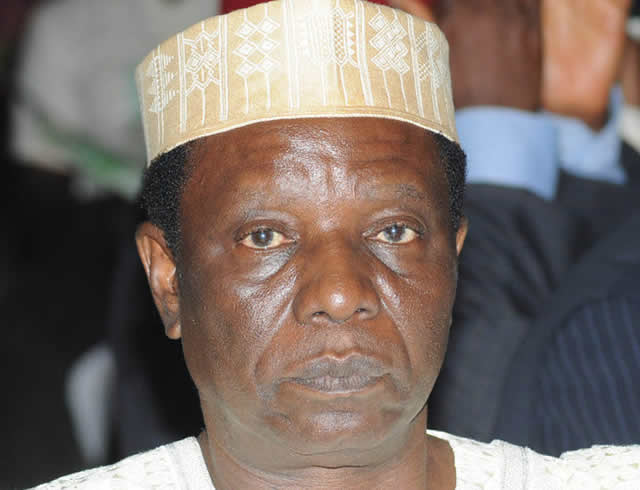
BY TONNIE IREDIA

The common saying that when a problem is identified, it is half-solved is valid only when it is the identified problem that people conscientiously seek to solve. It becomes a different matter when in the process of solving a clearly identified problem, state actors lose focus and either divert attention to other ancillary matters or begin to imagine that the procedures and processes for attaining a goal and the goal itself are coterminous. Well before independence, the people of Nigeria were fully aware of the heterogeneous nature of their country. Also clear to them was the inclination for a multi-ethnic society to be easily destabilized by innate centrifugal or divisive forces. Unfortunately, the same Nigerians keep failing to downplay divisive forces by embracing the centripetal or unifying forces available to them.

To continue to bemoan the existence of diverse cultures and multiplicity of ethnic groups in the country is unwise because the problem of Nigeria is not her ethnic diversity but the failure of her leaders to manage the phenomenon. Nigeria has failed to read Jawaharlal Nehru’s book “Discovery of India” which had laid bare the expedience of ensuring harmony and unity amongst different regions and cultures through the instrumentality of the principle of inclusivity. Our people have to constantly abide by relevant legal provisions especially section 14 of the 1999 constitution which provides that at all levels of government – local, state and federal, the composition of government or the conduct of public affairs “shall be carried out in such manner as to recognise the diversity of the people within its area of authority and the need to promote a sense of belonging and loyalty among the peoples of the federation.”

Despite the relevant constitutional provisions, the recommendation of “unity in diversity” by Jawaharlal Nehru is yet to take root in Nigeria. But at no time in the nation’s history has inclusivity been as blatantly breached as the last 8 years of the government of former president Muhammadu Buhari. Apart from several federal appointments in which the dominance of particular ethnic groups became the order of the day, it took a few courageous governors of the ruling party to scuttle attempts to foist another northerner to succeed the departing president of northern extraction. In the states, the situation has not been better, perhaps it has only been less publicised. In Benue state, no one has been able to persuade the major ethnic group to allow their neighbours to serve as state governor for once since the state was created. In Kogi state, if the candidate of the ruling party is declared winner in the forthcoming governorship election, the new governor would succeed his fellow tribal brother.

The implication of the love for ethnic dominance is heightened suspicion and mutual distrust by different people at the expense of unity. Interestingly, our leaders cherish self-denial as they continuously make statements that they themselves hardly believe. We keep telling ourselves what we know we are not likely to adhere to. Last Monday, President Bola Tinubu told the ministers he picked on the basis of state of origin that they should work not for their states but for the federation. Tinubu, who spoke at the inauguration of the new members of the federal executive council said: “you are not a minister of a particular state, colony, region or ethnic nationality; you are a minister of the federal republic of Nigeria.” The president’s point is clear but he knows, just as the ministers and the rest of us do that action will not match those words.

The states from which the ministers were picked will not even allow them to be that pragmatic. It is what they can do for their families and their states that will eventually determine their popularity and acceptance in the states. History in fact teaches us that political office-holders are usually bugged down by self interest and other parochial tendencies which every citizen has since taken to be normal. Nigerians who diligently work for the entire nation are quite few. Among them are our high performing sports men and women such as the super falcons. This explains why no one saw anything wrong with the uncoordinated reception for a team which demystified traditional world champions like Australia, Canada and England in the last female world cup. We were all satisfied that the best way to applaud the super falcons that were picked not on the basis of state of origin but on merit was to clap for state governors who honoured some of the team members from their states.

Although we agree that the players did well for Nigeria, we will not allow them to forget their respective states of origin. Accordingly, both the super falcons and our new ministers are better appreciated by their states; yet we occasionally charge them to be patriotic enough to put Nigeria before their ethnic units. Indeed, we are constantly reminded that Nigeria is not only indivisible but that its continued existence is in addition not negotiable. This viewpoint however violently offends the principle of self-determination which recognizes the freedom of people to determine where they wish to belong. It also encourages us to forget that negotiation is what guarantees unity, not bullying. Through such negotiations, leaders are better positioned to delicately address the different concerns of each group thereby encouraging such groups to develop a sense of belonging.

Unity in diversity is more likely to propel a voluntary and positive renewal of a group’s belief in a particular union. On the other hand, mutual suspicion grows when some societal institutions that are central to the attainment of national unity fail to perform. A good example is the federal character commission whose main purpose is to moderate recruitment into government services to avoid the dominance of any group. A few weeks ago, Nigerians watched on national television, how the commission transformed itself into a body that organizes recruitments for sale. In fact, a proper understanding of the endless in-fighting within the commission is that how to secure employment slots from different government bodies for their relations is the main goal of the members. Associated to this negative posture is how to convince a young Nigerian that it is in order for his colleagues with lower scores than his own to get admitted into elite schools because of their states of origin. ‘Quota system’ will no doubt eternally persuade those it favours to embrace loyalty to their states rather than the nation. The situation would have been different if the quota system was used to pick the best from every state instead of officials exploiting the strategy for ethnic dominance.

Another societal institution whose main goal has been thwarted is the National Youth Service Corps (NYSC). After the Nigerian civil war, government set up the scheme for the purpose of creating easy integration of different groups. It was then decided that to ensure Nigerians massively interacted with one another for a better understanding of each other’s sensibilities, no one was allowed to undergo the one-year compulsory national service in his or her state of origin. Today, many citizens are able to choose where to serve especially with increased insecurity in the land. A few others are mysteriously able to serve in their states of origin, while a third group does not serve at all notwithstanding that evading service is designated as an offence. In this group, there have been at least three ministers and some governors.

We dare say that if well managed, the NYSC can successfully unite thousands of Nigerians annually. It is such unifying factors that another tool for national integration – the National Orientation Agency (NOA) was set up to propagate for the benefit of all. Painfully, whereas everyone including legislators believe that NOA is moribund, no one has cared to know that unlike its predecessor, MAMSER, the Agency is not equipped to engage in effective value re-orientation of Nigerians. It is only assured of salaries for its workers but no funding to meet the task of mobilizing Nigerians to embrace patriotism. Hence, whereas people have held-on to the erroneous viewpoint that Nigeria’s problem is her multi-ethnic diversity, the failure of leadership to manage the nation’s cultural diversity is in reality the real issue at stake.

August 27, 2023.
August 28, 2023 0 comments
0 FacebookTwitterPinterestThreadsBlueskyEmail
HeadlinesOpinion

Nigerian legislators in Canada: For what?

by Leading Reporters October 2, 2022
written by Leading Reporters

Nigerian politicians have in the last few months been preoccupied with arrangements to select flagbearers to represent their political parties in the 2023 general elections which are some 3months away.

As usual, rancorous party primaries tore the parties apart with governance placed on recess in both the executive and legislative arms of government.

But not many Nigerians would have imagined that in the heat of political contestations, some legislators would successfully arrange to give themselves a jamboree outside the shores of the country in what is popularly known as study tours where huge sums of money are expended.

But it happened as Speakers of State Houses of Assembly across the country took-off to Canada to gain some knowledge on the intricacies of lawmaking and general governance.

The tour has since ended and the delegates are back home but not without controversies.

Reading through one foreign newspaper the other week, I found a report on how the visiting Nigerian state legislators were engulfed in a scuffle with some Nigerians living in Canada.

The story was that one or two diaspora members had gone to the hotel where the legislators were lodged to hand-over to them a protest message to be delivered to President Muhammadu Buhari in Nigeria.

Among other things, the protest message was said to have been informed by the long drawn-out strike by university teachers which had kept students at home for about 7months. The newspaper report had blamed the diaspora members for going to a hotel to harass guests adding that the police should have picked them up because the guests were entitled to their peace. Well, not much details could be gathered to make informed comments on how the so-called scuffle began and ended.

It is however important for public officials who expend tax payer’s money on foreign trips to be exceedingly tolerant of the bitter disposition of the diaspora. Such privileged tourists should find time to serve as representatives of government wherever they find themselves.

The ordinary citizen, usually with a huge sense of deprivation sees every public official as part of the oppressors, no matter how far away the official might be from the super occupants of the corridors of power.

In the instant case, the legislators should have included in their programme, a meeting for the exchange of ideas with some select members of the diaspora, at the Nigerian Embassy. For a well-publicized study tour of Nigerian legislators to begin and end without a plan to meet with Nigerians who are on ground at any foreign location can hardly go down well with citizens. Even if it was a private visit, there would still be the expectation that government officials have a duty to account to the people. In truth, it is not too much to warmly accept a protest letter for onward delivery to the appropriate authorities.

On the other hand, diaspora groups should desist from thinking that they have a right to assault any public official they find visiting the country where they live. However, the conflict between our tourist-speakers who went to Canada and some Nigerians they met there is really not the issue of interest to this column. A more important subject is the objective of the study tour which was arranged to hold at the tail end of the current legislative year. While it is conceded that every form of knowledge is useful, it is unfair to use public funds to seek personal pleasure under the guise of searching for knowledge. It is true that Canada is a leading commonwealth nation from where ample knowledge can be gained but the programme organized for our legislators in that country appeared pedestrian. It was not a study visit to legislative bodies in Canada but a workshop which did not involve real Canadian legislators. The resource persons were essentially some generalist-panellists.

Besides, the duration of the study was confusing. Whereas it was advertised to be a-7day programme, the disclosed agenda hardly filled more than 2 days. Indeed, the organizers titled it “the Institute on Governance’s two-day learning program for the Delegation of Nigerian Legislators to provide a learning opportunity on the legislative processes in government in Canada.” The first day, that is, September 19, 2022 was to focus on providing an overview of Canada’s Westminster Model of Government, Orders and Accountability while the second day was to cover what was described as flash lights on the Judicial System and Election Process in Canada. The social aspect of the programme was put at the end of the first day where a reception was to be used to recognize the Nigerian Delegation on its visit to Canada with officials from Global Affairs Canada and the office of the High Commissioner of Nigeria to Canada in attendance.

It would also appear that some effort was made to colour the tour with more value than it deserved. A message reportedly sent by Prime Minister Trudeau to the opening session referred to a 7-day programme for National and State legislators from Nigeria. But would such a message have come if Trudeau’s office was properly informed that the programme was for a group of speakers of state legislatures only? The answer would no doubt be in the negative because Trudeau is not likely to be pulled to address a conference of provincial legislatures. It would be worse if the office of the Canadian Prime Minister got to know the condescending personality of the average state legislator in Nigeria. In fact, if many Nigerians in Canada had heard of the programme, they would have publicly discredited it as a medium to attract dubious estacode earnings.

Against this background, not many analysts would be convinced that whatever our state speakers learnt in Canada can stop them from continuing to operate as stooges of their state governors – a view which some legislators themselves had opined in the past. For example, when in May 2015, the then Senate President, David Mark, was invited to address newly elected lawmakers at an induction course organized by the National Institute for Legislative Studies, his main point was that since 1999, “legislators at the state level had reduced themselves to mere stooges of governors.” In the days when Imo state legislators cherished impeaching their successive deputy governors, Mike Iheanetu, representing Aboh Mbaise admitted that his colleagues across the country were in a banana state in which they conscientiously serve as stooges to their respective governors. In Kogi state, legislators were probably in that mood when they still impeached their deputy governor after a panel set up by them found him not guilty of the charges he was accused of.

In a veiled attempt to rationalize the behaviour of state legislators, Efa Esua, who represents Calabar Municipality in the Cross River State House of Assembly had argued that neither the legislature nor the Judiciary has autonomy and independence. In his words, “when you don’t have autonomy, why won’t you be seen as a rubber stamp? Even to drink water you will wait and depend on the executive. We largely depend on the executive arm of government to get money and survive.” But can pursuing doubtful foreign programmes redress the situation? Is it not better for state legislators to focus more on introspection for reforms so as to come out strongly as the nation grows democratically?

Honestly, our legislators must shelve their propensity to be undemocratic. They need to know that whereas democracy is a game of numbers in which the majority would always have its way, they ought not to clamp down heavily on the minority for exercising the freedom to have a say. It was therefore wrong for the Bauchi state house of Assembly to have in 2012 suspended Rifkatu Samson Danna representing Bogoro Constituency of the state for voicing out her peoples’ opposition to the ‘unconstitutional’ transfer of the headquarters of Tafawa Balewa Local Government Area from Tafawa Balewa town. The Kwara state legislature was similarly wrong last year to have suspended, Jimoh Agboola, the only member of the opposition in the 24-member House over comments deemed critical of Governor AbdulRazaq-led administration. These narratives can be stopped without visiting Canada.

October 2, 2022

October 2, 2022 0 comments
0 FacebookTwitterPinterestThreadsBlueskyEmail

Recent Posts

  • FCTA Workers, NLC Storm Industrial Court, Demand Wike Sack

    January 26, 2026
  • DisCos reject FG’s free meter plan

    January 26, 2026
  • Nigerian-born nurse loses licence in Australia for sleeping on duty

    January 24, 2026
  • AI may outsmart humanity in five years — Musk

    January 24, 2026
  • BREAKING: Kano Gov Abba Yusuf dumps NNPP

    January 23, 2026

Usefull Links

  • Contact Page
  • About Leading Reporters
  • Contact Us
  • Headlines
  • Investigation
  • Exclusives
  • Opinion
  • Business
  • Facebook
  • Twitter
  • Instagram
  • Linkedin

@2021 - All Right Reserved. Designed and Developed by PenciDesign


Back To Top
Leading Reporters
  • Featured
  • Politics
  • Opinion
  • Business
  • Entertainment
  • Sports
  • About Us
  • Contact